Megaptera novaeangliae: Humpback Whale– The Race Rocks Taxonomy

humpback at RROur most recent pictures are included in the post in the log:
Humpback whales in the ecological reserve:

See all the posts on Observations of Humpback Whales at Race Rocks
Ecological Reserve.

 
Raisa has several pictures on her Flickr site of humpbacks that came by in 2010. See also this page On Thursday Oct 5, 2006 Kohei, (PC year 33) took these two pictures at the mouth of Pedder Bay .. ..while on the trip back from Diving at Race Rocks.William Head is in the background. A picture of a humpback whale in Race Passage taken from Race Rocks in 2004.
x
The whale had also been photographed by Pam Birley of England using the remote control cam 5 from Race Rocks. These three pictures are from that sighting. You can see Victoria in the distance in this image. 03/10/06 0930

Sounds of Humpback whales from John Ford’s website:
Humpback Whale Feeding Calls:
Humpback Whale Song recording

CLASSIFICATION
Domain Eukarya
Kingdom Animalia
Phylum Chordata
Class Mammalia
Subclass Eutherias
Order Cetacea
Sub-order Mysiceti
Family Balaenoopteridae
Genus Megaptera
Species novaeangliae
Common Name: Hump-backed Whale (Borowski,1781)

Elephant Seal Moulting

Race Rocks is at the northern limit of distribution of the Elephant Seal. They often number from 2 to 3 large males and 4 or 5 females. Arriving in January, they usually stay through the summer on the middle island and then leave for several months in the winter. Elephant seals often undergo a juvenile moult on the local beaches of Victoria when several years old. This individual may be at the end of such a moult as it still has a few sore spots on it’s coat. They end up on beaches where they wallow in the sand to keep the flies off. Members of the public often report them to the “authorities” as being diseased in appearance as their skin is blistered and raw. There has even been an example in the past few years in the local Victoria area when an animal in such condition was reported to the authorities as sick and due to ignorance, the animal was shot by an animal control officer. Of course this outraged some of some local residents who had been observing it for weeks as it was going through the moult, but the mistake had been made. So humans — leave well enough alone. Misguided intervention is not helpful for this rather rare pinniped

The video of this female elephant was videoed off the South side of Race Rocks. It was done in hi 8 – before we had SONY cameras that would record in Digital. One can see the patchy skin typical of the moulting stage just behind the head. This seal had probably already gone through the most serious part of the juvenile moult, which may have occurred on one of the sandy beaches over near Metchosin. The barking in the background is from California sealions. 

The Abiotic Effects of Solar Energy at Race Rocks

Cormorant thermo-regulating while drying wings and Sea lions rafting while exposing fins or tail for heat exchange and thermoregulation. below , Glaucous-winged gulls panting on a hot July day

9. C4 and CAM adaptation for xerophytic conditions eg stone crop, plantain

10. Microniches and temperature availability – eg sea slater isopod video


Aldridge Point (Figure 1) is a rocky outcrop with a small cove on the north side. The cove has a gravel beach and is bounded by the terrestial vegetation, comprised of arbutus, Douglas fir, salal and pine. The rocky area is composed of bedrock with many smooth vertical faces, dissected by numerous cracks and crevices. There are also large boulders piled one on top of the other down to the low tide level. Many of these boulders are up to 4 feet in diameter. A detailed species list for this area is presented in Appendix 2. In summary, the intertidal area shows the species that are characteristic of moderately wave exposed areas of southern Vancouver Island. The flat rock faces of the upper intertidal are sparsely populated by barnacles, lichens and algae (Porphyra and Fucus distichus).The numerous cracks and crevices harbour snails’, crabs and limpets, while tidepools are inhabited by anemones, mussels, limpets, snails, hermit crabs and coralline algae.

The rocky shores throughout the proposed park area are generally smooth, steeply sloping and dissected by numerous cracks and crevices. The topography and substratum of a shore influences the gradient of conditions on the shore by variations in the water-retaining capacity. As the tide recedes, the intertidal areas start to dry out. The rate of drying depends, firstly, upon the slope of the shore, with steeply sloping rock faces draining more rapidly than undulating platforms or shallow slopes. Cracks and crevices provide micro-environments in which the rate of drainage, and the drying effects of sun and wind are greatly reduced, and permit colonization to higher levels on the shore than occurs on the open rock faces in the same location. This “uplift” of the intertidal zonation may be noted in cracks and crevices throughout the proposed park area.

11. Adaptations of marine animals to low light intensities
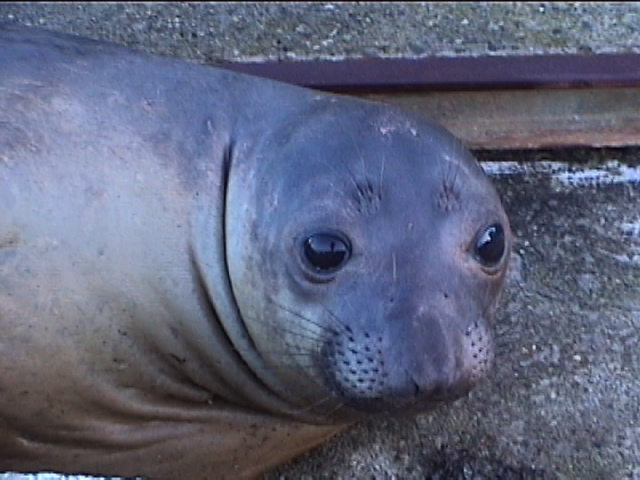
For example, the female elephant seal has very big eyes

See the elephant seal file in the Taxonomy.


12. Temperature regulation – flippers being held by sea lions and the wings being held out by cormorants and gulls.( see photograph s at the beginning of this file.)

13. Fog as a product of solar energy and the resulting effect on visibility for organisms.
eg:
.feeding,mating, migration.

14.  The sun contributes to tides which have a big effect on organisms

15. The illumination of the earth changes with the tilt of the planet . The result is seasons.

Seasons have a great impact on organisms. At the ecological reserve the animal census posts reflect the presence of migratory birds, and of course nesting birds , all determined by seasonal influence.

On Dec 22nd it can be noted that it was still sunlight in the Western part of Alaska and in California when it was already dark here at Race Rocks. From the GOES Satellite we can see the limit of the sunlight in Northern Canada on the 22 of December 2005. These images are taken from satellite images from the Satellite file
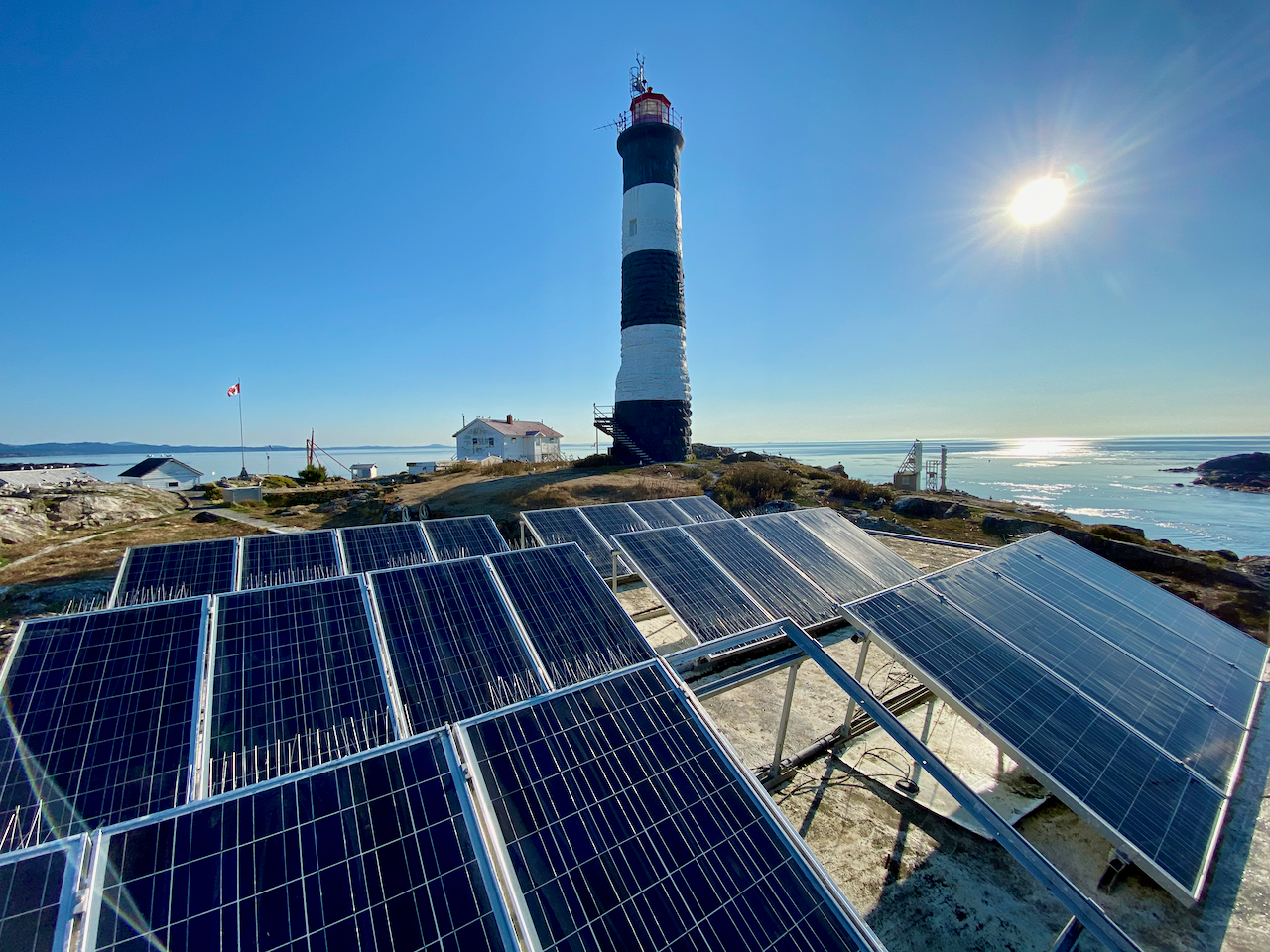
 

The SOLAR ENERGY component of the Integrated Energy Project at Race Rocks


–—Effects of Ultraviolet energy on organisms at Race Rocks:
Slash, a year and a half after recovery

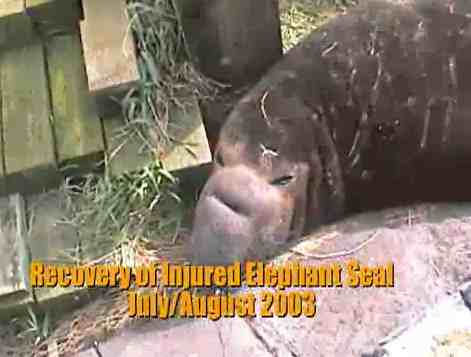
Slash, the elephant seal was struck by a motor boat at Race Rocks in January of 2003. Fortunately he has recovered well in the past year and a half as can be seen here in two videos taken by Mike Slater in July and August of 2004.

There is also a second video showing Slash undergoing a moult in August of 2004.

See the footage taken of his original injuries here.recovereed


Return to the Elephant seal taxonomy file:

Elephant seal mating

Two elephant seals haul out on the lawn and provide evidence of mating behaviour.  The female has a large cut around her neck indicating an old injury. (Scarlet)

On January 22, 2004 Mike and Carol Slater moved camera 3 over to their house in order to keep track of the male elephant seal, Mirounga angustirostris who has been hauled out on Great Race Rocks recently. They took these images right outside their house. He is the same one (Slash) who was injured a year ago.. See the video footage from January 03, and from August 03

This was the first time an adult female had come up to join him on the lawn. That afternoon there was considerable maneuvering for reproductive purposes.

It turns out that the female has also had an extensive injury. This deep cut, now healing over has probably been caused by a fish net or rope. We have not observed this female before at Race Rocks. She may have been hauled up on the Middle island where they lie on the flat top part and are not very visible from a boat. ( Later, Pam Birley gave this female the name of Scarlet
In 2009, we believe this same female elephant seal has again shown up on Middle Island