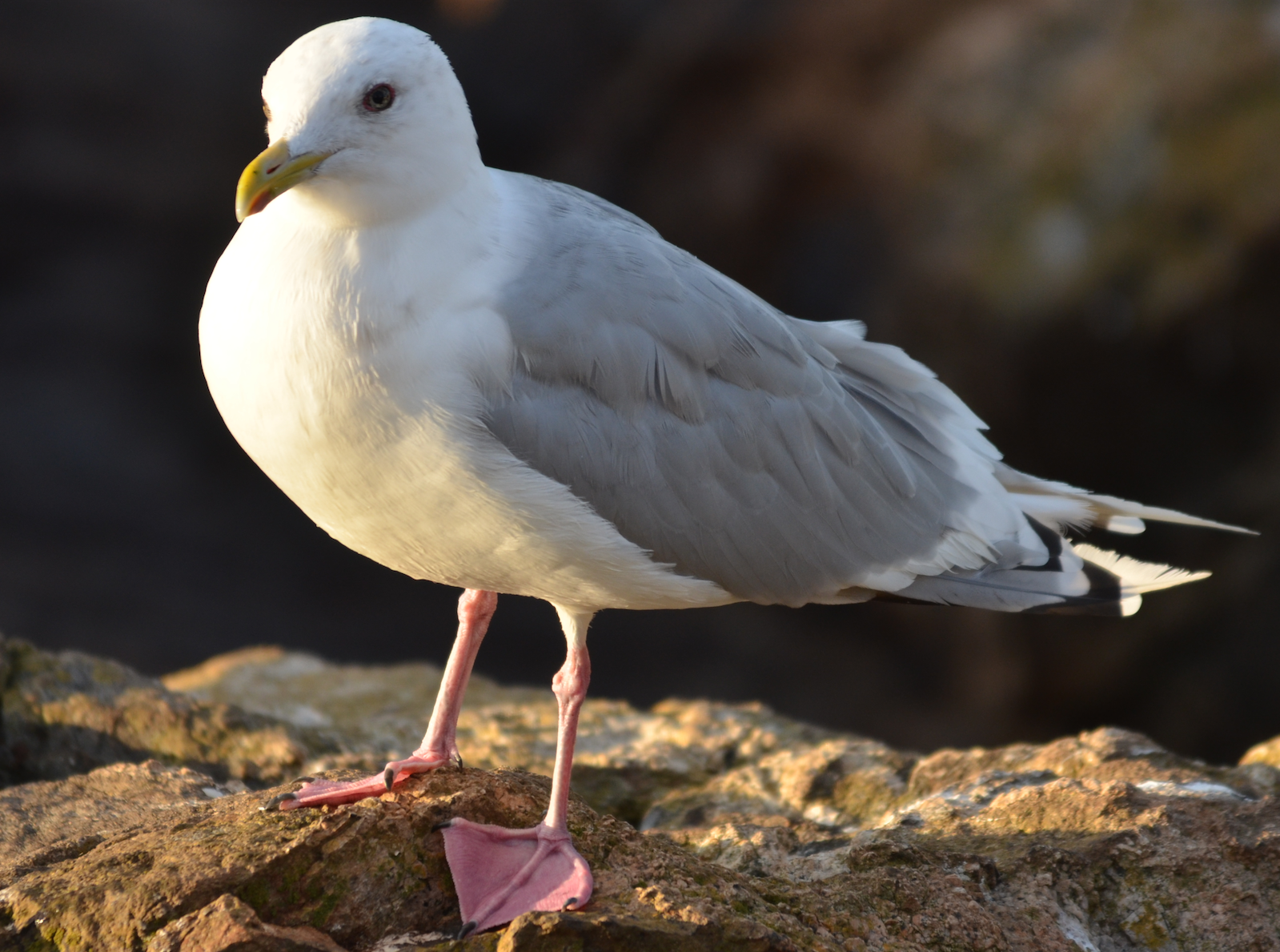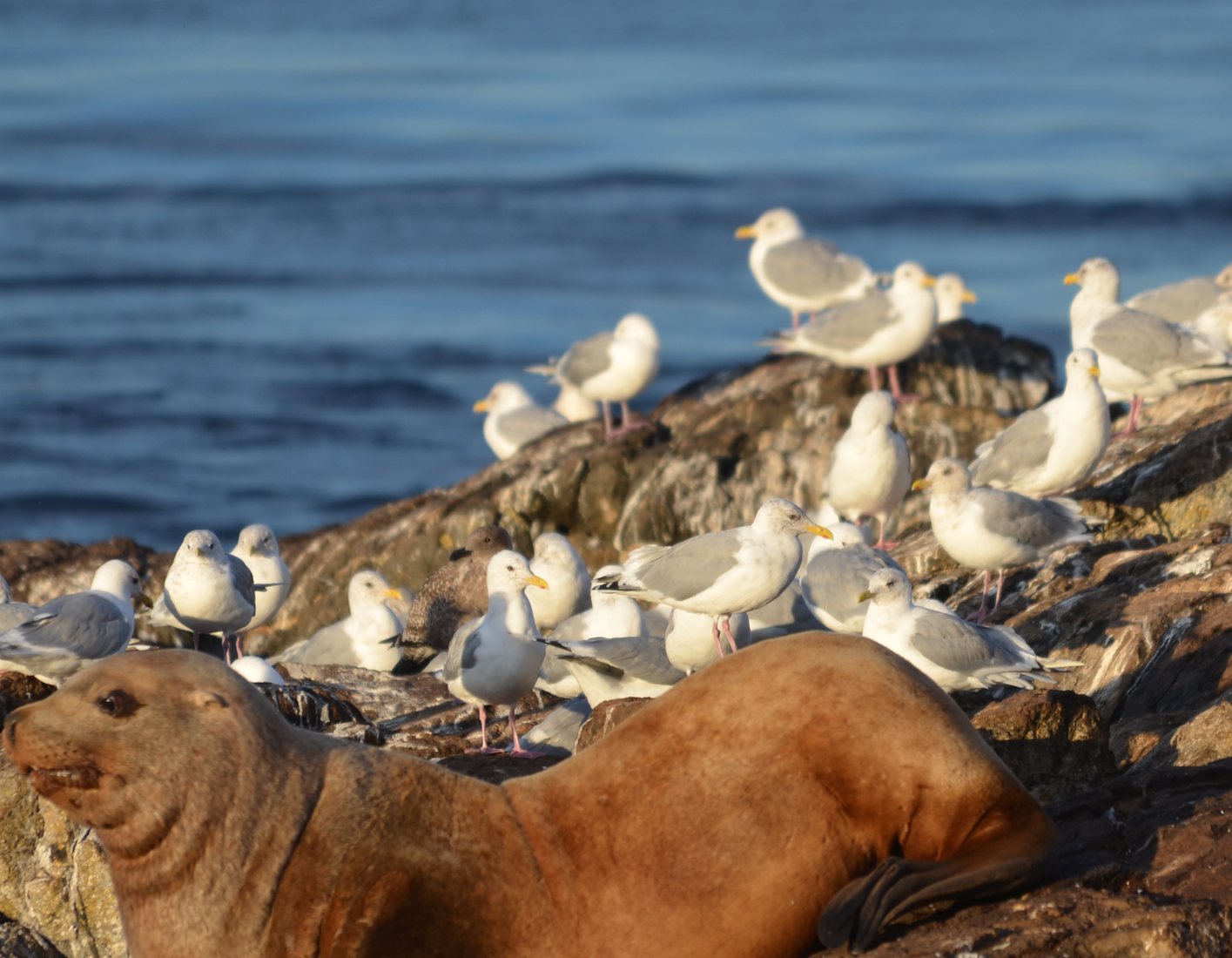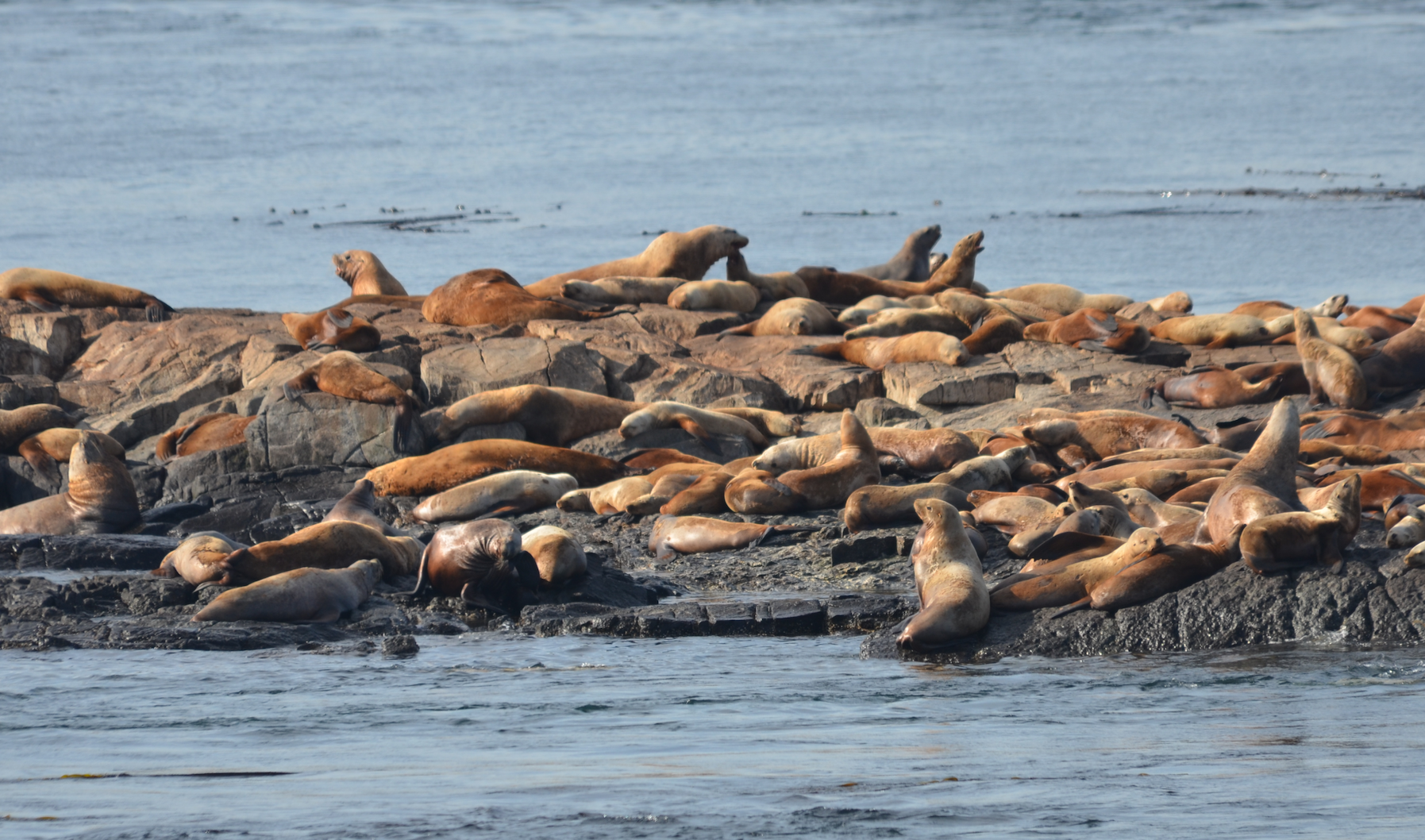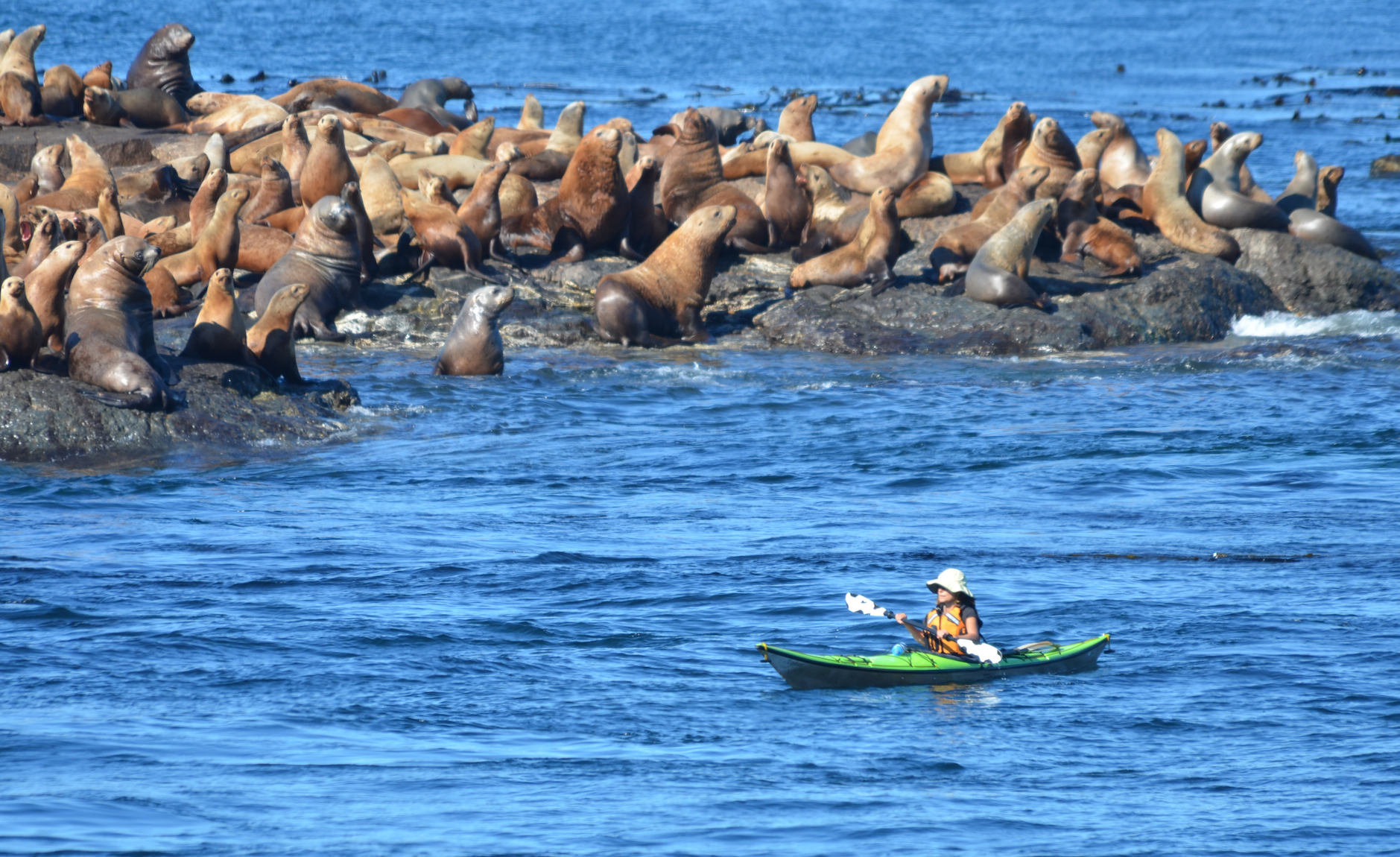
Golden Day at Race Rocks.

This morning dawn came with a mostly overcast sky and fog distant. It cleared by late morning and stayed sunny, only clouding over in the early evening. The wind was light, less than 10 knots and easterly all day. The barometer was up to 2022 earlier and is falling now. The forecast includes a strong wind warning for tonight. Thursday is expected to be sunny with a few clouds.

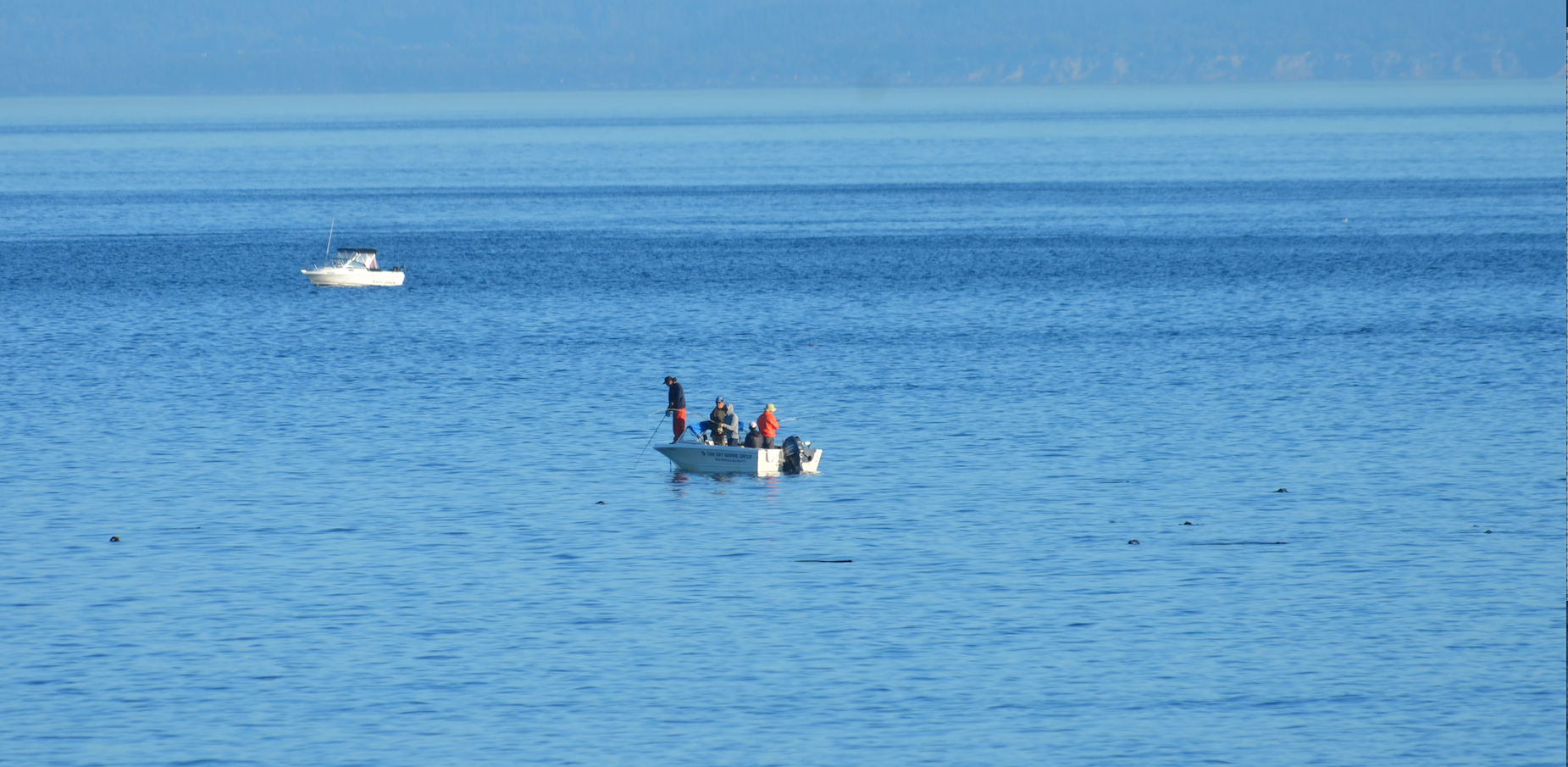
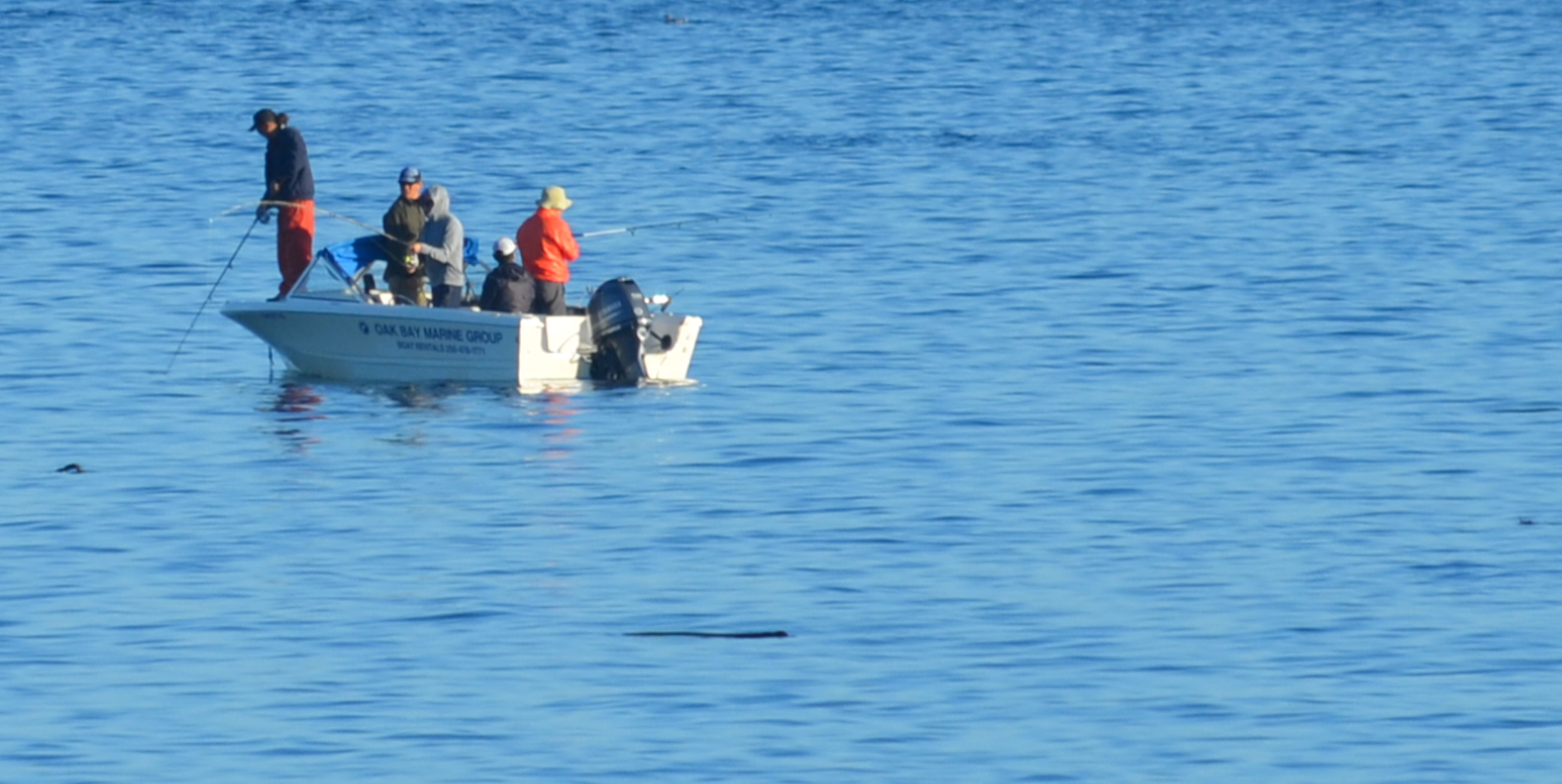
Four whale watching vessels were observed working in the protected area today. Several sport fishers passed through. The salmon gillnet fleet and packers passed through Race Passage heading east. There was a big swell during the morning and early afternoon.

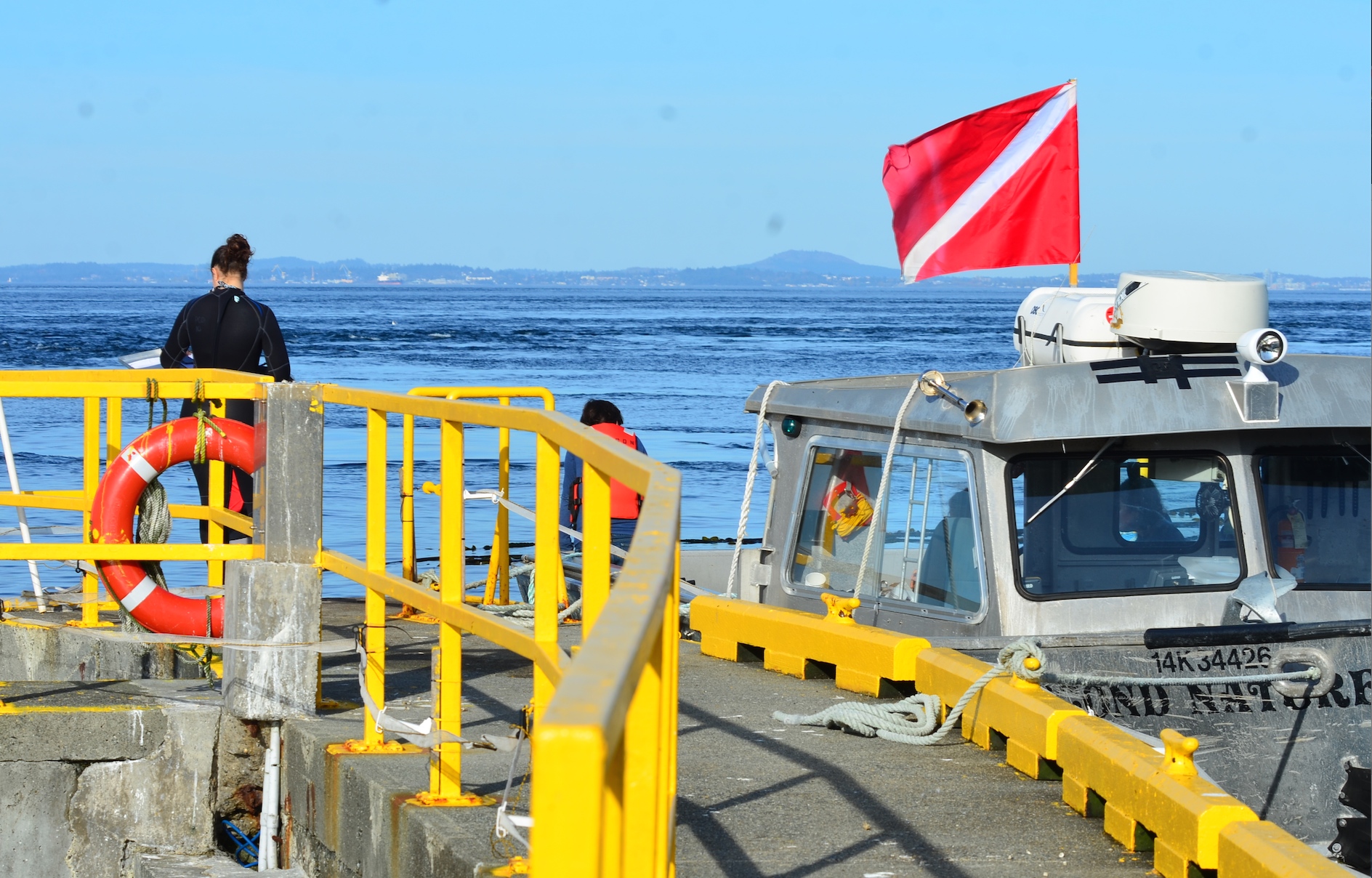
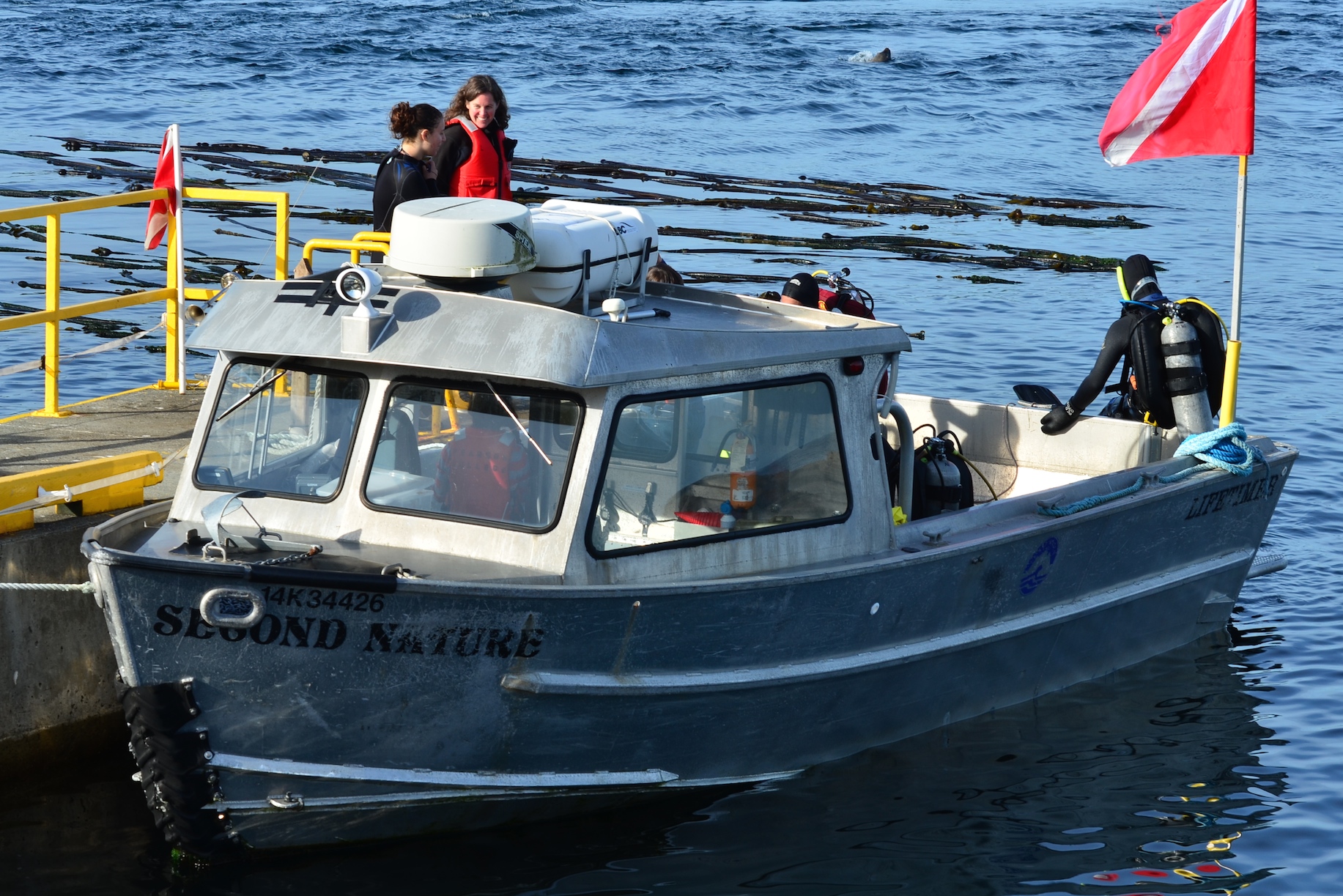
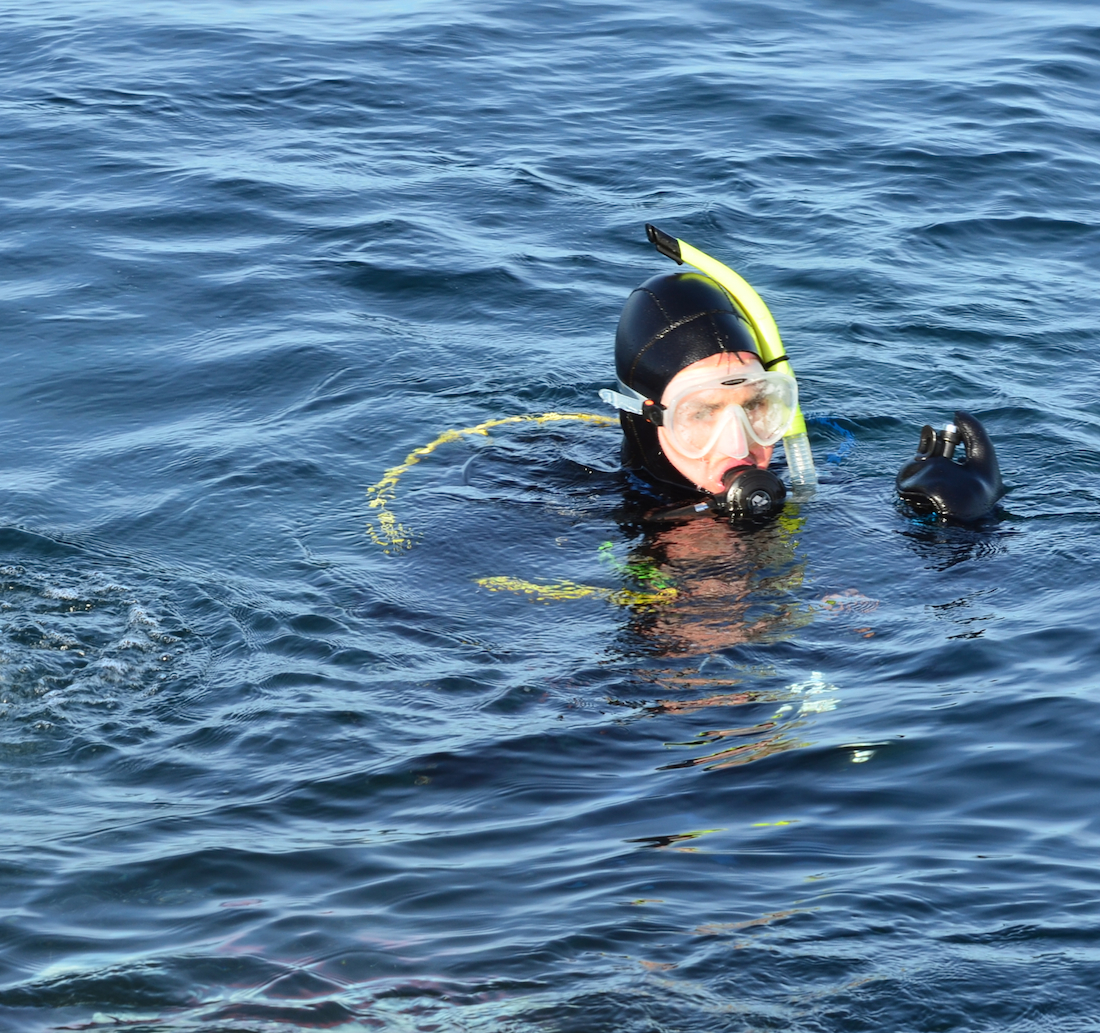
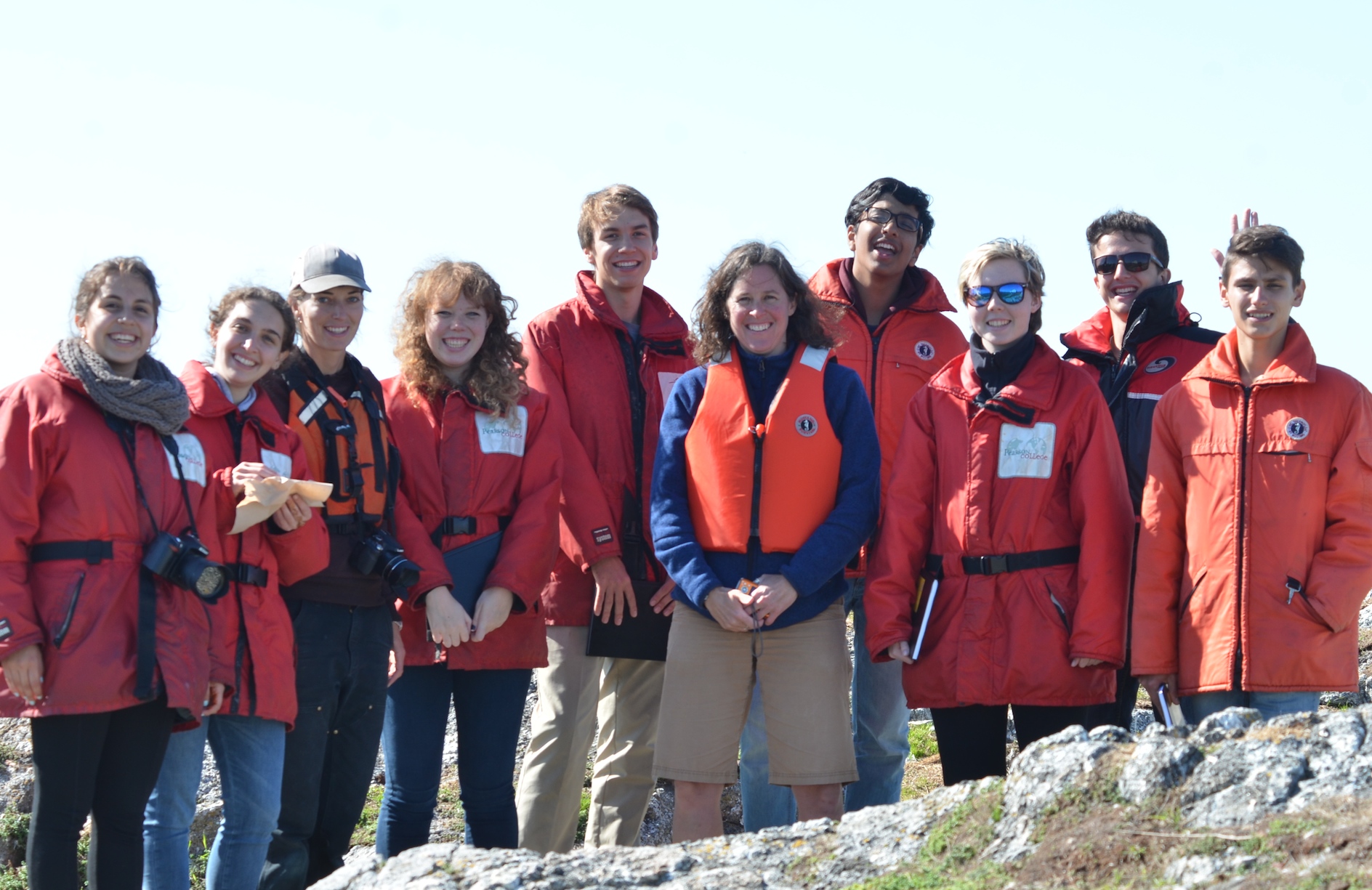
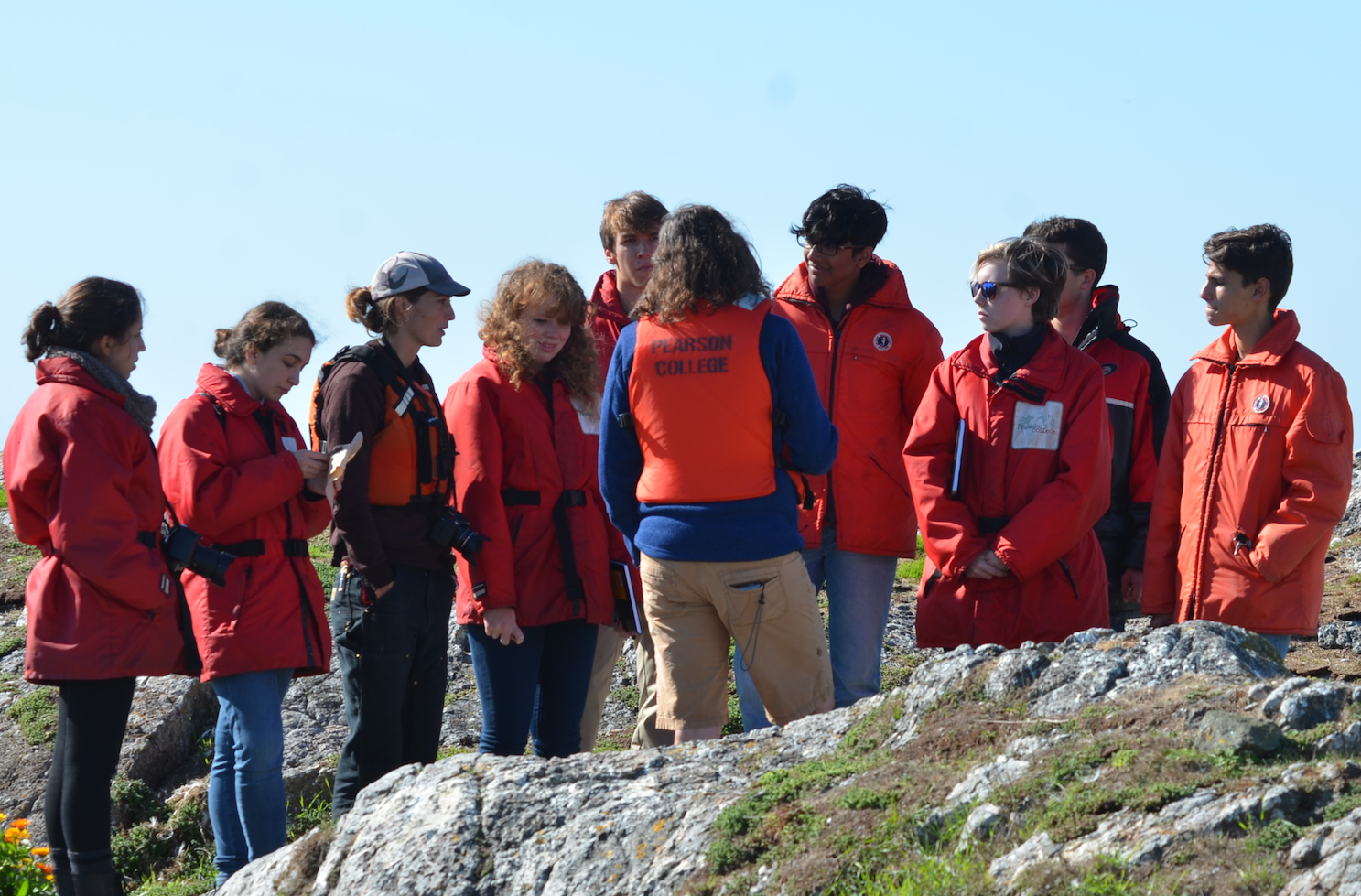
Second Nature brought one of the Pearson College student dive teams today and the students who got into the water had a fantastic dive. Not only were they able to observe and film the incredible richness of this biodiversity hotspot, they were also visited underwater by curious sea lions.

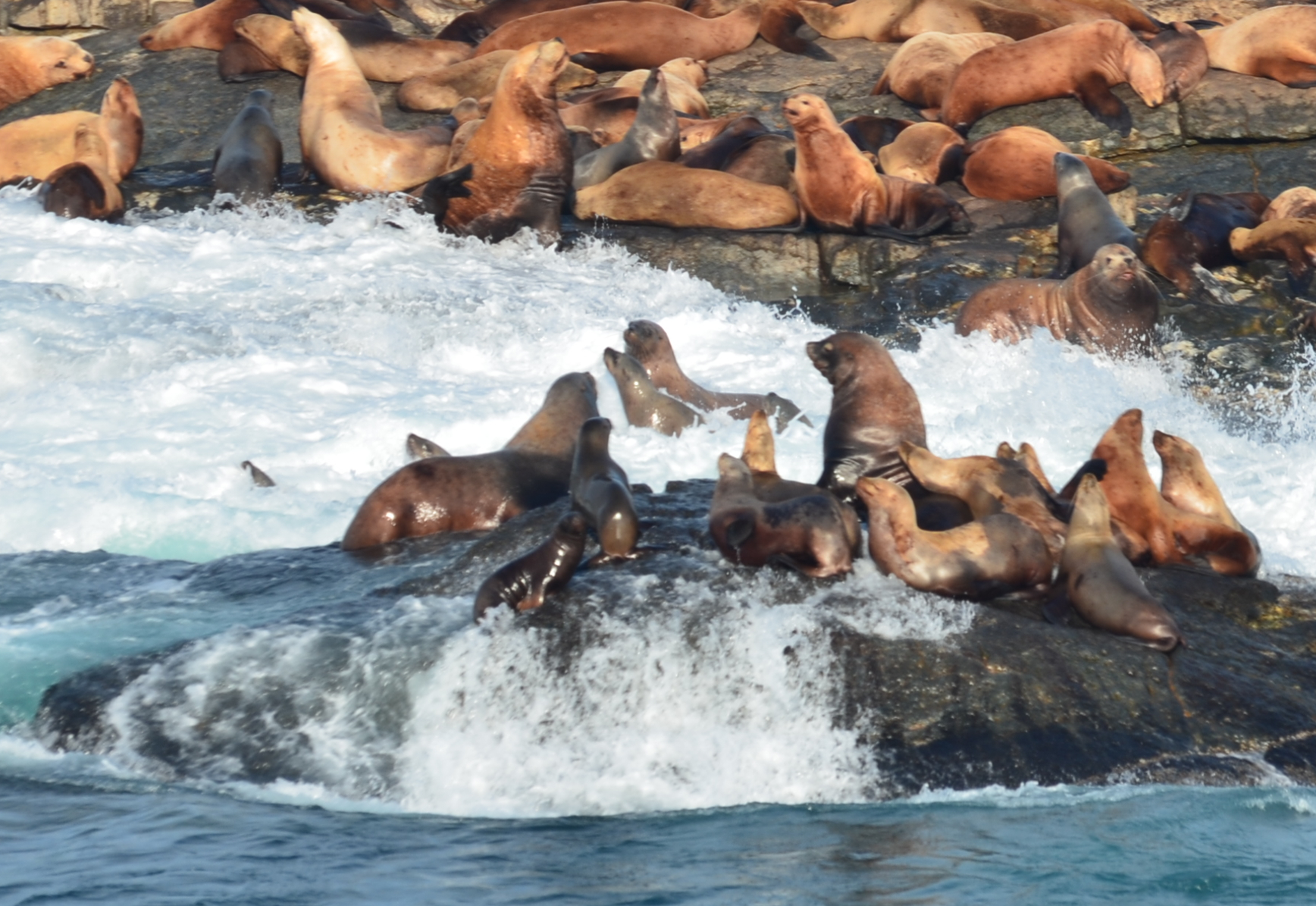
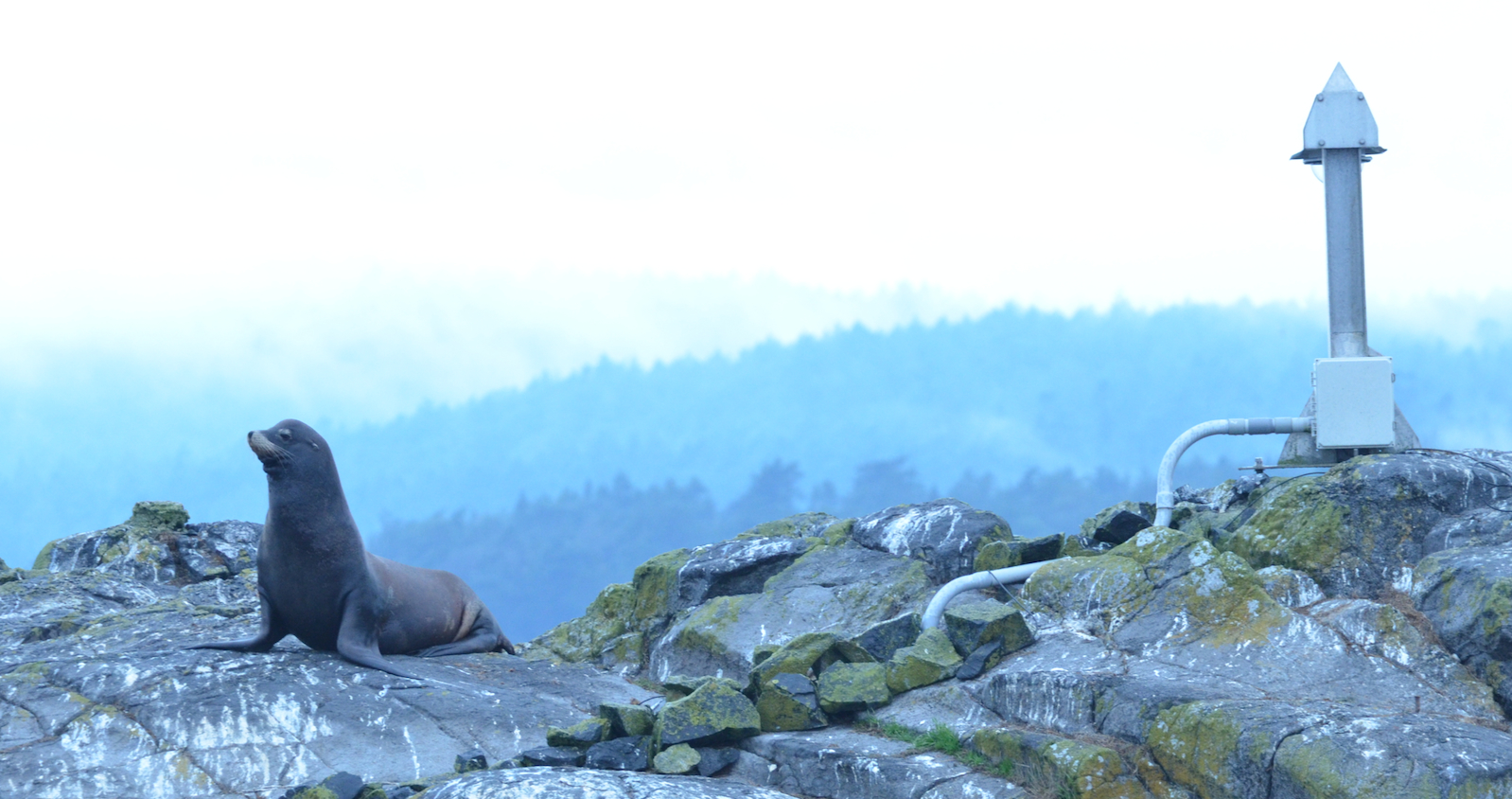
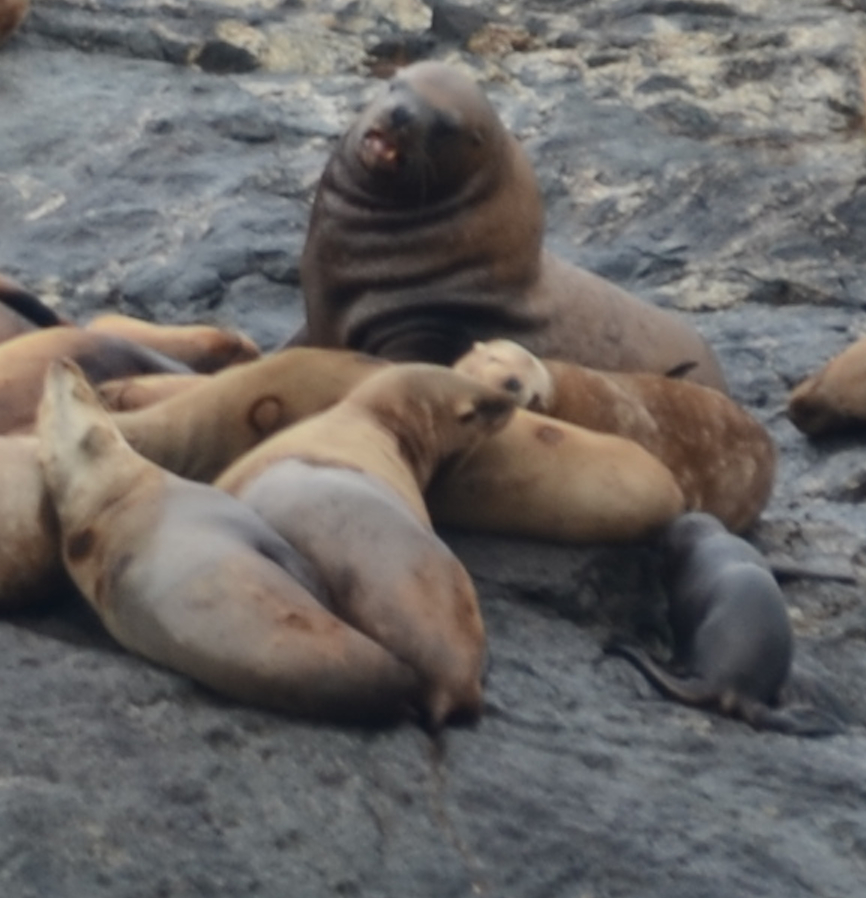
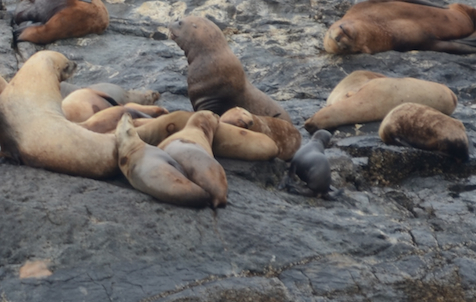
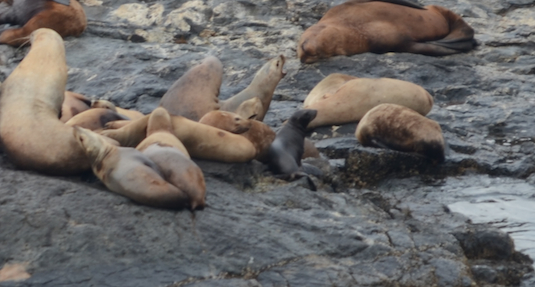
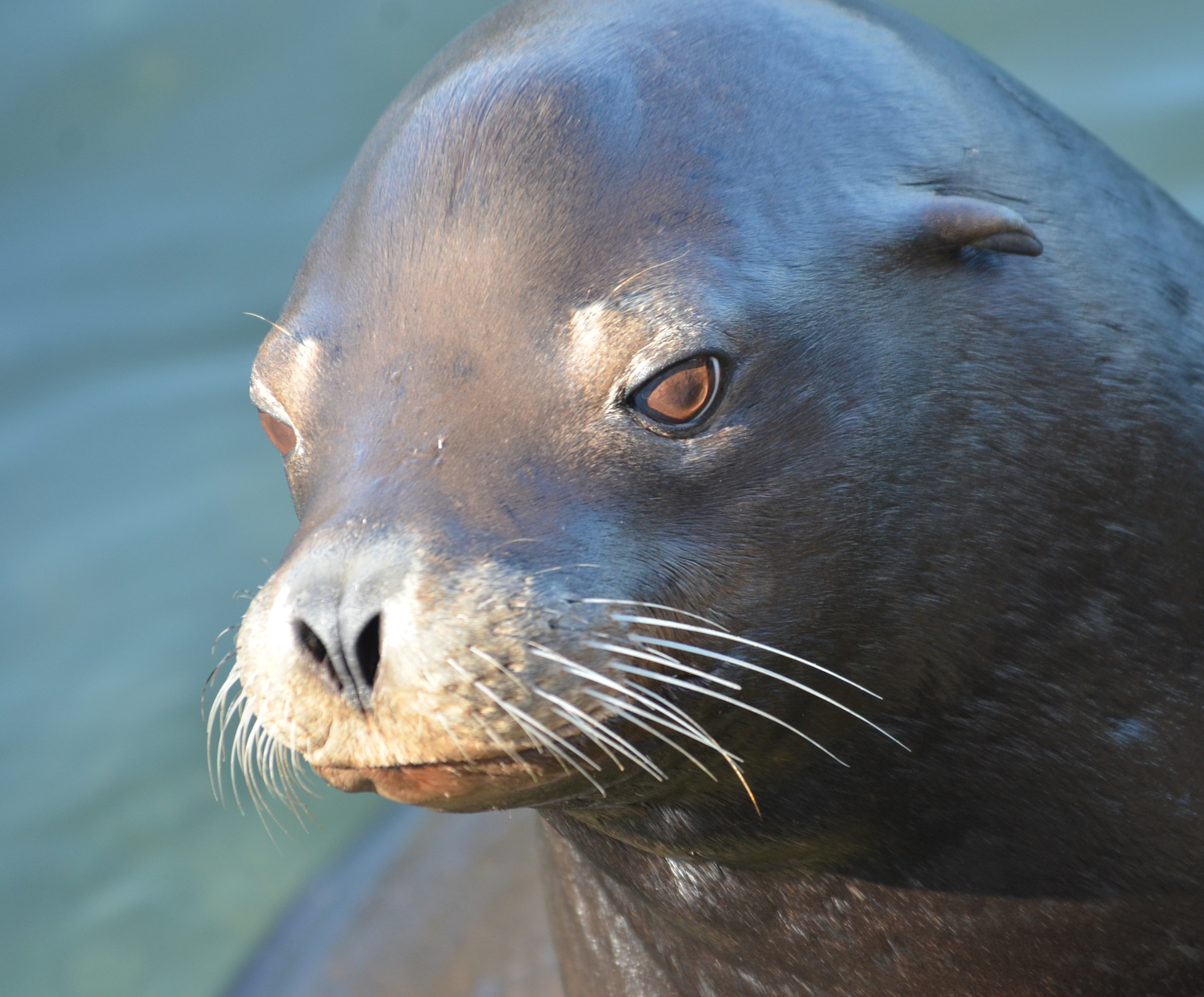
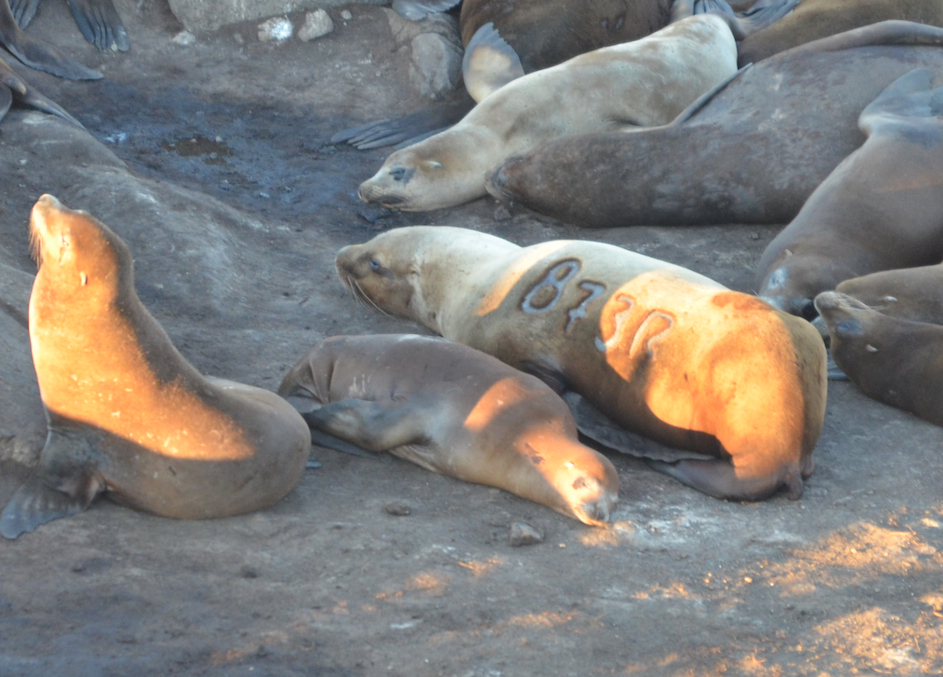
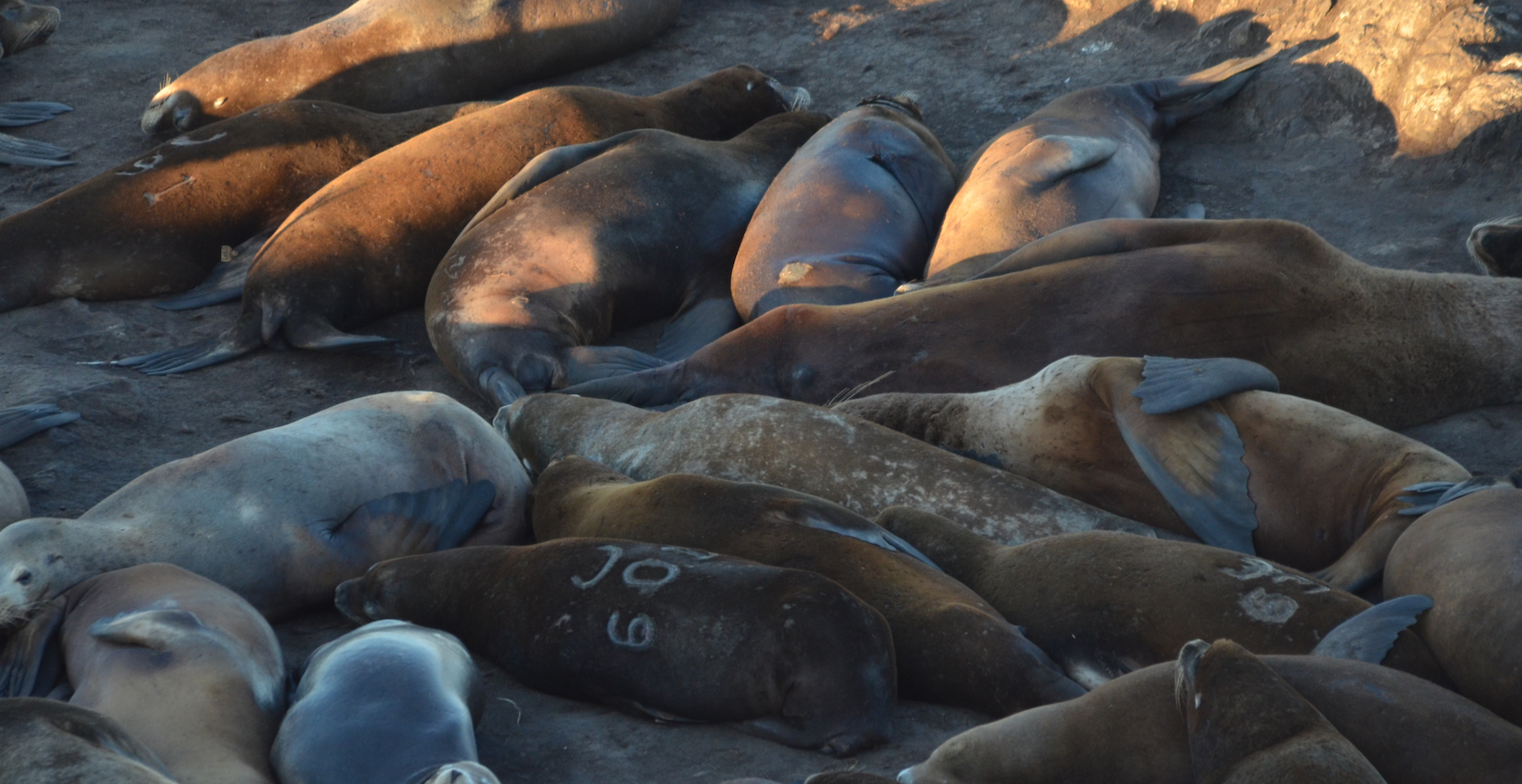
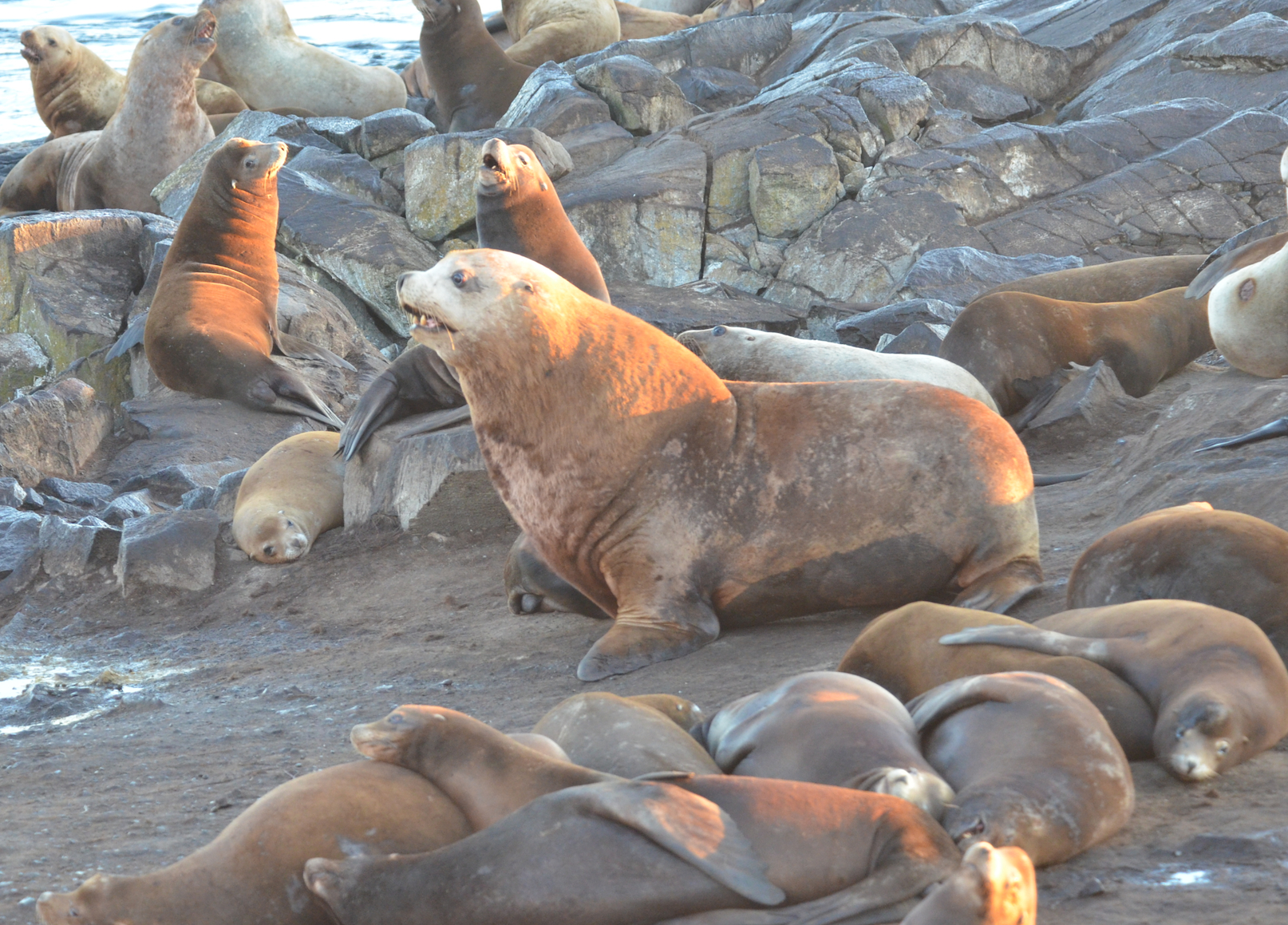
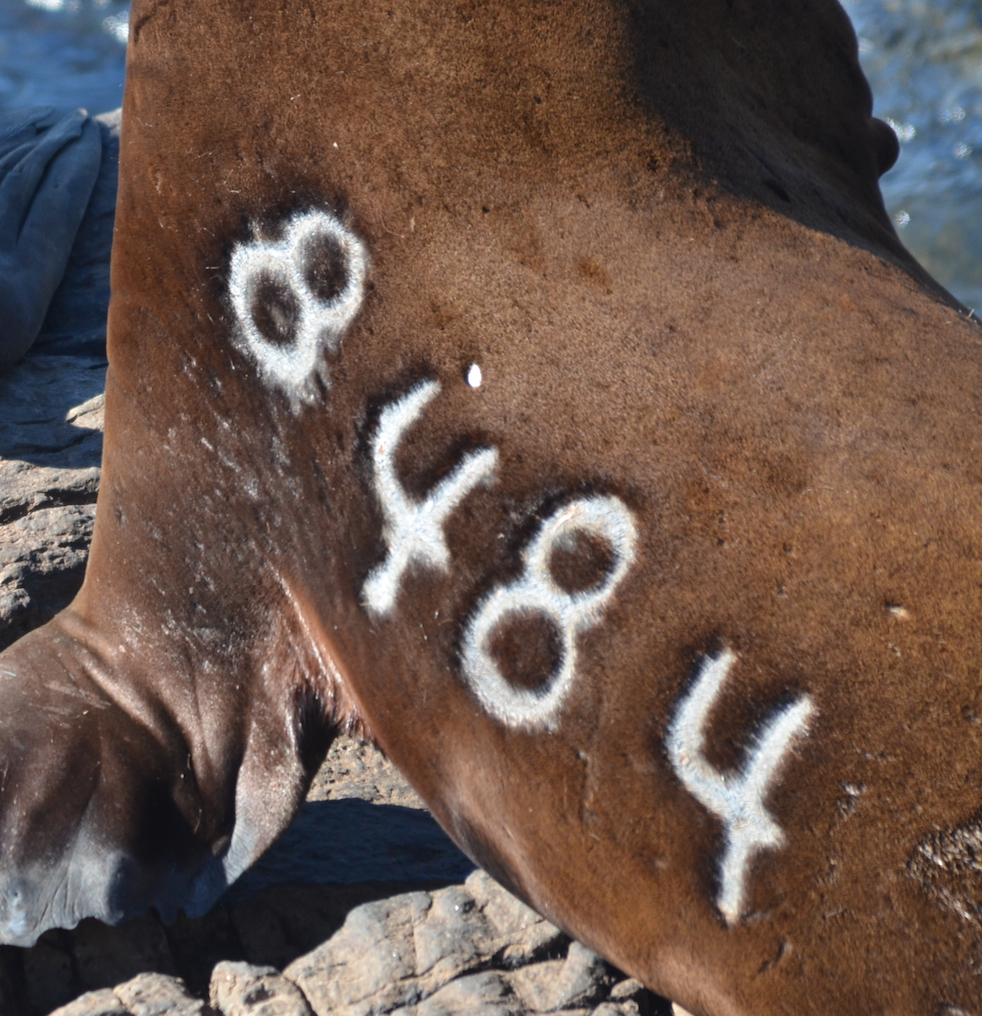
Several new sea lion brands were noted today including Californians U20, U503, U363 and U844. One of the California Sea Lions made it right up to camera #5 today. By the time I got outside with the blog camera, he was already descending.

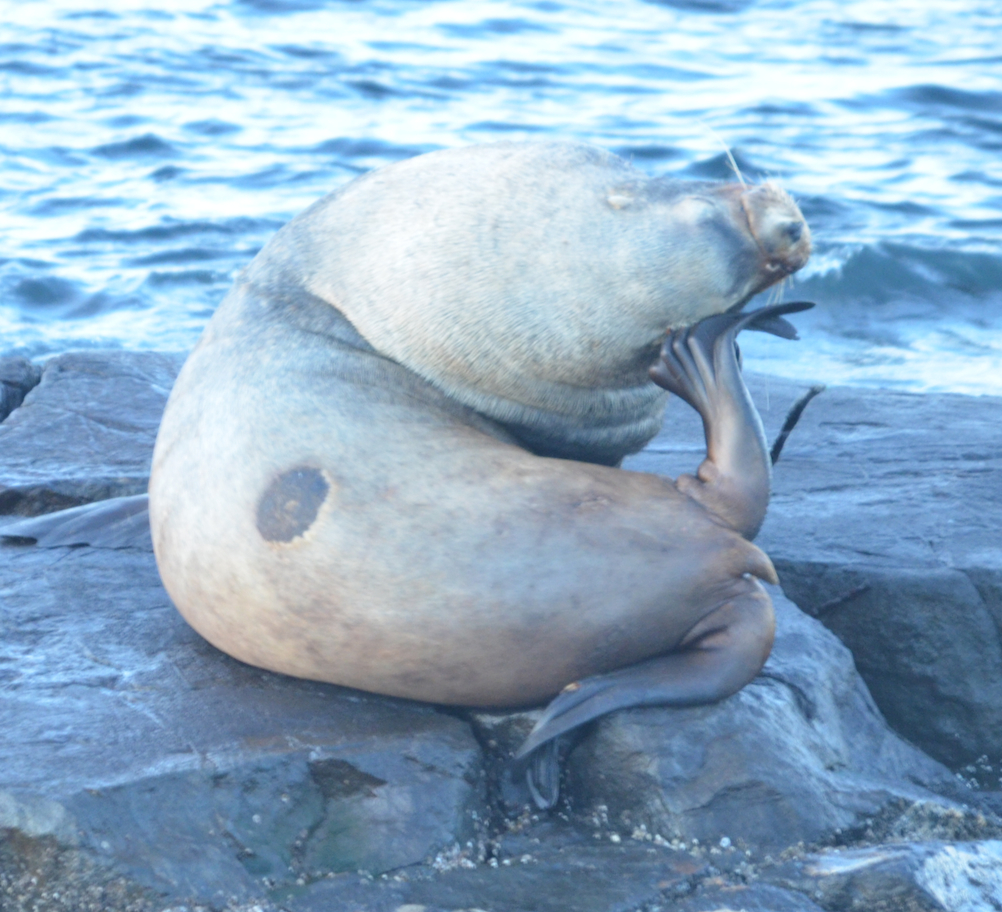
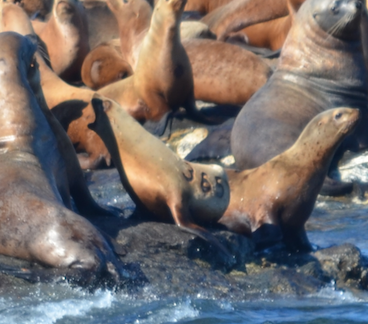
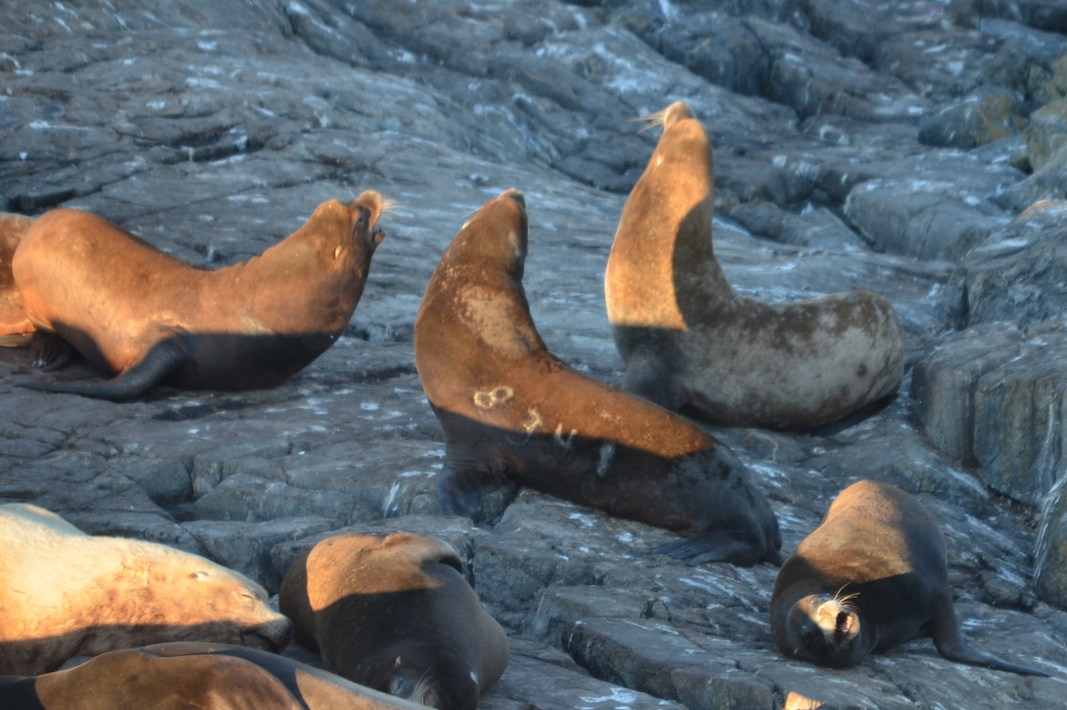
I noted the other day that I hadn’t noticed cookie Cutter Shark scars on the Steller’s Sea Lions. Well since I made that remark I am seeing theme everywhere, so take that back.

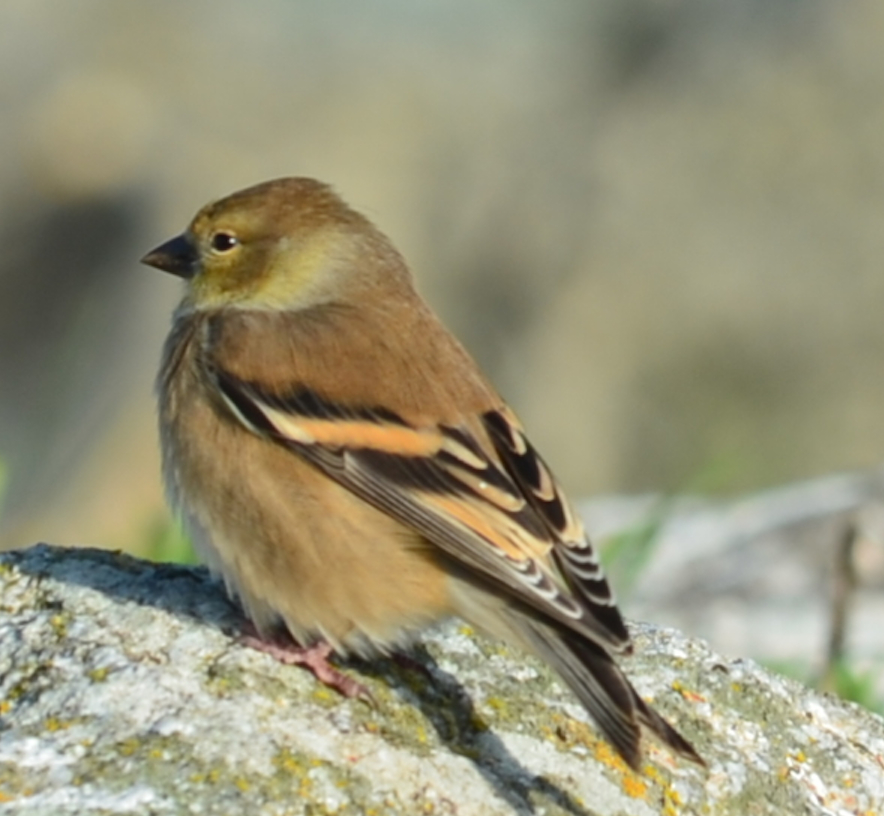
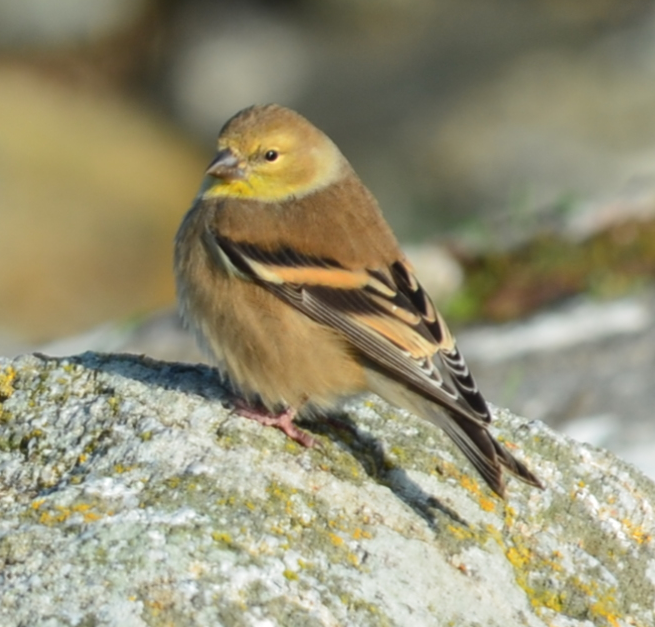
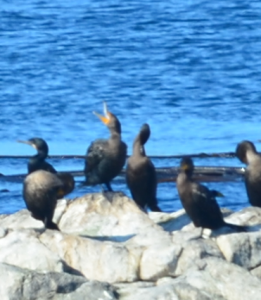
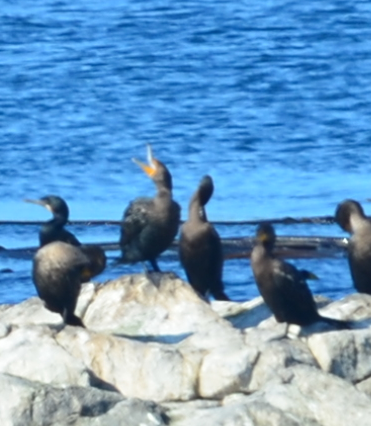
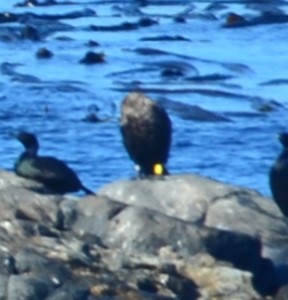
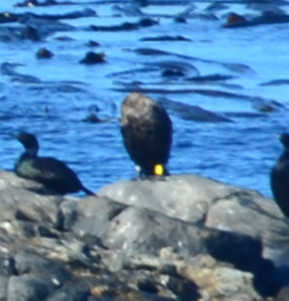
On the bird front, we had a little female American Goldfinch visit today. It landed on the thistles right in front of me over by the tower. Also on the bird front a suspected Brandt’s Cormorant with two leg tags was spotted today; yellow on the left leg and white on the right leg. There was also a strange bird amongst the Brandt’s Cormorants that I was hoping would be the Brown Booby that has been floating around out here.


Chores were routine and in preparation for the new eco-guardian crew coming out tomorrow. There were nine people on board Second Nature.
 

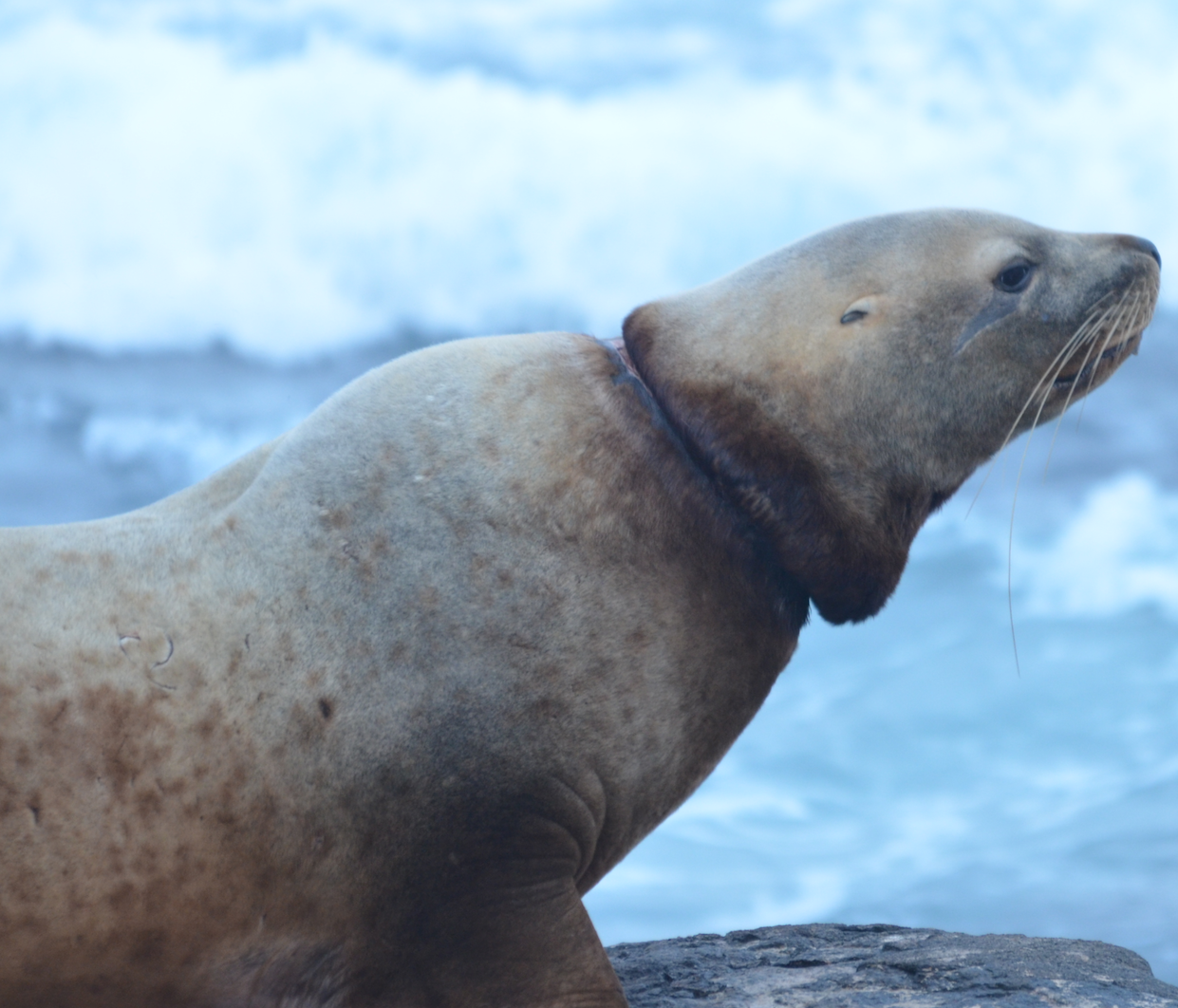
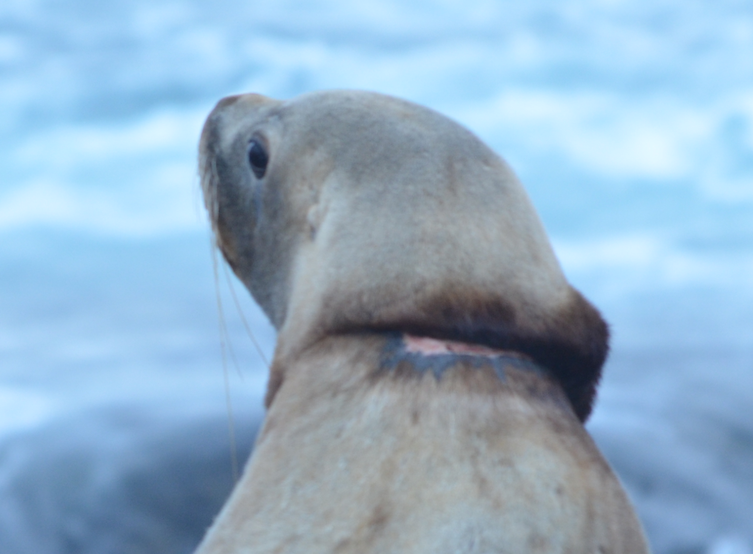
Plastic No No Band

Thanksgiving Monday was a wet day dominated by light north-northeast winds in the morning and a moderate westerly in the afternoon. Wind speed was 10 or less knots until it turned to west. By early evening it had risen to 15 – 20 knots. The barometer fell early and has been climbing since late morning boding better weather tomorrow. The wind is forecast to drop after midnight and switch to light easterlies for Tuesday. Forecasters expect a mix of sun and cloud with fog patches dissipating in the morning. A brighter day expected.

Seven whale watching vessels visited in the morning and none in the afternoon and the three pleasure craft that passed through were also in the morning.

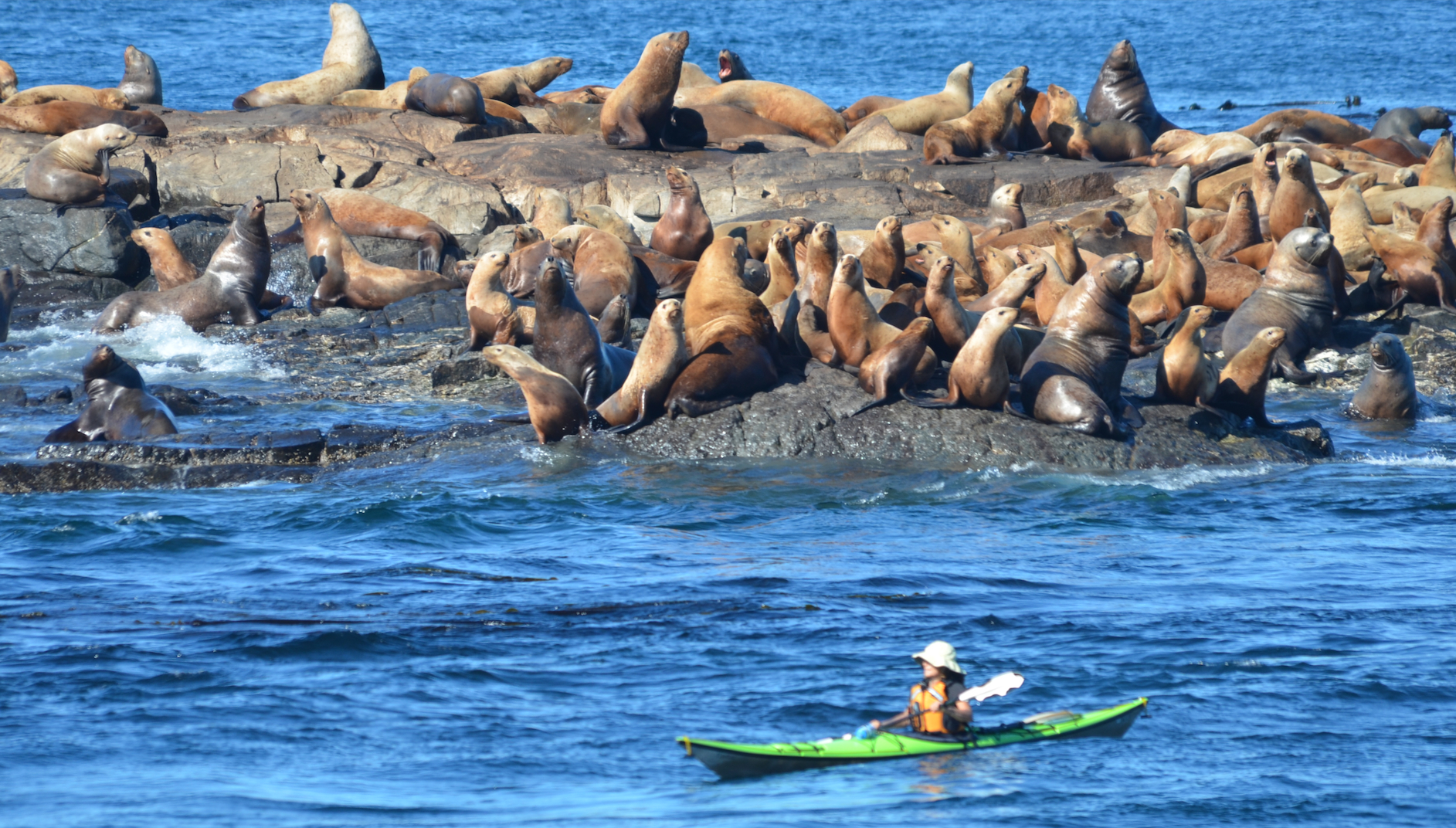
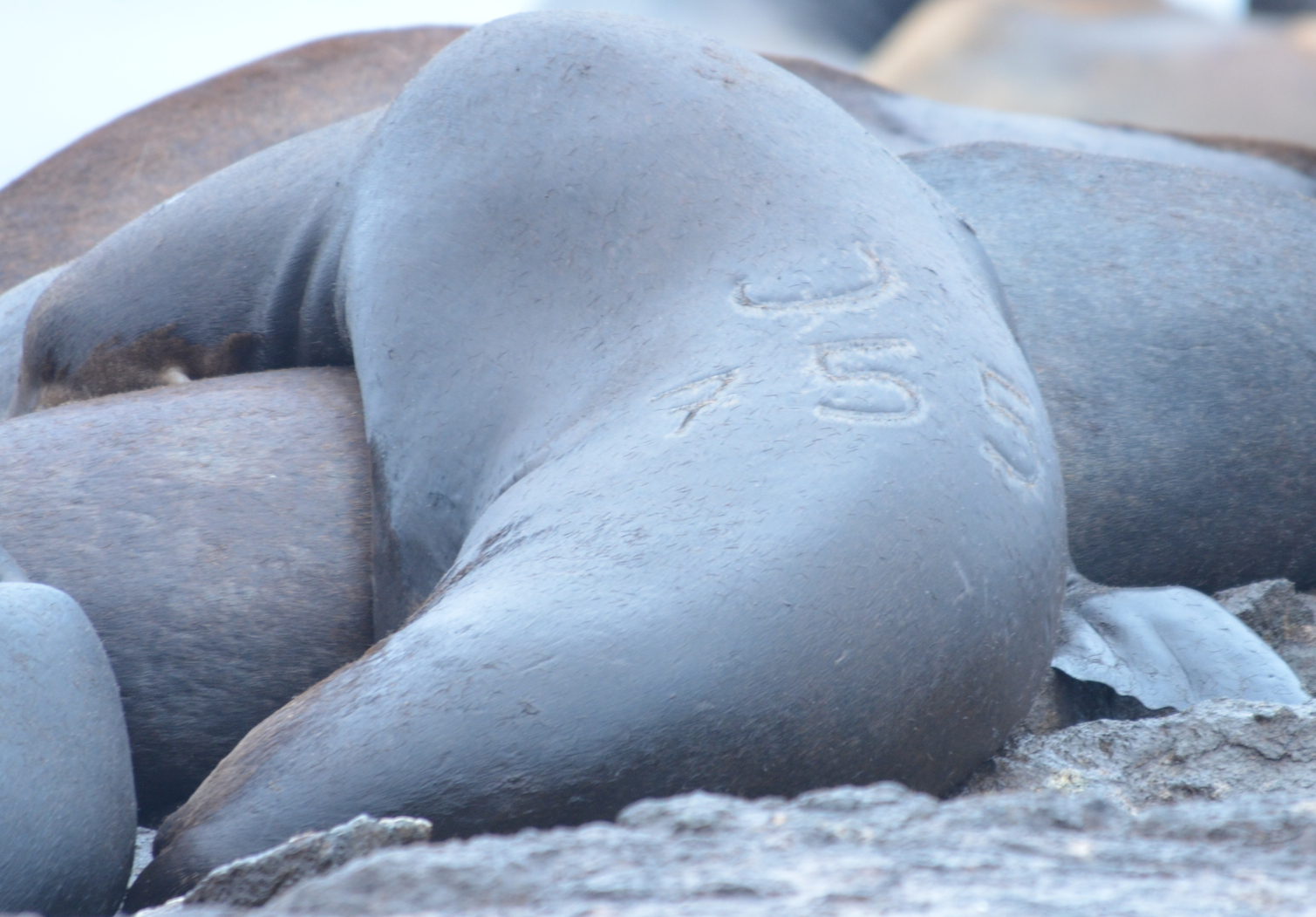
On wet days, it seems as if the sea lions spend more time in the water although there are pockets of Californians (on the cairns, for example) that stayed put, hauled out all day. The rock-climbers also stayed where they were (up by the heli-pad), some for a couple of days. I did see one “new” (to me) brand today, California Sea Lion ‘U755’ from the Columbia River area. There was also a “necklaced Stellers Sea Lion on the rocks by the energy building today. That rock is quite popular with Stellers which surprising due to its proximity to the activity.

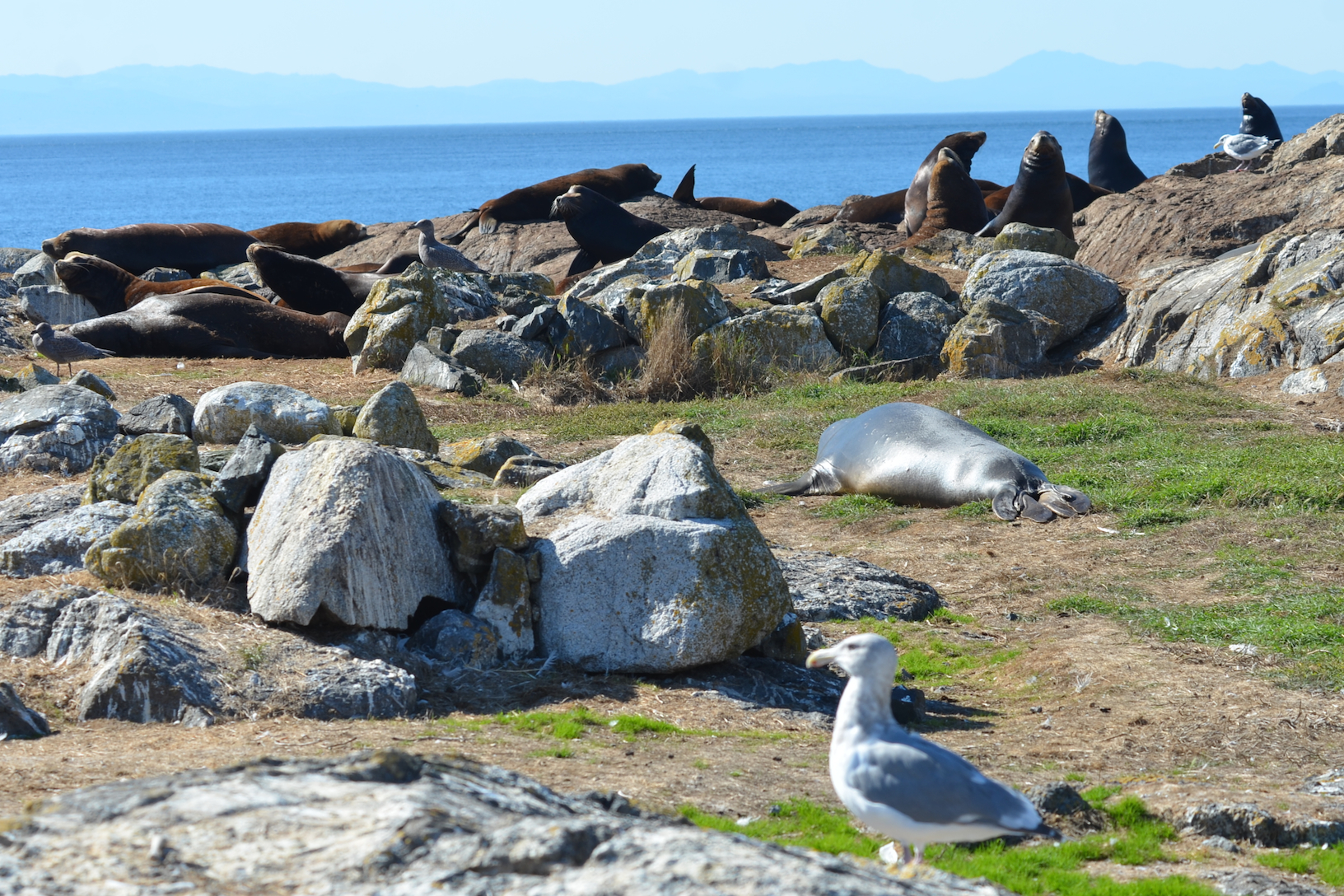
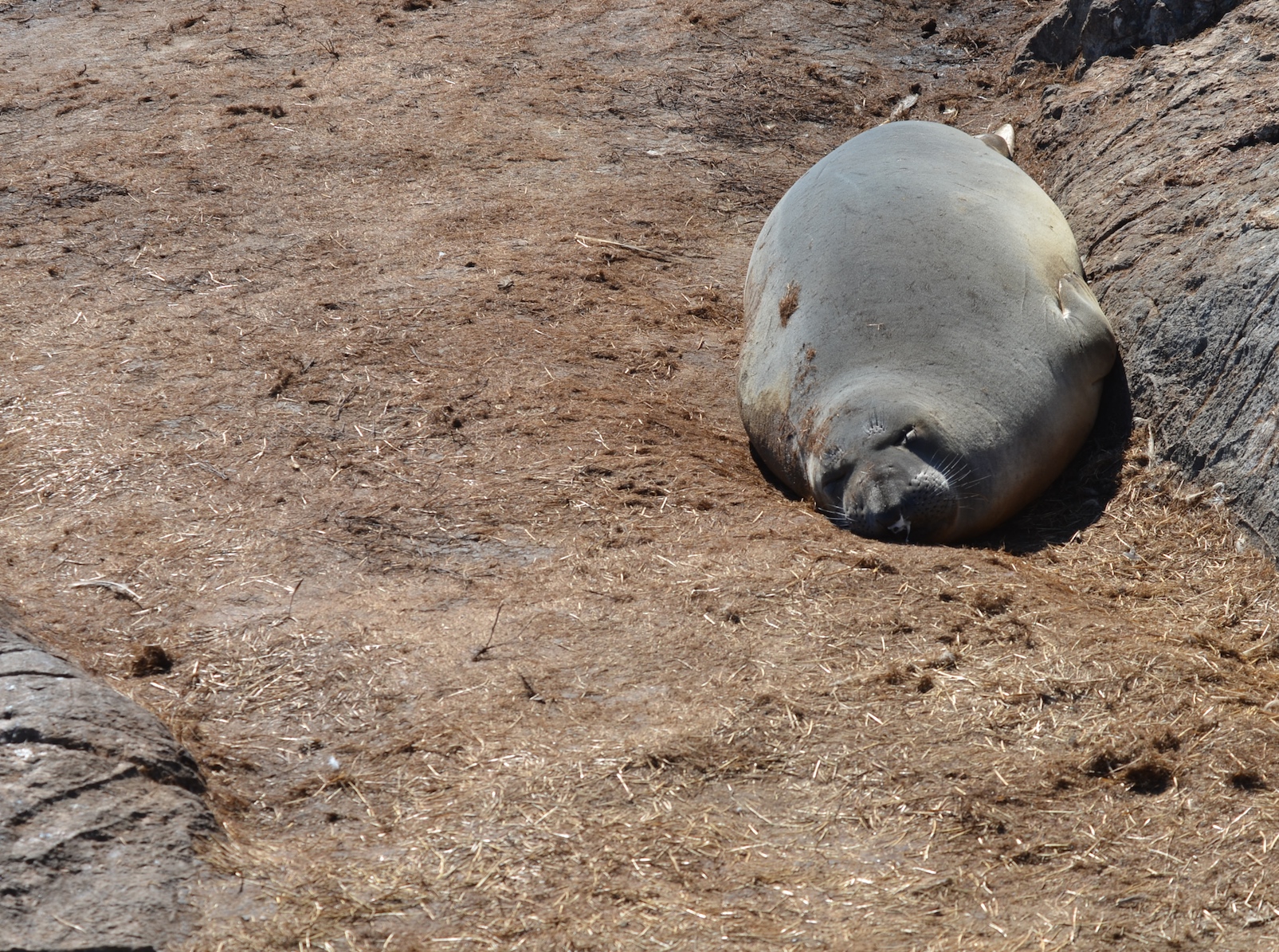
Six young Northern Elephant Seals were ‘hanging out’, tussling in the water by the jetty all day today.

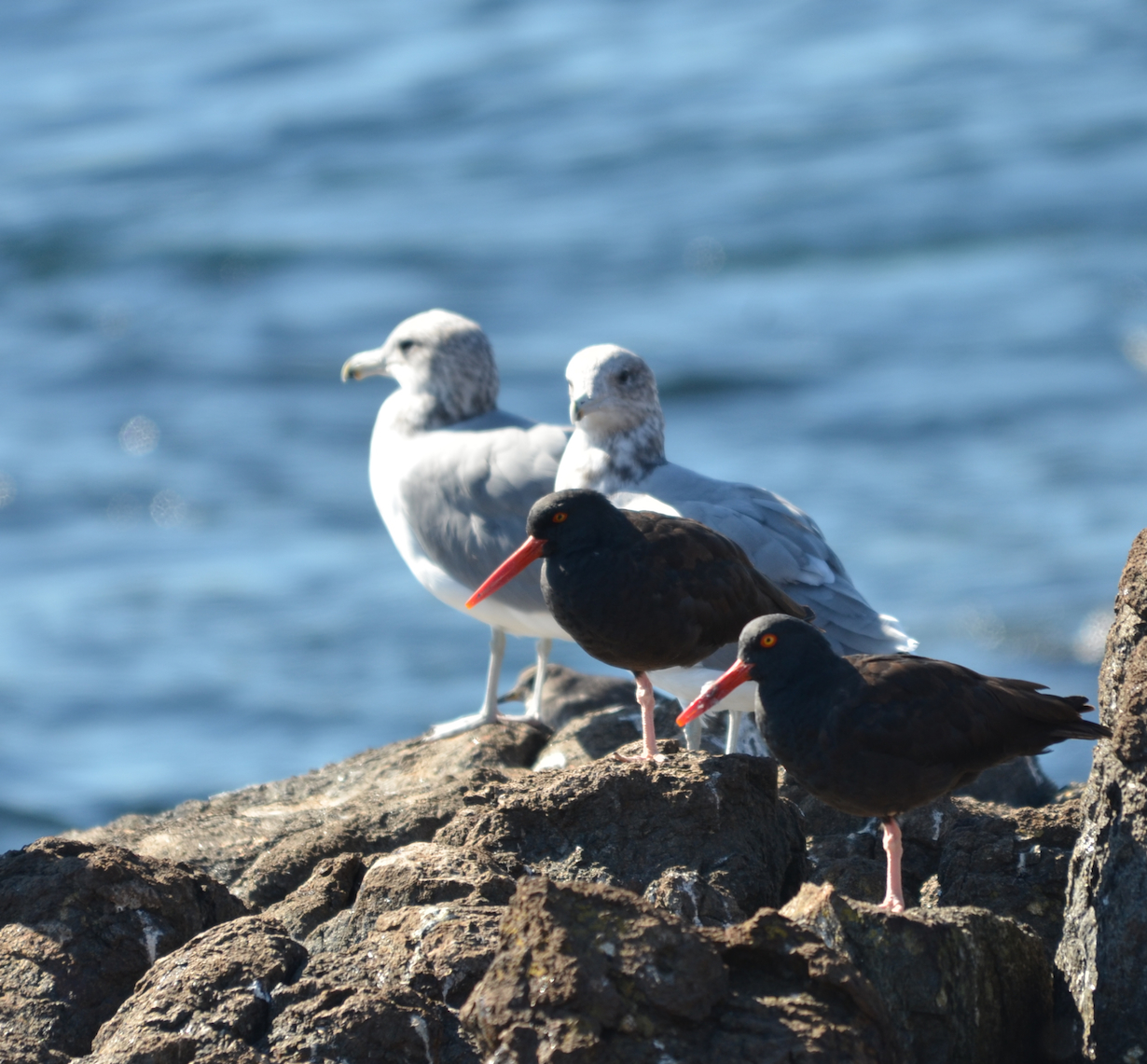
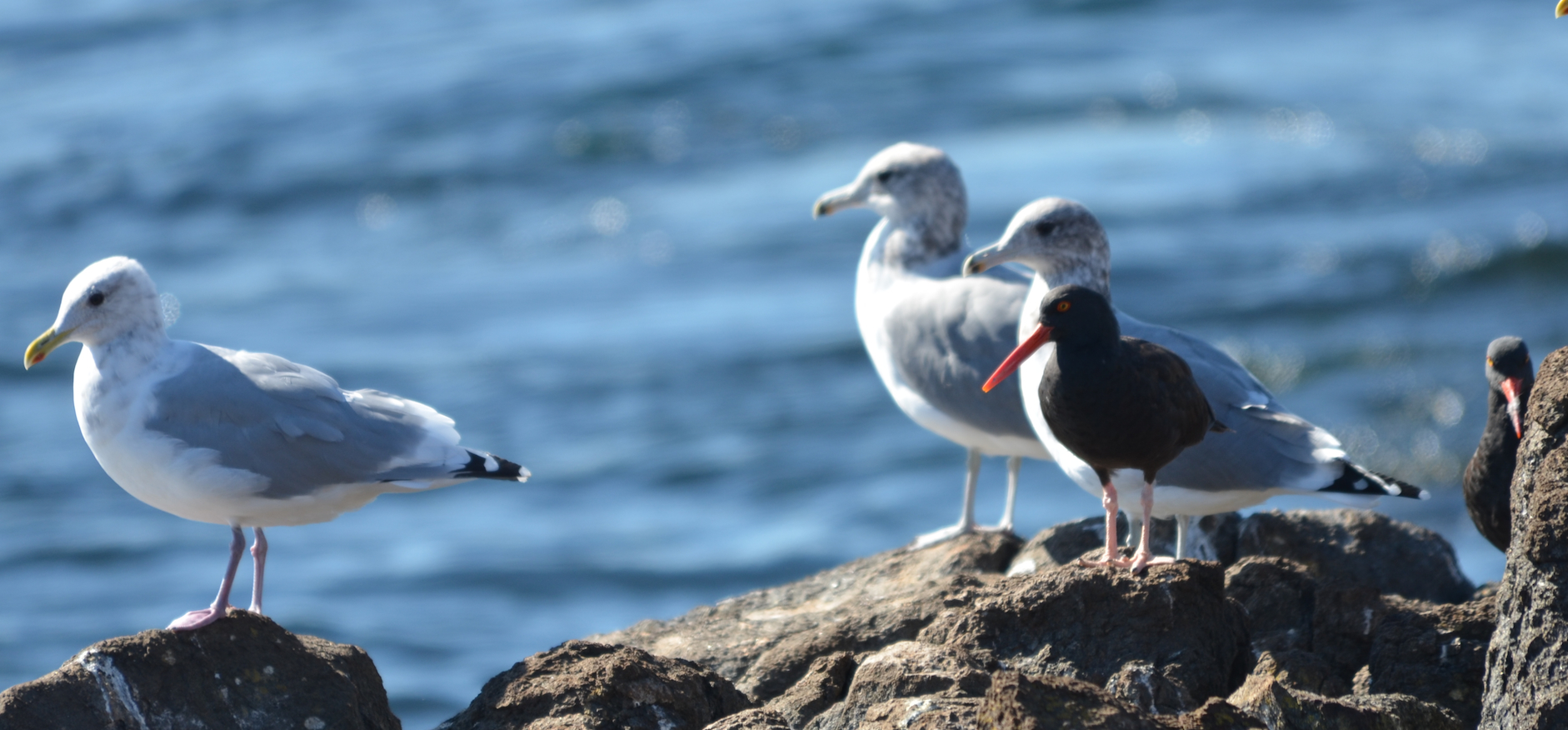
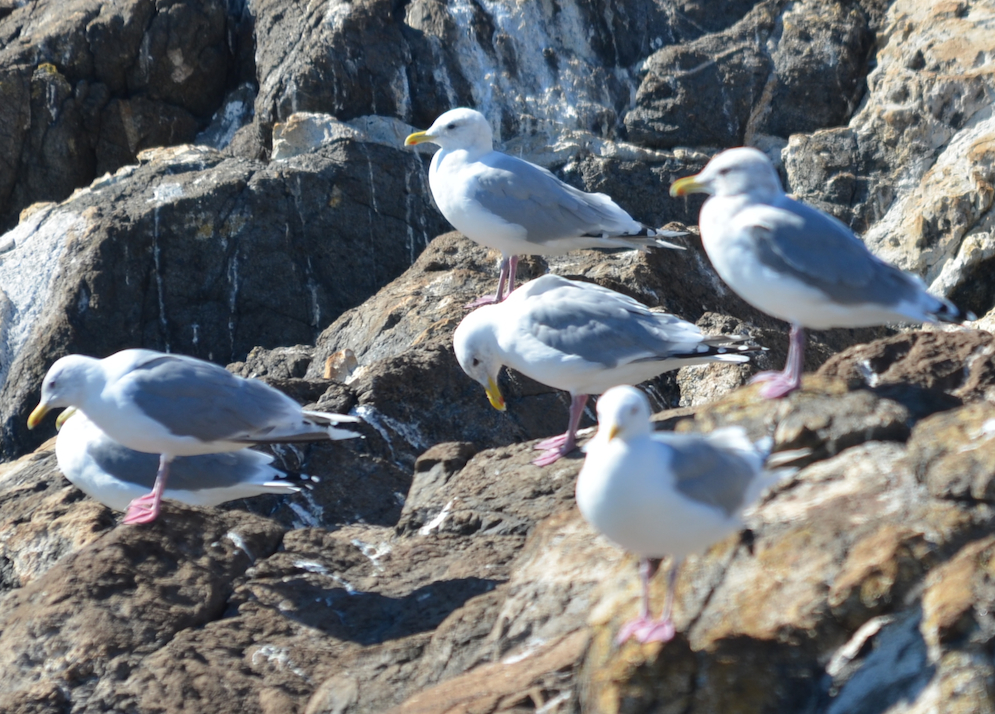
Salmon continue to pass through, as observed in sea lion kills throughout the area. The Glaucous-winged Gulls and Thayers Gulls continue to scavenge at the surface during the kills and in the mixed species feeding flocks where diving birds force forage fish balls up to the surface. Humpback Whales continue to forage adjacent to the protected area. The Humpback out by Rosedale Reef today is an extremely large one (probably a female). It spends very little time at the surface with dive times averaging greater than 10 minutes

California Sea Lion with brand U755. The U is also a C and indicates the animal was branded as a weaner near the Columbia River.

California Sea Lion with brand U755. The U is also a C and indicates the animal was branded as a weaner near the Columbia River.

and sometimes only one or two blows. They are tremendously high, straight blows.

More and more Double Crested Cormorants arrive daily raising the total number of cormorants using the protected area to forage and roost. The adult Bald Eagle returns each morning and worries the gulls and cormorants.
Chores are routine and it is really great to have company.

Giving Thanks.

The morning was calm and mostly clear with very light winds (<5 knots) from the southeast. The wind picked up a little in the afternoon and switched to north-northeast by evening. The barometer peaked at 1020 hPA mid-day after rising quickly from yesterday’s low of almost 995. As the sun sets, the barometer is falling almost as fast as it rose and the forecast has a strong wind warning in effect. The forecast also calls for clouds and periods of rain on Monday along with the wind.

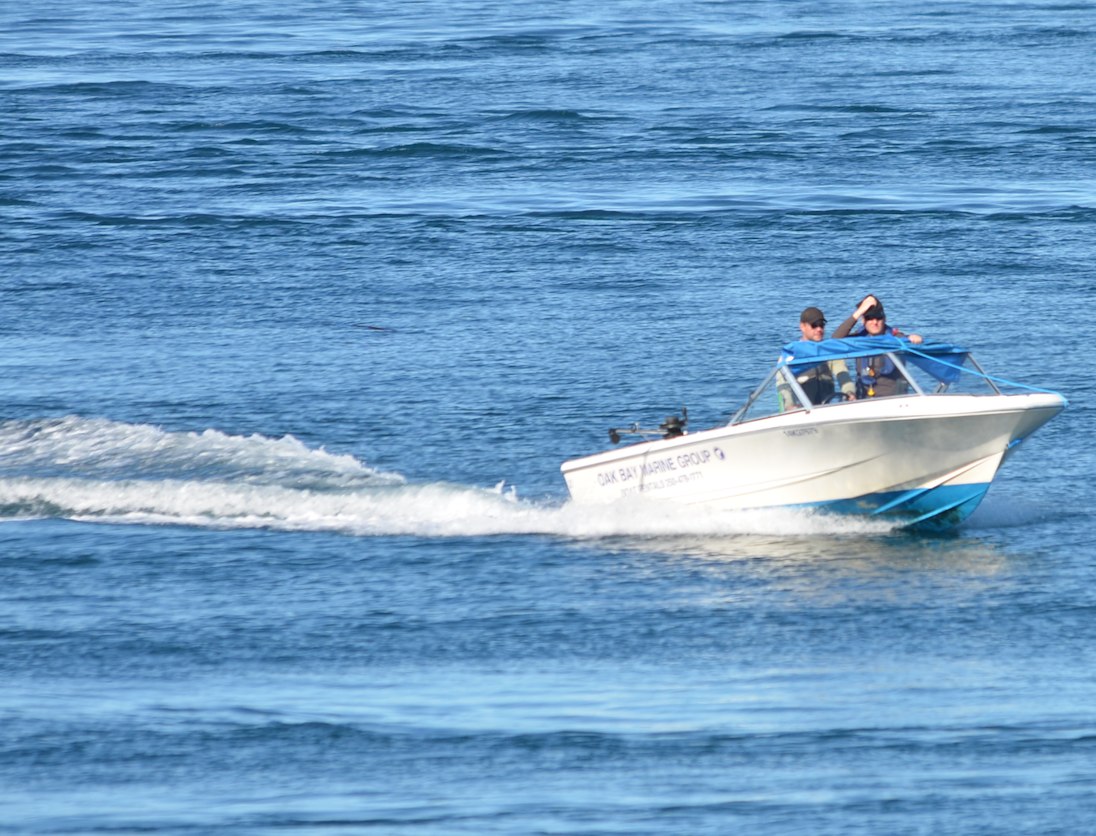
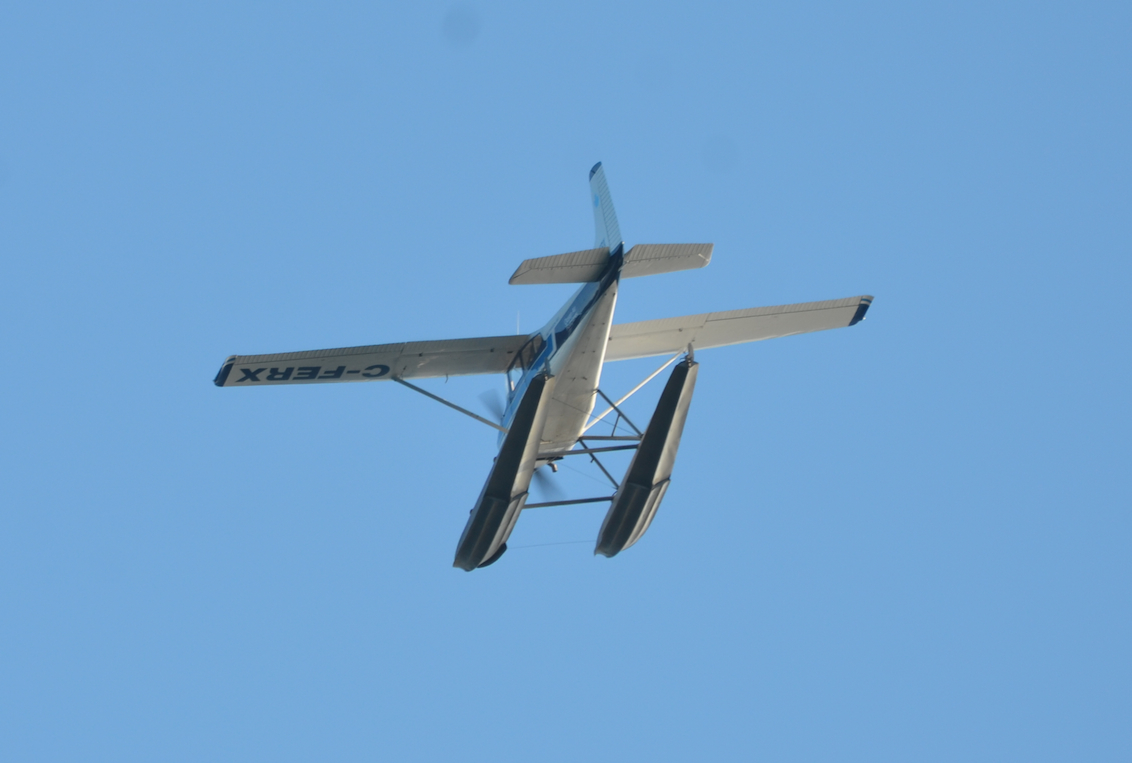
Five whale watching vessels were observed in the protected area. There may have been more when I went ashore for a few hours. Four pleasure craft were observed in reserve. One rental boat was observed speeding in reserve on the south side but stopped just after they were spotted and left the area slowly and carefully. There was one over-flight observed, it looked like a fisheries patrol vessel and they were high, probably one thousand feet.

One very large Humpback Whale was blowing near Rosedale Reef in the morning and there was some whale activity near West Rock in the afternoon, but unable to identify the species. Whale watching vessels were aggregating there.

The adult Bald Eagle was back on North Rock today and I counted 95 cormorants in the water just after a flock of gulls flew past alerting the presence of the eagle. As the salmon rivers start to be less busy there will be more and more eagles.

Processing some of the photos taken earlier in the fall brought to light a few showing a very young (still black) Stellers Sea Lion on Middle Rock. That might be a new record.

Red-winged Blackbirds moved through Great Race today and as in the spring they landed on the tower before heading south. There were seven on them and they may have come down to ground but I was busy and didn’t see them.

My husband is here for Thanksgiving and I am thankful

.

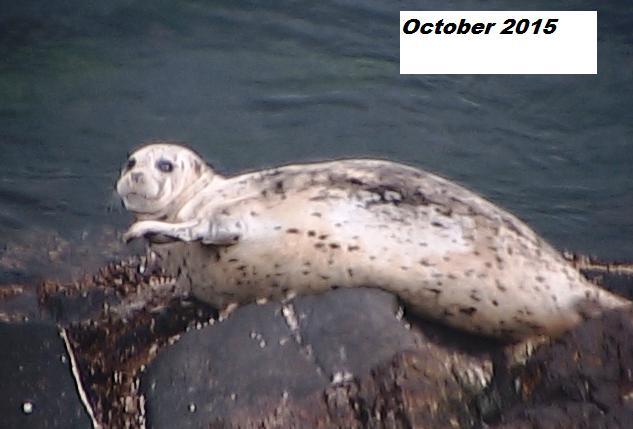
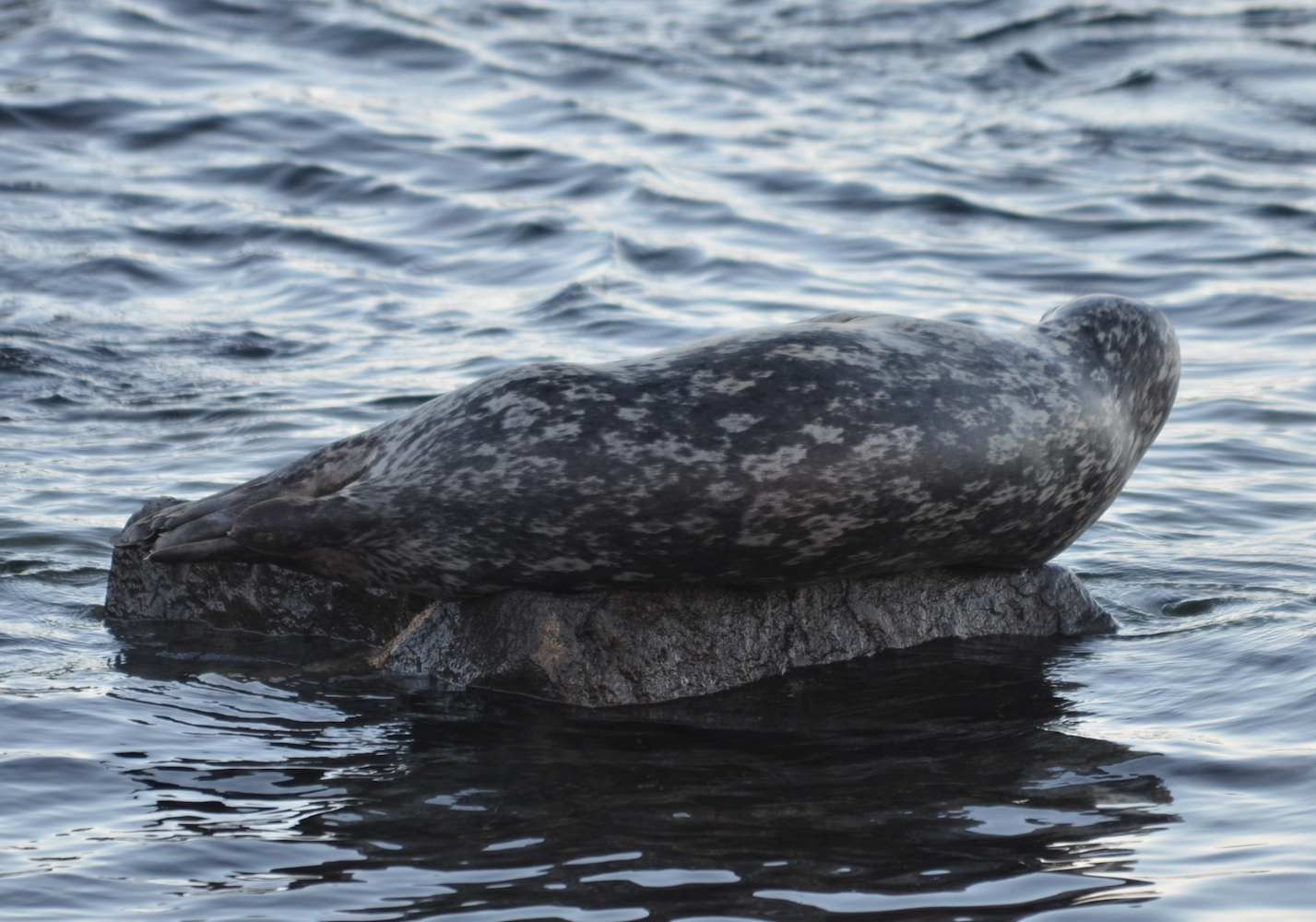
6-spot the Harbour seal Observed at RR since 2008

sixspot-harbourseal

6-spot the harbour seal observed by Pam Birley on the rock by the jetty October 9, 2015

A record for long term observation has occurred with Pam Birley of Lesteshiire England observing over a period of 7 years a certain harbour seal she named 6-spot because of the distinctive markings. Oddly enough she often gets an image of it from the remote camera 5 in the fall as it lies on the same flat rock near the Jetty.  You can see some of her other observations of it at https://www.racerocks.ca/pam-birley-photo-records/

Pam sent the picture with the note: “Hi Garry,  YES….it is 6-spot !!!!    I got a good clear view this morning as it lay basking below Cam 5.  Here is a picture. First seen 2008 I believe, that makes it seven years !!!    I love it !!!!    Pam


Drizzle, Fog and Steaming Sea Lions

It was a wet, drizzly, foggy day at Race Rocks but very calm. For most of the morning, the wind varied little from  east northeast at less than 5 knots. It only picked up to 10 – 15 knots as it swung around to north northeast in the evening. The forecast for Thursday is similar and while winds are expected to rise to 25- 35 knots southeast on Friday. Periods of rain, cloud and showers are on the horizon in spite of the barometer rising (overall trend) since late Monday.

It was a quiet day on the vessel observation front and only three whale watching vessels were noted in reserve. One ‘sports’ fishing vessel came through at very low speed, well positioned away from the animals.

There was some cetacean activity noted during the day as visibility increased to over 5 nautical miles. This included two Humpback Whales feeding near Rosedale Reef just outside reserve to the south, a Minke Whale just east of North Rock and Dall’s Porpoise to the southwest.

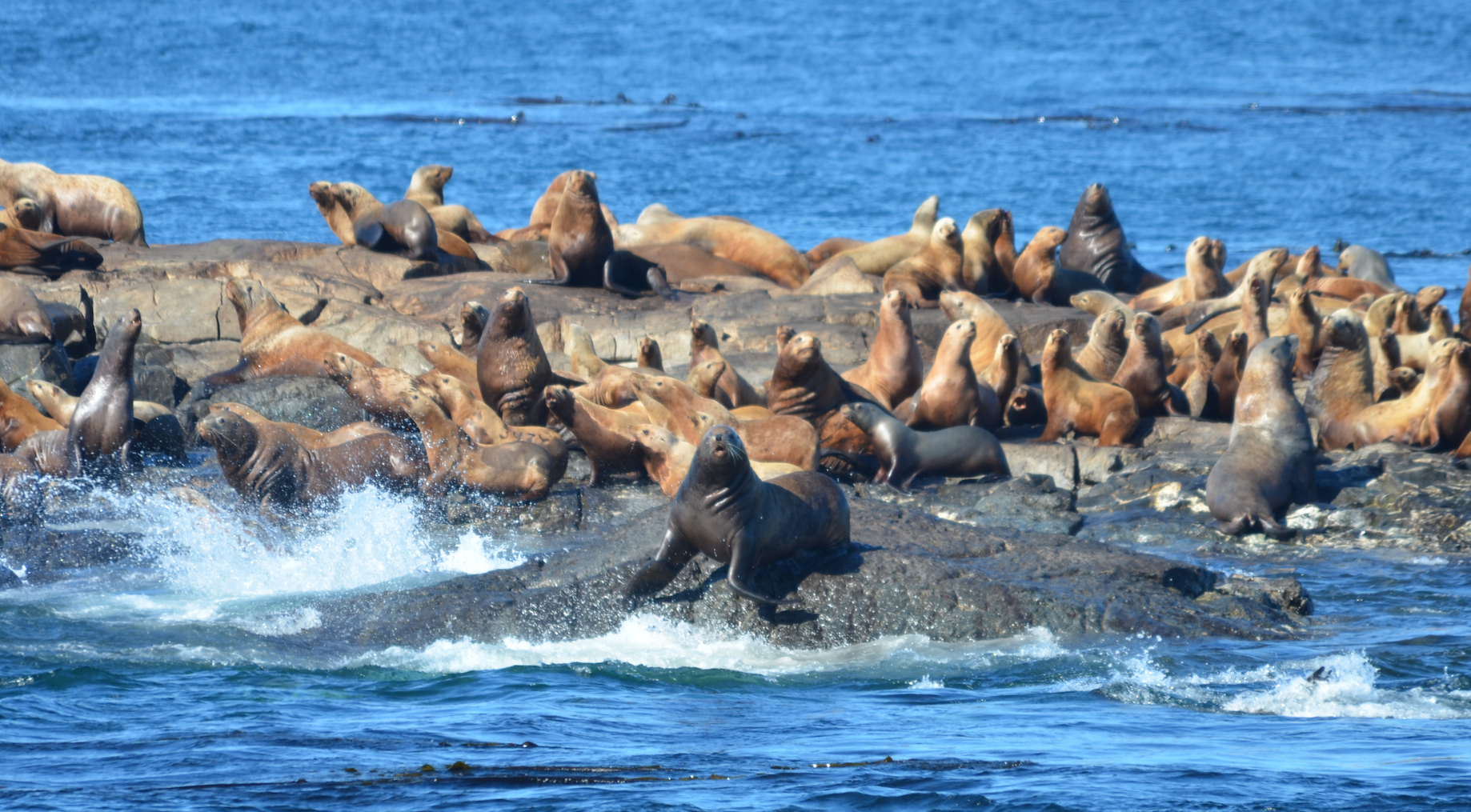
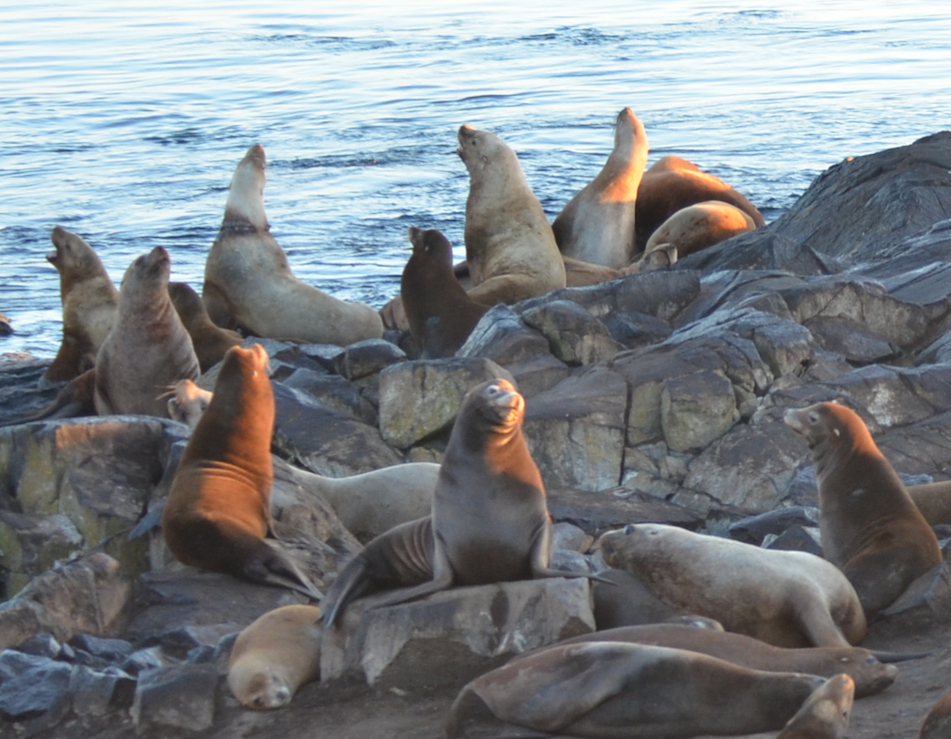
On Great Race, the Sea Lions were steaming today as air temperature hovered around 12 degrees C. and the cooling rain was evaporated off. Part of their haul-out at this time of year is a physiological need to warm their skin during the moulting process, thus the tidy rows of animals pressed against each other and the piling on top of each other to share their body heat. Some California Sea Lions have taken to rock climbing these last few days. They are well established above the boathouse now and at the base of the cliff under camera 5, so the logical (to them) extension was to move further up and there were three of them up by the helicopter pad today. I suspect that they will really like the heli-pad, if they make it that far.

There were six Northern Elephant Seals hanging out in the water around the jetty today.

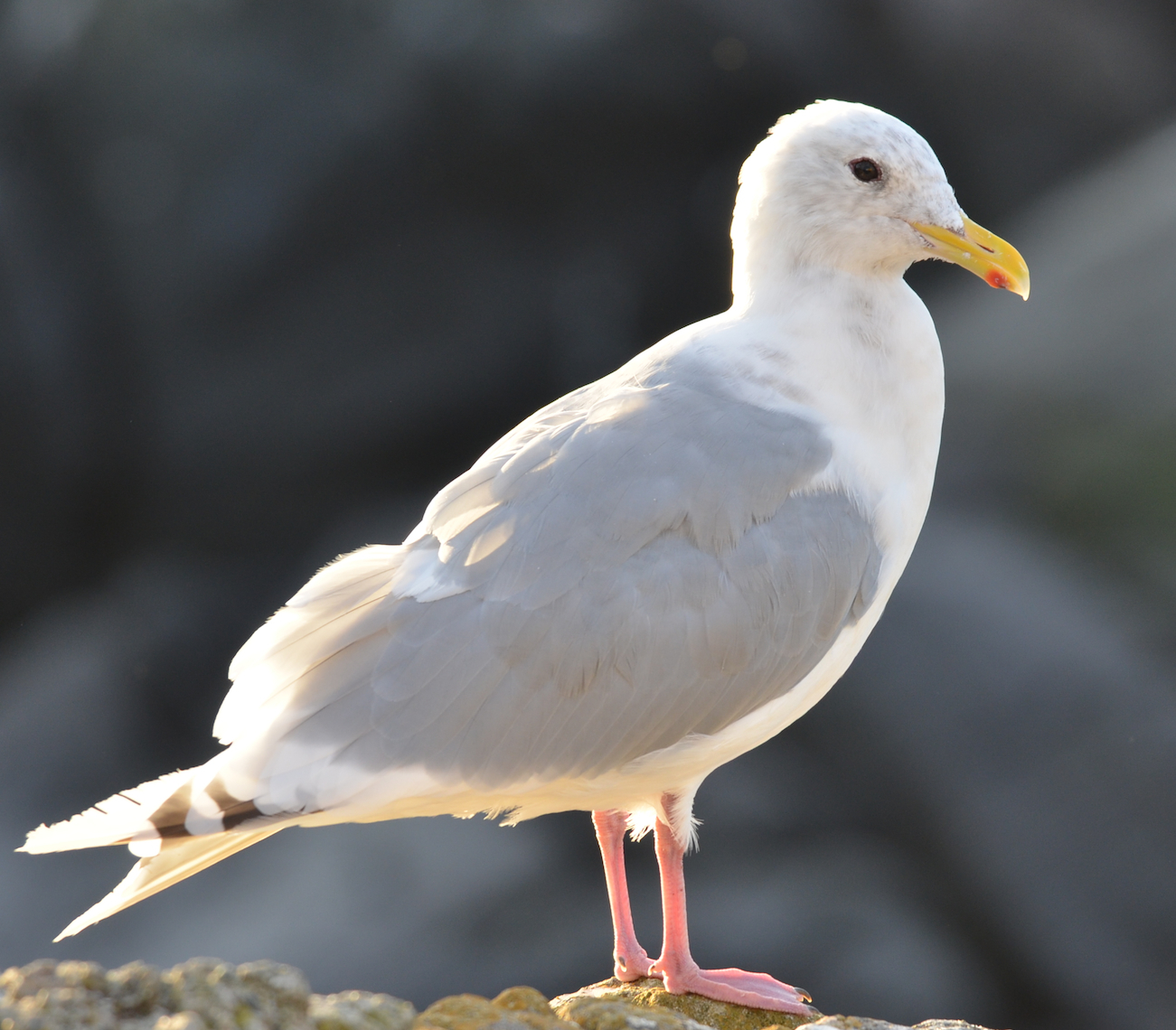
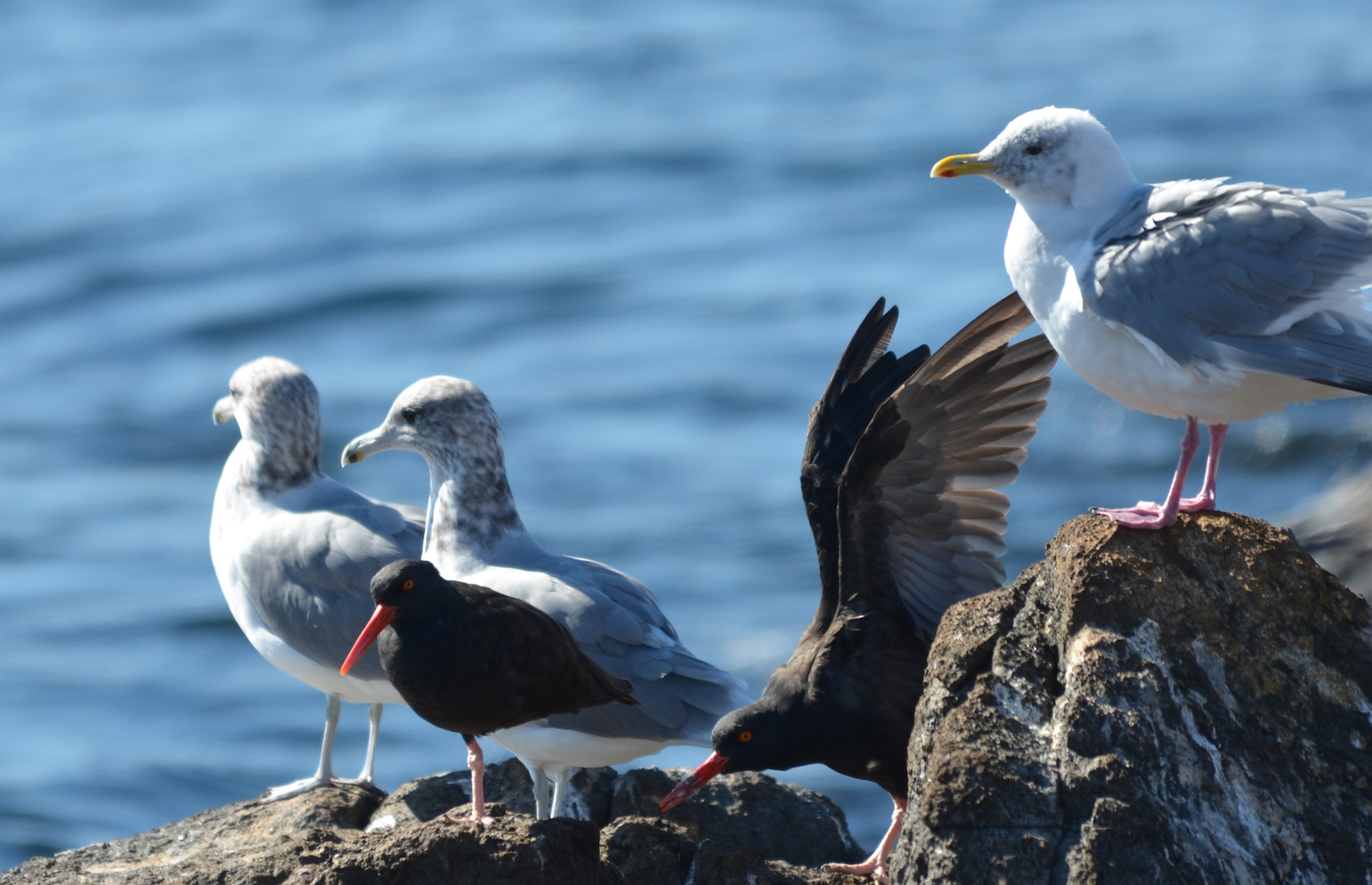
Adult Glaucous-winged Gulls and this years young, continue to frequent their nesting territories much to my surprise. I have seen them chase off Thayers Gulls. The “visiting” gulls roost in peripheral areas away from the nest sites. A family of four Canada Geese continue to make the island their home.

Chores were as usual and there were no visitors.

Noticeably Darker Day

Today was more of a fall day with cooler temperatures and a threat of rain in the air. Light levels were way down too. The barometer rose to 1014 hPA from a low of 1010 yesterday and it has just started to fall again. Rain and east winds of up to 25 knots are predicted to bring tomorrow’s forecasted rain, with a cool, wet outlook for the week ahead.

Thirteen visits to the protected area, by whale watching vessels, were observed today. Only one pleasure craft was noted.

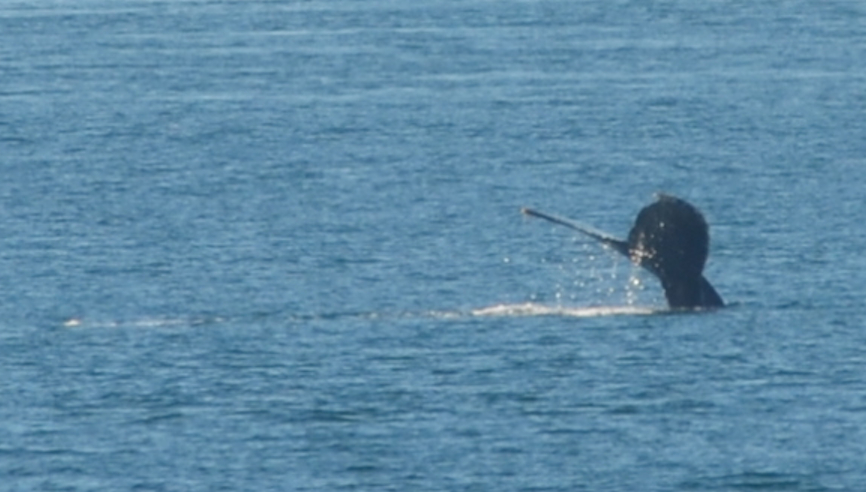
There was a lot of cetacean action in and around Race Rocks for most of the day. It started with two big, bull, Biggs Killer Whales (Transients), travelling in from the west on the Rosedale side. They were later spotted in Race Passage and not long after an adult female Killer Whale was seen well inside the reserve by Turbine Rock. There were two Humpback Whales, one feeding just east of Race Rocks that moved west through Race Passage. It had a definite white splotch on the right fluke. The other one was feeding just west and had dark flukes, the same one, I think, that has been around for a while. There was also a Minke Whale feeding just to the south of Race Rocks.

Accumulated solar radiation levels today were less than half of what they have been for the last few days, 150 versus 300 to 350 Langleys and the days are getting noticeably shorter, faster now. Migrant species are moving through the reserve daily with hundreds of Surf Scoters moving through from west to east every day. All three species of cormorants are using the rocks here as roosts now and feeding in the multi-species flocks that surround the reserve with much commotion. This change into autumn not only impacts the biodiversity of the reserve but also has an impact on practical things like power generation.

Solar power has been producing over 90% of the power needed to run everything on the island and that amount will change over the next few months. Right now the shortfall is made up with a diesel generator but the plan is to move to cleaner burning propane in the near future. A great deal of progress has been made in reducing the amount of fuel stored and used here, from the days of the Coast Guard when there were six giant diesel tanks dominated the rock and the generators ran 24/7. A big shout goes out to Pearson College, for both reducing the ecological footprint in terms of CO2 and for reducing the risk of a spill.
Sun-Monday Log: Double Billing Blog

Two more, lovely, sunny days squeezed in with the barometer down at ~ 1010 hPA and dropping. Light southeast wind today and yesterday will switch to variable and east on Thursday and the forecast looks like a change towards showers and southeasters towards the end of the week.

Ten visits by whale-watching vessels were observed in the Ecological Reserve each of the two days being reported. A handful of pleasure craft came through as well and everyone except the same guys who are always in a hurry and one boatful of lucky fishermen, were well behaved. The fishermen were lucky as they must have lost power and were swept over the little reef by Turbine Rock. One was ready with a paddle and the youngest one got the kicker going which got them out of there (eventually). That was exciting, especially for them. Eight kayaks came through the reserve yesterday. The paddlers at the front came through without disturbing any of the animals hauled out. The weakest paddler came by on her own, last. The tide pushed her a bit too close the Middle Rock and the sea lions stampeded. Sometimes it doesn’t take much.

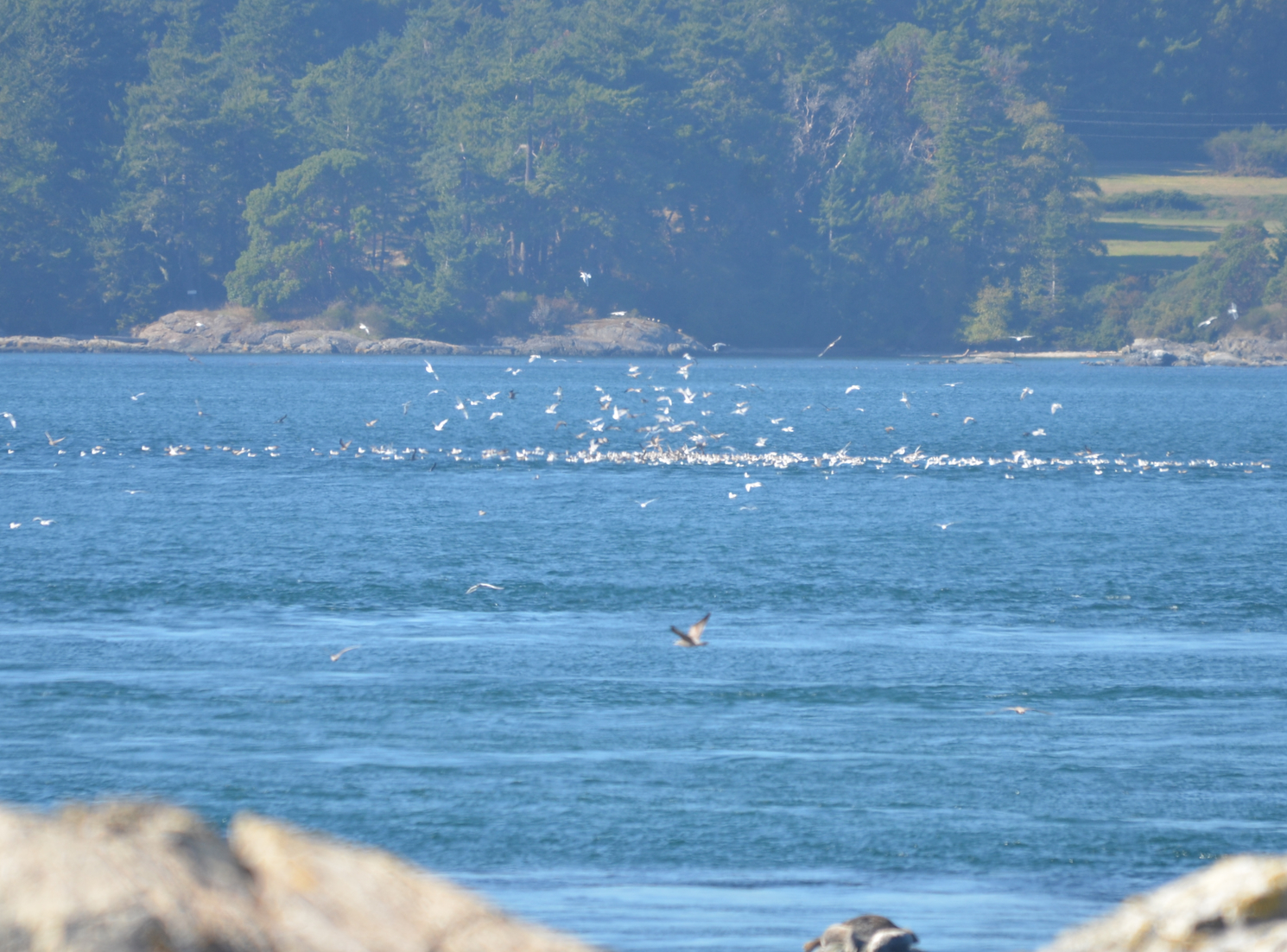
Humpback Whales are feeding close if not in the reserve just about every day now. The individual spotted by the Marine Science students is feeding downstream just to the west of Middle Channel, during ebbing currents. I am curious if it goes down and just orients itself into the flow and filters away. There is a lot of food in the area and large multi-species feeding flocks driven by diving birds such as Common Murres and all three species of cormorants. The gulls, and there are a lot of them, roost on Race Rocks and then rush out to the feeding frenzies which I am assume are either small schooling fish like herring, sand lance or anchovies and/or large zooplankton like krill. These crustaceans are also known as Euphasiids and they look a bit like tiny shrimp with really big eyes. Those are the same sort of treats that Humpback whales like to feed on with their baleen and they use their really big fore flippers that are white on the underside, to herd krill and forage fish.

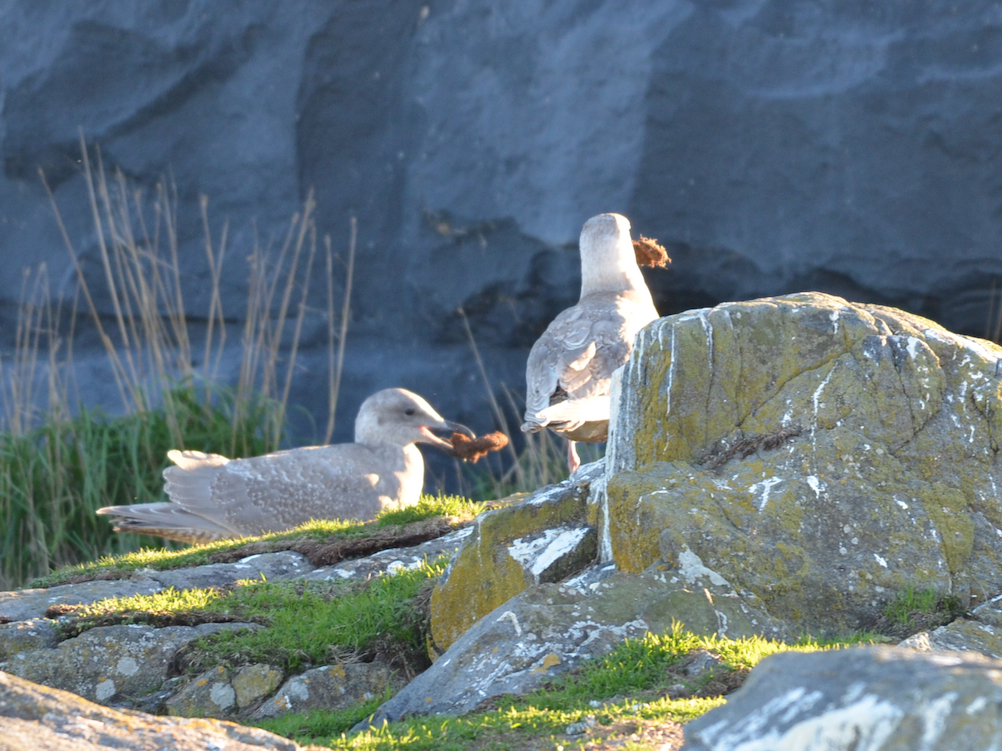
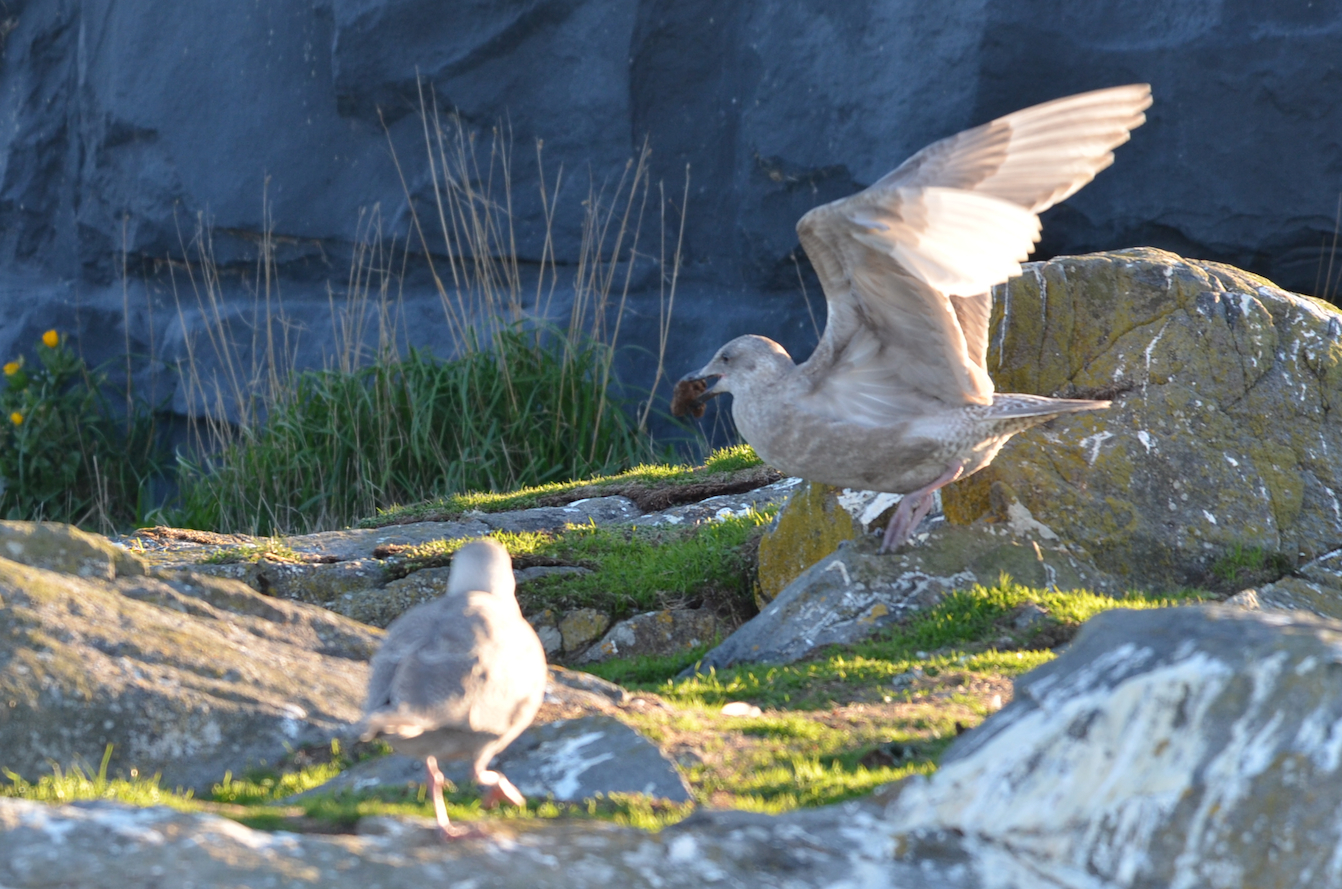
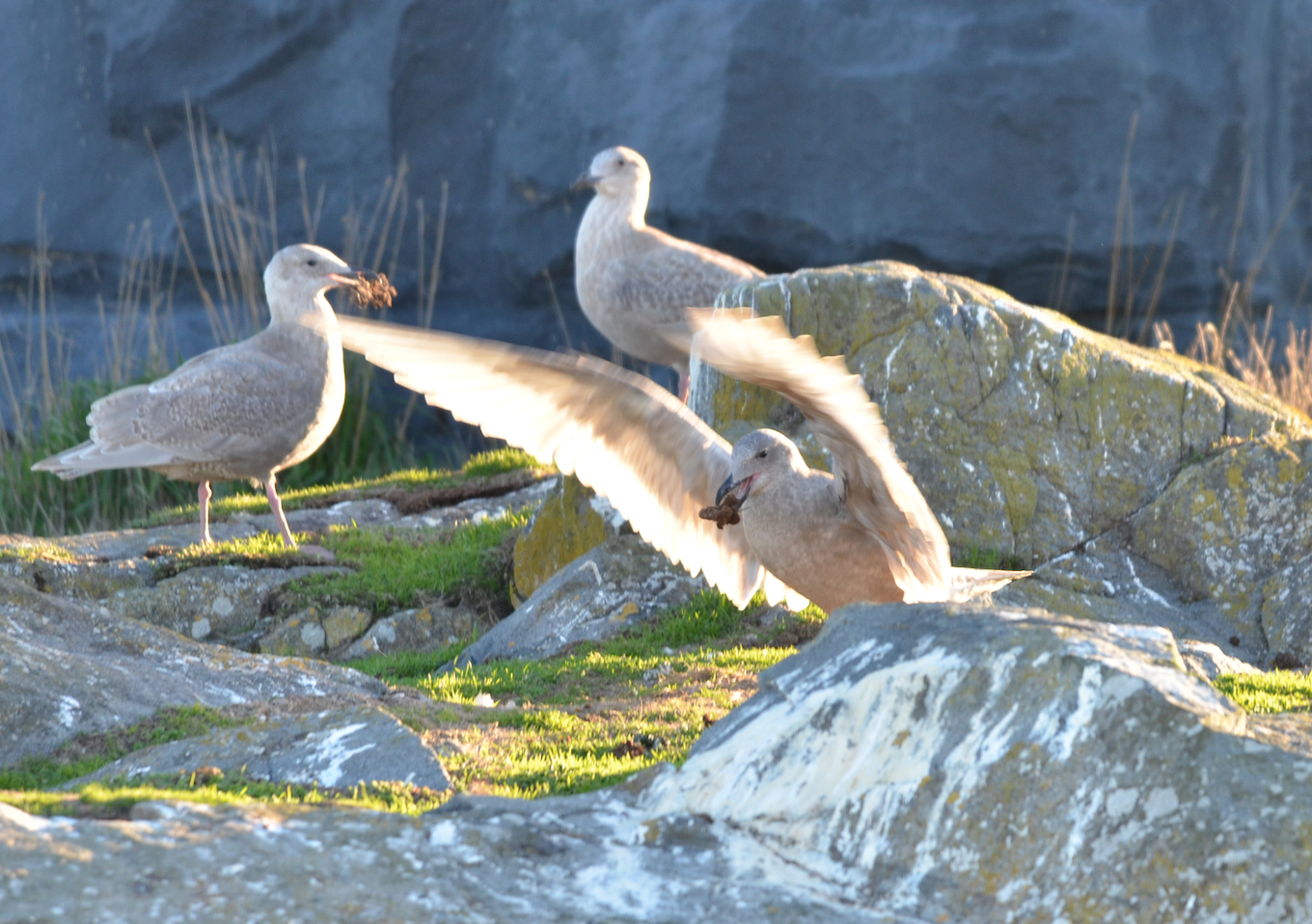
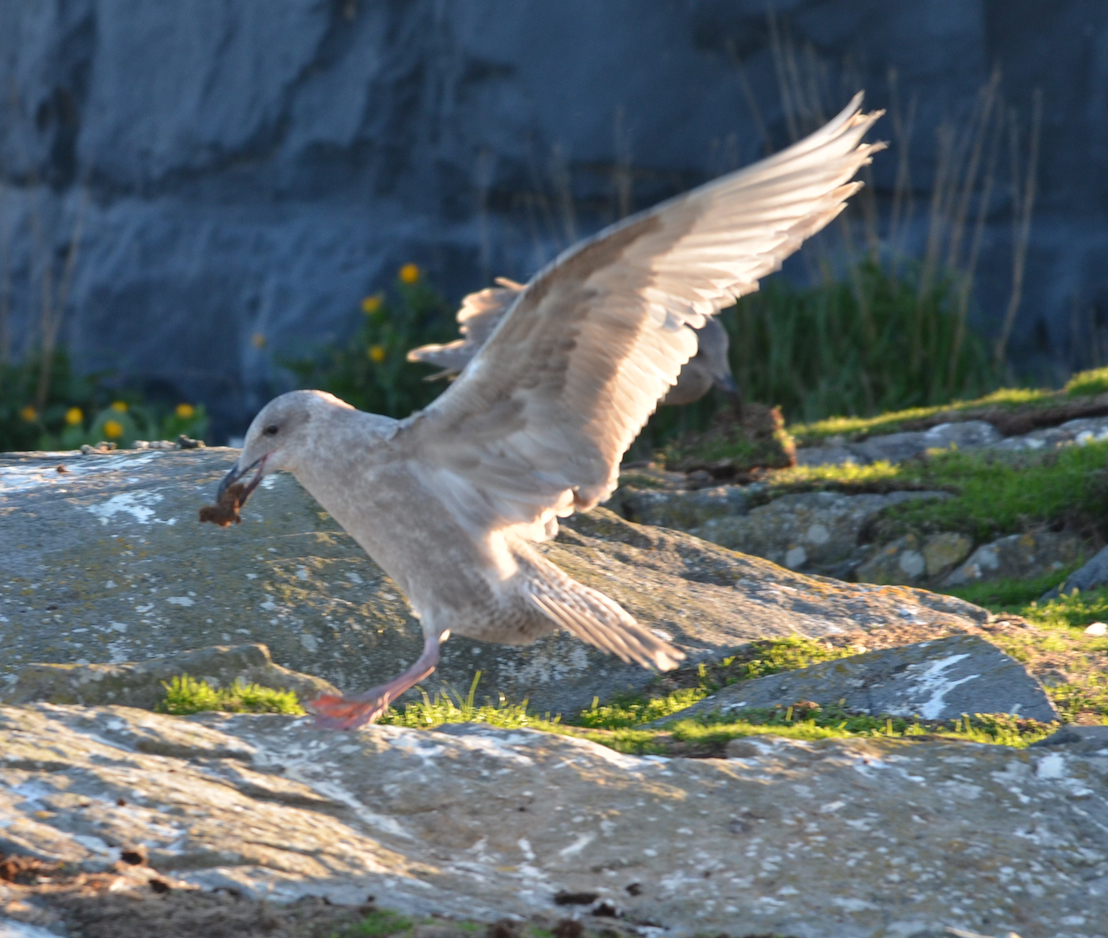
I have come to realize that the Glaucous-winged Gulls are still sitting around on the territories. Something I didn’t notice or understand last year until the spring shift and then I thought that they had just come back from somewhere. The juveniles that were raised here are mostly out foraging but also sometimes ‘hang-out’ where they were raised and also do a fait bit of begging from their parents. This week a lot of them have been practicing picking objects in their bills, flying with them and dropping them. Not sure if they are working on their aim but have noticed rocks, chunks of wood and bark and clumps of vegetation on the walkways. Yesterday morning I found a rock on the roof of the energy building and when I looked around saw the damage done to one of the solar panels.
Other birds seem a lot more refined. It is so nice to see the Harlequin Ducks back again, they are a favourite of mine. More and more Surf Scoters are flying through from west to east and it seems that fall is in the air.
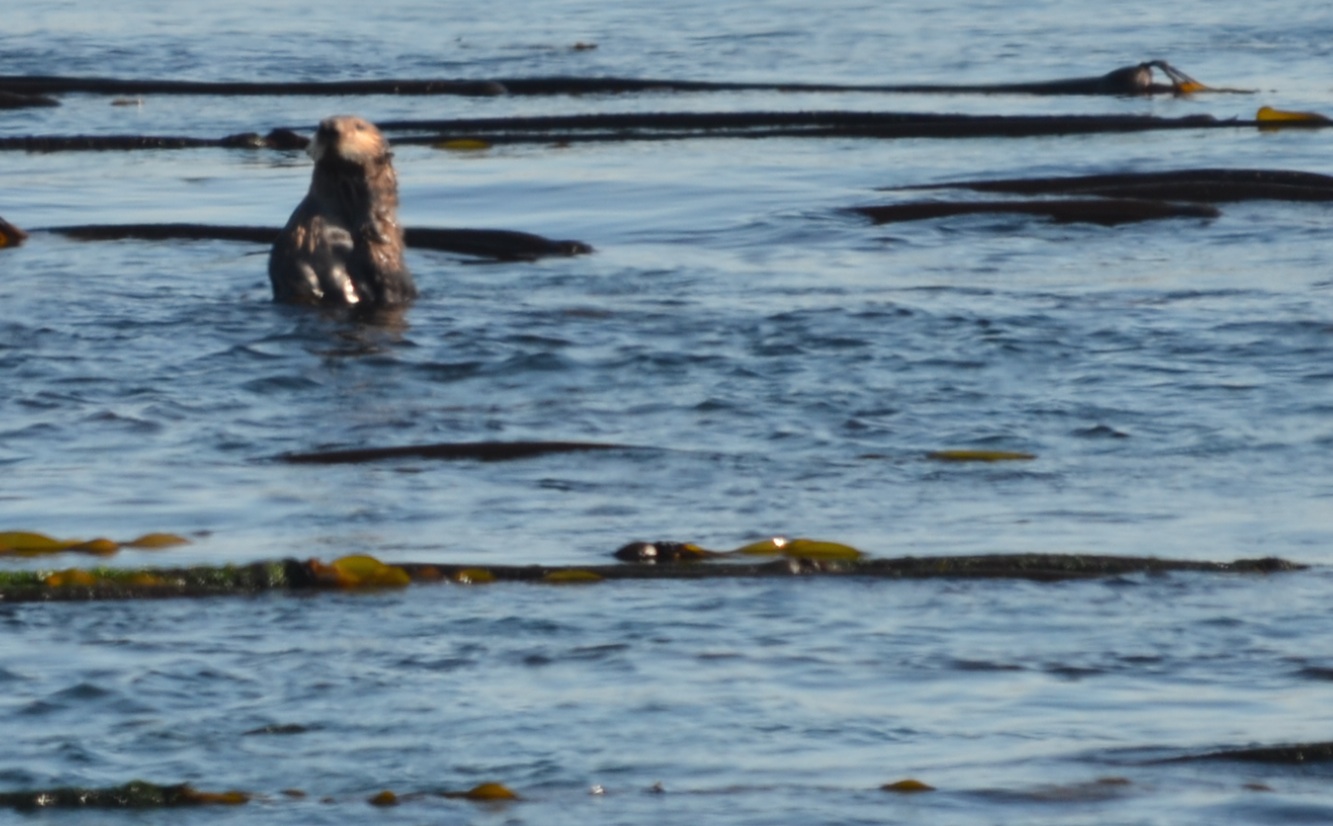
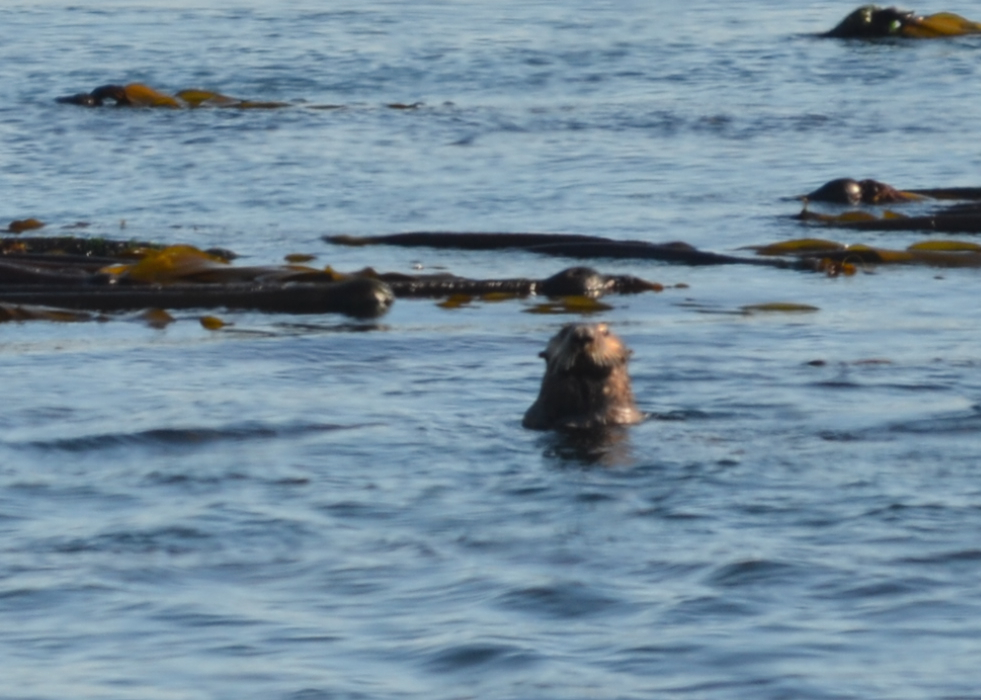
 

Chores were routine both days and there were no visitors.


Hotel California

It was a glorious October day with sunshine and light southeast winds. The barometer slid down to almost 1015 hPA but the forecast looks good with more light winds and sunshine.

Only two whale watching tour boats were observed visiting the Ecological Reserve today. Several ‘pleasure’ craft came through and only one speeder was observed, two young men in a rental boat.

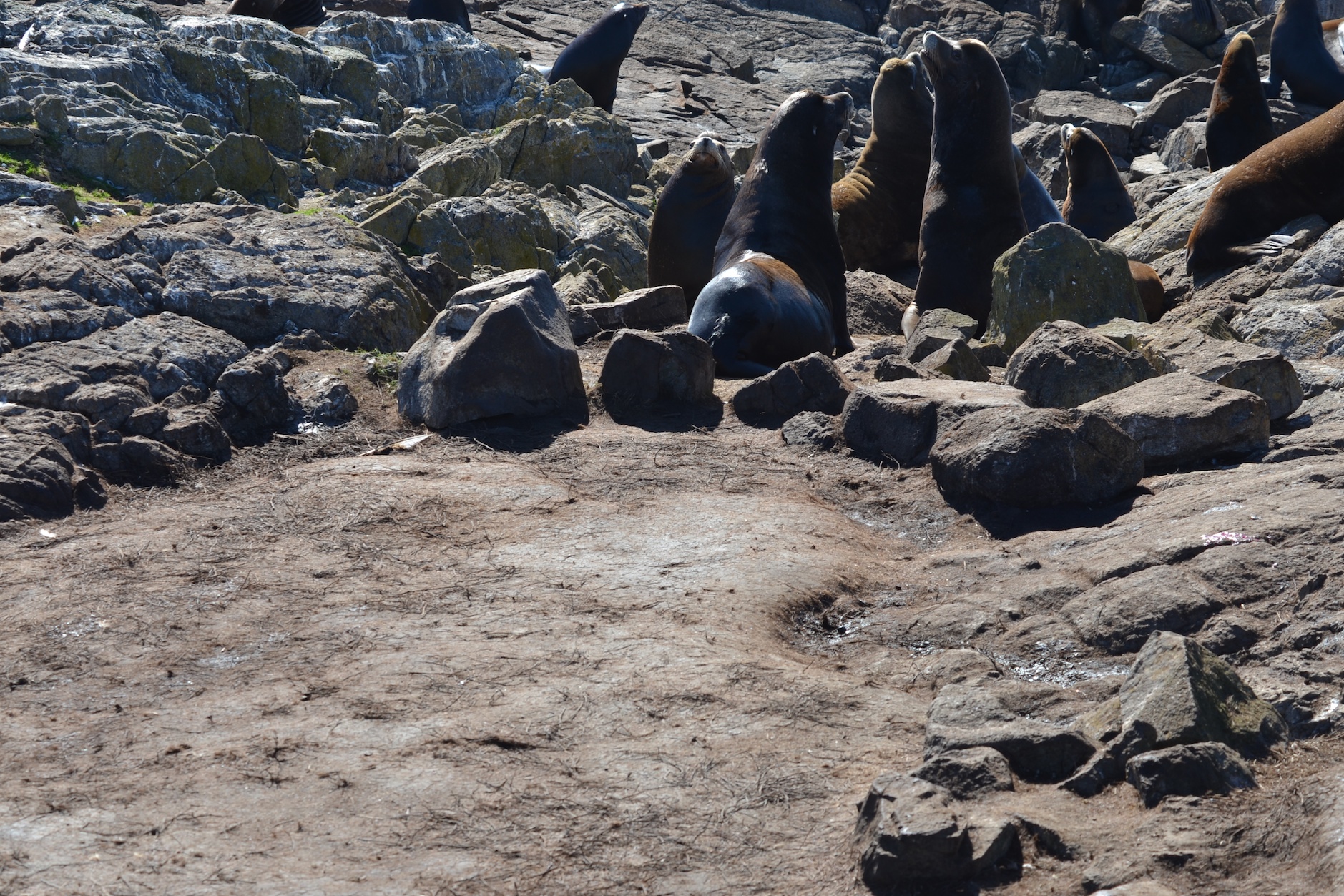
There are more and more California Sea Lions and they are damaging the burial cairns and the area above the boat shed where the rare plants used to live. Where ever they haul-out for more than a few days becomes quickly burnt looking and devoid of vegetation. Today they knocked down a big boulder from above the boat house onto the walkway. The Canada Geese have returned as well and are stubborn about staying so it feels like an invasion. The Stellers Sea Lion numbers are staying steady and individually they seem much wiser and wilder than the California party lions. The Northern Elephant Seals sleep amongst the Californians and are much less reactive than either of the two sea lion species.

Chores were all about fighting entropy today. The sunshine was a bonus for power generation and making fresh water. There were no visitors.

Marine Mammals Small and Large

Early fog crept over from the American side, obliterating visibility for a few hours this morning but then it was cleared by west winds of 10 – 20 knots. The wind was constant, as was the sunshine for the rest of the day. The barometer started rising last night and peaked at 1014 hPa before starting to drop again this afternoon. Tomorrow’s forecast includes strong wind warnings for afternoon westerlies of 15 – 25 knots, it is supposed to be mainly sunny while Friday has a 60% chance of showers.

There was a near-miss boating incident this morning just after the fog cleared. During the full ebb current, of close to six knots, a small rough looking commercial fishing vessel with lots of bumpers out and a ‘scotchman’ astern went flying through Middle Channel. Just as it arrived at the roughest section where the standing waves were standing high, it turned abruptly at right angles to the current. It rolled and seemed to take a long time to right itself. Then as I watched from the roof of the energy building, it lurched around,  finally straightening out like a drunken sailor making its way westward. Six whale watching vessels were noted, working in the Race Rocks Ecological Reserve today, all very professional, heeding sustainability methods and best practices except for one orange zodiac that was in a hurry to leave when the Navy arrived on scene just west of the reserve.

A Humpback Whale was feeding just to the west of the reserve all afternoon and the students were able to observe it through the spotting scope and time the dives. Some of them managed to sketch the blow shape in their field journals and a few even caught glimpses of the flukes. They also had a chance to observe the sea otter and that was a highlight amidst the roar and din of the ubiquitous sea lions and their stinky ways. Two young male Northern Elephant Seals took advantage of the chaos when the students were coming ashore to sneak up the ramp and they put on a good demonstration of elephant seal wrestling and jousting in between their sudden naps.

The field trip was the third marine science class to visit in a week and it was really a treat to work with such wonderful young people from all over the world.

Chores were routine in addition to end of the month routines.

Sumo-sized Sea Lions

It was a copycat kind of day, weather wise, the same as yesterday and the day before. Calm, very light winds and clears skies. The barometer continued the drop started on Sunday and is now below 1012 hPa again. The forecast is calling for a switch to light winds west 10 -1 5 and a mix of sun and cloud until Friday when showers are expected..

Whale watching traffic in the Ecological Reserve was fairly light with only eight observed visits. All the operators did really well today. They slowed on entry, went with the current, drove in a responsible way that respected the protected area and saved speeding up until they were clear of the reserve. This is the sort of cooperative behavior that is the norm for sustainable operations in reserve. Observations were made of “sports” fishers hauling in lingcod and rockfish in the Race Rocks Rockfish Conservation area.

Although there may have been more elsewhere, there was no lack of whale action around Race Rocks today. Three Biggs Killer Whales were spotted travelling from east to west through Race Passage in the morning and a Humpback Whale went the other way, in the afternoon, spending some time feeding close to North Rocks. There large multi-species feeding flocks in the same area. Perhaps there are balls of forage fish there.

I saw a large kelp raft, first of the season, sweeping out to sea with the ebbing tide today. This annual kelp becomes more and more prevalent in the tidelines as autumn progresses and the winter storms will remove most of it before spring. It is a great carbon sink that fixes large amounts of carbon, which will eventually become entombed on the bottom. Not all of it goes out to sea and sinks though. Kelp that lands on shore is a key part of near shore food webs relying on this large volume of rotting biomass to fuel new generations of shore spawners and out going young salmon.

Chores were routine again and the sunshine is allowing for recovery of freshwater lost earlier in the month. The level is almost back up to where it was on September 5th. There were no visitors.