Watching the Watchers

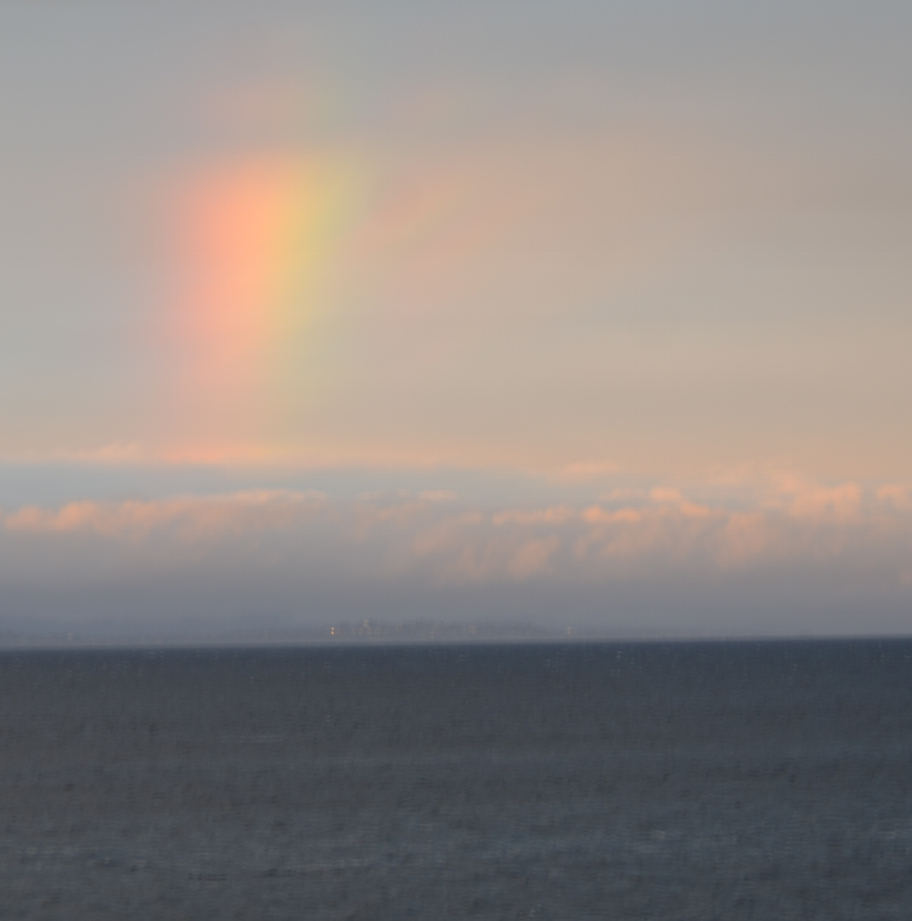
Morning broke revealing thick fog at Race Rocks. Pushed around by light east by southeast winds along the Vancouver Island shore, the fog came and went. Across the strait in Washington it cleared first and stayed bright. The fog was gone by mid-morning and change was in the air. Over the course of the morning and early afternoon, the wind backed through northeast all the way to west. A dark line on the western horizon told of a storm coming and it hit quickly rising from 10 knots to 35 with higher gusts, in short order. Rain followed and there was a good wet blow autumn-like blow until it cleared with spectacular quadruple rainbows just before sunset. The barometer started to rise an hour before it started to clear in the early evening and the forecast is for winds to diminish to light overnight and 10 -15 west Monday afternoon. The clear skies are supposed to hold.
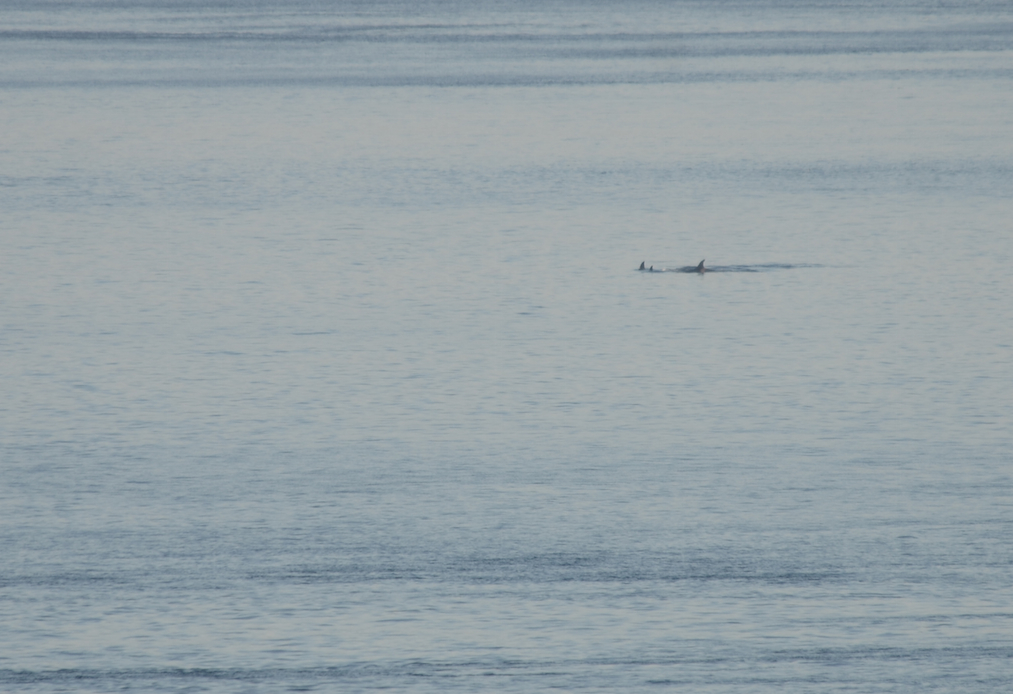
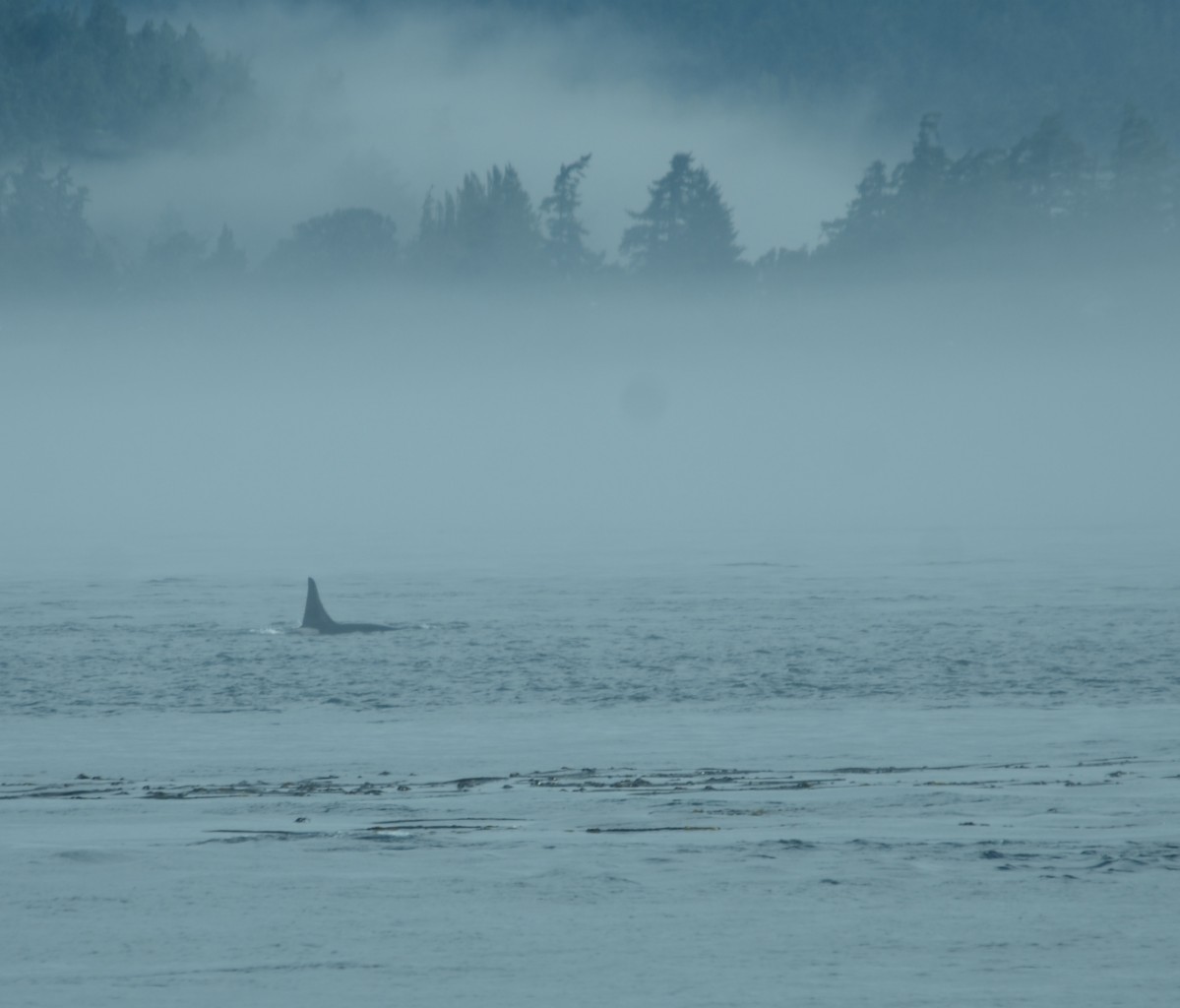
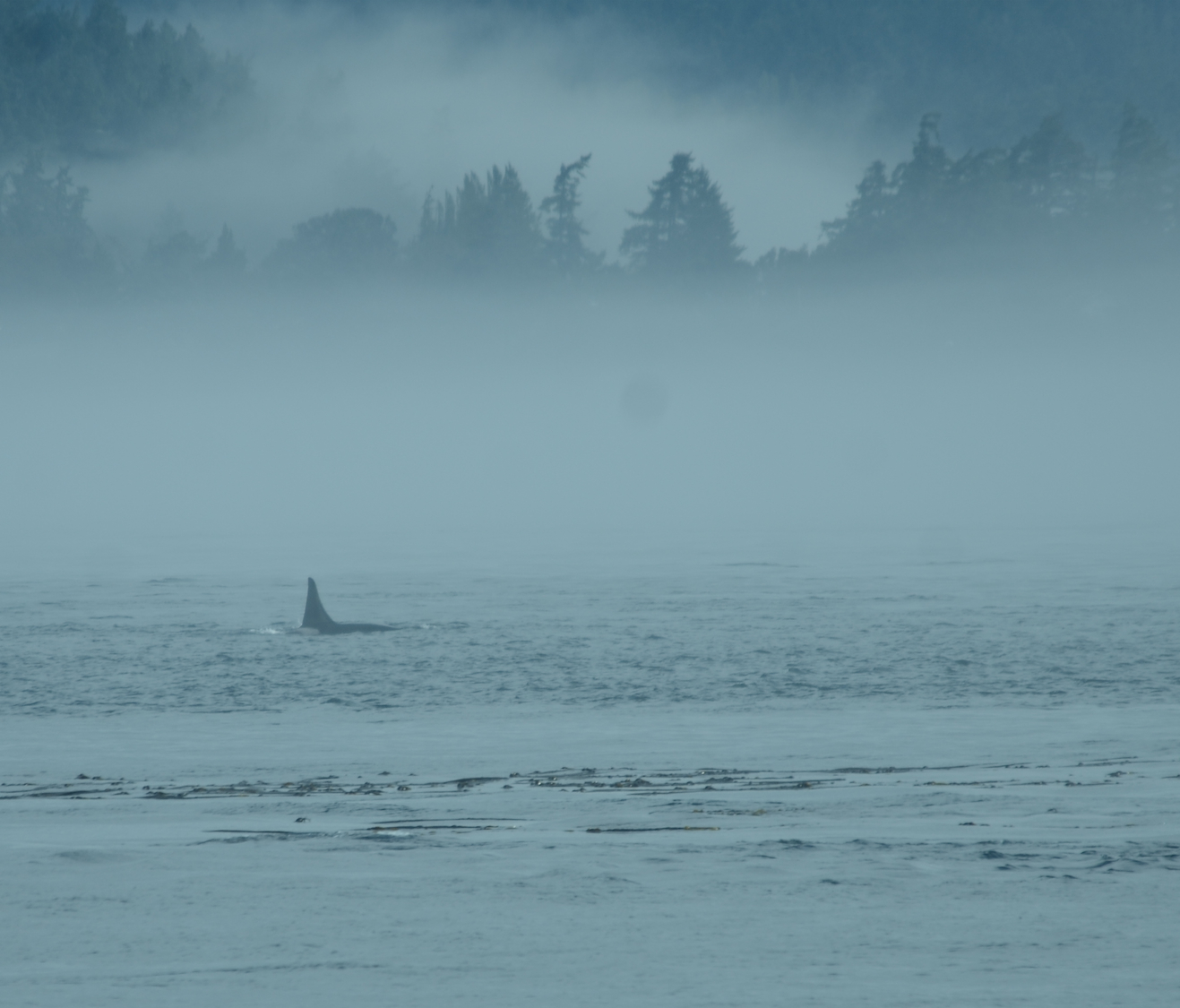
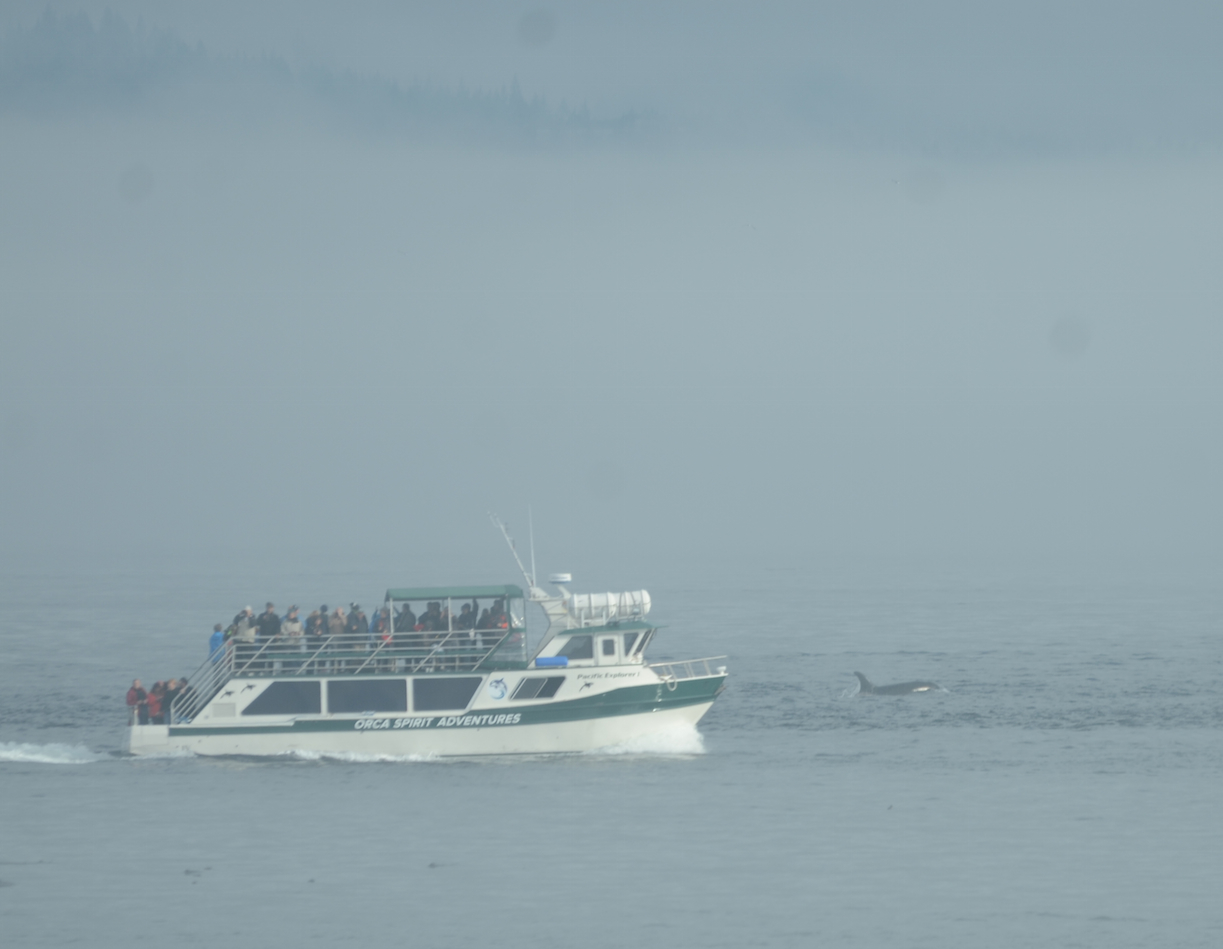
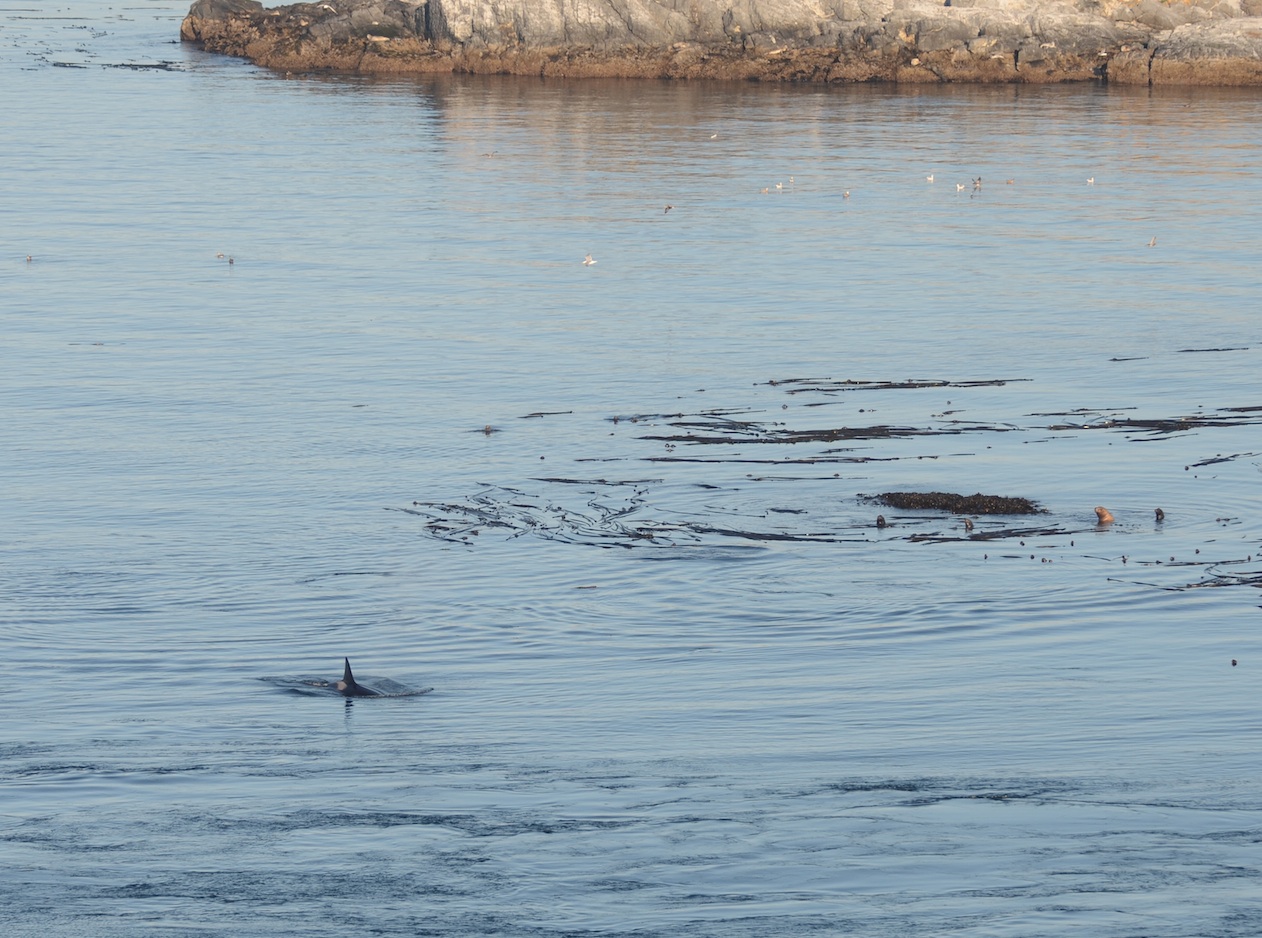
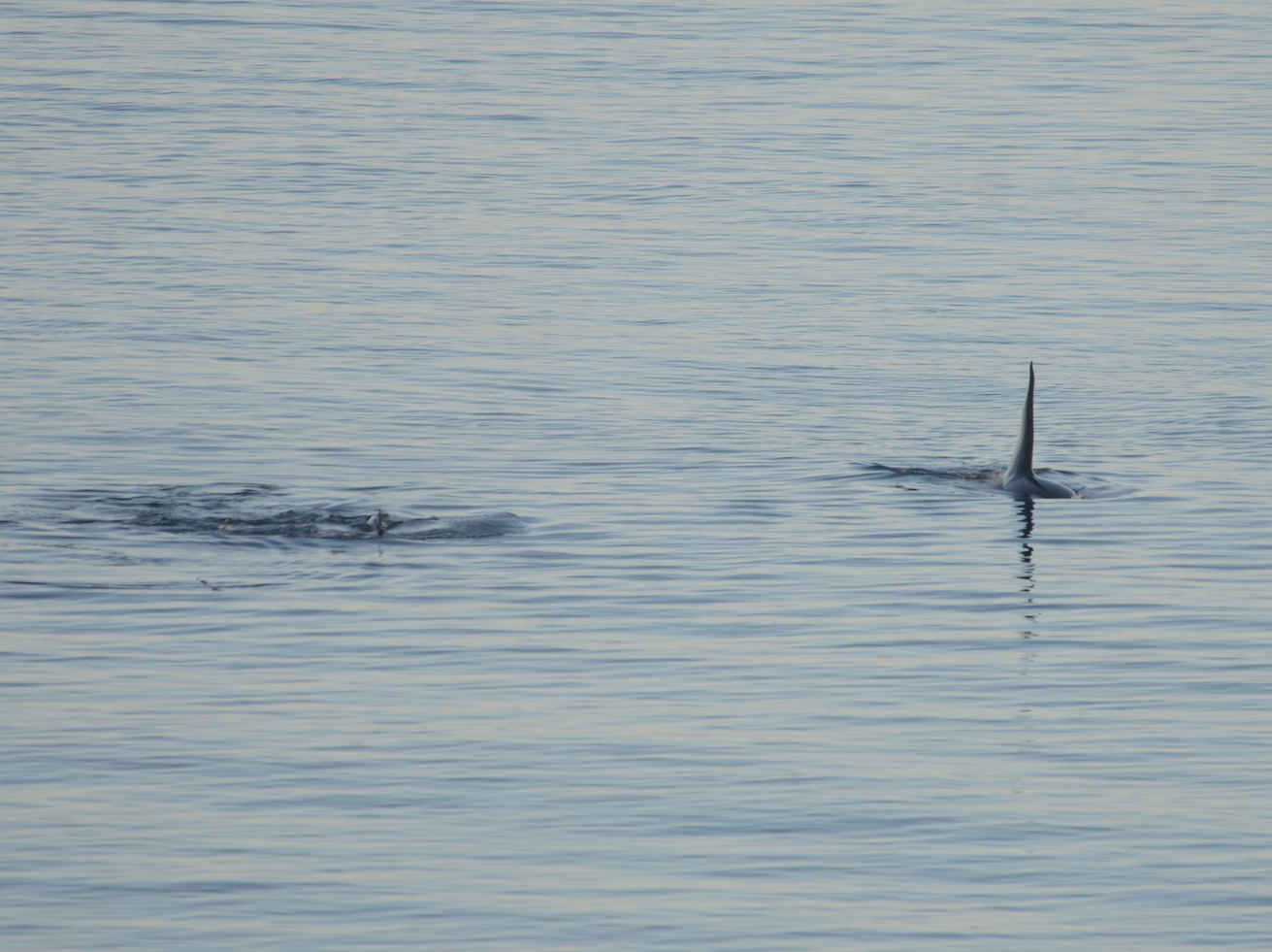
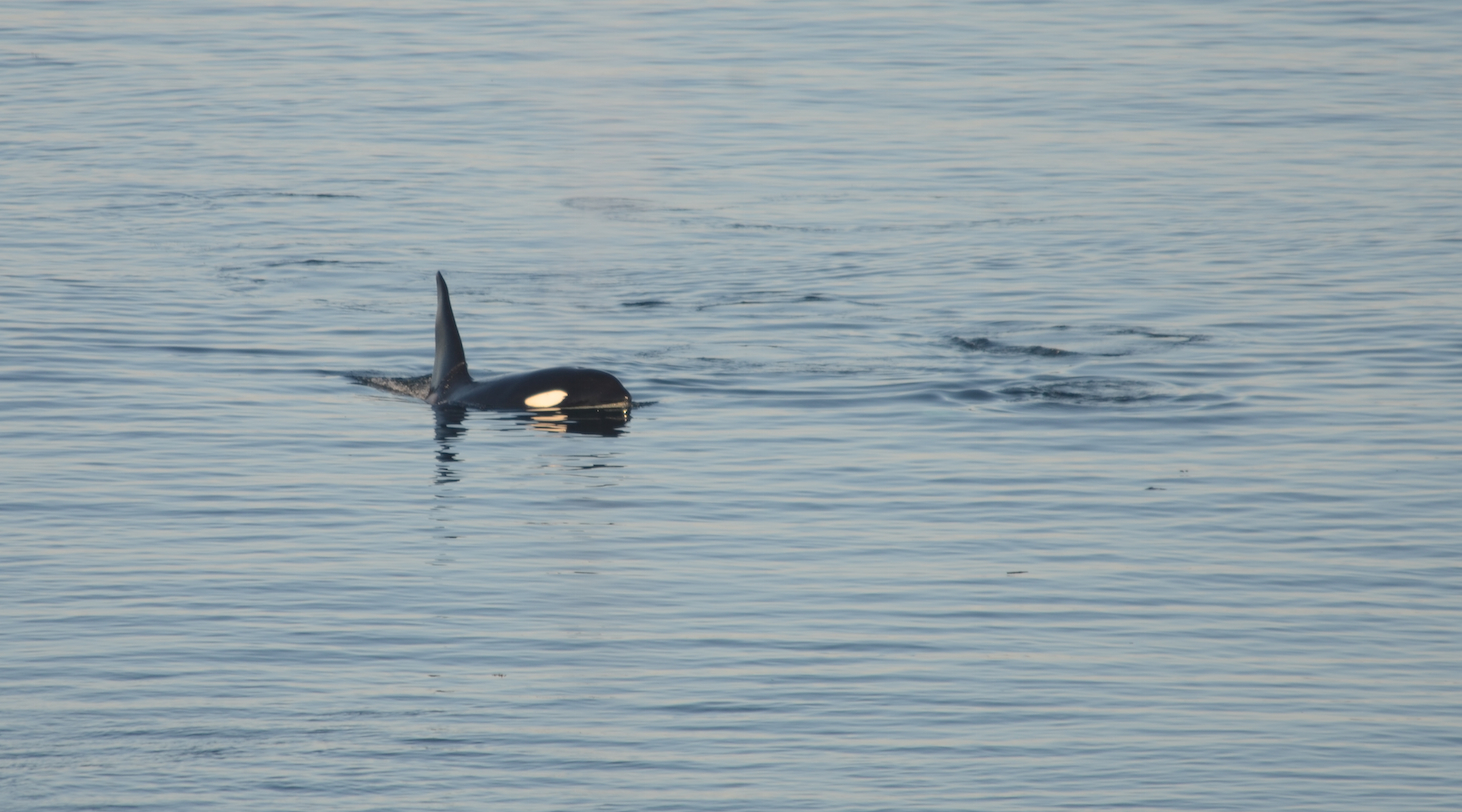
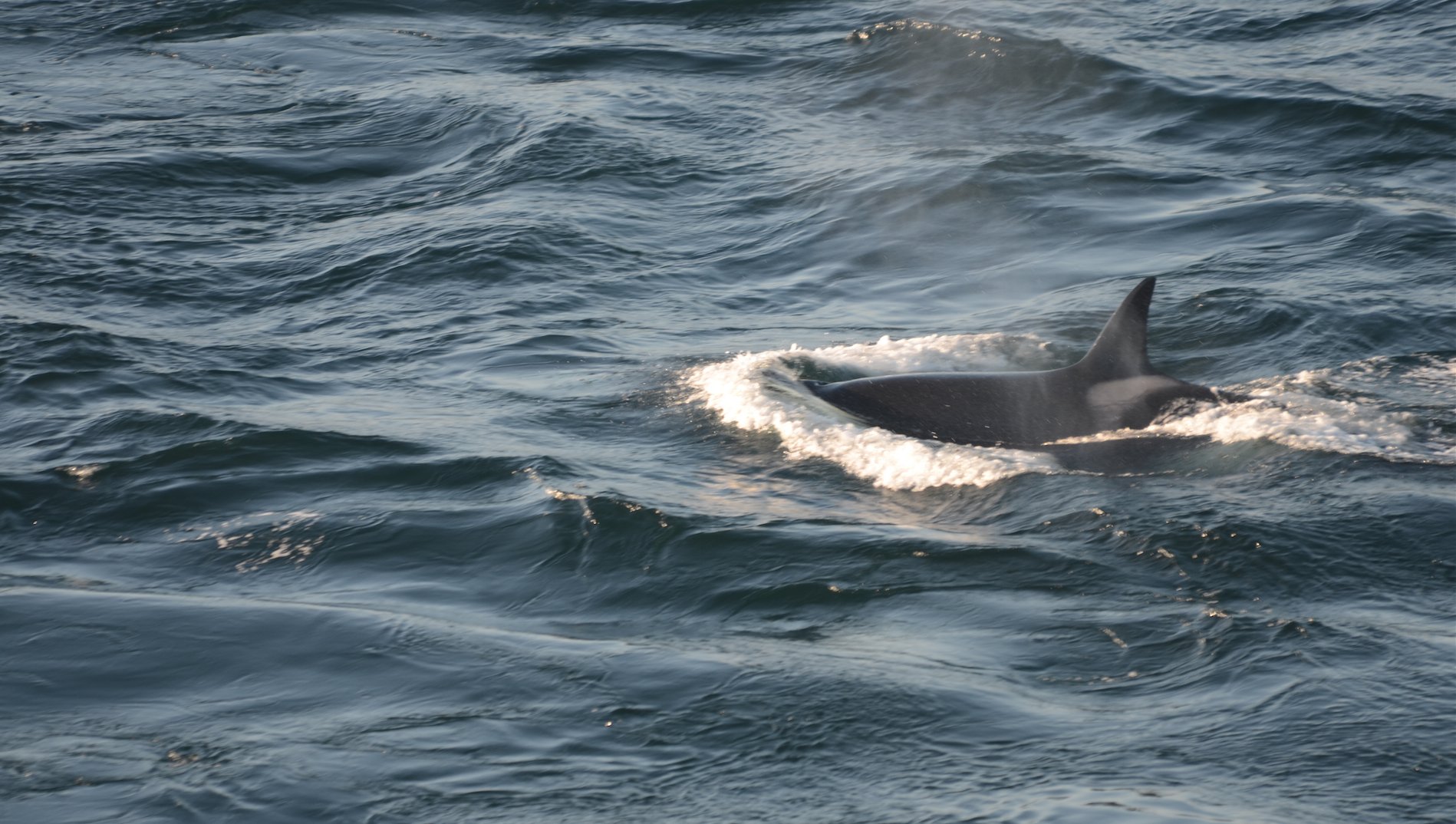
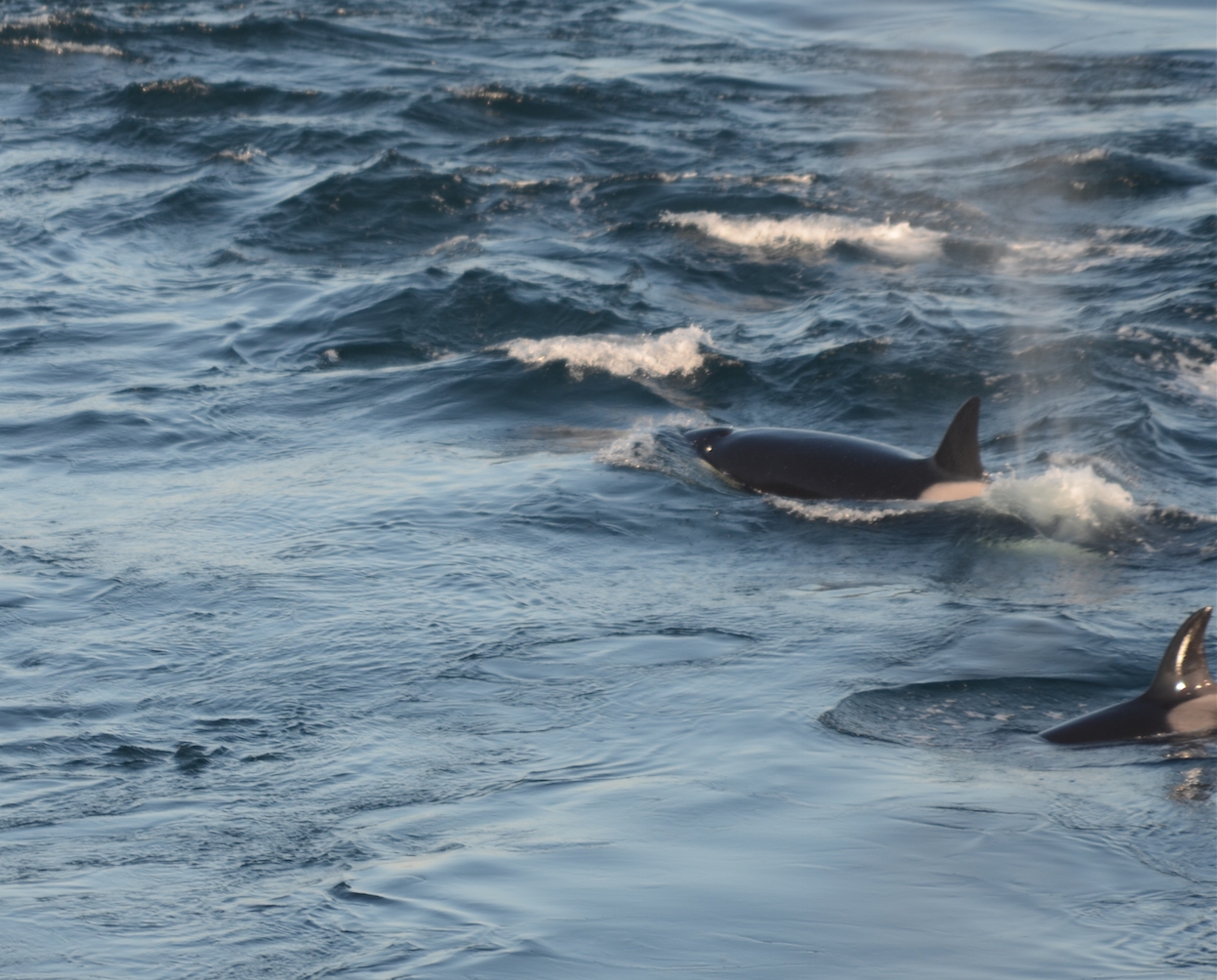
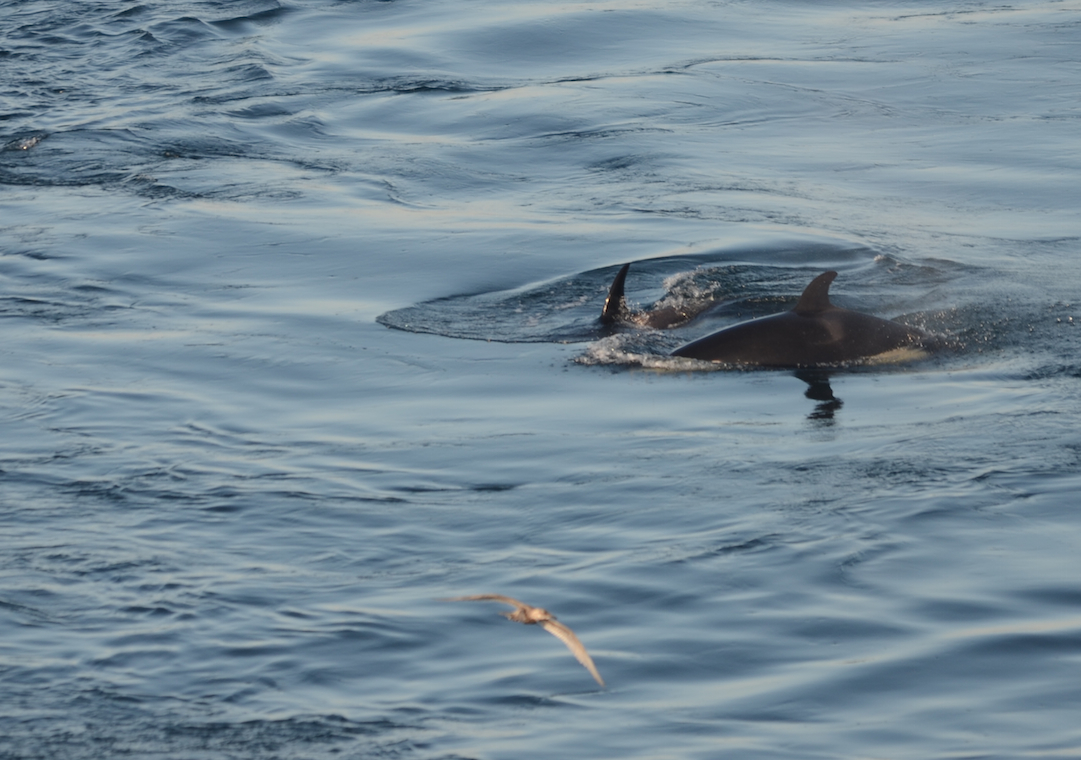
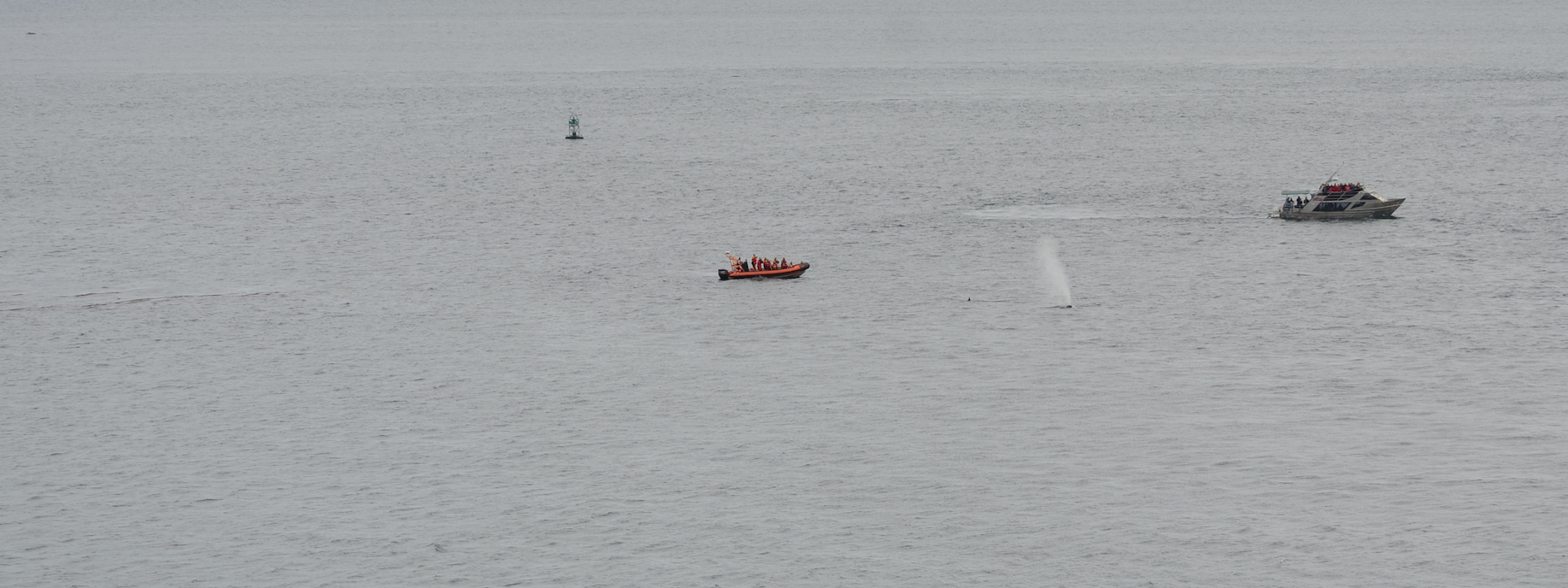
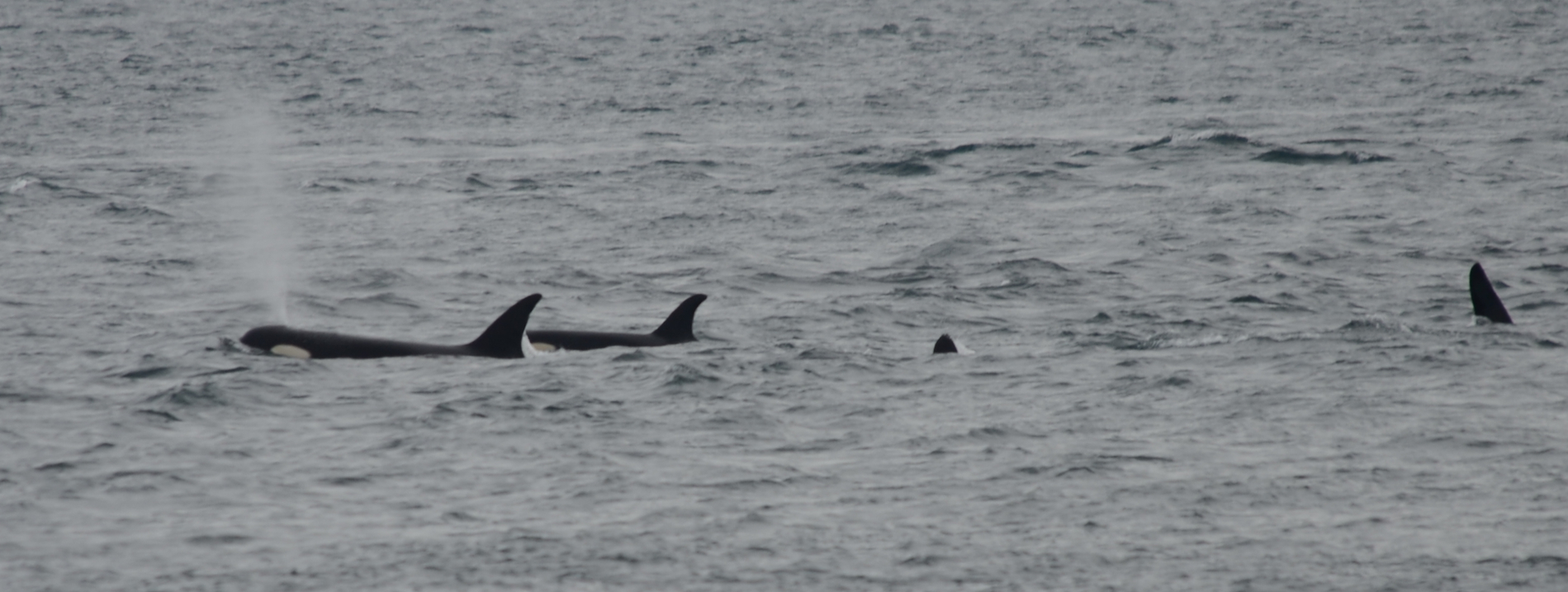
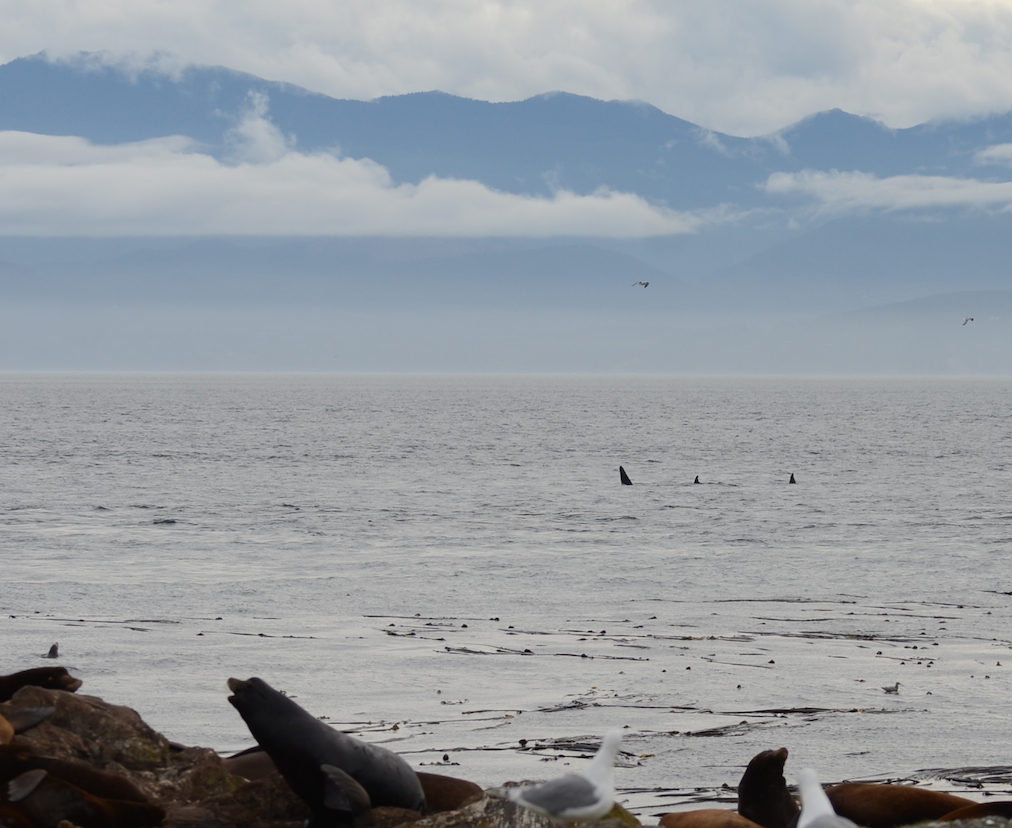
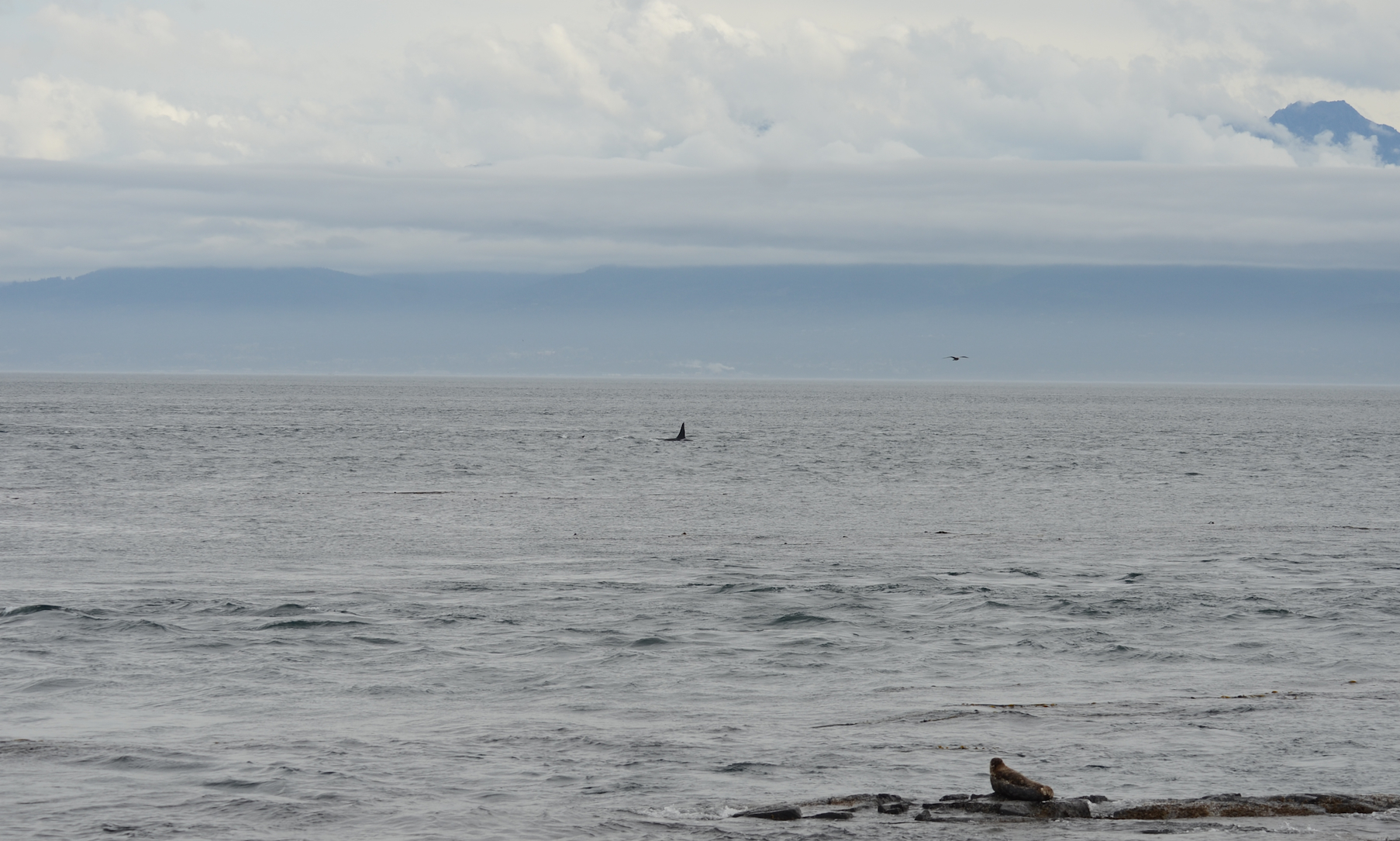
While the fog was receding and there was just a thin strip left along the north side of Race Passage, we were able to witness the moving sight of Southern Resident Killer Whales heading eastward. There were at least twenty animals and possibly more and they were moving at about four knots. There were a couple of really large bulls, lots of mid-size animals, one fairly small and one tiny one swimming with another little one. Several of the big bulls passed close to North Rocks and there was some tail slapping just to the east of the reserve. These animals are very endangered and yet very resilient. These are the surviving members of family groups that were hunted for live capture and sale to aquariums where they were (are) shown for the price of admission. Now that they are listed under Canada’s Species at Risk Act as Endangered animals, they are accompanied daily by a great parade of commercial whale watching vessels. The first vessel to spot them alerts the others and they hopscotch them, lay in wait for them and pass them off to others so they won’t be “lost”.

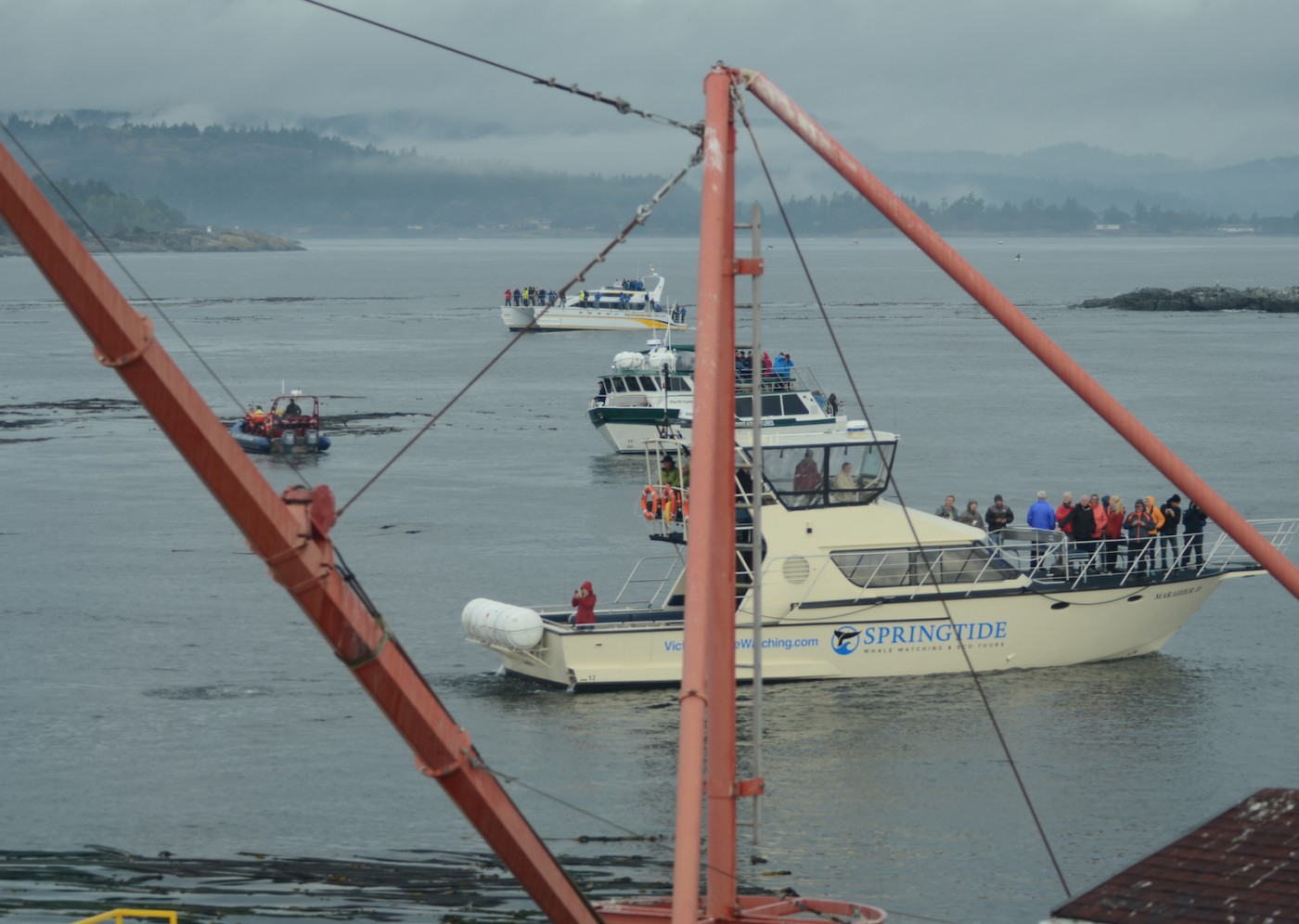
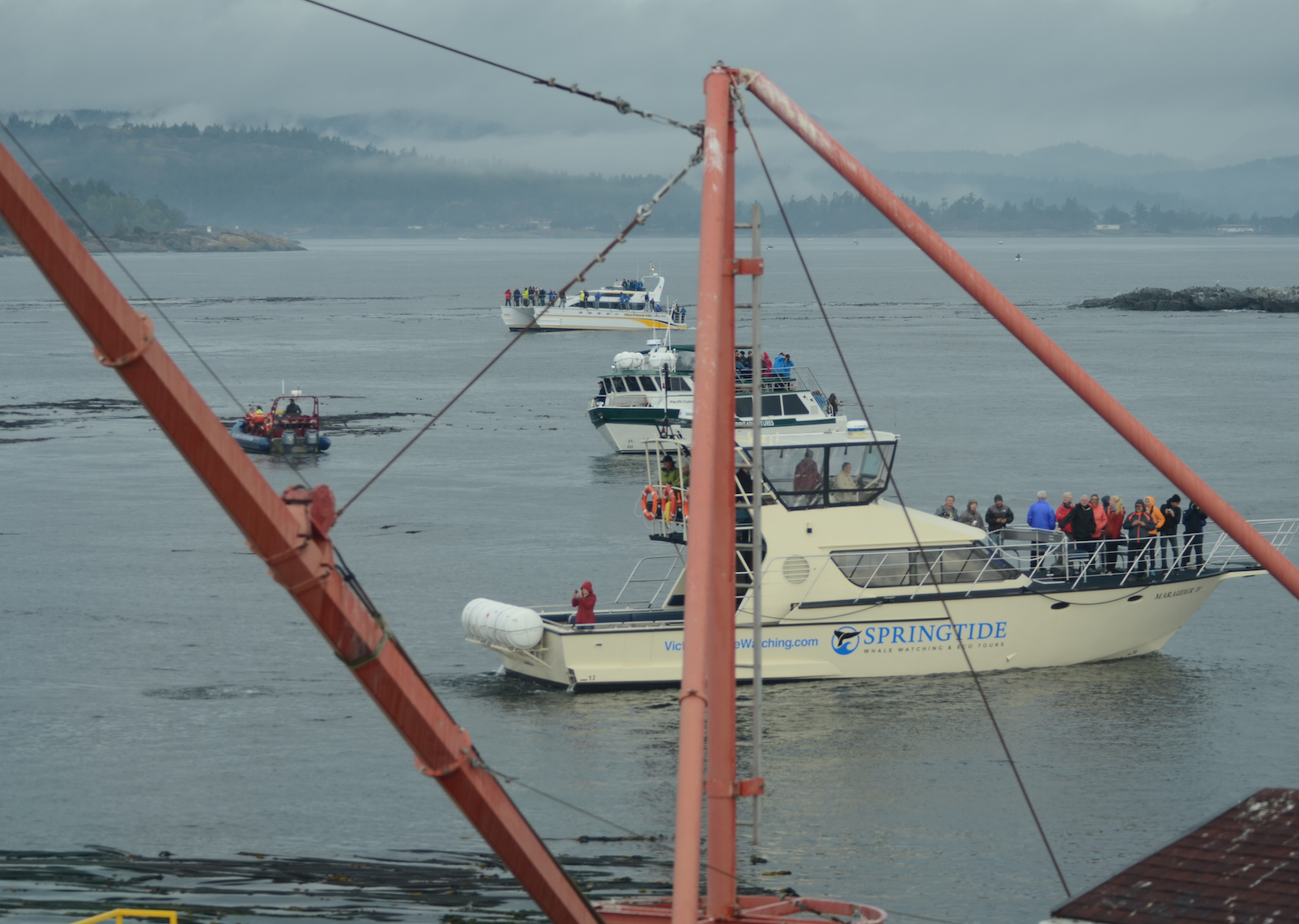
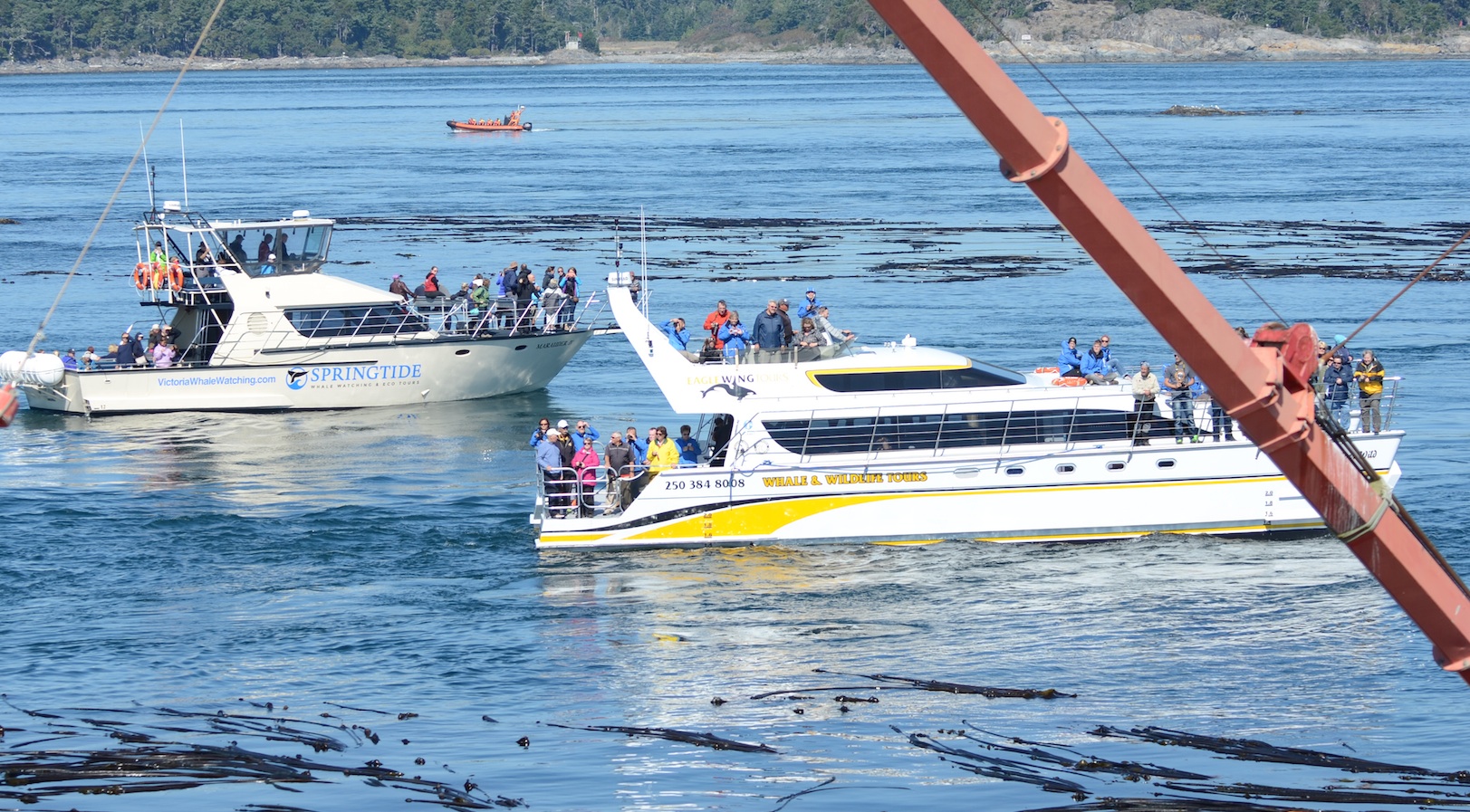
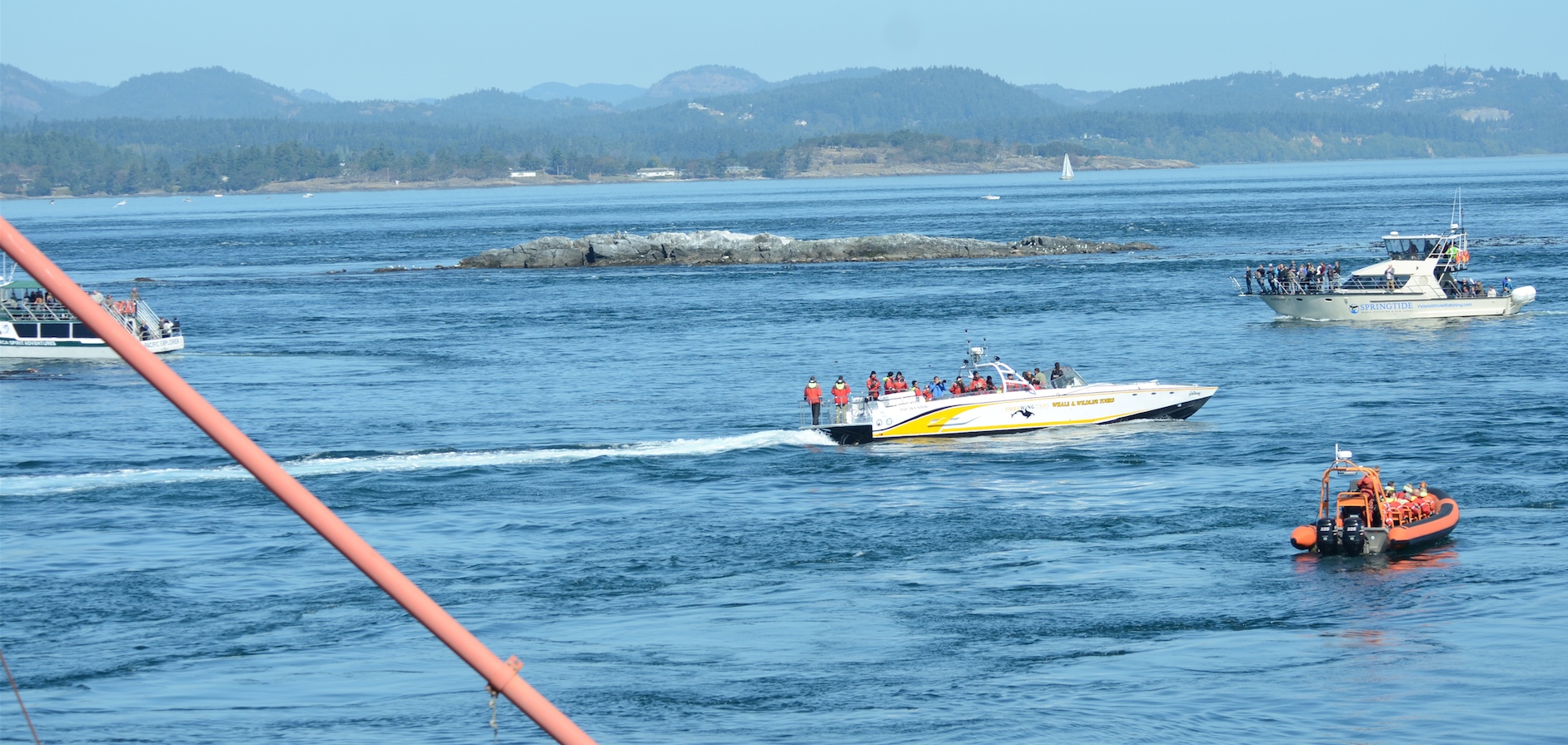
The parade came to Race Rocks again today with 28 visits observed in the Ecological Reserve by commercial whale watching vessels. At one point there were six vessels right in front of the jetty. Most of the vessels paid a close visit to the Sea Otter. Sea otters are one species we can celebrate as a conservation success story, in some places maybe even too much of a success. This is a species that was extirpated, reintroduced, listed successively as endangered, threatened and now is down-listed to special concern. People and policies do make a difference when it comes to recovery of species at risk and there are simple things we can all do to help make a positive difference.

Chores today were routine and we had no visitors.

Explosions and Implosions

The wind blew north by northeast at 5 – 10 knots for most of today. Morning fog seemed to be blown out of the southeast but stayed on the American side of the Strait today and there was sunshine mid-day. By evening the wind had switched to west and the clouds had thickened along the Olympics and out to sea. The so-called marine air (aka fog) out to the west, had a yellowish colour of the kind you see in the haze coming into Korea from China. There may be some leftover forest fire smoke in that mix as yellow is not a normal colour for fog. The barometer continued the climb it started yesterday and reached 1008 hPA this evening. Forecasters are calling for light and variable winds and showers. I have my wheelbarrow out to catch any moisture coming from the sky and it is just starting to spit.

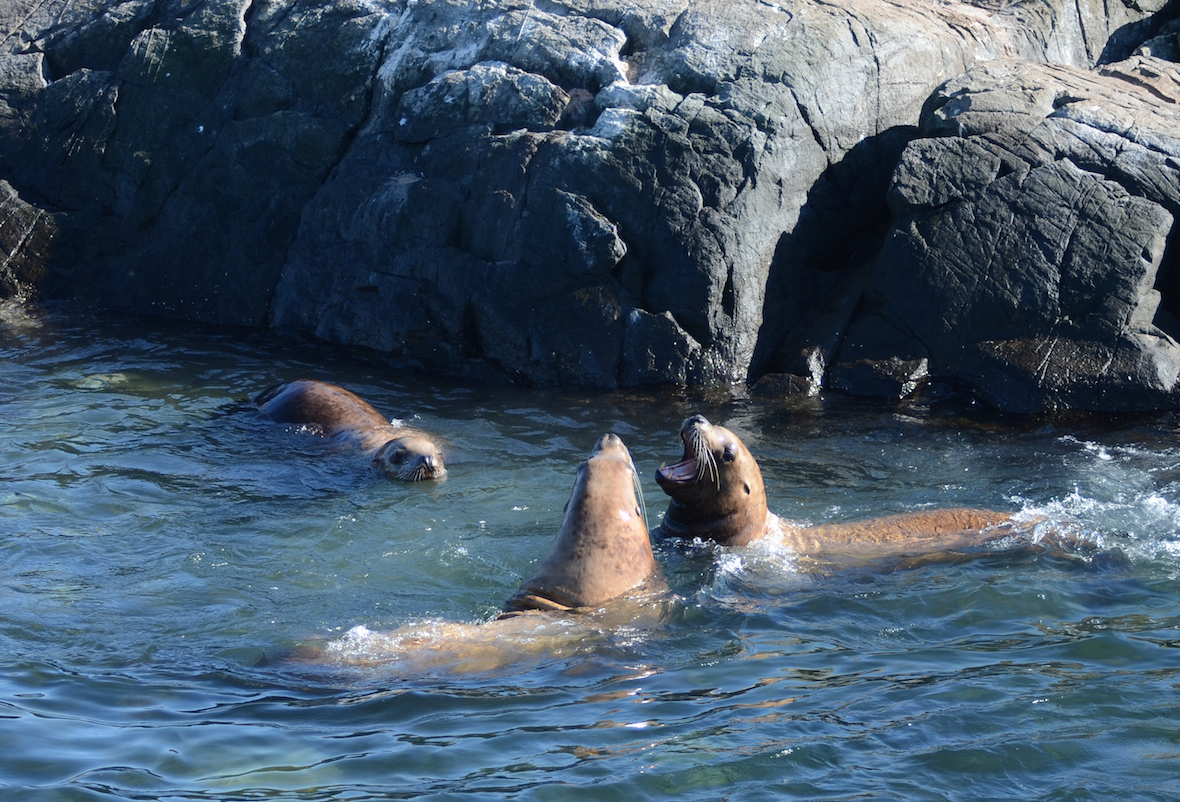
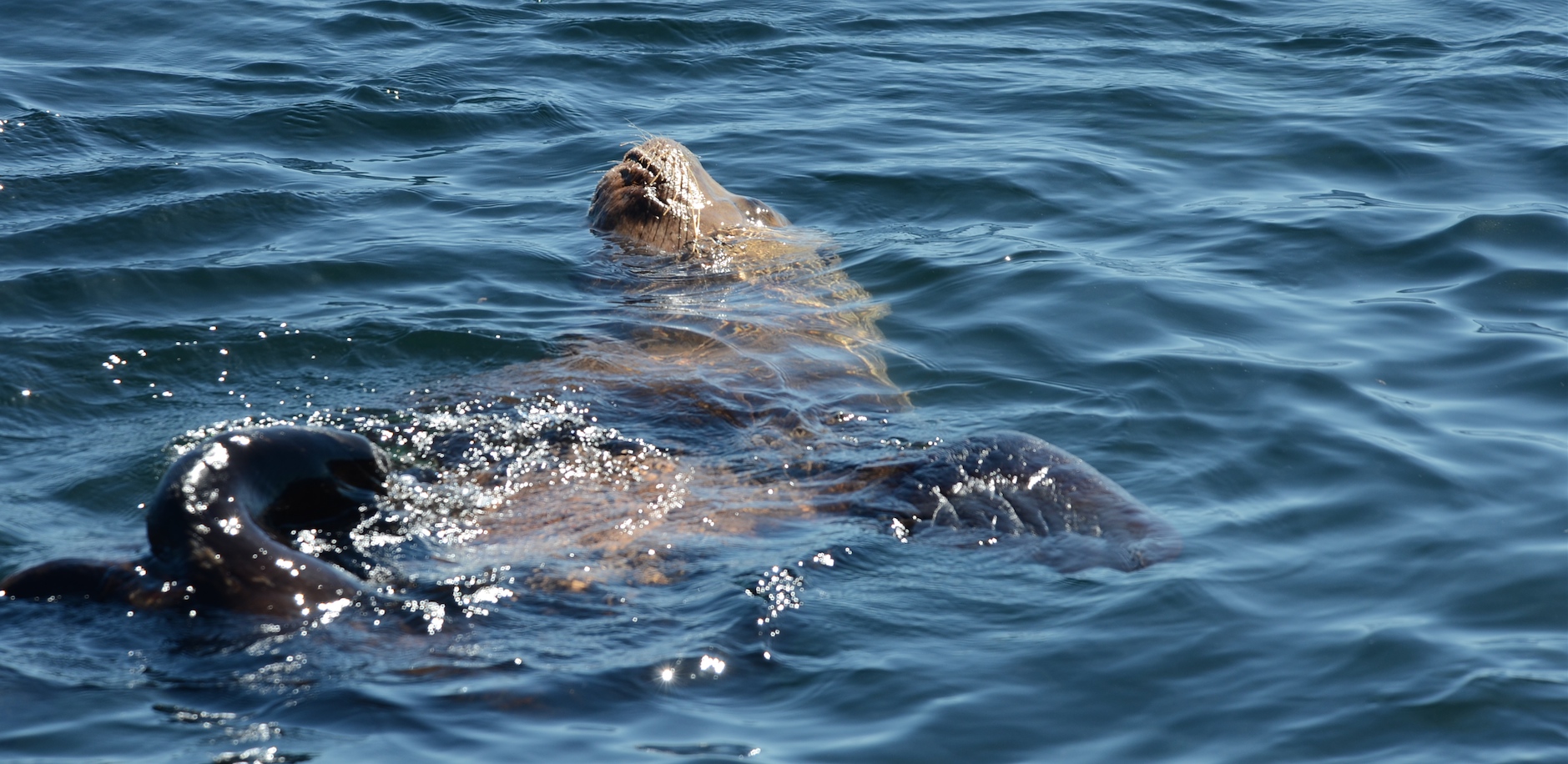
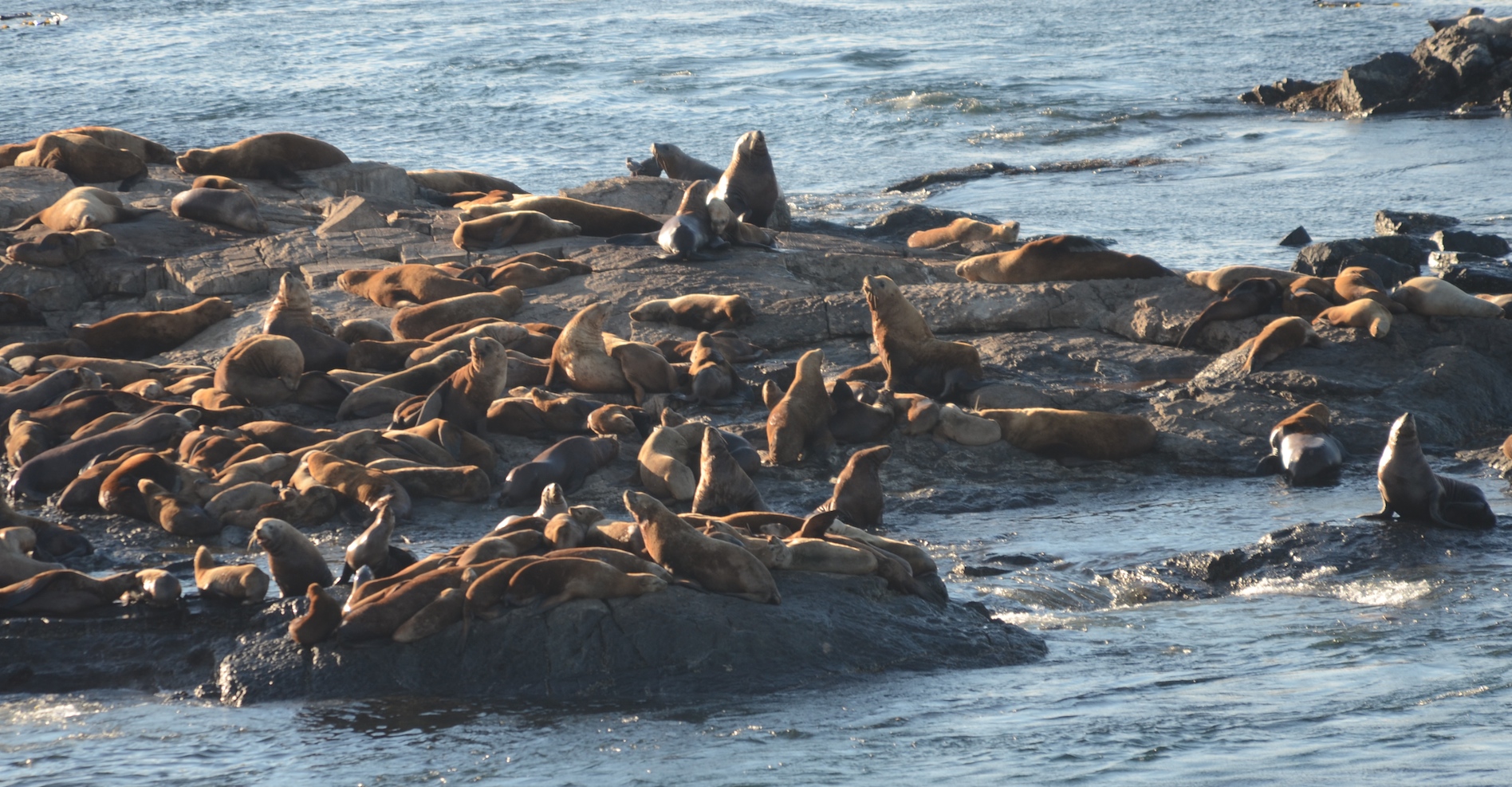
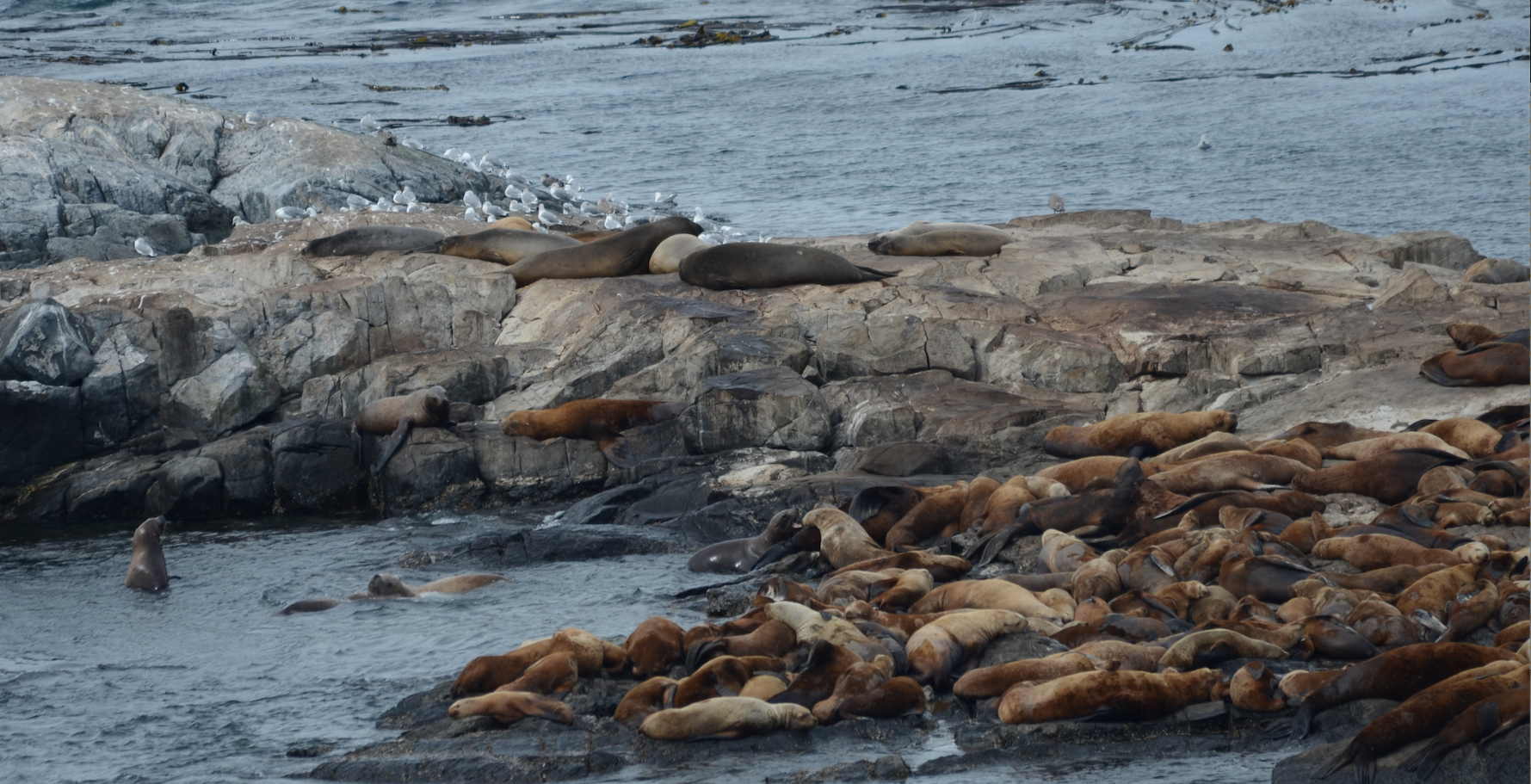
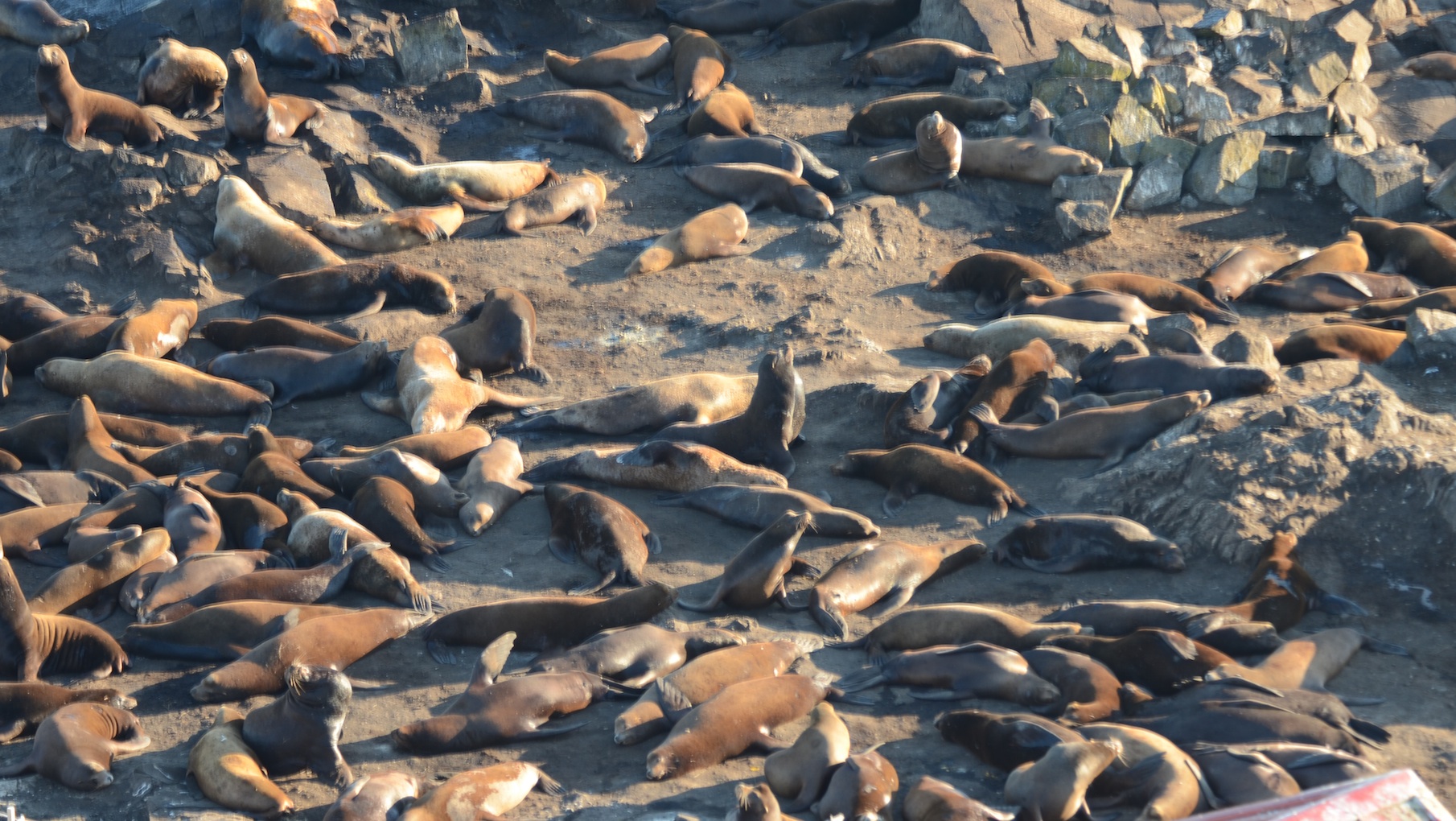
There were twenty visits by commercial watching vessels observed in the Ecological Reserve today and highlights included the sea otters, sea lions, elephant seals and the very large explosions coming from Rocky Point. The explosions sarted late morning and ran through the afternoon. Quite often the blasts do not seem to effect the animals but today they seemed extra substantial, of a magnitude and recurrence that cleared the islands (mostly)  of sea lions, several times. This made for some good sea lion watching in the water, as that is where they spent quite a bit more time than usual, today.

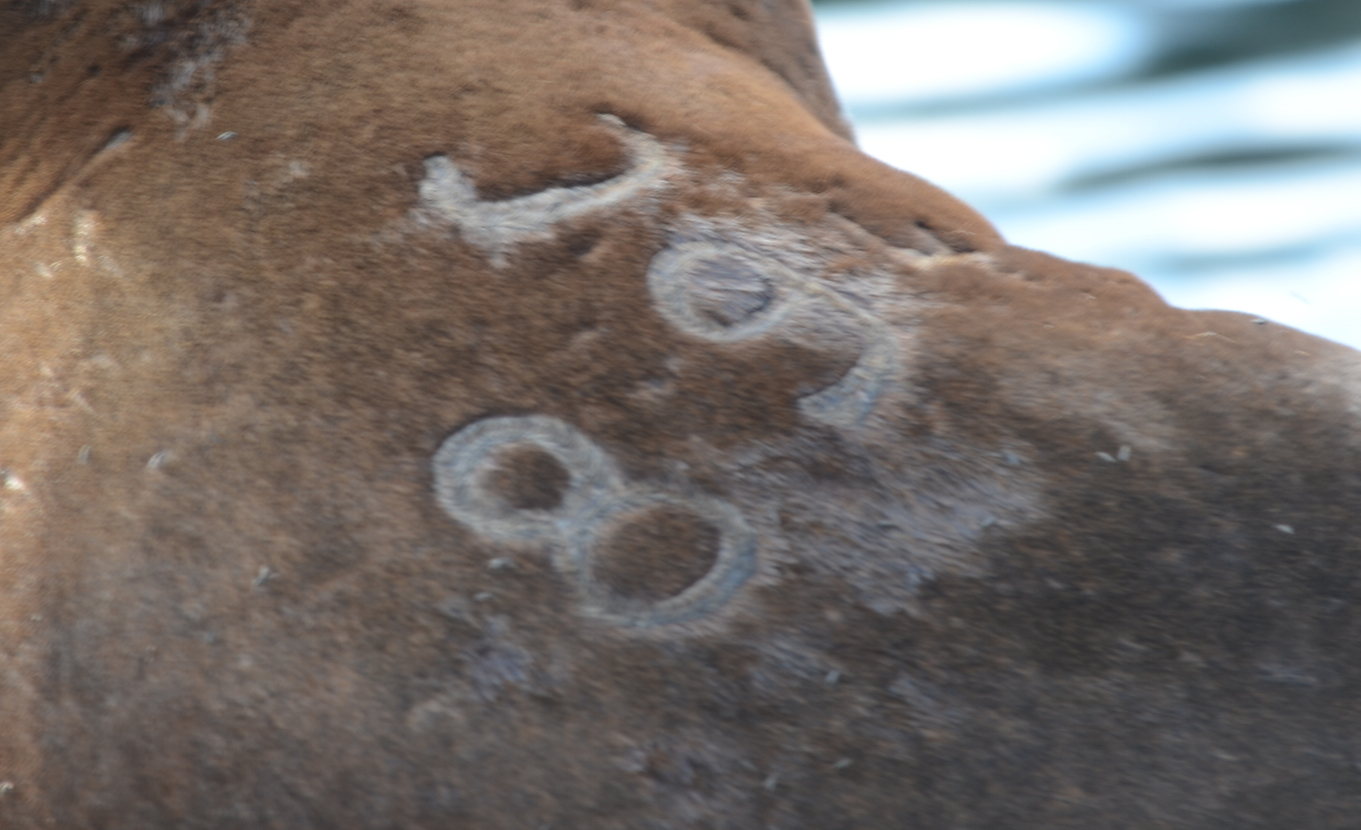
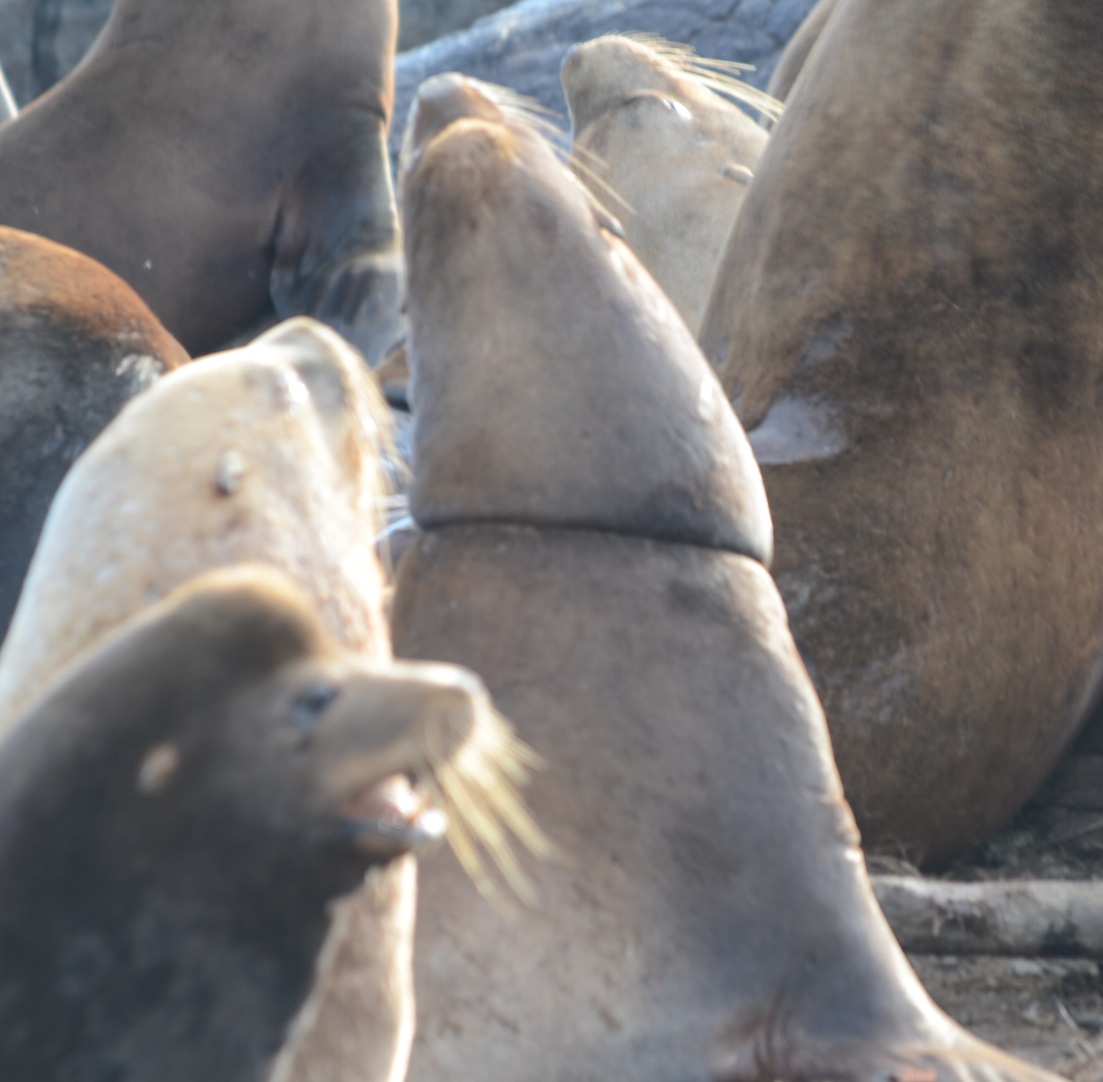
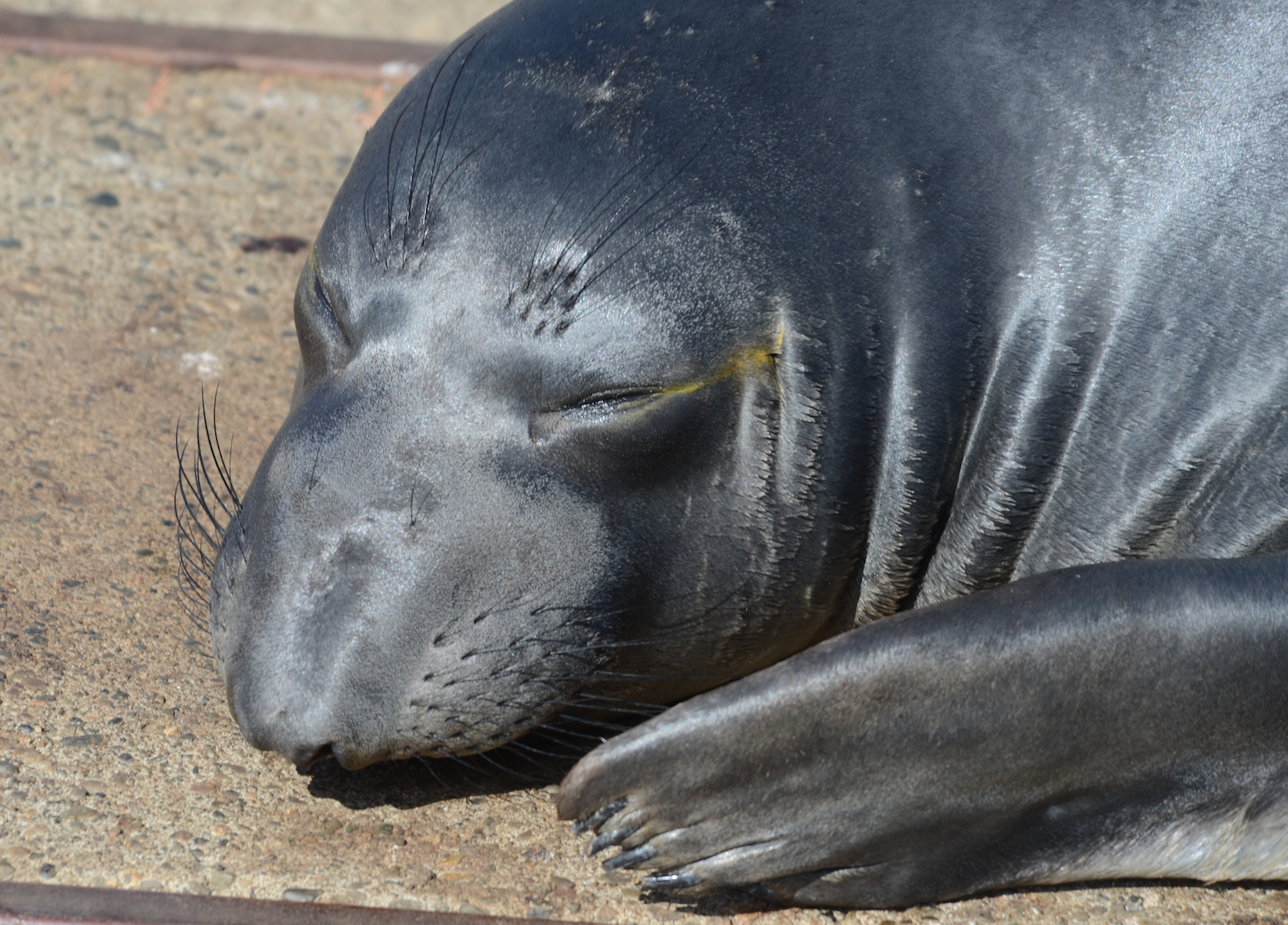
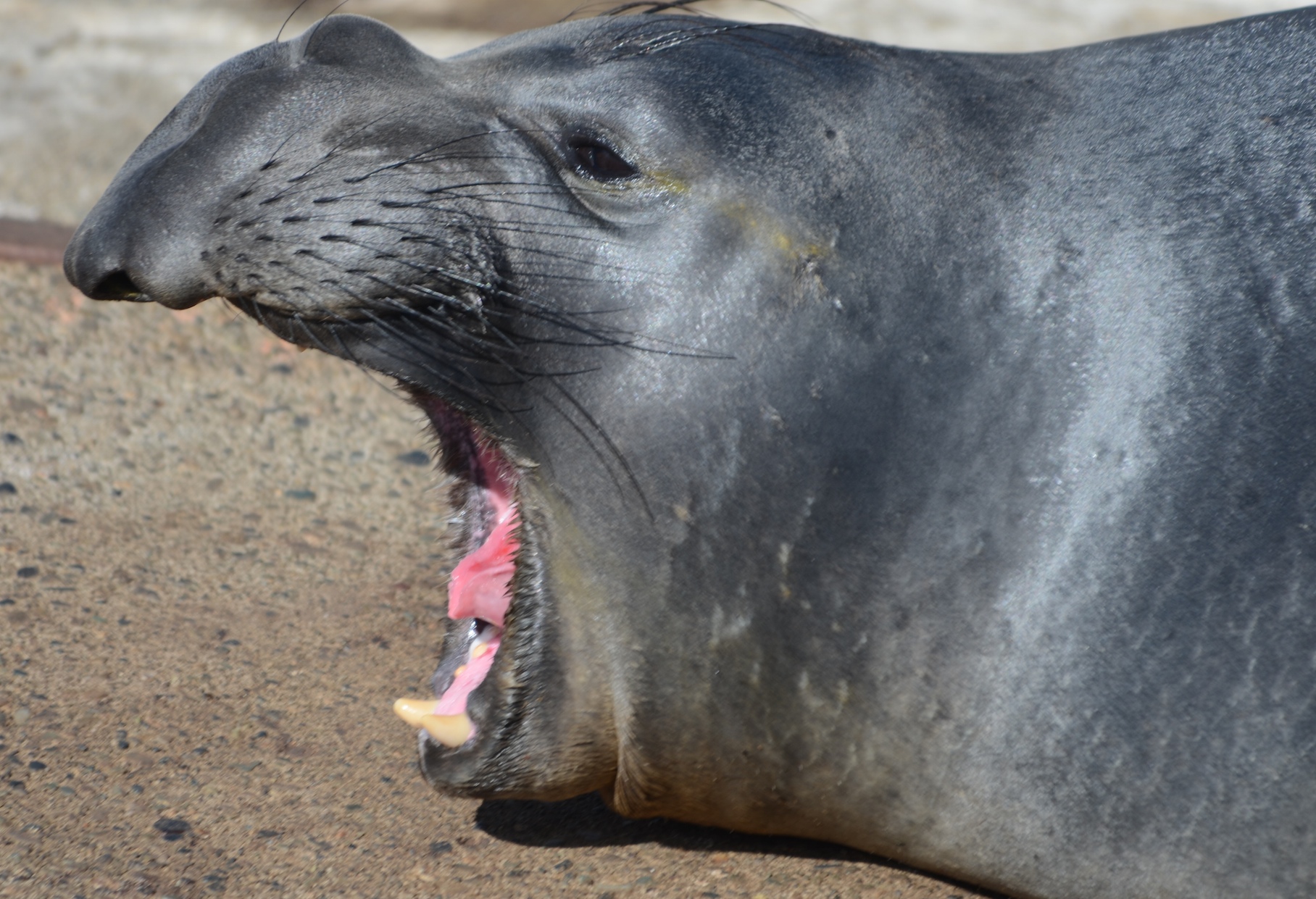
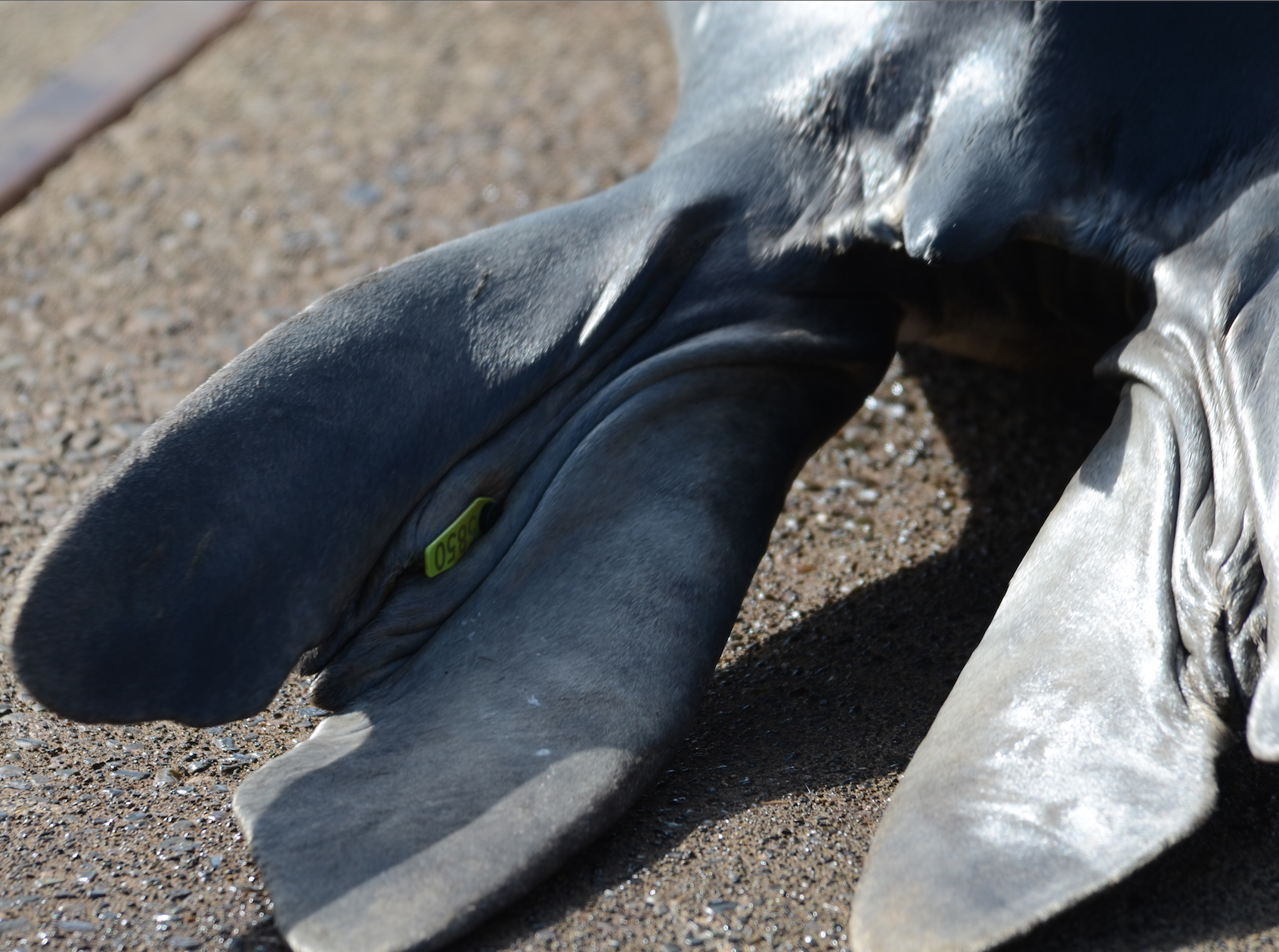
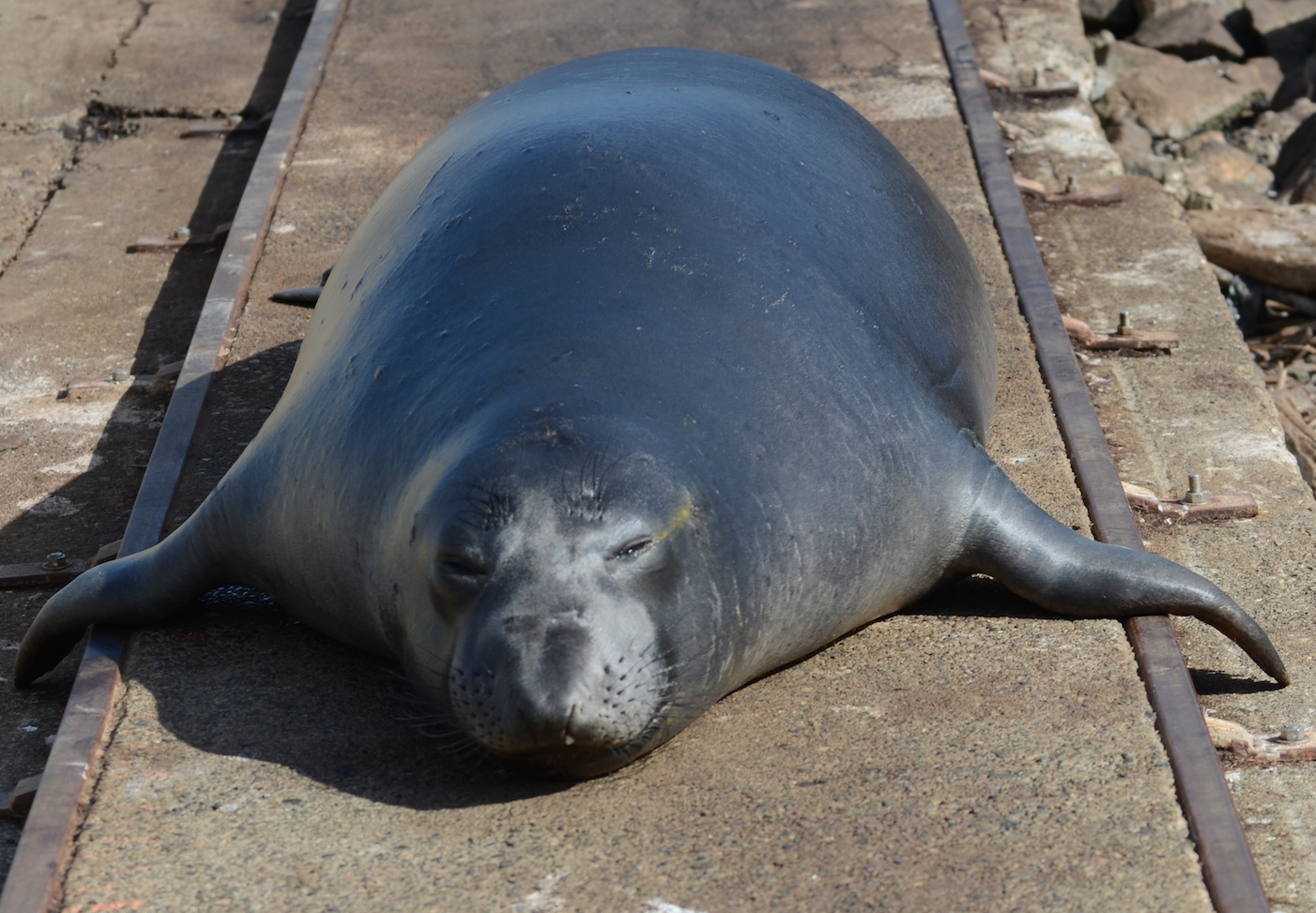
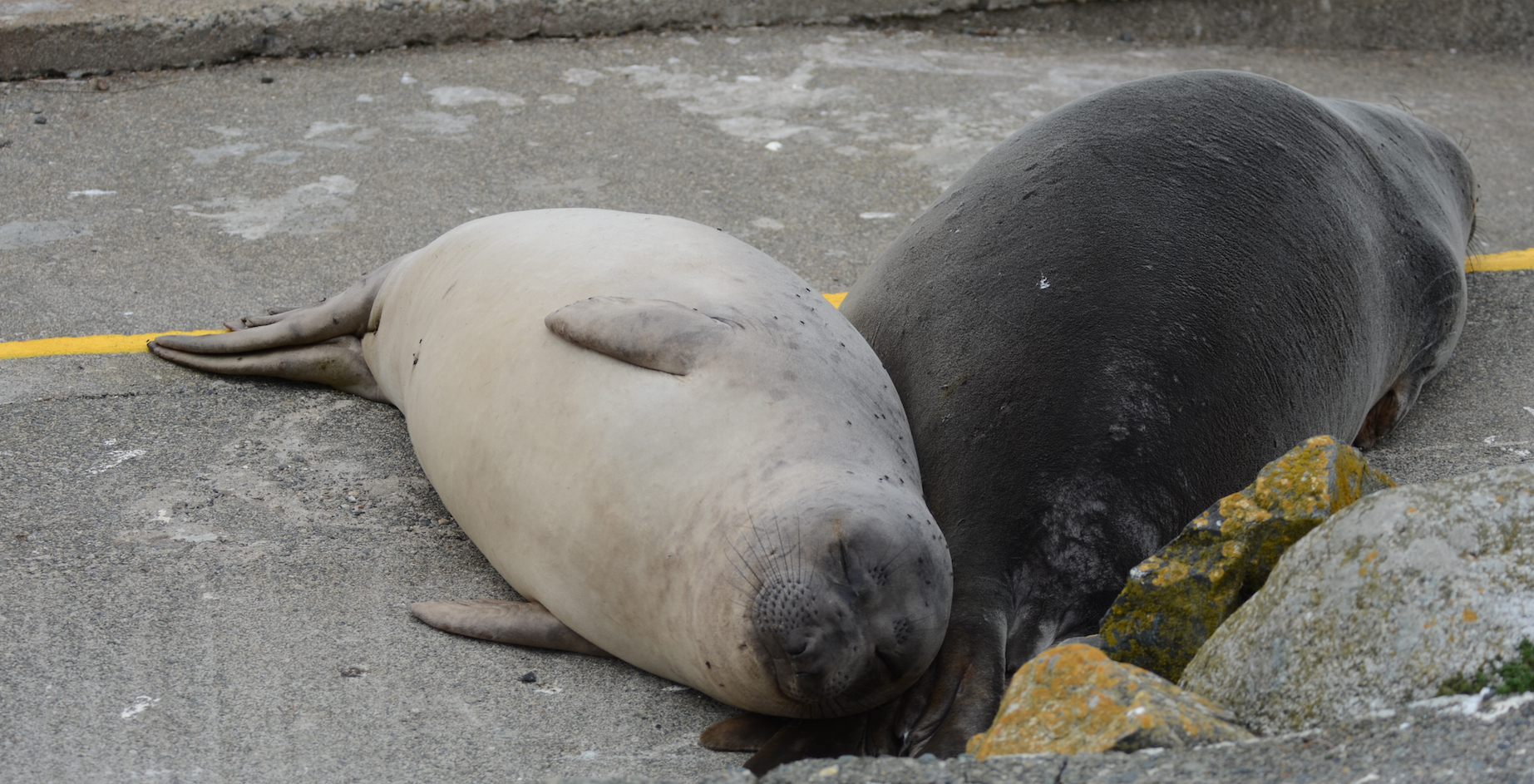
The sea lions also spent a lot of time repeatedly running for the water and then slowly climbing back out and hauling themselves up to resting spots. I doubt that this is part of a normal energy budget during moulting season. The Northern Elephant Seals remained undisturbed by the large explosions and appeared to sleep right through the brouhaha. All the moving around made it easier for photograph to see neck-laced sea lions and brands without worry of disturbance.  Two Northern Elephant Seals visited Great Race today. The young male #5850 who was here both last fall and last spring was here again today with a little female. He has really grown in the last year, especially since his spring moult. Definitely filling in and stretching out his skin. The only tag left is on the inside of his left back flipper.

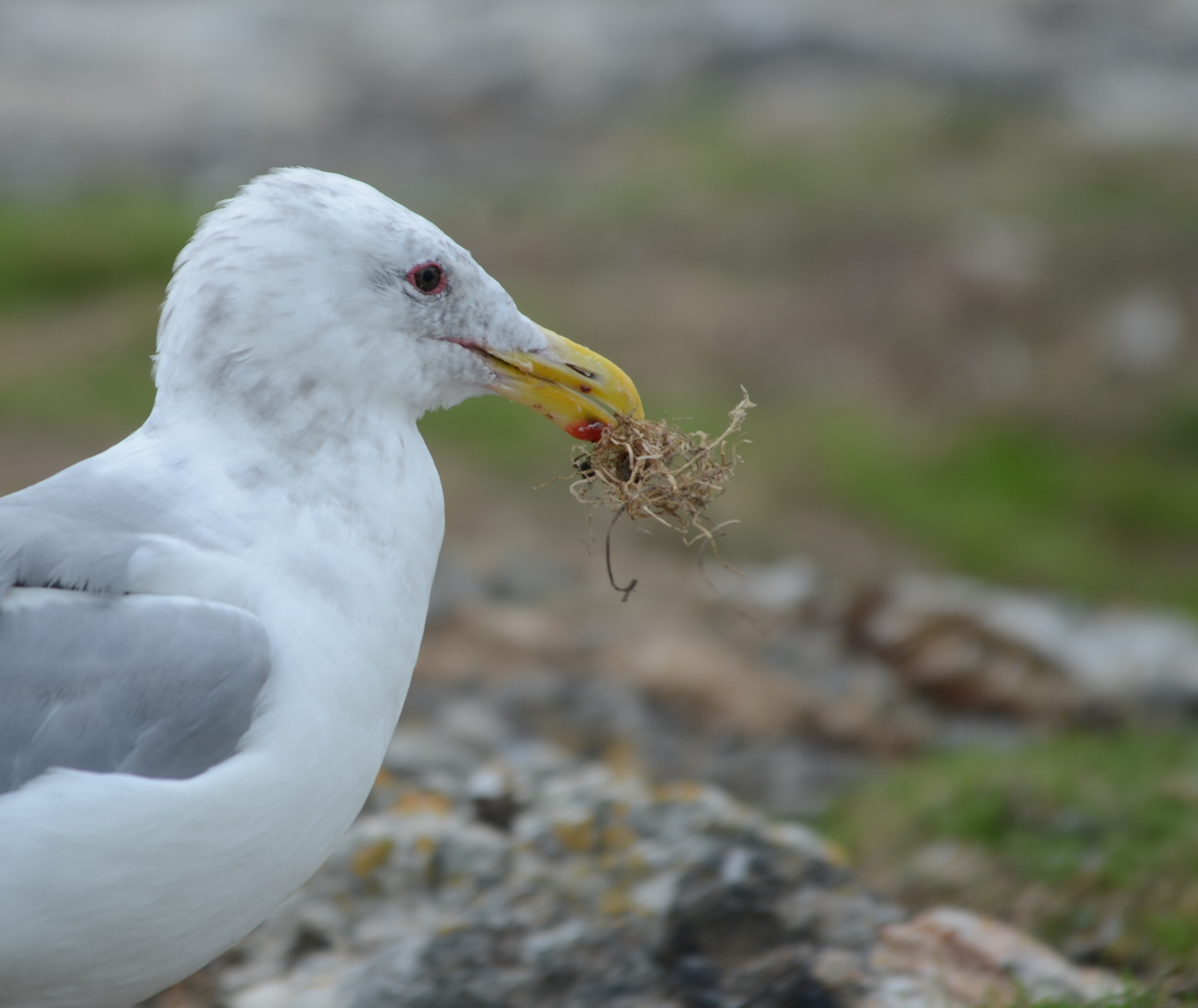
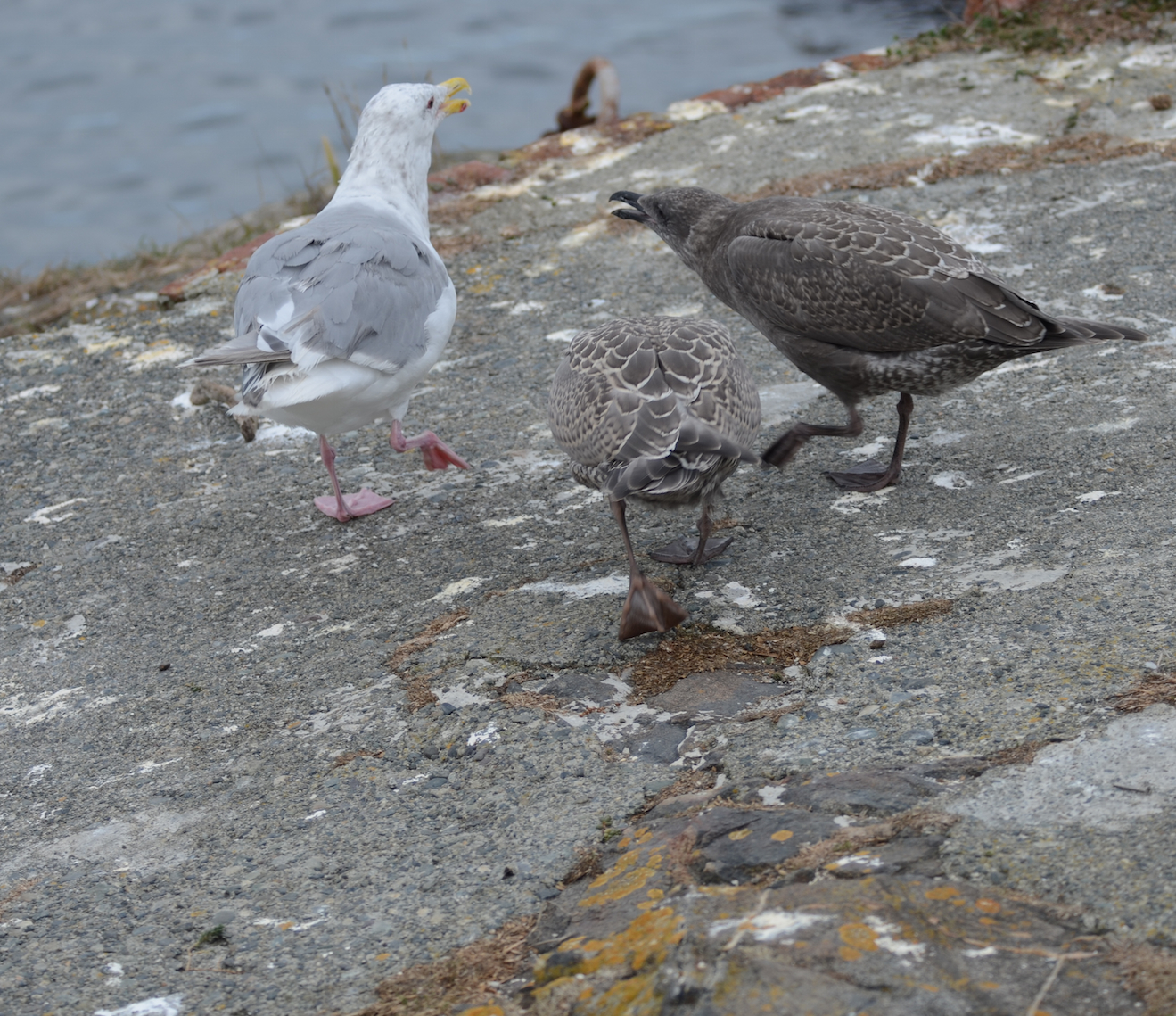
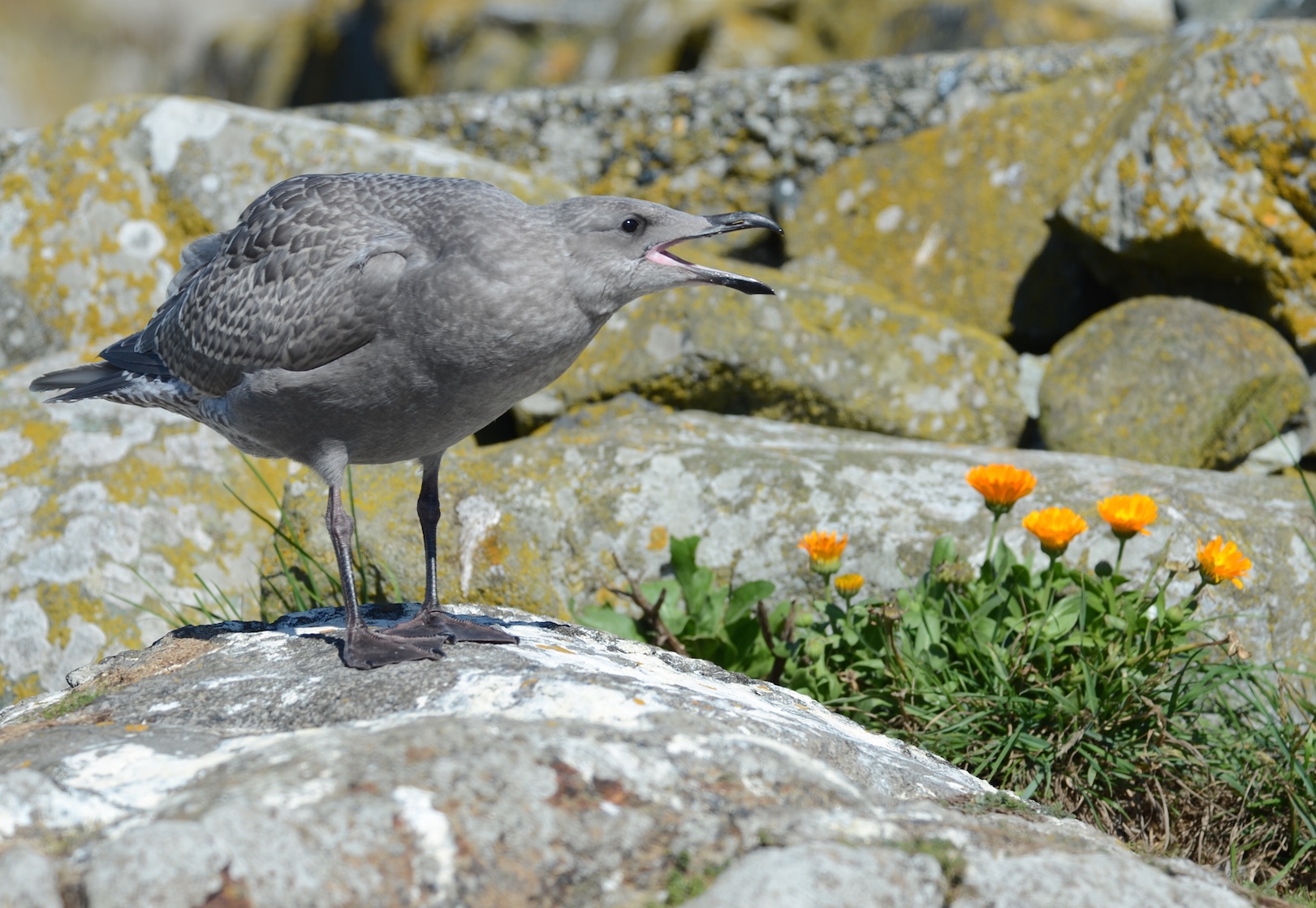
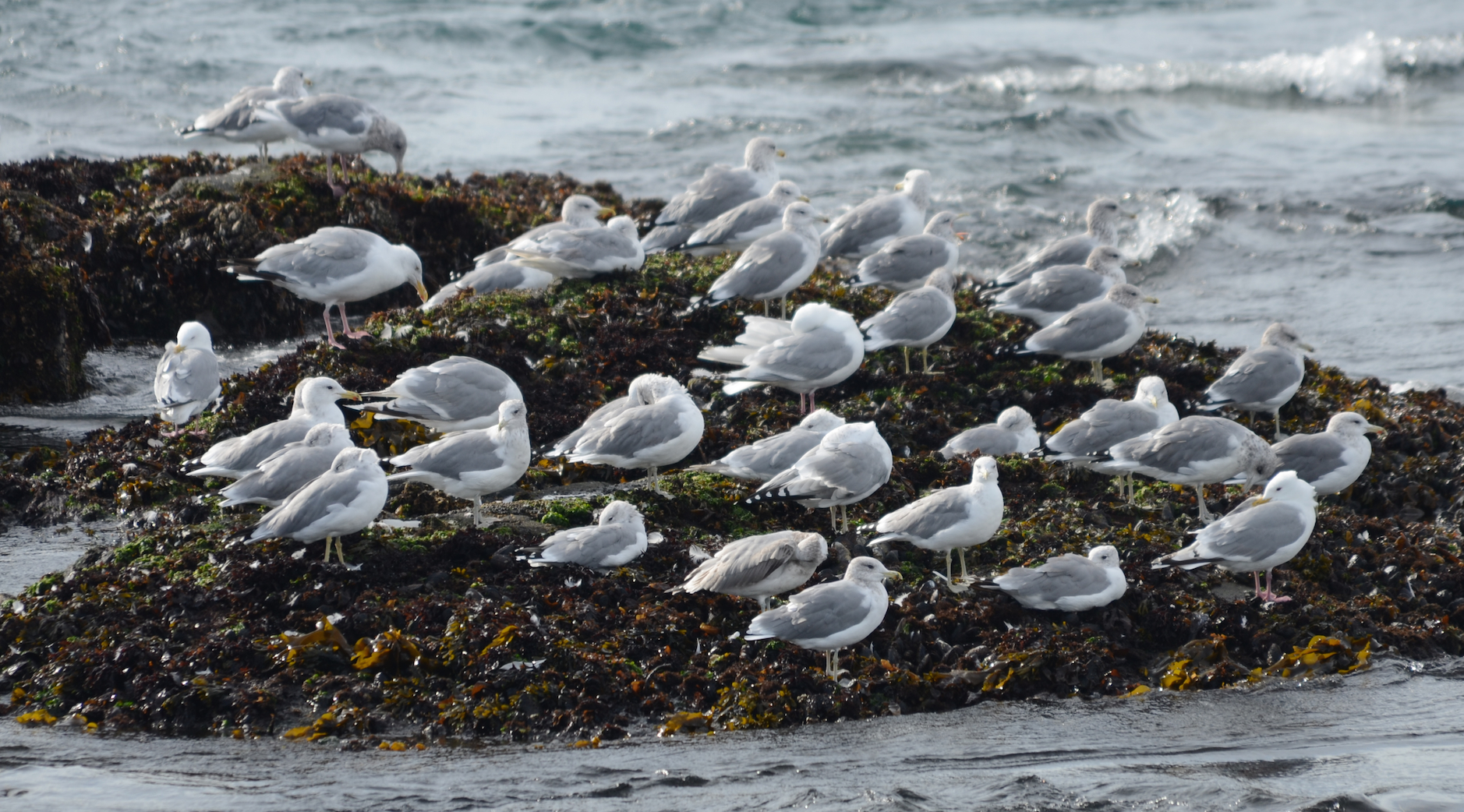
There were no obvious effects from the explosions on the birds. Many of the adult Glaucous-winged Gulls have returned to their territories and are standing around on their “spots”. It almost seems as if some of them are experiencing empty nest syndrome: some pairs are doing a bit of redecorating, carrying nesting material around, acting out behaviours observed early in the nesting season last May, but with less verve, and of course ‘going gray’. The white head of the adult Glaucous-winged Gull is only white during breeding season and turns into an alternate, mottled gray during the winter. Many are transitioning now. Some adults are still feeding young gulls, although most of the young are also out learning how to forage. The youngest, or perhaps slowest one to develop, is the last one learning how to fly and spends quite a bit of time stretching its wings, taking little hops with the wings out and running while flapping. It will be aloft soon. The last Canada Goose family took flight today and hope is that they will flock off.

Chores were routine except for another plumbing challenge. There were no visitors.

End of Summer?

The day started with partially overcast skies and a south wind of 5 – 10 knots. Late morning, the wind picked up from the northeast and brought fog. There was a bit of sunshine mid afternoon and then clouds gradually filled. By evening the wind was from the west 5 knots. Barometric pressure ended up a little higher than yesterday, but not by much and it was dropping again as evening progressed. The forecast is calling for showers and light to variable east to northeast winds.

There were was whale watching activity to the south today and 12 whale watching vessel visits were observed in the Ecological Reserve. They were mostly well behaved but a couple operators need to mind their speed in reserve and everyone gets very close to the sea otters, although the sea otters do not seem disturbed. Three sports fishing vessels were noted in reserve. They all slowed and proceeded carefully, using Middle Channel.

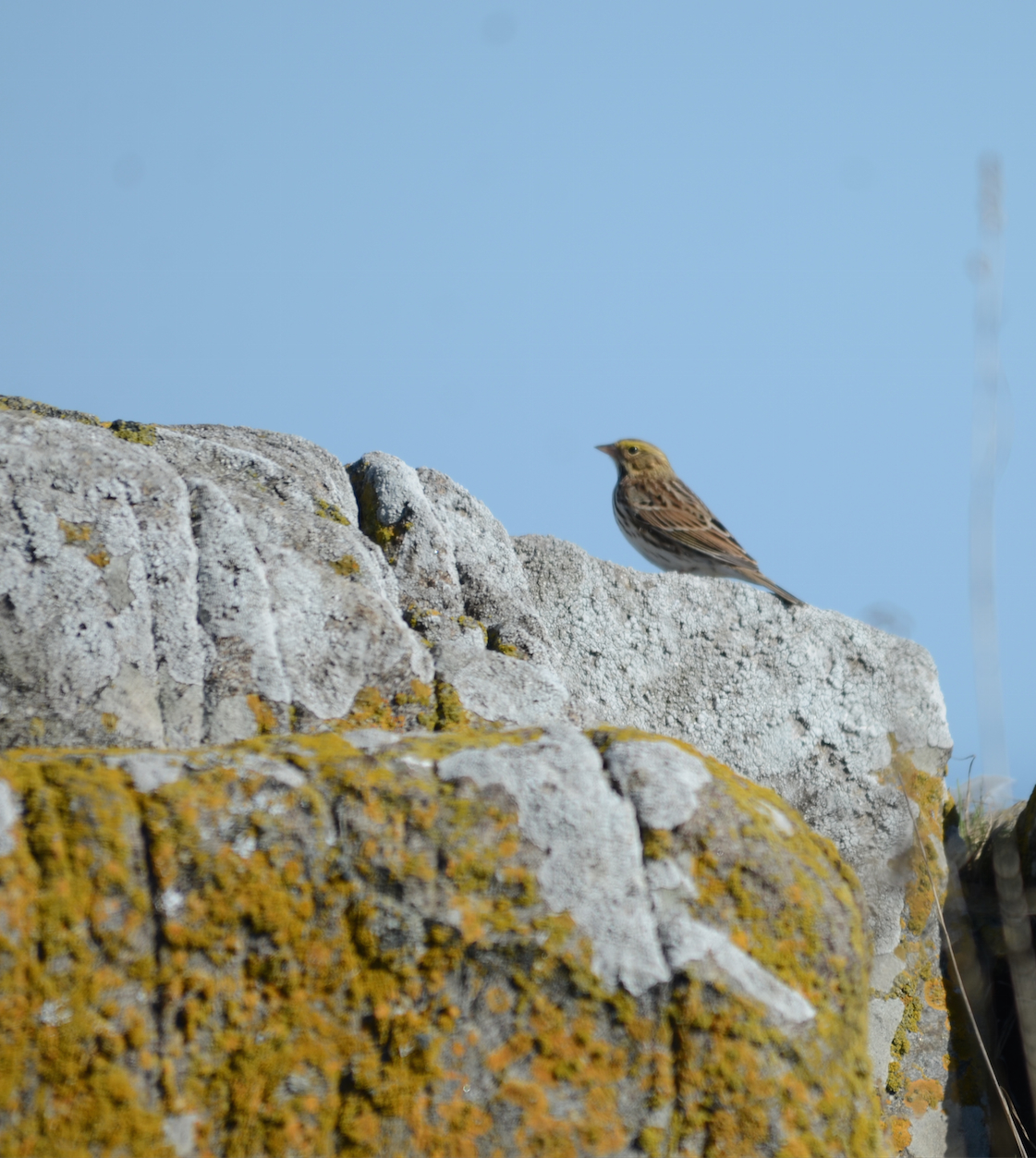
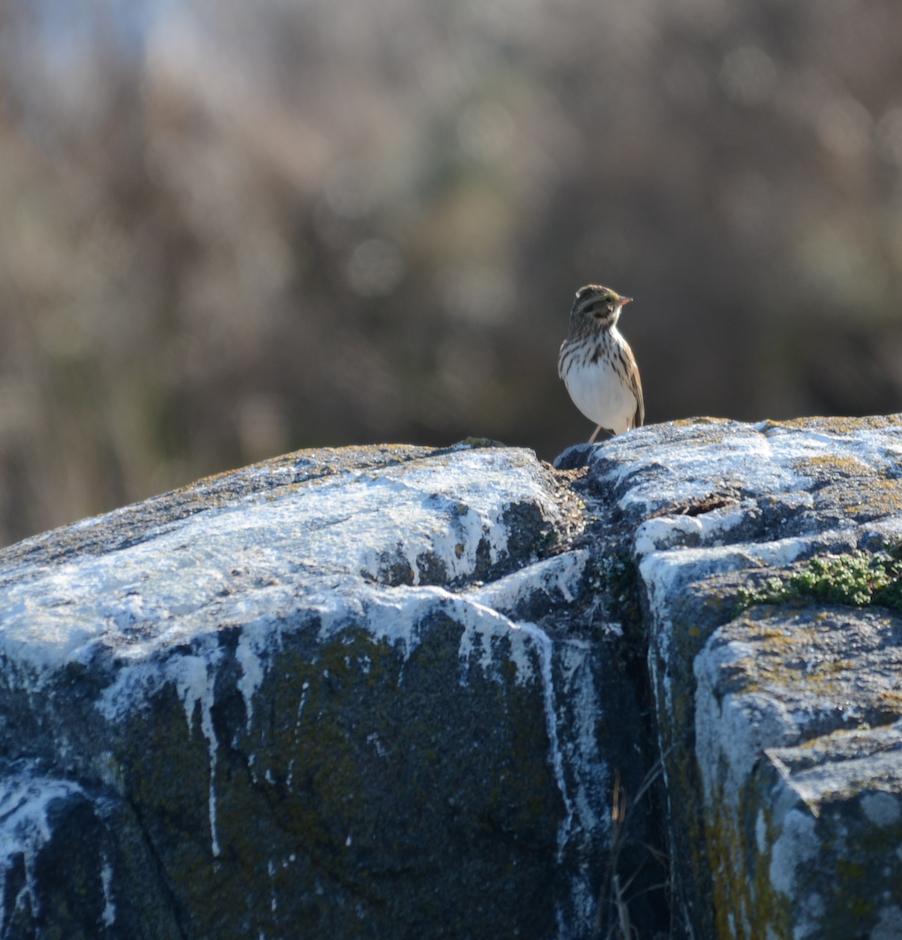
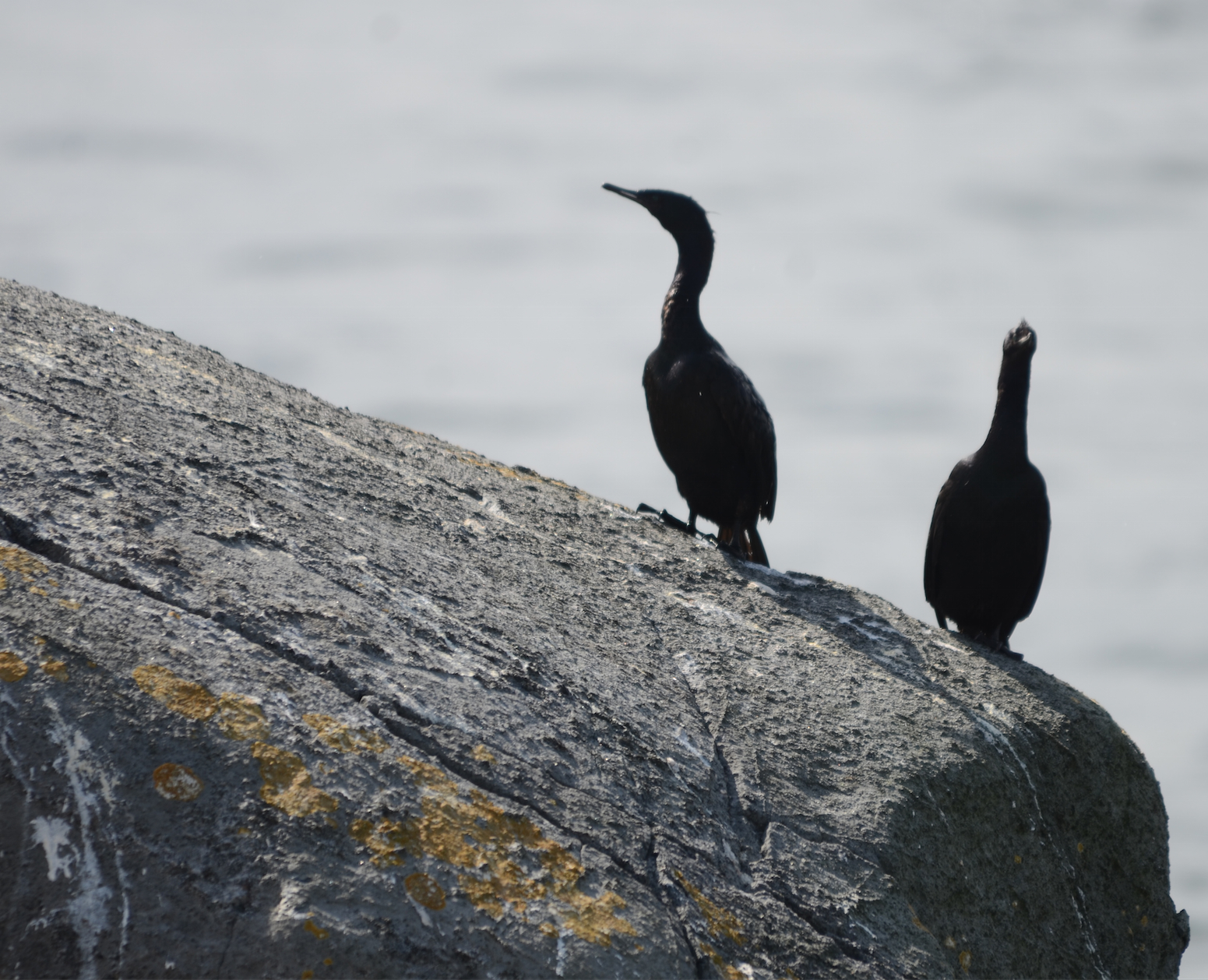
As the weather changes and summer draws to a close, more migratory birds are noted at Race Rocks. Some are just passing through on their way south, maybe some of the same ones I saw going in the other direction last spring such as Barn Swallows, Fox Sparrow and American Pipets. Other birds are arriving back from their breeding grounds to spend the fall winter and spring, like the Harlequin Ducks. Harlequin Ducks were seen this morning around Turbine Rock. Others are at the northern end of their post-breeding migration like the Heerman’s Gulls and California Gulls and will head south again before long. Pelagic Cormorants are spotted roosting near Camera 5 daily. This is a species that used to nest here and it would be nice to see them nesting here again.

On the Pinniped front there were nine Northern Elephant Seals holding their ground on the top of Middle Rock today. As I know from personal experience they are good at that.

Chores were routine today and there were no visitors.

Sea Lions Moulting at Race Rocks

There was very little wind all day and the sun came and went as clouds formed over central Juan de Fuca Strait and environs. The forecast calls for light winds to increase to westerly 15 – 20 knots this evening and then drop to 5- 15 knot easterlies Tuesday morning. The chance of showers has been pushed back to Tuesday afternoon and evening and rain is forecast for the rest of the week. The dropping barometer continued its descent and reached 1005 hPA this evening.

Today, there was only one whale-watching vessel visit, observed in the Ecological Reserve. They went really slowly in the protected area, stayed in the middle of Middle Channel and operated their vessel in a sustainable fashion. Definite candidates for the Kudos award that I give out weekly in the form of a thank-you e-mail to the company that does the best job of operating sustainably in reserve. Best practices align with the agreement made with the industry and the Marine Mammal Regulations. One sports fishing vessel was also noted. They were fishing either right on the boundary or just inside the reserve. As soon as I went out with the camera, they pulled up and left which made me wonder.

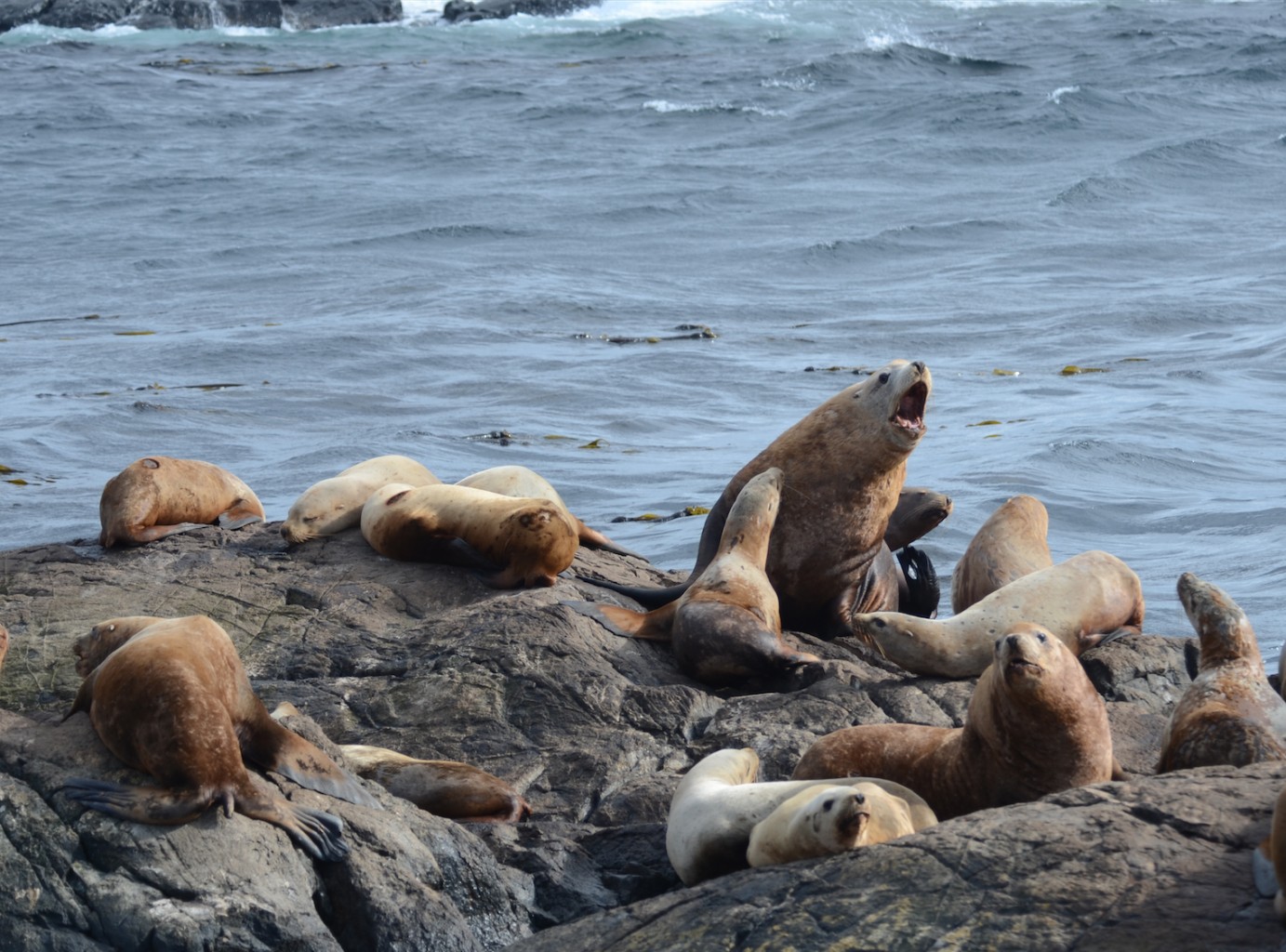
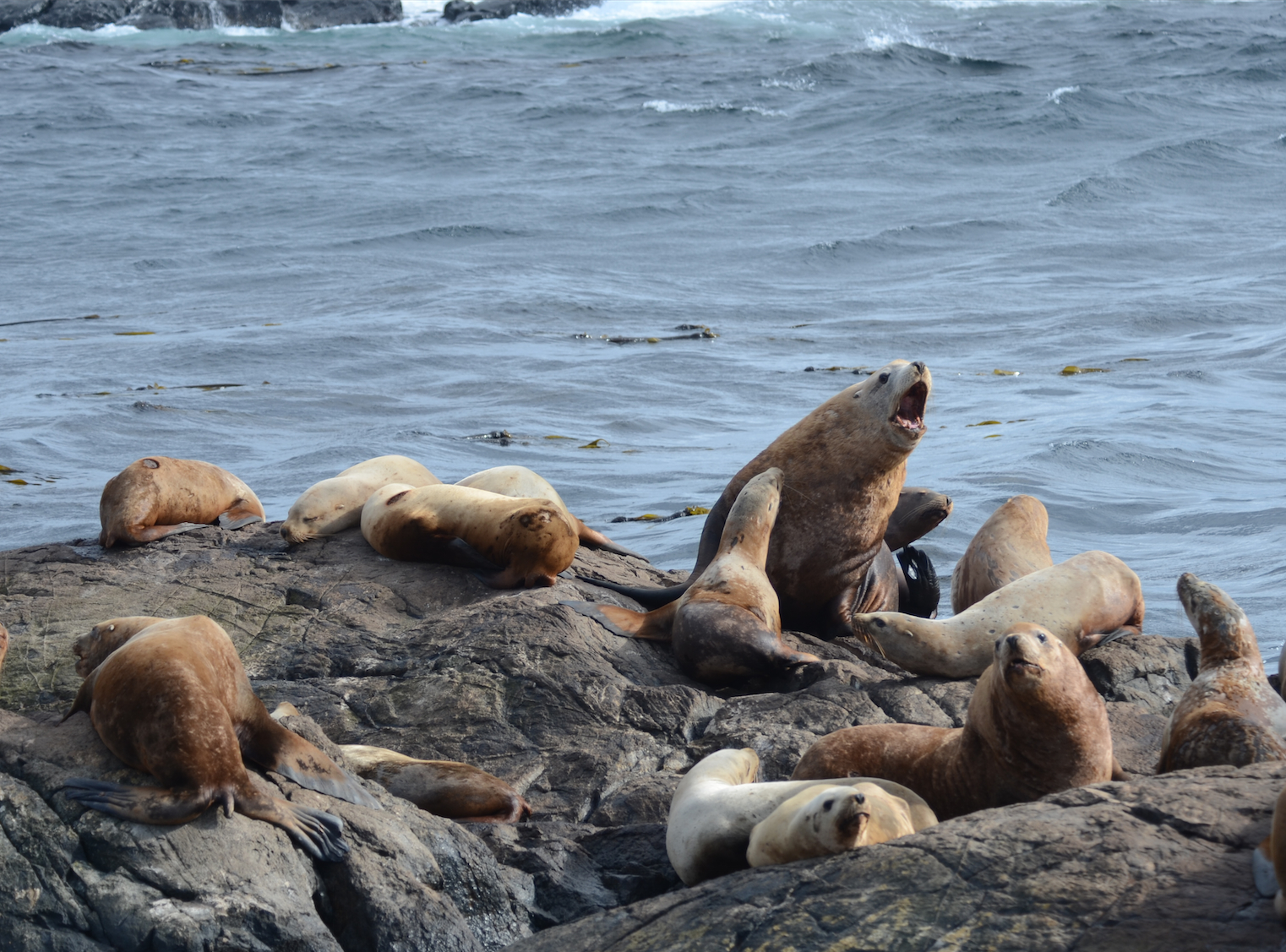
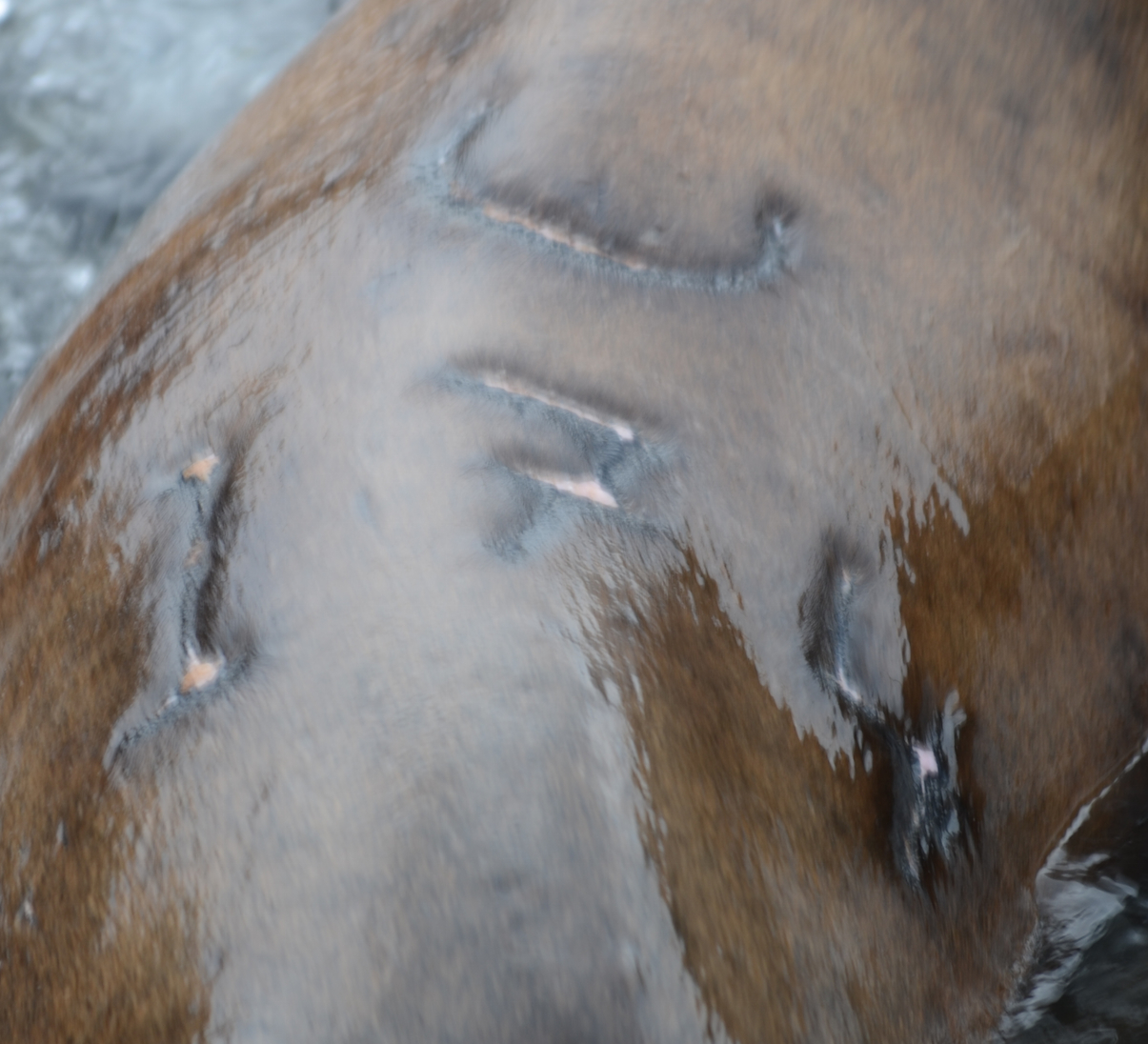
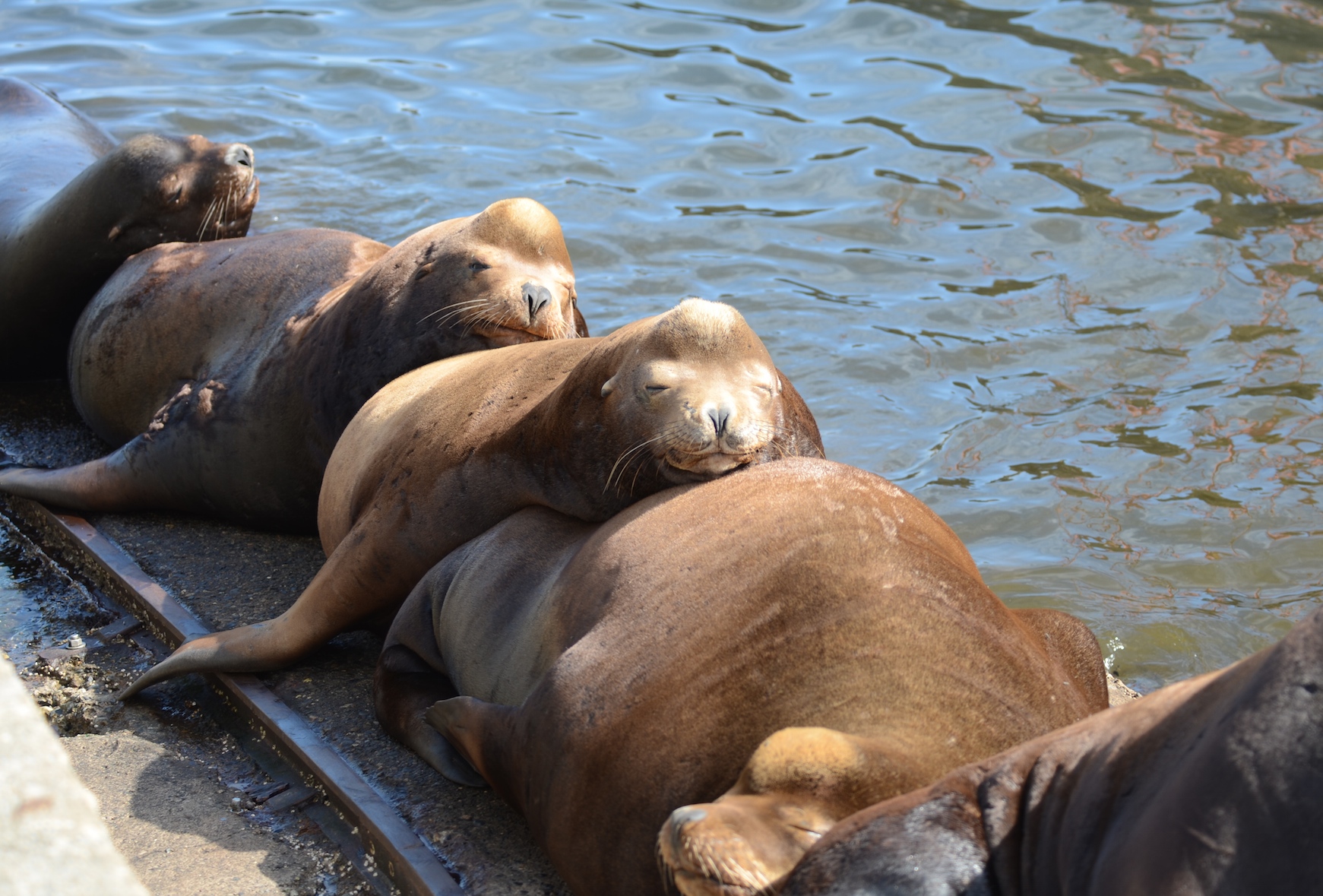
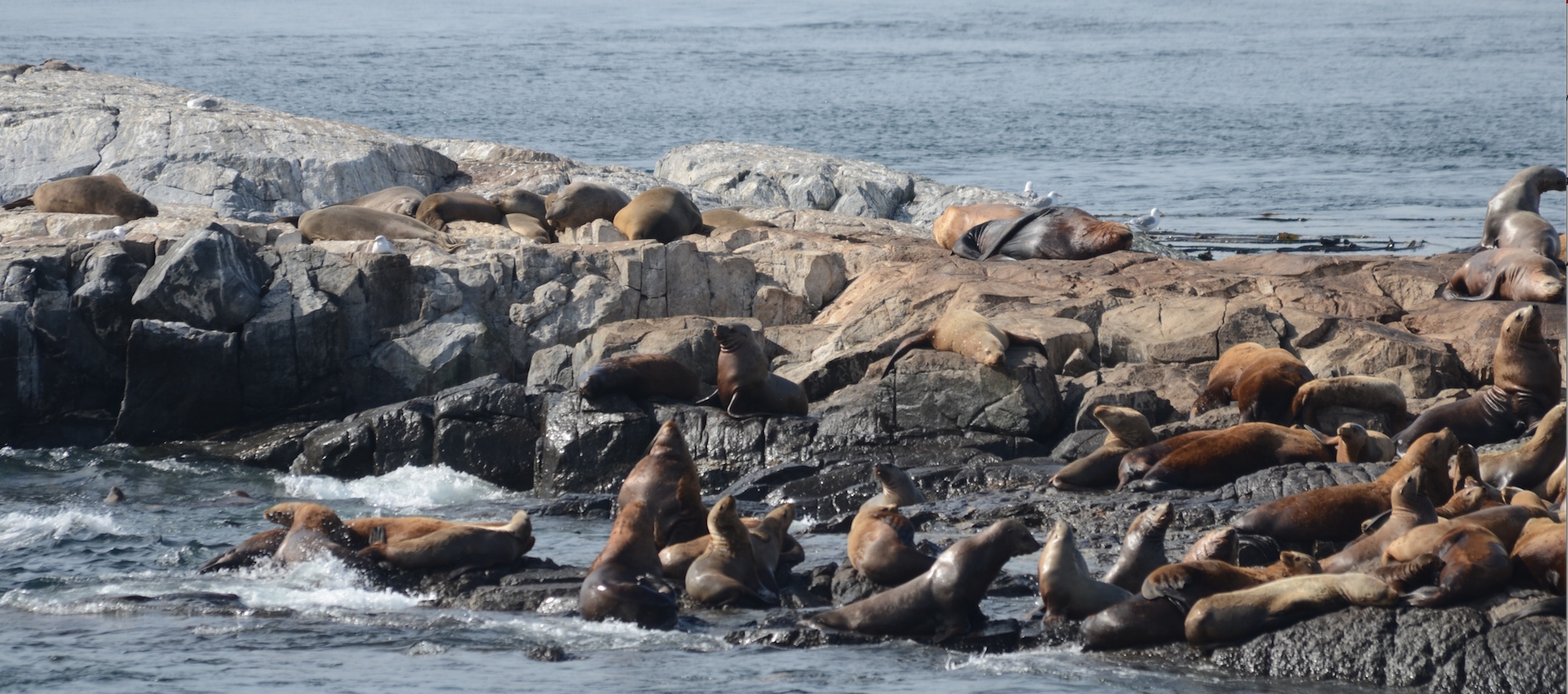
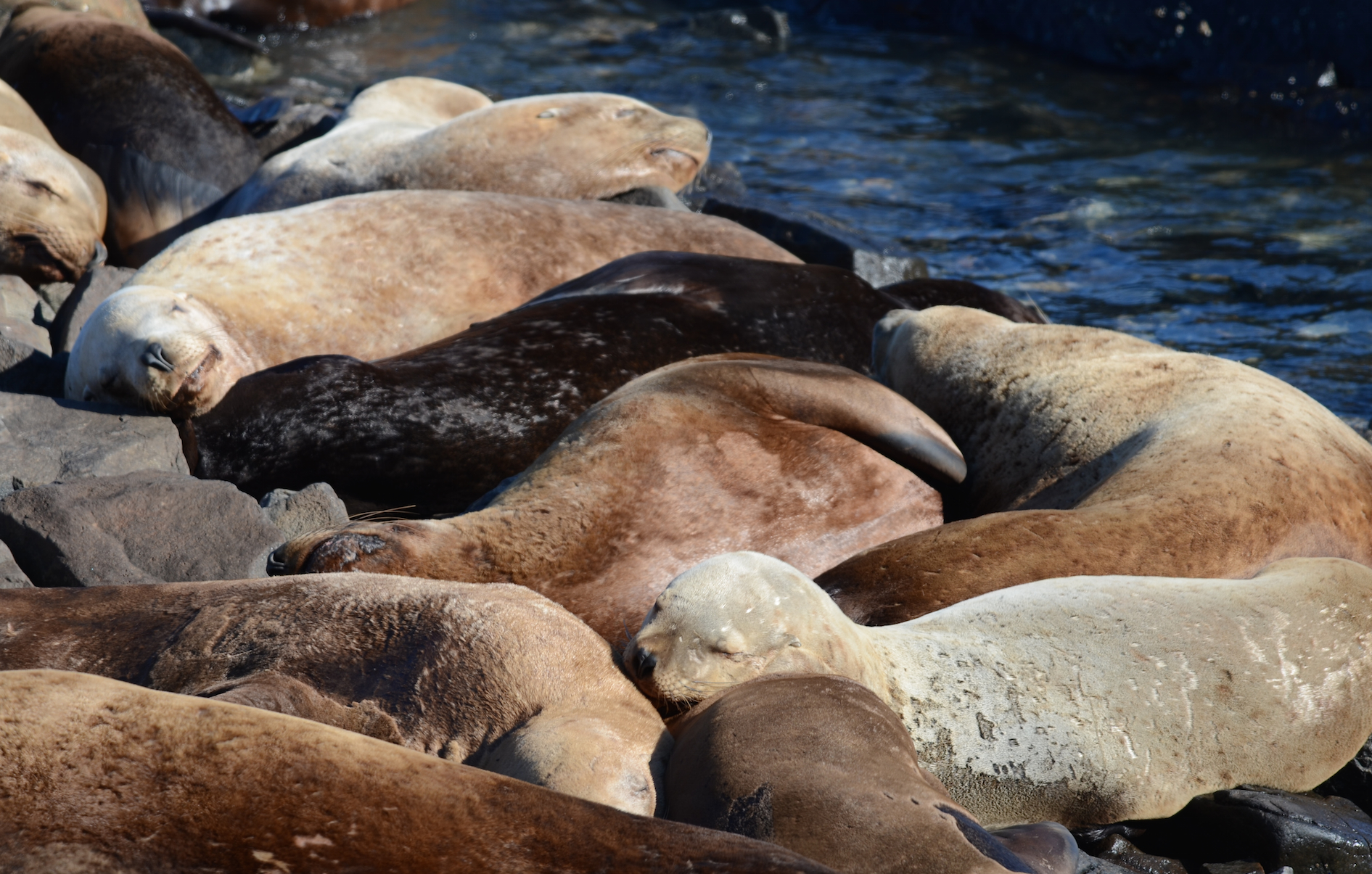
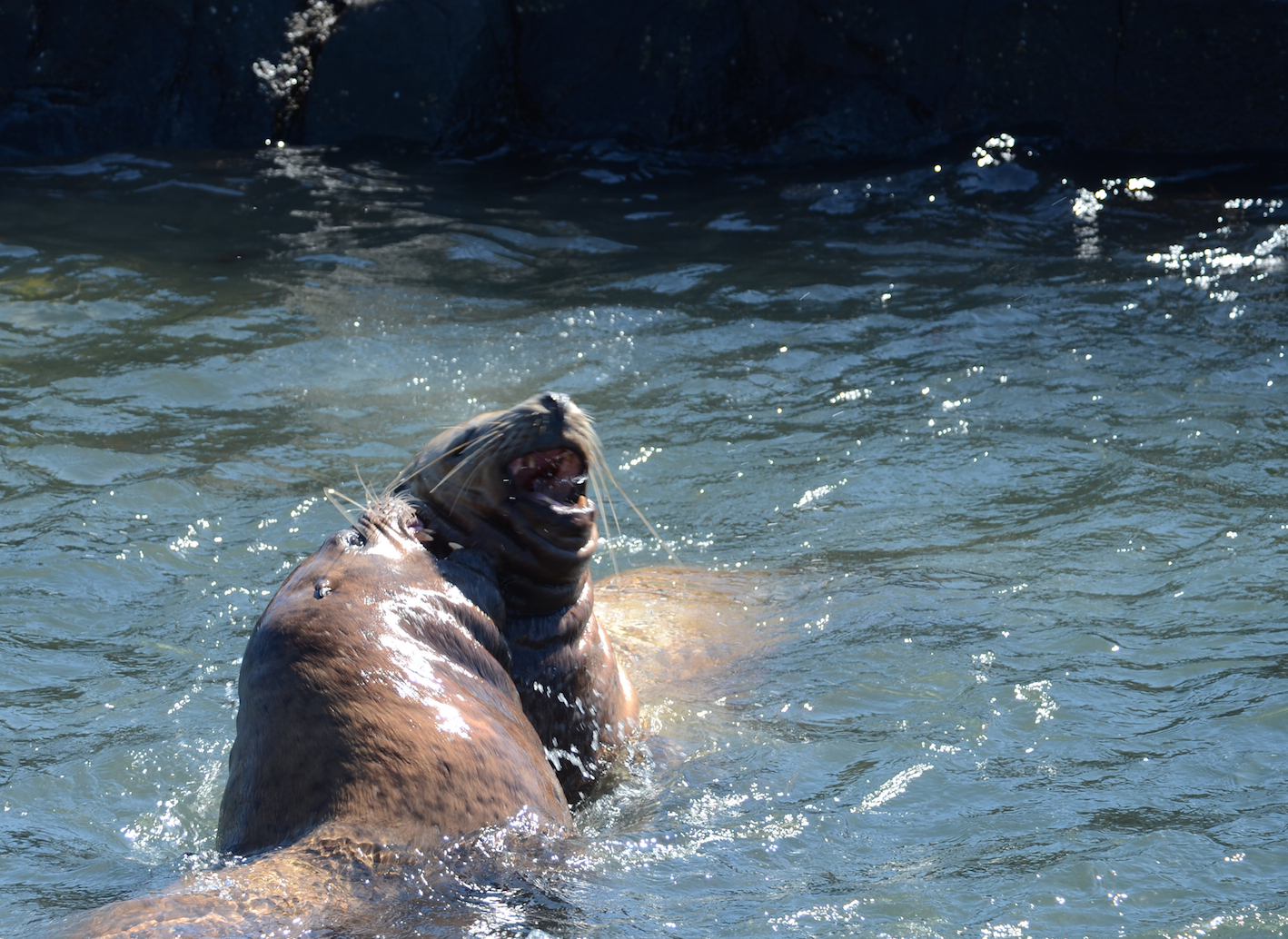
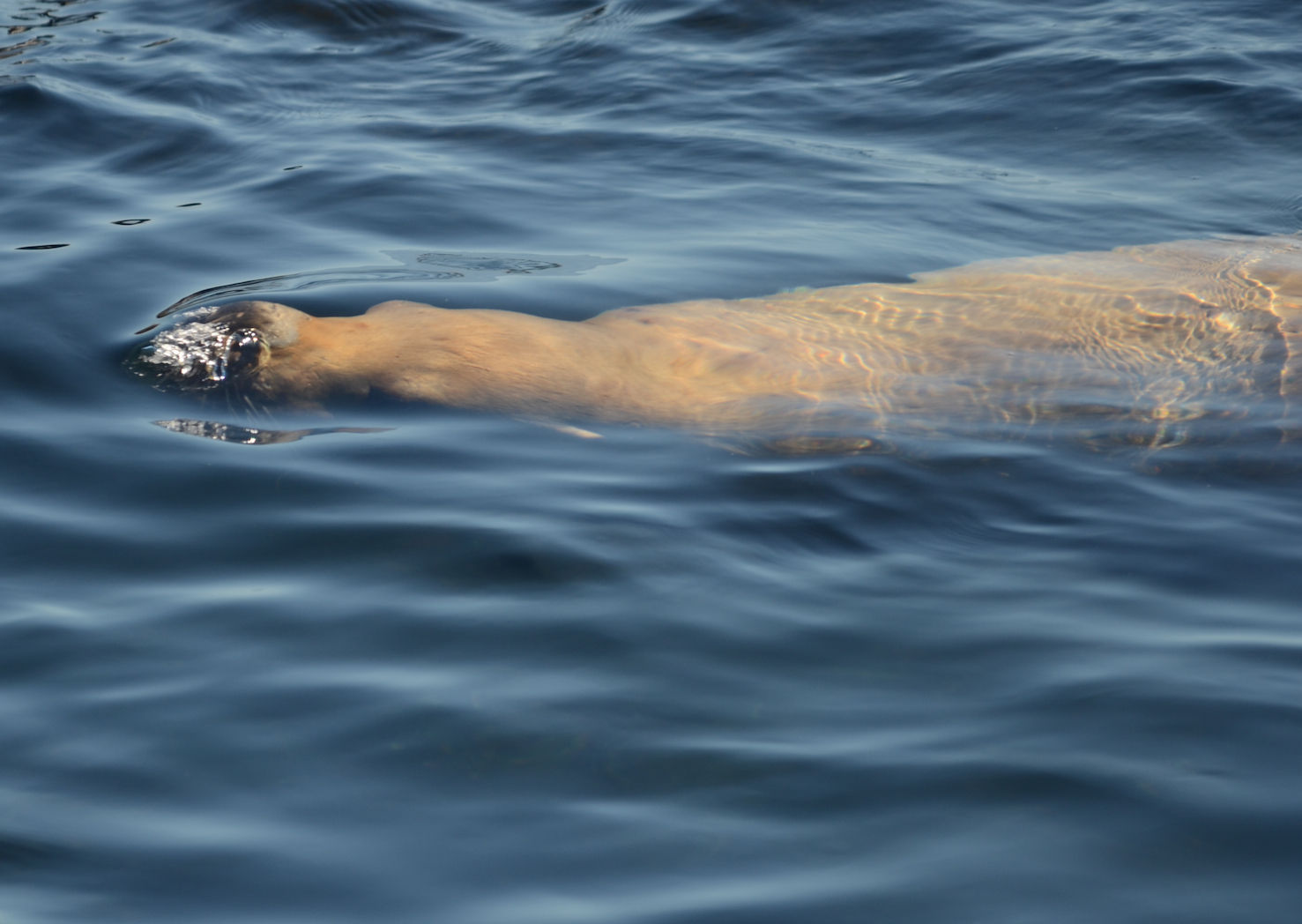
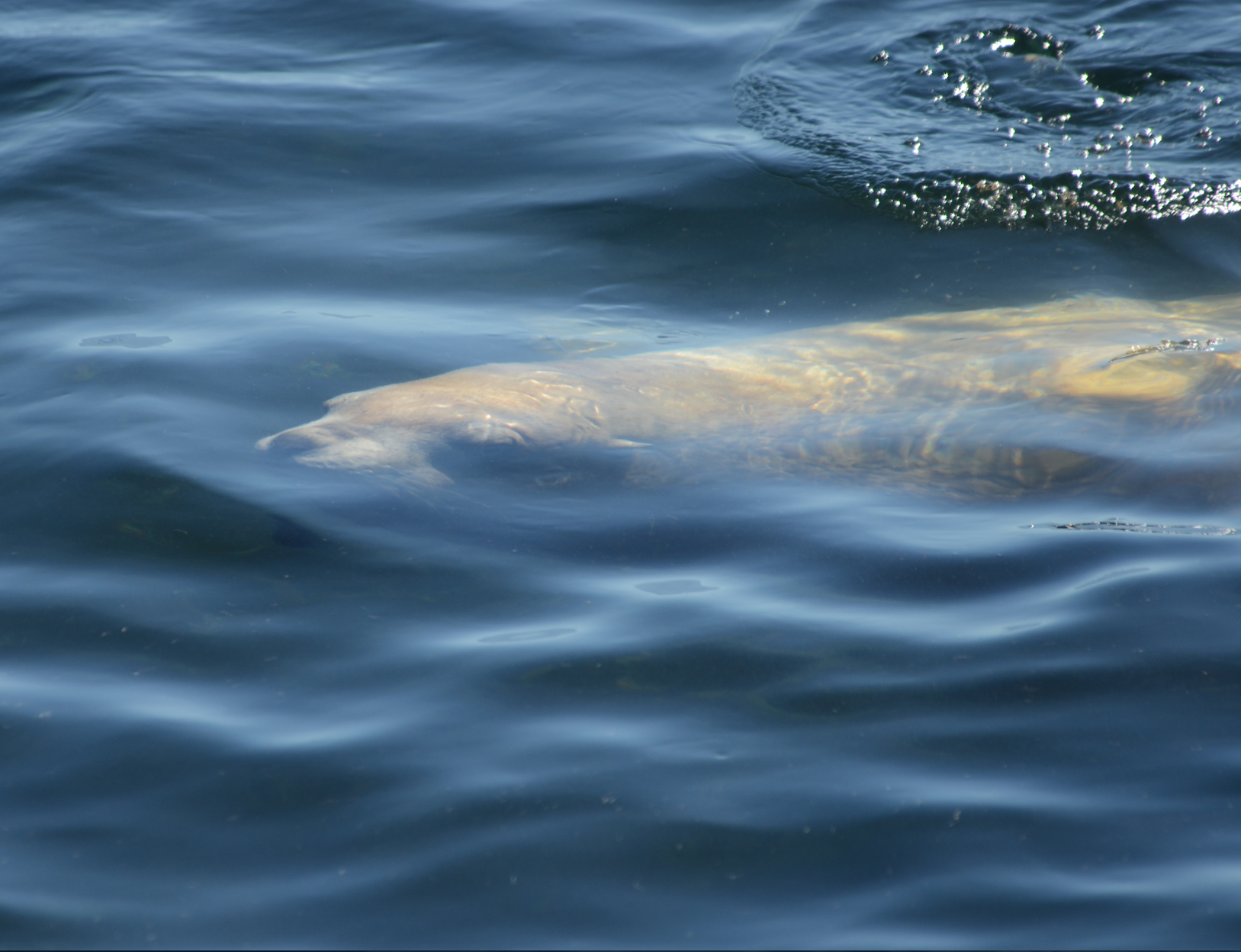
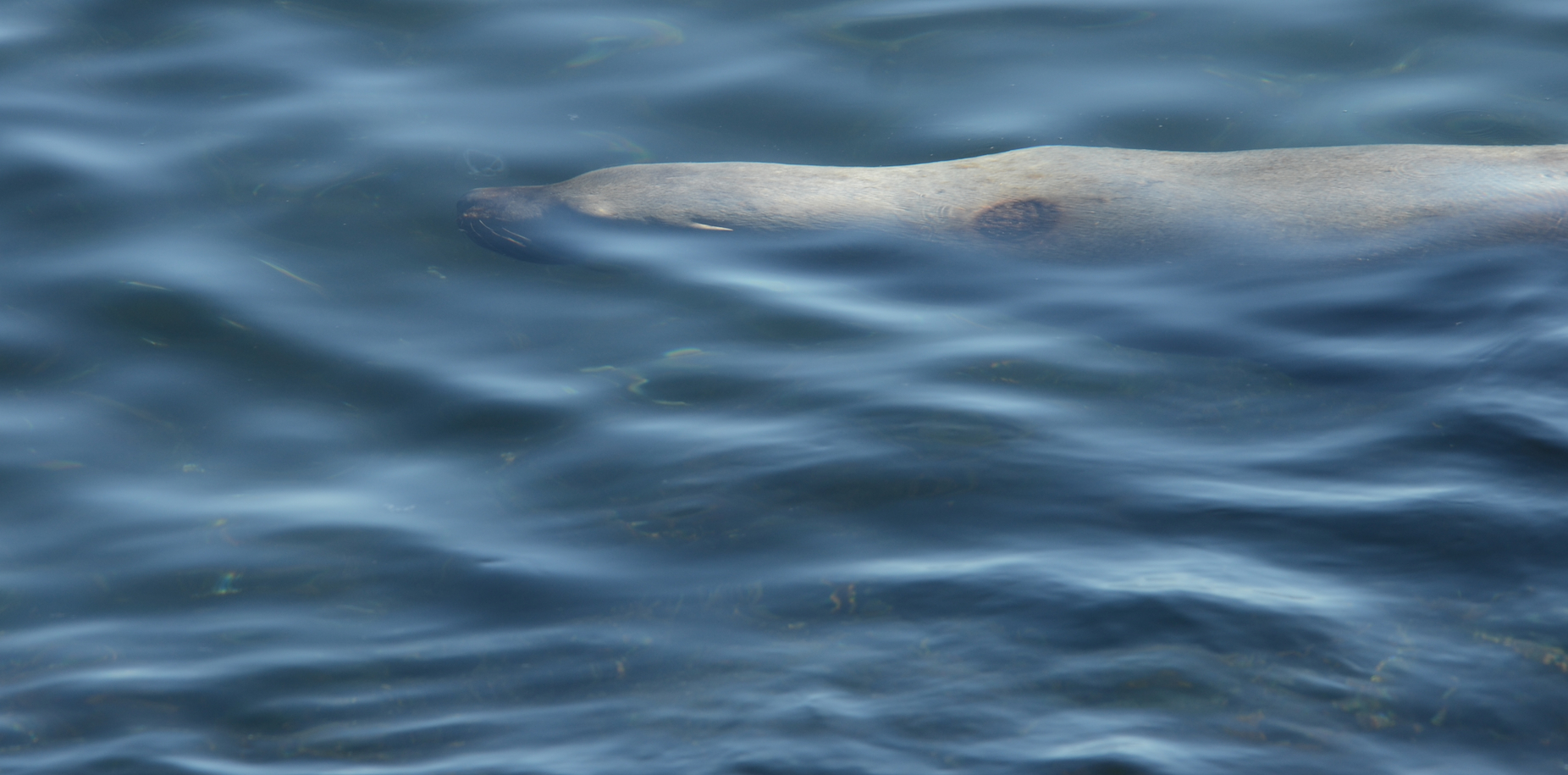
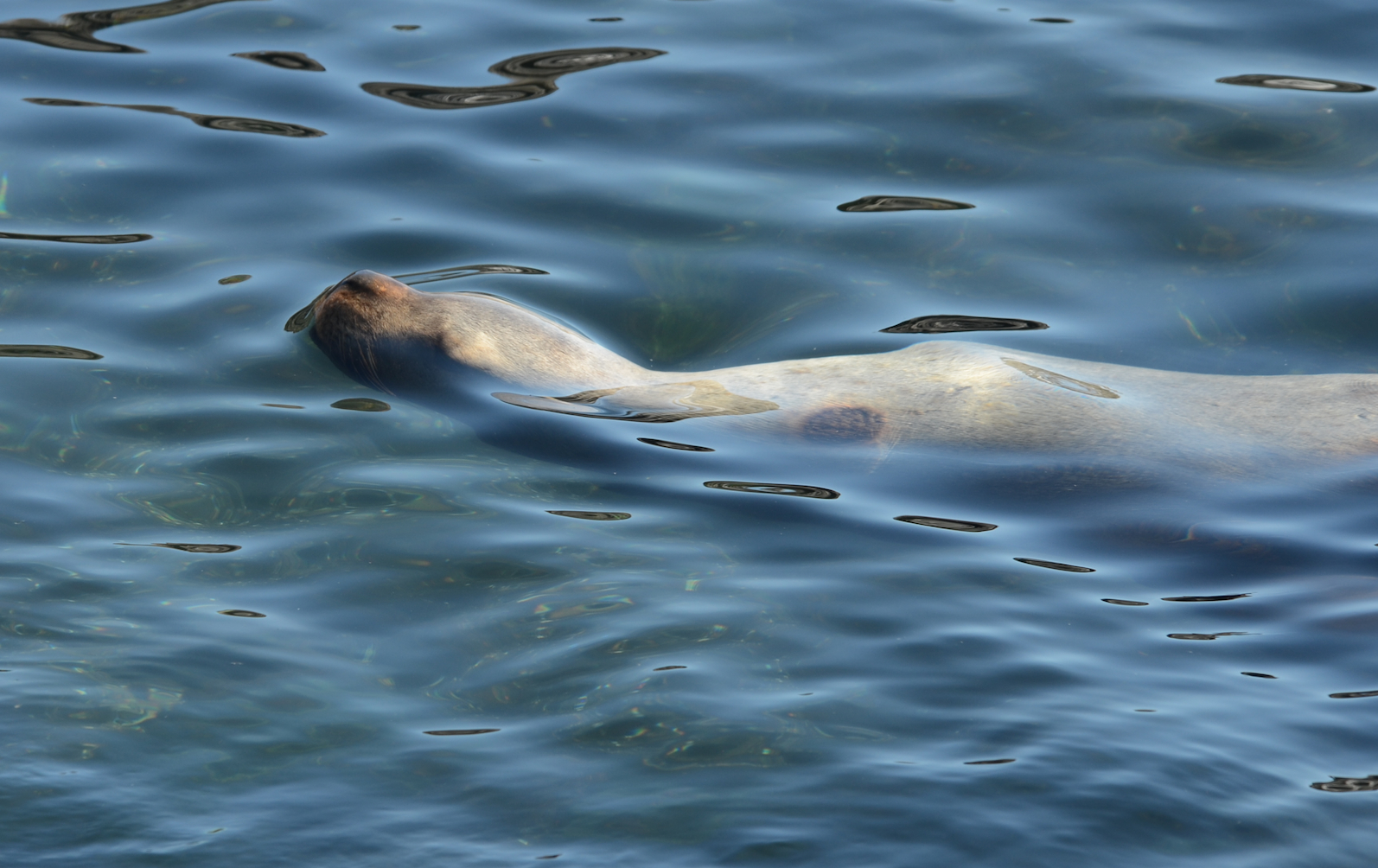
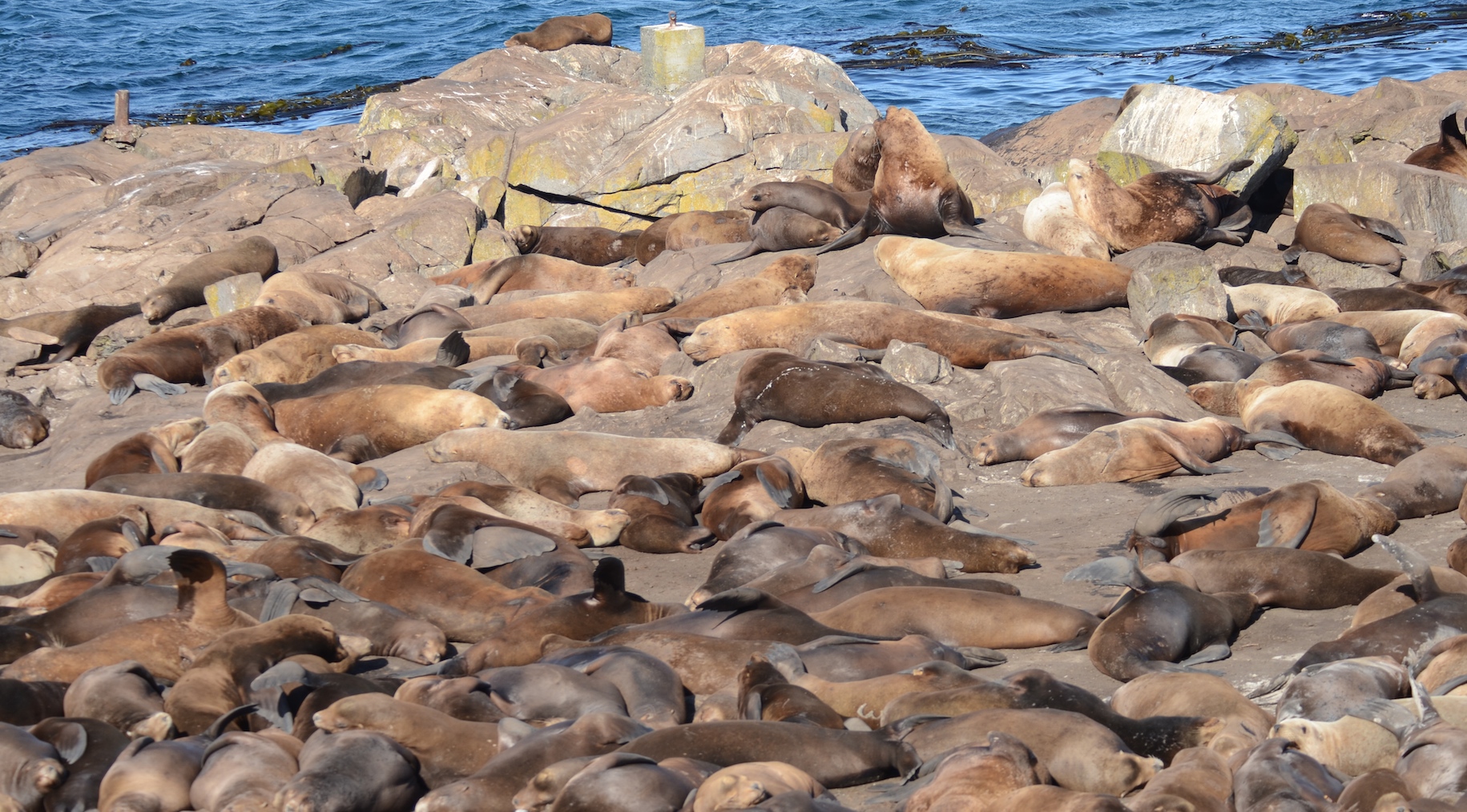
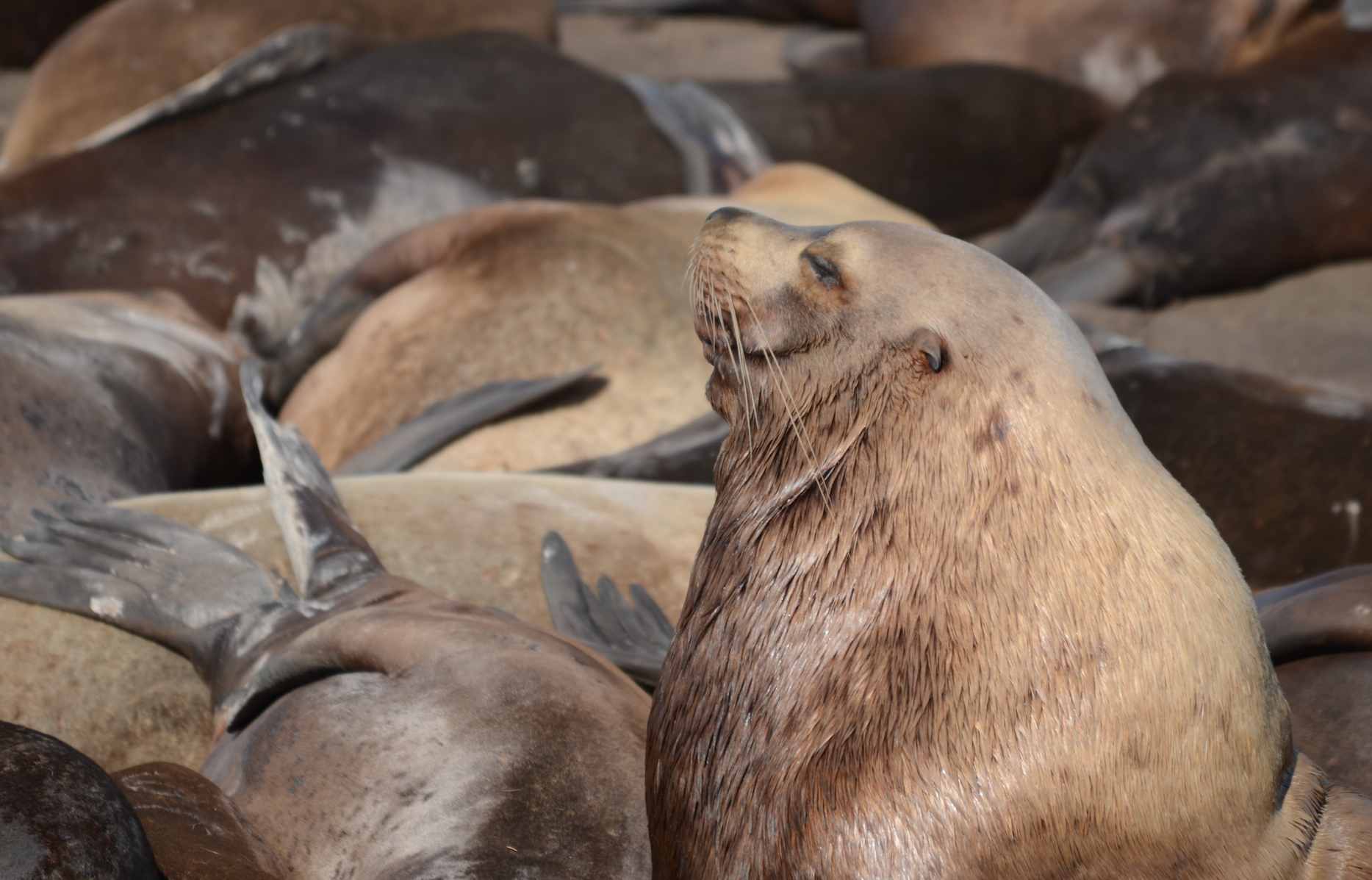
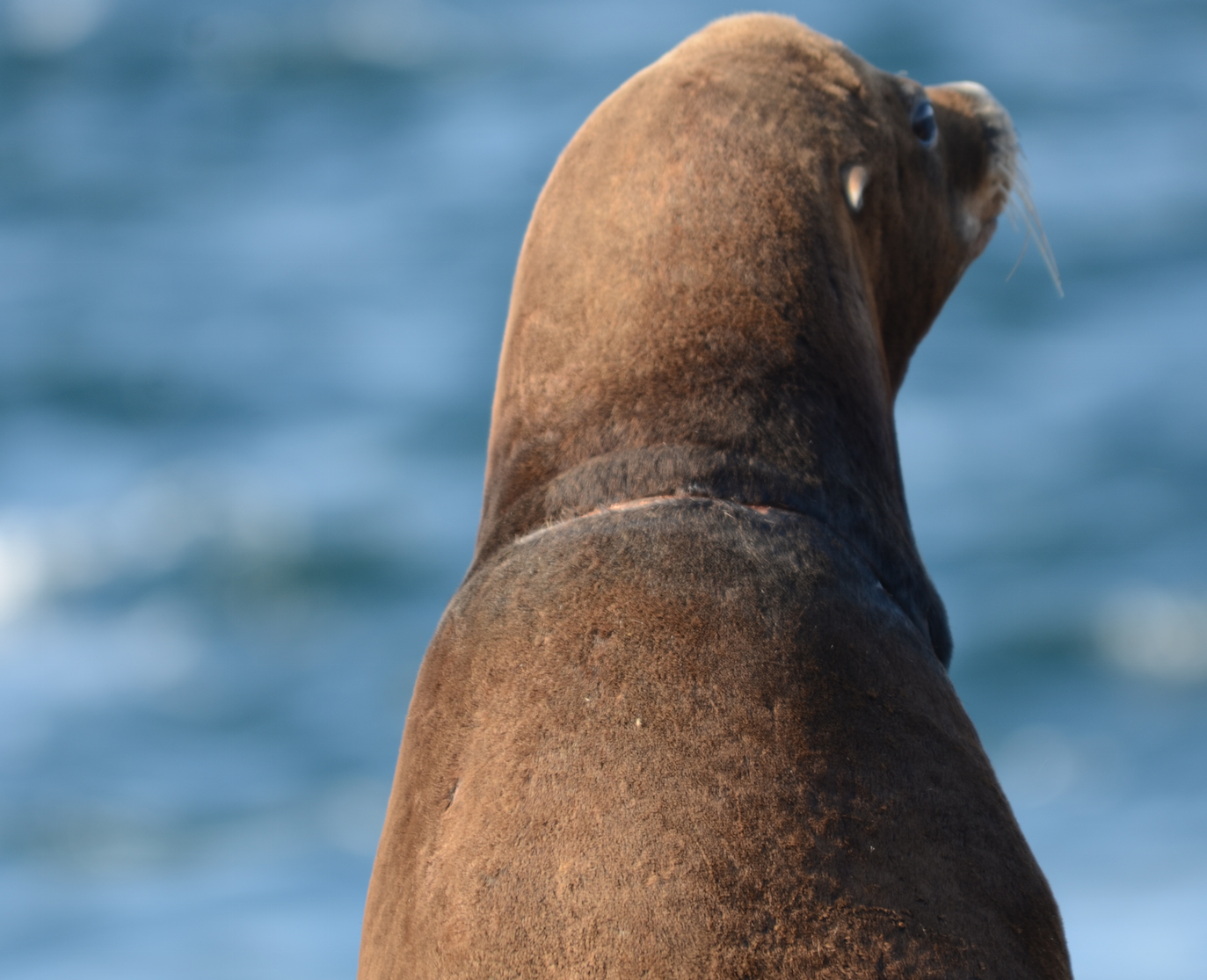
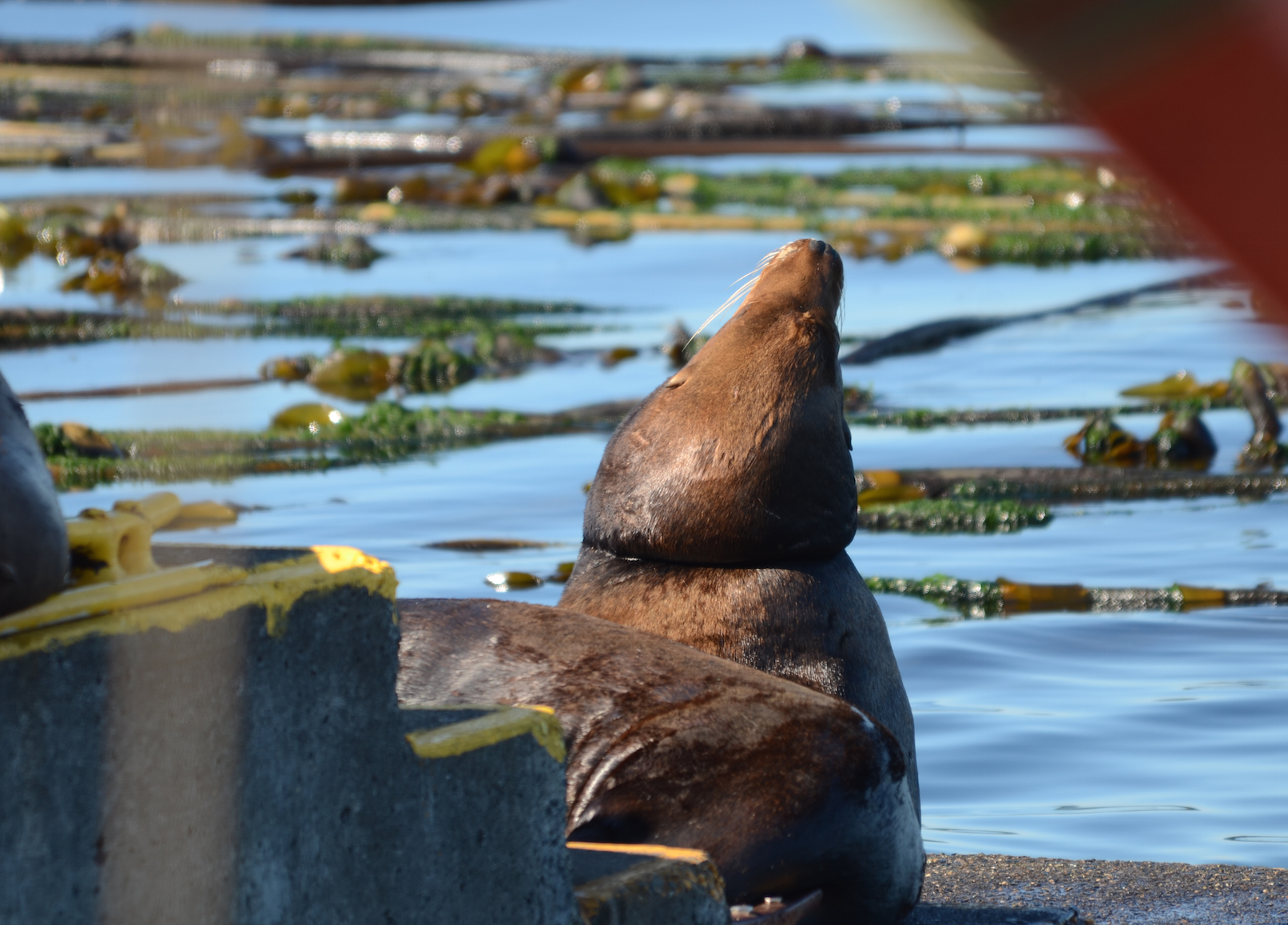
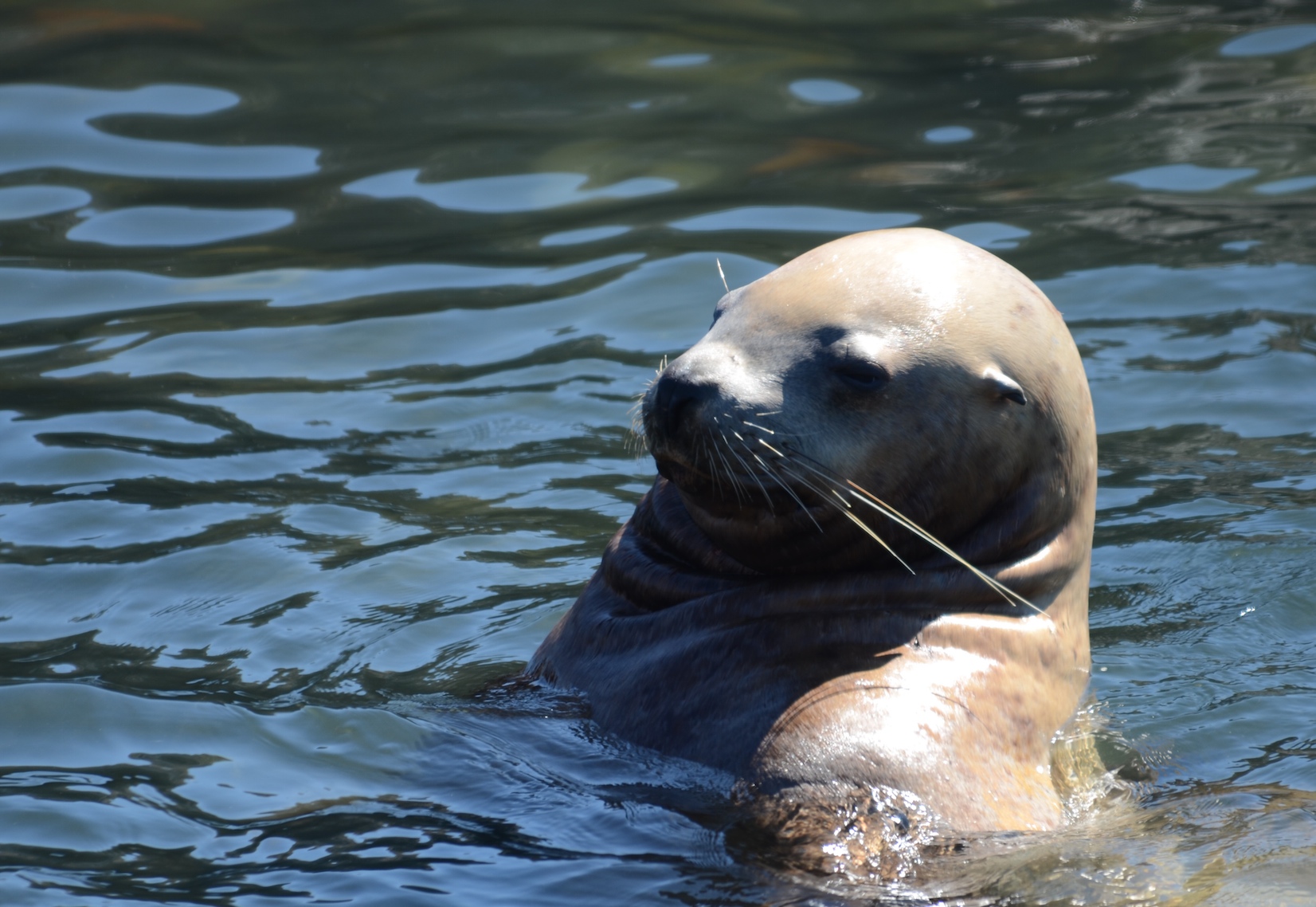
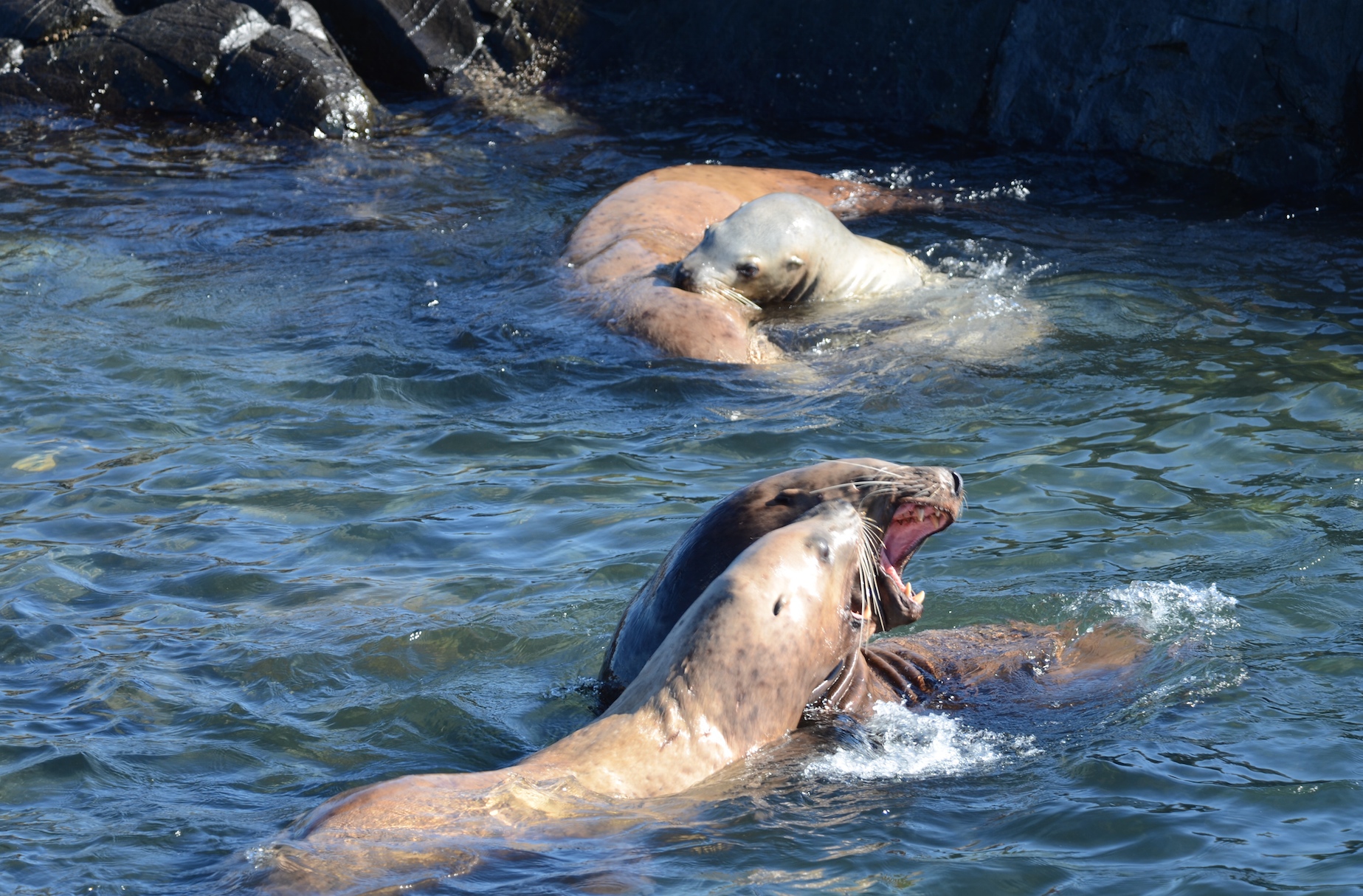
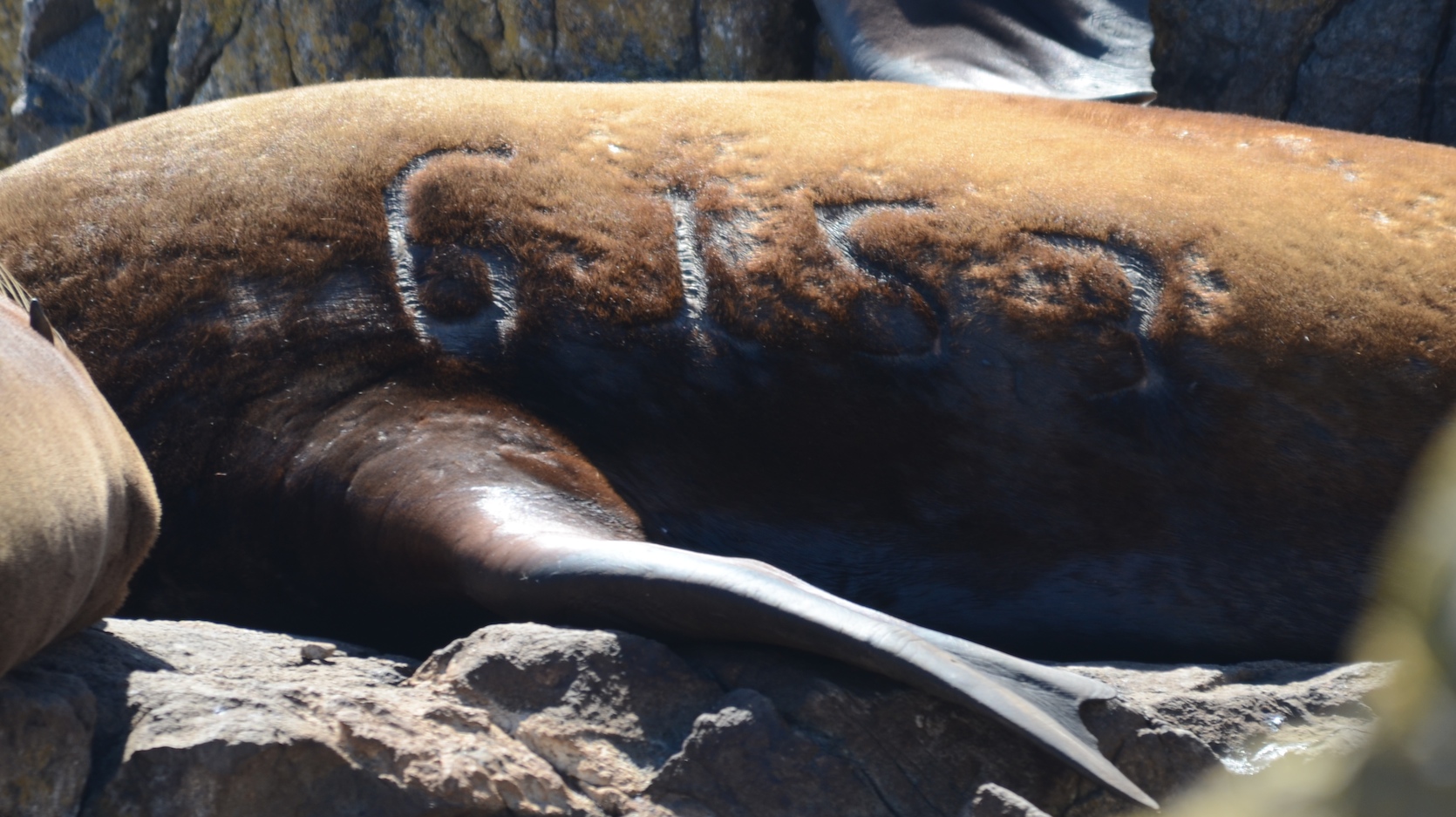
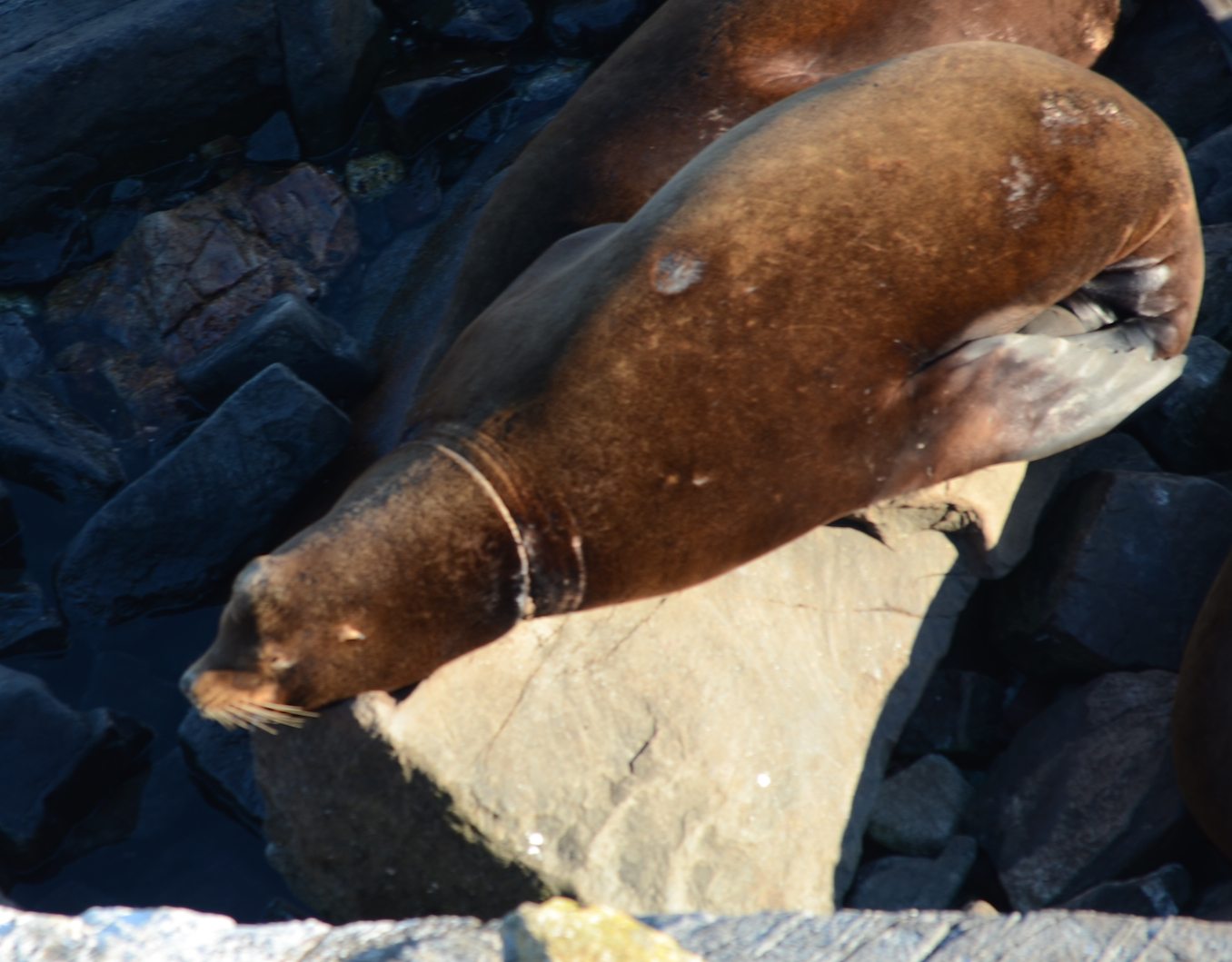
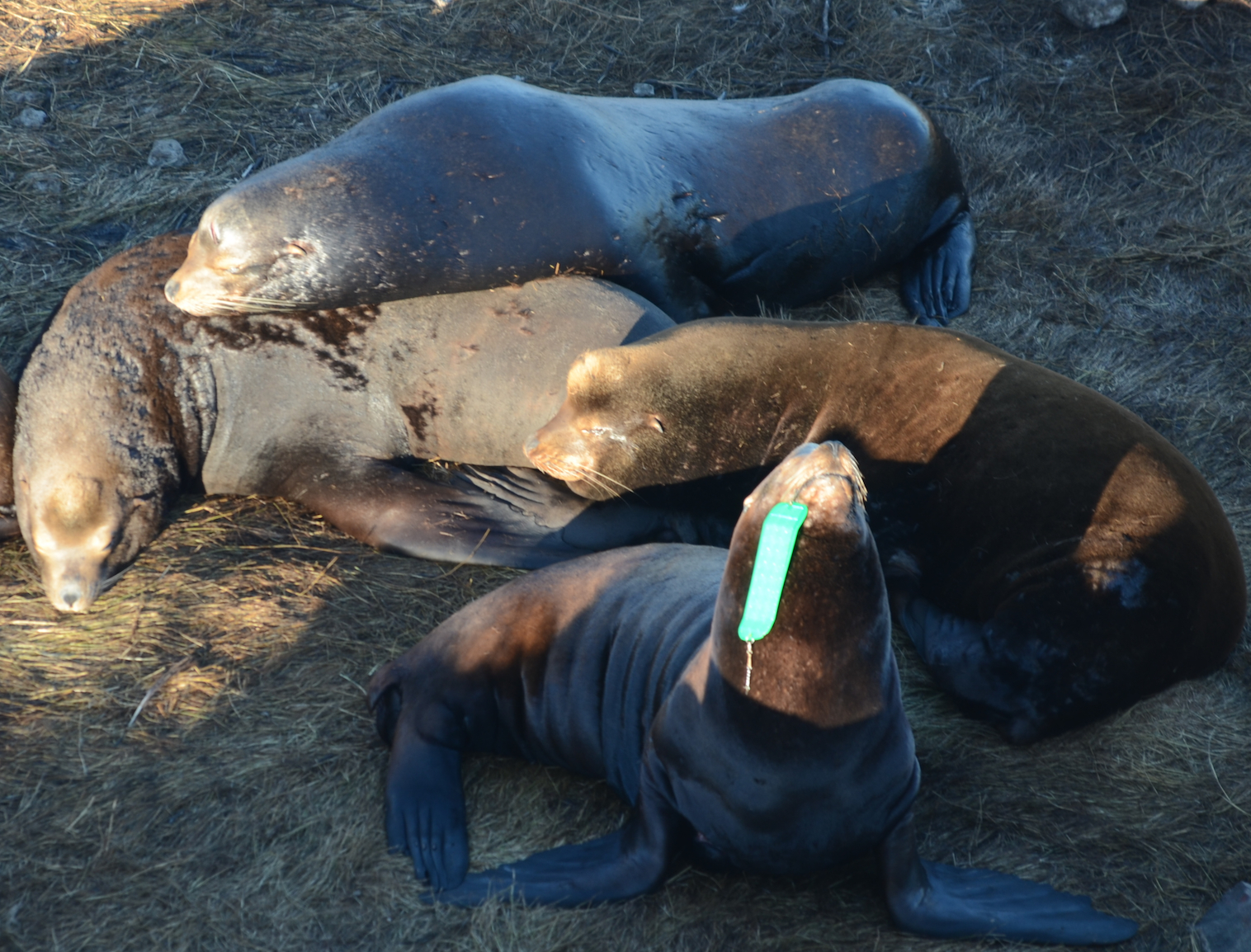
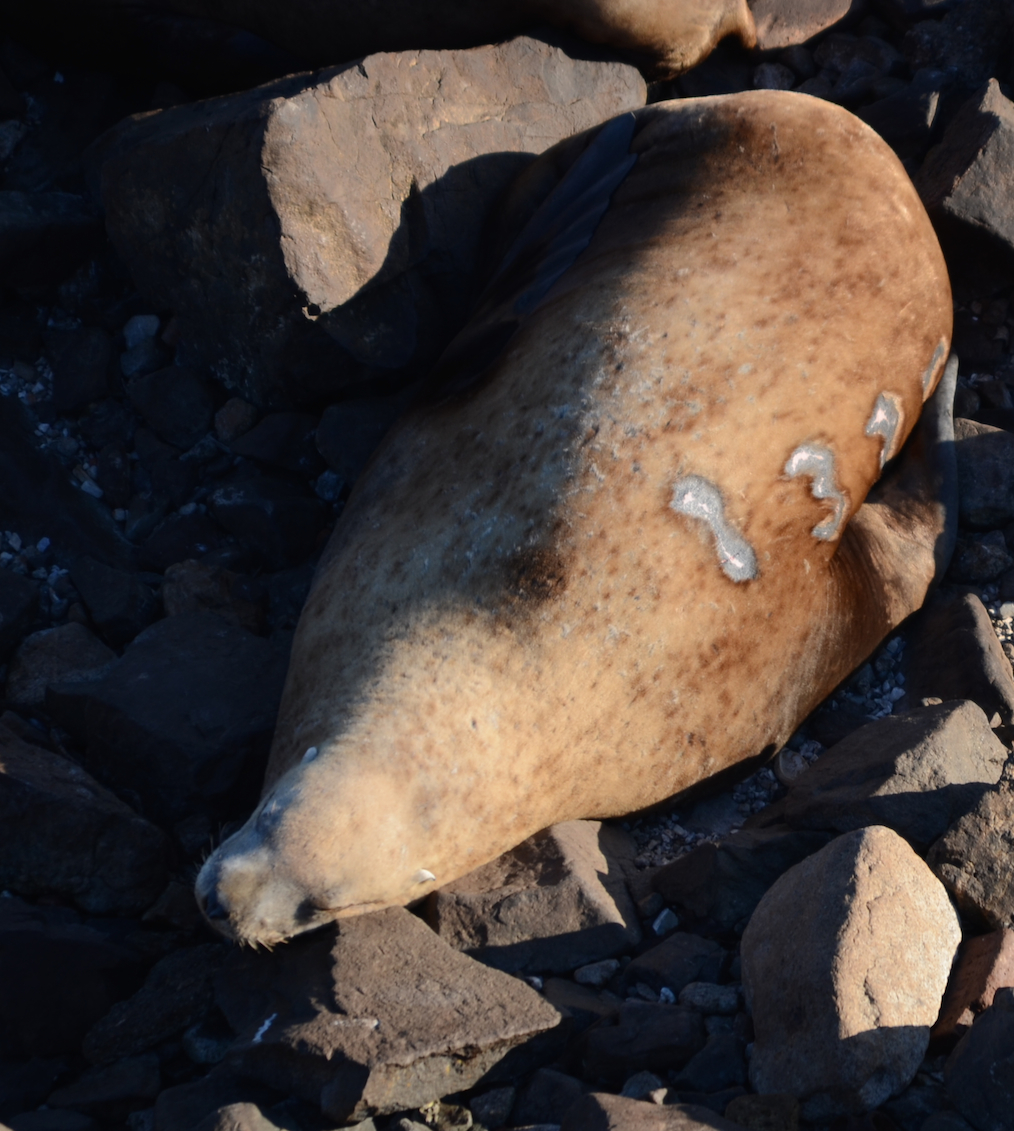
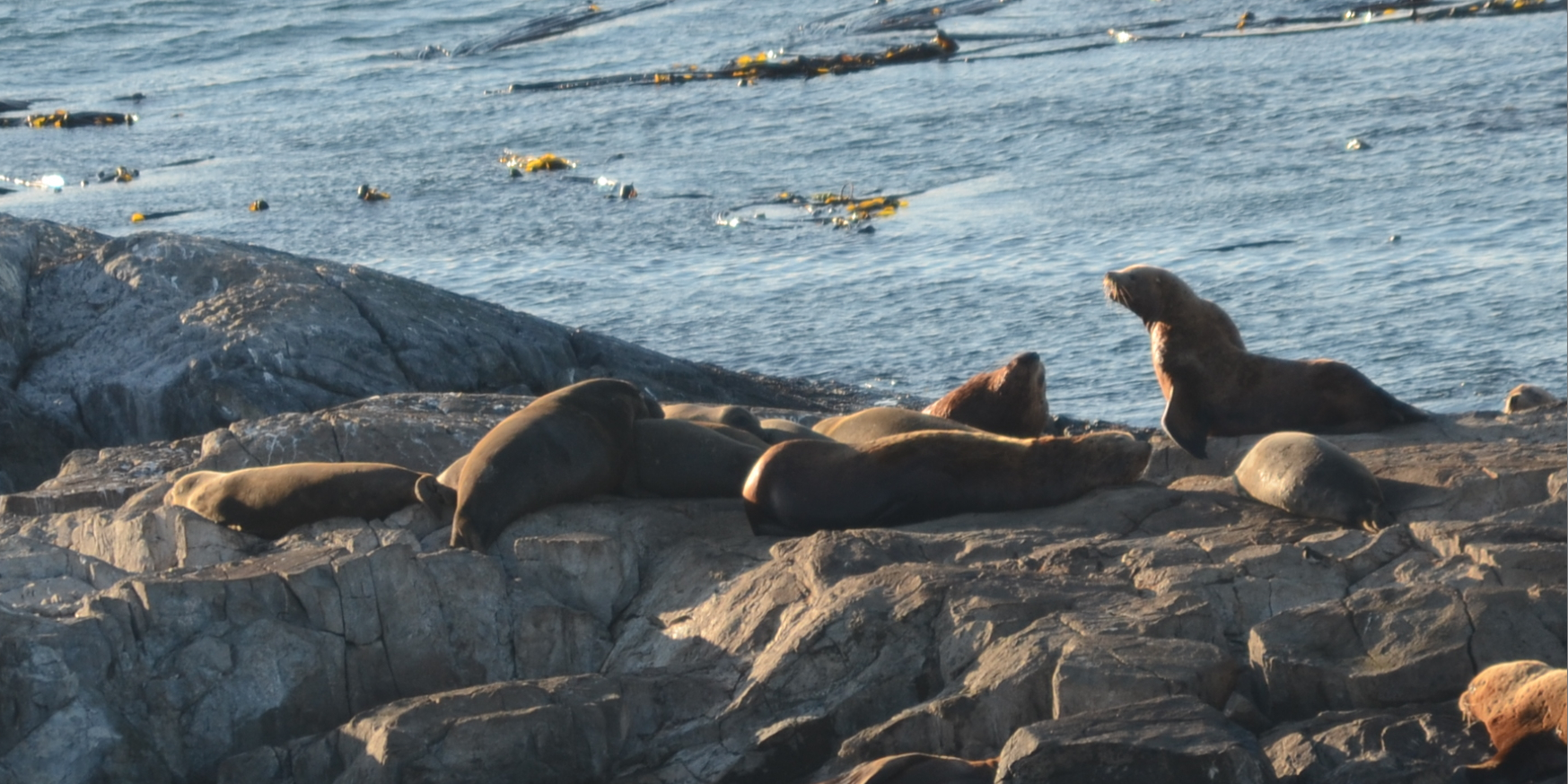
The sea lions continue to dominate the scene and the sound here. Their moult is progressing and there was hair everywhere after yesterday’s strong westerly winds. They seem to be spending more time ashore and it appears that there are more animals on Great Race everyday. This may be because less of Middle Rocks is available due to increased swell height and tide level. Photography of tags, brands and wounds continues and the data is being logged for use by NOAA scientists in determining population levels and trends, as well as migration patterns. The Vancouver Aquarium is interested in doing some animal welfare work here later in the season with “necklaced” individuals like the ones shown in yesterday’s blog, with plastic packing straps stuck on their necks and ‘growing’ into the flesh. I also take quite a few photos of sea lions that have nothing wrong with them: they are wrestling, sleeping, swimming and just hanging out. See gallery below.

More on other species tomorrow.

Chores were routine today other than creating a draft hand-out on ecologically sensitive areas for island visitors. Fence mending takes quite a bit of time each day but the sea lions are very smart so it is getting better. There was no gull guano on the solar panels this morning and I thought maybe it would soon be time to move into a every second day routine, for cleaning them. The dust and hair deposited on the solar panels turned the wash water into a deep brown in no time, so the daily wash will continue for now. Solar energy is particularly appreciated right now as I am still recovering from an almost complete loss of fresh water due to a mystery plumbing failure downstream of the Science House shut-off valve. This means running the de-salinator to make fresh water whenever there is sufficient solar power in order to not run down the batteries or use the generator. It is a bit of a juggling act but a small bother in a wonderful place with an incredible window on the world of nature.


Strong Westerlies

It was a westerly kind of a day, gusting 25 – 30 knots all morning under partially clear skies. In the afternoon gusts were stronger, churning the sea into a white froth. The wind speed dropped to 20 knots in the evening and was closer to 15 by the time the sun went down. Although the fog was threatening early, it stayed off to the west and the haze that has hanging around was cleared by the wind and replaced with building clouds. The strong wind warning continues and the forecast for Monday is mainly cloudy. The barometer continues its step-wise descent.

In spite of blustery conditions and because of all the marine mammal action there were 18 visits observed by commercial tour operators today. Whale watching was good in the area today and the sea lost some salt to exhilarated looking tourists who had their hoods on and exposure suits battened down in the smaller open boats. No other vessels were observed in reserve.

It was another exciting day on the mammal front with Humpbacks all around, Killer Whales in Race Passage, an increased number of sea lions and return of at least one elephant seal to Great Race Island. Salmon continue to be an important part of gull diet in the area and that is mostly due to scavenging off kills by sea lions.

One of the California sea lions that hauled out with a big new flasher last week, has managed to get rid of it. I am not sure if the hook is inside but today he just had a little broken piece of the flasher hanging out of his mouth when I went to do the seawater sampling and when I came back it was lying on the walkway with its bead chain still looking shiny. There are several ‘necklaced’ sea lions here right now. They all seem to have white plastic strapping around their necks and it looks deadly.

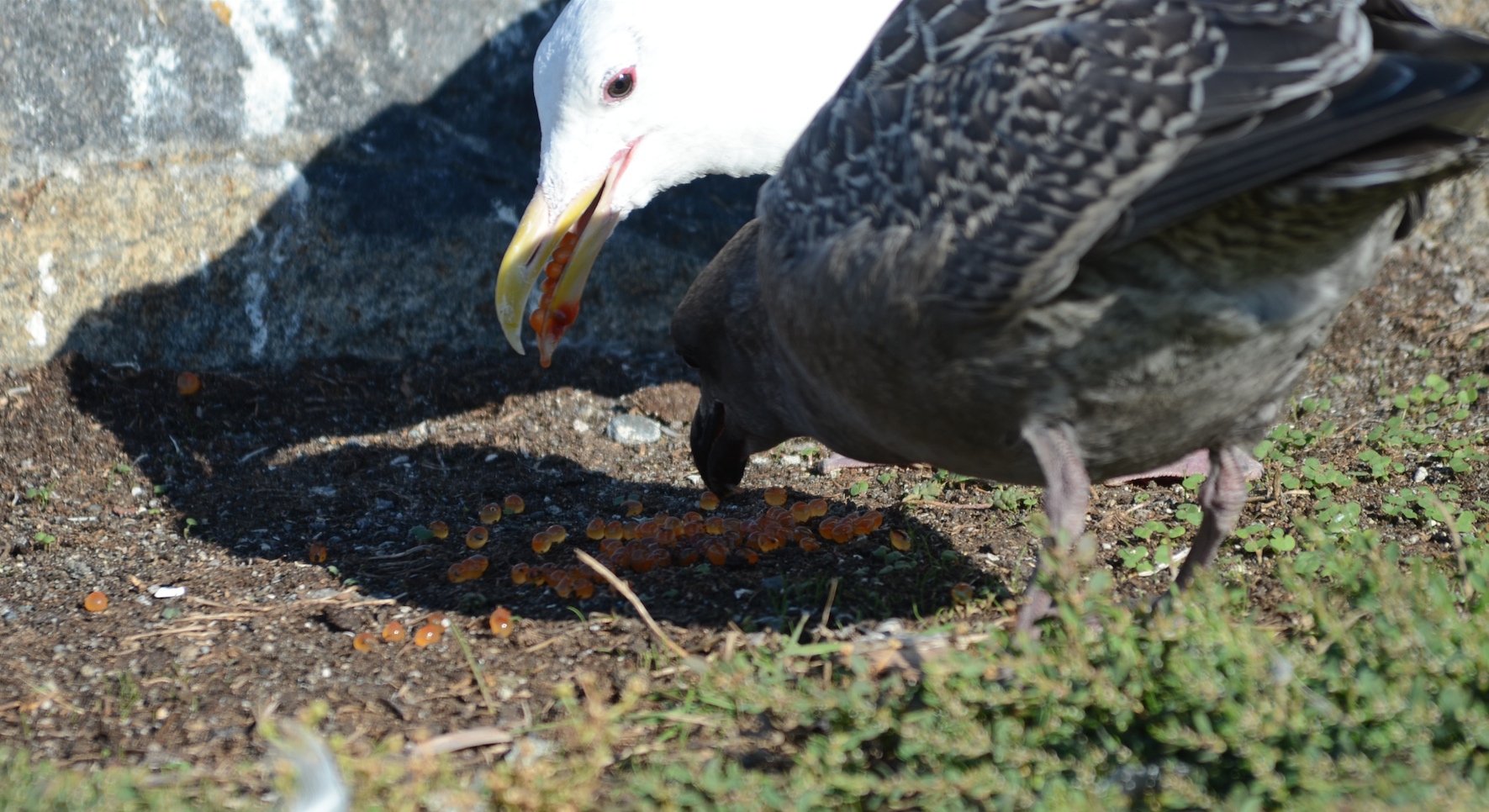
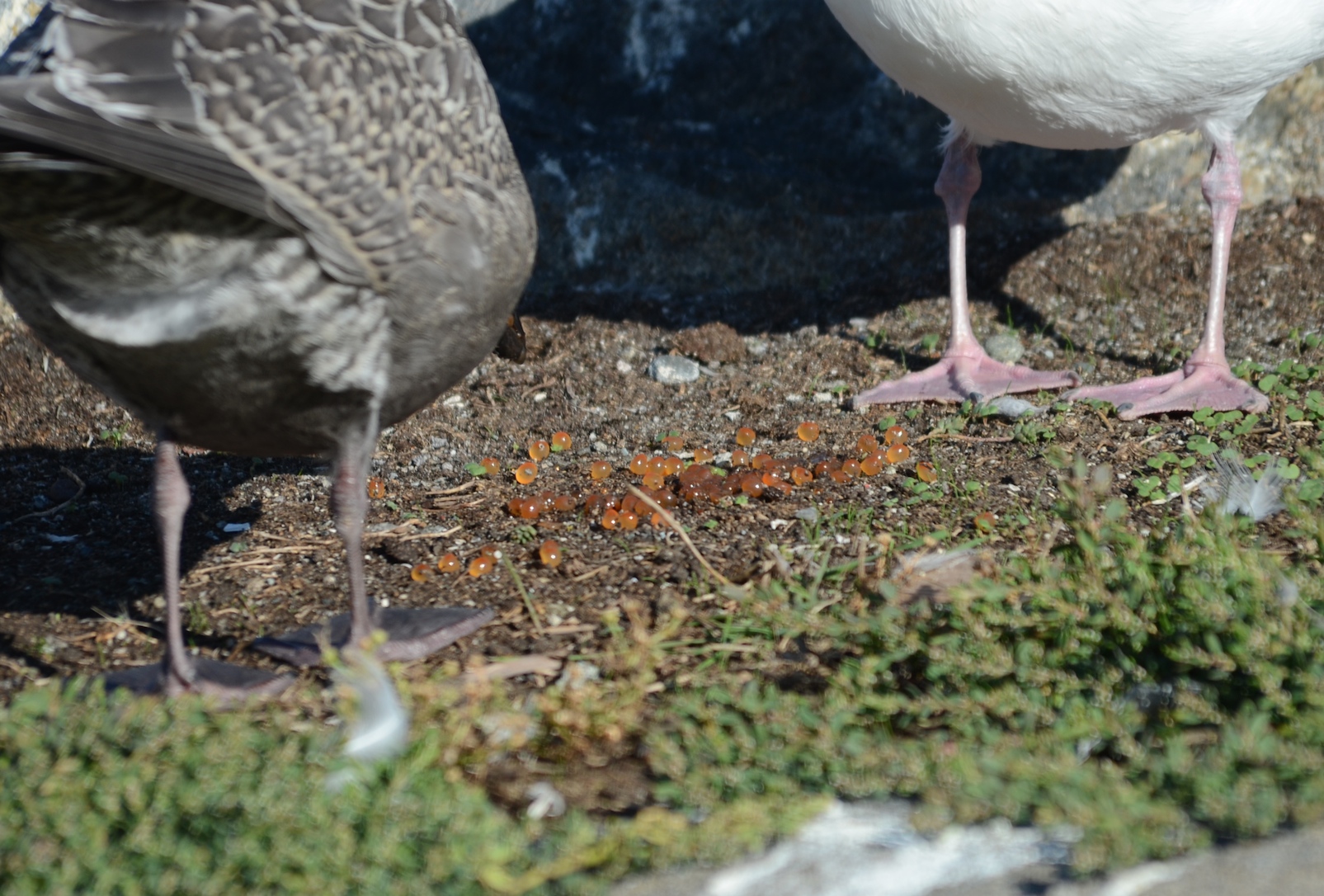
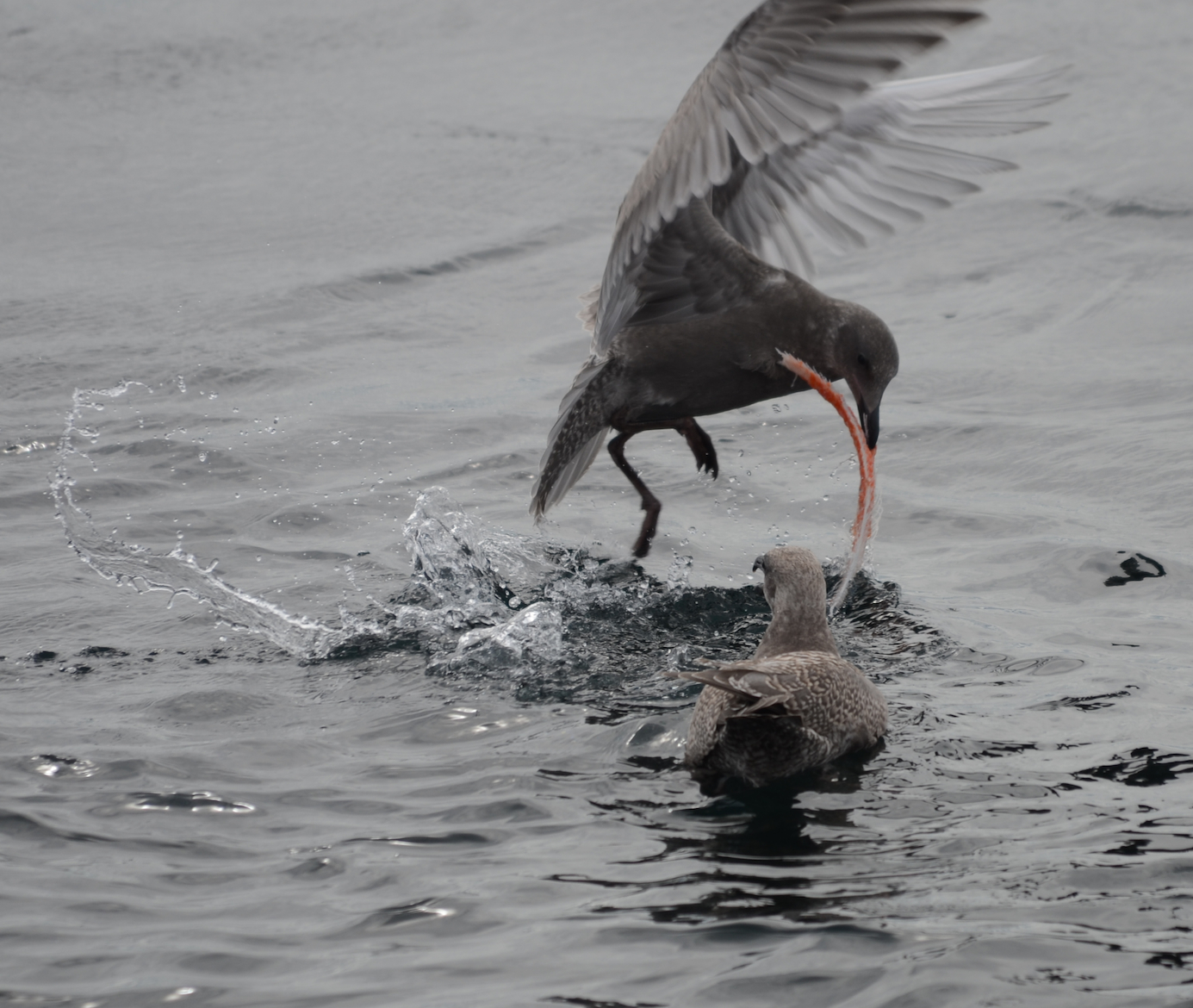
There are only a few Glaucous-winged Gulls left on Great Race and not many more that are still being fed by parents. I photographed one juvenile eat salmon caviar brought back and deposited with special serving and plating effects by its parent. Lots of people think that gull is just a four- letter word associated with human garbage and super abundant. Glaucous-winged Gulls are the only species (of ten species seen here) that actually nest in the Salish Sea and their numbers have been declining for a few years now. Known in birder code as GwGu this four letter word represents an important species in the local ecosystem that is a risk due to human activity. In many areas plastic pollution poses a serious threat to young gulls that do not know better than to eat it. From the evidence so far far at Race Rocks, GwGu have been fairly plastics-free. Lets keep it that way.

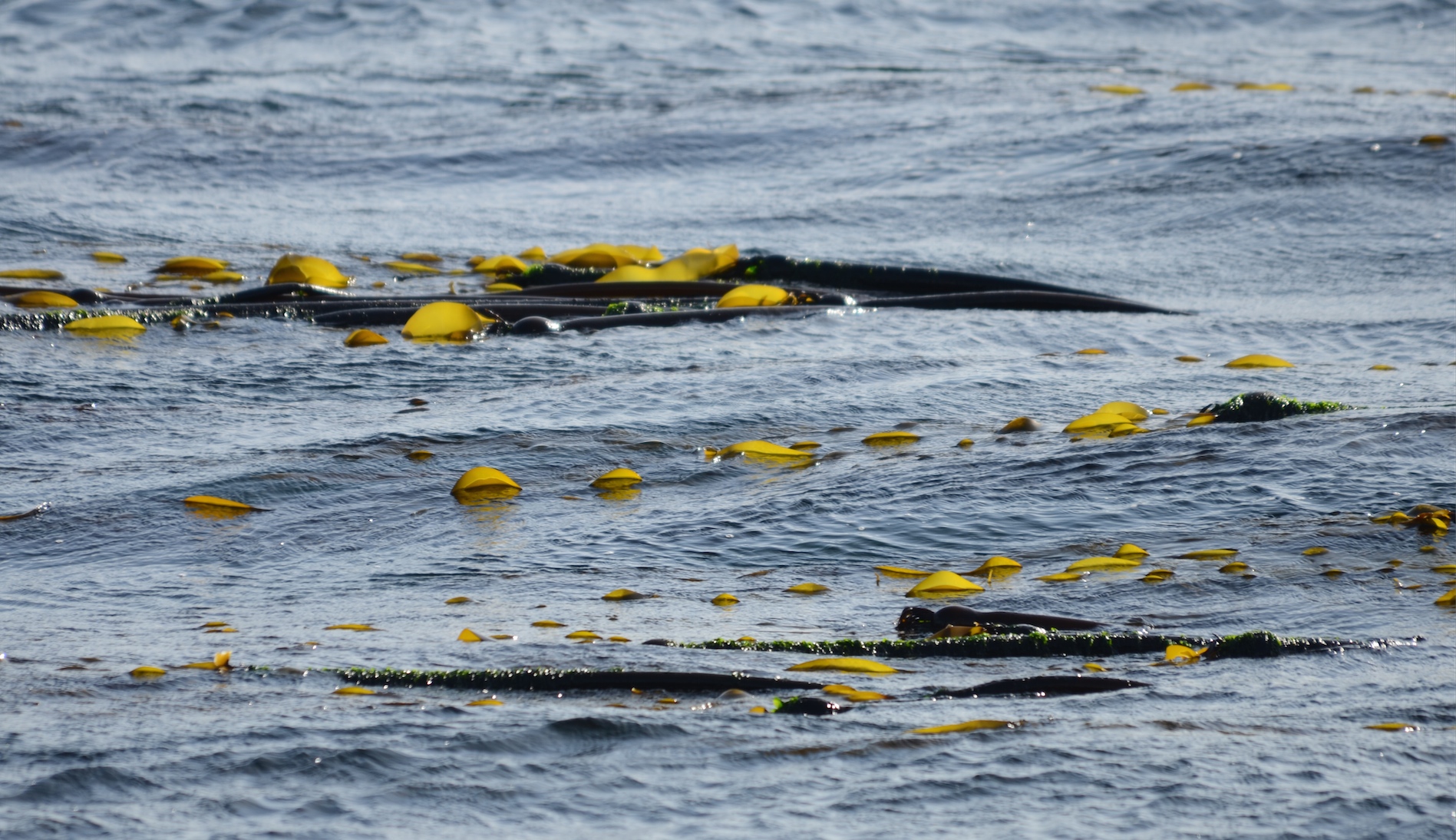
Although most of the bull kelp is still very strong and beautiful, many of the stipes have epiphytic green or red algae growing on them now as they start to senesce. Bull kelp is an annual species and it grows very fast during the spring and summer. Soon the storms will be dispersing these incredible carbon sinks and some will end up on the bottom entombed in mud. Sinking plankton takes the most carbon to the bottom, helping make the ocean the world’s biggest carbon sink for atmospheric carbon dioxide. Thank you ocean, for being such a complex regulator of climate.

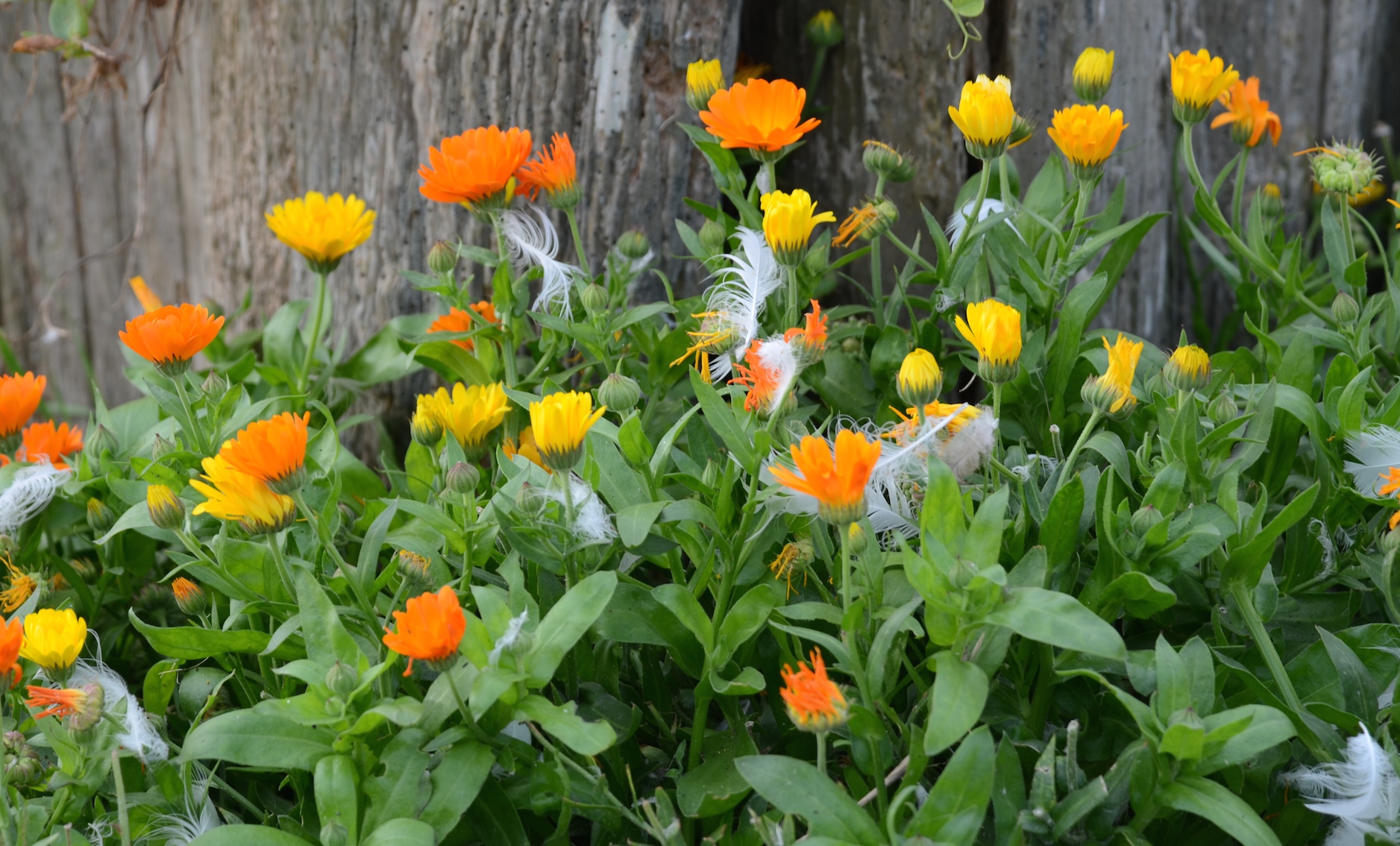
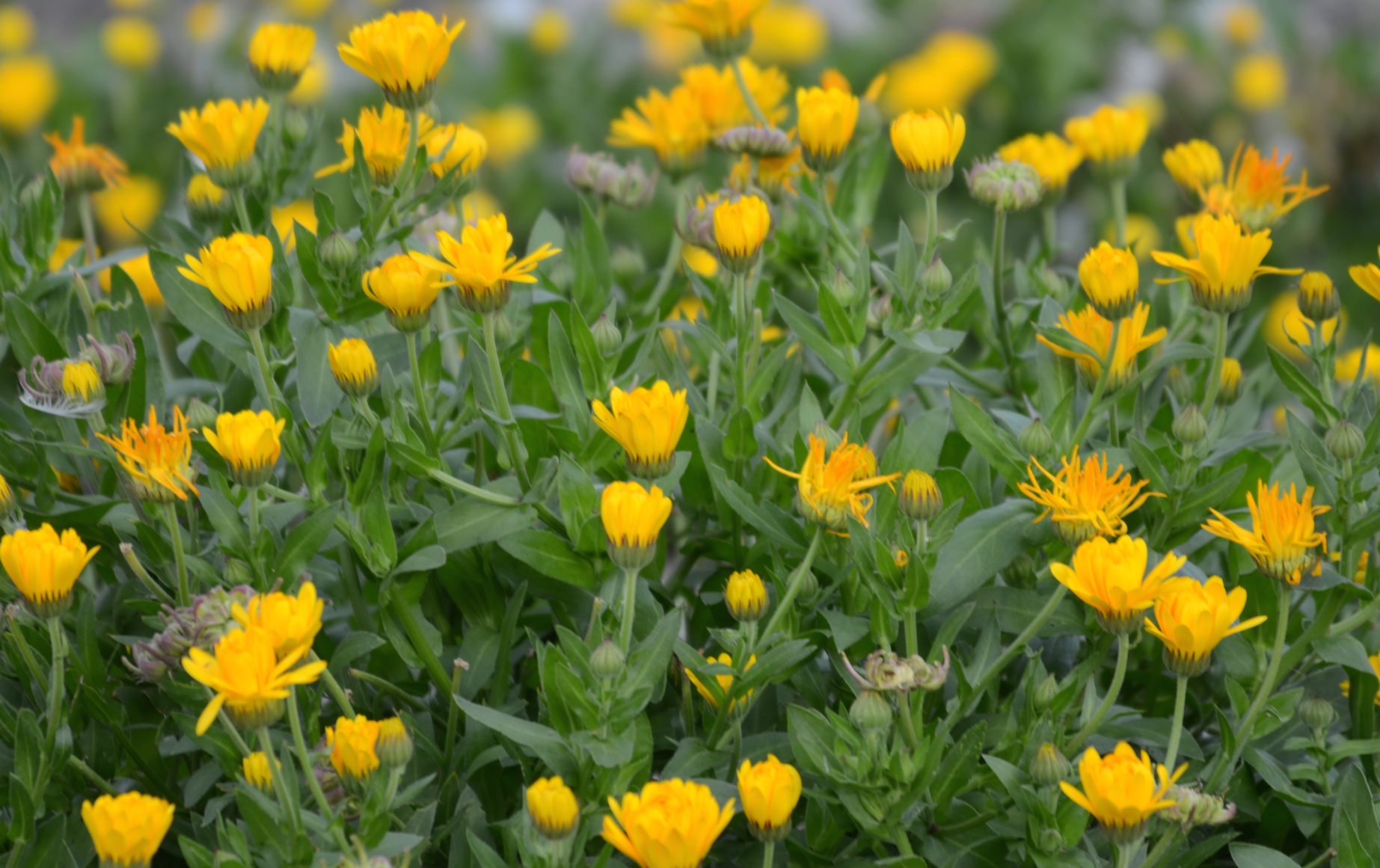
Ashore, the Calendula is still blooming giving new meaning to the term perennial. This plant flowers all year round here, looking as fresh in September as it does in March. It closes up when it is cold and wilts in frost but survives as a remnant of a long-gone lighthouse keeper’s garden. Native to the Mediterranean, Calendula’s bright, cheery blooms are incredibly resilient and it is one of the few plants the Canada Geese don’t eat. Although it probably shouldn’t be flourishing in an Ecological Reserve here, I am glad it is here and it reminds me that people are part of the ecosystem.

Again chores were routine and there were no visitors.

Killer Whales at Dawn

Although the wind didn’t do much during the day, it came up strong from the west in the early evening with cold fog in its wake. By nighttime it was blowing 25 – 30 knots. The strong wind warning remains in effect and the forecast expects fog to dissipate in the late morning. The barometer made another step down in its week long descent and ended at 1011 hPa. Tomorrow is supposed to cloud over and showers will follow next week.

There were relatively few commercial operators noted in reserve today, only eleven vessels including a dive boat, and two tour boats who are not part of the ‘regular’ whale watching fleet. There were almost as many sporty boats with several speeders noted, including a Pedder Bay rental.

The sea lion numbers seem to be at their greatest early in the morning so I went up the tower first thing to photograph them and while up there noticed three small killer whales in the southwest corner of the reserve and a group of about six milling around in the middle of the Ecological Reserve. The larger animals seemed to be feeding in a back eddy just off Middle Channel between Middle Rocks and West Rocks. Gulls were attracted to where they were which I assumed meant there was food. They slowly traversed the reserve on the same general track as the Humpbacks and L-pod did on Thursday, heading off towards the southeast. The two groups rejoined on the outside of South Islands. It was a pleasure to watch these animals unaccompanied and unimpeded by the usual parade of boats.

Work was routine (interspersed with incredible nature observations) and there were no bipedal visitors.

September Summer

The wind didn’t do much more than puff occasionally from the east southeast and the fog stayed away all day. It was a beautiful September, summer day and another one is forecast for tomorrow, (with fog patches). The barometer has been stepping down since Monday and took another step today, landing at 1014 hPA. The forecast calls for strong winds from the west.

It was an extremely busy day on the water in the Ecological Reserve today. There were 32 observed visits by commercial whale watching vessels and at times it looked like a marine Grand Central Station than a protected area. Twelve sports boats were also noted transiting the reserve and one stayed all day taking photos of the wildlife from as close as about 10 meters. Several of the sports fishing boats were speeding in reserve. Most of the commercial operators were being respectful and careful in their operations but one zodiac did go through the gap between Great Race and South Islands against the current and a couple of vessels (always the same ones…hmmm) sped inside the reserve. The commercial operators did well to not have any incidents considering the congestion compounded by the current.

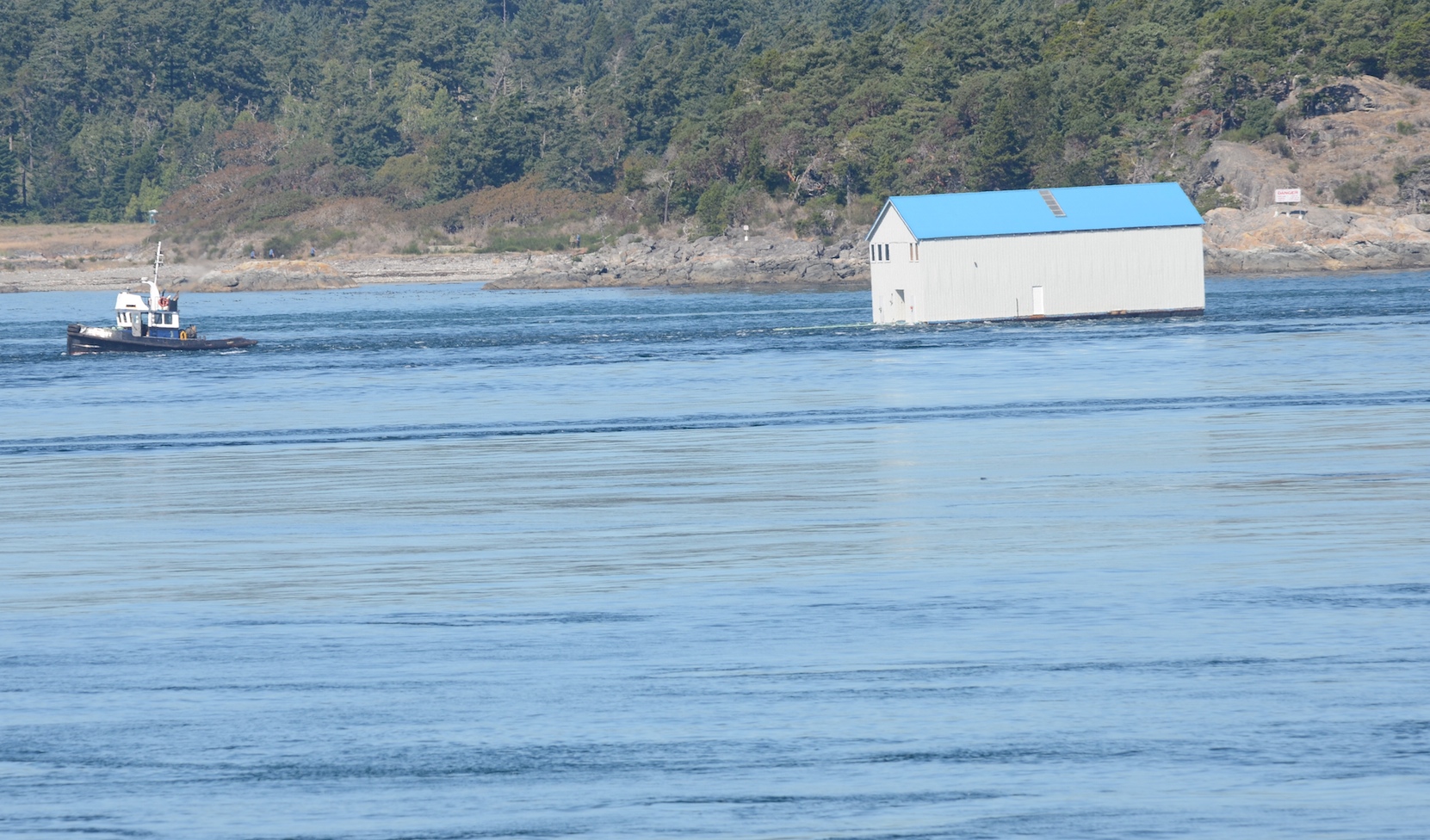
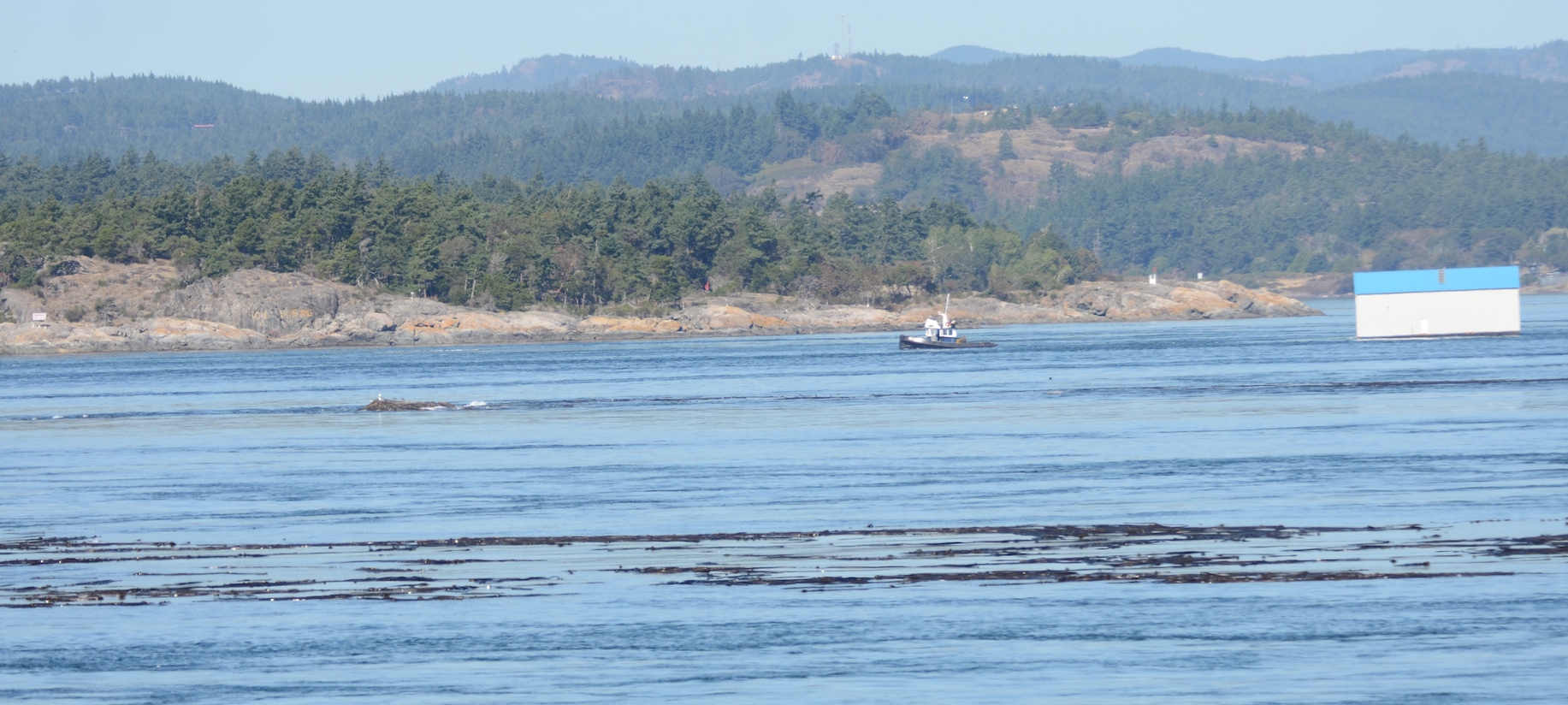
There was a lot of cetacean action today with two Humpback Whales just outside the reserve to the south and two pods of Killer Whales (one Southern Resident, one Biggs (Transient) travelling past through Race Passage from west to east. Unlike the tug that was trying to tow a houseboat past and going backwards today, the Killer Whales are smart enough to use the tide to give them extra speed. At least two individuals from the Biggs group entered the reserve near North Rocks and then continued on without slowing down.

The sea lions dominate Great Race right now and their massive nitrogen contribution to the ecology of the islet and surrounding water is more than just a whiff on the air. It is pungent and obvious.

I had planned on doing some intertidal work on the low tide but had to spend the time repairing things and doing routine work that couldn’t be put off. There were no visitors.


Moulting Time Again: Fur and Feathers Fly

Fog gave way to sunshine by early afternoon and the west wind continued to increase from ~10 knots in the morning to 18 knots by mid-afternoon. The barometer, which has been sliding down stepwise since mid-day Monday made another step down today but remains relatively high at 1016 hPA. The forecast for Central Juan de Fuca is for more of the same but sunnier.

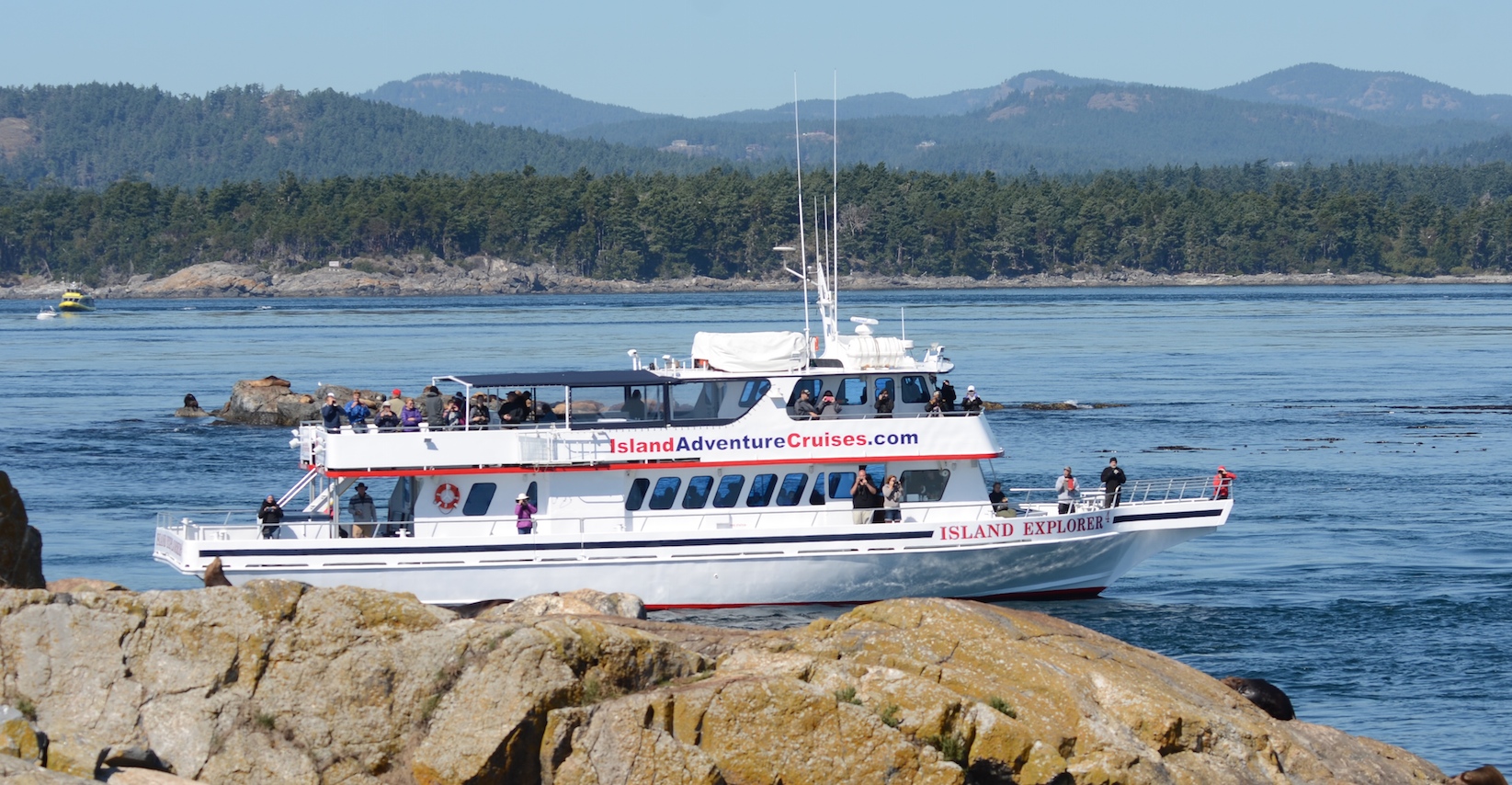
Except for Island Explorer, which did go through Middle Channel against the current today, there was no whale watching activity here today and no other vessels were noted in reserve.

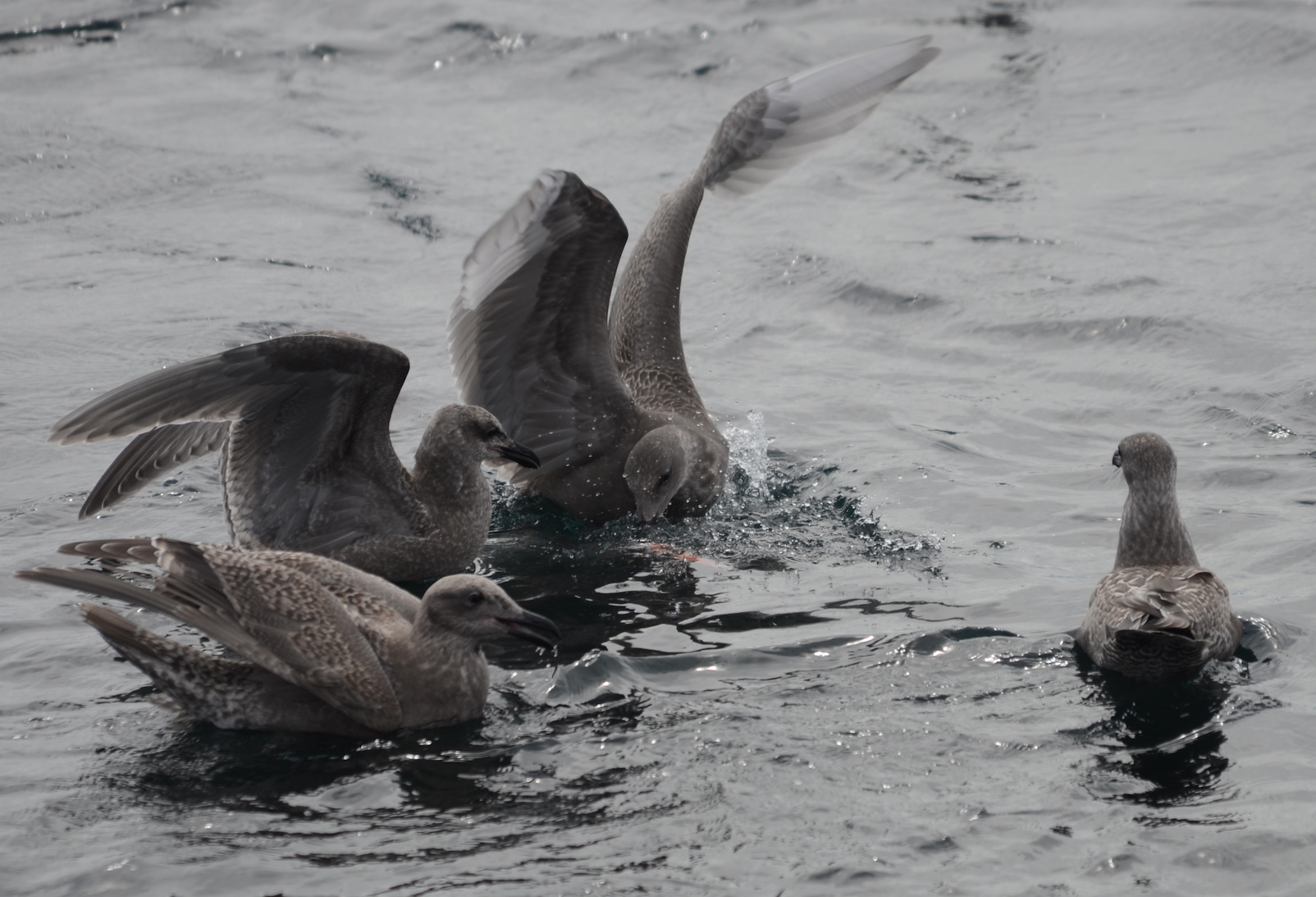
More post-breeding gulls from other breeding areas are showing up daily including California, Heerman’s, and occasional Herring and Ring-Billed Gulls. Glaucous-winged Gull adults that are still feeding chicks are looking battle weary and changing into winter plumage. Some of their heads are a mess from constant begging and pecking by the young ones. There are still territorial disputes going on between adults and young gulls that are not their own. Fresh remains of Glaucous-winged Gulls are seen daily in different spots so I guess in a way those adults with young are the lucky ones. The gulls that are flying are feeding on salmon bits provided by the sea lions and many of the feeding flocks here are dominated by juvenile Glaucous-winged Gulls.

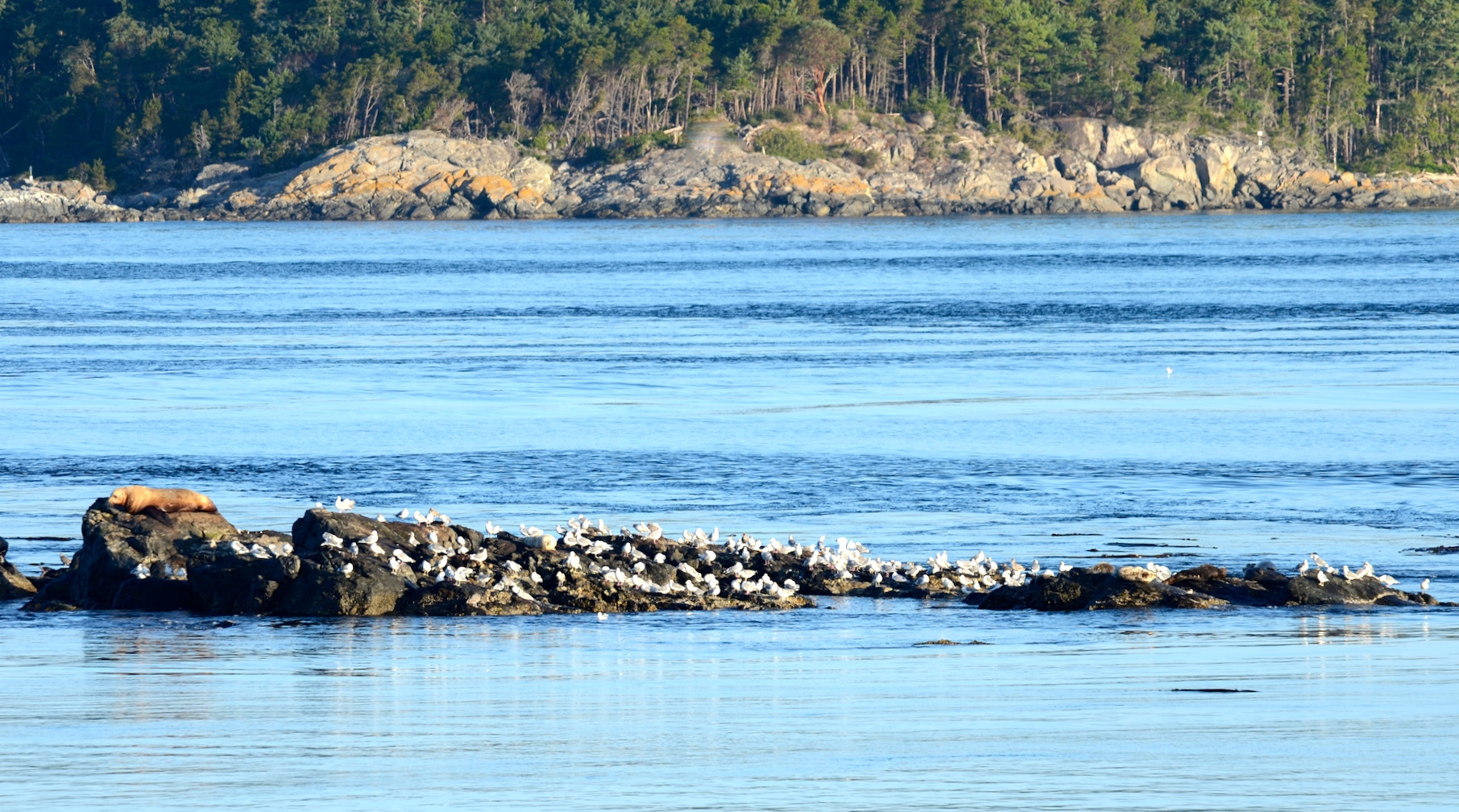
The sea lions are firmly into their moult now as well and spending lots of time ashore. Middle Rock is almost exclusively Steller Sea Lions except for a small hold-out at the top by Northern Elephant Seals. Large male Stellers are encroaching on their space again today but it appears more about finding a quiet place to sleep than the more aggressive interactions I saw with younger male Stellers who were scared off yesterday. Turbine Rock is also mostly Stellers while Great Race and South Islands are populated by both species together. The Harbour Seals are hauled out wherever there is a bit of separate space on North, West and South Rocks with a few on Turbine and Middle as well.

I continue to get brand, tag wound and entanglement photos of the sea lions while they are ashore. I am curious about the biomass hauled out here right now. It is a pretty incredible concentration and one of the reasons that it is a special area worthy of conservation as an Ecological Reserve. It is an honour to be here and witness what goes on a daily basis. Some of the other conservation reasons are underwater and less accessible but we are working on getting camera 2 back up and running to give a glimpse into that world too.

Chores today were routine maintenance and there were no visitors.


A Whale of a Day.

The weather on Race Rocks was variable today. We started with drizzle, overcast and fog. The fog came and went until early afternoon when it cleared. The wind, which was westerly, picked up a bit in the afternoon and was still blowing 15 – 20 west, as I finished up the log after sunset. The barometer started a descent yesterday that continued today ending at 1016 hPA. This matches the forecast which is calling for showers tonight. There is also a strong wind warning in effect and overall it looks like more good weather coming.

There were 18 observed visits by whale watching boats to the Ecological Reserve today. Most of the operators work carefully, respectfully and sustainably, they slow right down on entering the reserve and go even slower when there are seals and sea lions in the water. If there are whales in the Protected Area they do not enter into the Ecological Reserve and if whale enter while they are inside they carefully and slowly leave using extreme caution to avoid interacting with the animals. They stay in the centre of Middle Channel going with the current and never try to wedge themselves between Great Race and South Islands (their insurance companies probably like this too). They are respectful of their distance to the animals and a role model for other companies and vessels on the water. In the long run, this is good for business and good for the animals. It means that this kind of commercial activity might be able to sustainably continue to use the Ecological Reserve for profit making.

Today was a day with lots promise for Southern Resident Killer Whale recovery. L-pod has another brand new calf, born sometime on or before September 5th. The significance to Race Rocks is its’ central location to this babies’ first few days of observed activities. This is the fifth Southern Resident calf born since last December and it renews hope for recovery of this very endangered population. To give you an idea of how significant this is: 1977 was the highest ever recorded year for Southern Resident calf production with nine calves born. According to the Center for Whale Research no calves survived in 2013 and 2014, so 2015 is a boon.

Killer whales and salmon are both almost iconic to our identity in this part of the world and of course they are completely linked together, especially here at Race Rocks, which is an oceanic salmon funnel, a condensed part of one of the planet’s largest salmon runs.

While celebrating this success, let’s also do more to continue their recovery by modelling more fundamentally sustainable behaviours, like using less water, eating sustainable seafood, recycling, using fewer harmful chemicals, electricity, fuel and plastic, doing shore cleanups and working for positive change through democracy. I have digressed, so back to biology: this new calf was seen with L91 (probably the mother) and has been officially named L122.

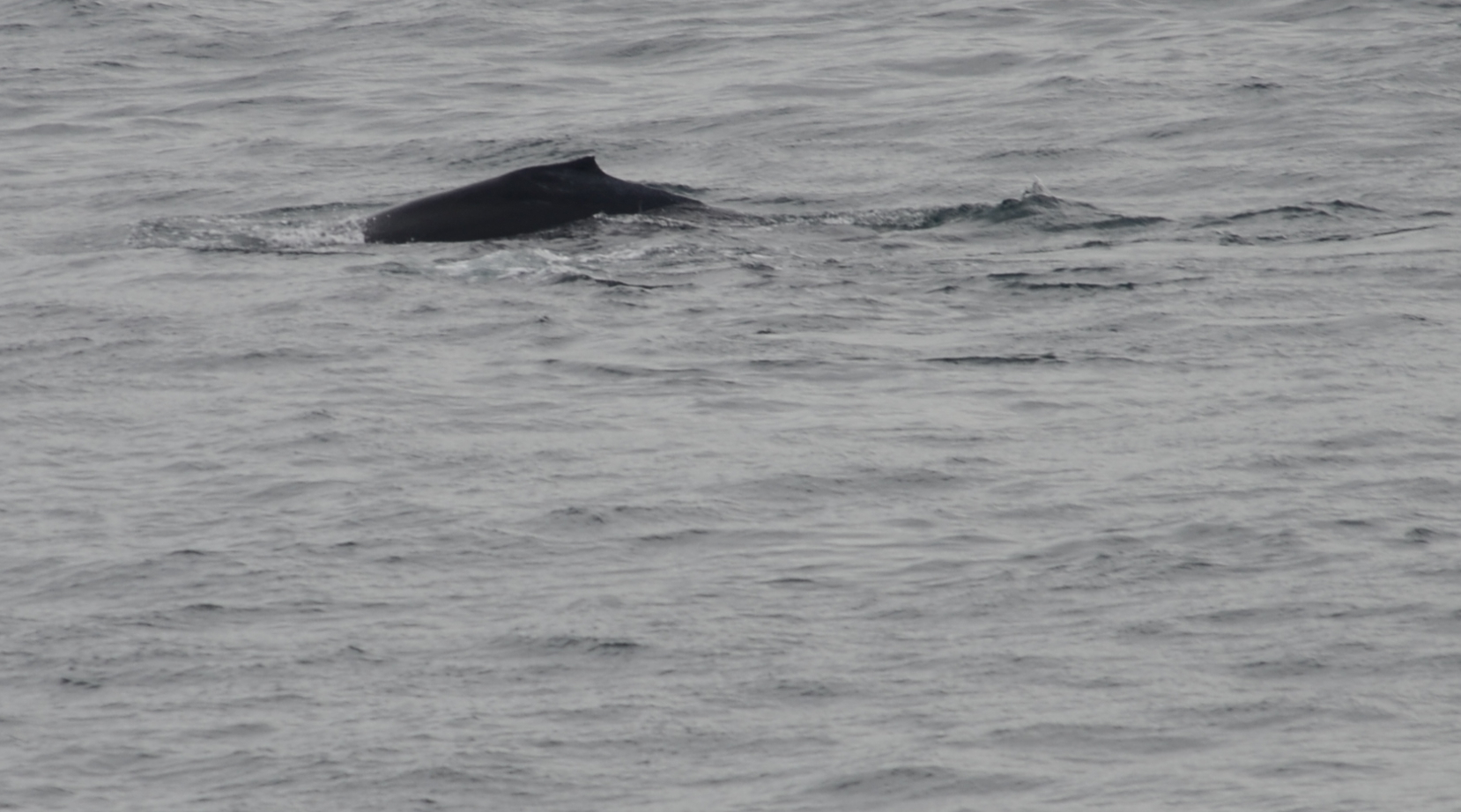
At this stage of writing the log, I looked up to see several Humpback Whales going through the Ecological Reserve from west to southeast. It looked like three animals; a very large one, (probably “Big Mama” a name used by whale watchers) and two others, one much smaller, which may have been a calf. I headed out to photograph the whales and witnessed some whale watching vessels making a bee-line for them, even though the whales were inside the Ecological Reserve. Speaking of sustainable behavior, the agreement states that if there are whales inside the reserve, the whale watching boats stay outside. Two vessels came up tight behind them and a third came in around the front of their path, the other vessels following the whales dropped off staying outside as per agreement.

The whales were in fairly shallow water between South Islands and Rosedale Reef, next to a kelp bed, so didn’t have a lot of maneuvering room with two boats behind and one in front. I went up the tower and took more photos.  I totally commend the vessels that left the whales and turned to travel outside of the reserve instead of following the whales and other vessels into the Ecological Reserve.

I did a few chores and went back to writing. This time when I looked up there was a pod of Killer Whales heading into the reserve on basically the same track as the Humpbacks but a little closer to Great Race. I went back out for more photos and saw a group of about fifteen Southern Resident Killer Whales, members of L-pod according to the whale watchers. There was a little calf travelling at the back of the pack with a small adult animal, probably a female (?). Not sure if it was the newest one.

I took a lot of photos today and will share them over the next while. It was a busy day with regular chores, spotting and phtotographing the 10 Elephant Seals that have recaptured the top of Middle Rocks and are scaring off sea lions, photographing sea lion tags and brands, gulls and of course the whale shows. With all that going on it seems odd to say, there were no visitors.