Solar Energy at Race Rocks

cormwingm correlate  solar
Link to the Effects of Solar energy on organisms at Race Rocks: Correlations File: Data has been selected to show seasonal patterns and to allow some study of the relationships between solar radiation, uv  and temperature Second exercise on Solar and UV. This one also links through to the raw data references for the factors.
solar day solar week solar month
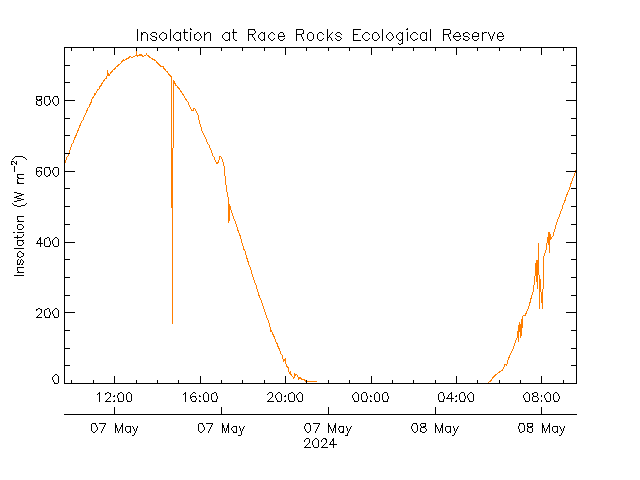
Graph of today’s Solar Insolation:
The intensity of the incoming radiation is measured in Watts per square metre (Wm-2)
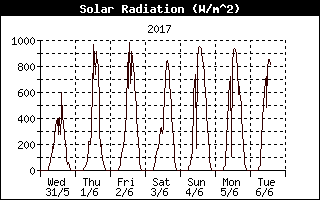
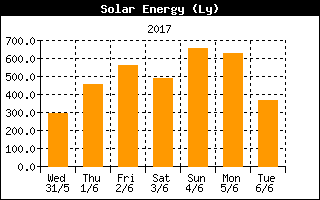
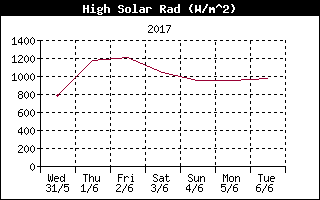
Cick on the above graphs for a larger version of the past week’s solar level at Race Rocks.  The “three graphs above represent historical records of Solar insolation at different time scales These graphical interpretations are made possible by the website victoriaweather.ca
Solar Radiation Levels SOLAR ENERGY Hi Solar
Solar Radiation levels for the past week.. This is the peak solar raddiation measured during the archive interval..(30 min) Solar Energy history for the past week: The amount of accumulated solar radiation energy over a period of time measured in Langleys; 1 Langley= 11.622 Watt-hours per square meter =41.84  kilojoules per sqare metre=3.687   BTUs per square foot Highest levels of Solar Radiation for the past week as recorded on the davis Weather Instrument.
solar energy
The SOLAR ENERGY part of the
Integrated Energy Project at Race Rocks
Alternate Energy: Solar,
A curriculum resource
AN EXPLANATION OF WHAT THE SOLAR MEASUREMENT REPRESENTS
As the Earth orbits the Sun, it receives approximately 1,400 W / m? of energy, as measured upon a surface kept normal (at a right angle) to the Sun (this number is referred to as the solar constant). Of the energy received, roughly 19% is absorbed by the atmosphere, while clouds on average reflect a further 35% of the total energy. The generally accepted standard is 1020 watts per square meter at sea level.
website on the Basics of Solar Energyhttp://zebu.uoregon.edu/disted/ph162/l4.html
Incident Solar Energy on the ground:• Average over the entire earth = 164 Watts per square meter over a 24 hour day So the entire planet receives 84 Terrawatts of Power our current worldwide consumption is about 12 Terrawatts so is this a solution?
Broadband Solar Irradiance – theoretically the solar radiation arriving at the earth from all frequencies or wavelengths, in practice limited to the spectral range of radiometers, typically from 300 nm to 3000 nm wavelength. Meteorologists refer to this band as short-wave radiation.
Electromagnetic Radiation – the energy produced by an oscillating electrical (and magnetic) field, transmitted by photons. See Electromagnetic Spectrum – the entire energy range of electromagnetic radiation specified by frequency, wavelength, or photon energy. The low end of the spectrum is infrared radiation (heat), and passes through the colors of visual light from red through violet, through ultraviolet radiation, x-rays, and gamma rays. Radio and television are transmitted on specific electromagnetic frequencies.
Shortwave Radiation – the principal portion of the solar spectrum that spans from approximately 300 nanometers (nm) to 4000 nm in the electromagnetic spectrum. Longwave radiation is infrared radiation (>4000 nm).
Watt – a unit of power defined as a Joule per second.. A Joule is – a metric energy unit (Newton-meter) equal to approximately 0.2389 calories.
Btu – British Thermal Unit, the amount of energy required to raise one pound of water one degree Farenheit at 60°F, equivalent to 1055 joules or 252.1 calories.
LuxThe lux (symbolized lx) is the unit of illuminance in the International System of Units (SI). It is defined in terms of lumens per meter squared (lm/m2). Reduced to SI base units, one lux is equal to 0.00146 kilogram per second cubed (1.46 x 10⁻³ kg / s3).
One lux is the equivalent of 1.46 milliwatt (1.46 x 10⁻³ W) of radiant electromagnetic (EM) power at a frequency of 540 terahertz (540 THz or 5.40 x 10¹⁴ Hz), impinging at a right angle on a surface whose area is one square meter. A frequency of 540 THz corresponds to a wavelength of about 555 nanometers (nm), which is in the middle of the visible-light spectrum.
The lux is a small unit. An alternative unit is the watt per meter squared (W / m2). To obtain lux when the illuminance in watts per meter squared is known, multiply by 683. To obtain watts per meter squared when the illuminance in lux is known, divide by 683 or multiply by 0.00146.
Illuminance varies inversely with the square of the distance from the source on a free-space line of sight. If the distance is doubled, the illuminance is cut to 1/4; if the distance increases by a factor of 10, the illuminance becomes 1/100 (0.01 times) as great.
lumenThe lumen (symbolized lm) is the International Unit of luminous flux. It is defined in terms of candela steradians (cd multiplied by sr). One lumen is the amount of light emitted in a solid angle of 1 sr, from a source that radiates to an equal extent in all directions, and whose intensity is 1 cd.
One lumen is the equivalent of 1.46 milliwatt (1.46 x 10⁻³ W) of radiant electromagnetic (EM) power at a frequency of 540 terahertz (540 THz or 5.40 x 10¹⁴ Hz). Reduced to SI base units, one lumen is equal to 0.00146 kilogram meter squared per second cubed (1.46 x 10⁻³ kg multiplied by m2 / s3).
The lumen is a small unit. An electromagnetic field power level of 1.46 milliwatt is small; the radio-frequency (RF) output of a children’s toy two-way radio is several times that much. A frequency of 540 THz corresponds to a wavelength of about 556 nanometers (nm), which is in the middle of the visible-light spectrum. A steradian is the standard unit solid angle in three dimensions; a sphere encloses 4 pi (approximately 12.57) steradians.The Davis Weather Instrument provides a measure of solar radiation in Langleys: This is Solar Radiation Integrated over time. One Langley equals 11.622 Watt hours per square meter= 697.32 Watt minutes per square meter.This file is  a link on Solar Cycle Progression from NOAA. It includes data on sunspot activity.Return to the Physical/Abiotic factors Files:

Creating power to stay in power:

Creating power to stay in power: 

Conservatives are out to prove that their plan is better than the Liberal oneTimes Colonist (Victoria) Saturday, January 20, 2007Page: A16 Section: Comment Byline: Les Leyne Column: Les Leyne Source: CanWest News Service

What a lot of trouble Prime Minister Stephen Harper went to in order to announce that a rather obscure alternative energy program that the Liberals unveiled earlier is going to carry on under his government. By plane, by motorcade and by water taxi he made his way almost literally to the ends of the Earth to illuminate the point that “Canada’s new government,” as Tories like to say, is following Canada’s old government when it comes to nurturing alternative energy suppliers.

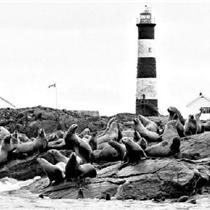
Lester B. Pearson College isn’t the end of the earth, but it’s on the edge of the western frontier as far as most Canadians are concerned. It was a good backdrop for an alternative energy announcement (even if it is named for a Liberal PM) because it’s home base for the ecological reserve at Race Rocks, on which sits a tiny tidal-power demo project.

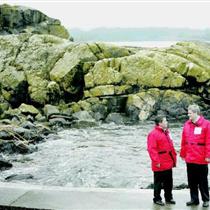
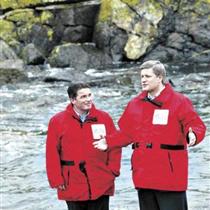
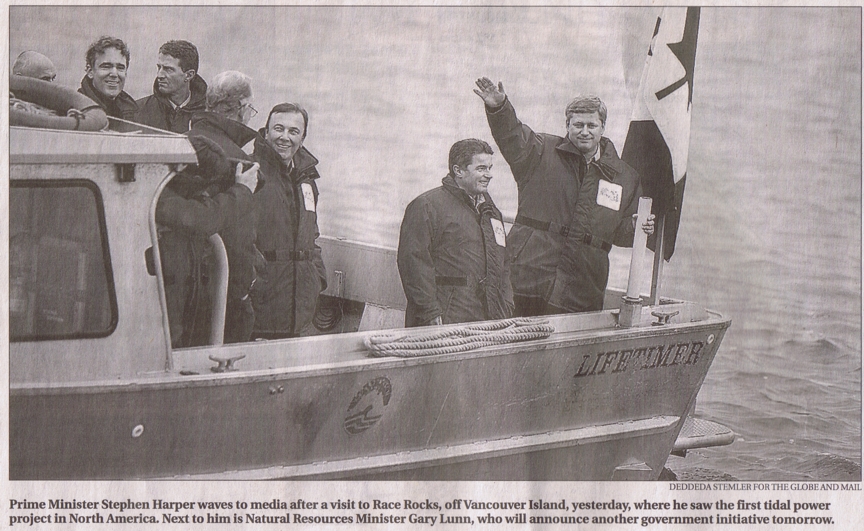
Harper has a newfound passion for eco-friendly initiatives that can be said to curb greenhouse-gas emissions that contribute to climate change. It’s burning so intently that he even ventured past the college, hopping a boat for a quick run out to Race Rocks for a photo opportunity.The project is the only one of its kind in Canada. Getting electricity out of this sort of natural power — tidal, solar, geothermal, wind — is about the coolest thing you can imagine. But the technology needs a lot of work before it can go big league, so alternative energy needs to be coddled for years to come. Harper put down $1.5 billion over 10 years.

Federal Liberals fronted a similar program during their last term. Its future was uncertain when the Conservatives took over. But the conventional wisdom is that something clicked in the public’s mind recently.

Perhaps it was prompted by the extreme weather — savage storms in the west, freakishly warm days in the east. Climate change became a big deal and the Conservative government became determined, even desperate, to stay on top of it.

So Harper canned Rona Ambrose, his environment minister, replaced her with someone more familiar with the game of political hardball– John Baird — and set his government on an eco-blitz, which touched down at Pearson College.

Amazing what can come from Ontarians playing golf in December.

The blitz is an impressive one. The prime minister brought two supporting acts with him — Baird and Natural Resources Minister Gary Lunn. The federal incursion demanded a provincial response, so B.C. Energy Minister Richard Neufeld made an appearance. And a host of people from the alternative energy world — third-party validators — were invited to bulk up the audience.

The message is double-edged. Conservatives want it known that not only are they concerned about climate change and doing something about it, they’re doing more than the Liberals ever did.

So Harper and Baird outlined their alternative energy funding and quickly compared it to the Liberal record. As Baird put it, meeting the targets set by the Kyoto accord was the start of a marathon, but the Liberals spent the first 10 years after signing it running in the wrong direction.

And Harper said the initiatives were funded in the last budget.

“It may seem like a year is a long time to get them in place, but what we faced when we took office was a whole series of environmental programs that either weren’t reducing emissions in most cases or hadn’t even got off the ground…”

That in a nutshell is what the next few months of environmental debate are going to sound like in Ottawa. Some voters will welcome the new thrust, regardless of its timing. Some will decide Harper’s commitment to cleaner air is too late to be trustworthy. And everyone will have to measure it against the Liberal alternative, which was skimpy, at least prior to the leadership change.

The money promised yesterday for clean power is supposed to createthe same effect as getting a million cars off the road. But if they wanted to tackle climate change head-on, why didn’t they just get a million cars off the road?

It would hurt too much. Harper said people have to have the ability to earn an income. ” What we’re trying to do with our environmental plan is allow people to be prosperous and have energy security as well.”

Harper pointed out the emissions debate often centres on the sectors of the economy that produce them. But everyone uses transportation, energy and industrial products. “If we’re going to make the transformations in our economy we want to make over time, there’s going to be a responsibility of everyone to participate in that.”

The winner of this argument will be the one with the best argument about why their plan to curb emissions won’t hurt as much as the other guy’s plan.

Reprinted with the permission of Les Leyne
lleyne@tc.canwest.com

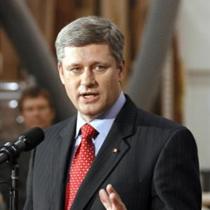
Prime Minister Stephen Harper Visits Pearson College and Race Rocks

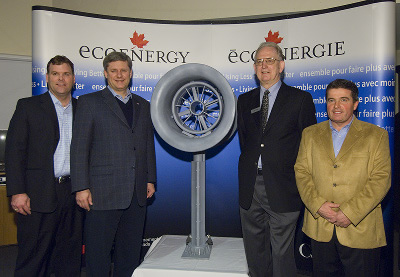
ecoenergyOn January 19 2007,Prime Minister Stephen Harper and two federal cabinet ministers, Gary Lunn and John Baird pose with Glenn Darou beside a scale model of the energy generating turbine installed at Race Rocks in September of 2006.


A number of other news media covered this event:

atdockB.C. critical for Tory majority, Harper says Peter O’Neil, Vancouver Sun; Files from CanWest News Service Published: Saturday, January 20, 2007
“OTTAWA — Prime Minister Stephen Harper, on Vancouver Island Friday to announce $1.5 billion for renewable energy initiatives, said B.C. is “critical” to his hopes of winning a majority government….” 
Harper was in Metchosin, near Victoria, to unveil an environmental incentive package in which the Conservatives will spend $1.5 billion over 10 years to boost Canada’s supply of wind, ocean, solar and other green energy. He said the package will boost the production of renewable energy by 4,000 megawatts a year. “In terms of greenhouse gas reductions, that’s the equivalent of taking one million cars off the road,” he said.

harperPutting ‘green’ toward going green Edward Hill, Peninsula News Review Jan 24 2007
….”Prime Minister Stephen Harper announced a $1.5 billion funding package for clean green energy generation Friday at Lester B. Pearson College in Metchosin, the host of North America’s first operational tidal turbine.
Coined the ecoEnergy Renewable Initiative, $1.48 billion over 10 years has been earmarked toward helping industry harness renewable, zero or low emission energy sources, such as wind, solar, tidal, wave, biomass or small hydro………”
PM to Boost Funding for Tidal Power… trip to Metchosin will heighten new Tory support for alternate energy Peter O’Neil, and Richard Watts, Times Colonist; CanWest News Service Published: Friday, January 19, 2007


harper3Harper pledges $1.5 billion for green energy, Global National,CanWest News Service, Saturday, January 20, 2007METCHOSIN, B.C. — The Conservative government will spend $1.5 billion over 10 years to boost Canada’s supplies of wind, tidal and other green energy, Prime Minister Stephen Harper announced Friday…..”In terms of greenhouse gas reductions, that’s the equivalent of taking one million cars off the road,” he said. “That is real, practical, achievable action on climate change.”


harplunnTories’ green boost to cost $1.5 billion... at Pearson College, Harper unveils incentives to ramp up wind,tidal and solar power.. Lindsay Kines.. Times Colonist, Victoria British Columbia, Saturday, January 20, 2007..page A1. “The Conservative government will spend $1.5 billion over 10 years to boost Canada’s supply of wind,ocean,solar,and other green energy, Prime Minister Stephen Harper said yesterday.”


pollPoll: Tories gain in B.C.  Prime Minister Stephen Harper said B.C. is “critical” to his hopes of winning a majority government while he was at Lester B. Pearson College of the Pacific yesterday in Metchosin to announce $1.5 billion for renewable energy initiatives,—-Public aware of initiatives his party is taking to protect environment, PM says.. Peter O’Neil..Times Colonist, Victoria British Columbia, Saturday, January 20, 2007..page A3.


Creating Power to Stay in Power, Conservatives are out to prove that their plan is better than the Liberal one. Les Leyne, Times Colonist , January 20, 2007, page A16.. “What a lot of trouble Prime minister Harper went to in order to announce a rather obscure alternative energy program that he Liberals unveiled earlier is going to carry on under his government. By plane, by motorcade and by water taxi he made his way almost literally to the ends of the Earth to illuminate the point that…..” (see full article.).

Tories announce $1.5-billion renewable energy plan, CBCnews “Harper said a 10-year incentive program, the so-called ecoEnergy Renewable Initiative, will be established to fund eligible projects to be constructed over the next four years.”

Harper nips some green from Liberals: wind, tidal and biomass projects benefit from new Tory program ..Rod Mickleburgh , Metchosin BC. and Bill Curry, Ottawa. The Globe and Mail Saturday, January 20, 2007, page A4 “Stephen Harper’s government is finding it easy to be green, resurrecting yesterday a frozen Liberal alternative-energy program, injecting it with a bit more “oomph” and trumpeting it as the Tories’ own. The ecoEnergy Renewable Initiative pledges to spend $1.5-billion over the next 10 years to increase Canada’s supply of emission-free power from renewable, alternative energy sources such as wind, the ocean and biomass. The program aims to produce enough renewable energy to reduce greenhouse-gas emissions equivalent to taking one million cars off the road, Mr. Harper said.”(enlarge picture)

glensRacerocks Tidal Project : Former Shell Executive wants to make a difference. Lindsay Kines , Times Colonist, January 22, 2007. page A3 ” ” Its very hard for someone to go out to Race Rocks and not come away saying: “this stuff is great!” …By the end of the year, Clean Current expects to complete design work on a three megawatt commercial turbine with manufacturing slated to start in 2008. …. “(See full article.)

See Video by Clean Current

Tidal Energy ENCANA video

This video is a compressed version of the one produced by Brainstorm for the Tidal Current Power Project. It documents the partners and the process along the way in the establishment of the Turbine Project . (released January 19, 2007 to correspond with the visit of Prime Minister Stephen Harper to Lester Pearson College and Race Rocks. )

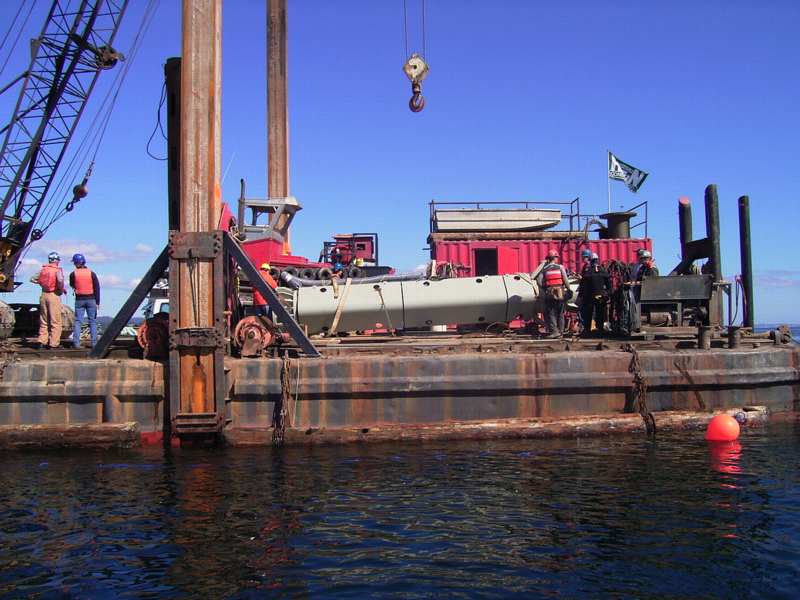
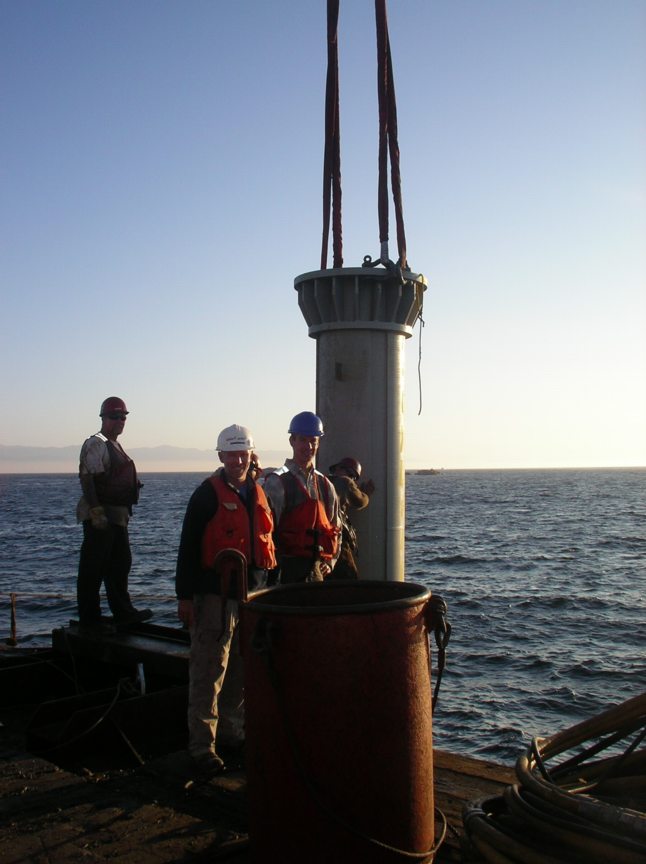
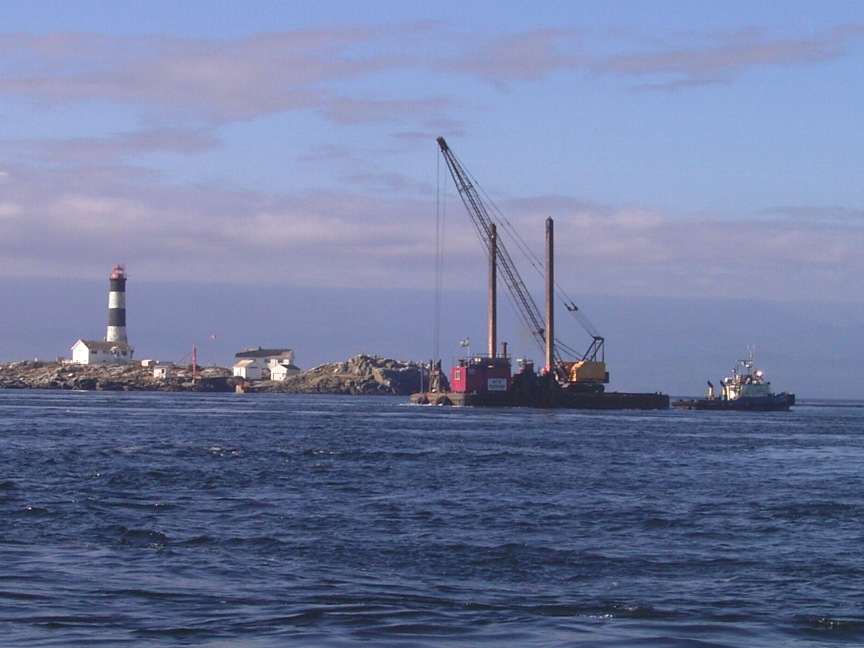
Upper Piling Installation for the Tidal Energy Current Project


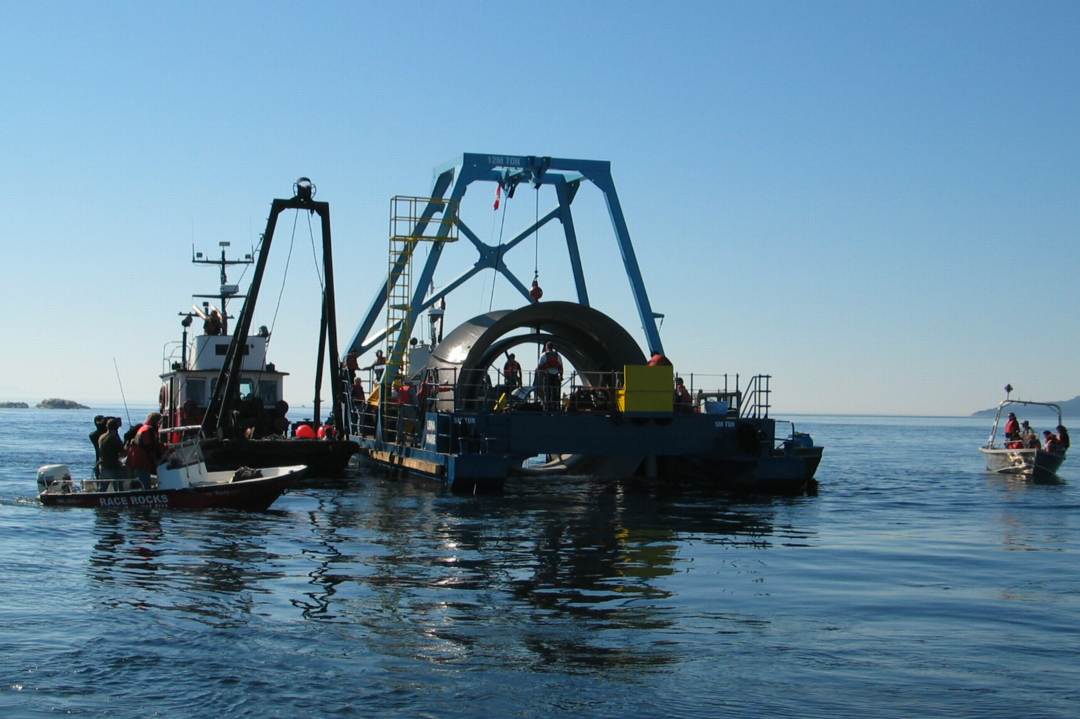
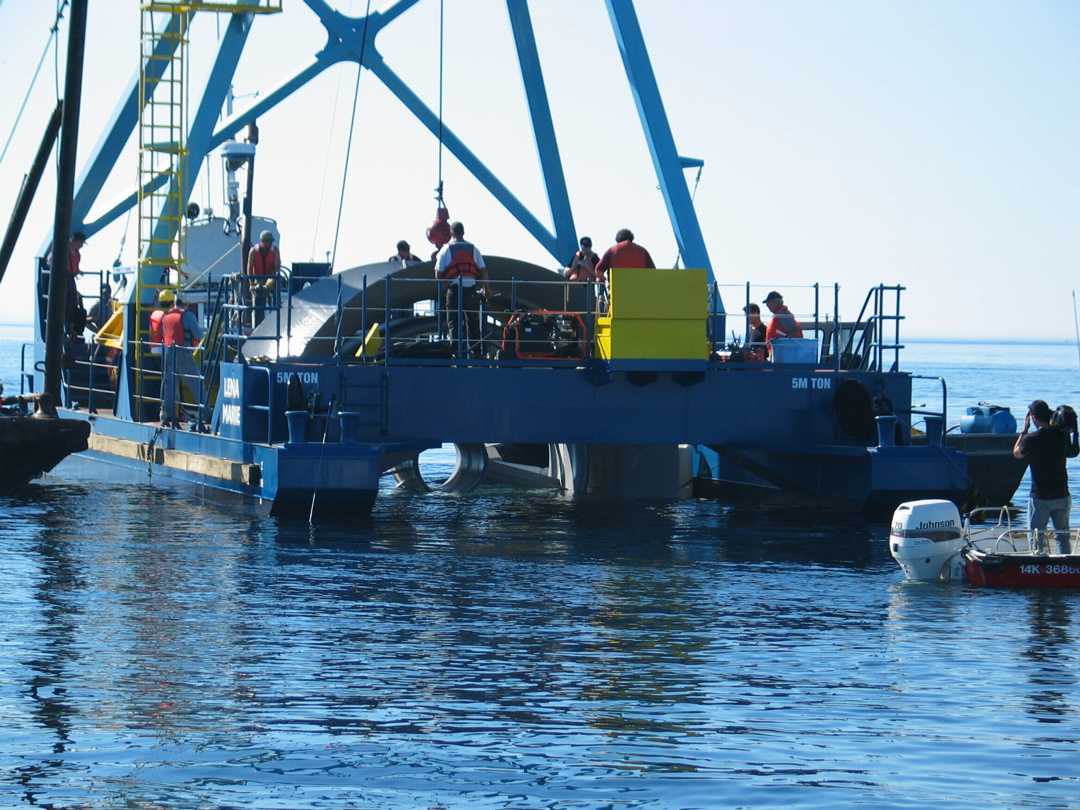
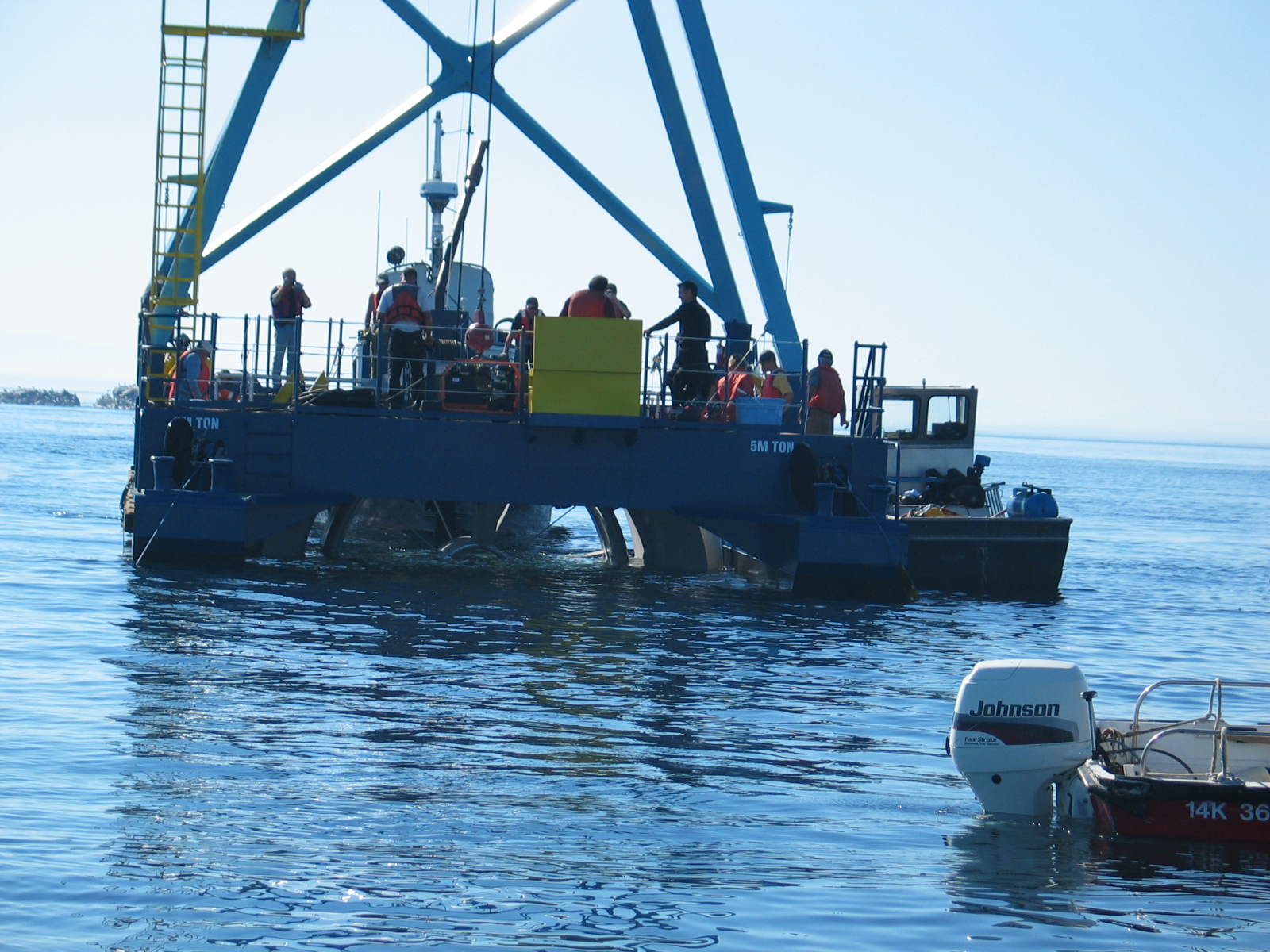
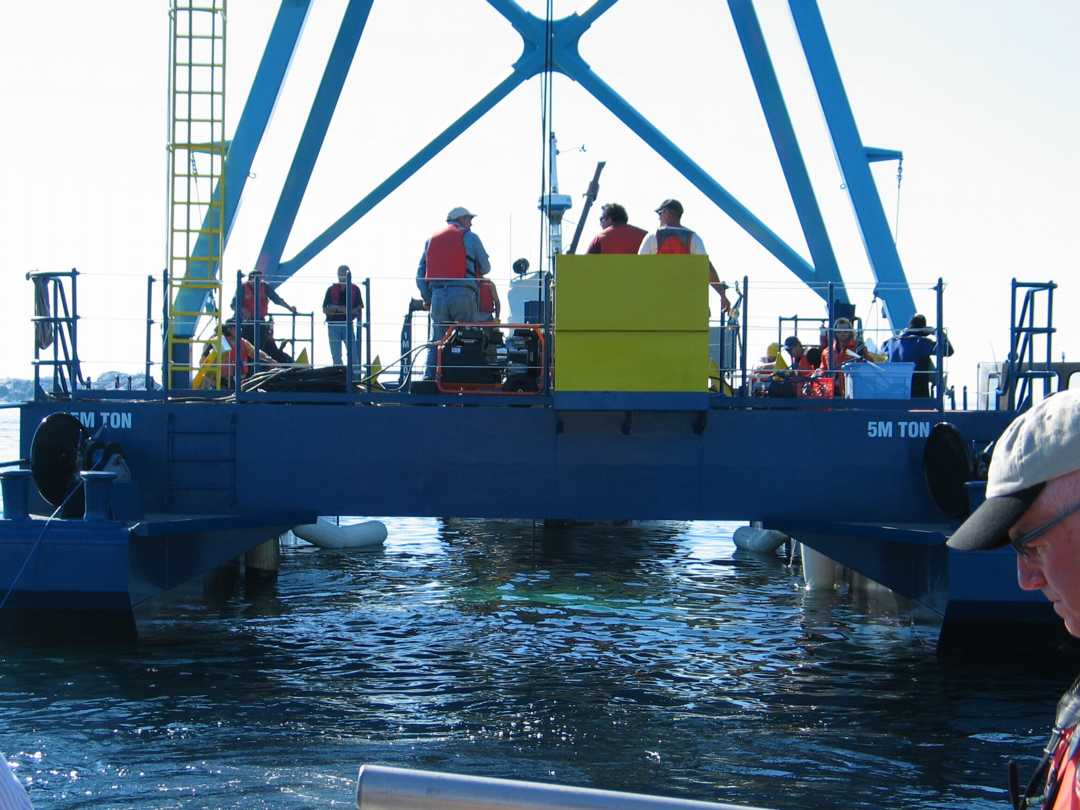
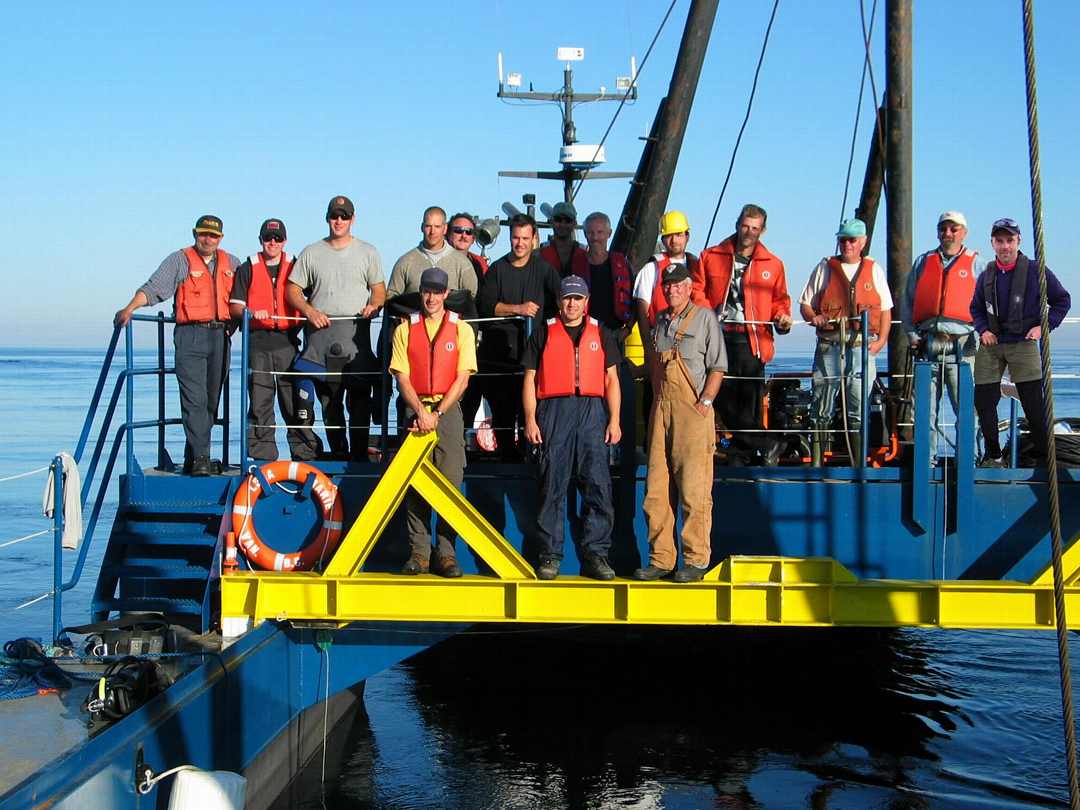
Images by Gary Bouman, Garry Fletcher and Chris Blondeau

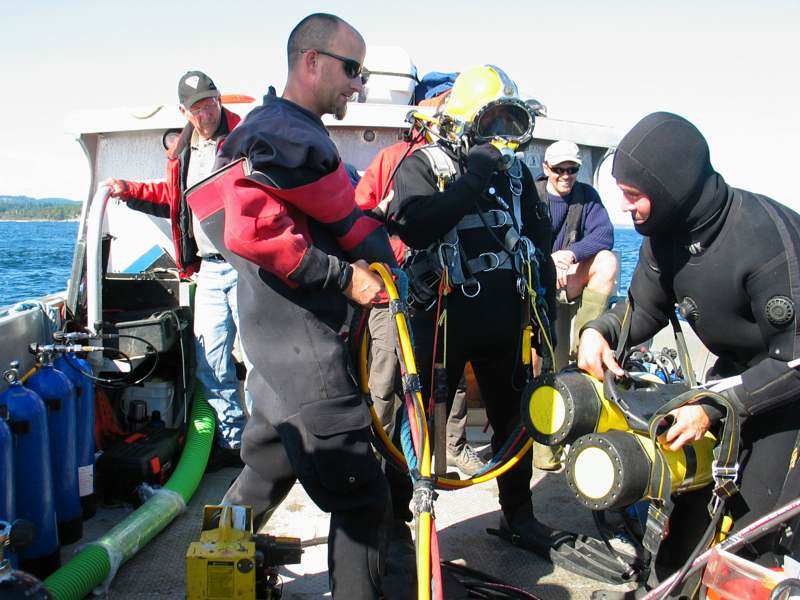
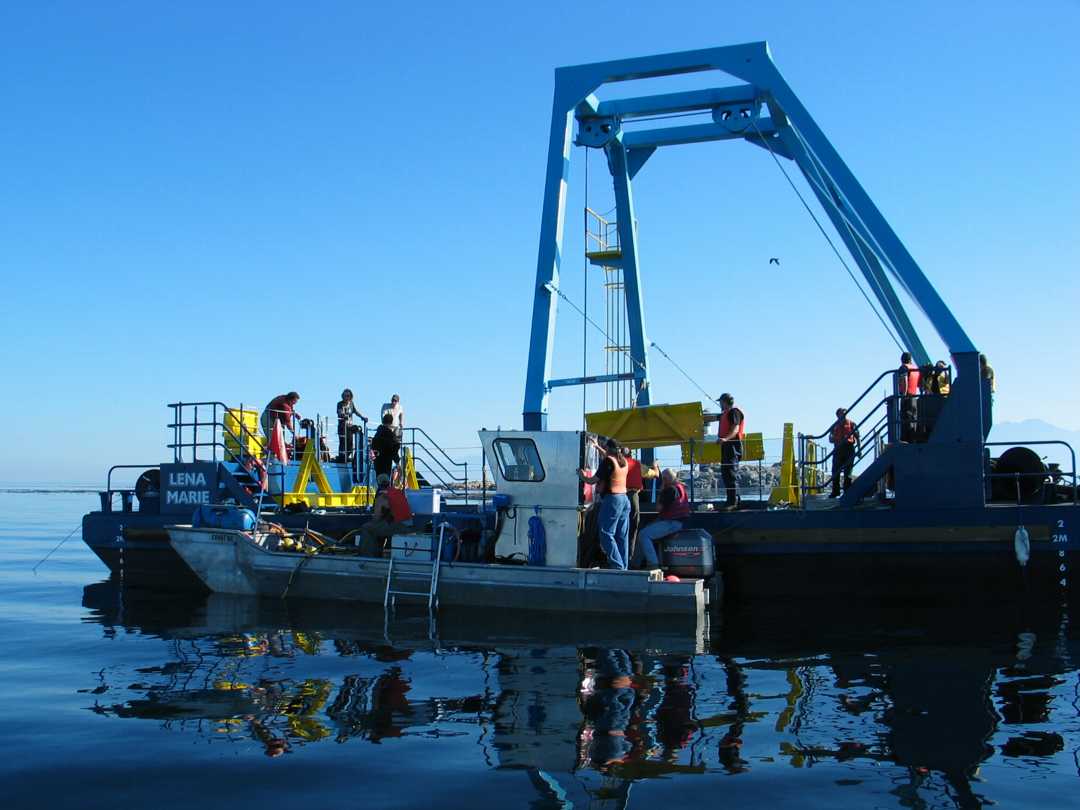
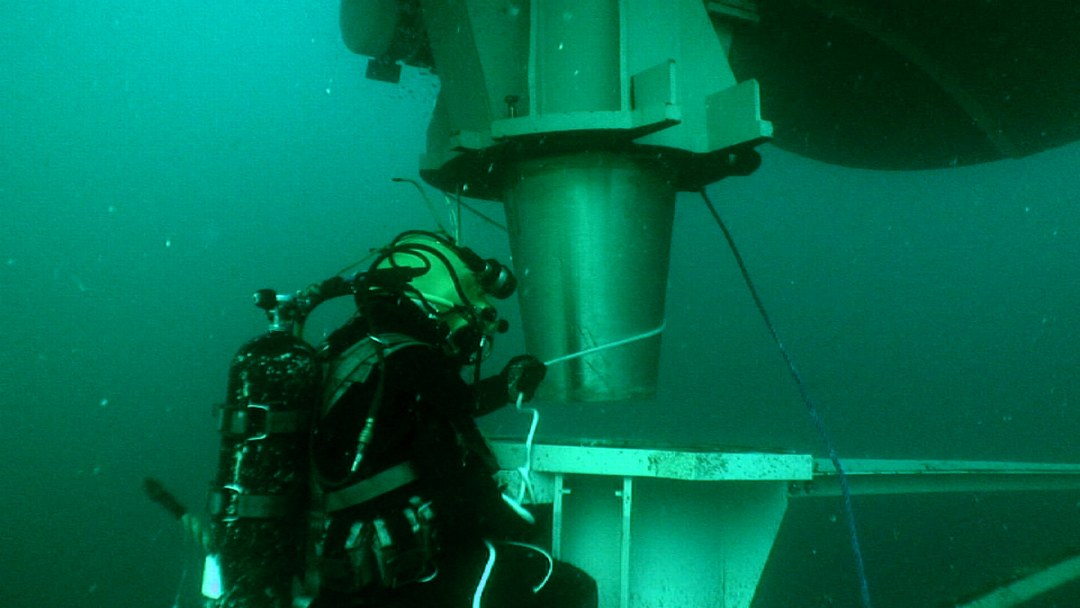
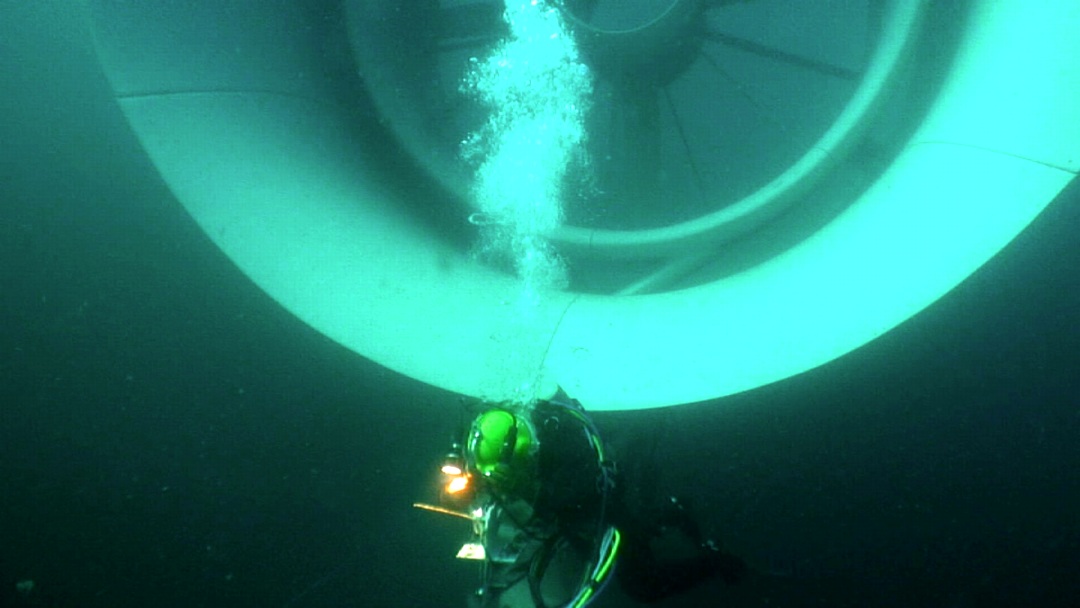
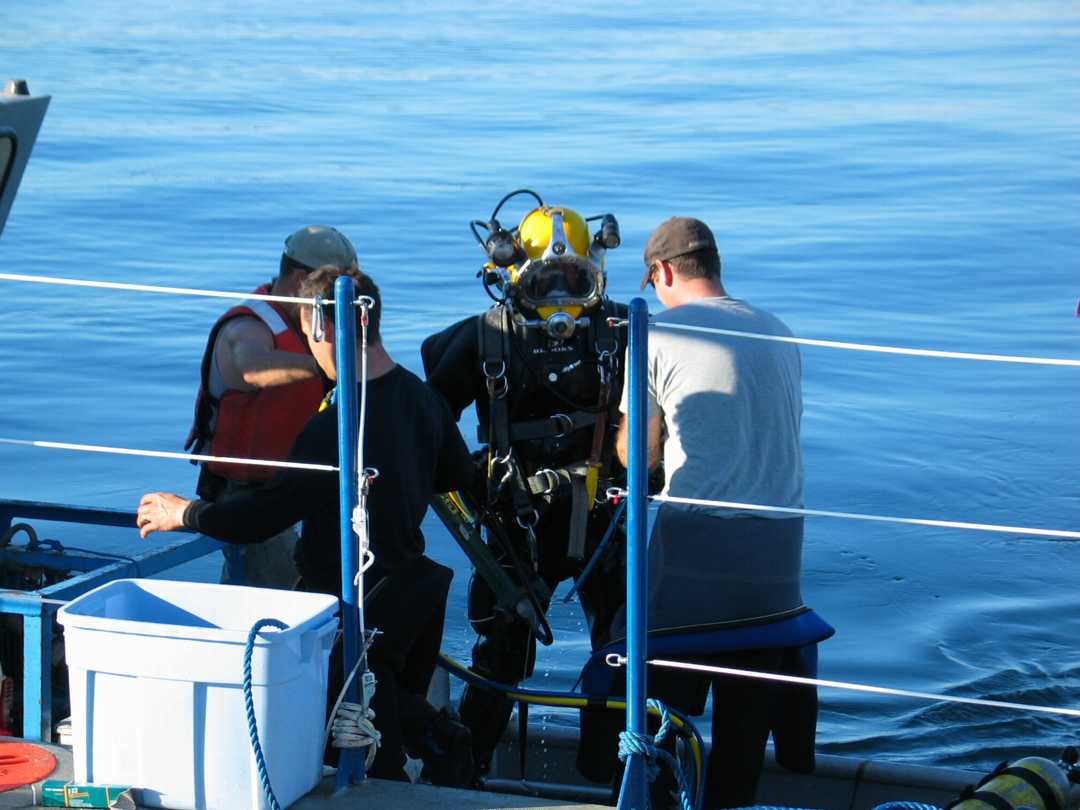
Installation of the tidal Current Generator at Race Rocks, Sept, 2006

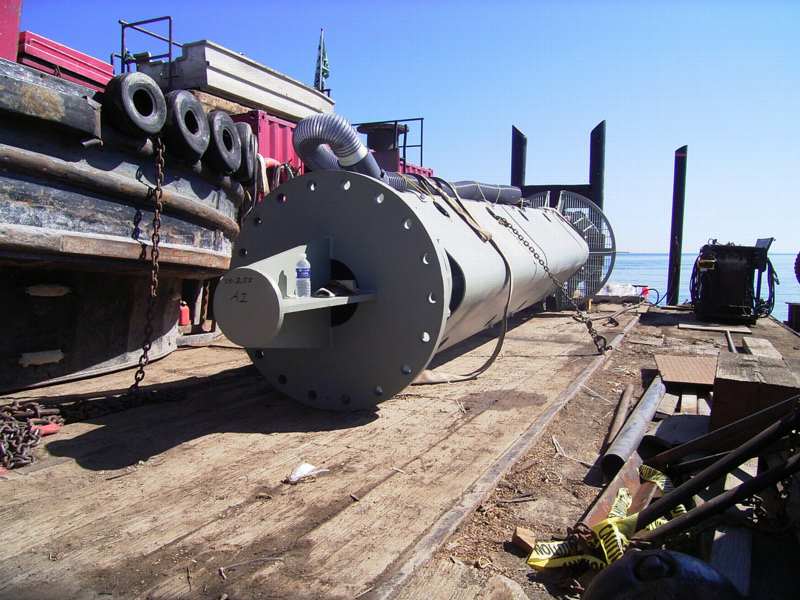
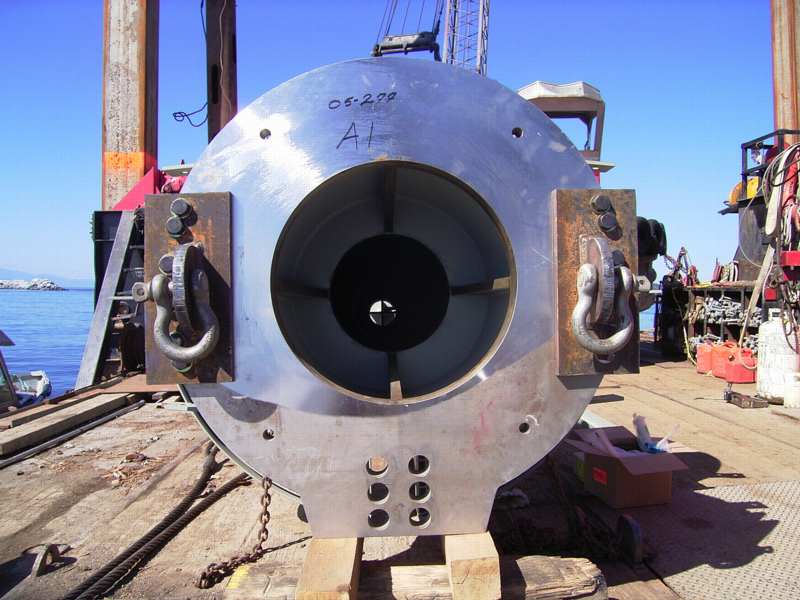
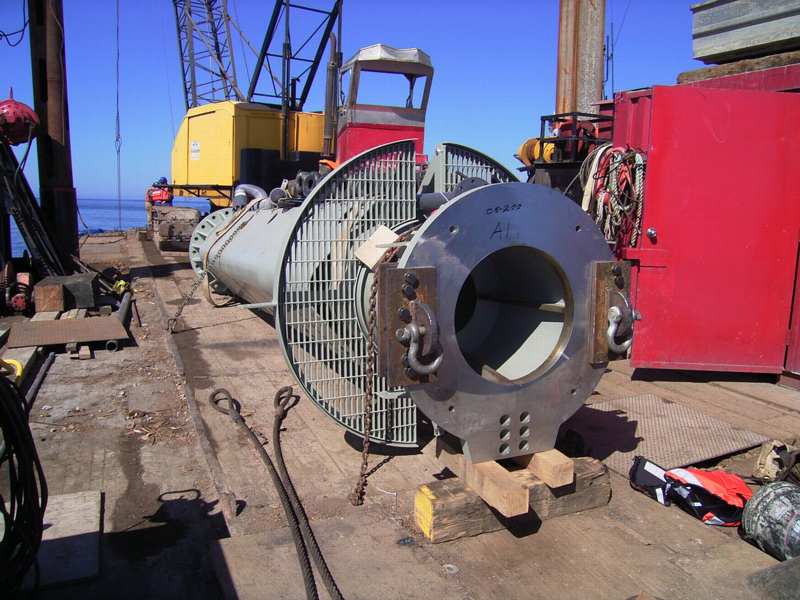
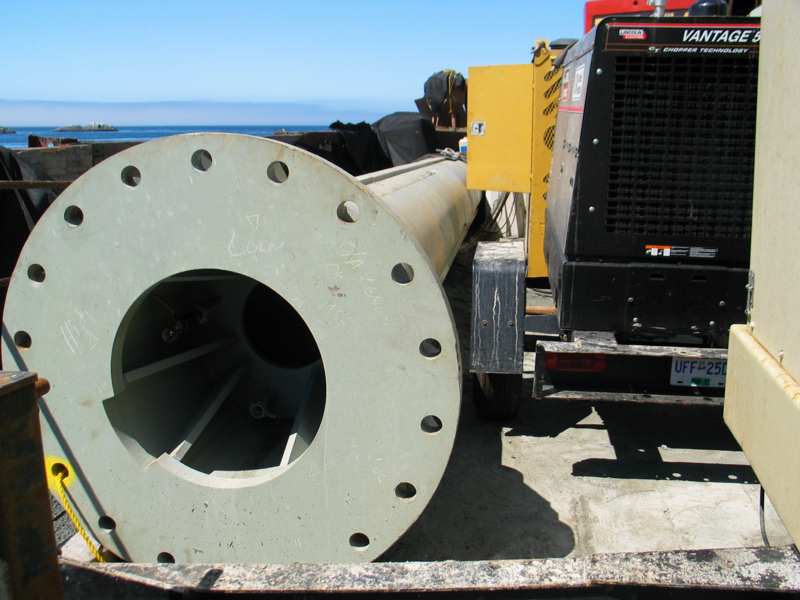
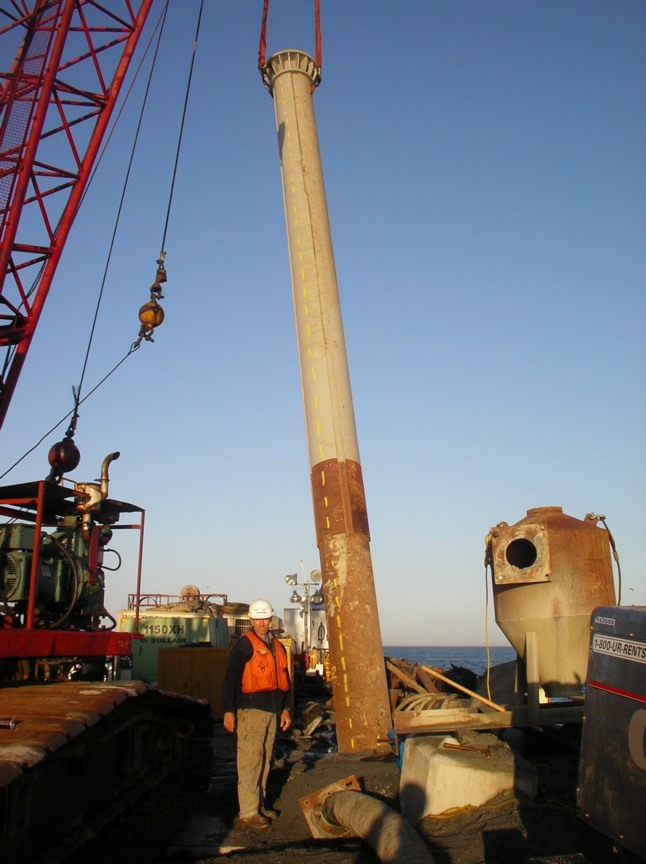
Installation of lower section of the piling for tidal energy project

The lower part of the piling awaits installation on the deck of the barge

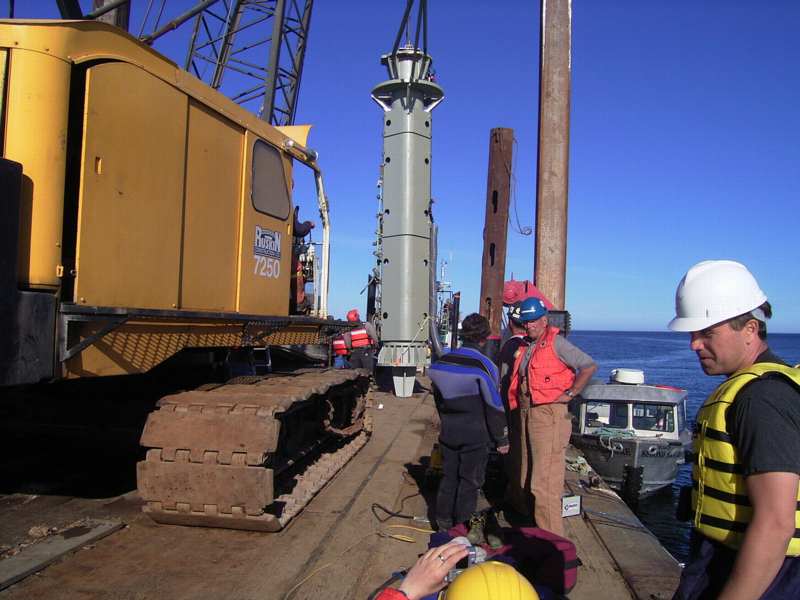
The crane hoists it into position. Almost half of it will be sunk in the shaft drilled underground at 20 meters depth

Lowering the lower section of the piling into the casing in the drilled shaft hole.


Images by Garry Fletcher and Gary Bouman

Link to the Tidal Current Energy Project