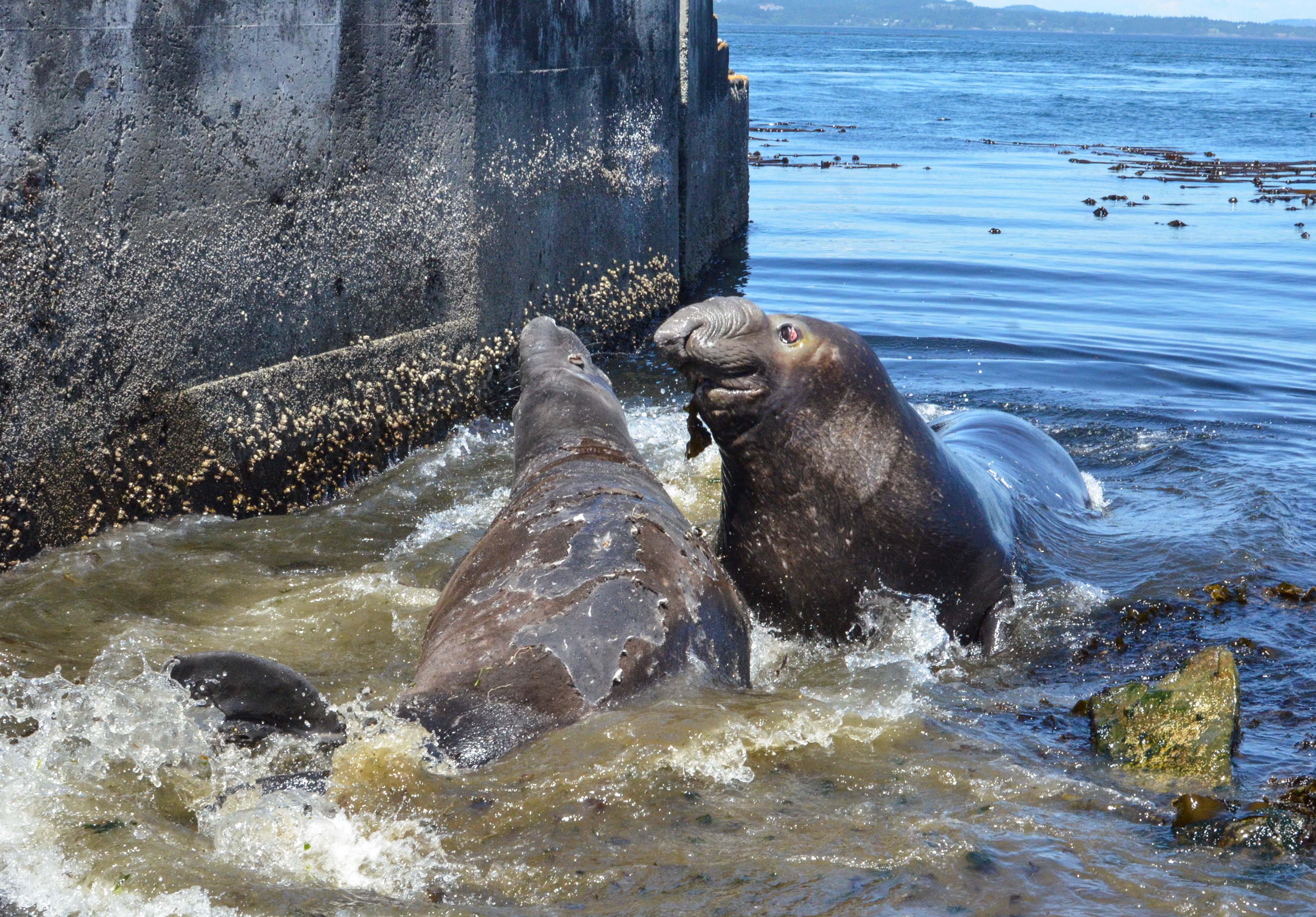
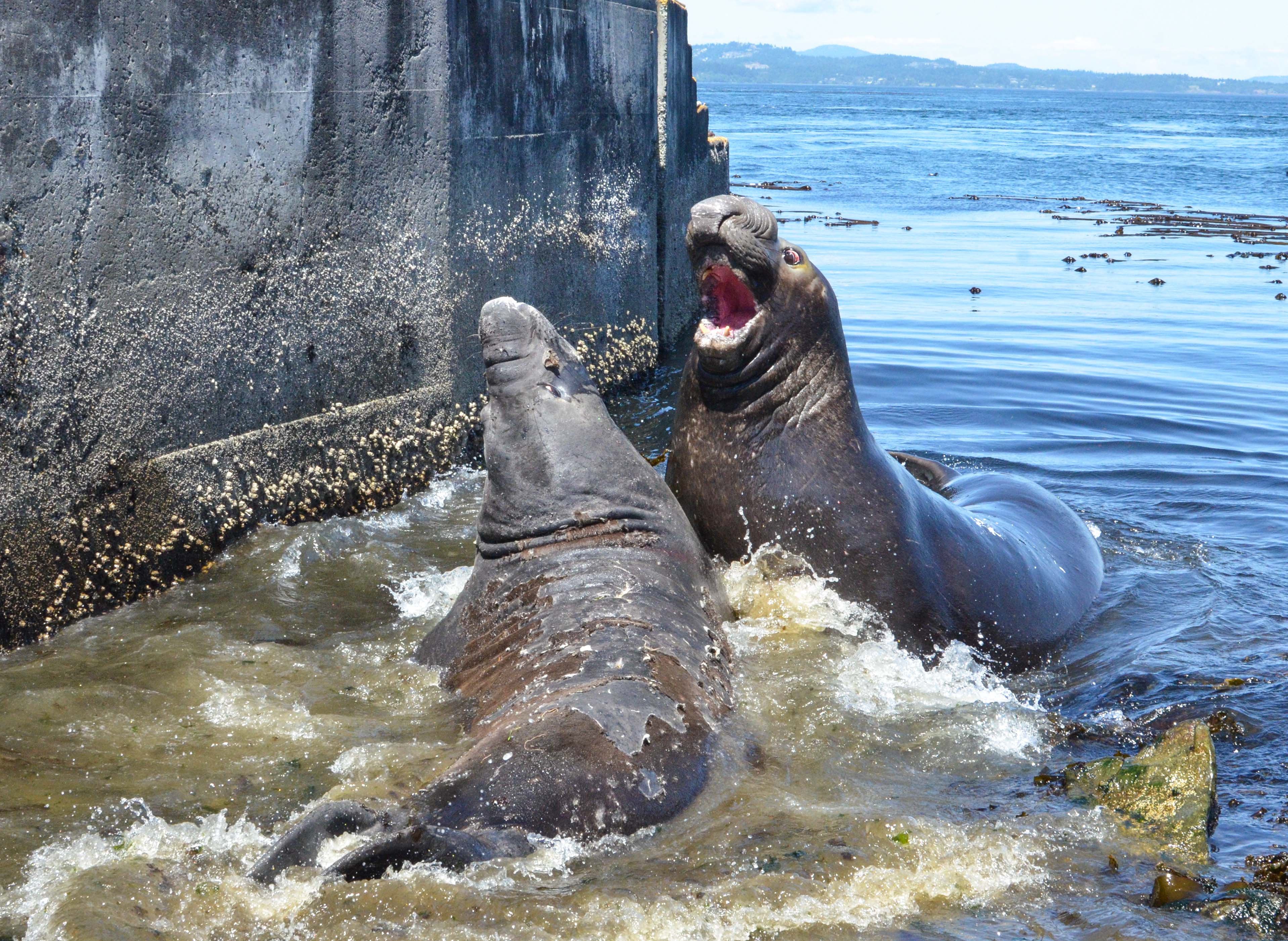
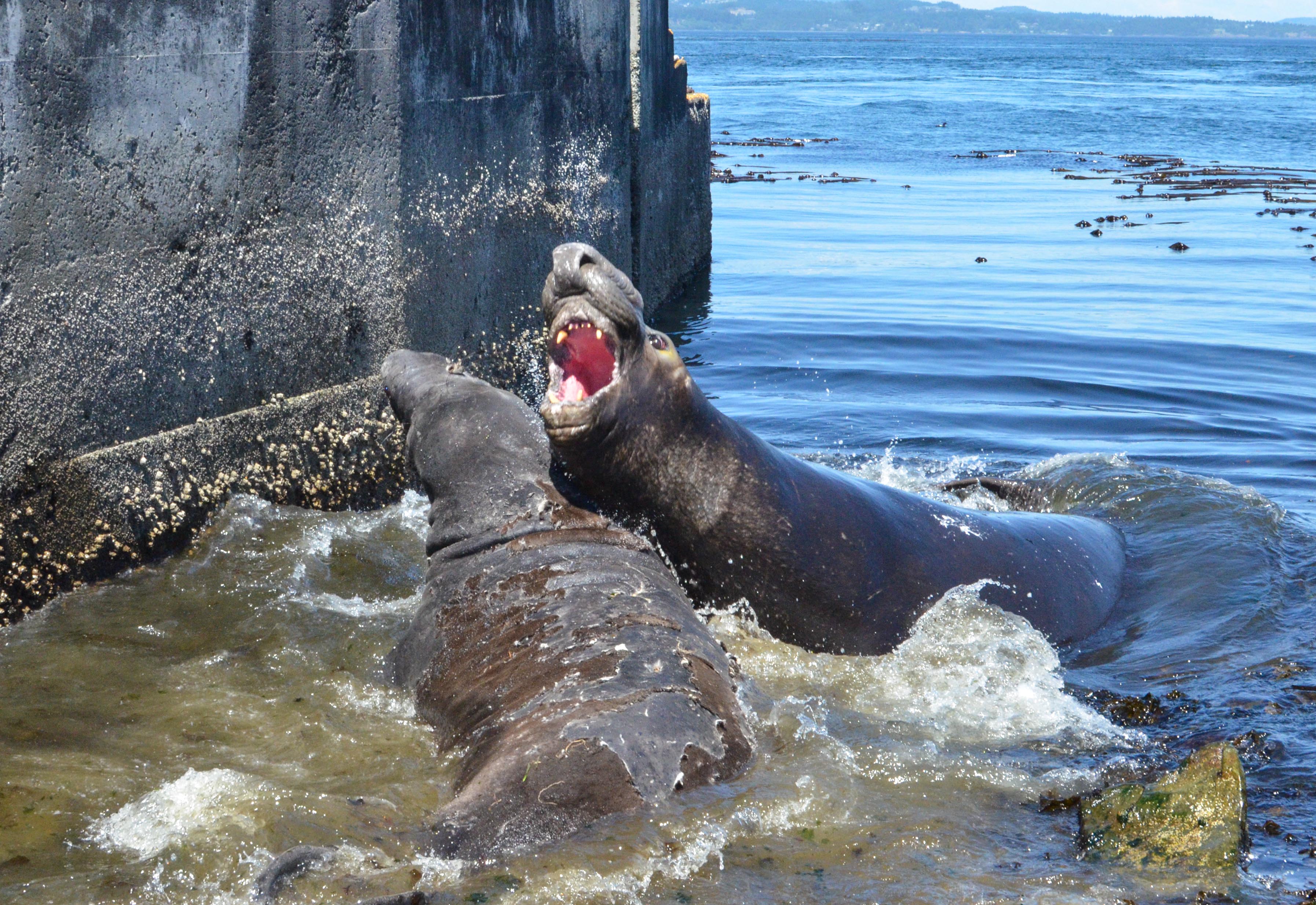
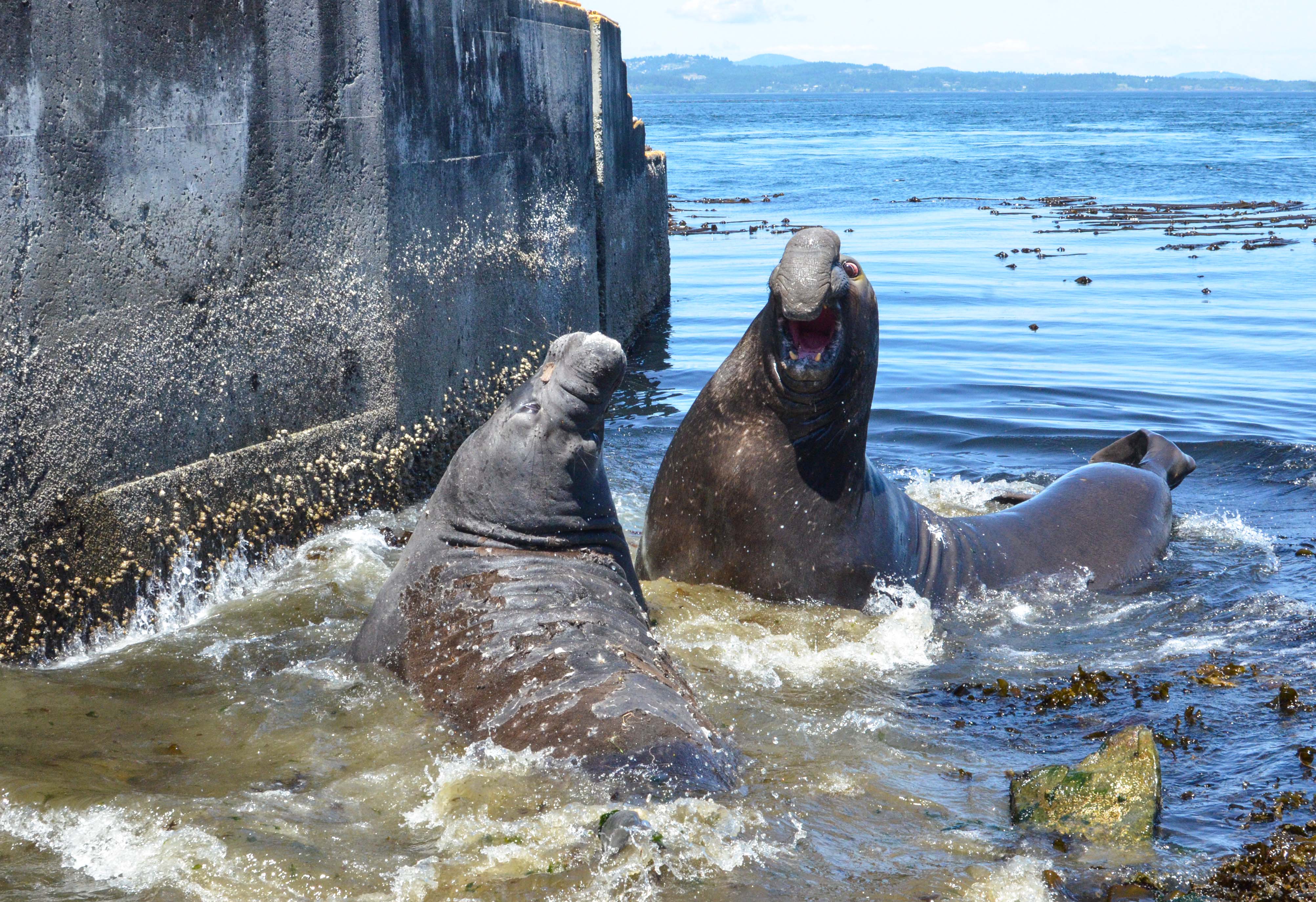
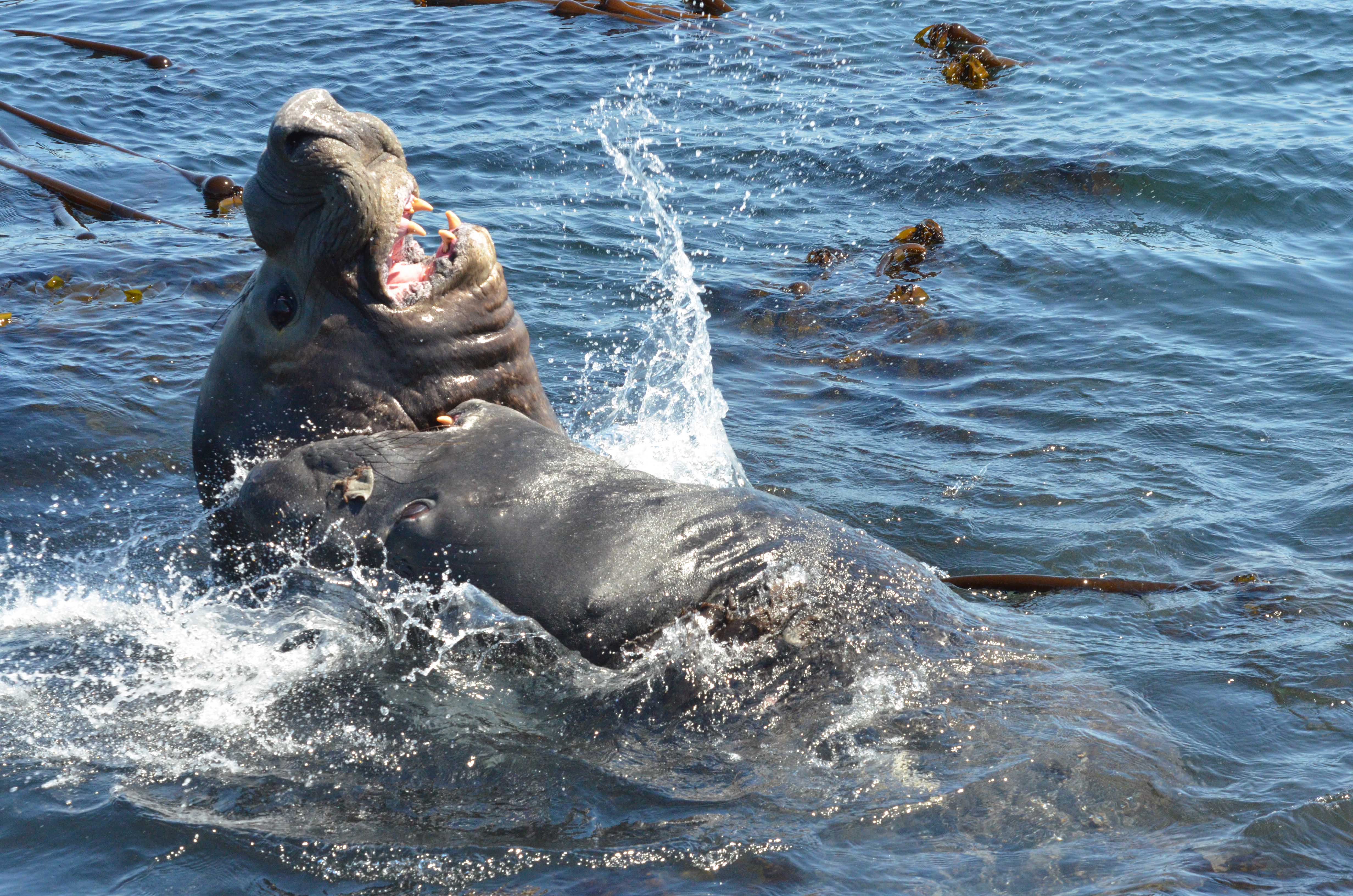
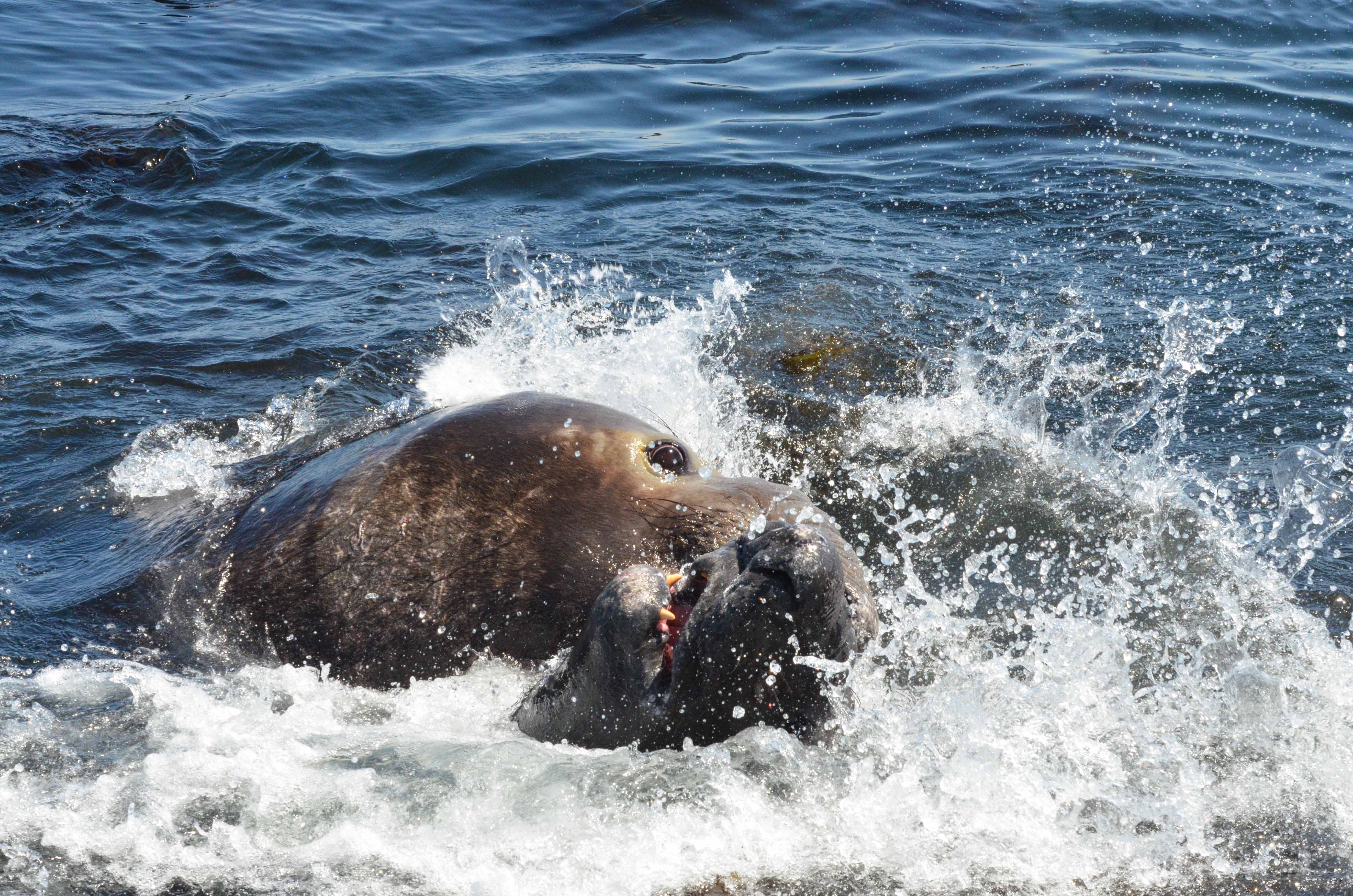
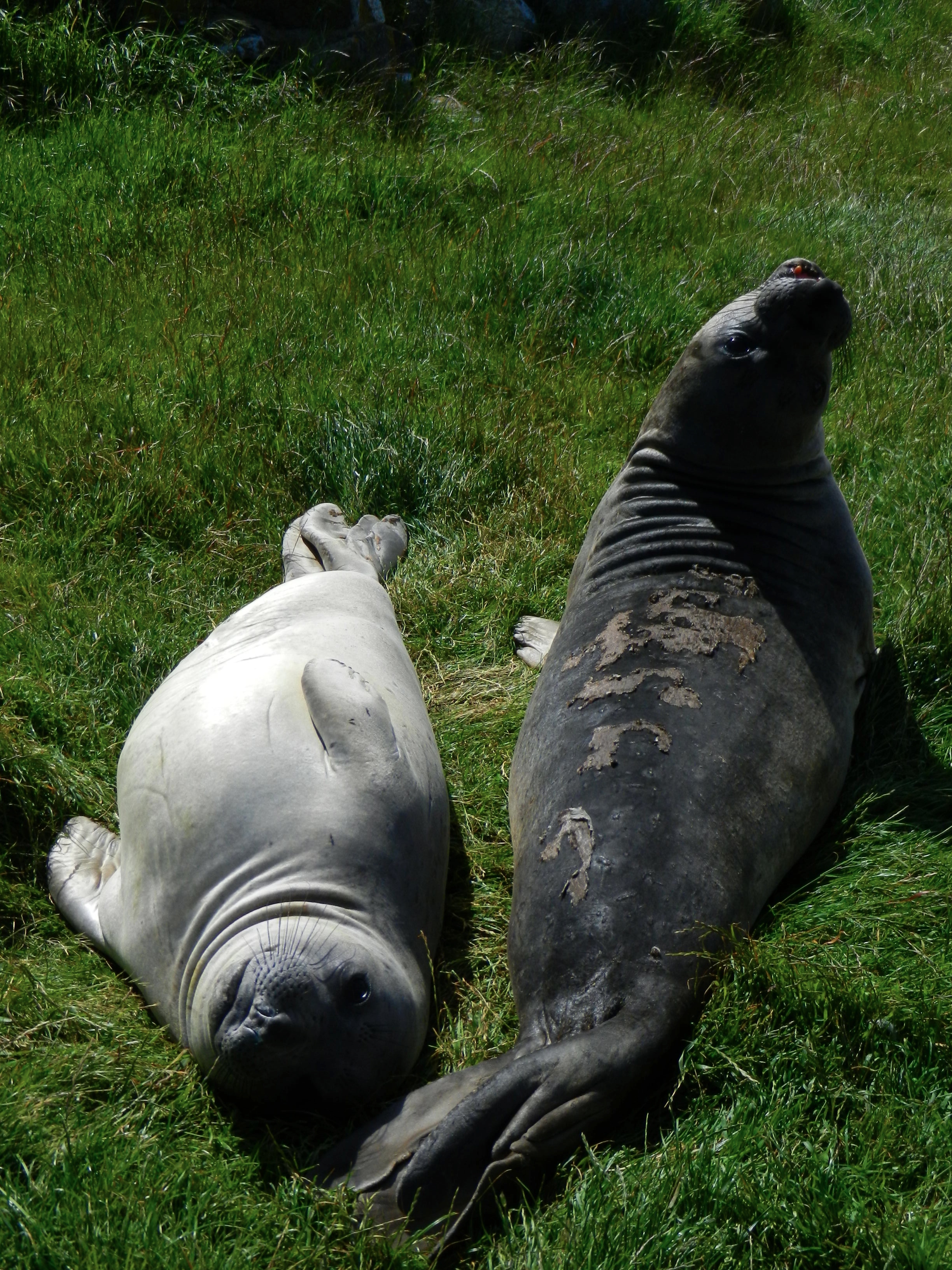
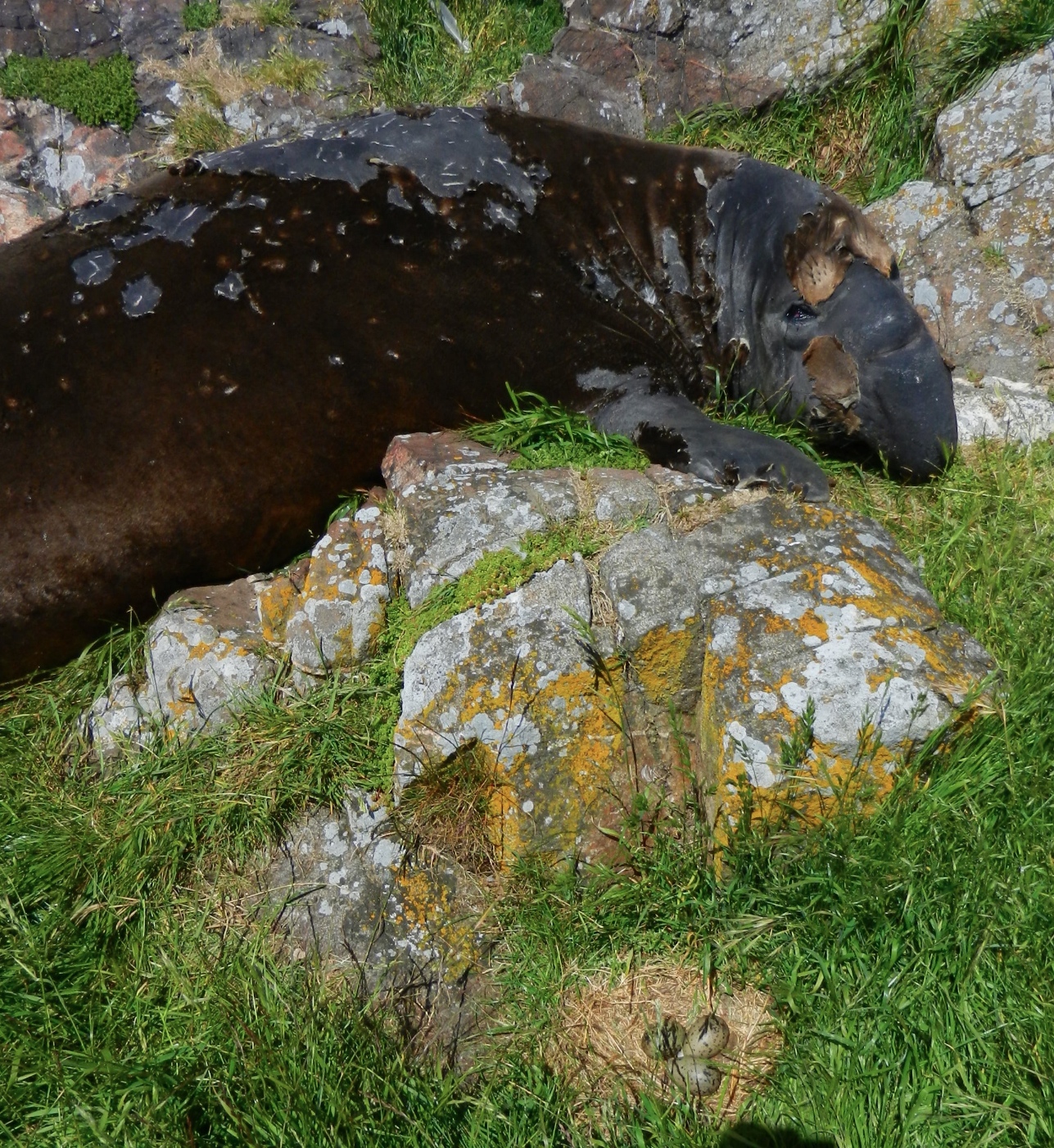
Oystercatchers Hatched, Chunk and Misery still sparring!

Mike left last week and I will be taking over for the next two months. My last shift was a year ago and it’s great to see how well Mike and Alex have taken care of the place.

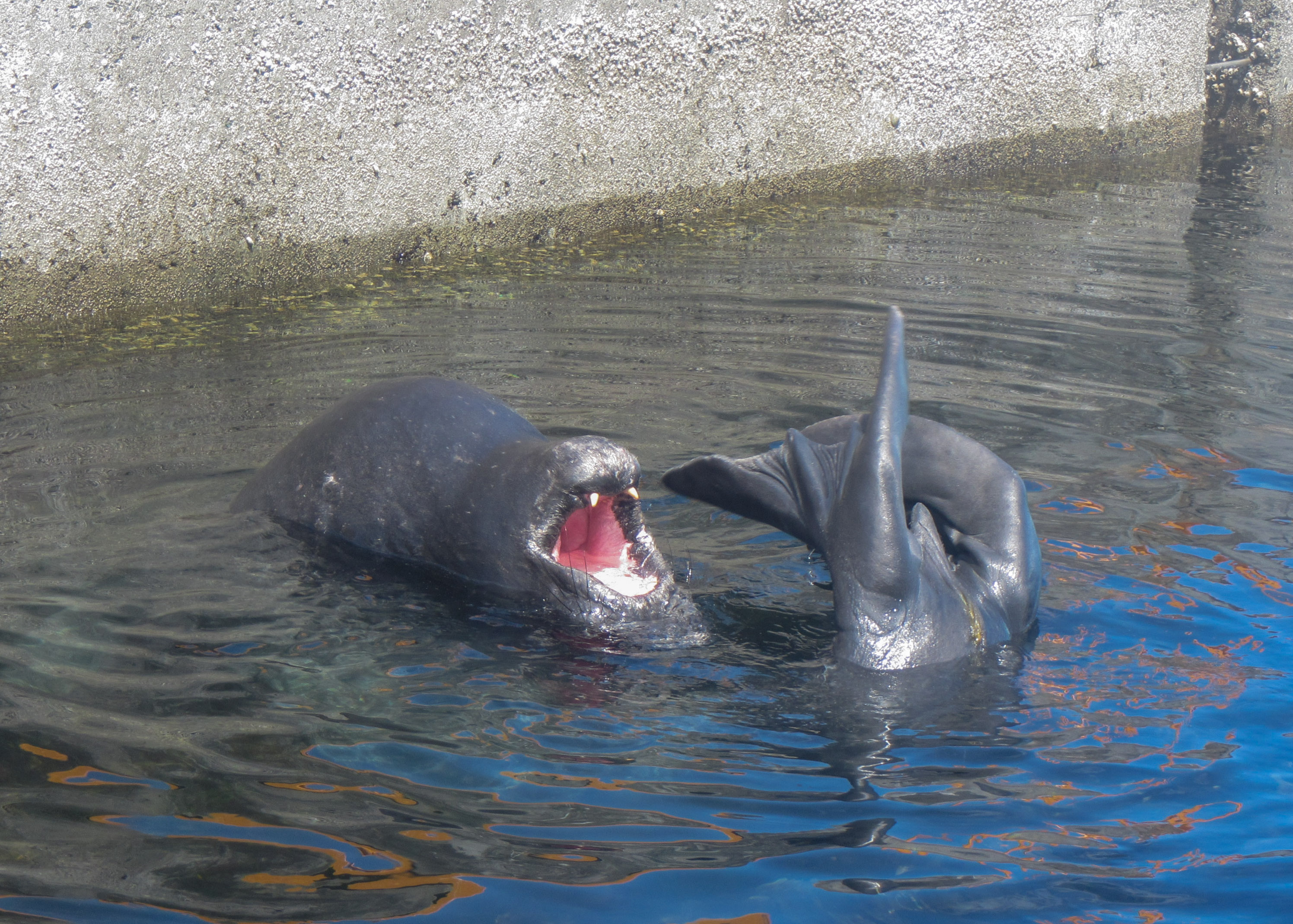
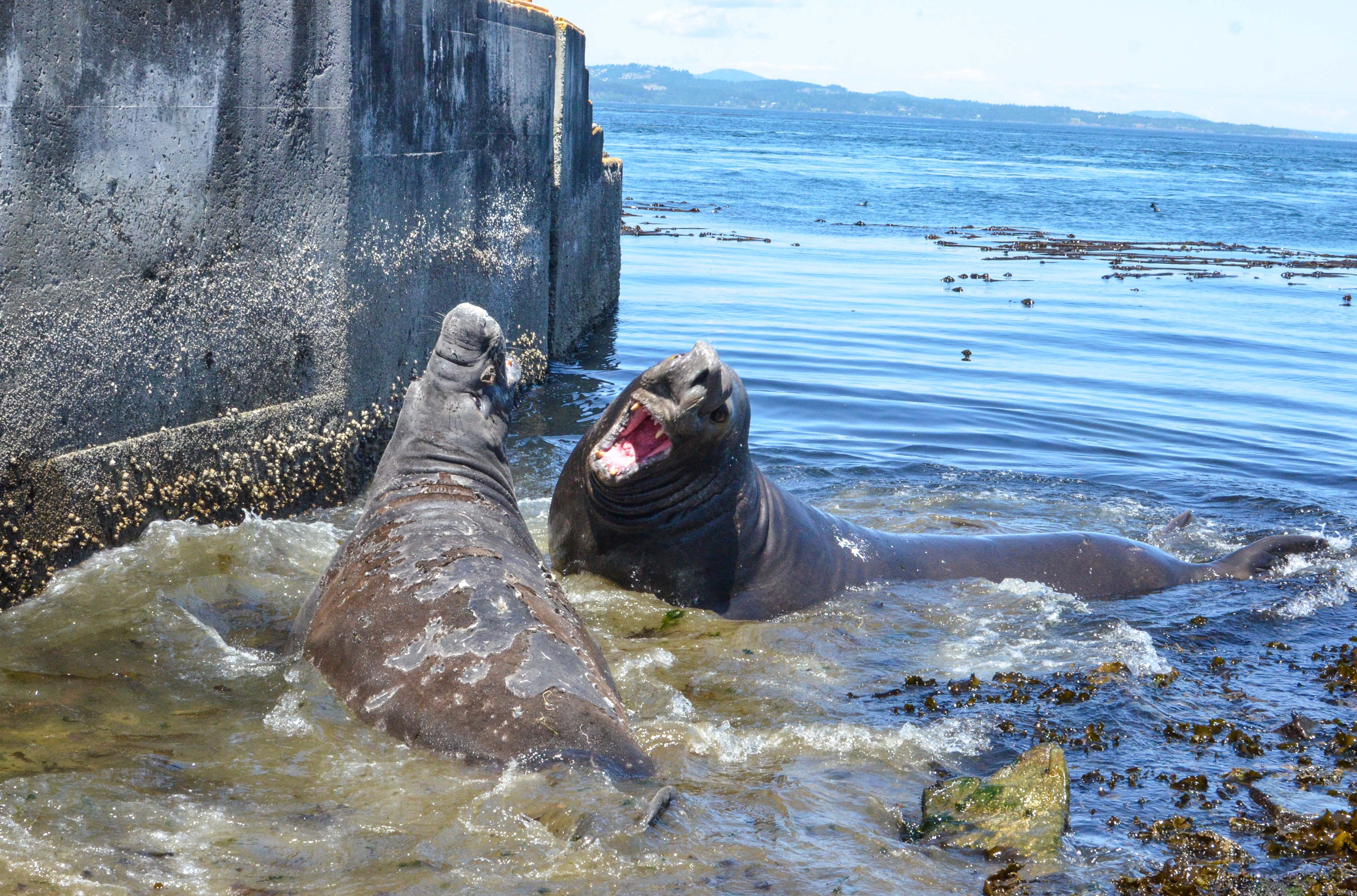
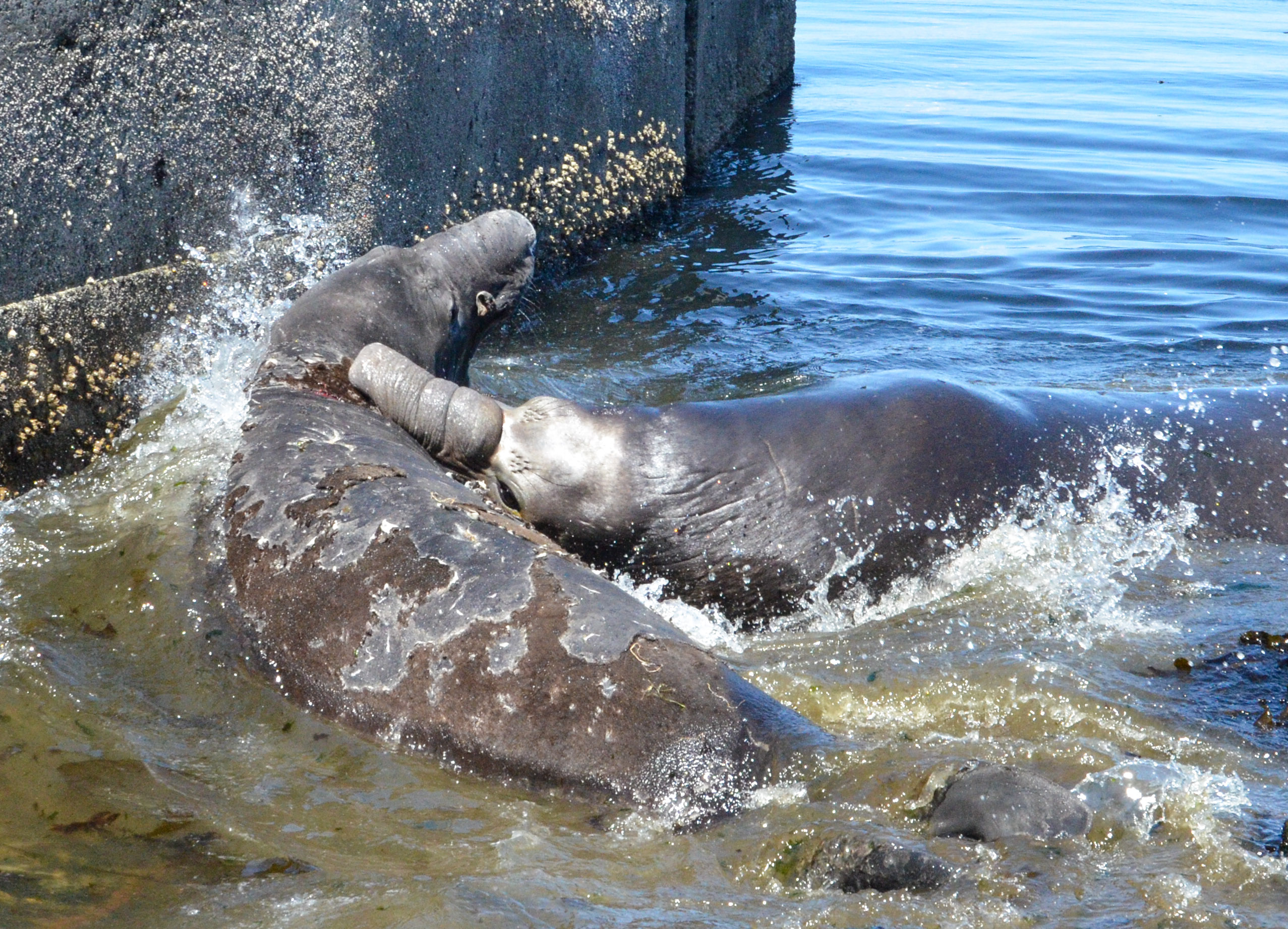
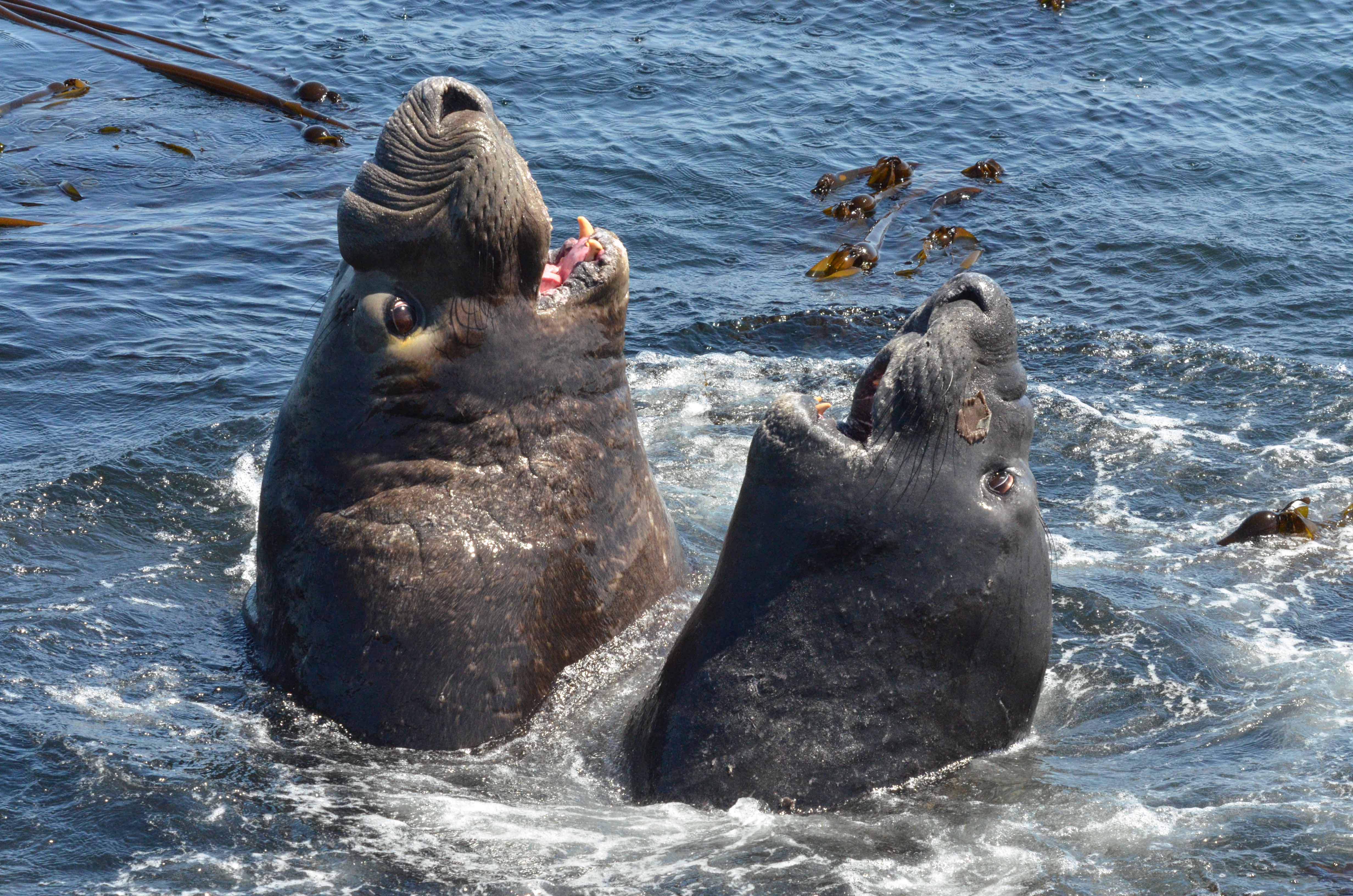
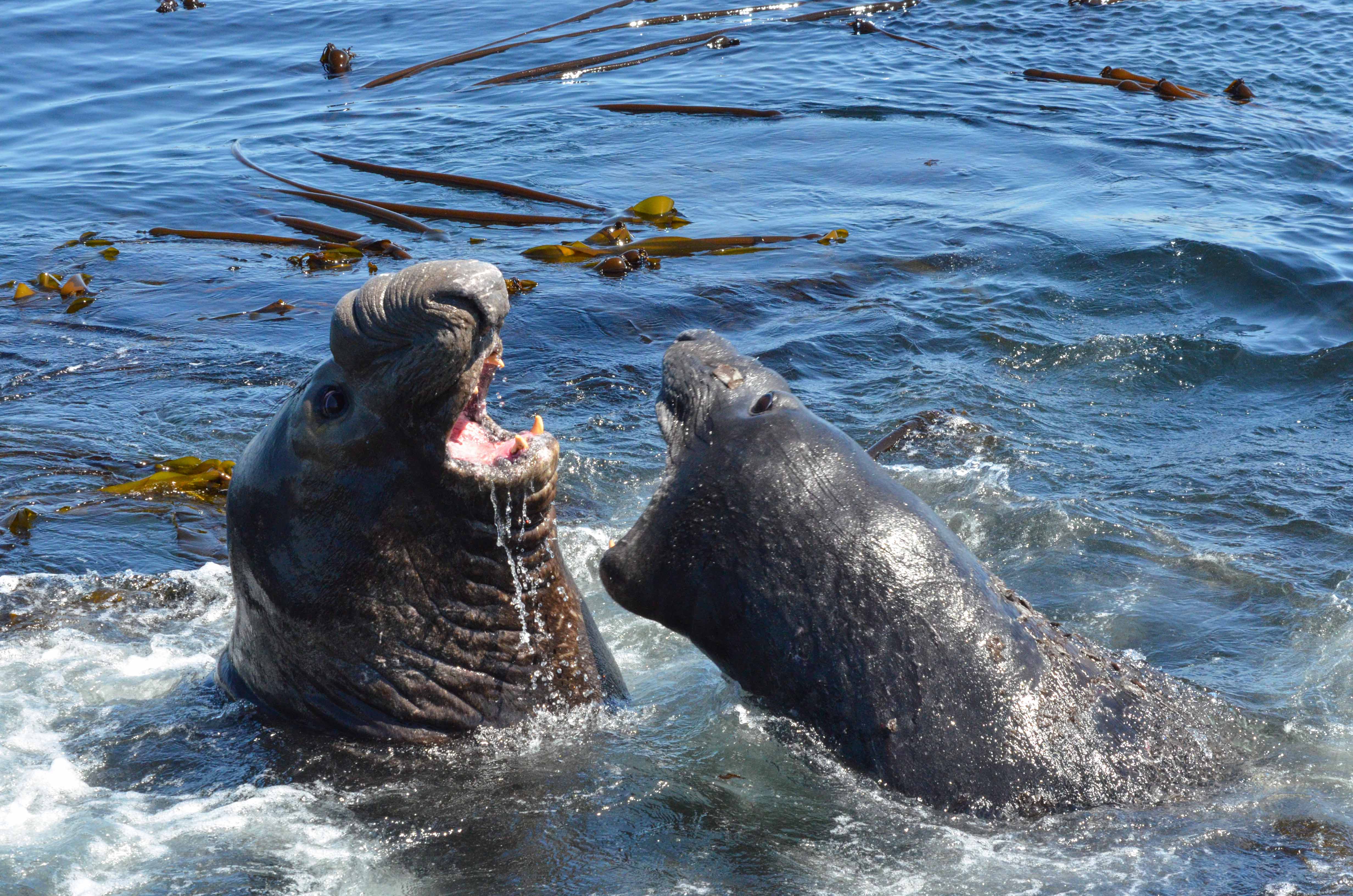
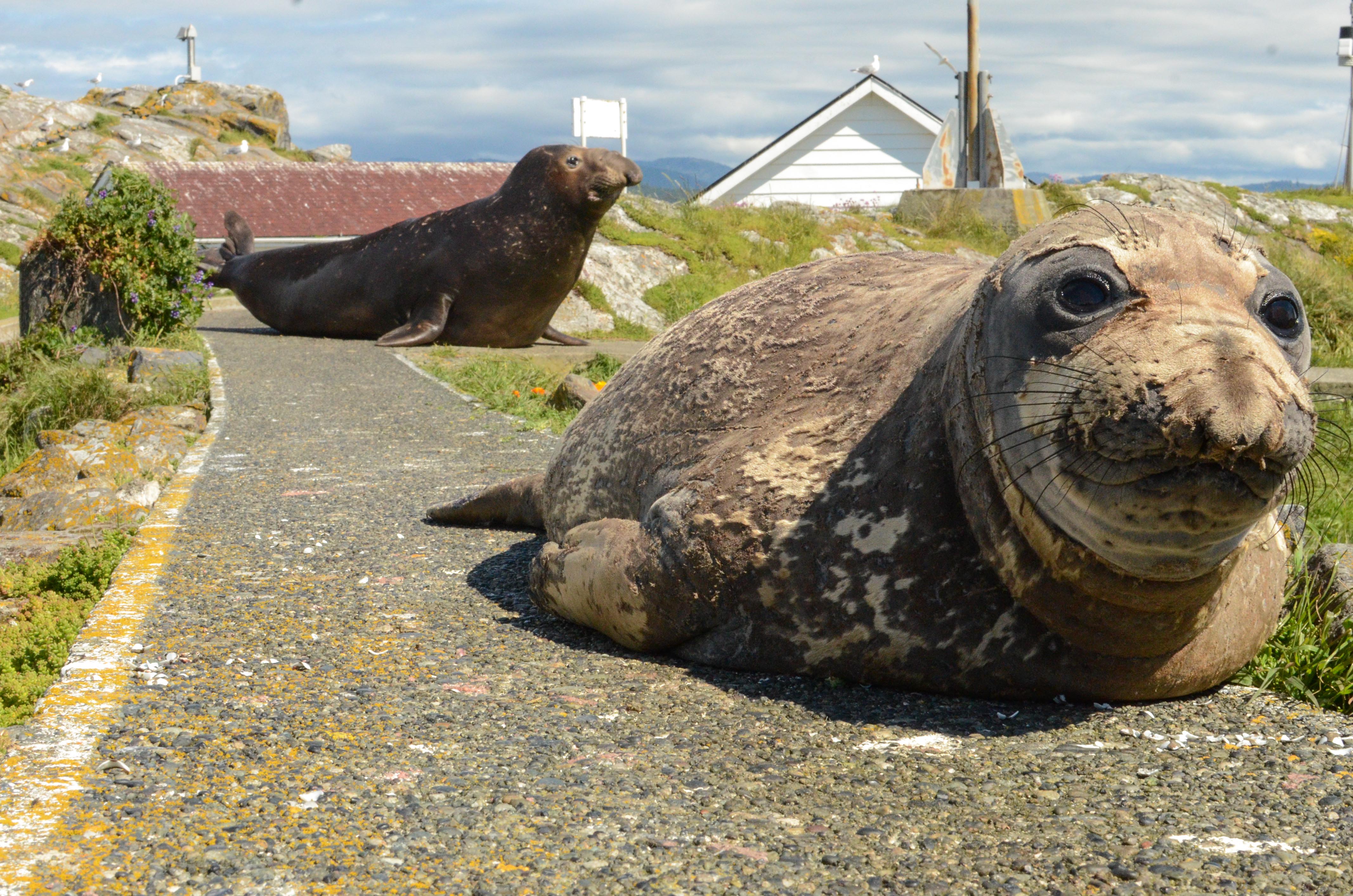
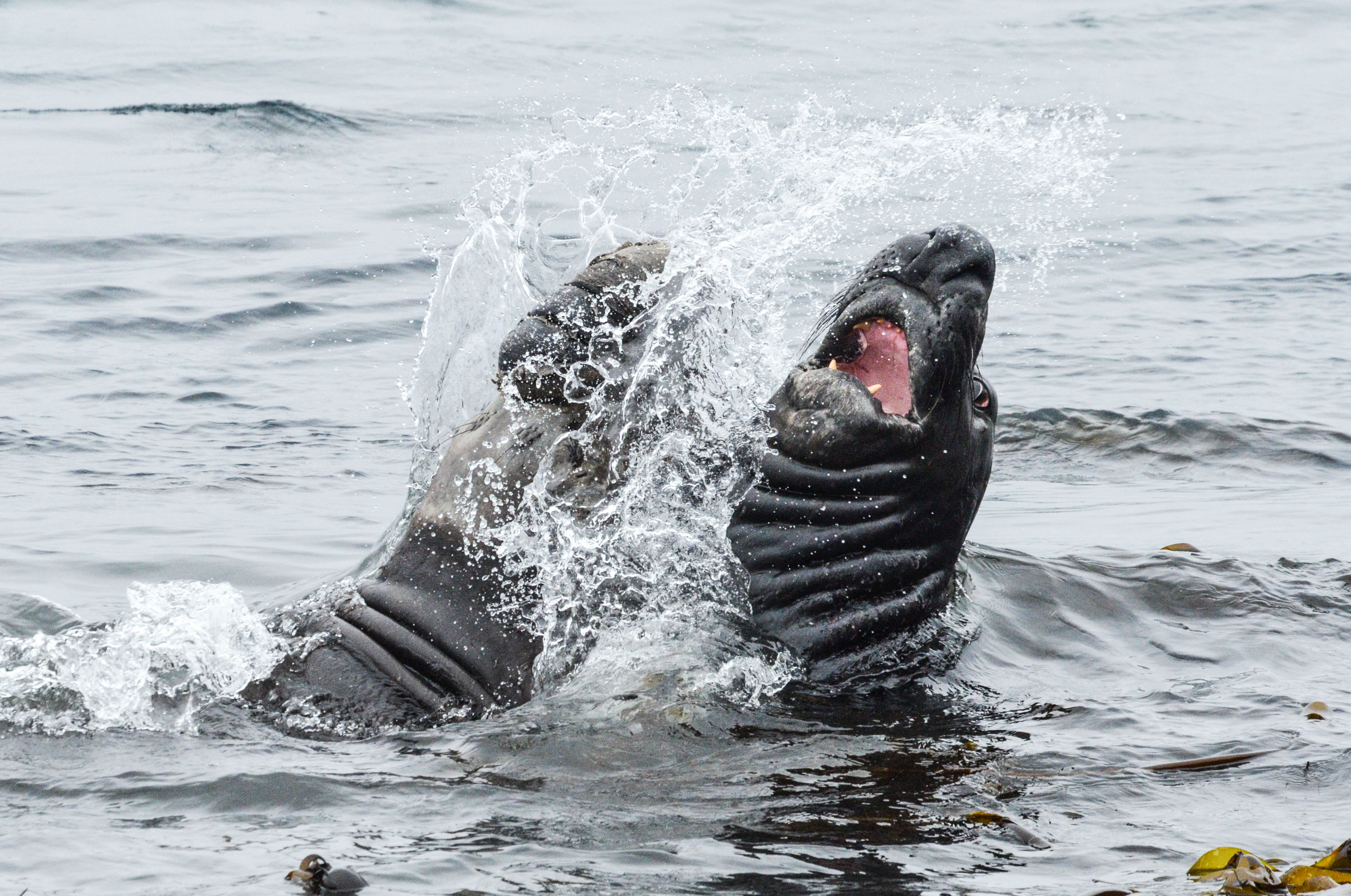
Over the past number of days, Misery and Chunk have been pretty subdued with the exception of Thursday when both headed into the water and had a 6-hour long feud. There are no females on the island so my assumption is that Chunk is testing Misery’s role as alpha-male (which he’s proven to be in check). 

The two contenders

The two contenders: Misery and Chunk


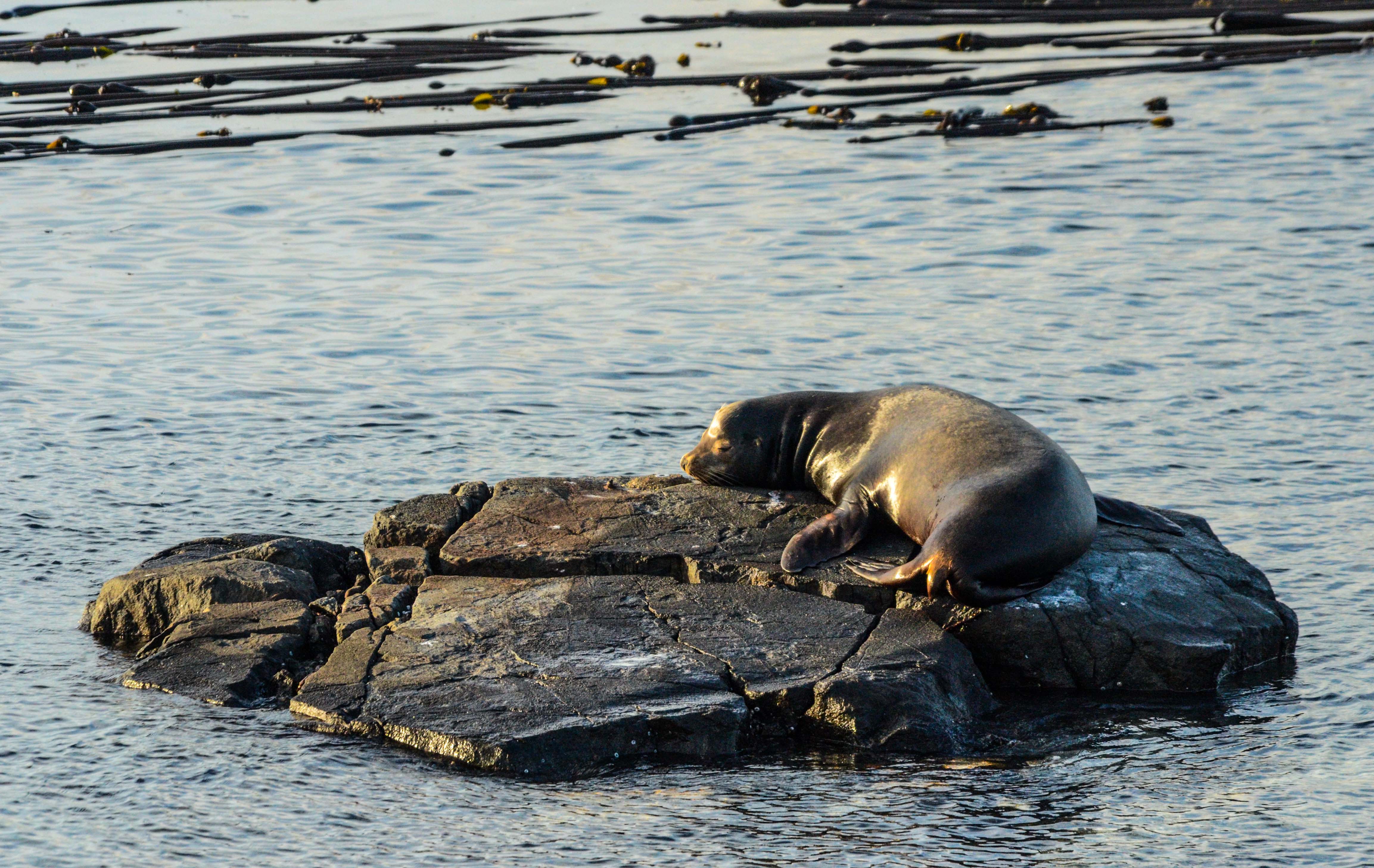
Sea lion near the jetty during sunset

Sea lion near the jetty during sunset


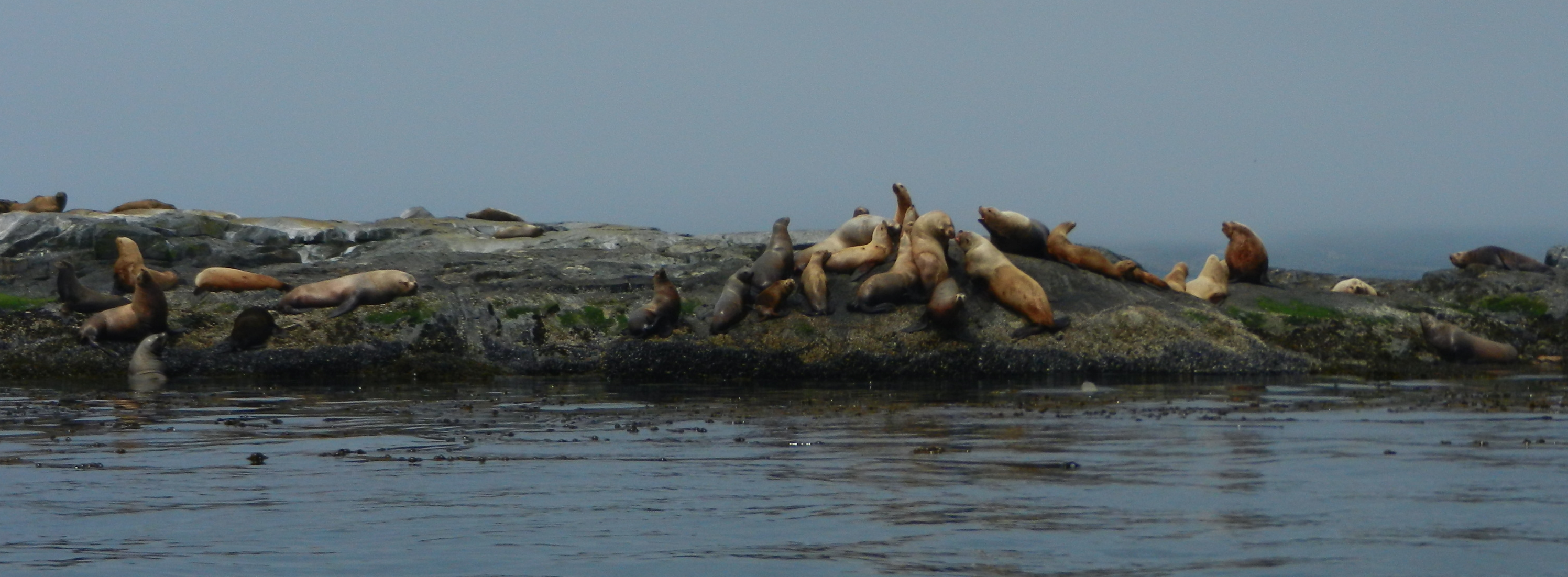
The first sea lion of the summer has been hanging around on the main island and the southern rock.


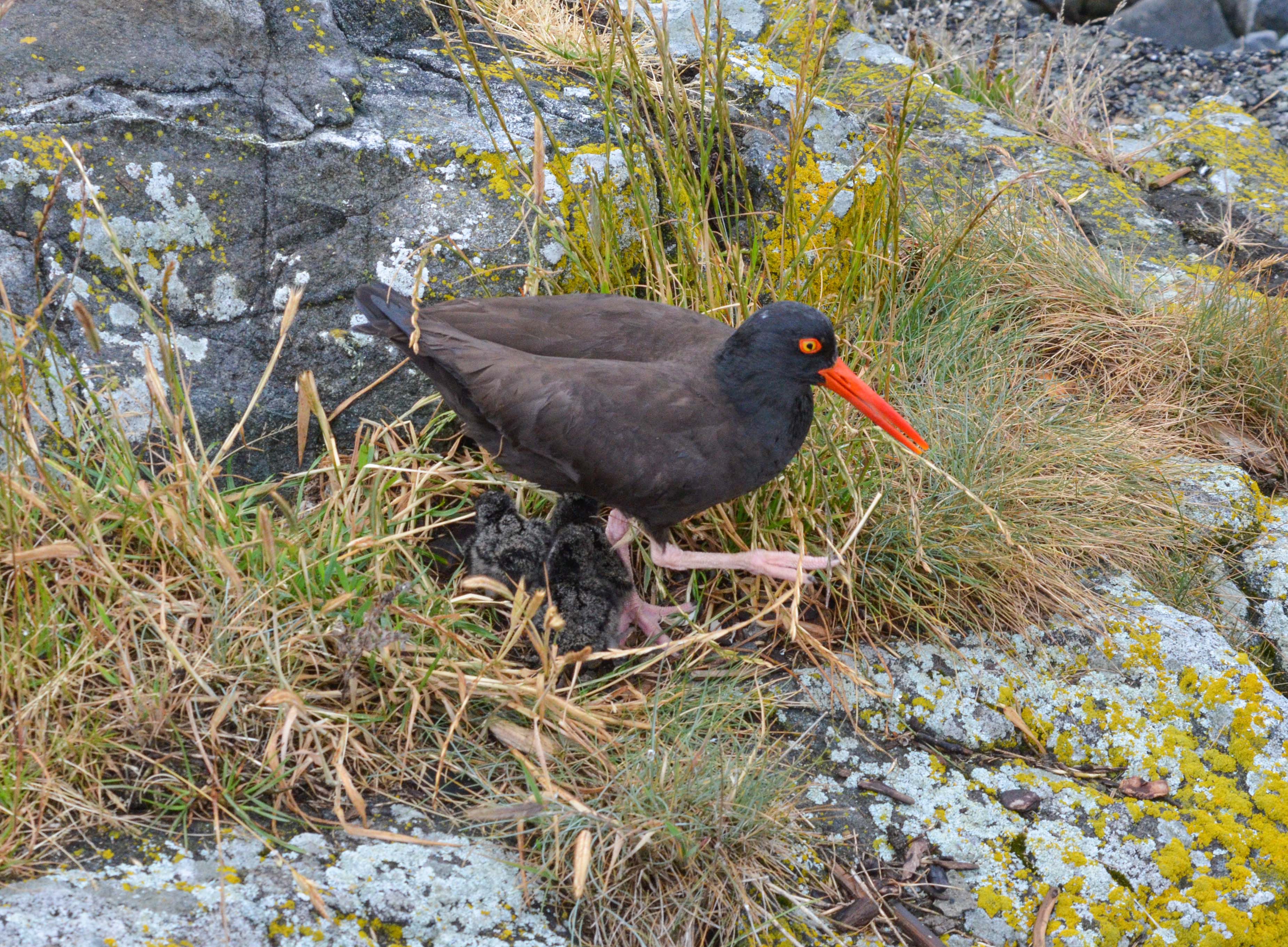
Oyster catcher with 3 chicks

Oystercatcher with 3 chicks

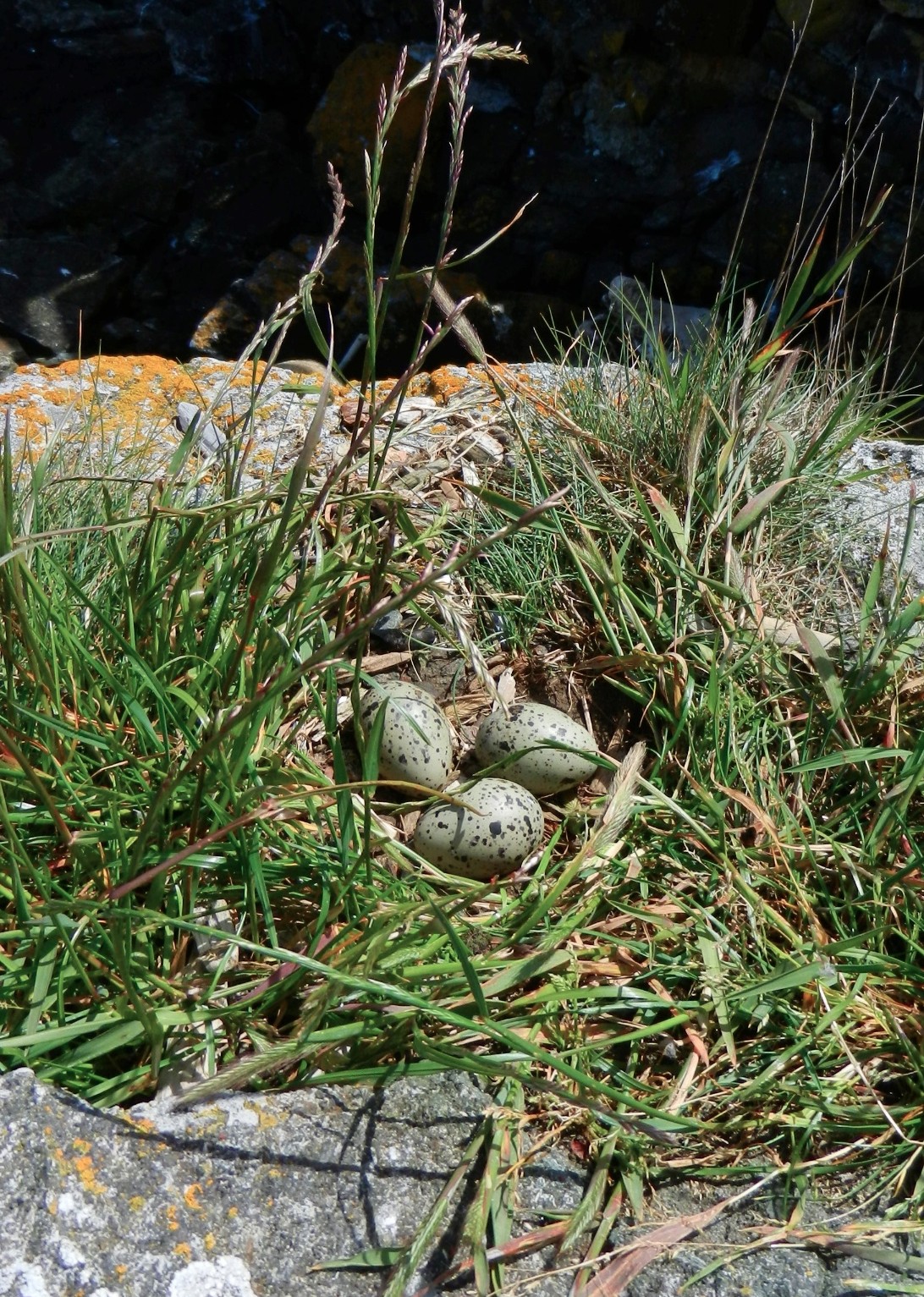
Another first of the season are the newly hatched oystercatchers, pictured right. This nest is on the north side of the island and there is another on the south side that still has its 3 eggs intact.


For boat traffic, there averages 10-20 vessels per day in the reserve (weather depending). In the photo below, the gathered whale-watching boats to the west of Race Rocks implies a whale-sighting although it was too far for any good views from the island itself.

Whale watching vessels to the west of the island

Whale watching vessels to the west of the island


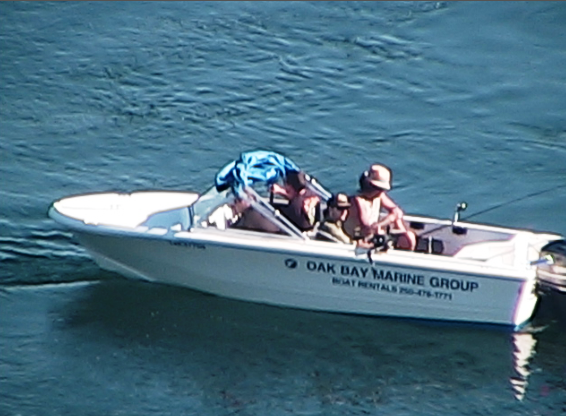
Another note on boat traffic, this morning four curious boaters from Pedder Bay Marina wanted to explore the island unaware it’s not for public use. I explained the rules of the reserve and sent the apologetic boaters on their way. Pam Birley took some snapshots on Camera 1.


Gull colony self-protection measures!

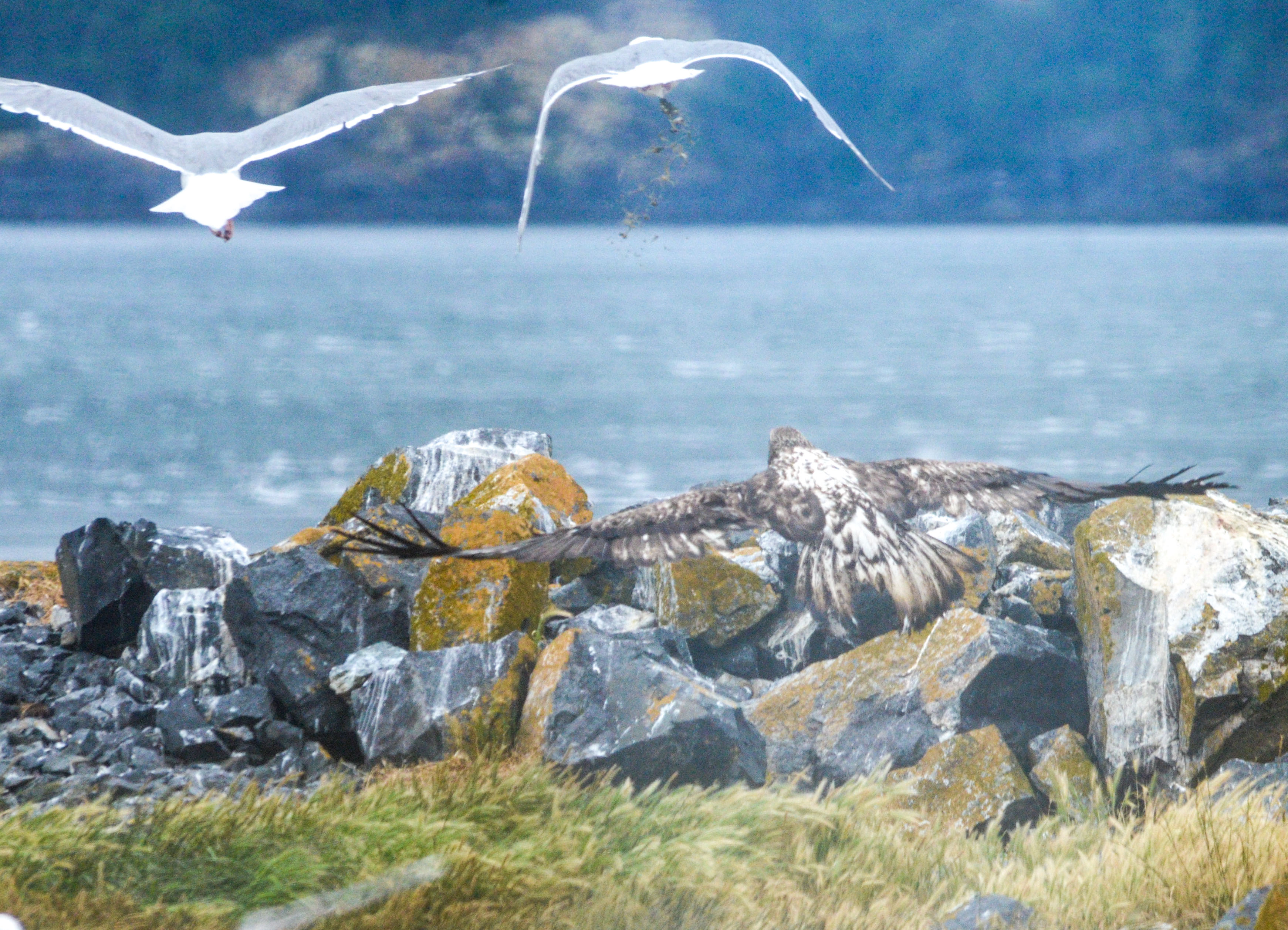
It is my last day out here for a while and Julie is taking over again for the summer. I shall miss my elephant seal friends and a little less so the gulls. I got pooped on last night right on the nose! But as you can see by the picture I am not the only one to suffer an aerial strafing. Have a great summer everyone….

Fecal Bomb on Agressive Juvenile Eagle

Fecal Bomb on Agressive Juvenile Eagle

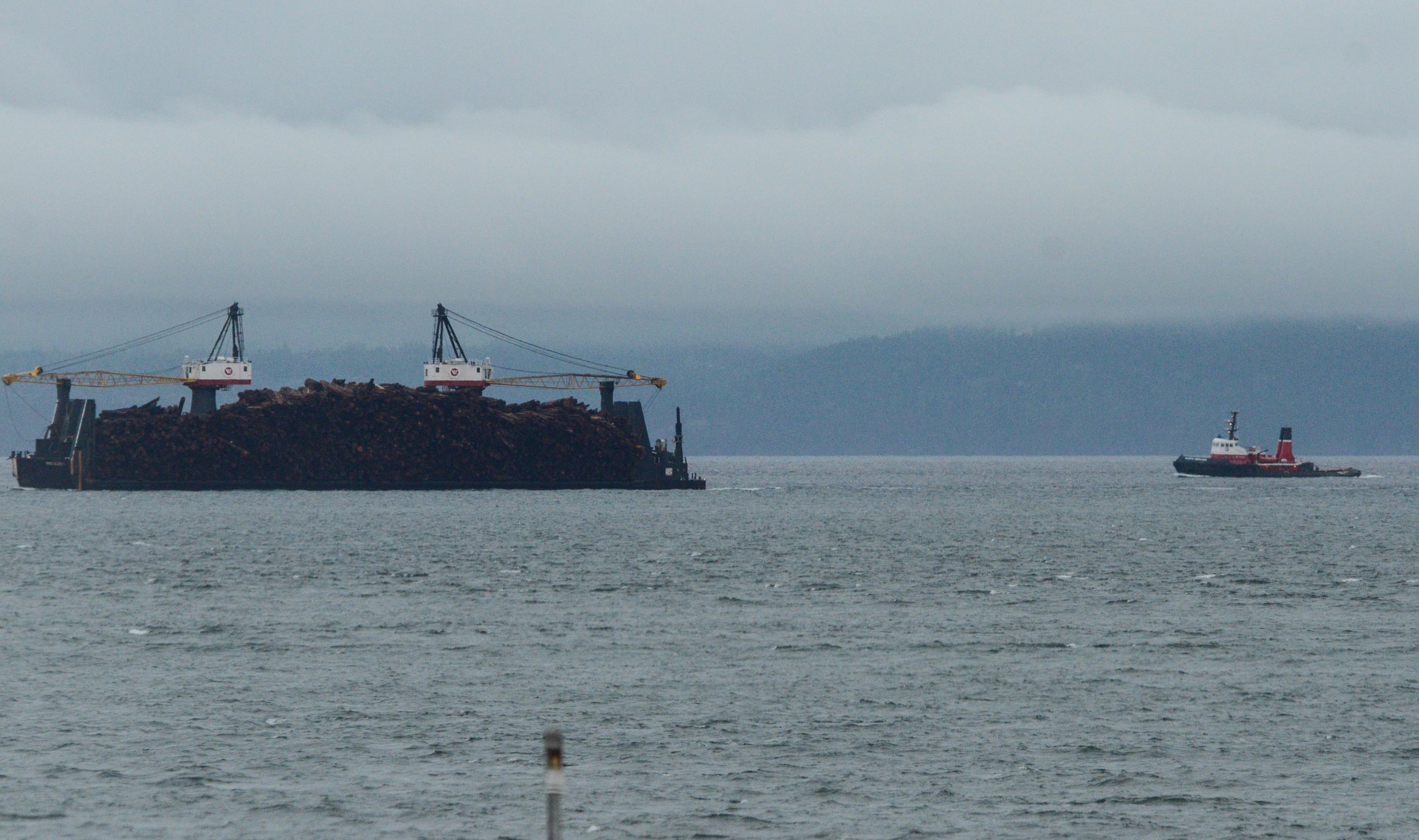
Log Barge

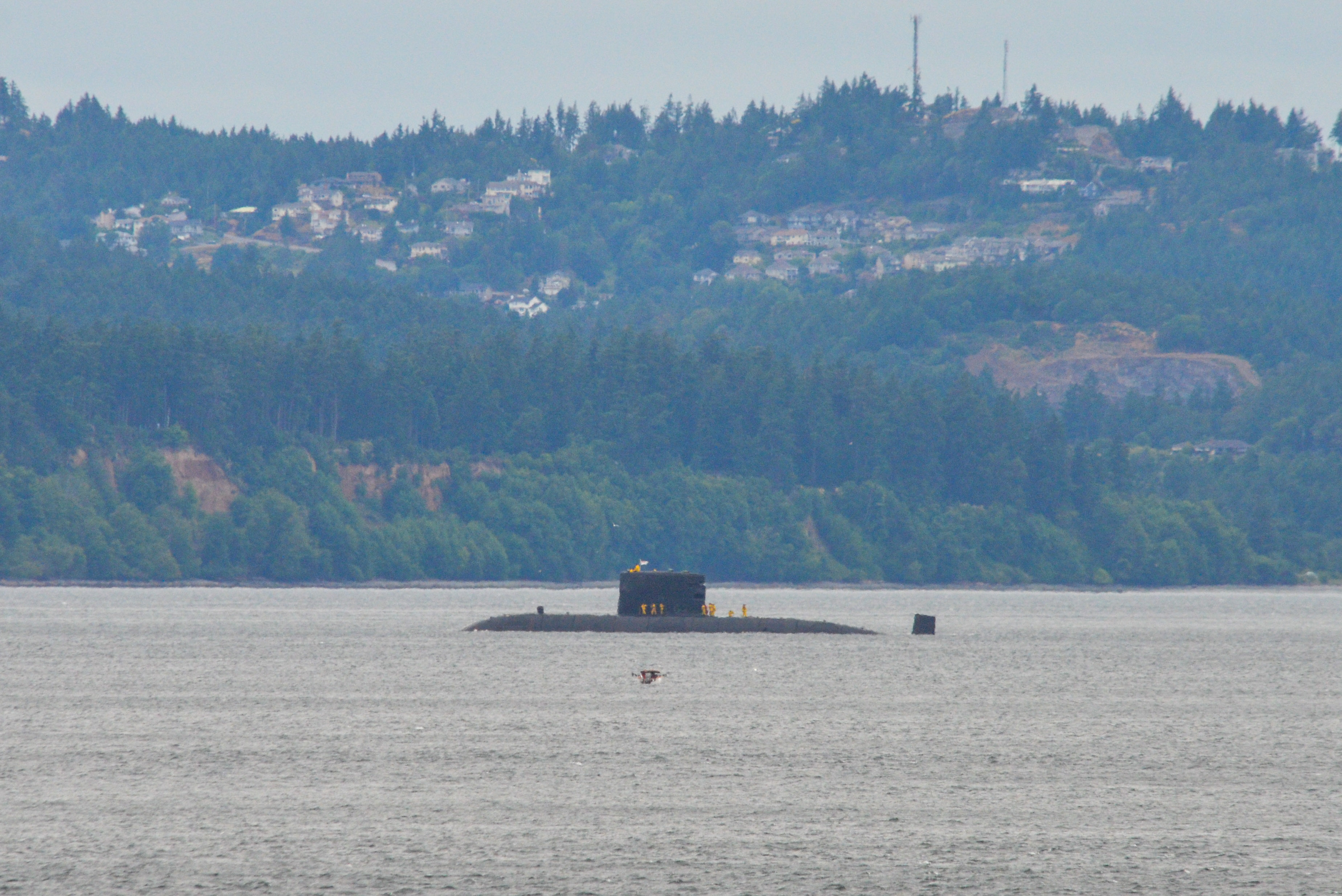
Canadian Submarine

Canadian Submarine

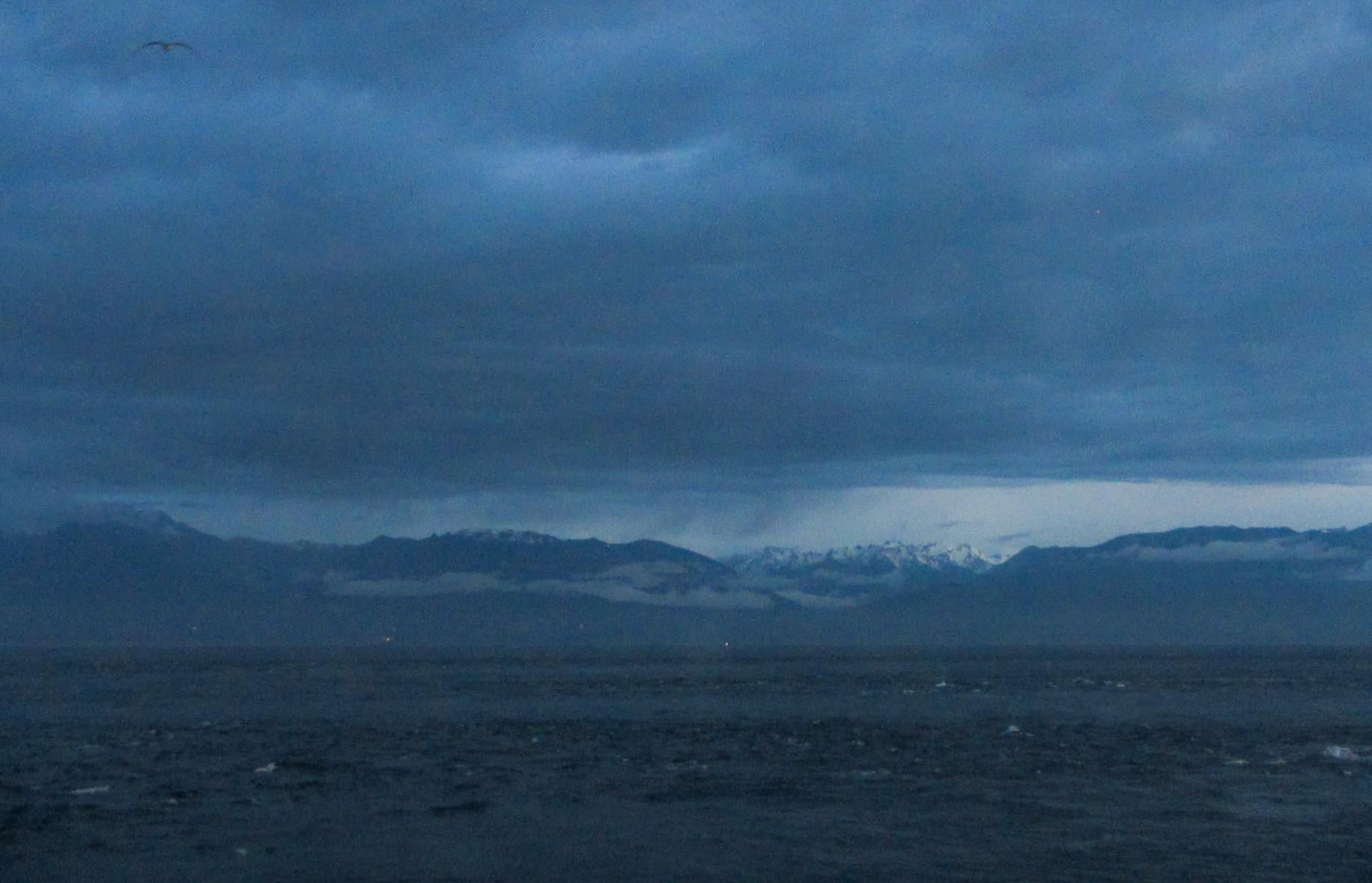
Ahhh June in BC

Typical June day in BC

Typical June day in BC

It always surprises me how long it takes for “summer” weather to arrive in BC. Today it is overcast, blowing 30 with driving rain, and 11 degrees (which feels like 7 with the wind chill).  For Race Rocks weather records see this link.


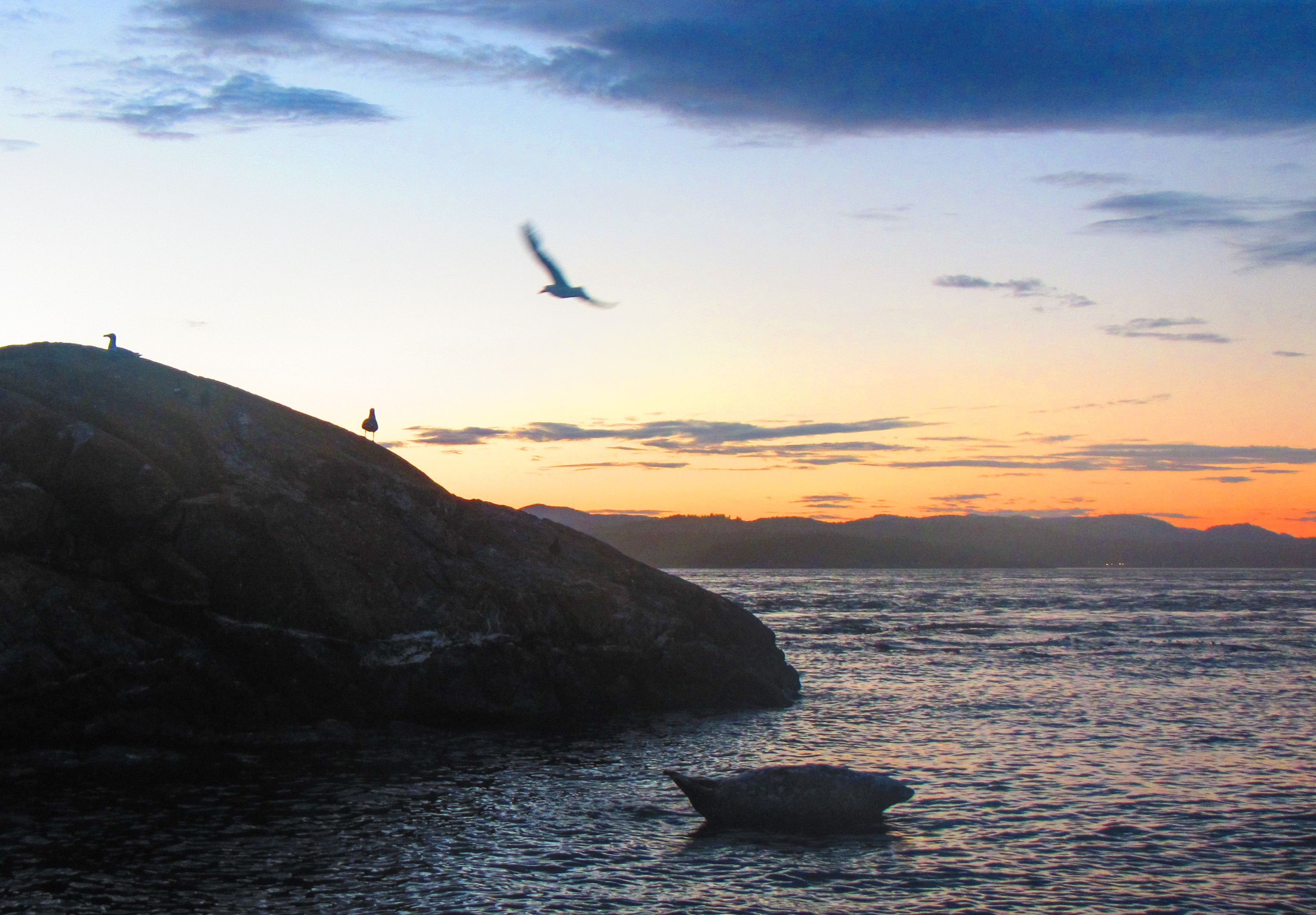
A very buoyant Harbour Seal

A very buoyant Harbour Seal


3 male elephant seals and I are the only mammals on Great Race Island but this big female Harbour Seal calmly shared a lovely sunset with me at the sea side…


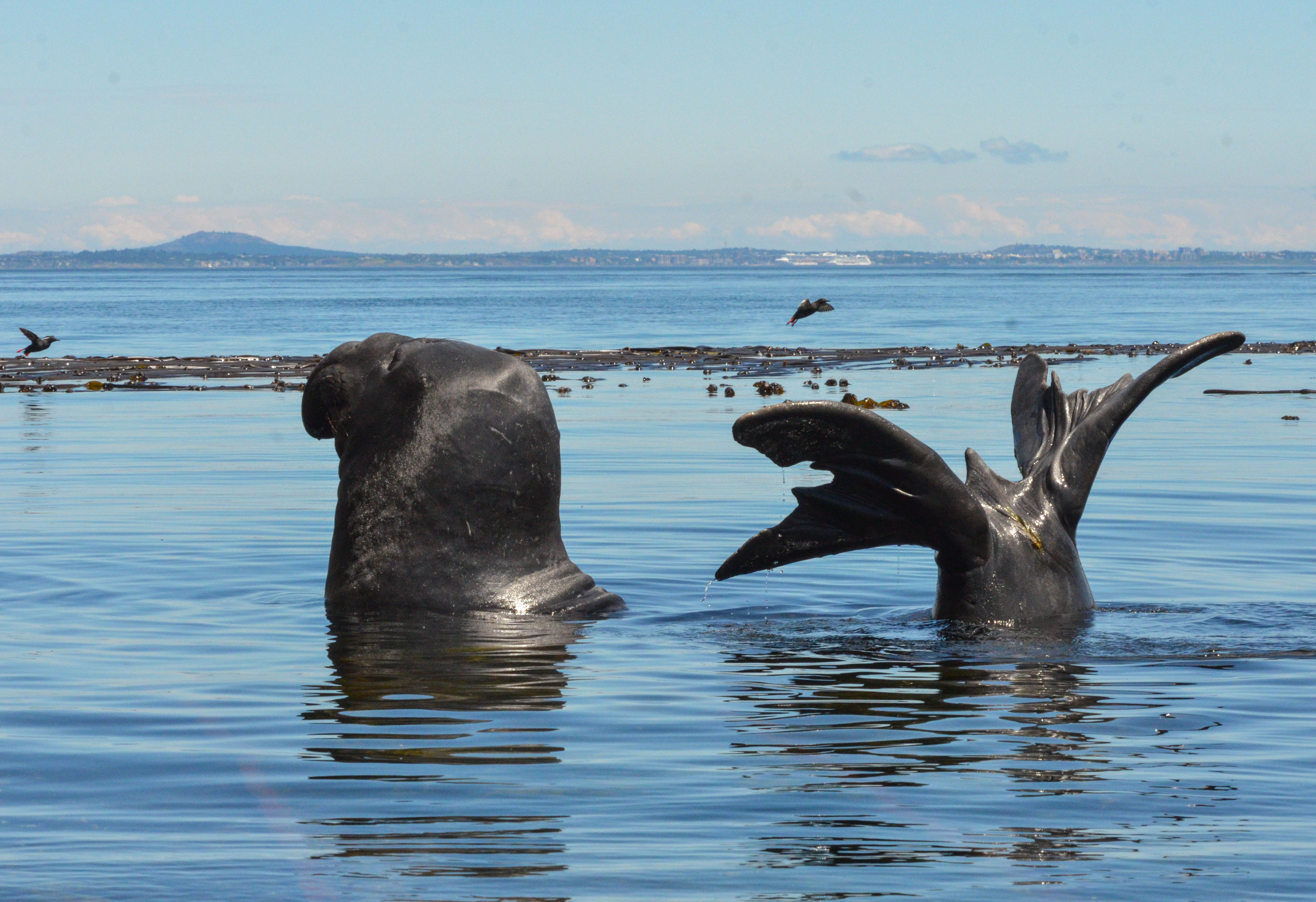
Yoga E-seal

Yoga E-seal


On a nice afternoon a few days ago Chunk was showing his flexibility by doing backbends and chewing on his hind-flippers.


Seal Salutation

Seal Salutation


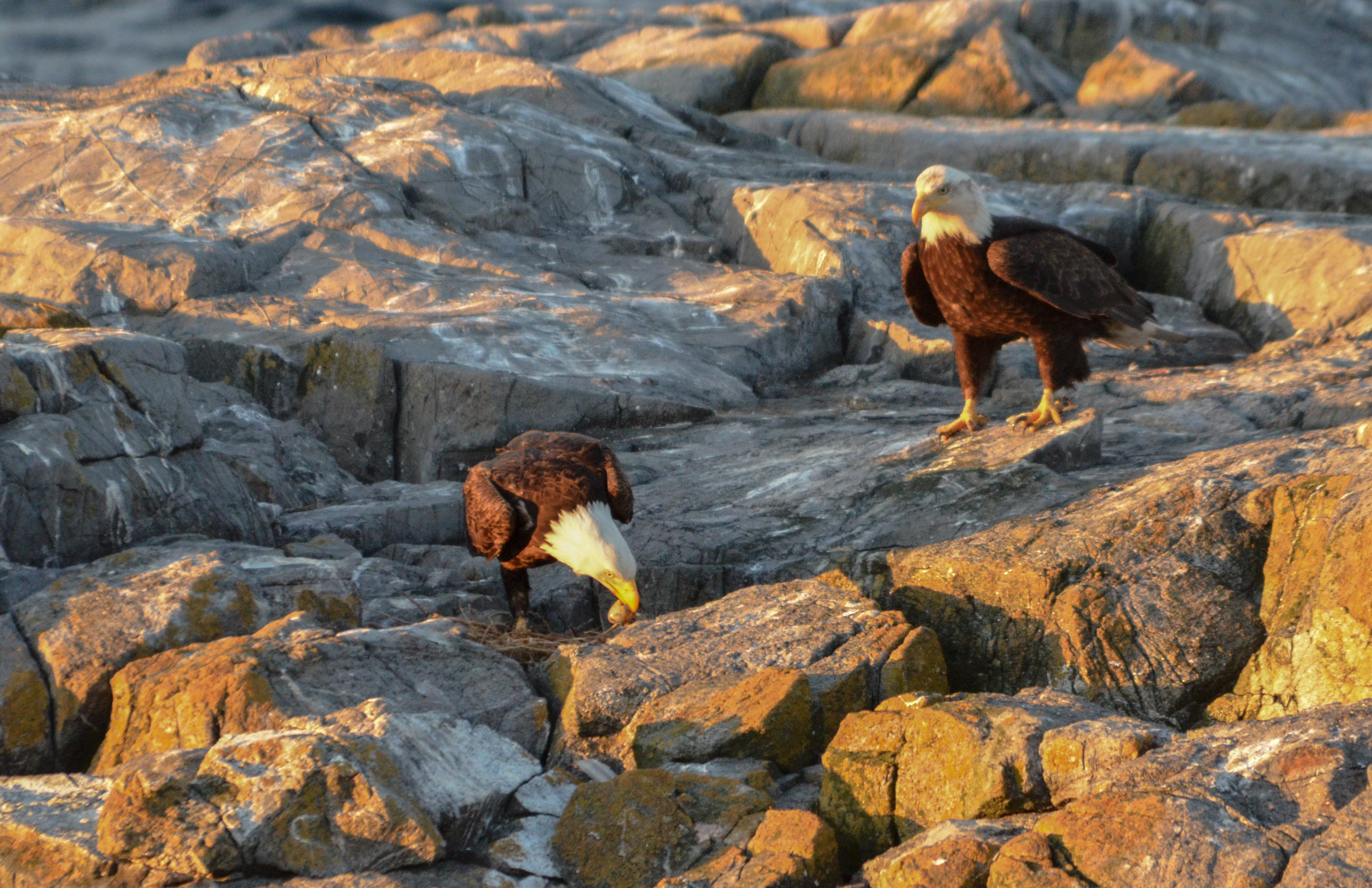
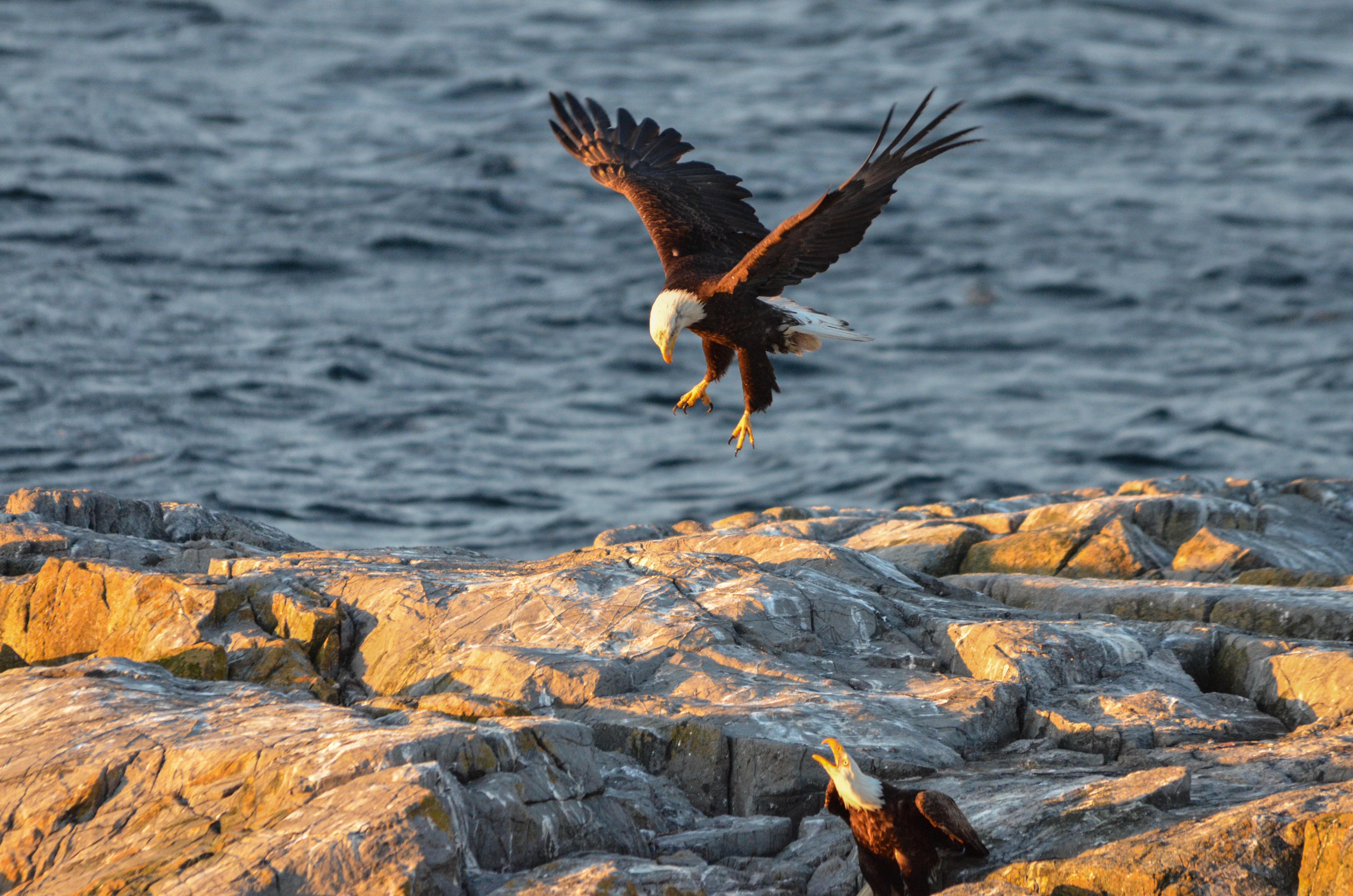
Bald Eagles Stealing Gull Eggs

Yesterday I spotted 2 Bald Eagles raiding gull nests. I had never seen this before.

Wary Allies

Wary Allies


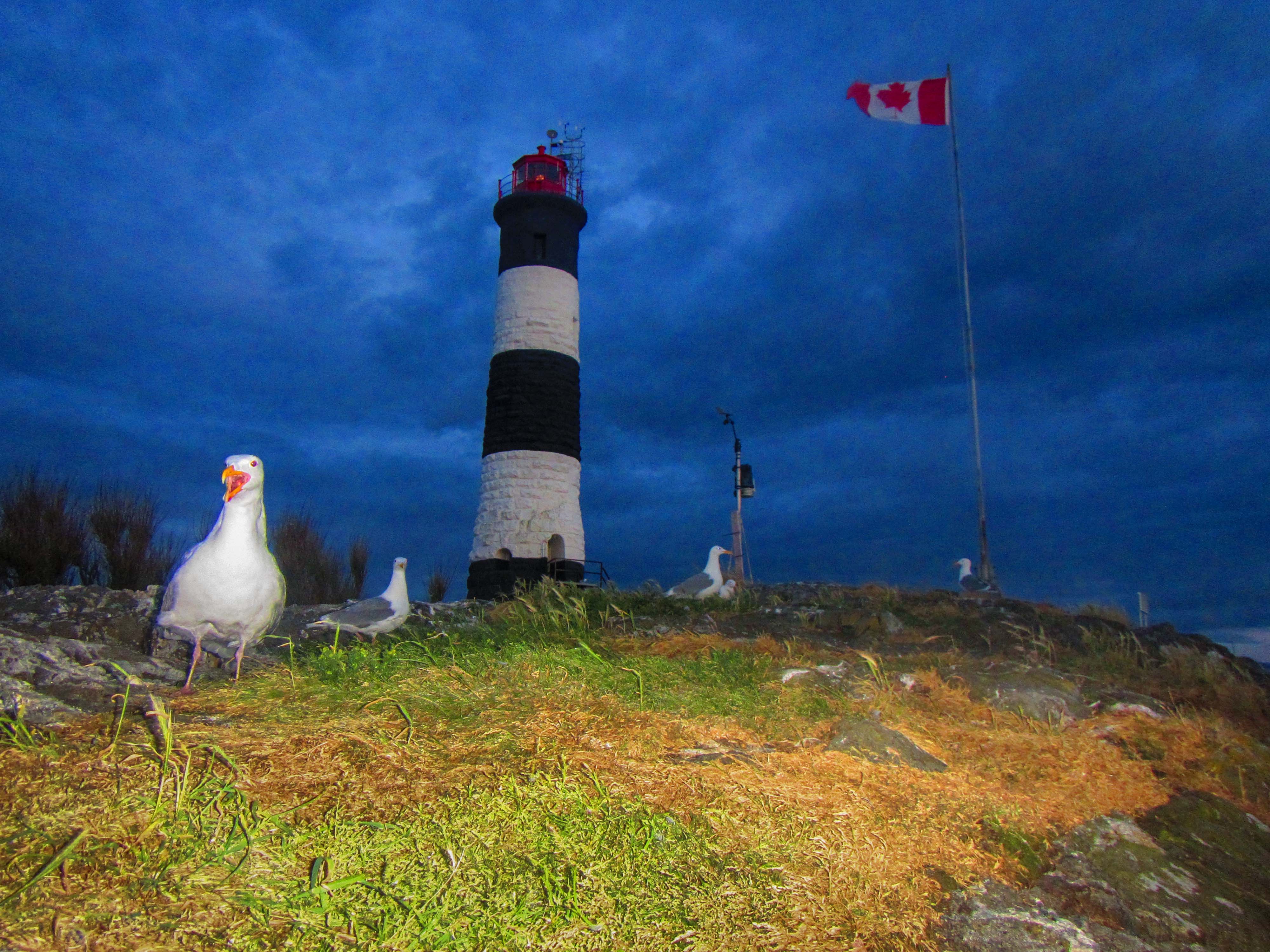
Nesting Gull and Tower

And finally this interesting shot! Nesting Gull and Tower.


Les Miserables


Waiting at the bottom of the ramp...

Waiting at the bottom of the ramp…

I'm back!-2 I'm back!-3 I'm back!-4 I'm back!-5 I'm back!-6Chunk found an unpleasant surprise when he popped in for a swim earlier today. King Misery has returned! After a brief thrashing an epic chase occurred around the island with a few skirmishes along the way. I have to give Chunk credit; he didn’t back down and gave as good as he got, but in the end Misery is just too big, and size won the day. I look forward to sharing their politics with you over the next few weeks….I'm back!-8 I'm back!-9 I'm back!-10I'm back!-11

A trip with BC Parks Staff to Race Rocks

On the morning of Wednesday June  6 , I went with Andy MacDonald,  the Vancouver Island Region (South) Parks and Protected Areas Section Head, and  Zsana Tulcsik, the new BC Parks Area Supervisor from the Goldstream Office out to the Race Rocks Ecological Reserve. ( A report by Garry Fletcher, Race Rocks ER warden)

College staff member Erik Schauff skippered Second Nature and we met Chris Blondeau , Director of Operations for Pearson College UWC  on the jetty. He is the relief ecoguardian at  Race Rocks for the week .

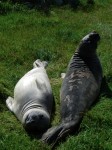
The elephant seals co-operated and were basking in the sun on the grass in the centre of the island. There were 4-  2 year olds and one large older Male, which may have been Chunk … the inflamed  right eye from an injury administered by Misery was a good identification mark.

Two Northern sea lions were observed in the water . I thought it was notable that there were very few harbour seals which usually have pups at this time of year, and none on the southern islets where they usually haul out. I will have to check over the next few days on the tower camera, as they may have been out foraging.

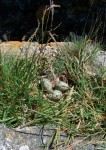
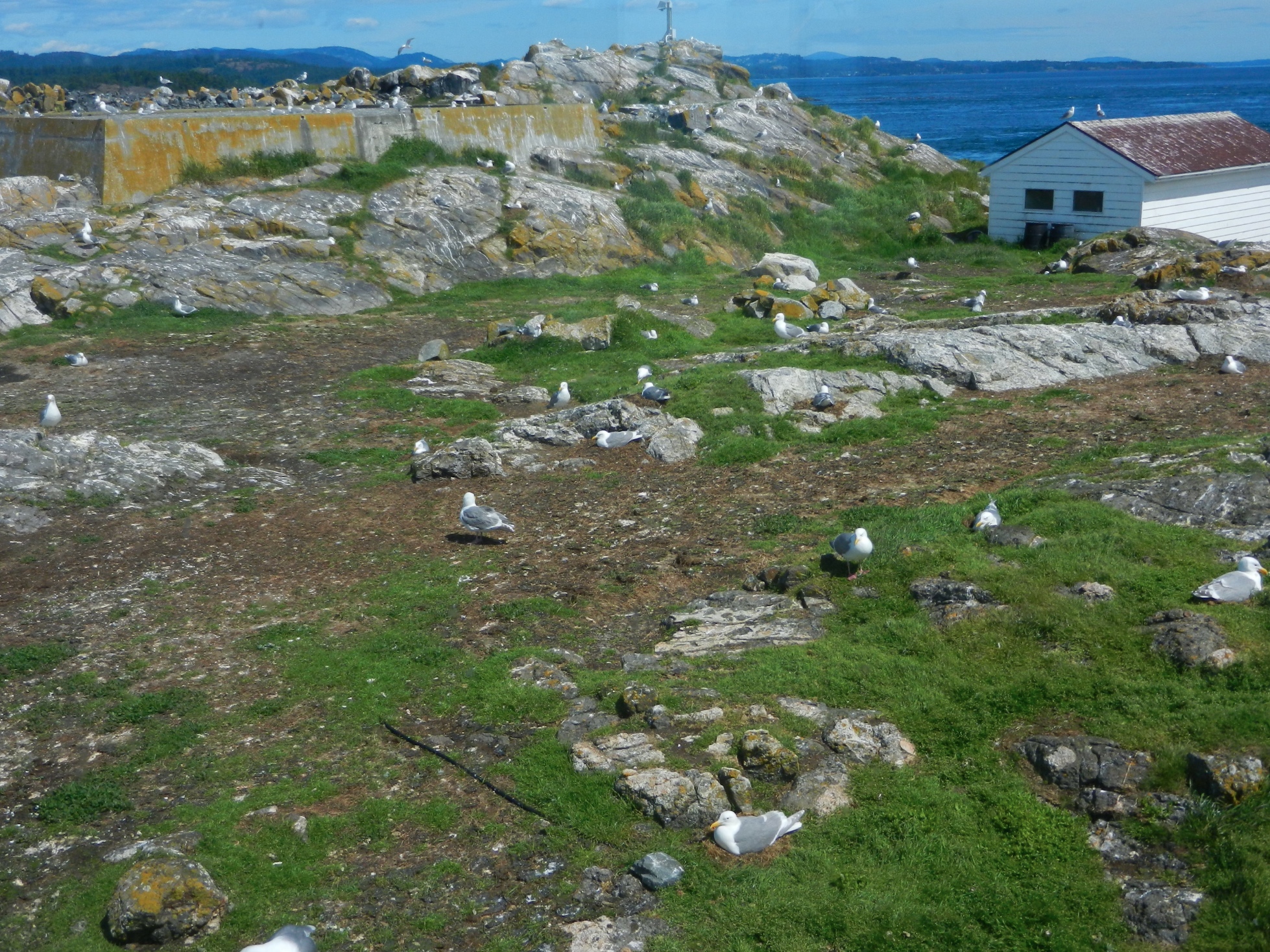
The glaucous-winged gulls are well into nesting season, with several nests containing three eggs. The image from the window of the science centre shows the distribution of pairs. Another picture above shows a nest precariously close to the elephant seal  haulout spot.

There was an abundance of pigeon guillemots on all corners of the island where they have their nesting burrows. They should be visible on camera 5 now out near the edge of the cliff to the west.  They have certainly been a success story in increasing numbers in the past few years. There must be well over 60 pairs nesting in the hidden burrows under the rocks. Ironically good habitat has been produced in several areas because of  human activity in the past by the blasting  of rock for the helipad construction by the Coastguard, and other construction on the islands done in the 1900s before it was an ecological reserve. This is a rare example of habitat enhancement that humans can claim, as usually it is the other way around.

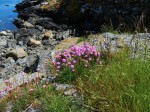
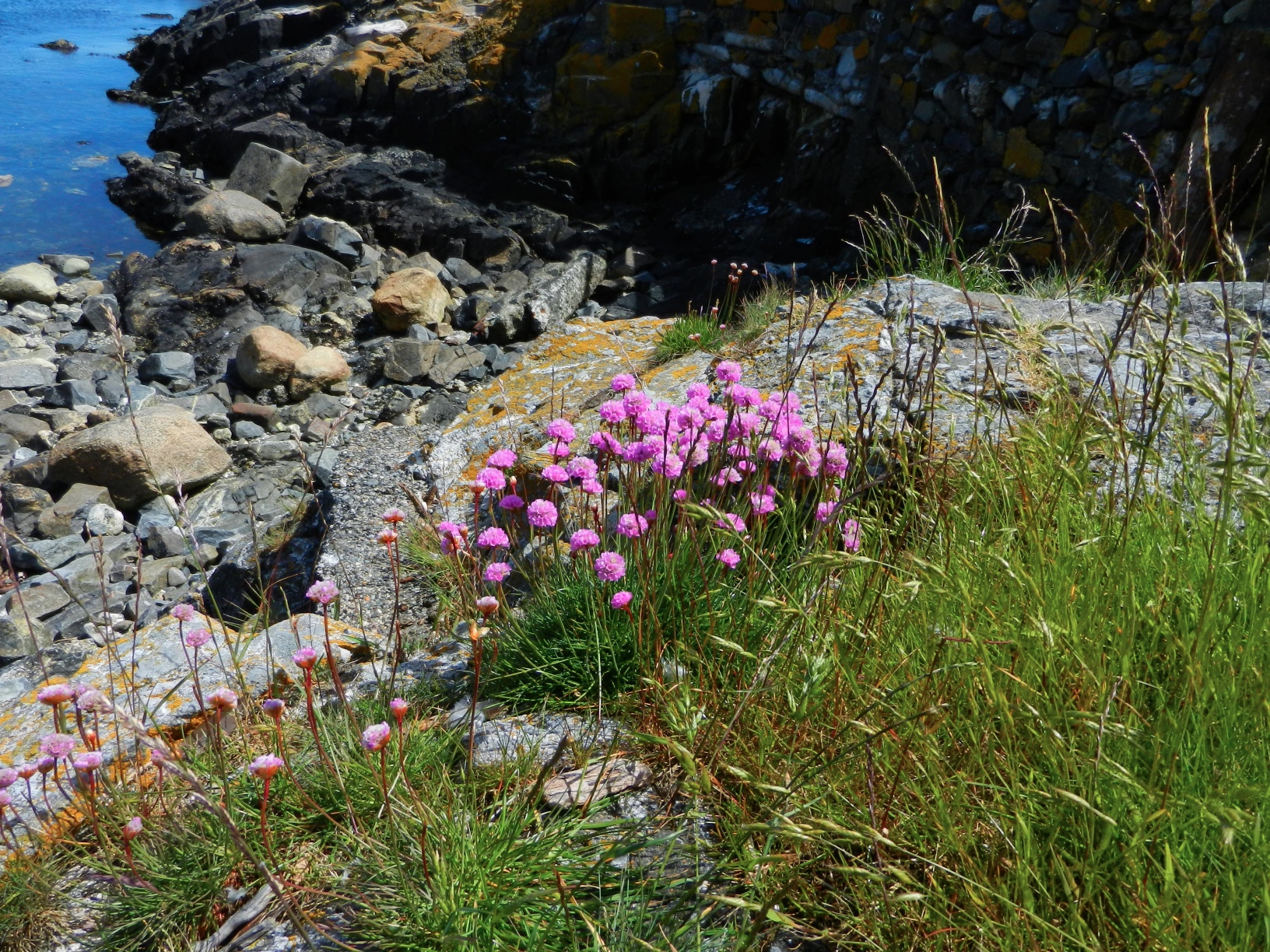
On the return to the docks we were impressed with the clumps of Thrift in full bloom. Chris mentioned that the Black Oystercatchers had been in the area on the rock right off the sidewalk by the docks and we soon spotted the nest. This is the same area they have used for many years. The videos of the hatching oystercatchers in this link  are from the same area.

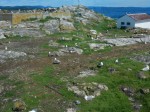
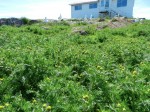
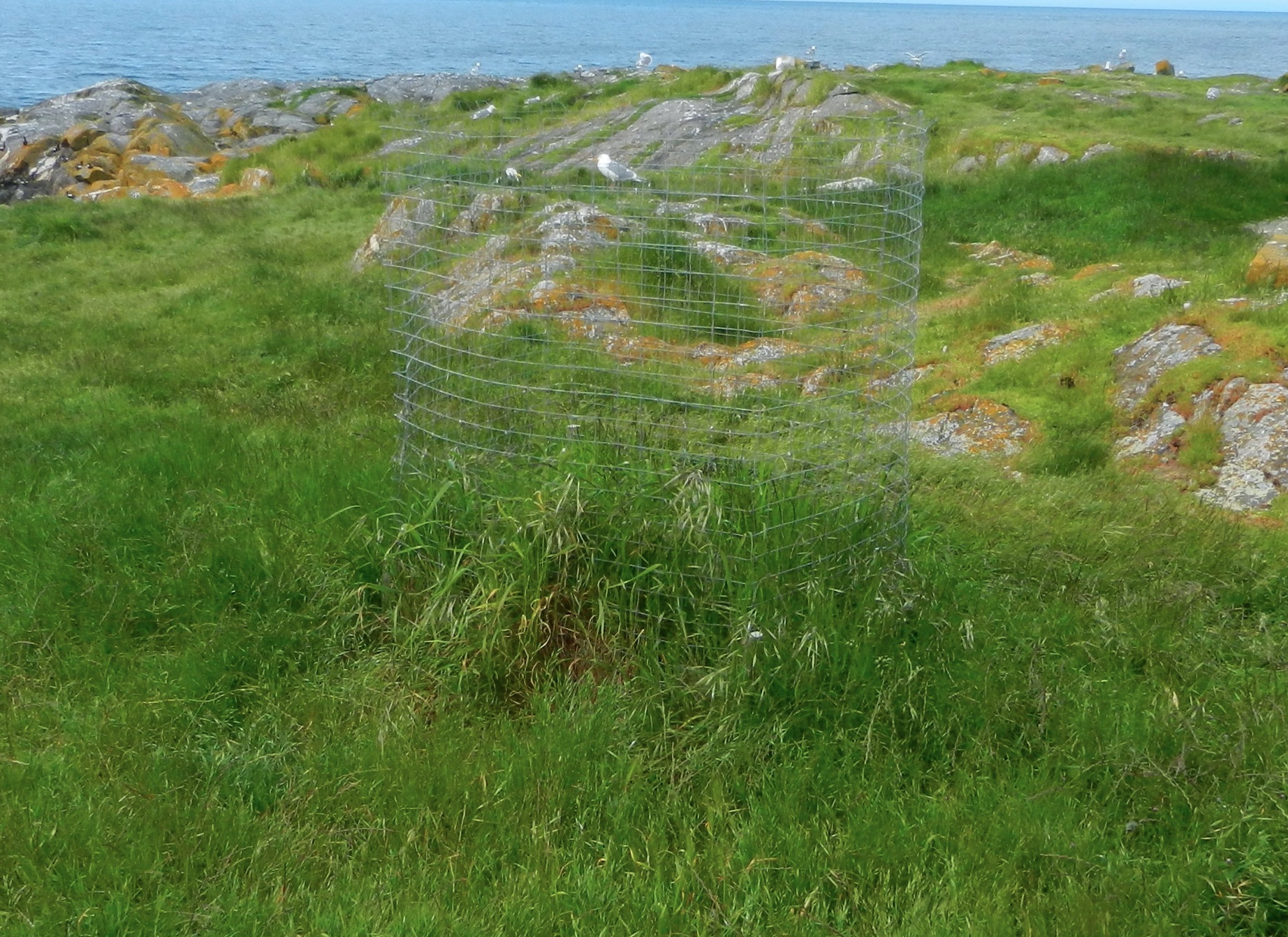
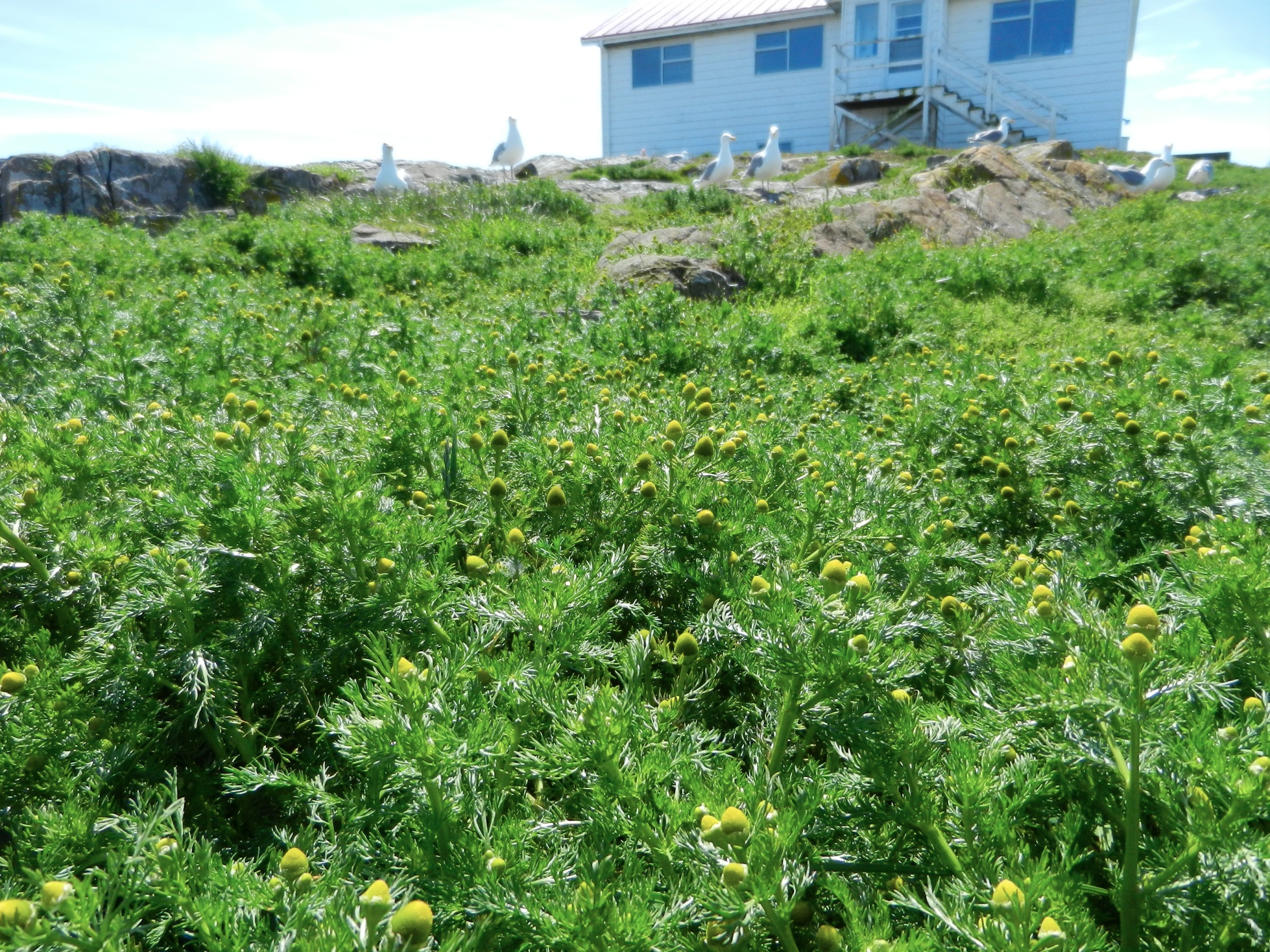
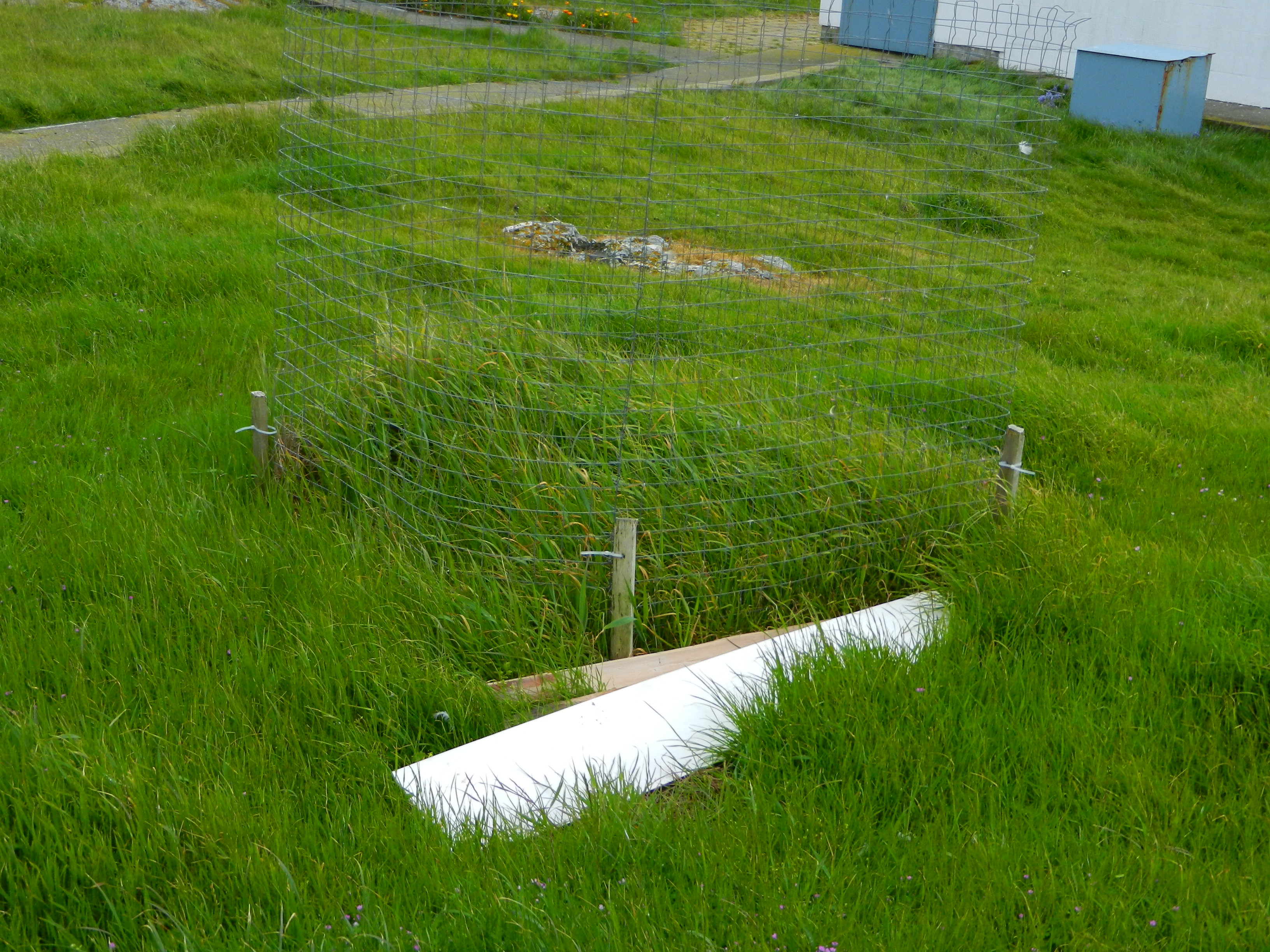
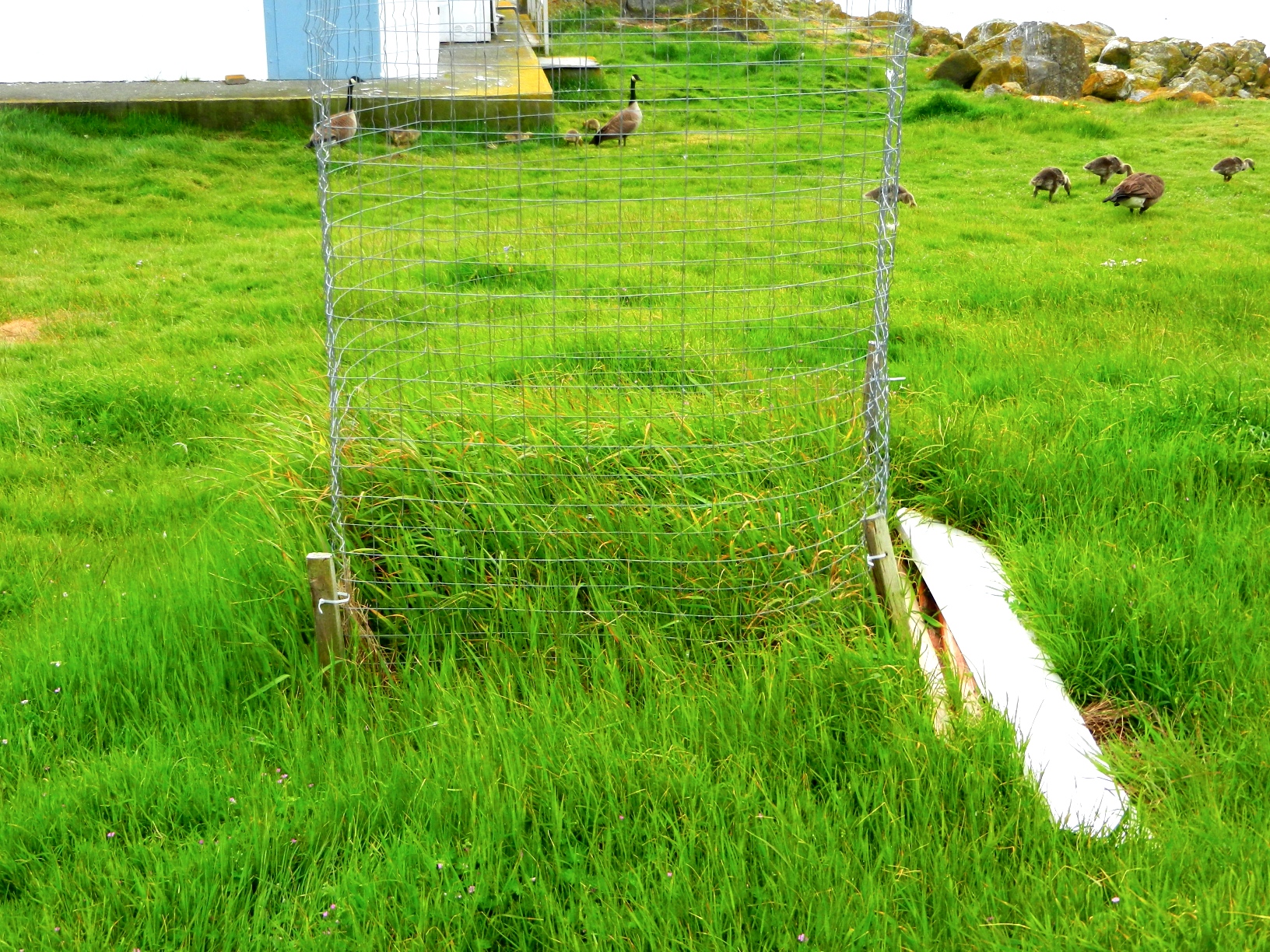
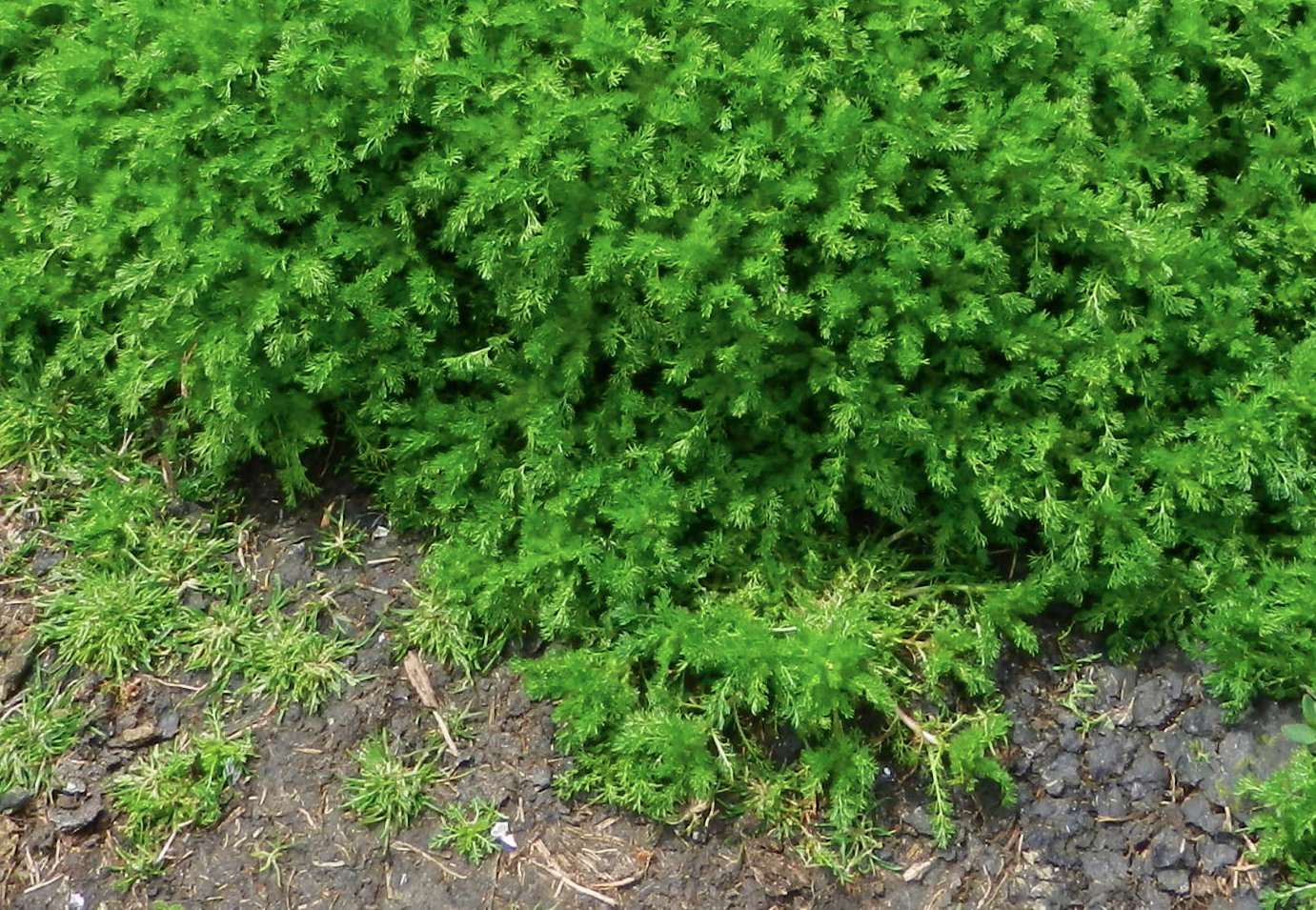
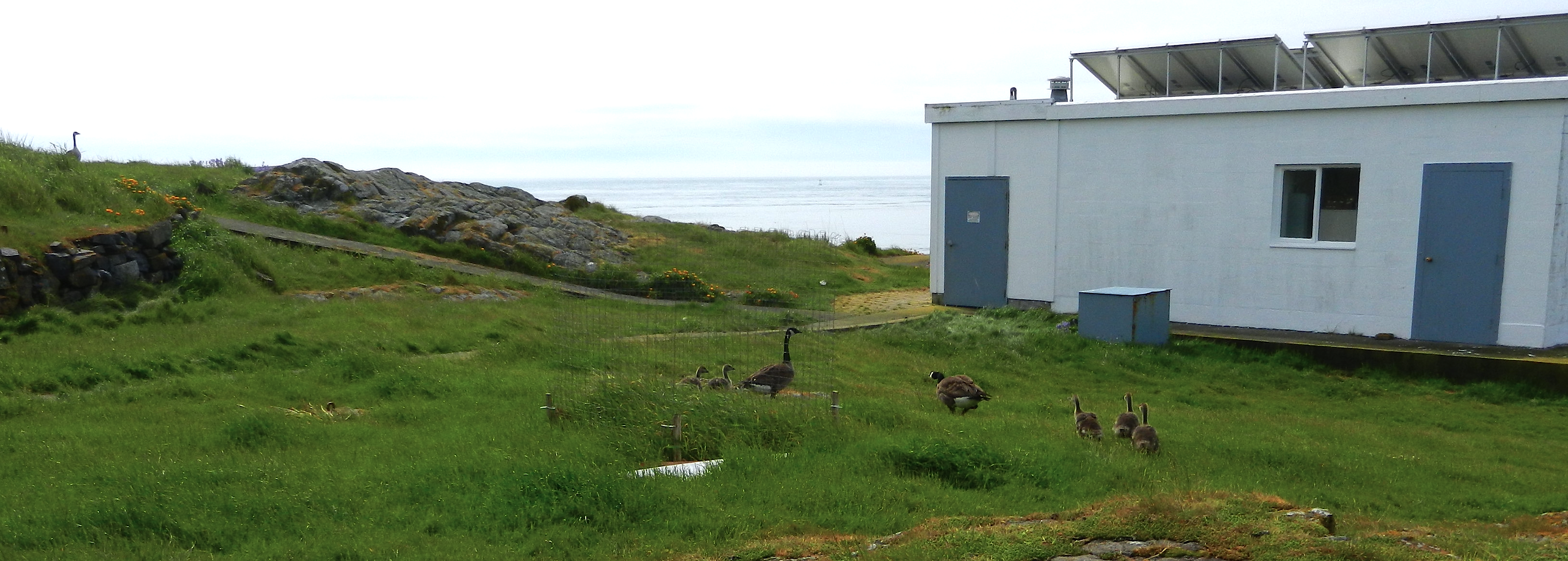
In addition to the vast monocultures of pineapple weed as shown above, this is the second year we have noted large patches of Fiddleneck, Amsinckia spectabilis in the same compacted and richly fertilized areas where the grass was killed out by the sealions and intense Canada Goose grazing.
Last week of May’s Photos

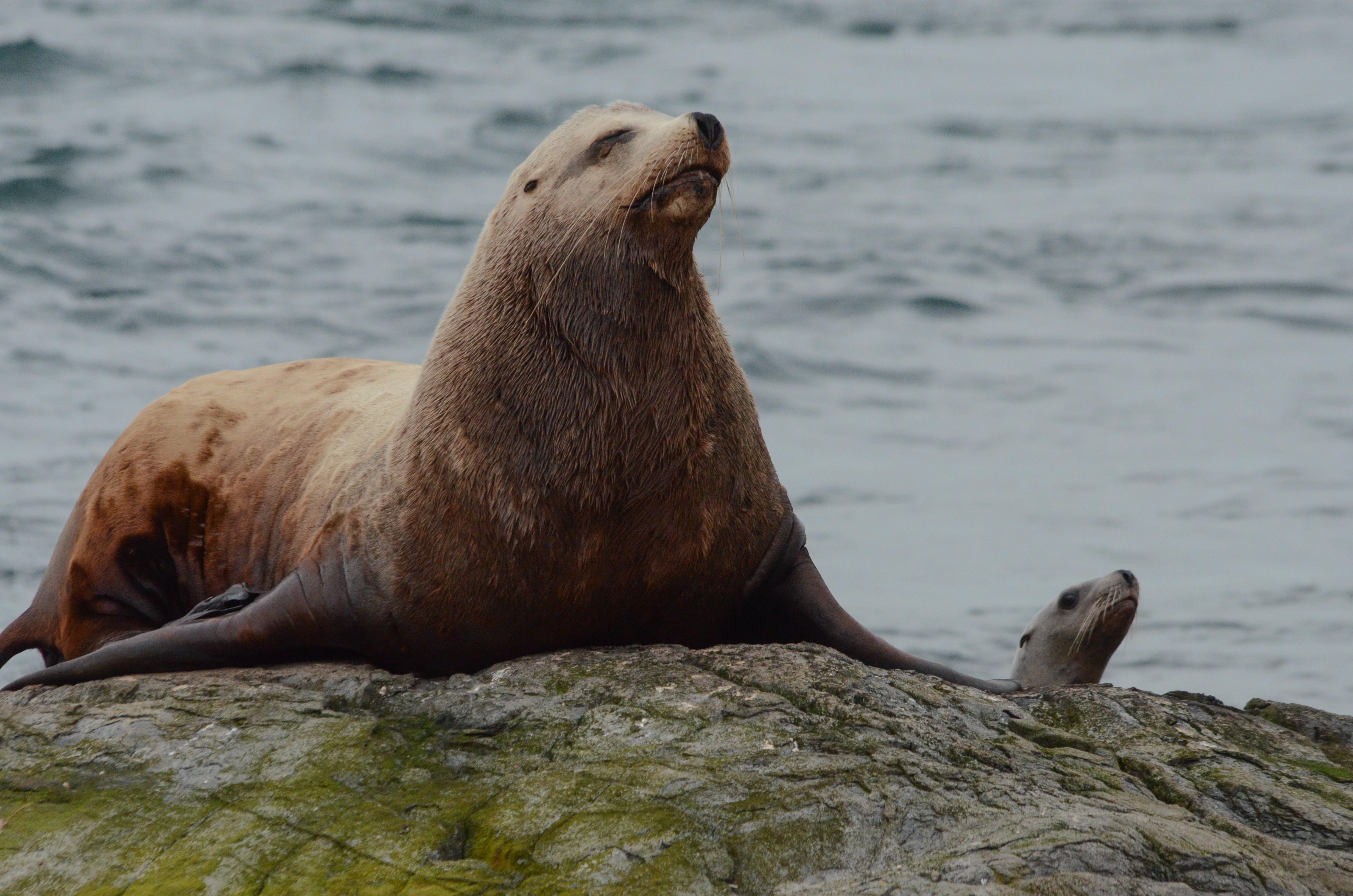
Big Steller - Little Steller

Big Steller – Little Steller

These are some of the more interesting photos the last week. I was able to lend a hand to the International Boundary Commission  technician who set up a GPS unit on the top of the tower in order to accurately determine the location of the US/Canada border.. to with in 4 decimal places! Why? Because we can!
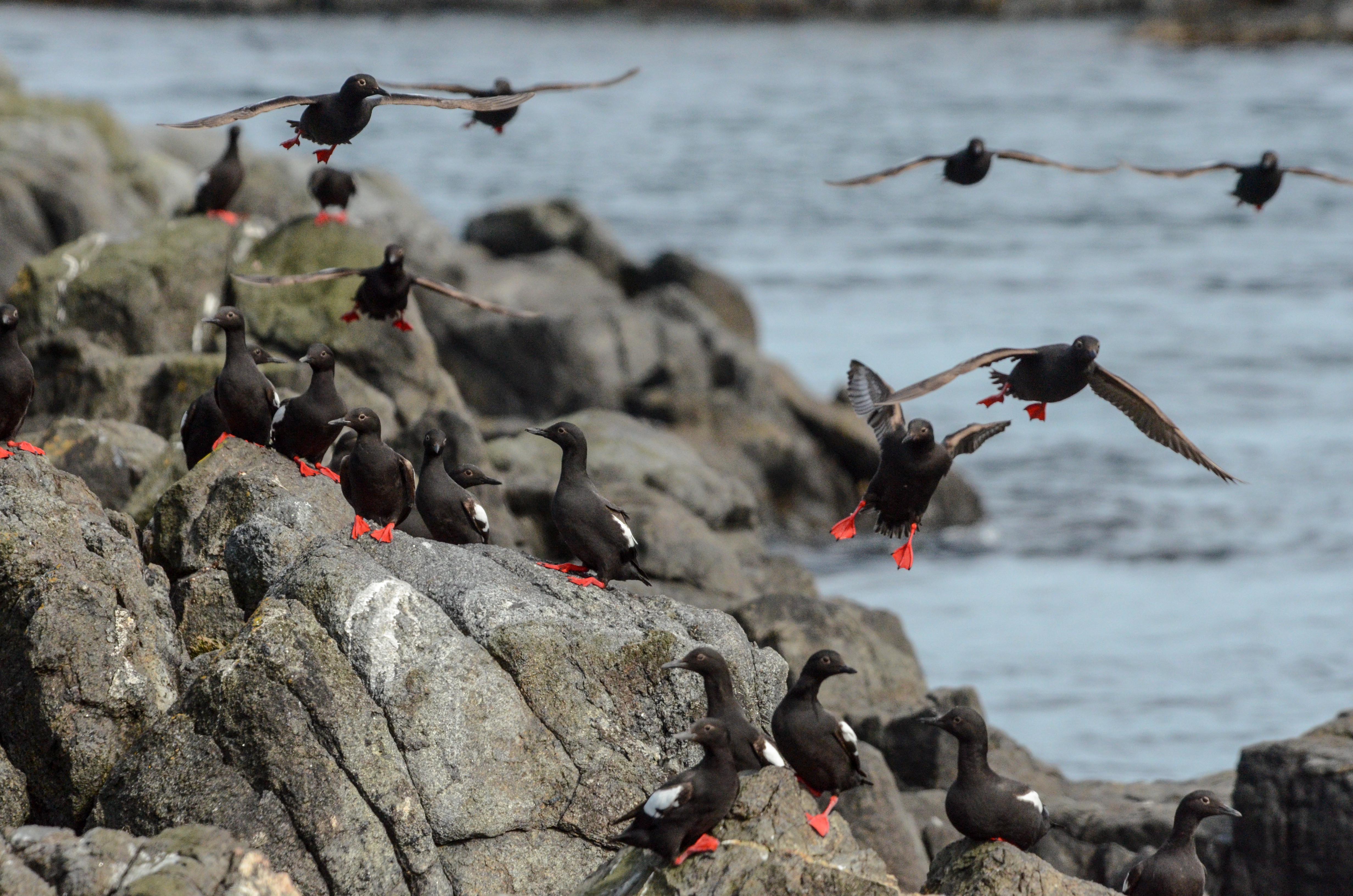
Pigeon Guillemots

Pigeon Guillemots


The Guillemots are starting to nest along with the Glaucous-winged Gulls

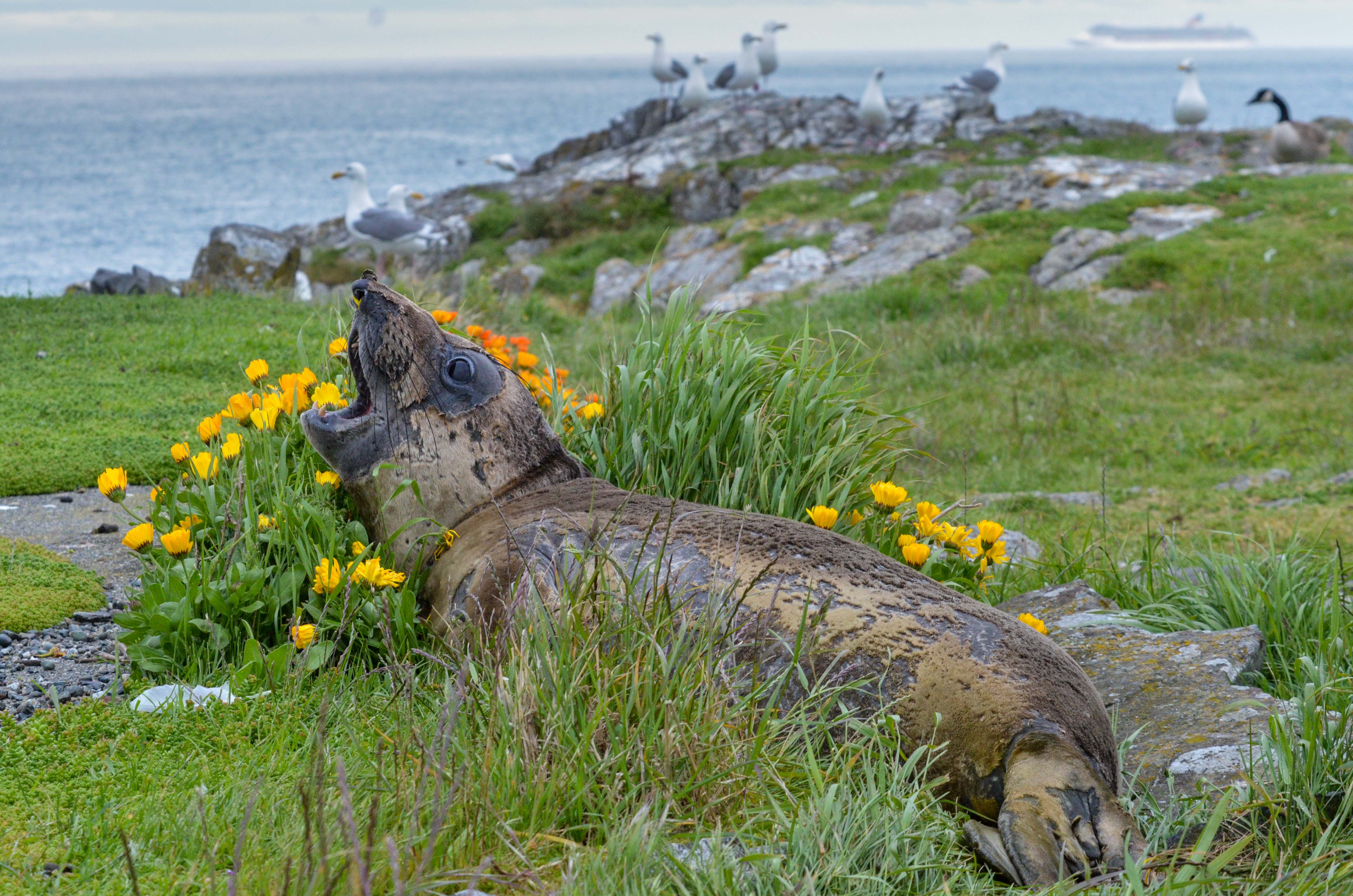
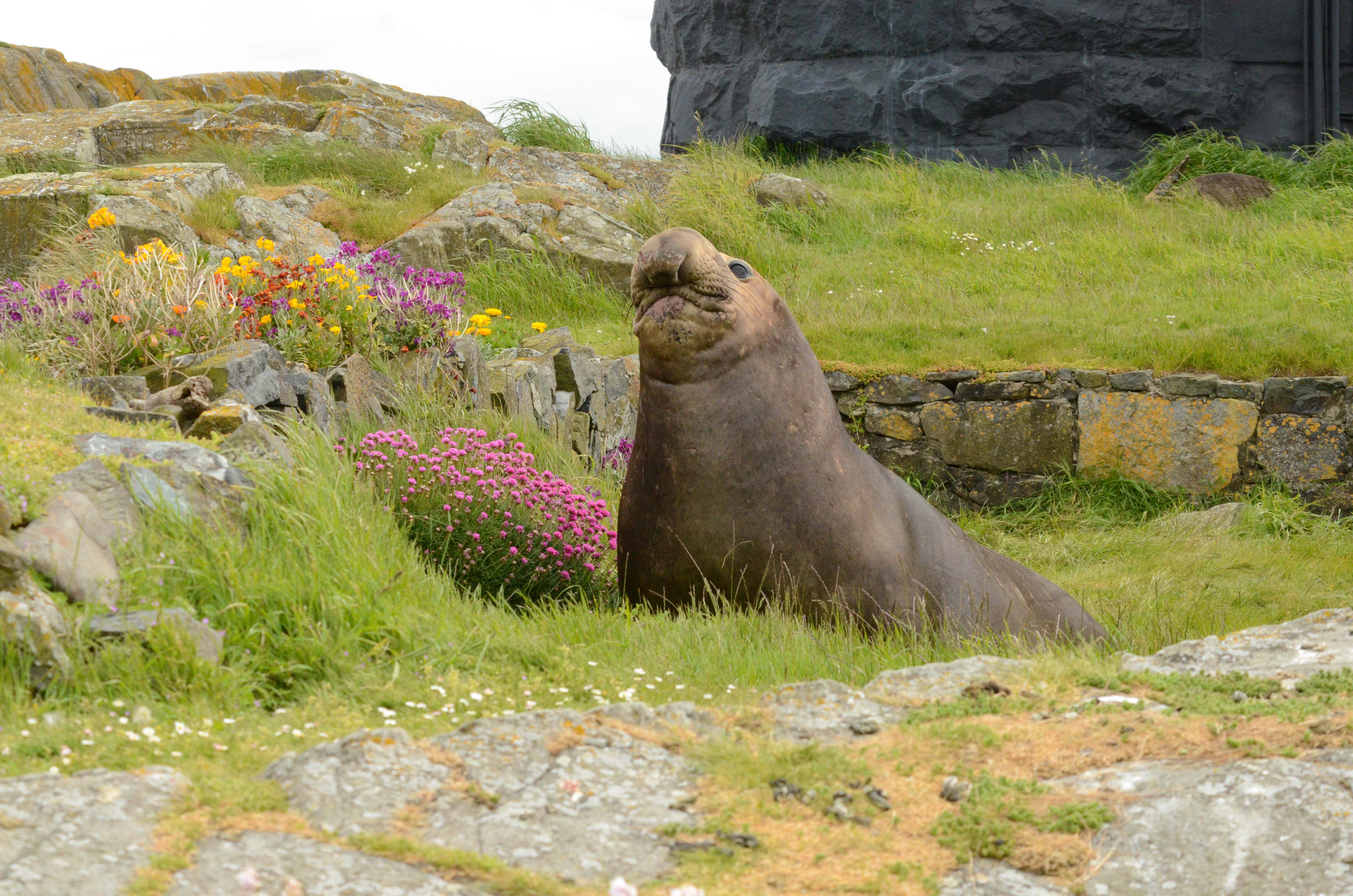
Pinky in the Flowers

Pinky in the Flowers


This little female found a nice spot to spend a few days….

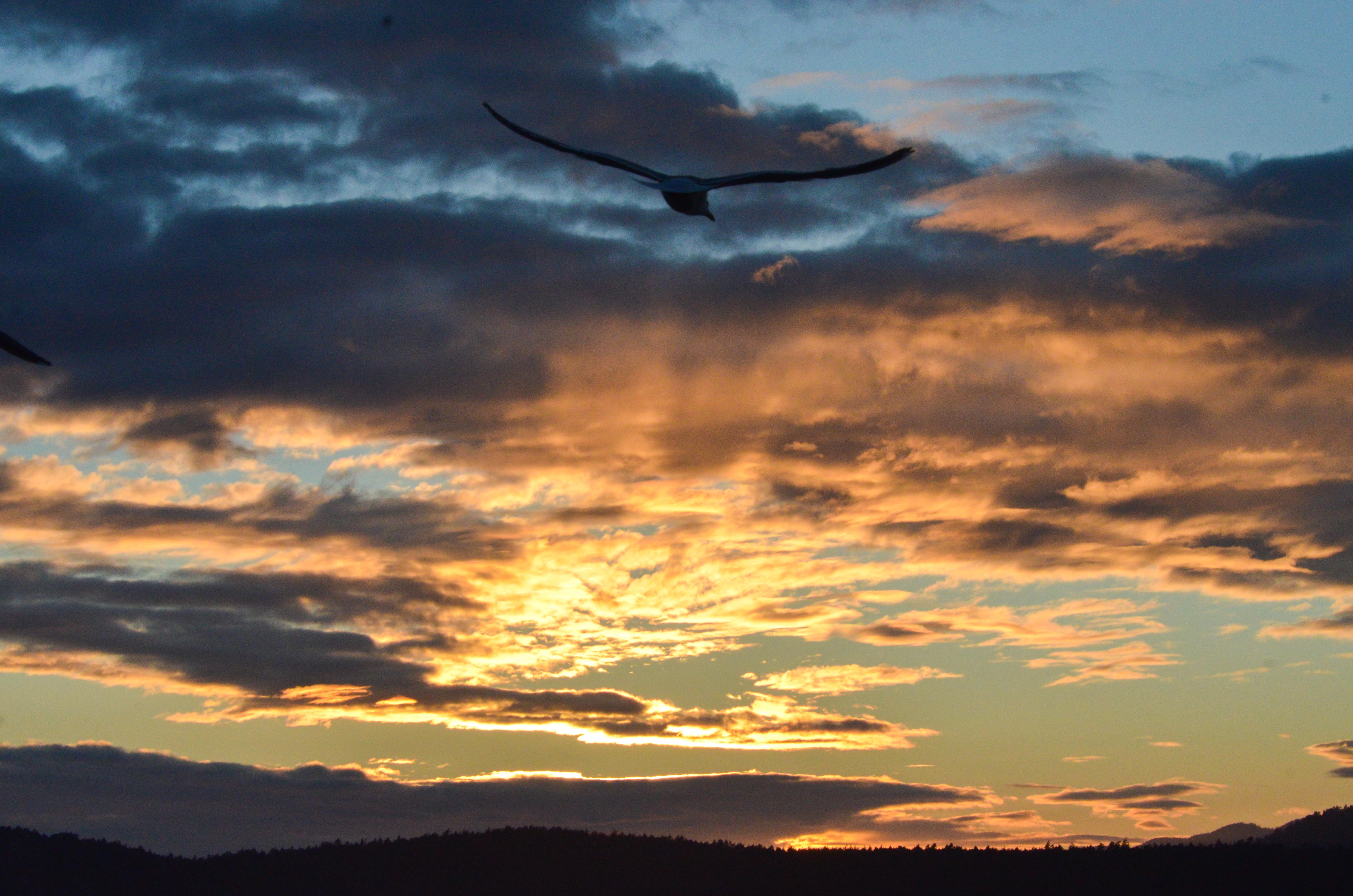
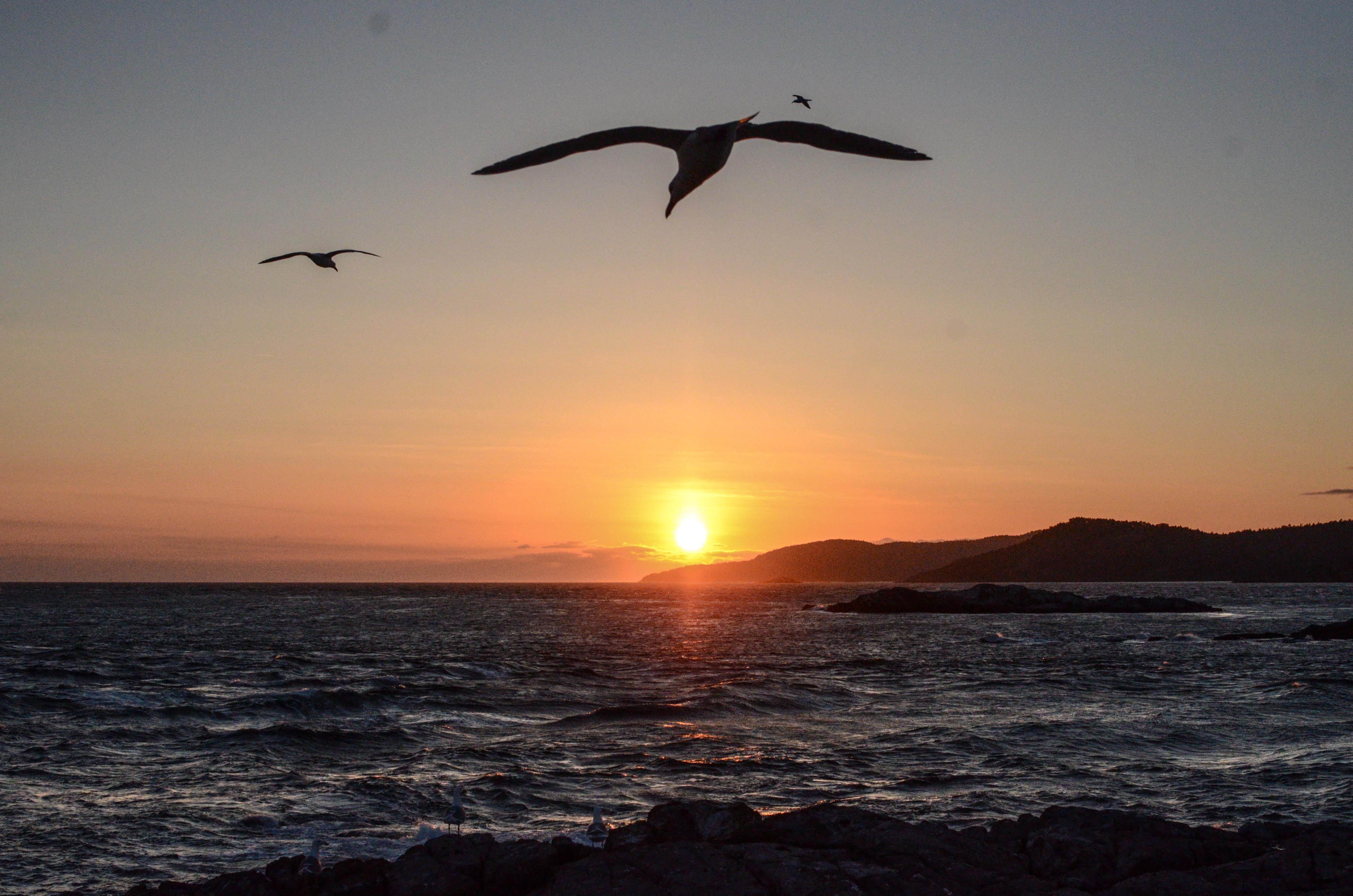
Sunset Gull

Sunset Gull

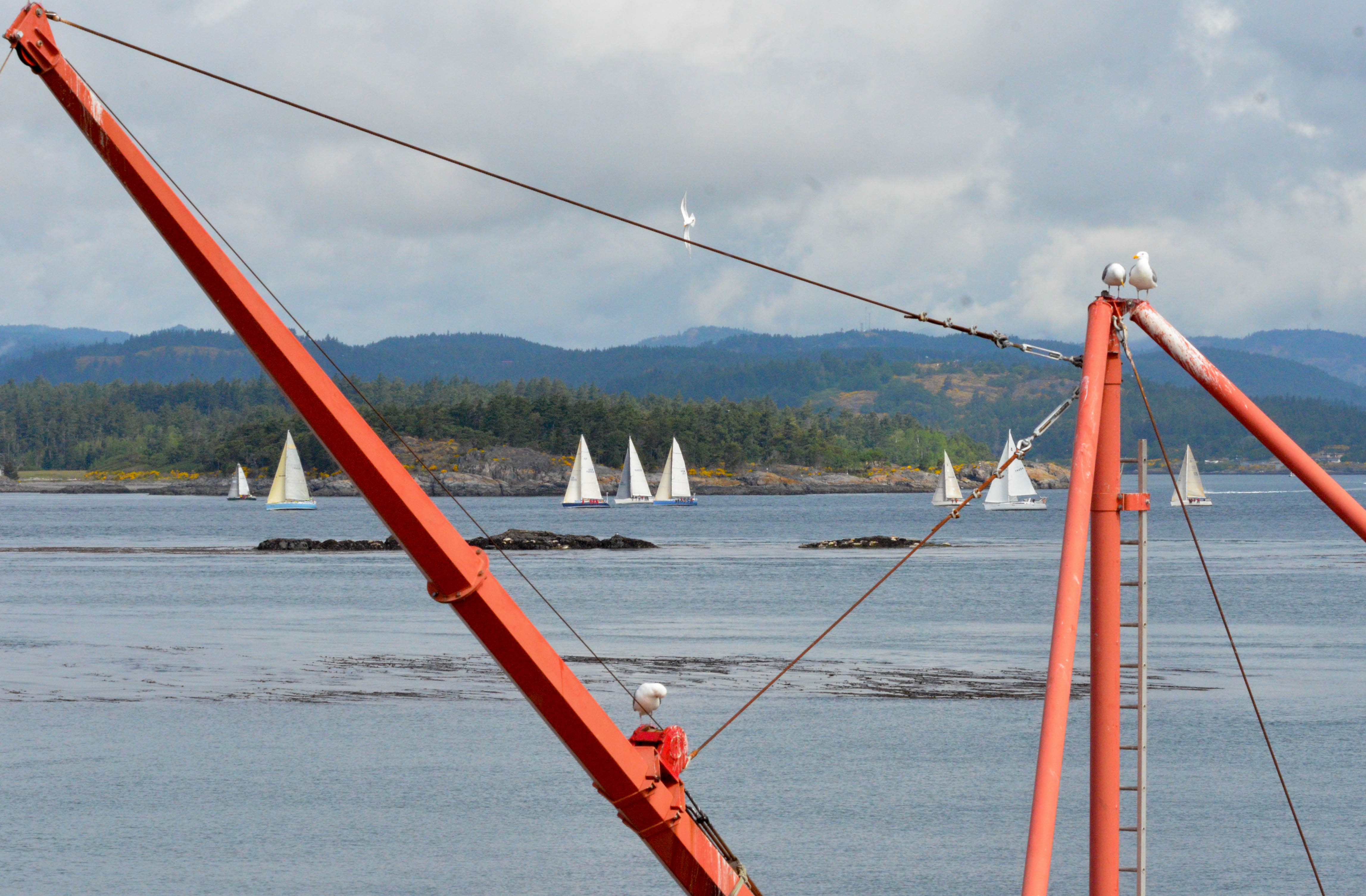
Swiftsure-Driftsure

Swiftsure-Driftsure


Stunning sunset…


A parade of sailing vessels…

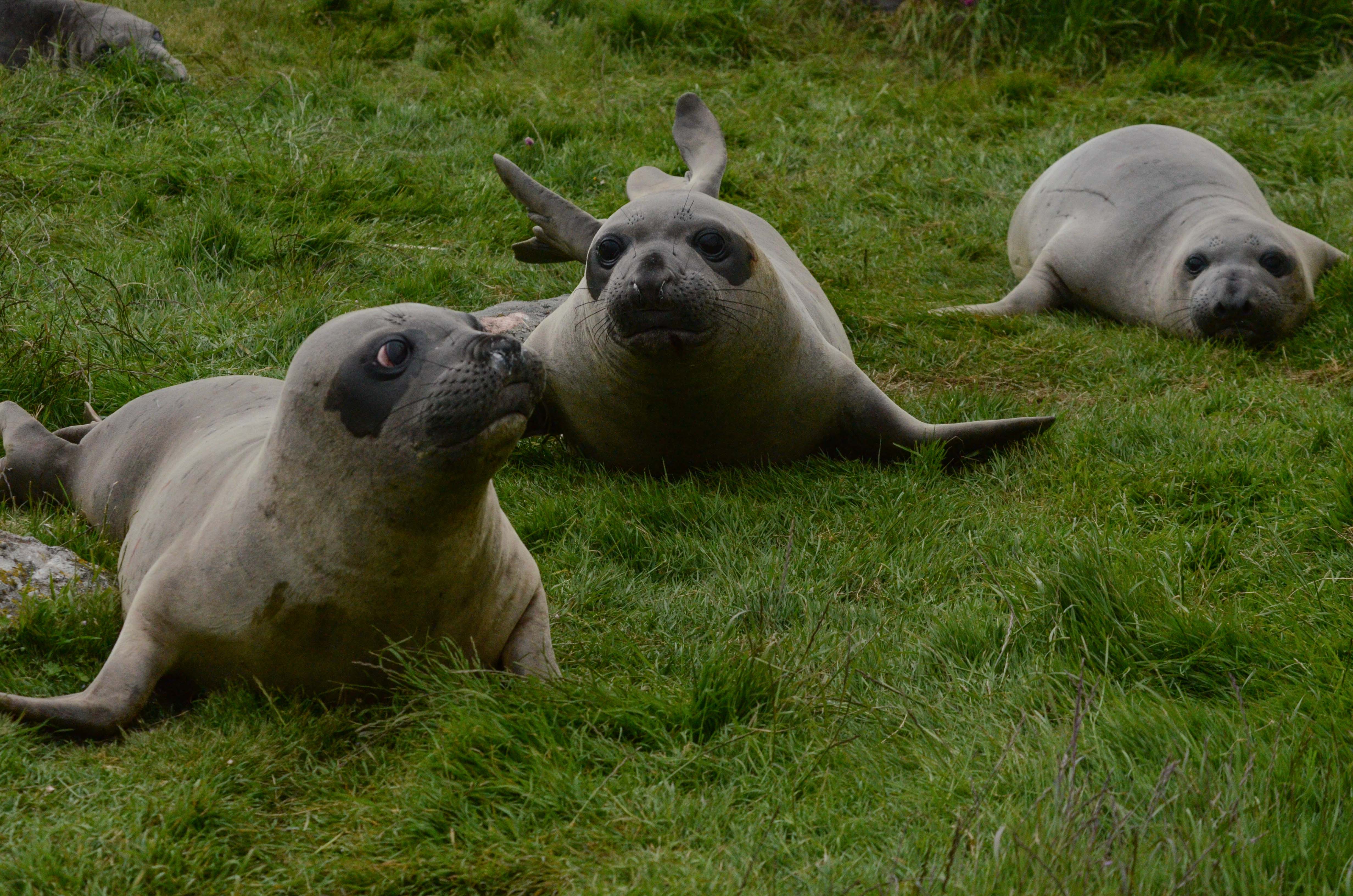
Rambunctous Youth

Rambunctous Youth


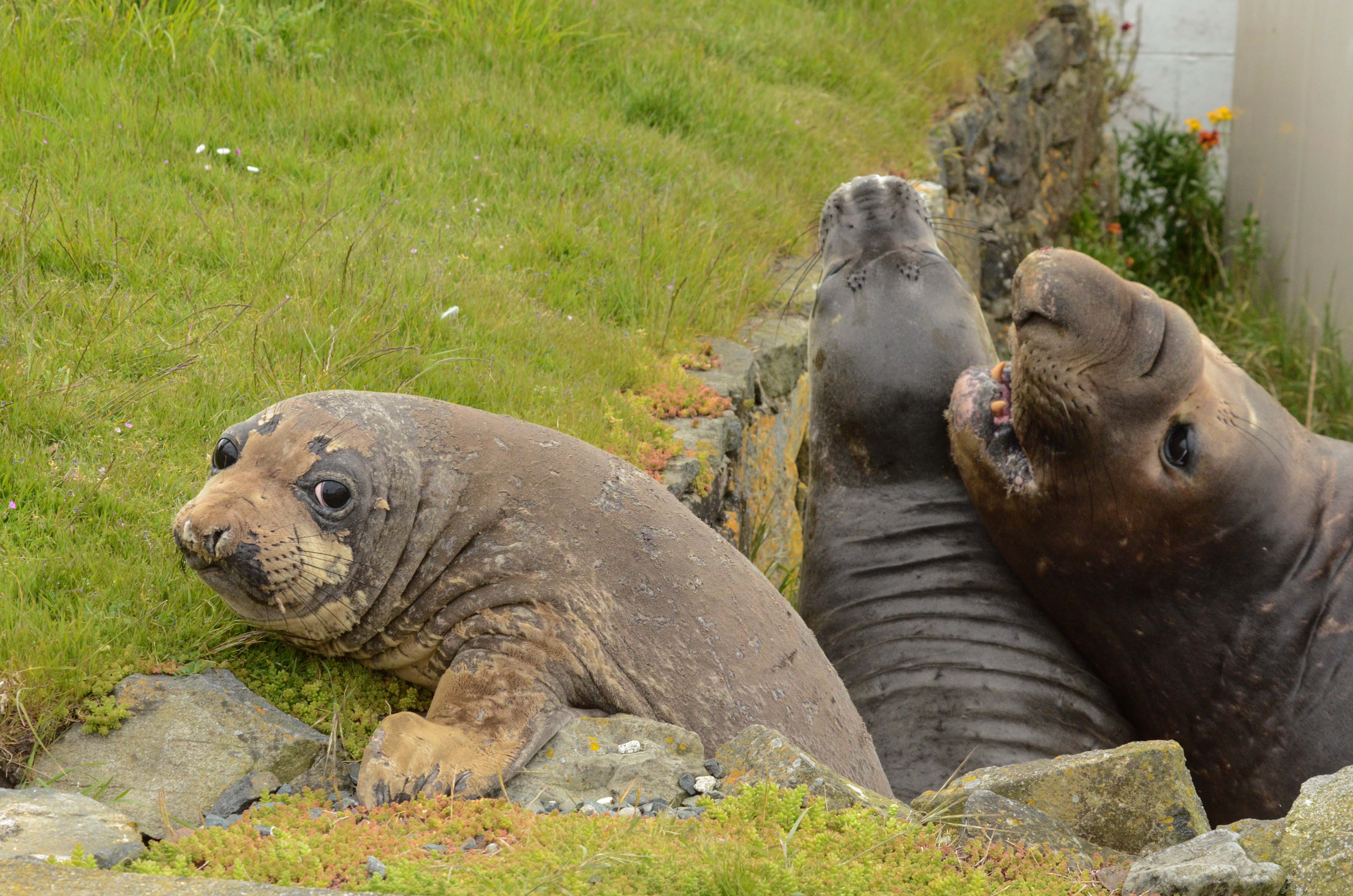
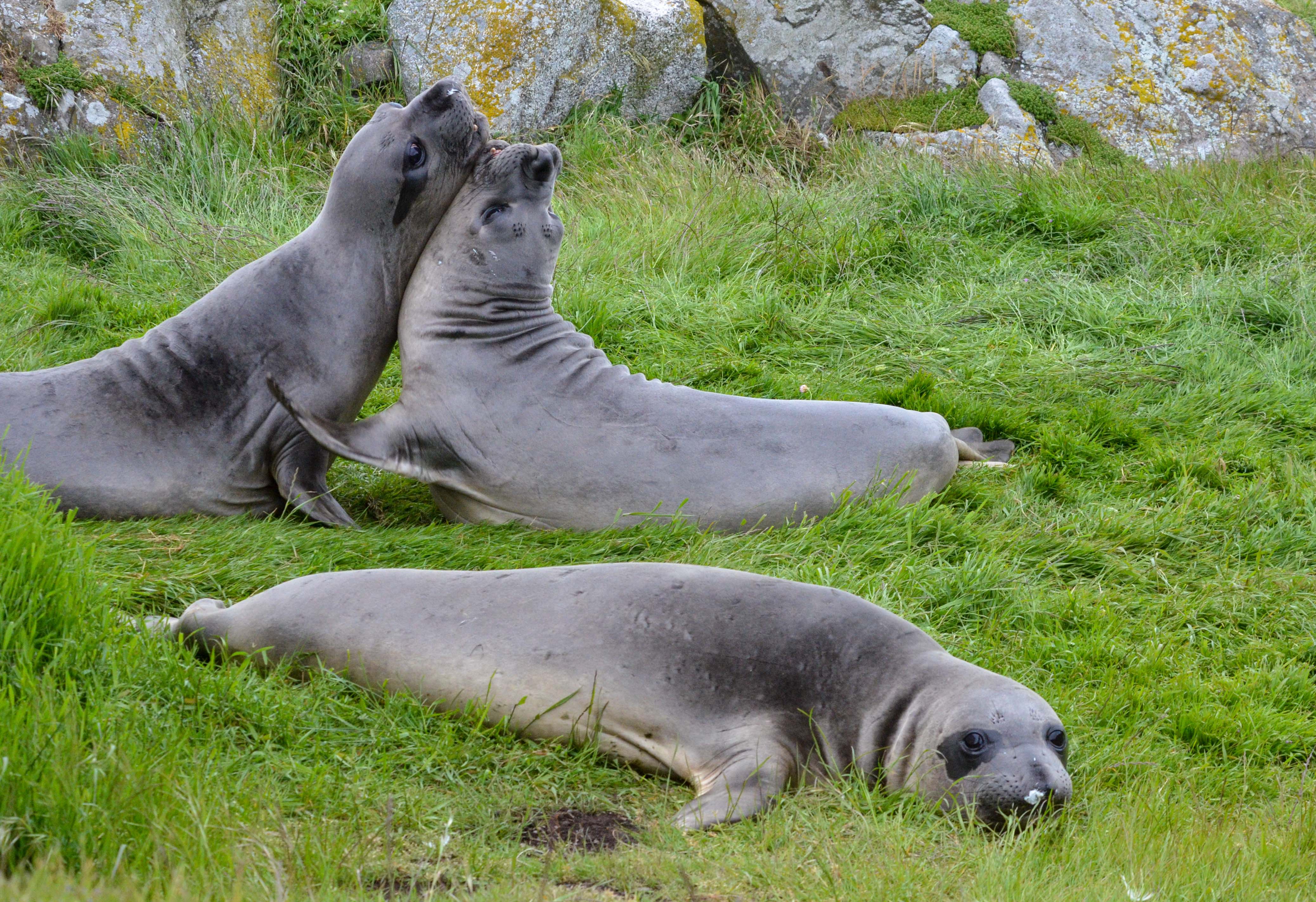
Lots of jousting from these young males

Rambunctous Youth

Rambunctous Youth

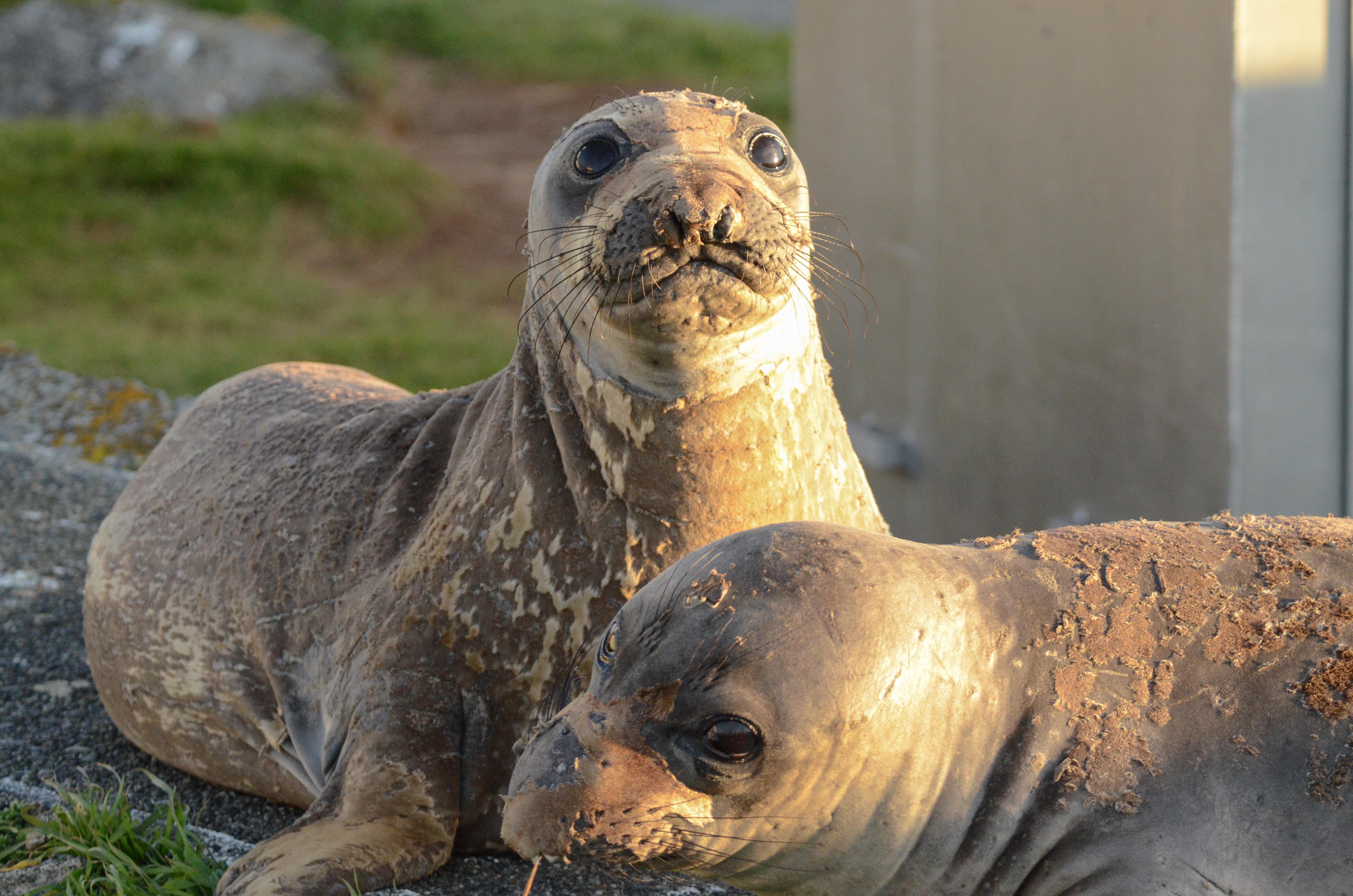
Lovely Month for a Moult

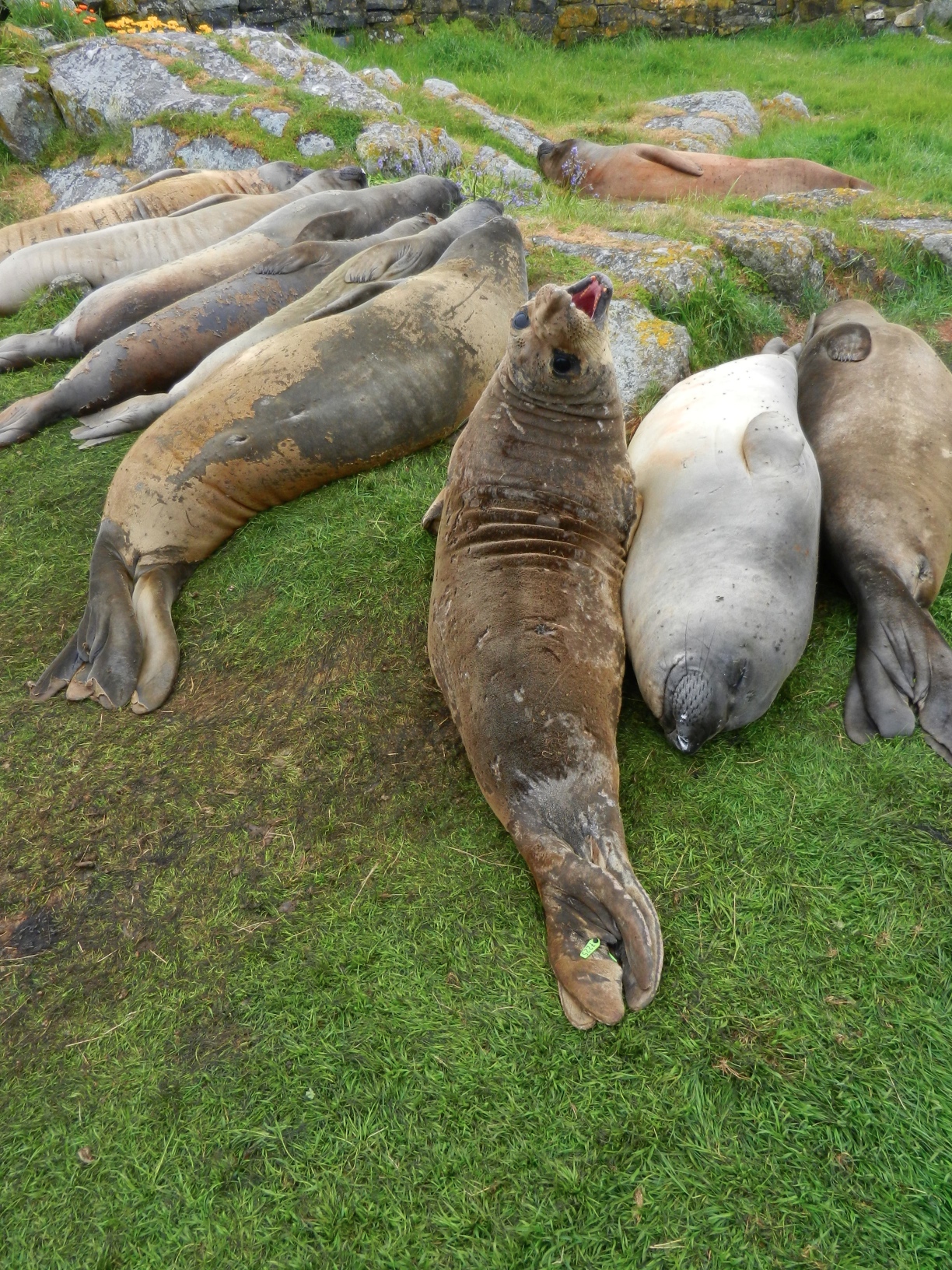
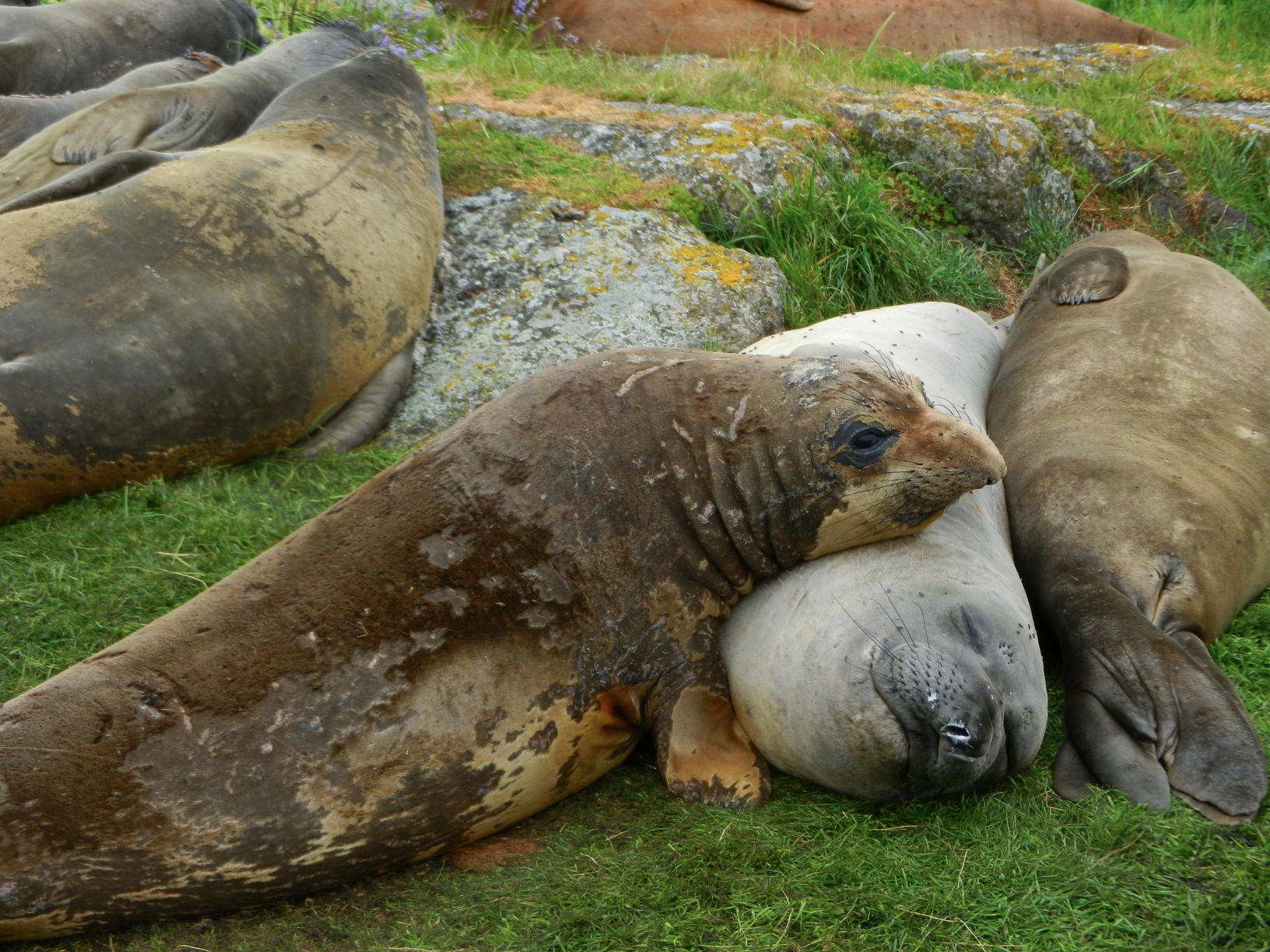
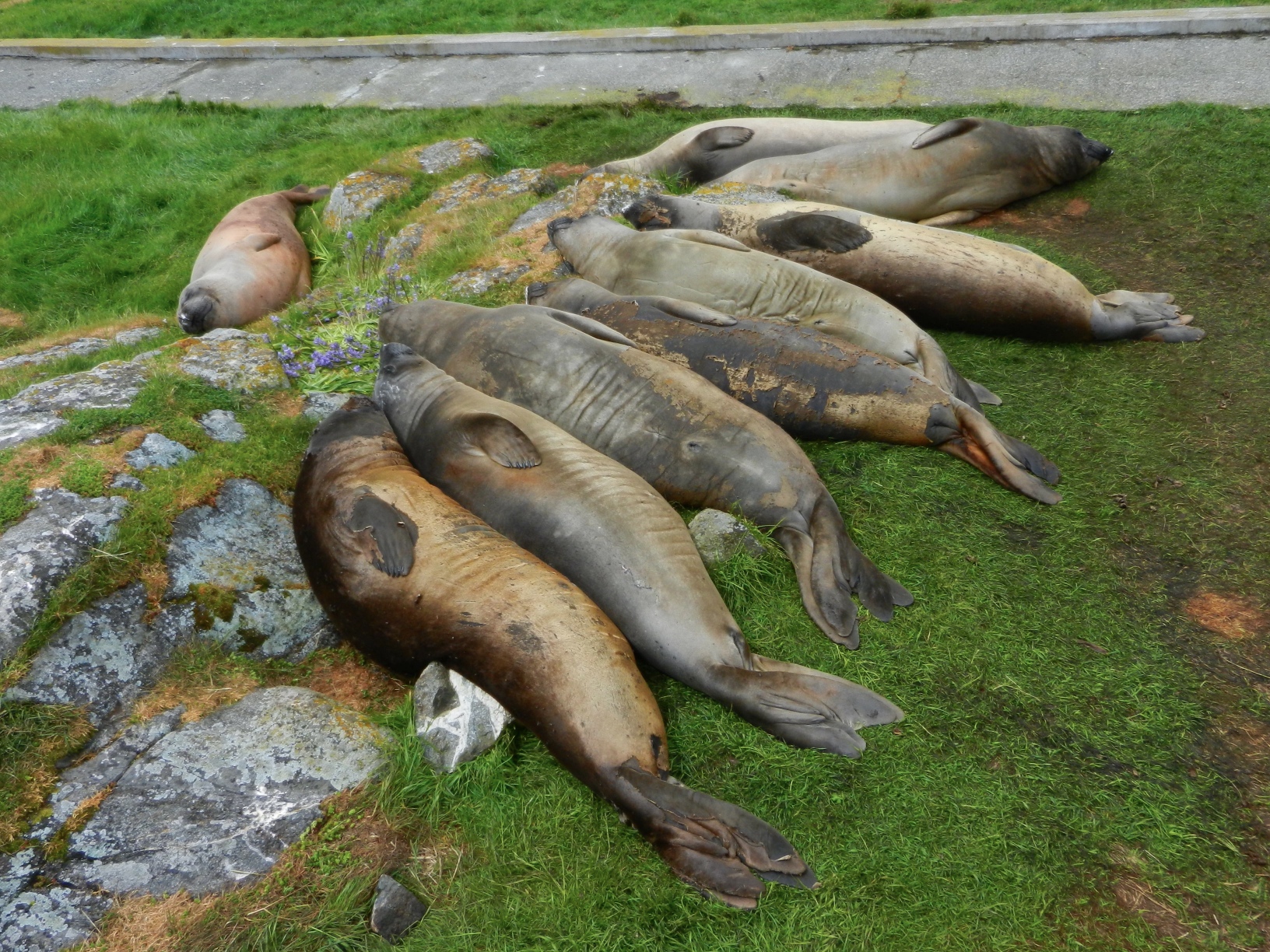
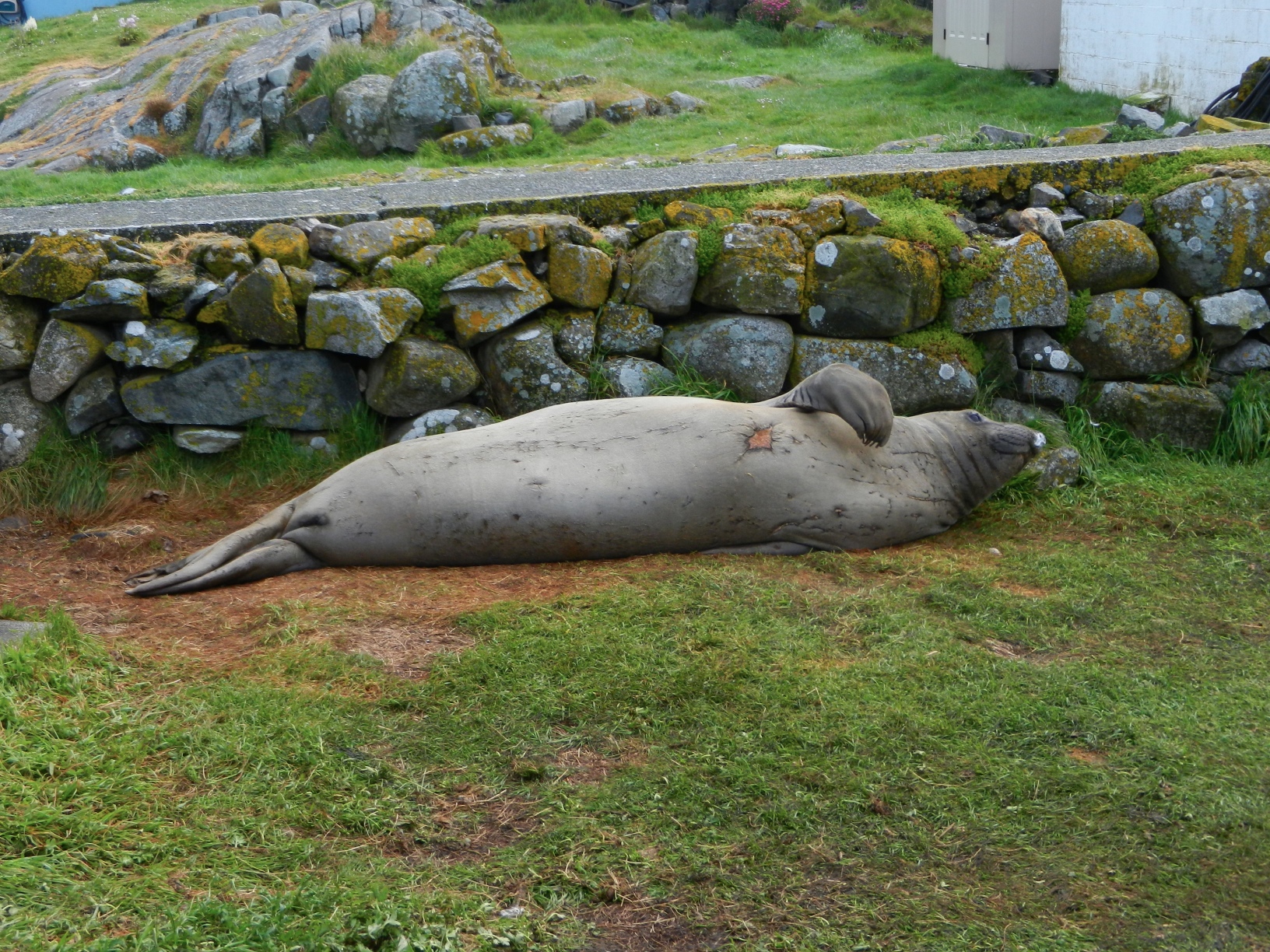
We continue to have about 12-15 elephant seals on Great Race Island. Most are nearing the end of their moult and are waiting until hunger drives them back to the open ocean. The big male (who is not fully grown) is just beginning to shed around his nose and mouth. Young e-seals and females moult earlier than the adult males, probably to avoid the threat of overly agressive or amorous advances by the big guys. Whenever Chunk moves a ripple of concern moves through the colony (literally). He often catches a small one and half-heartedly pushes it around, but he is fairly gentle all things considered.

Keeping an eye open...

Keeping an eye open…

Here comes trouble...

Here comes trouble…

Cornered...

Cornered…

Time to Smell the Flowers...

Time to Smell the Flowers…

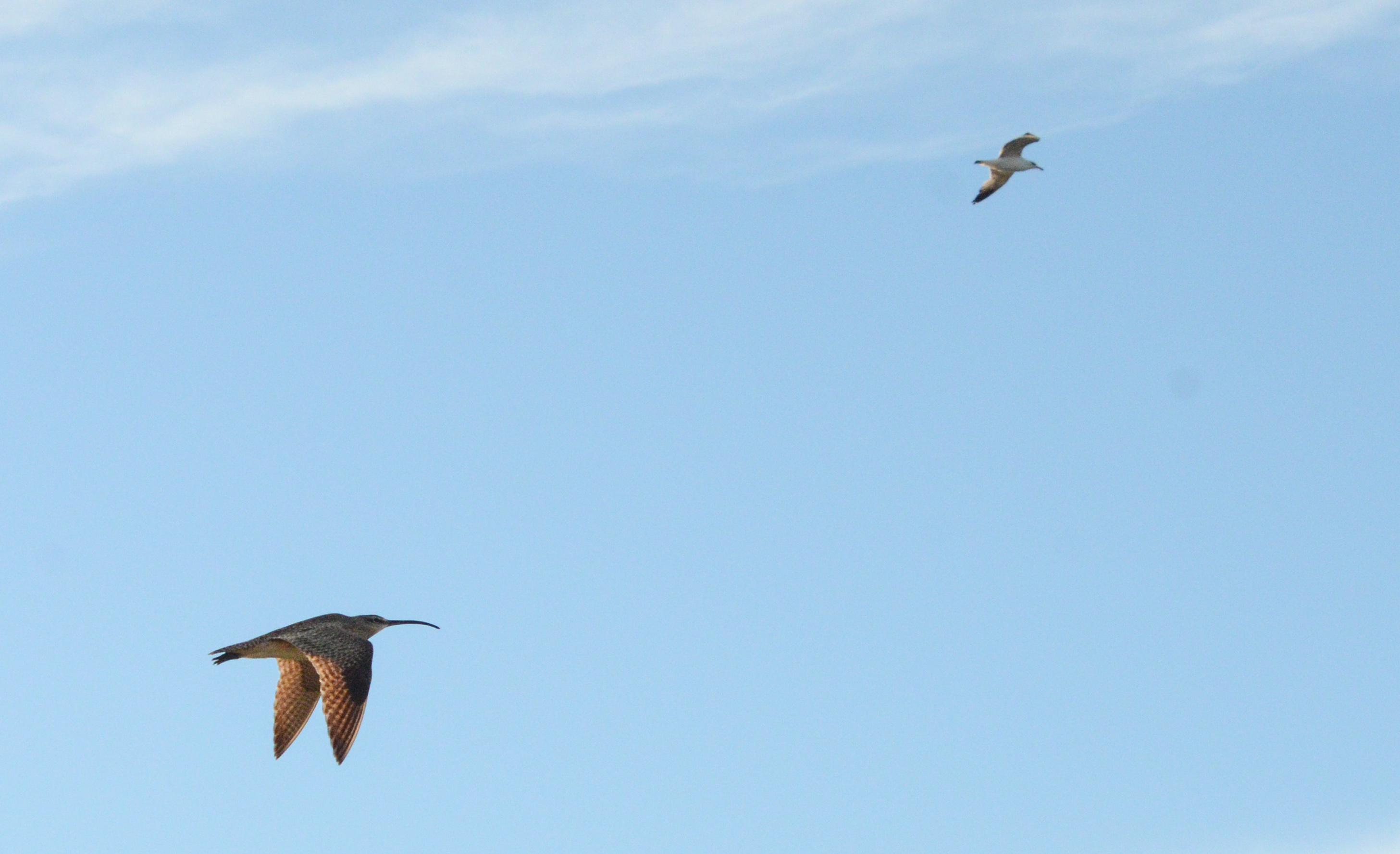
Whimbrel in Flight

Whimbrel in Flight


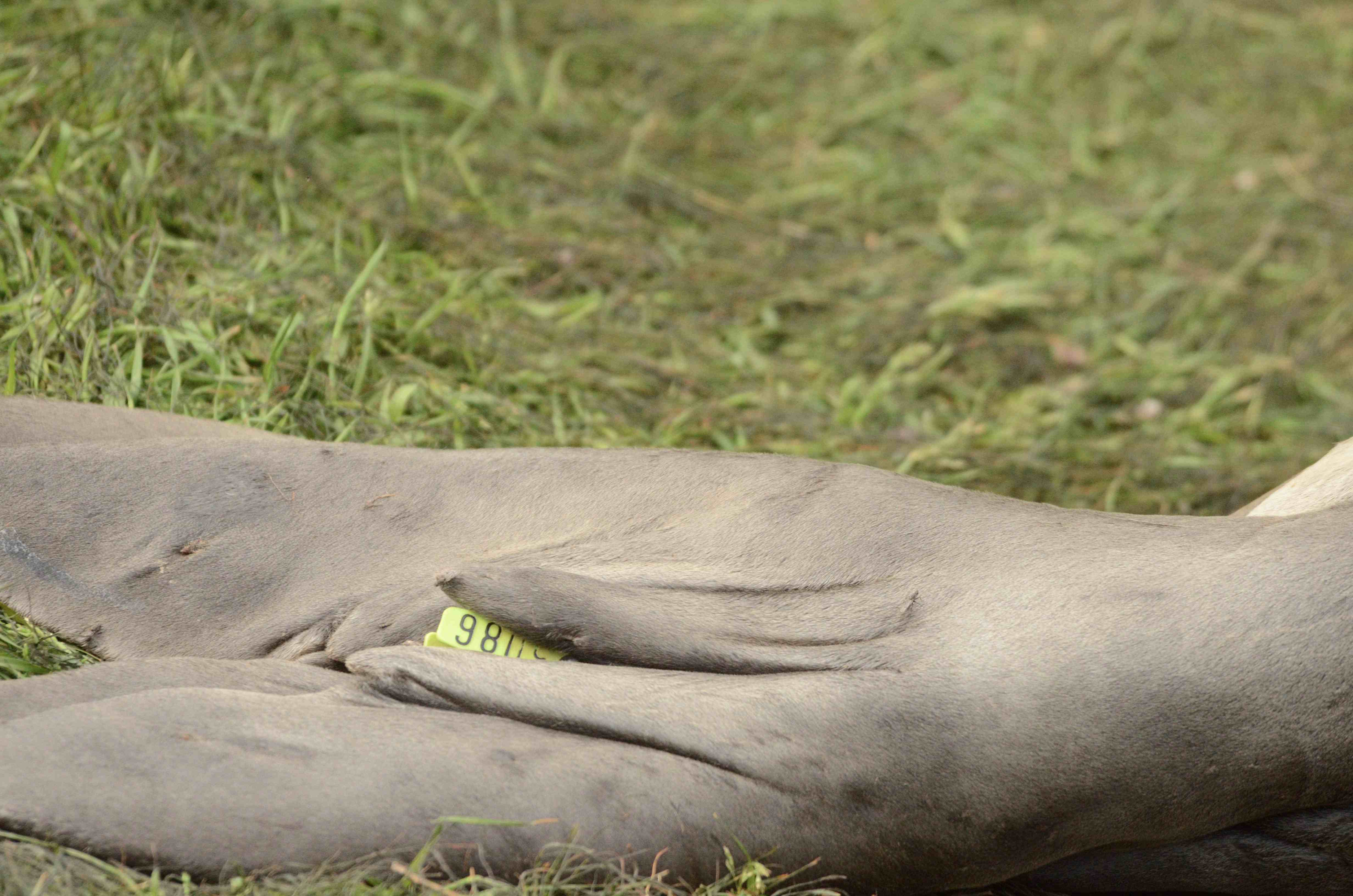
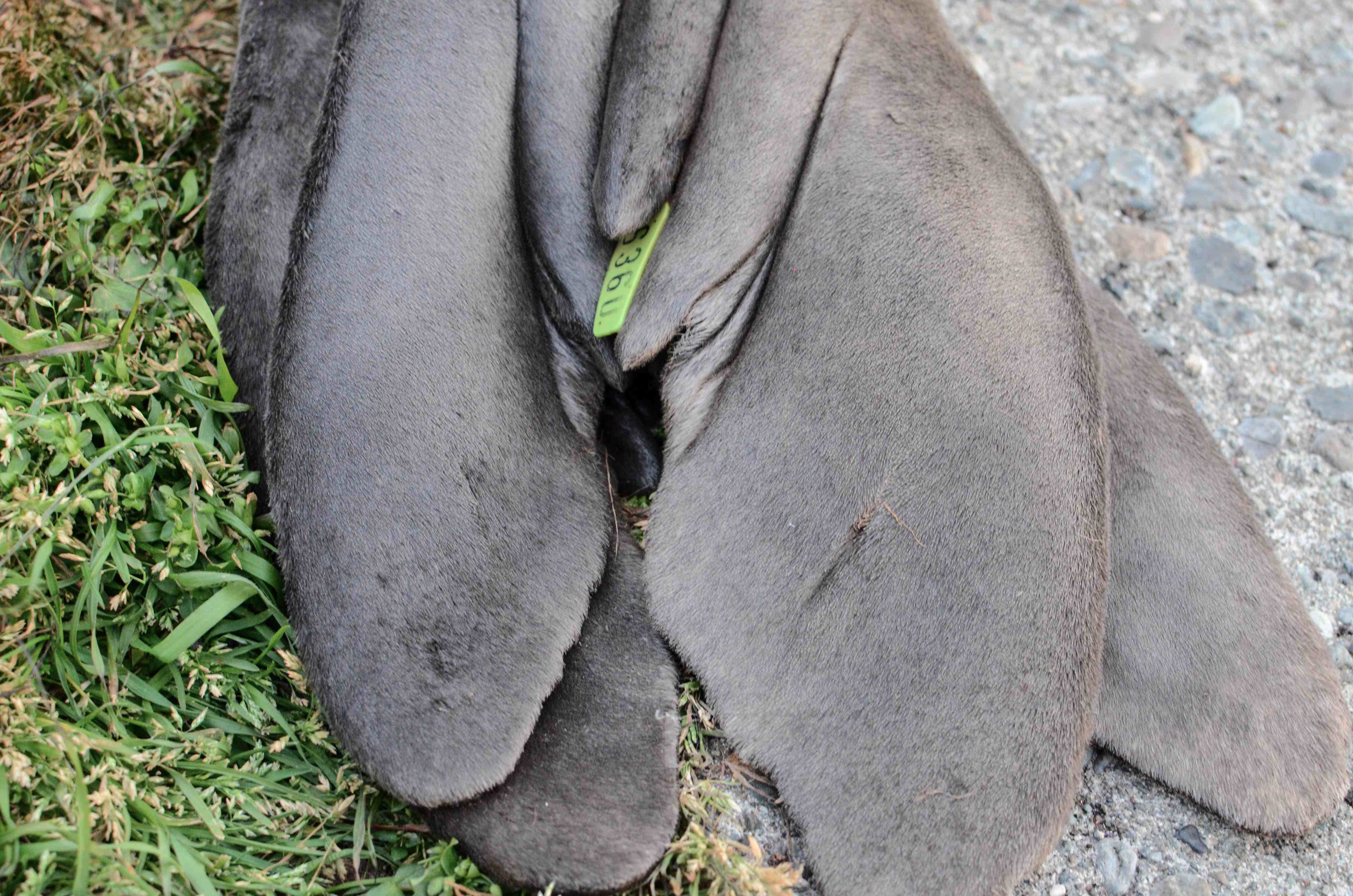
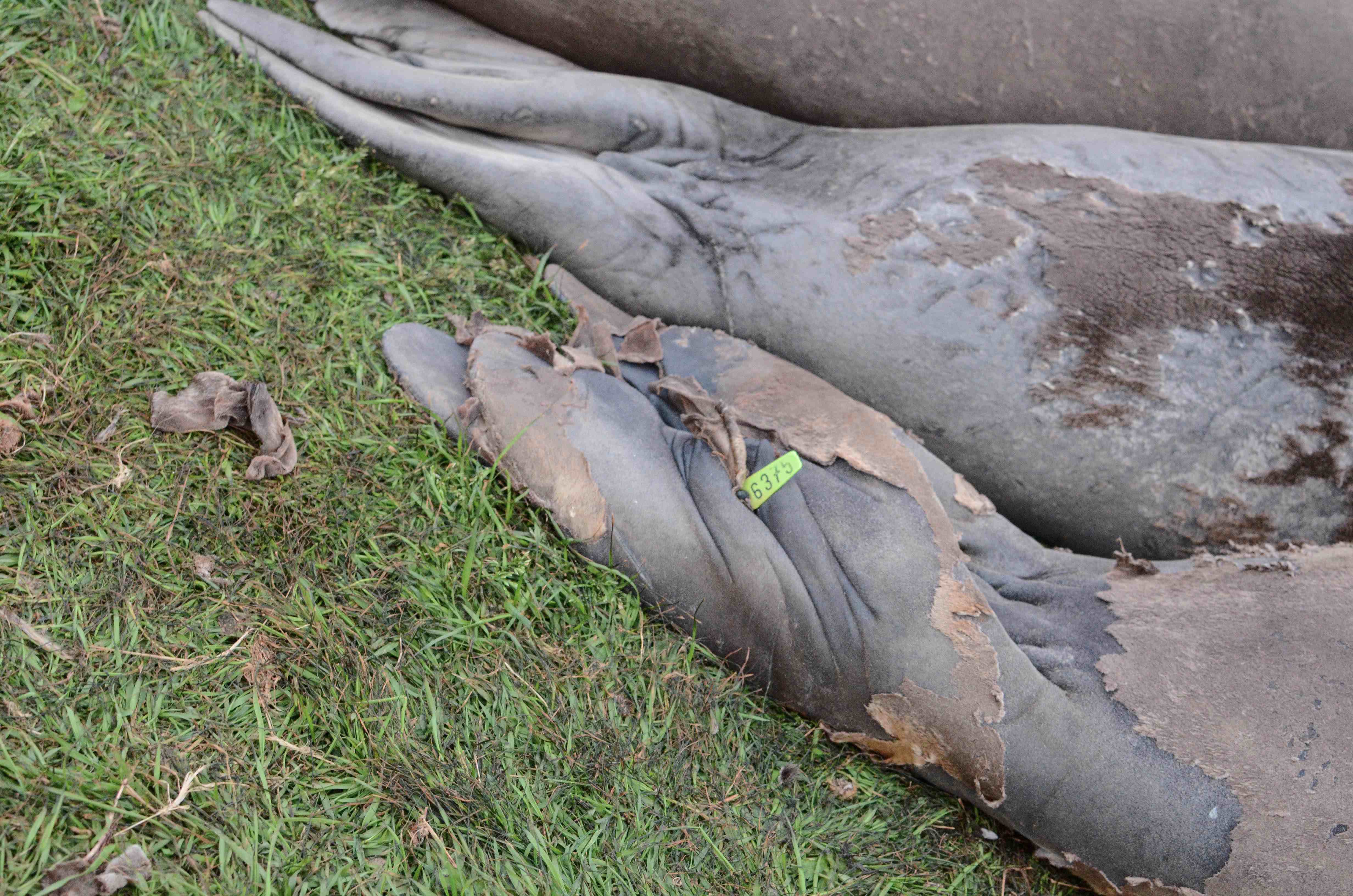
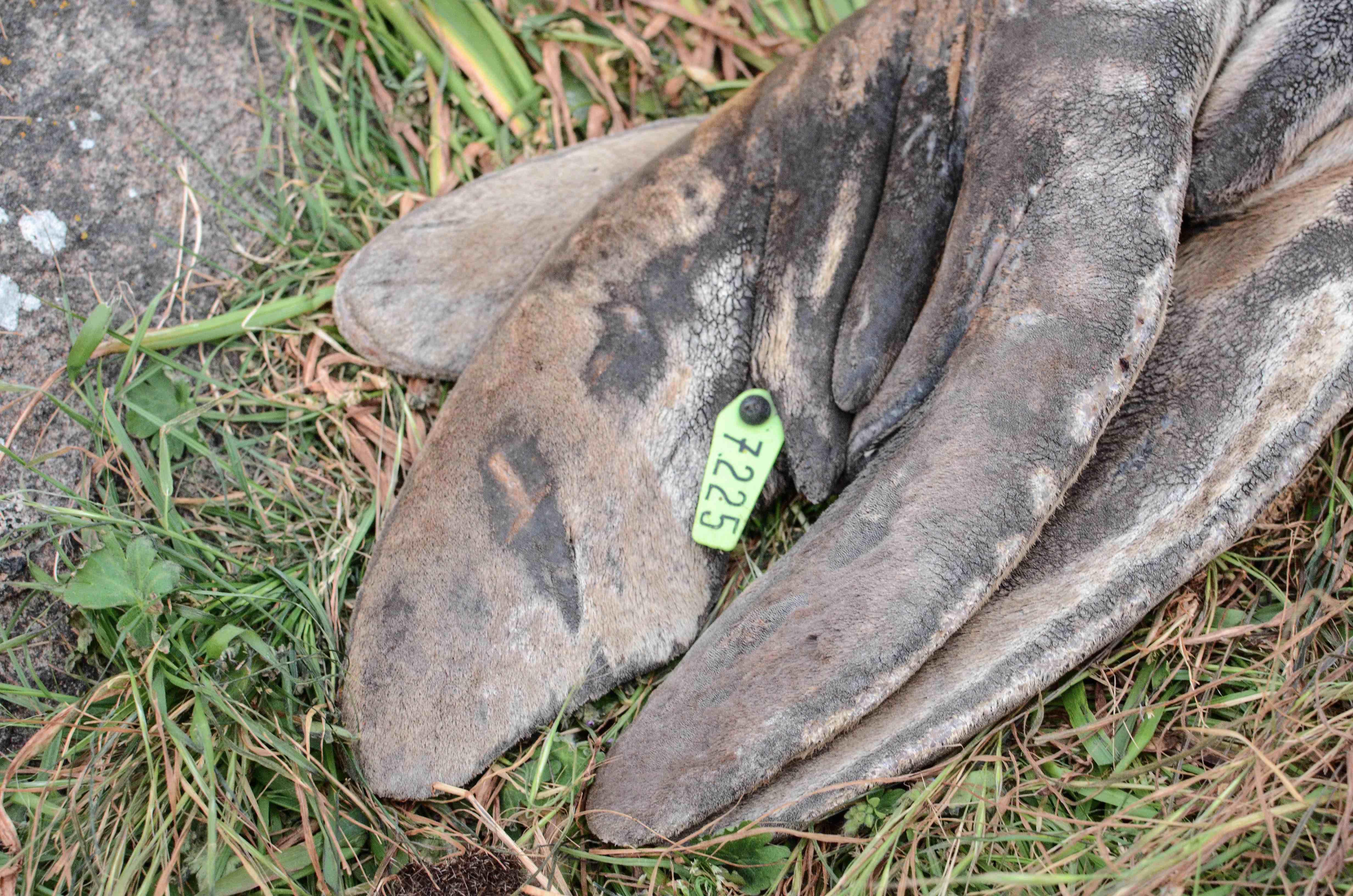
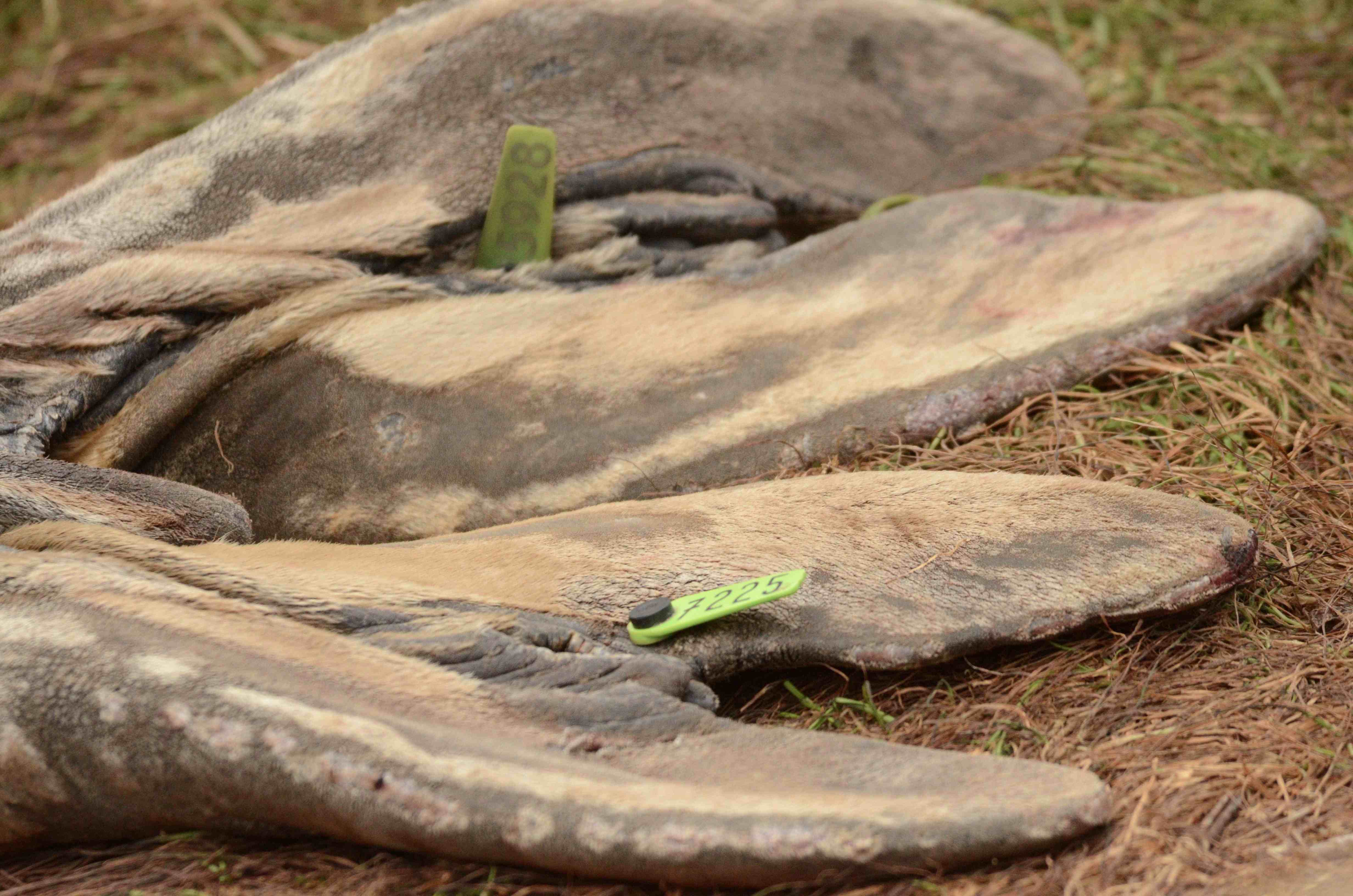
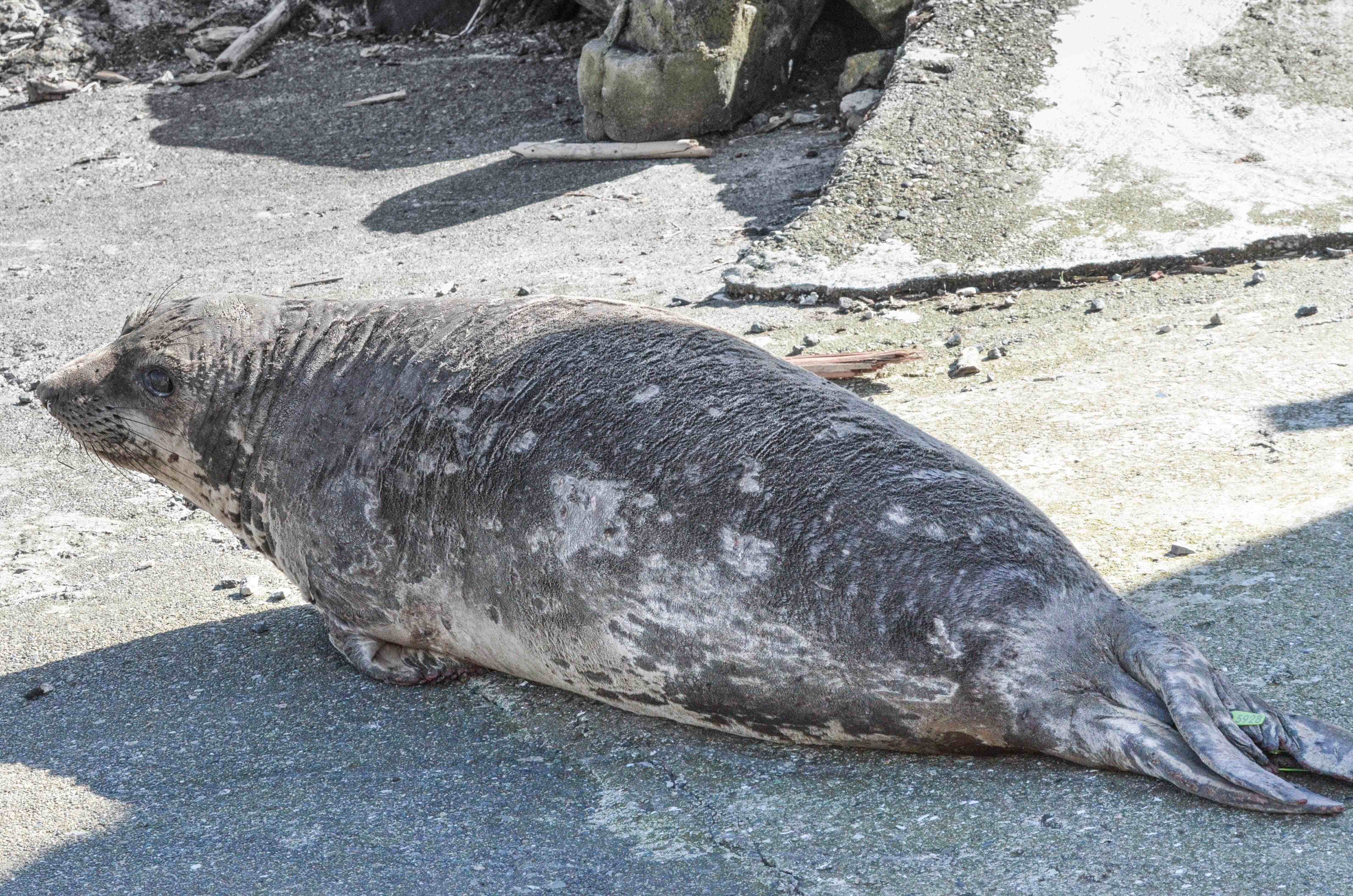
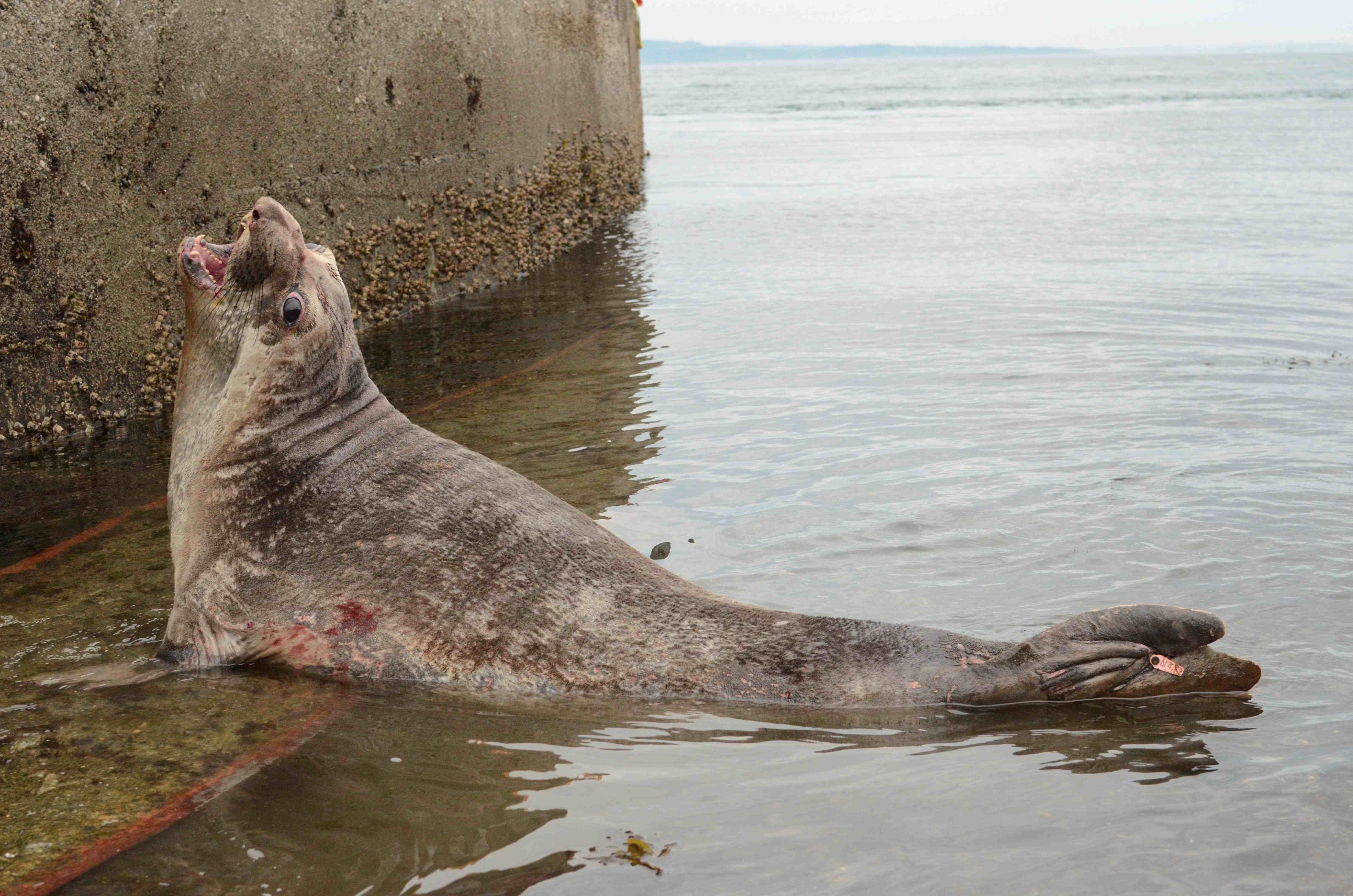
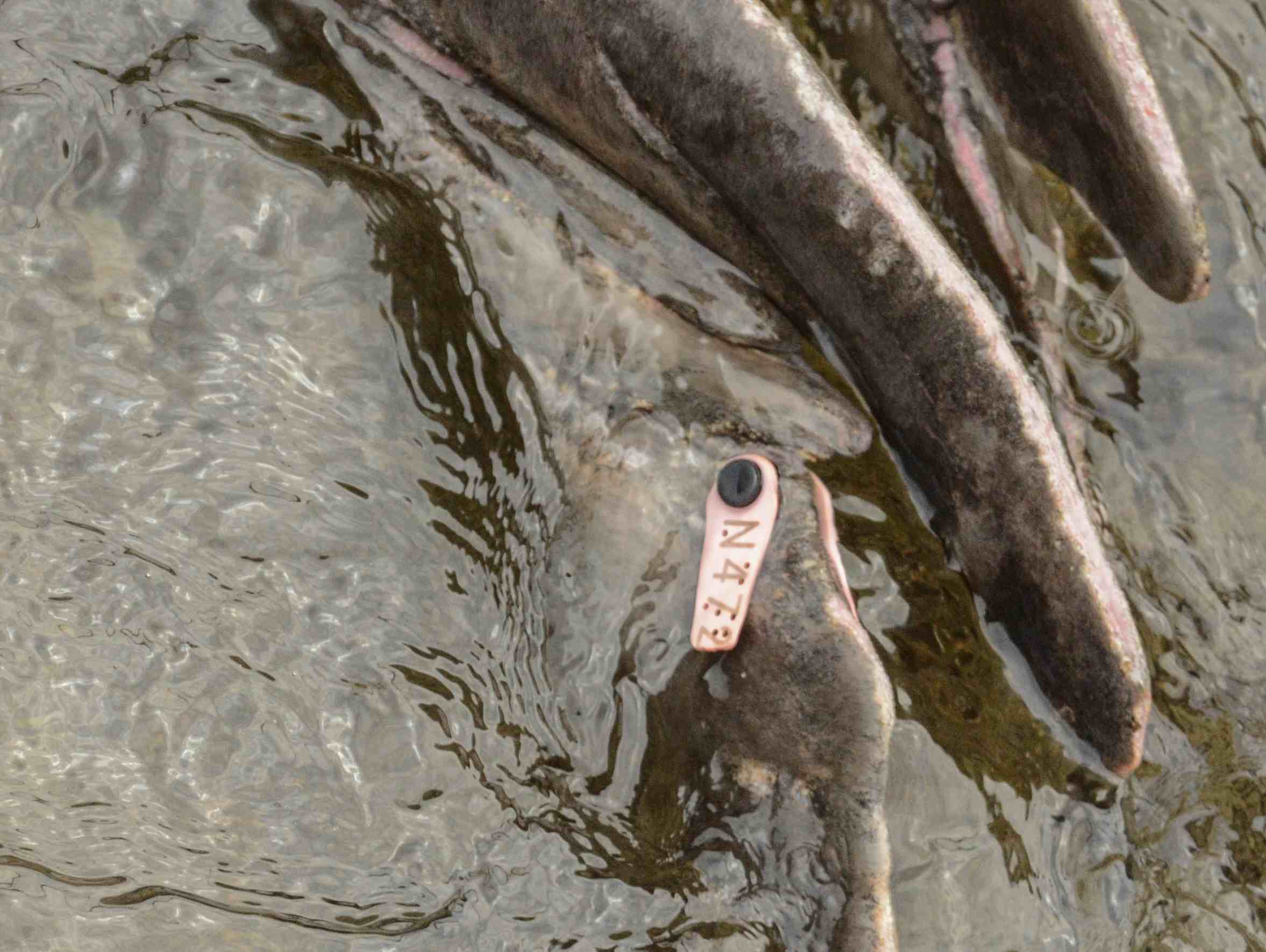
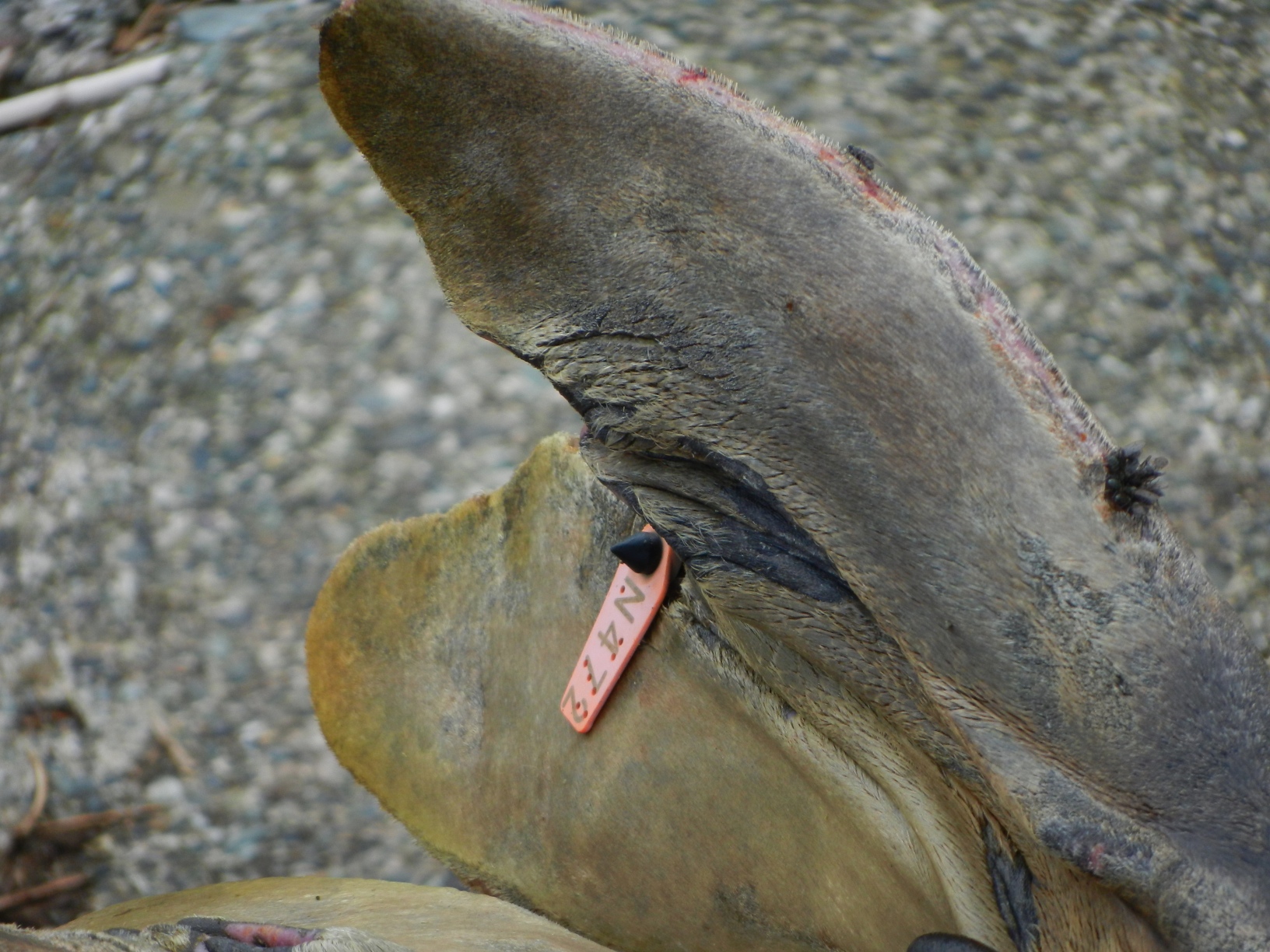
Tagged Elephant Seals

Mike Robinson sent these images of tagged elephant seals on May 22/13

FoER Field Trip ——–May 12, 2013

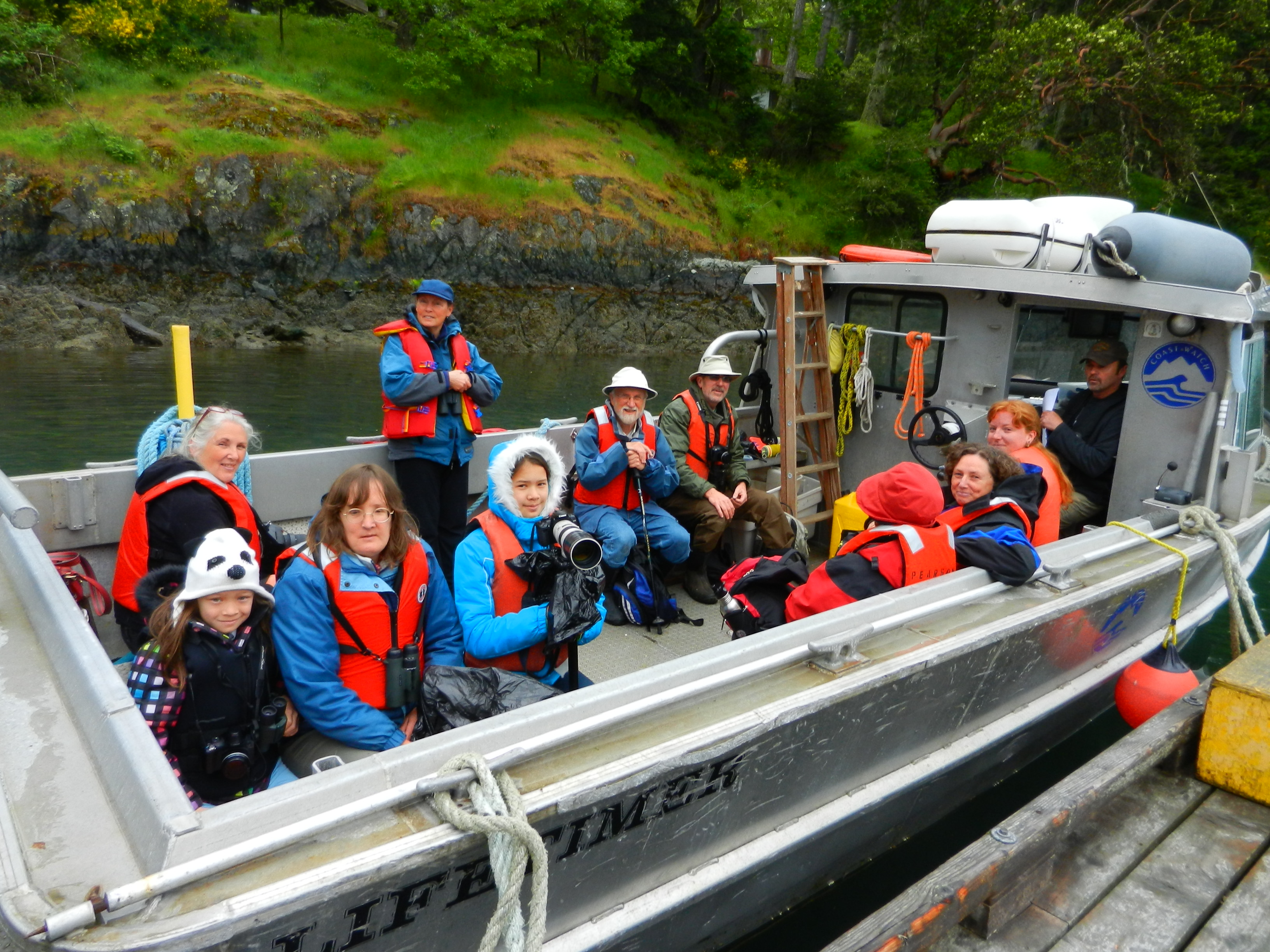
The Friends of Ecological reserves sponsored a field trip to Race Rocks On Sunday May 12. Chris Blondeau, Director of Operations for Lester Pearson College operated the boat and Garry Fletcher led a  group of ten on a tour of the reserve. The following gallery of images shows some of the activities.

references:
The tagging of elephant seals indicating their origin:

The hurricane of 2006


Where do the gulls go at night?

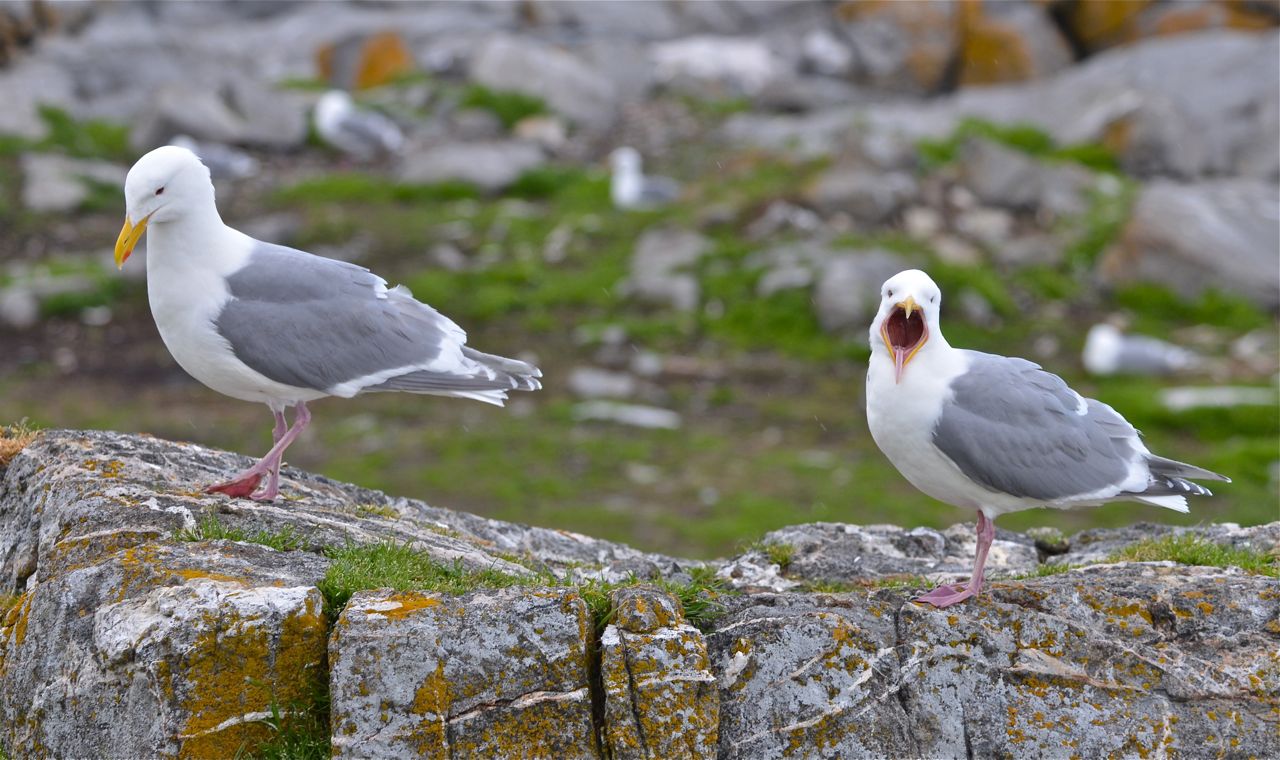
Glaucous-winged Gull

Glaucous-winged Gull

The Glaucous-winged Gulls (Larus Glauscens) is an almost ever-present fixture of Great Race Islet. This time of year from dawn to dark they can be seen occupying their potential nesting locations, building those nests, and settling territorial disputes with their neighbours. But many nights, when I head out to turn the generator off, I discover a silent and empty island; 300 gulls have simply disappeared, gone to some mysterious location I can only guess at. Do they prefer to sleep on the water? Do they feed on certain foods at night? What’s going on out there at night!

Sunset Soaring

Sunset Soaring

Regardless, I can tell you that Glaucous-winged Gulls are an extraordinary bird, at home on the lightest of breezes or duelling with the 50 knots gusts of an afternoon’s Westerly gale. Only in their ubiquitousness do we loose sight of their beauty and efficiency. They are masters of their realm.


The Hub of Activity

The Hub of Activity

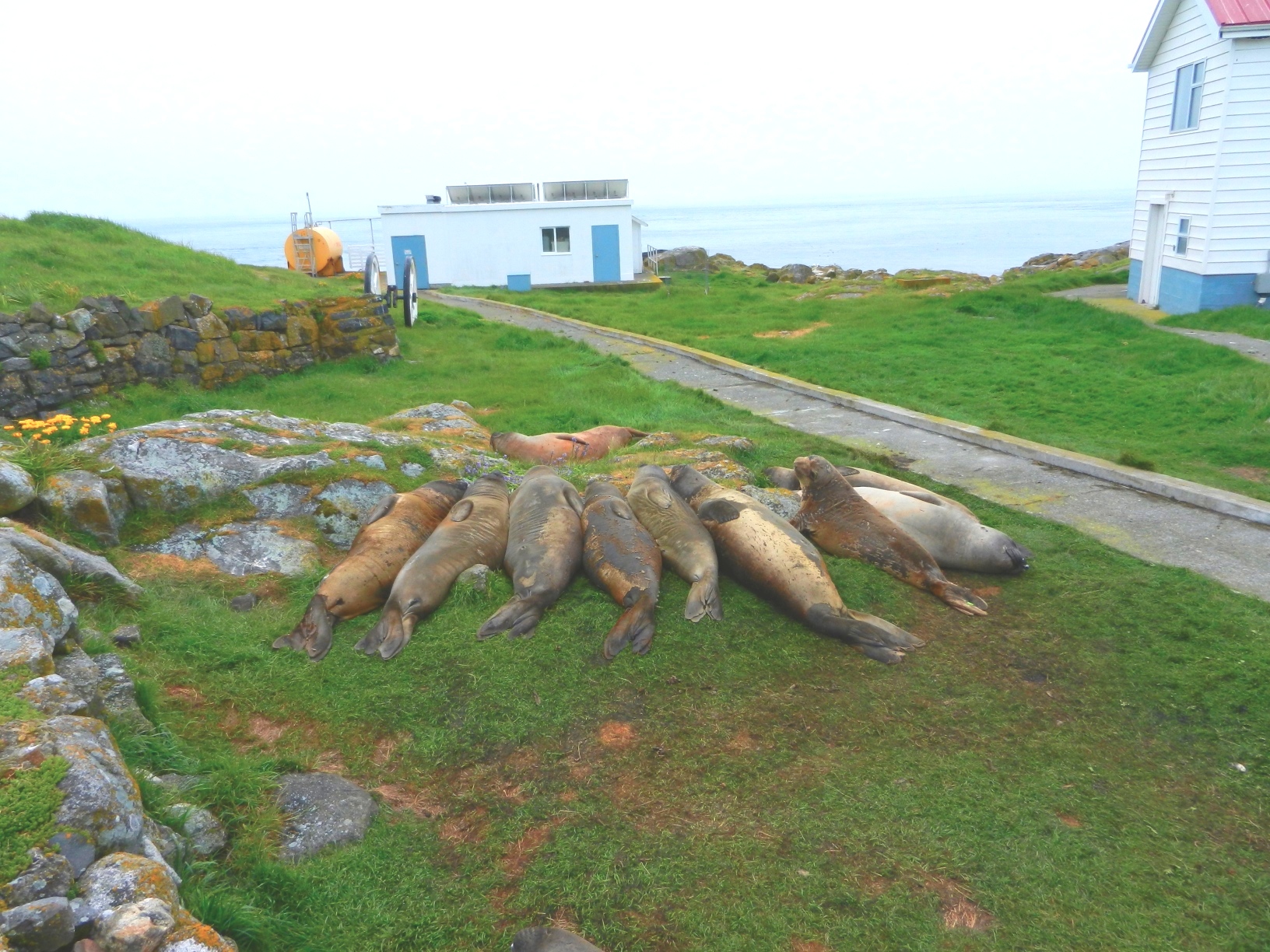
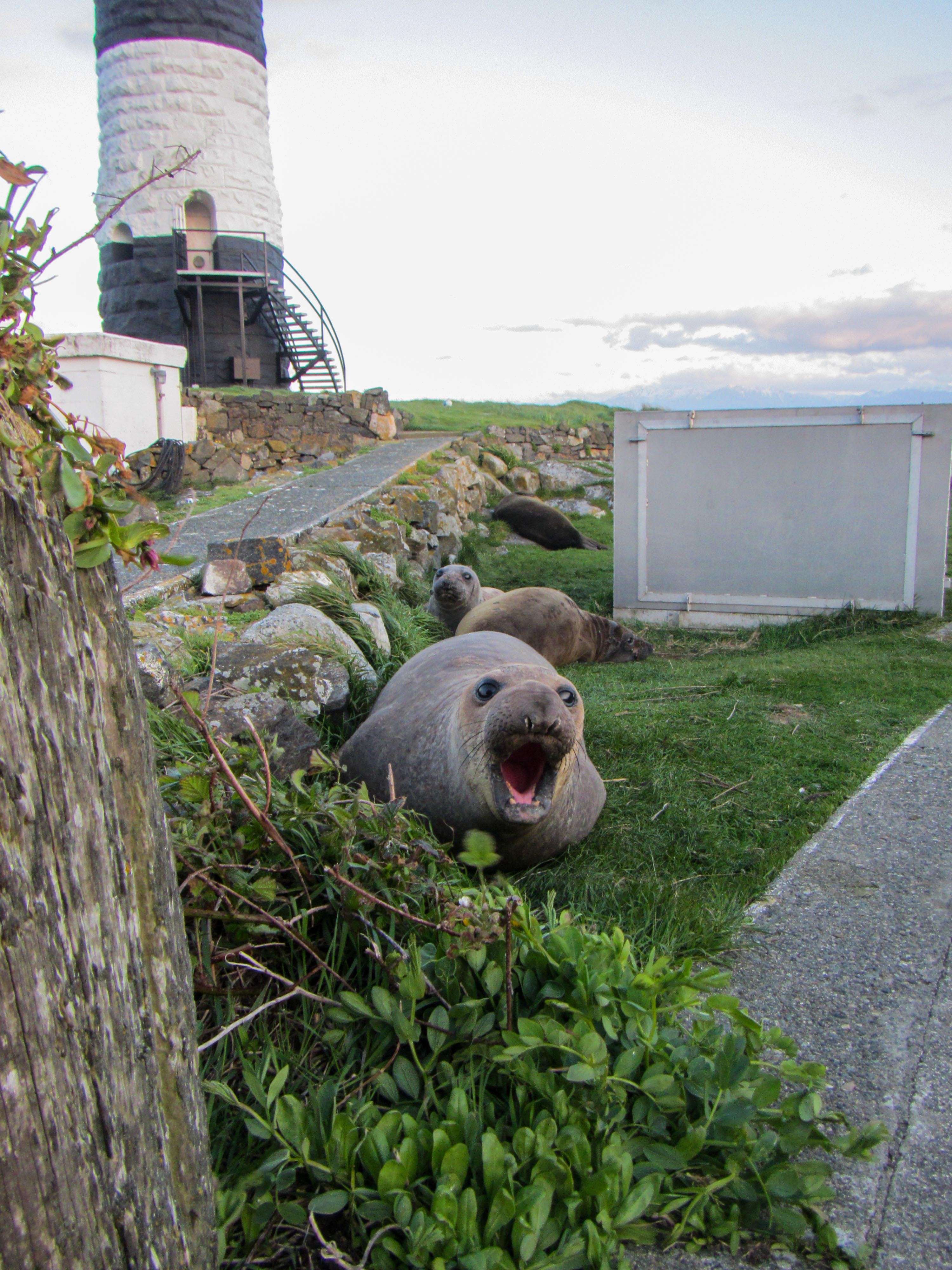
In other news, yesterday there were 10 elephant seals in the yard and on the boatramp! This is a new record for Great Race. There are 4 young males, Bertha the mature female and 5 smaller females. A good-sized male is out on Middle Rock but it doesn’t look big enough to be Misery.


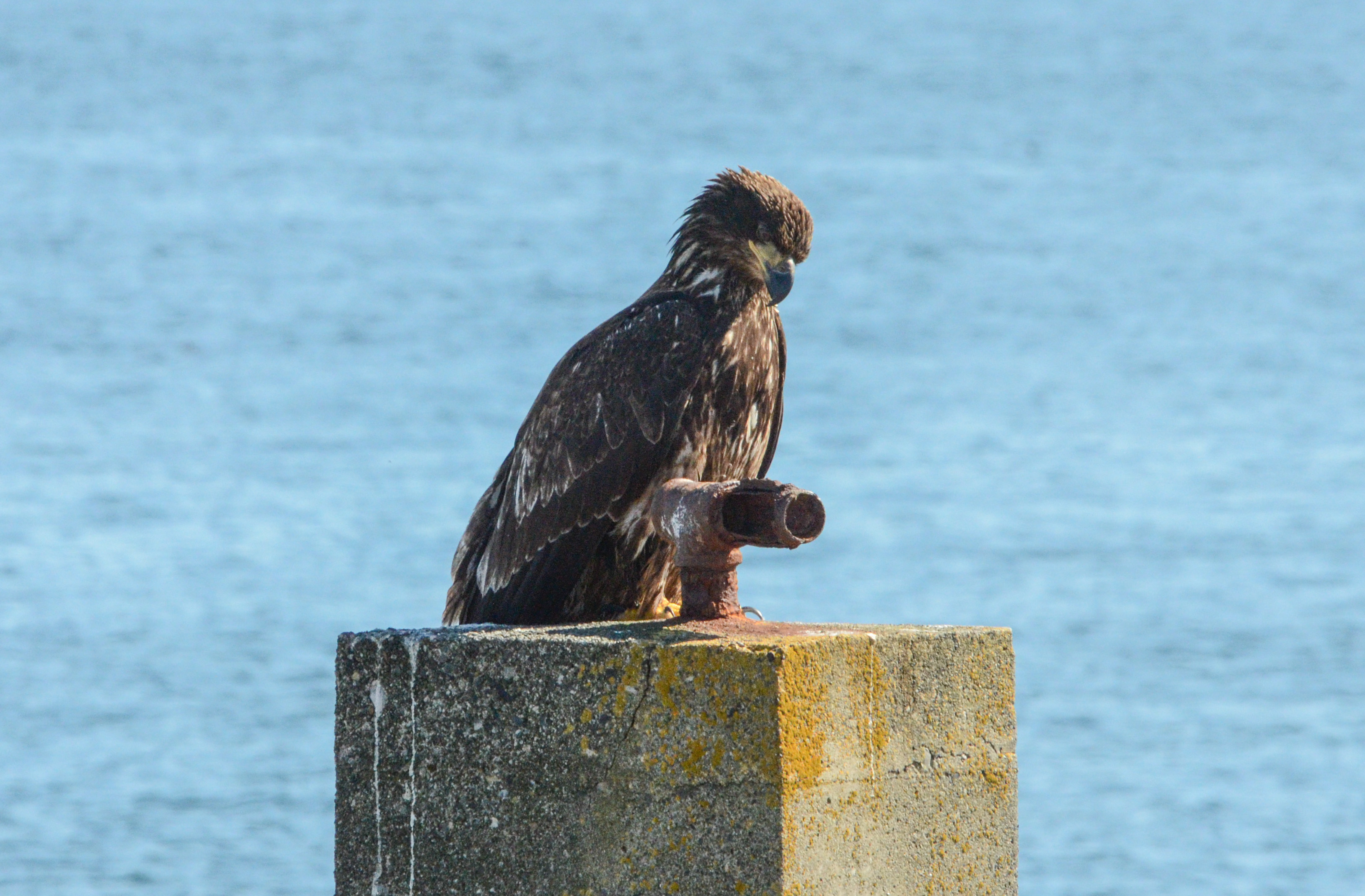
Juvenile Bald Eagle

Juvenile Bald Eagle

Many eagles are in the reserve, most juveniles. I watched one hunt a gull this morning and was surprised how the eagle targeted an individual gull and chased it for over a kilometer out to sea before I lost sight of them both.