Ouch, ouch, ouch…

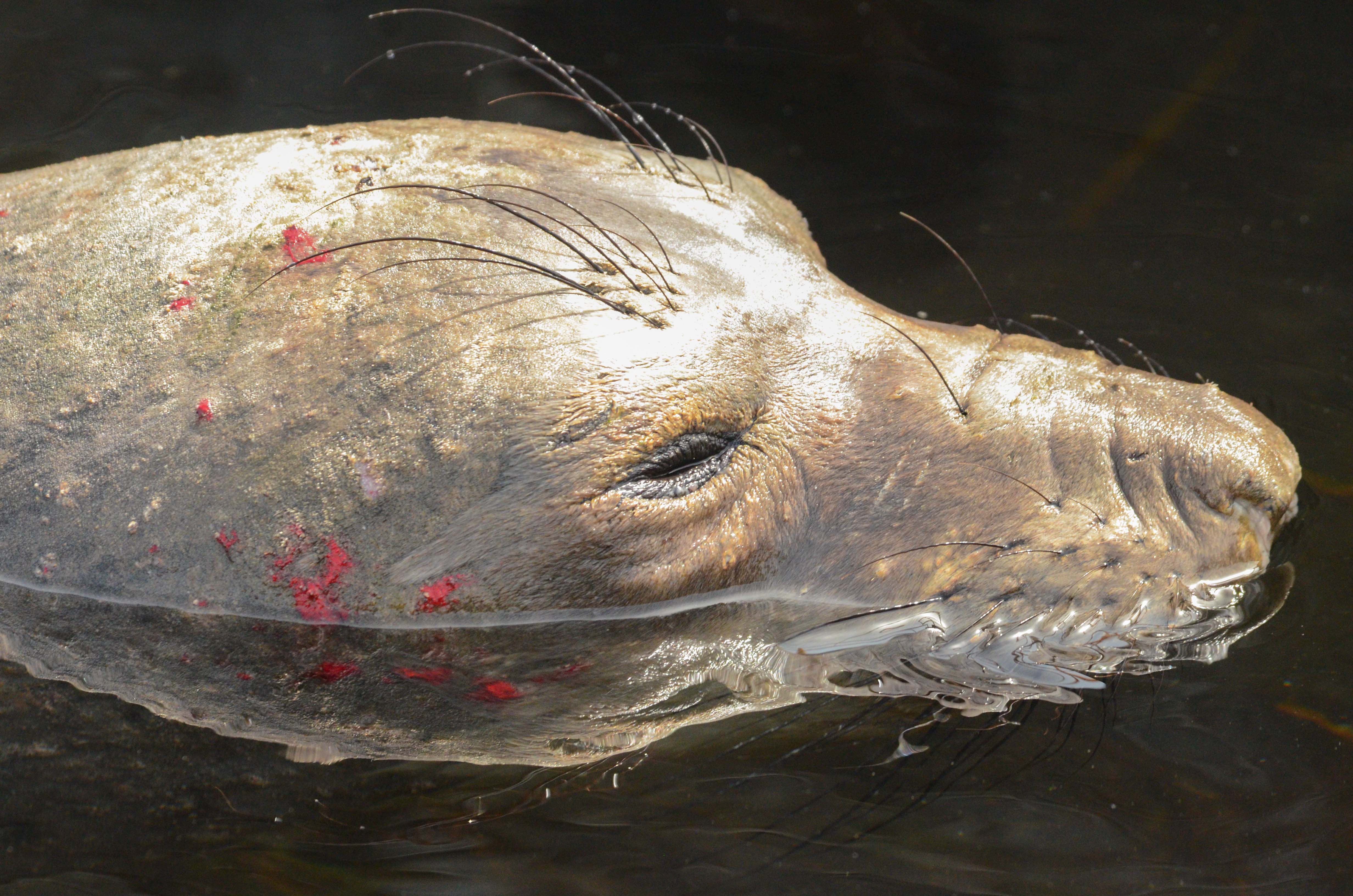
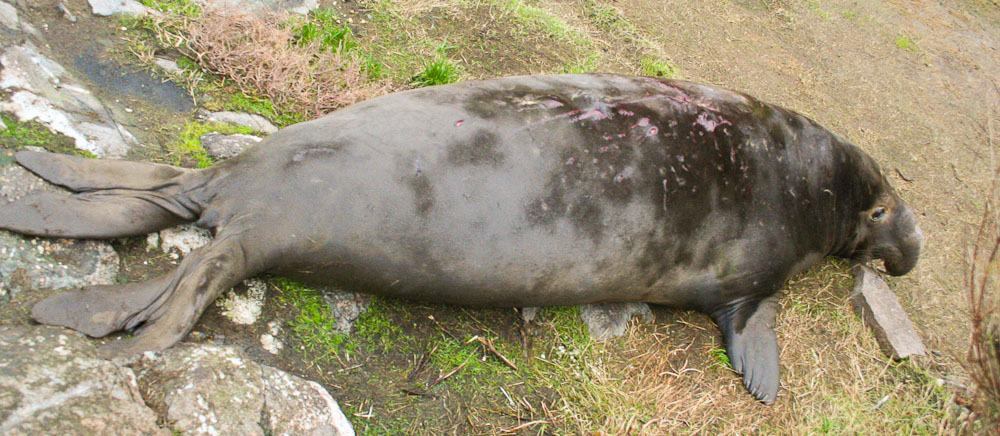
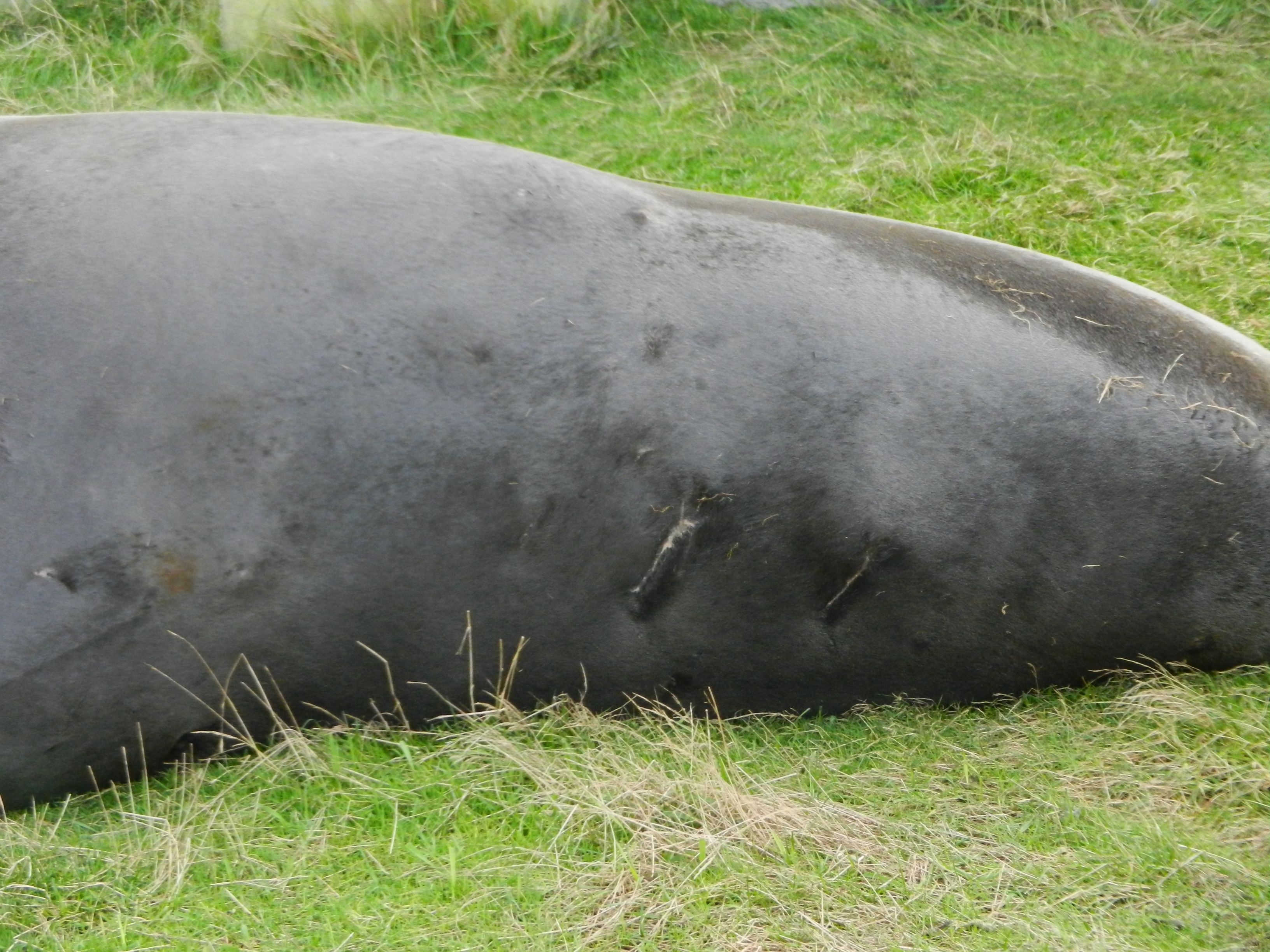
Update: The young e-seal seems to be doing well. I was just in the water clearing kelp from near the jetty and was able to observe it closely. Elephant seals are extremely tough and resilient; its abrasions are almost fully healed already! The one change in its behaviour I have noticed is a reluctance to come ashore. He has spent the last 48 hours in the shallow water at the foor of the boat ramp.

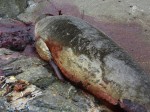
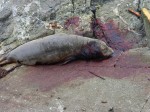
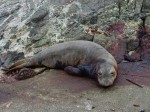
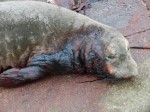
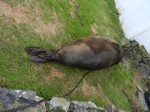
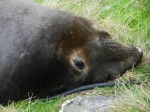
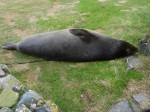
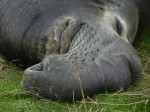
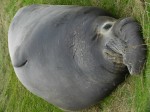
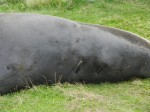
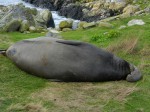
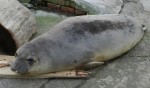
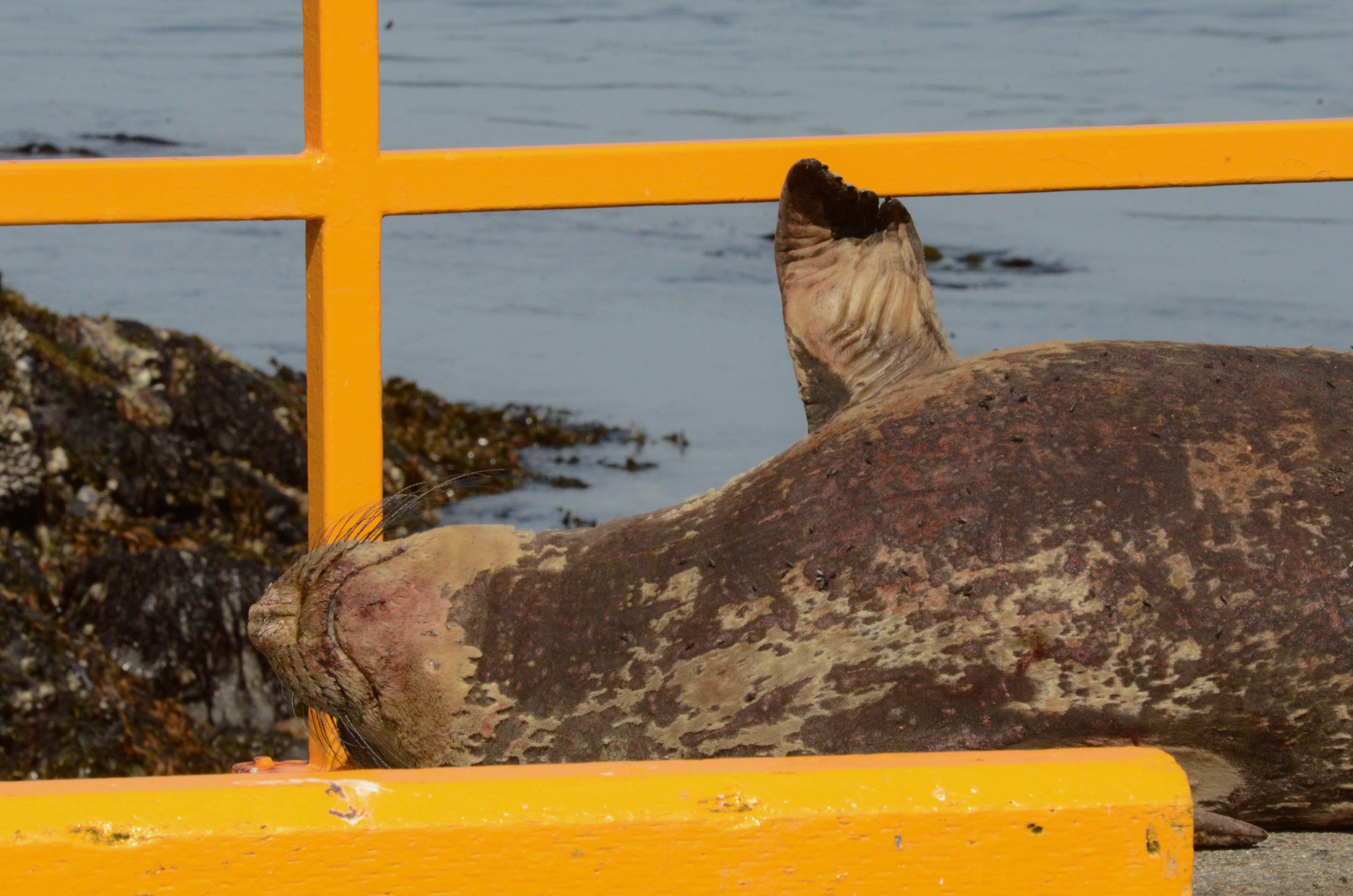
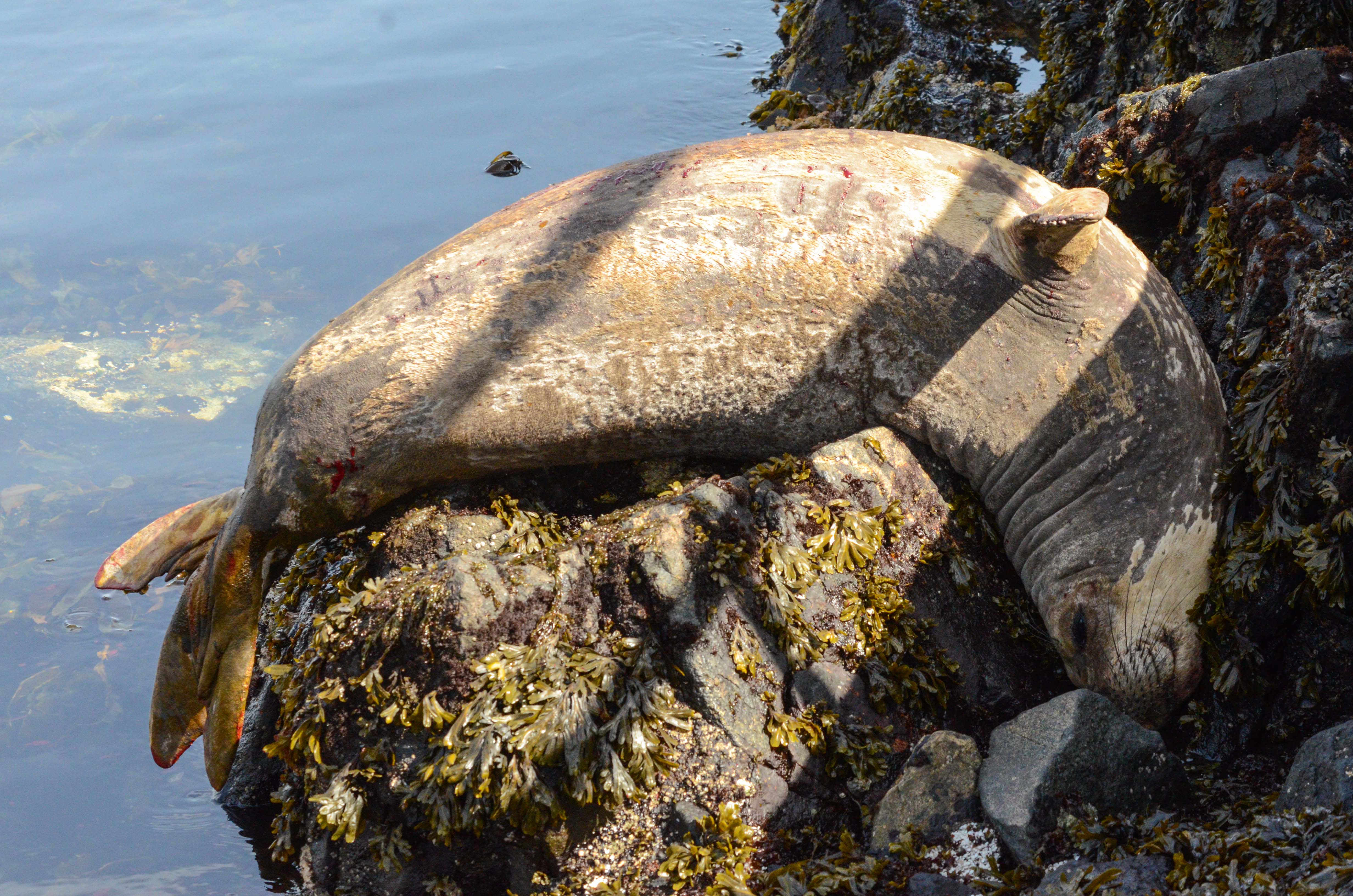
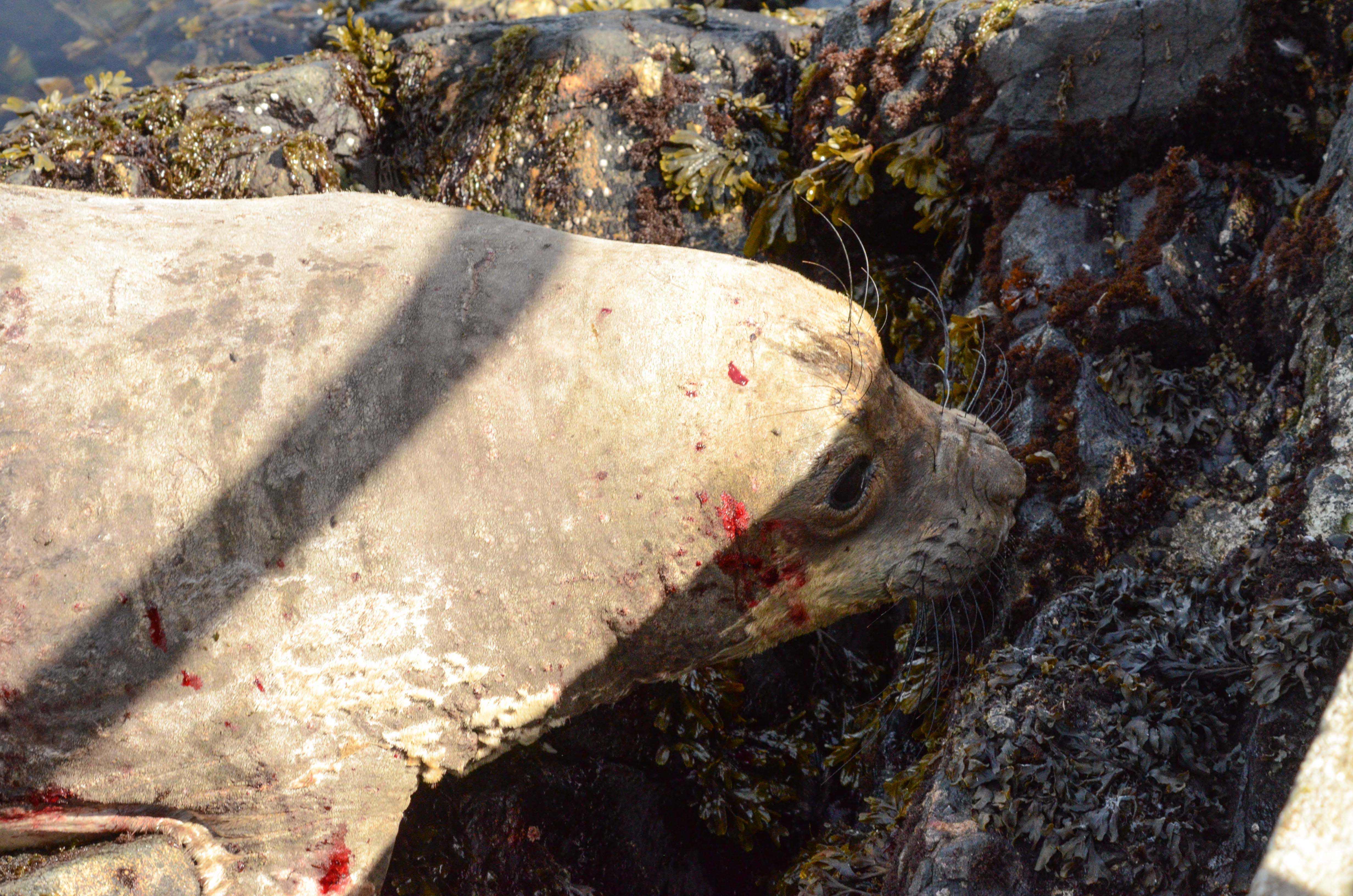
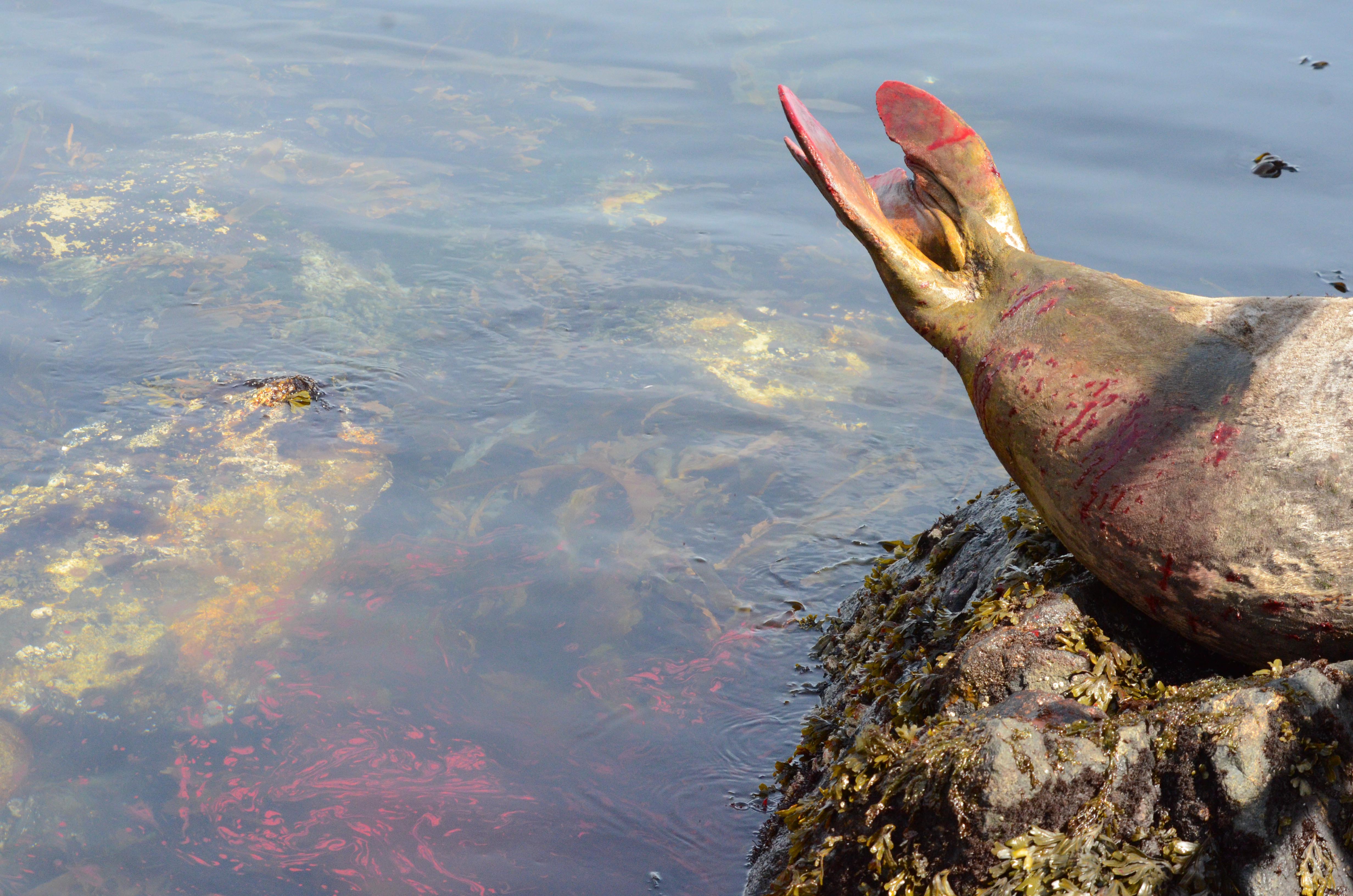
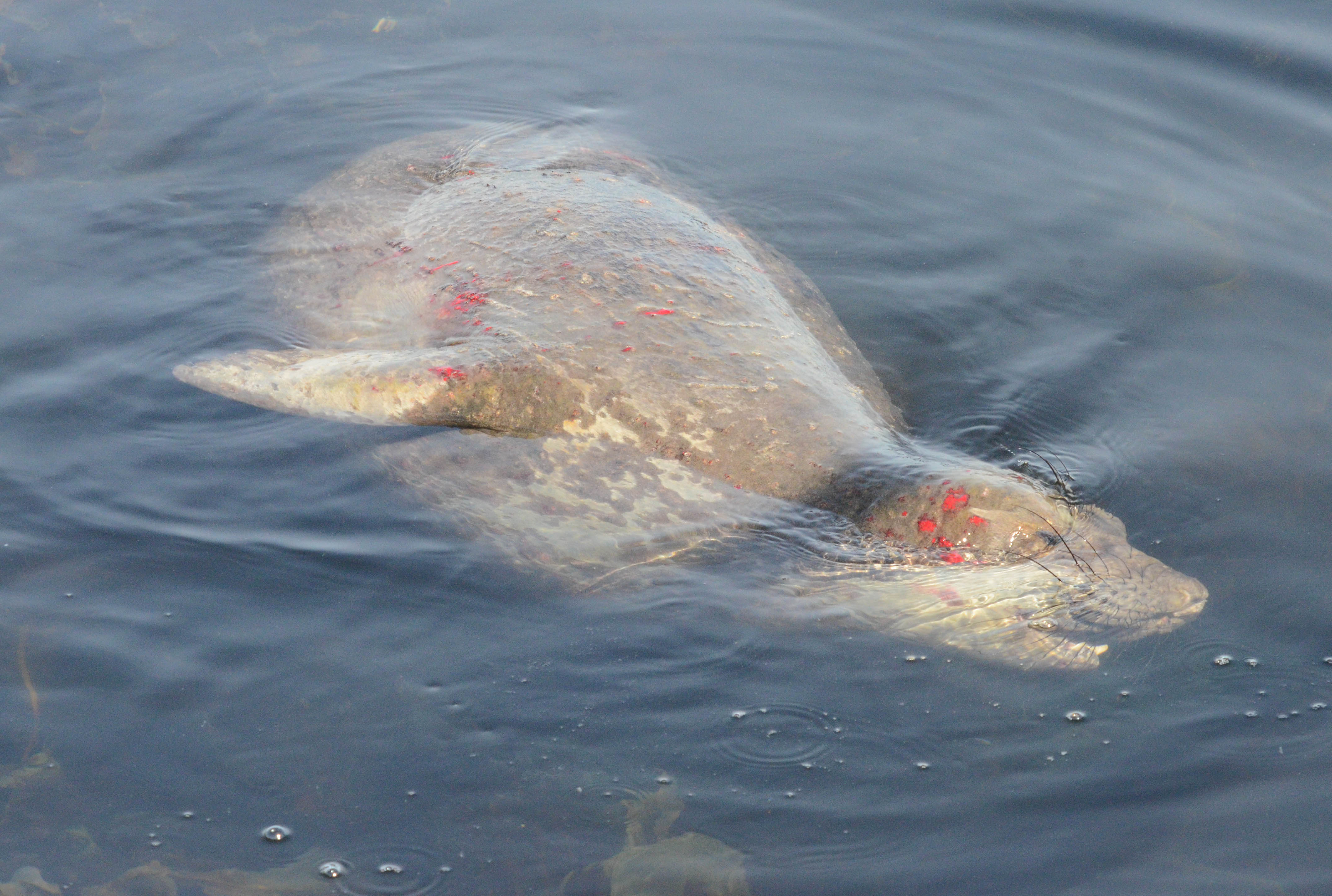
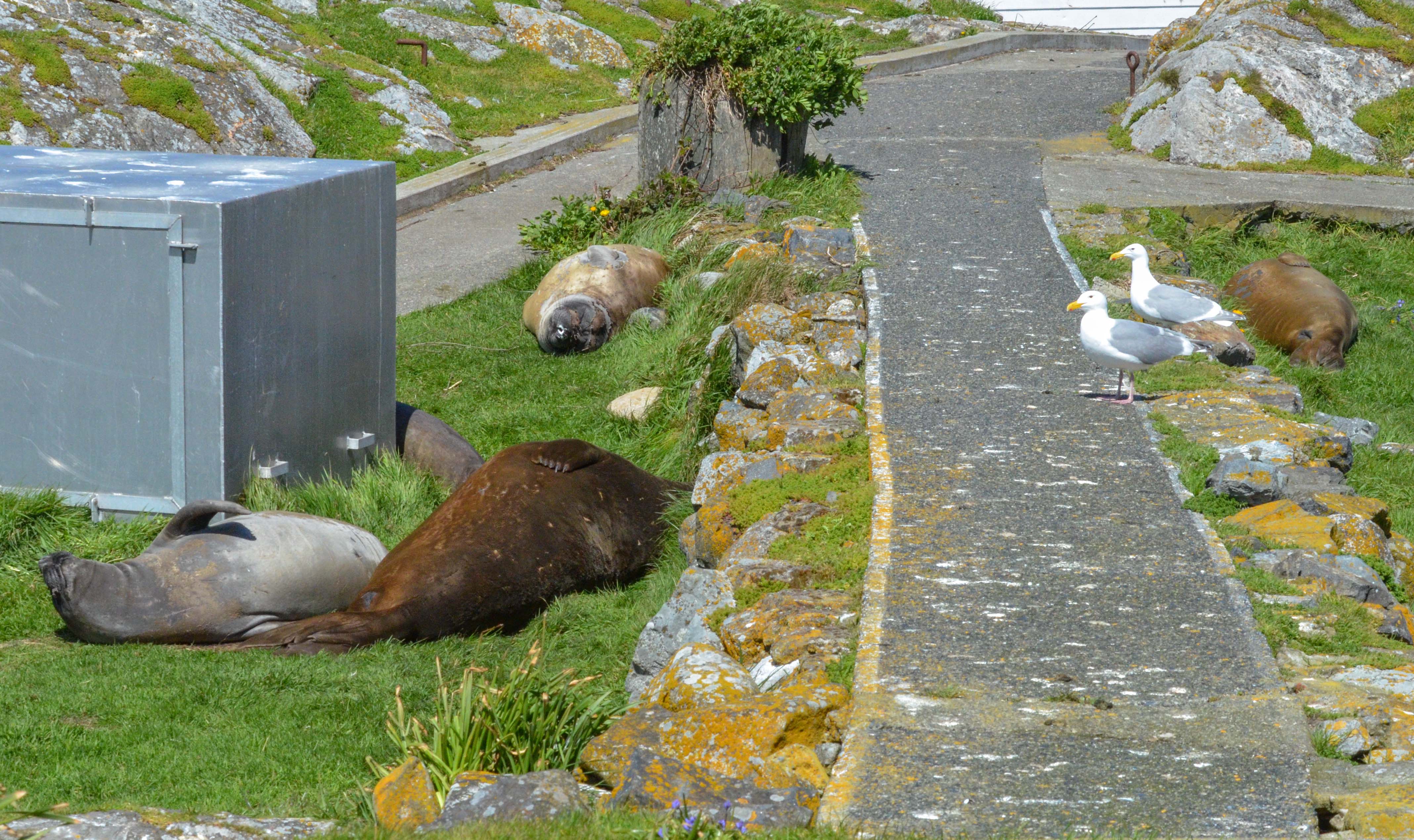
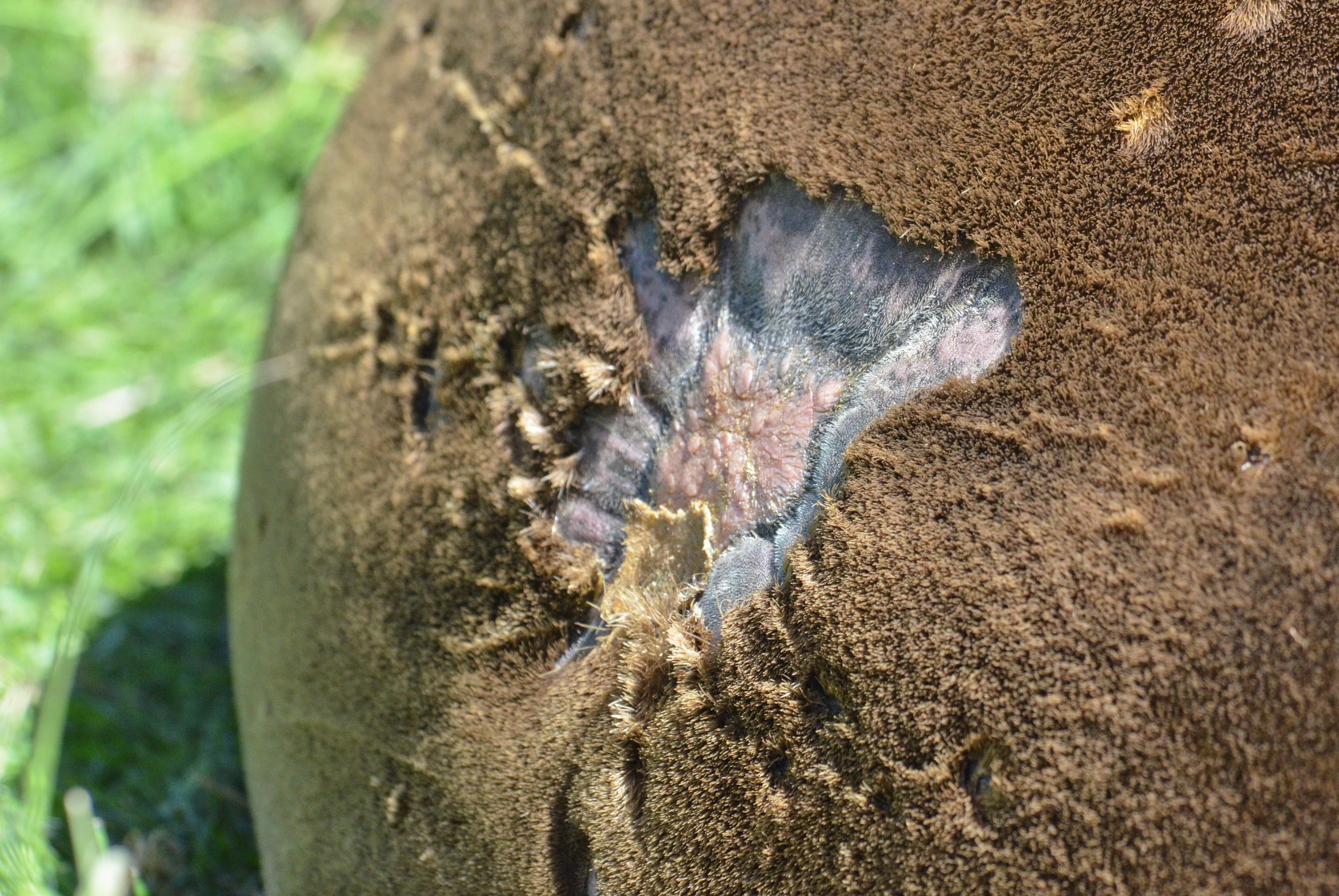
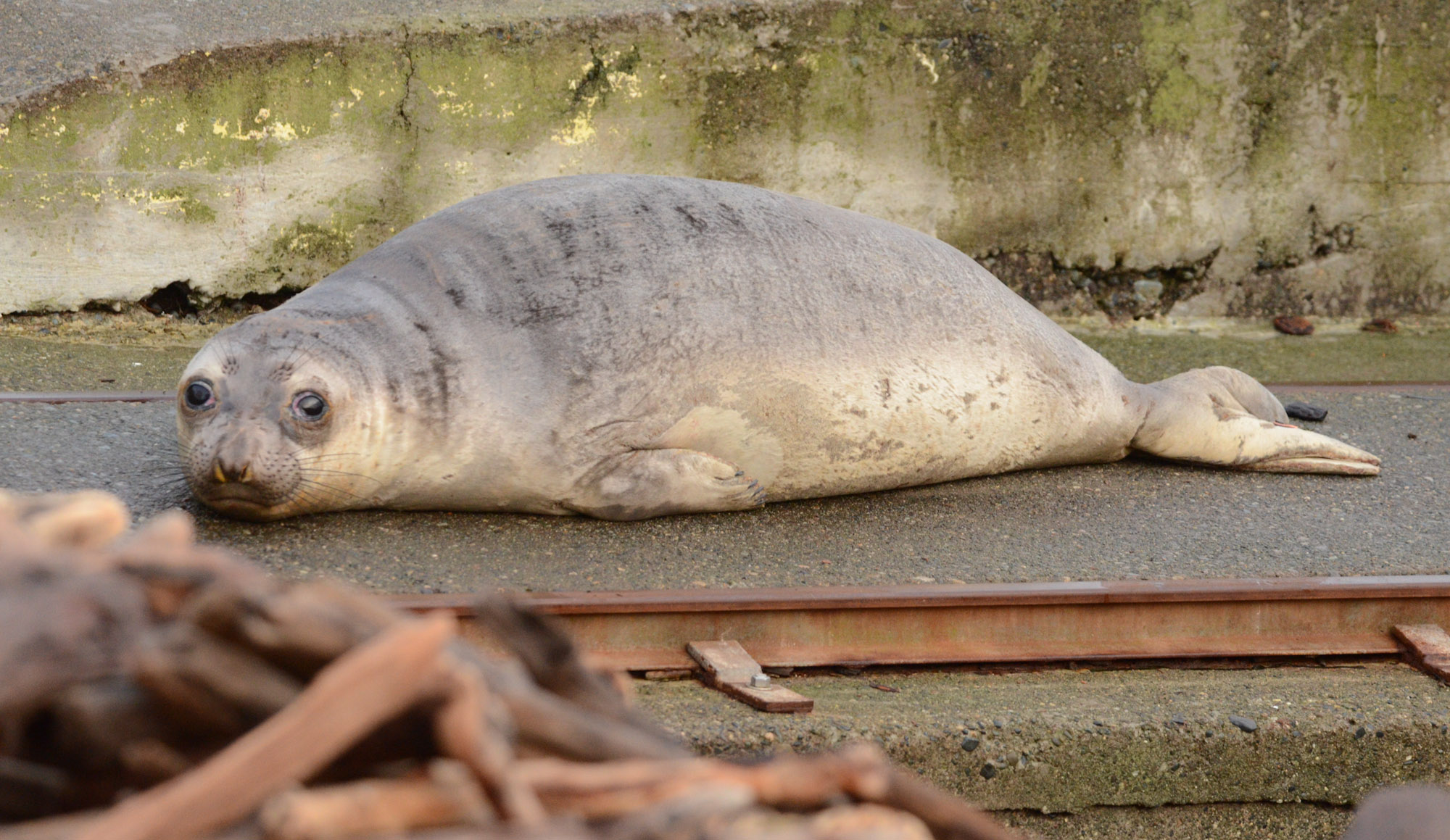
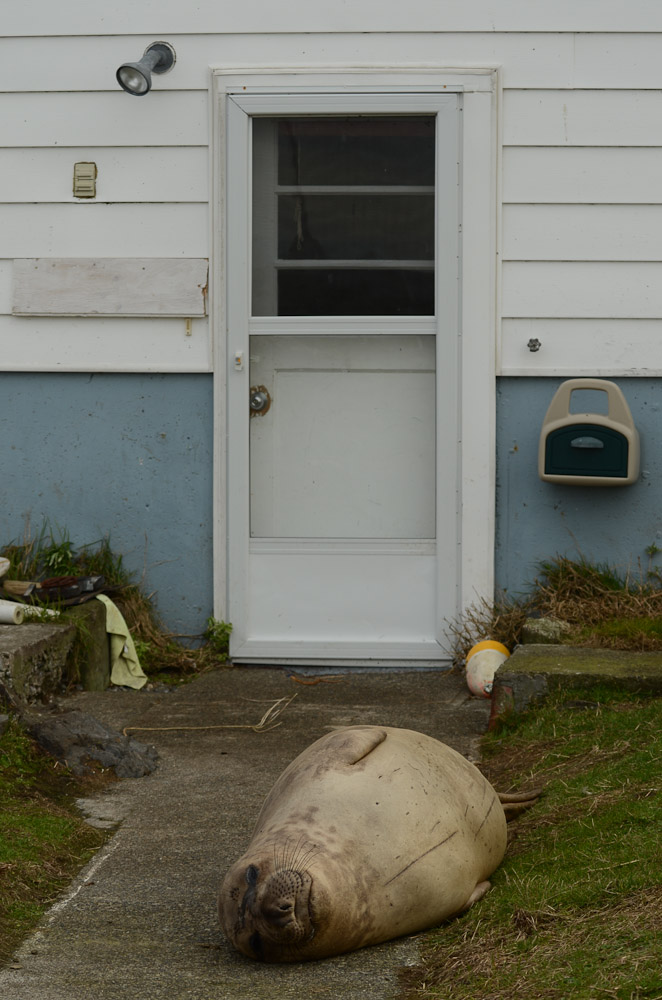
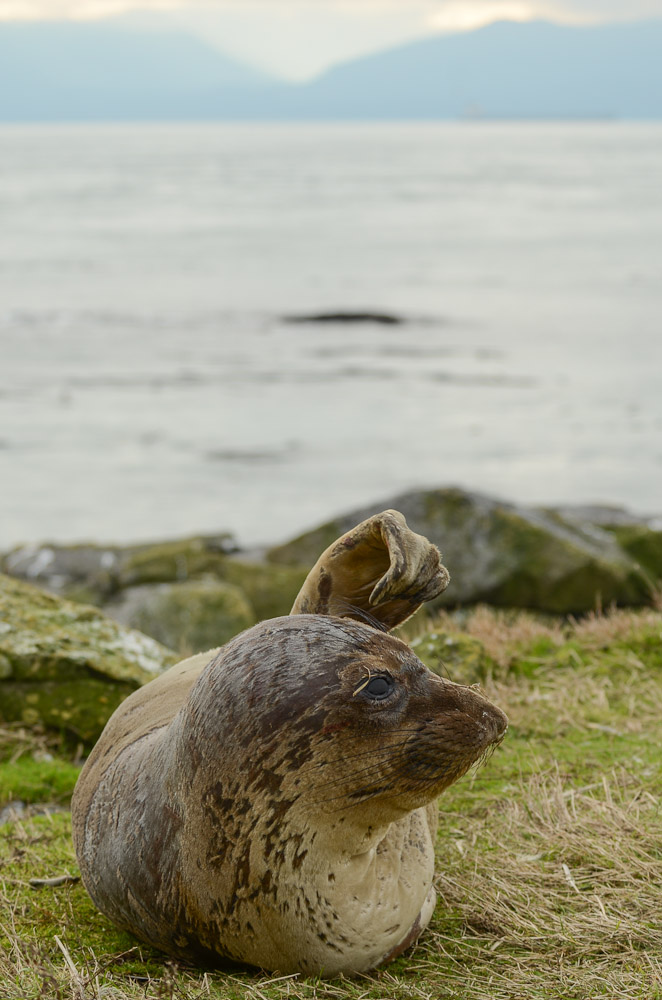
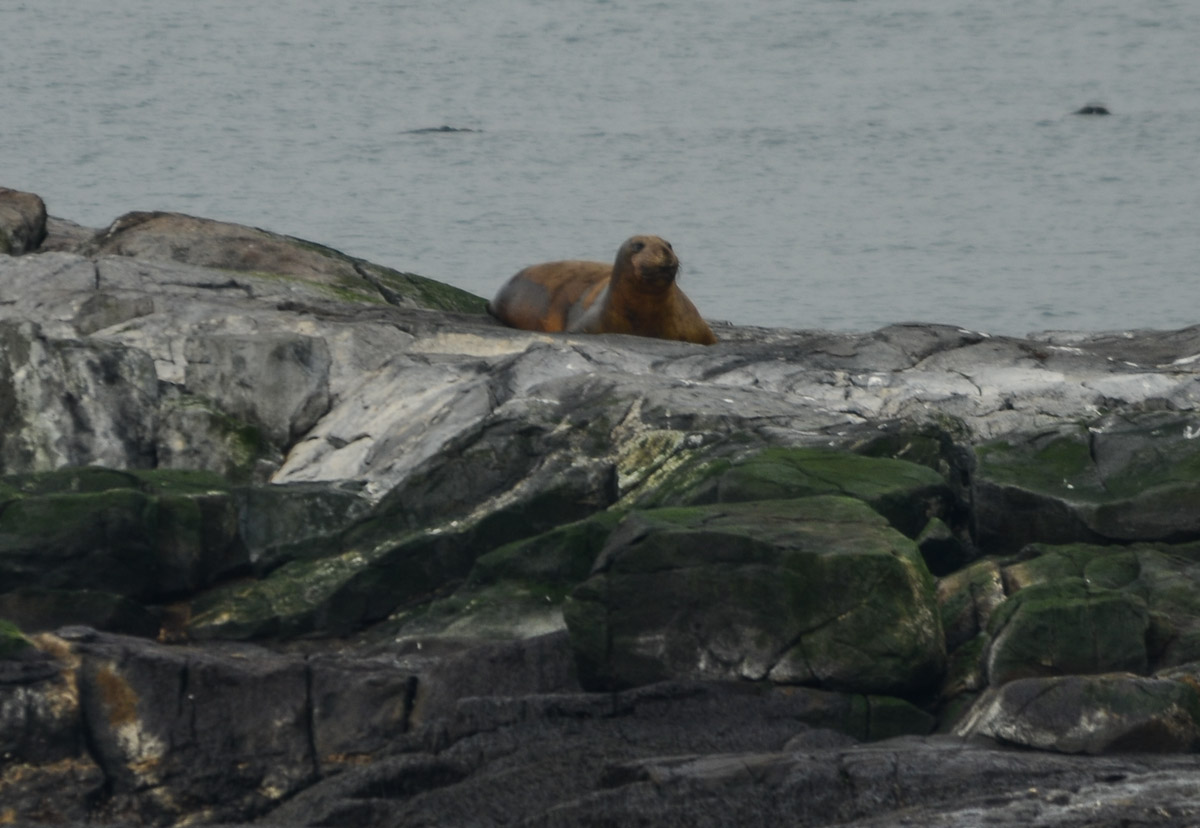
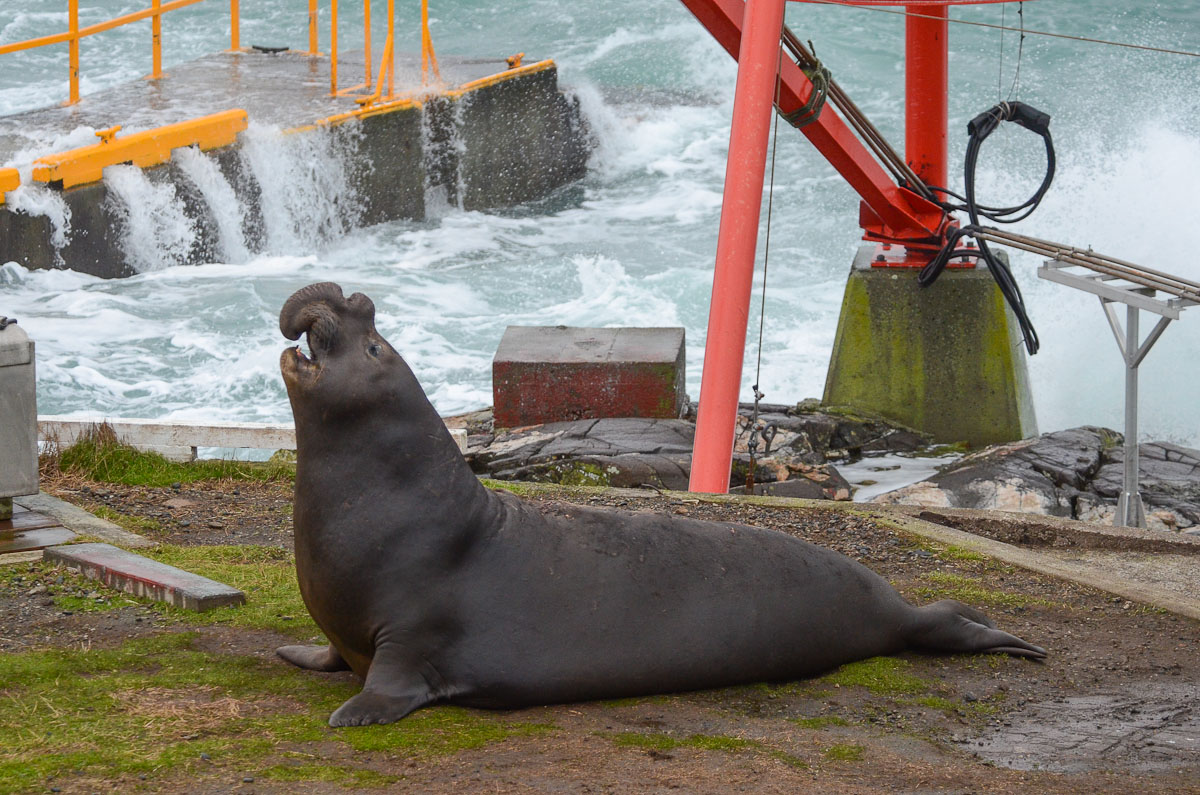
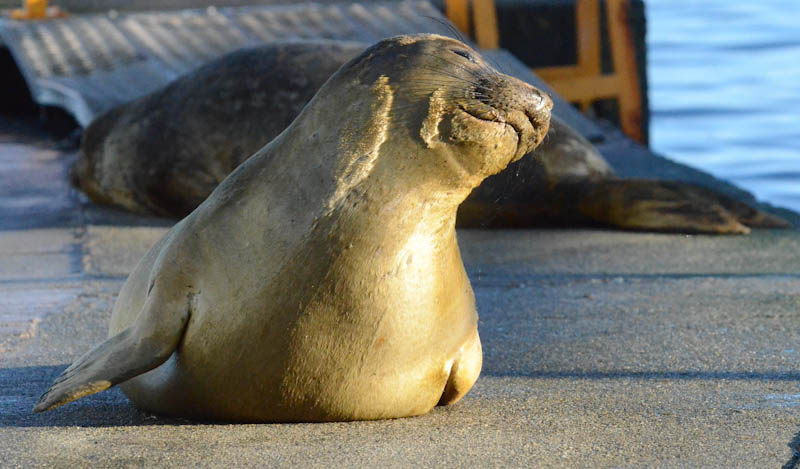
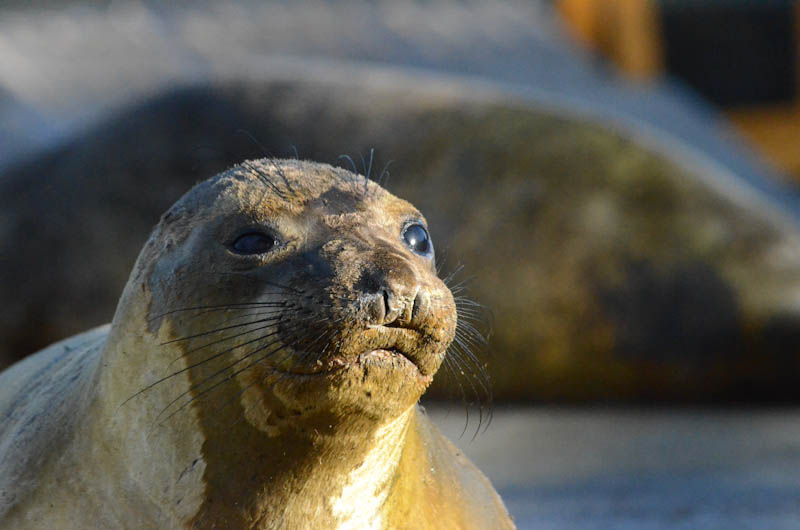
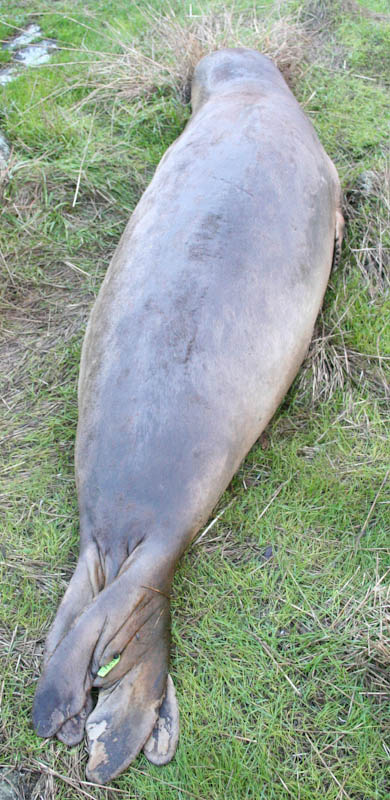
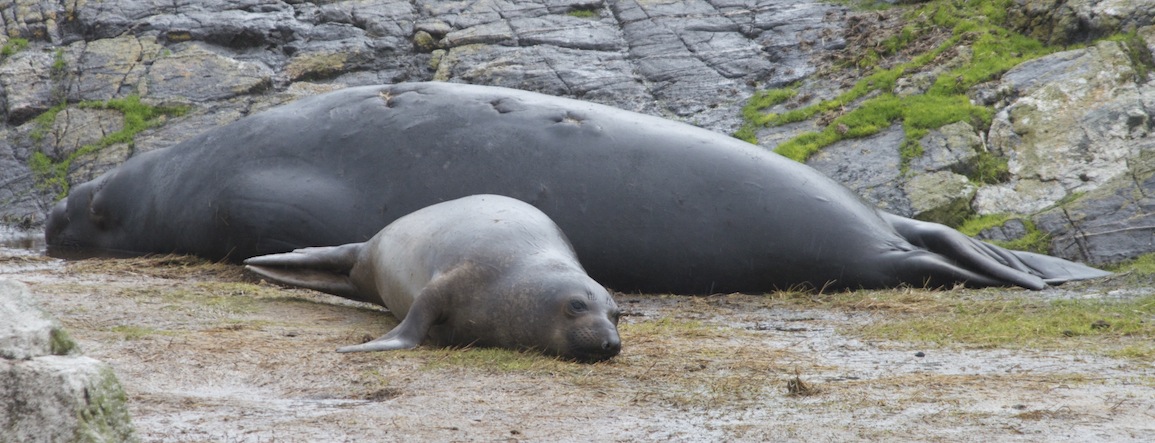
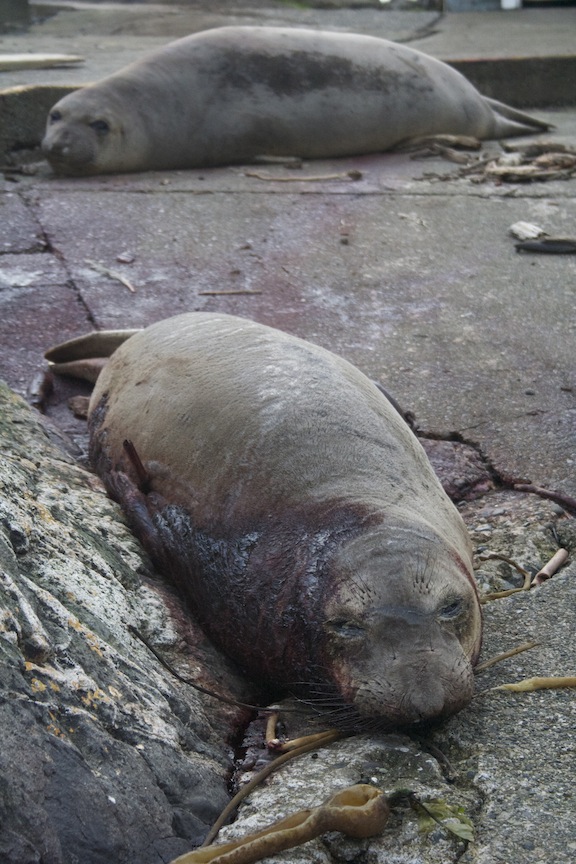
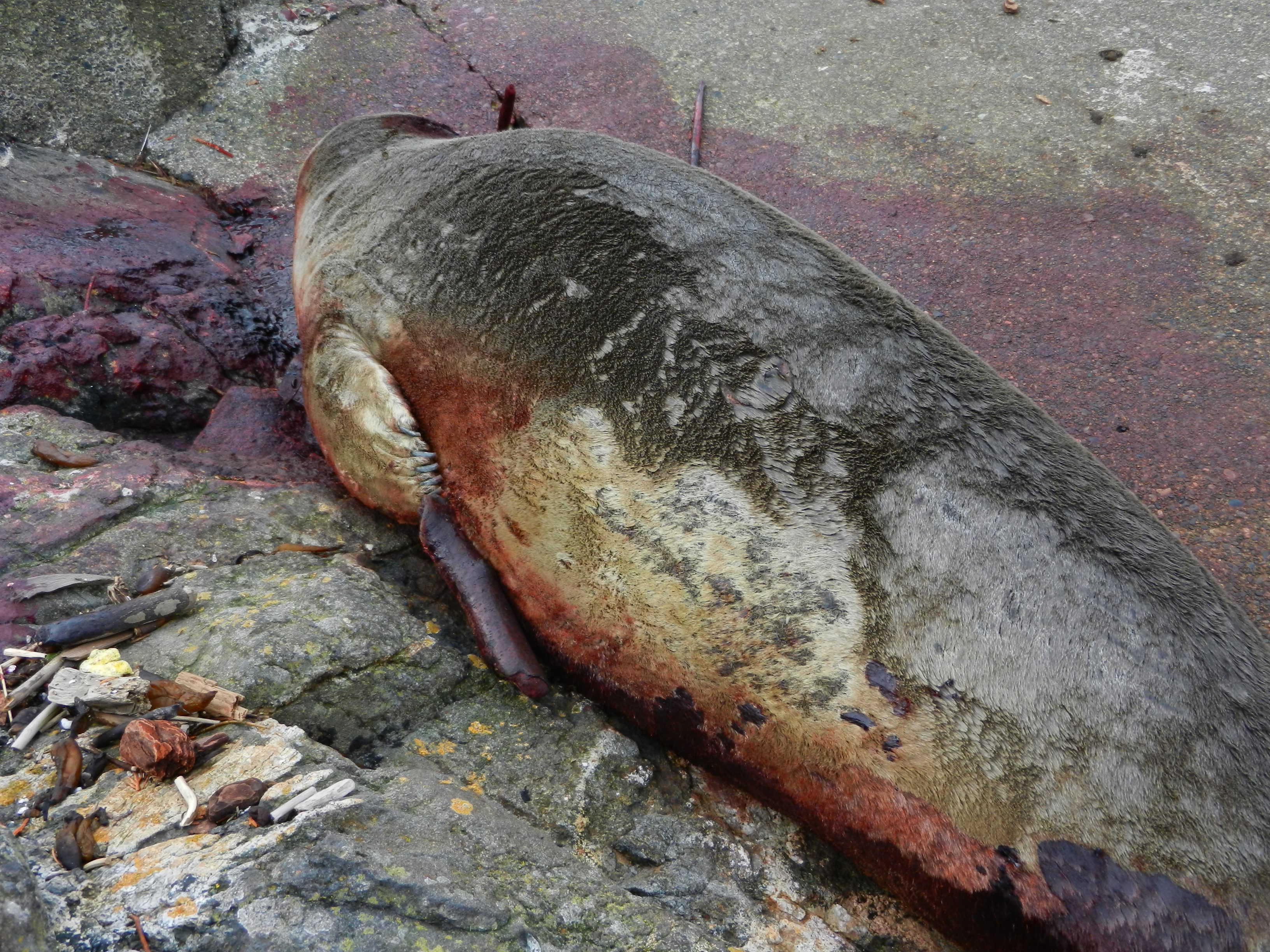
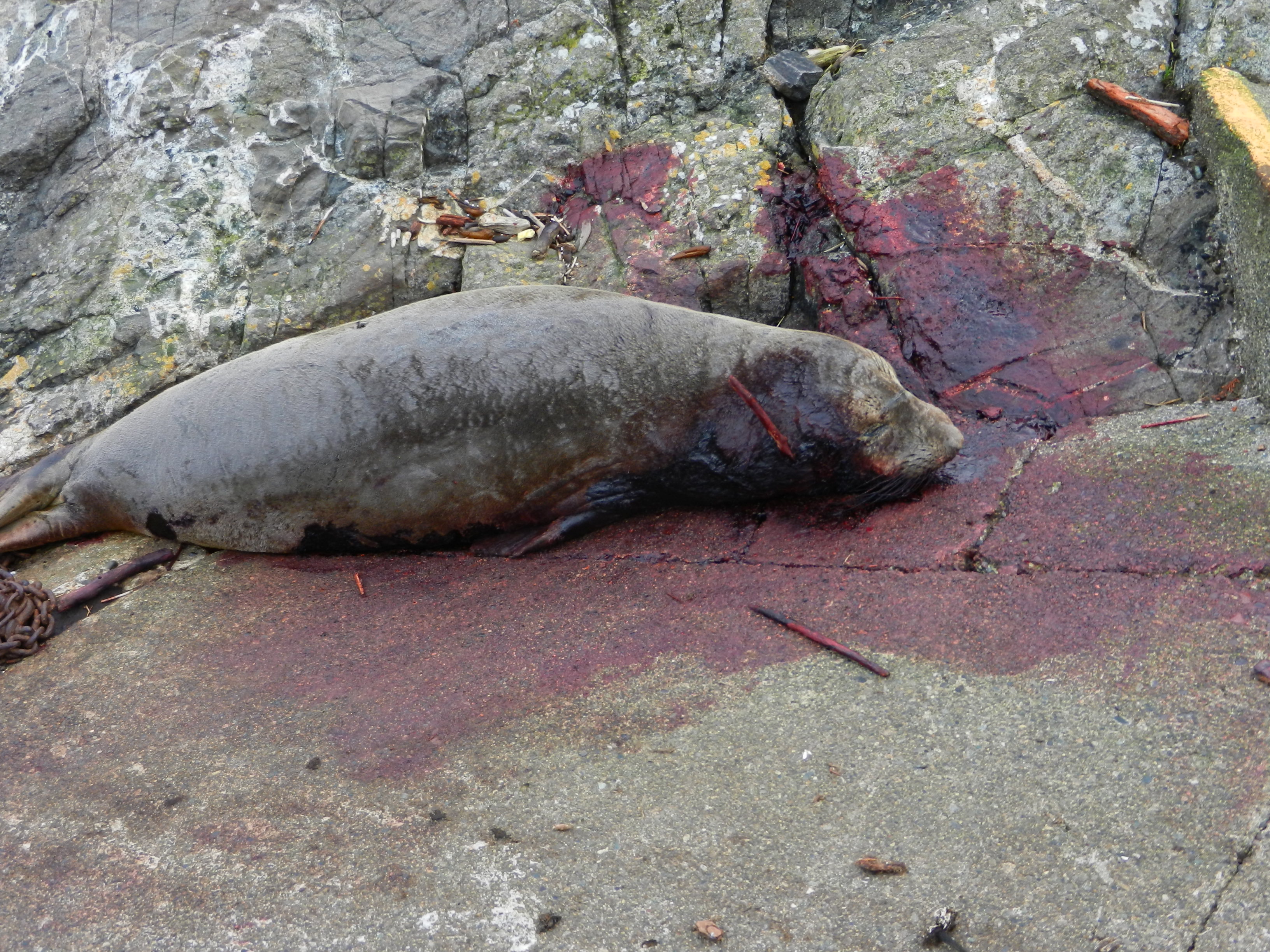
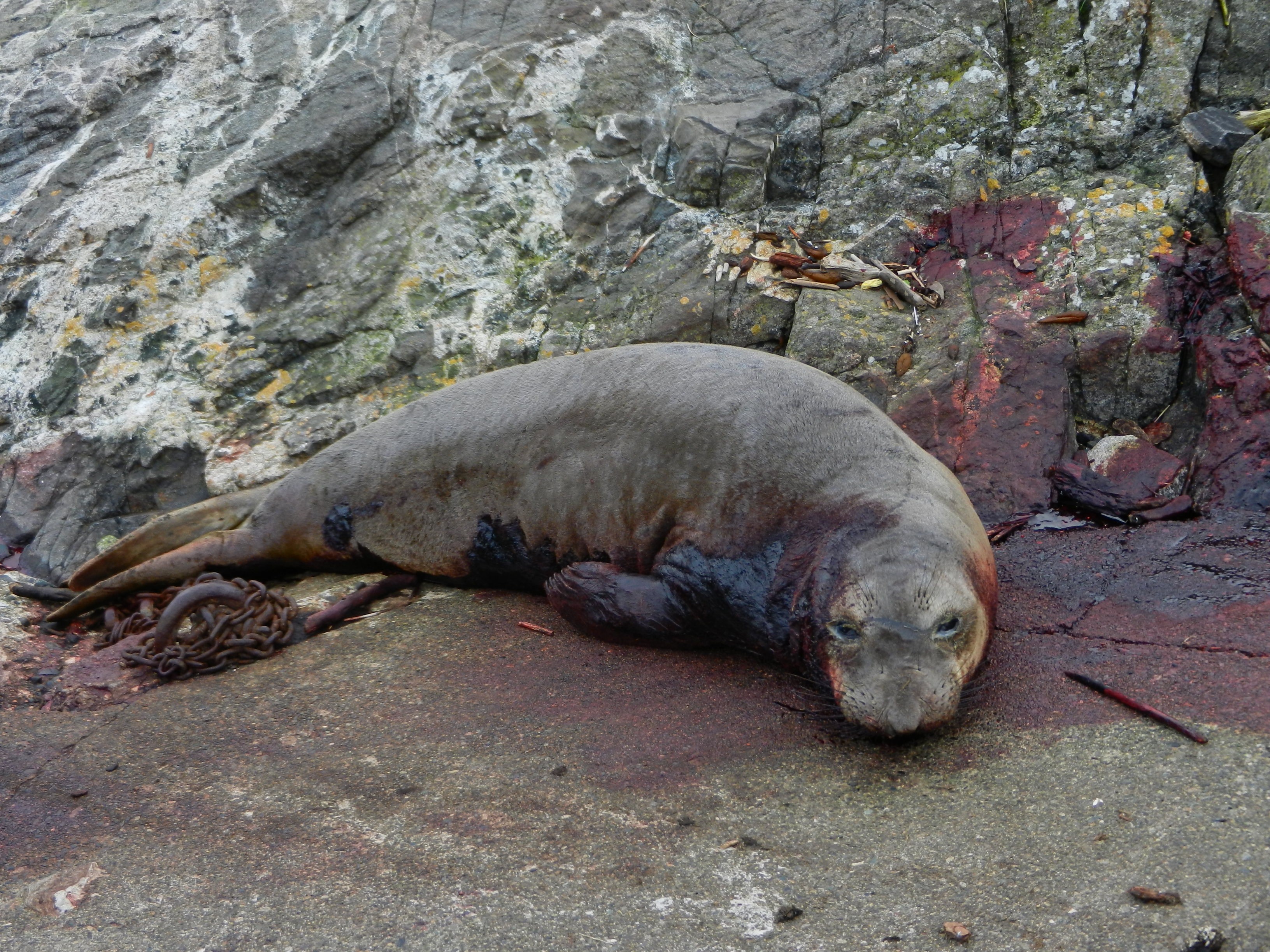
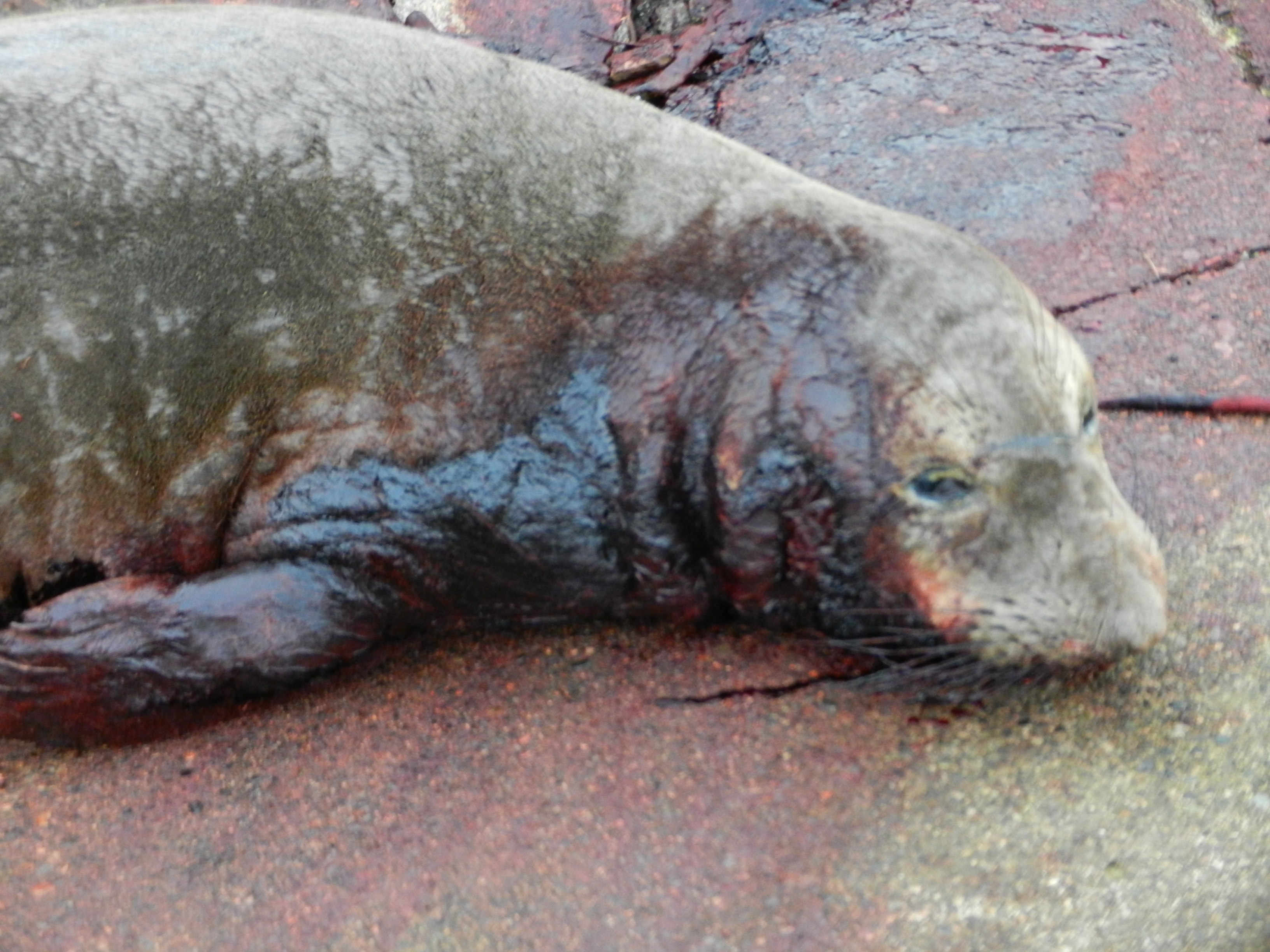
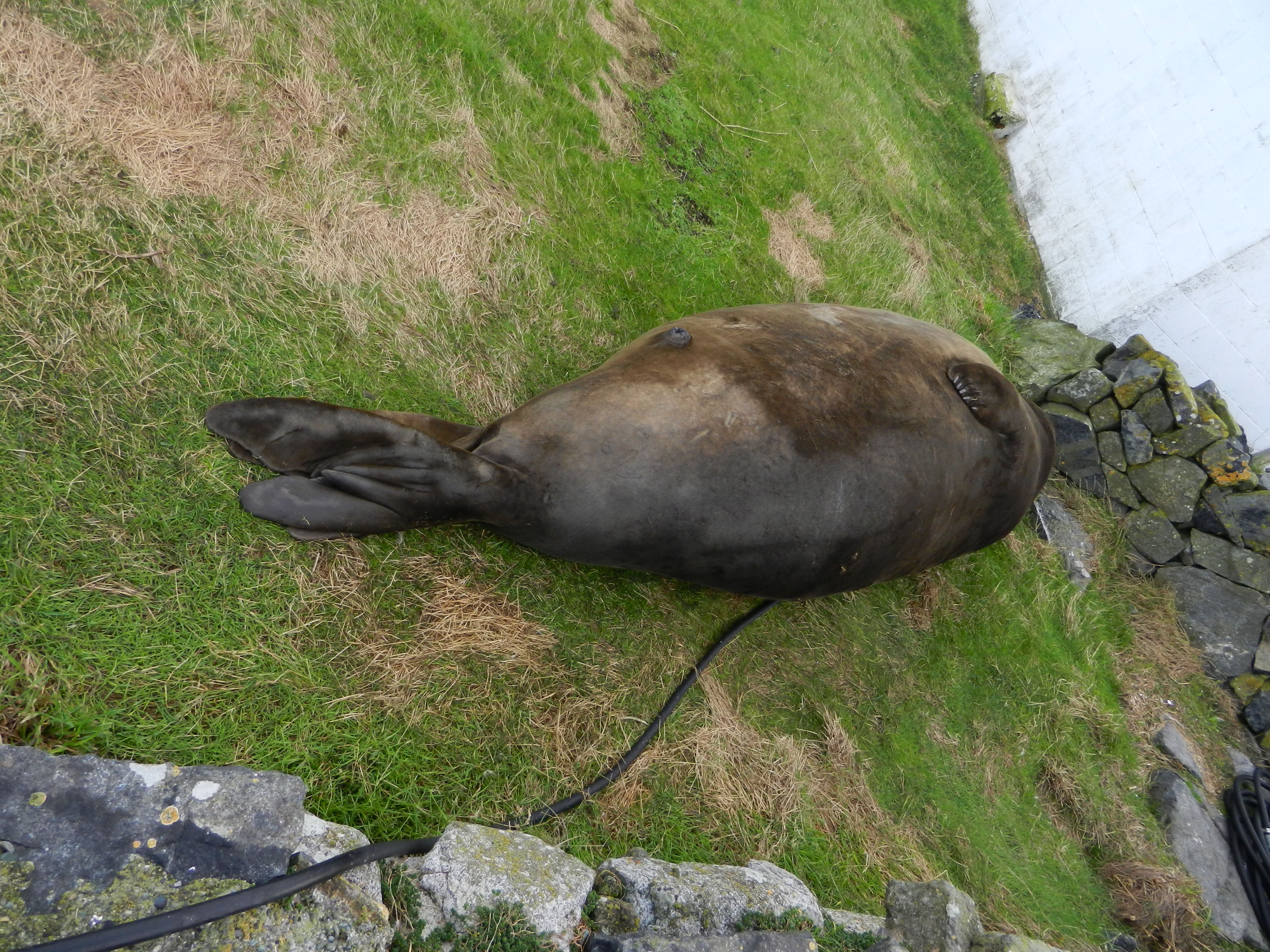
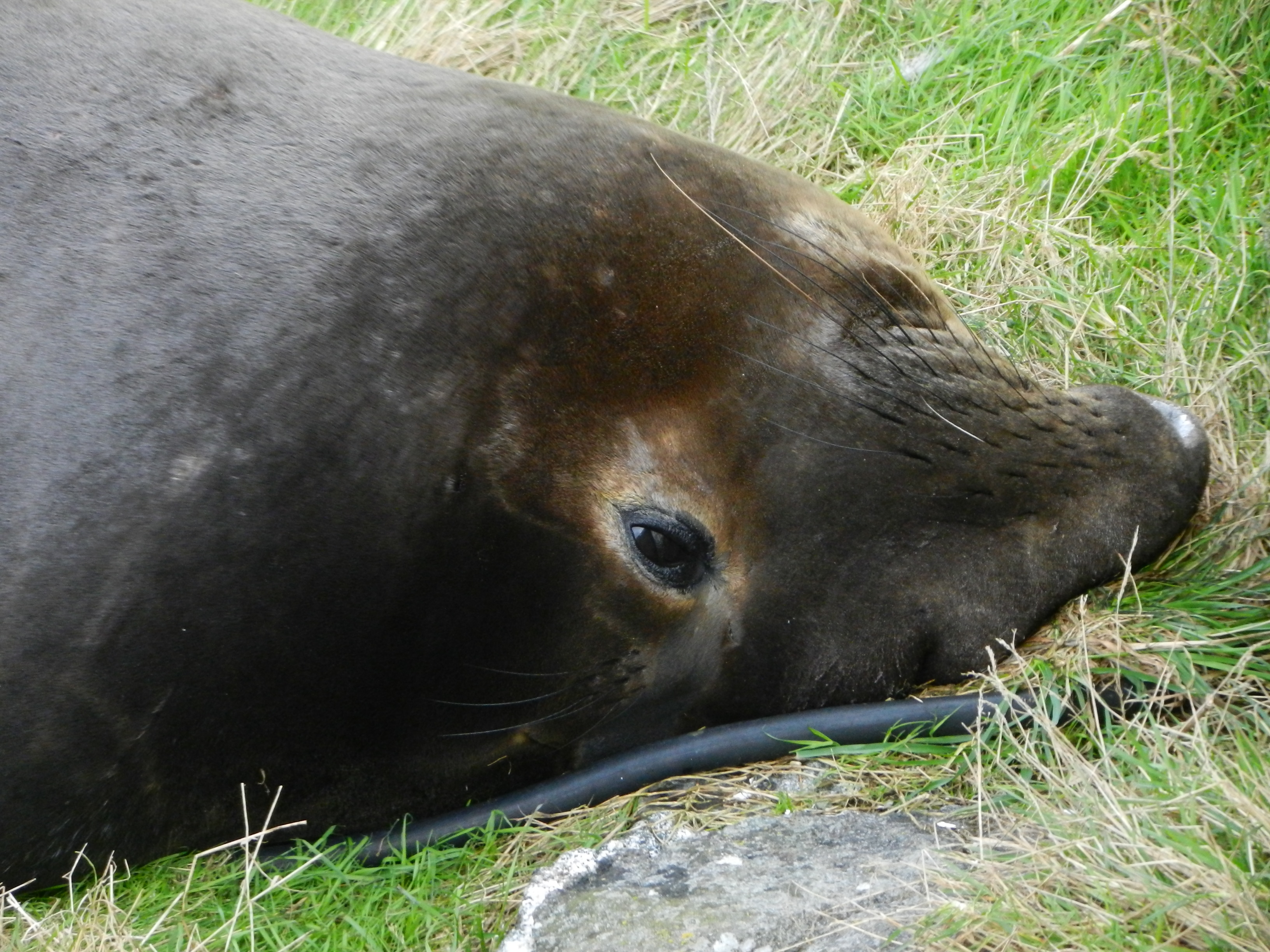
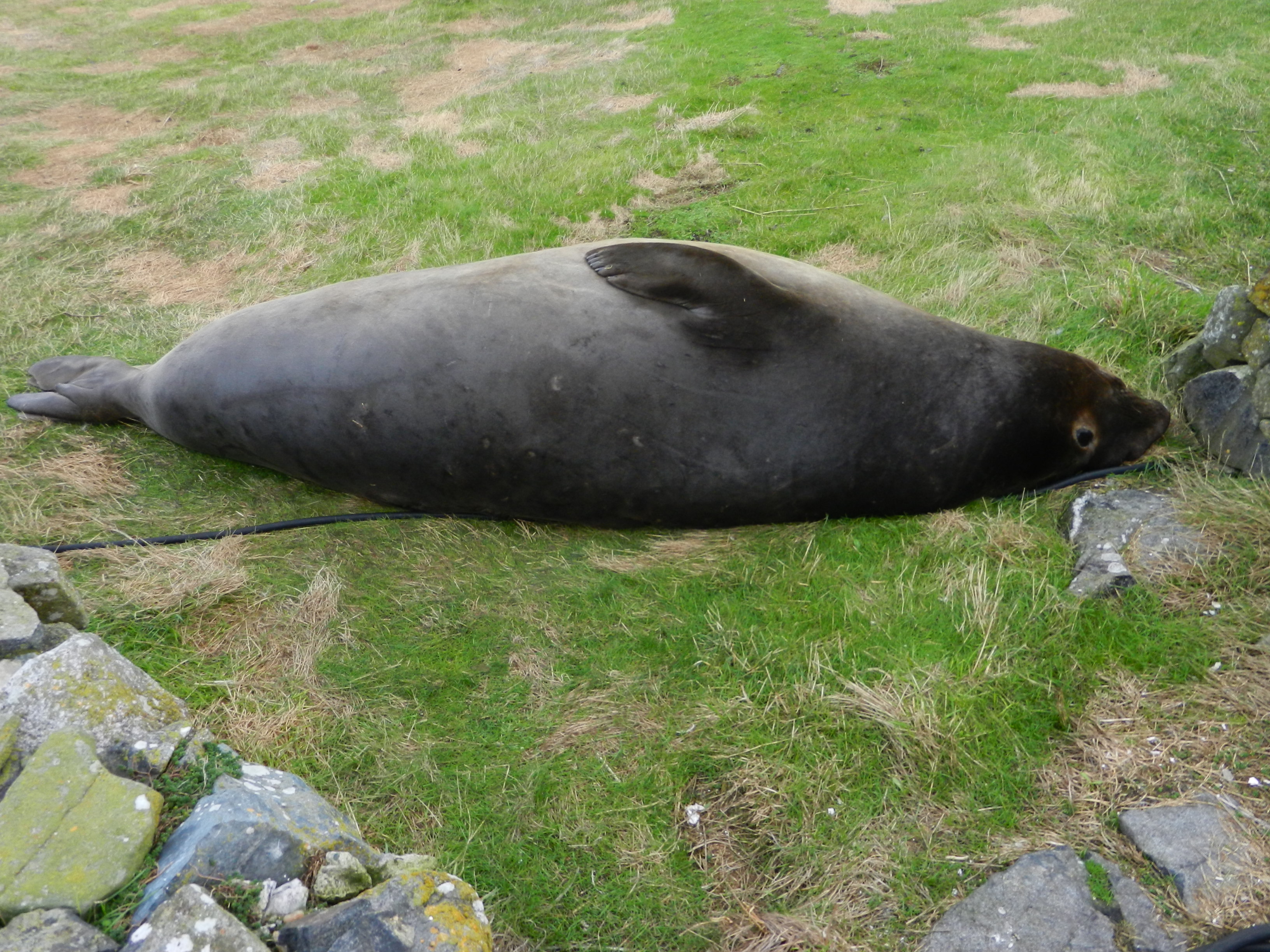
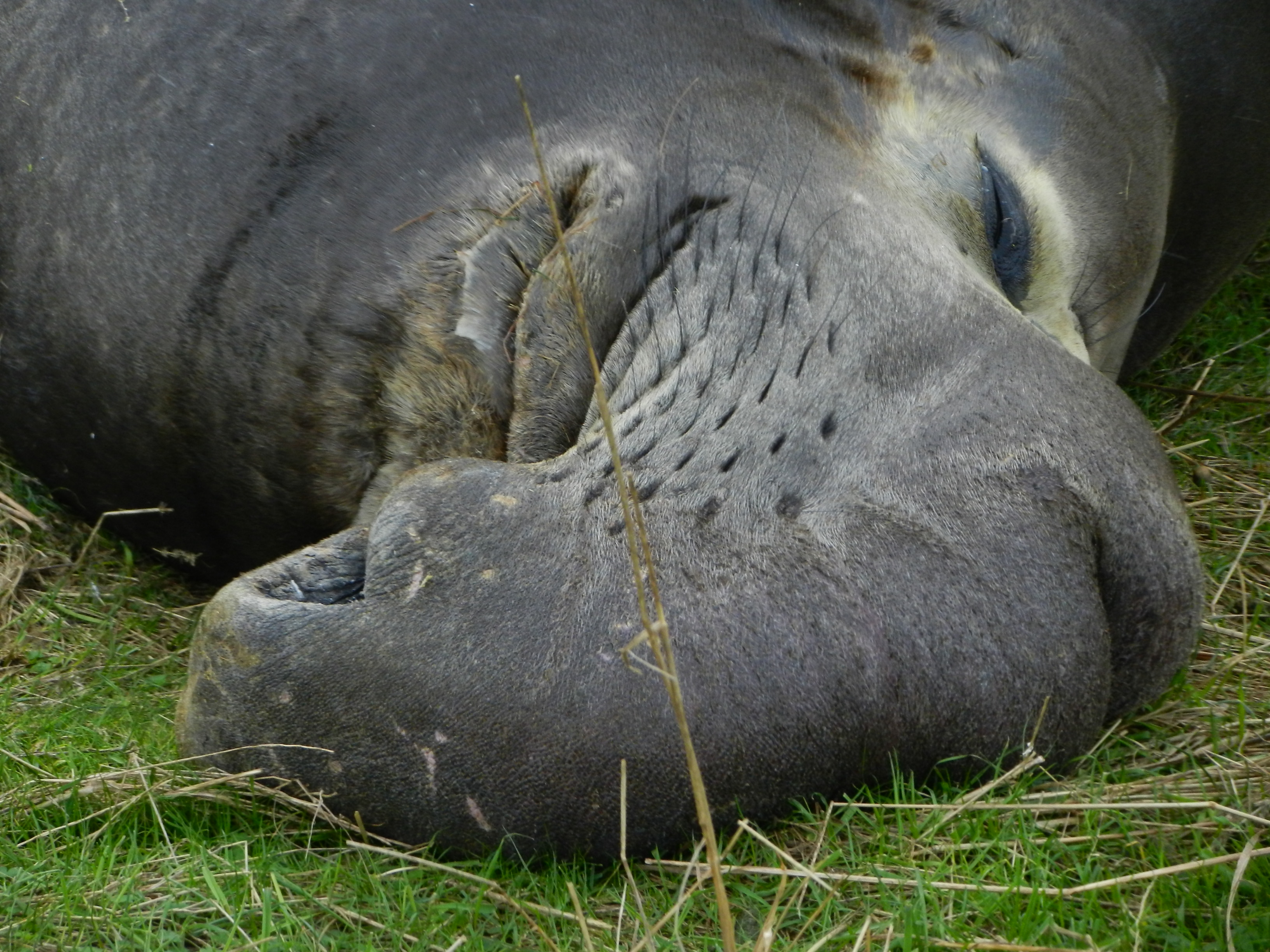
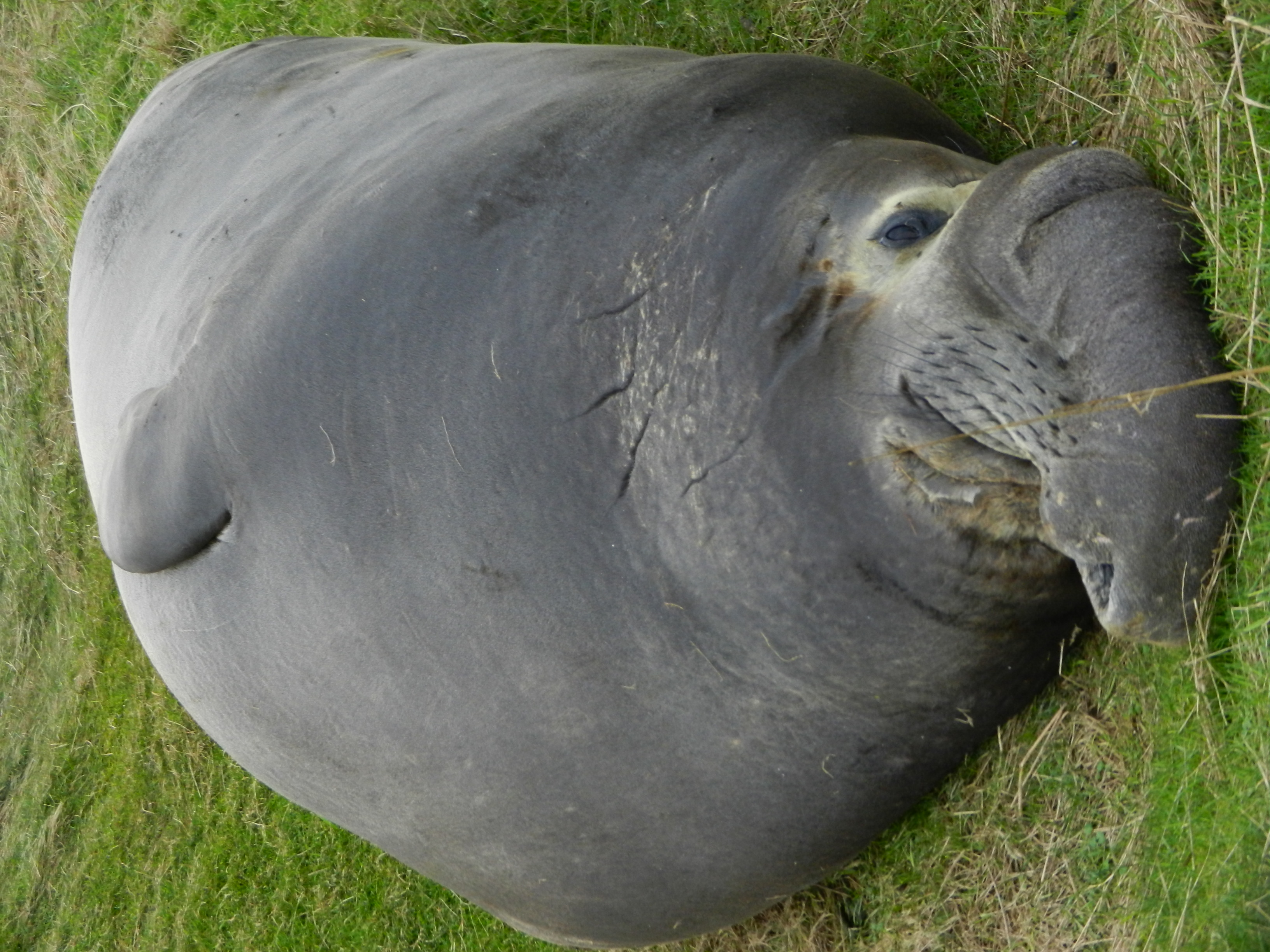
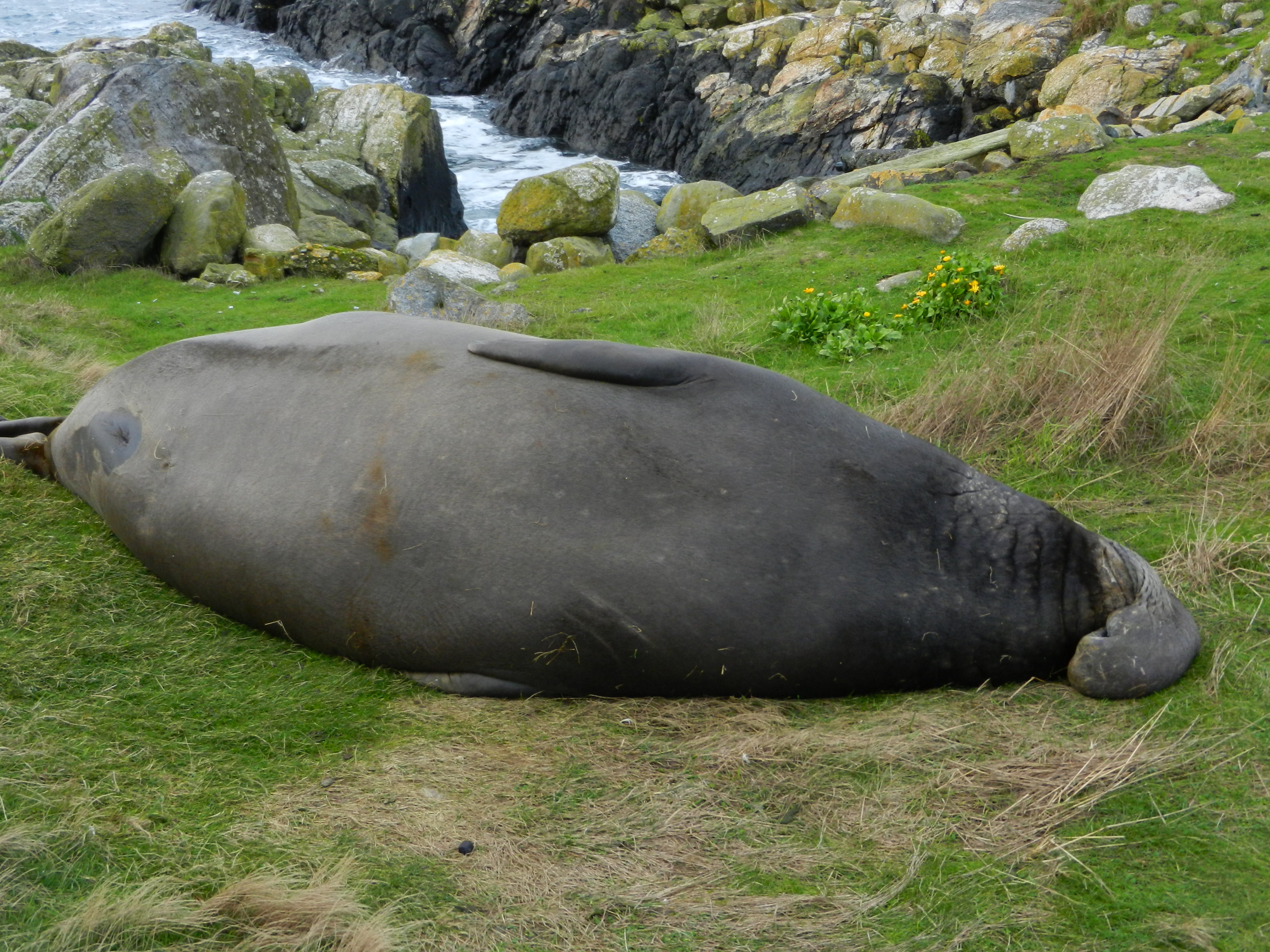
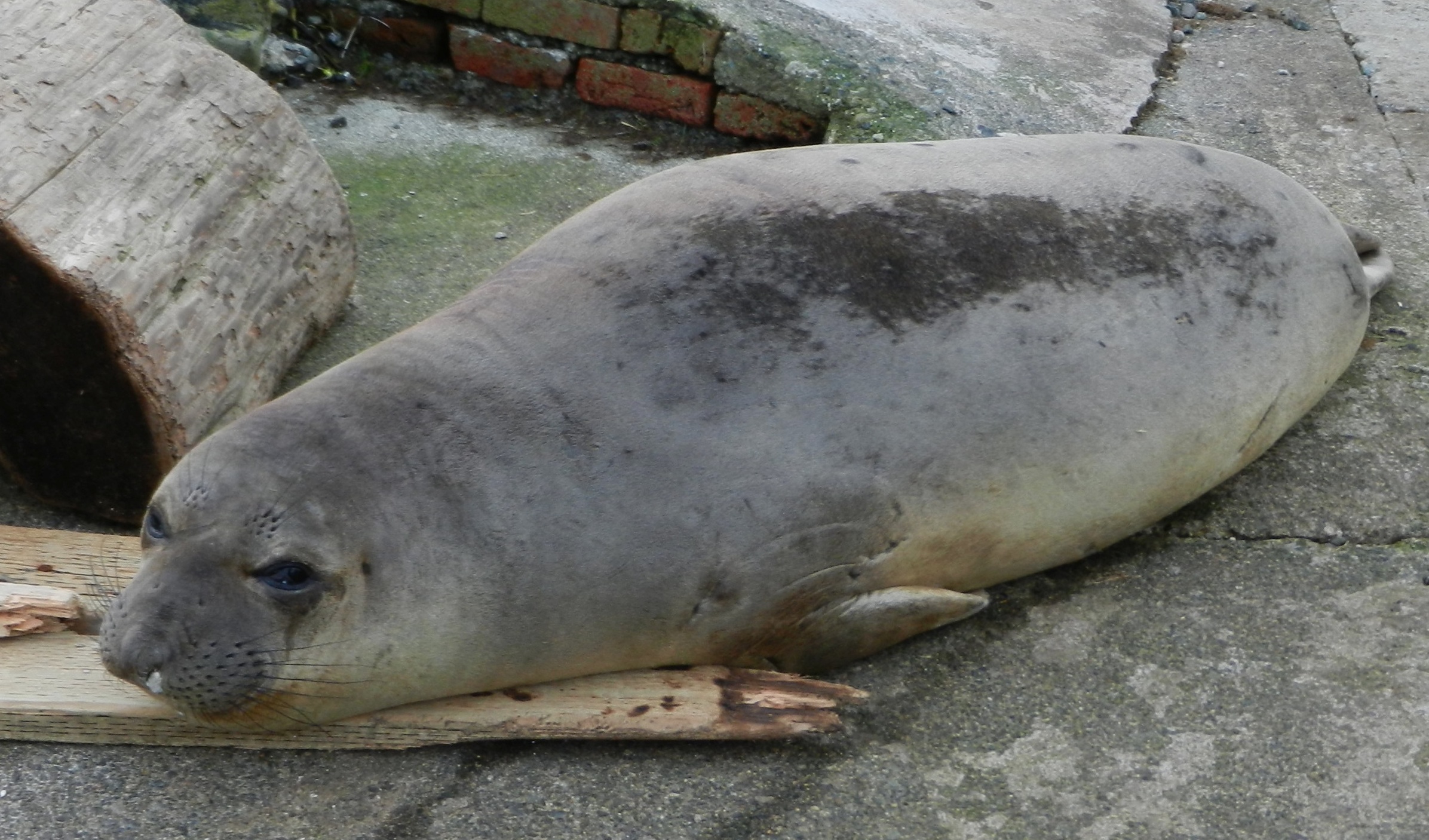
Animals have accidents just like we do. I happened to witness a tumble this morning when a lounging juvenile elephant seal lost its bearings and fell from the jetty. I was trying to photograph pigeon guillemots, sitting on the rocks across from the seal. When I saw it tumble I ran over and at first glance thought it was dead. It was stuck pretty good and having a tough time rolling over. After 30 seconds of struggle I used my boot to help steady it until it could roll over… I am sure it would have made it on its own but I couldn’t watch it suffer in the position it was in, and it was clearly in some distress. I normally let nature’s dramas play out on their own but the jetty is a man-made object and contributed to the seal’s predicament…. At the moment the unhappy little tyke is recovering in the water and looks like it will be OK, but it has to be hurting. I’ll monitor its recovery. Here are the pictures:

Such a lovely morning until


Such a lovely morning until-2Such a lovely morning until-3Such a lovely morning until-4Such a lovely morning until-5Such a lovely morning until-7

Bertha is Back

And more beautiful than ever!

Bertha and gang avoiding the strong Westerlies

Bertha and gang avoiding the strong Westerlies

Bertha's Scar

Bertha’s Scar

This morning 5 elephant seals were on the island, probably seeking some degree of shelter from the 35 knot Westerly wind that has been blowing all day. 4 are juveniles, but in the middle of the pile lies Bertha looking sleek and glossy-brown. She is easily identified by the large scar on her chest and her clouded left eye. Last year she arrived on Great Race on April 15th. I think she has been in the reserve for a little while now but I had not been able to identify her while she rested on Middle Rocks.


Biding their time...

Biding their time…


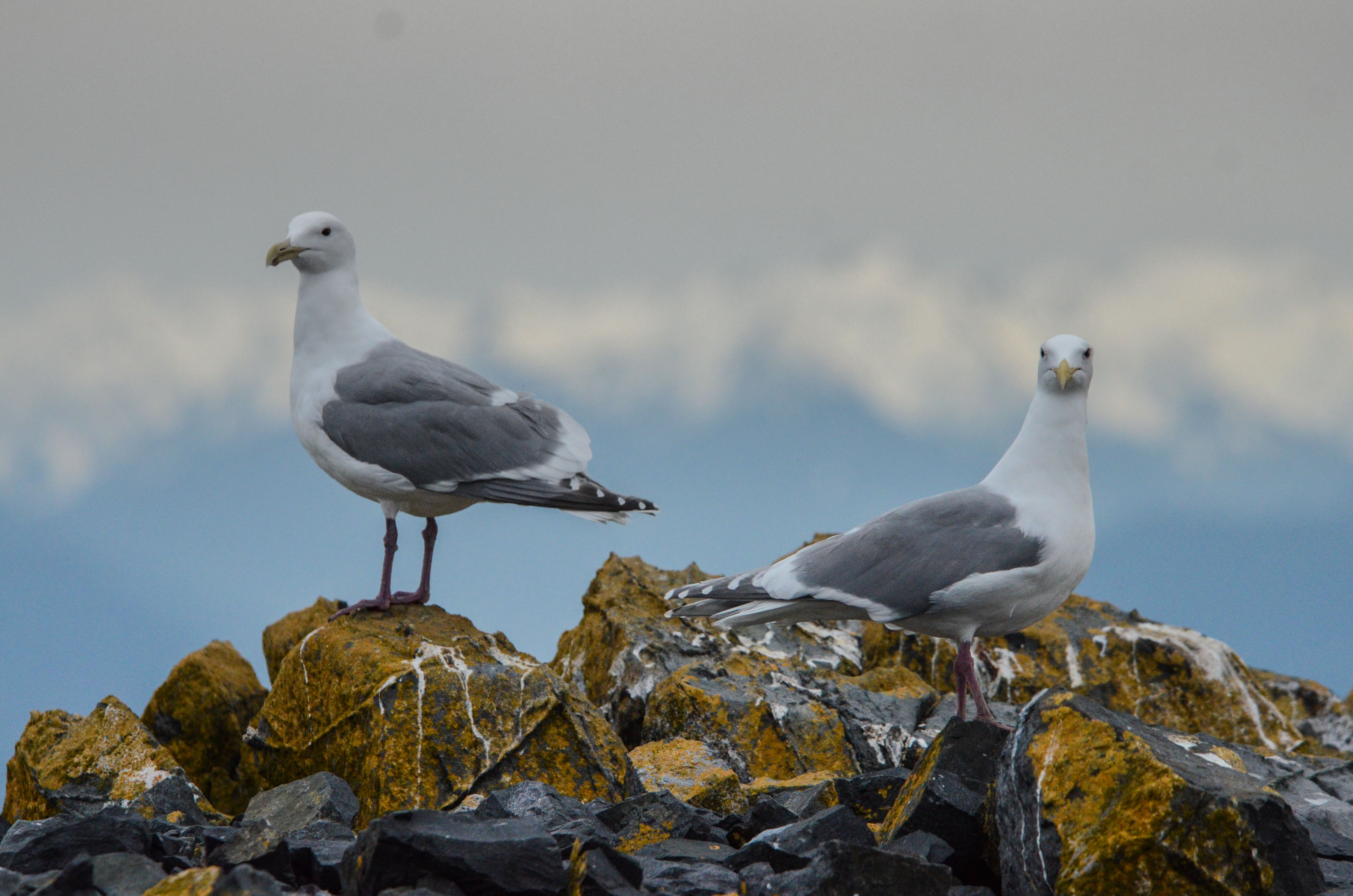
We appear to have about 300 Glaucous-winged Gulls on the island this spring. My estimate is that there are about 25% fewer individuals than last spring, when I counted about 200 breeding pairs. Other animals noted in the past few days have been several Dunlins, a small flock of Barn Swallows, a Whimbrel and what resembled a Solitary Sandpiper. I also saw for the first time a Mink (Mustela Vison) on Great Race; quite a swim for the little athlete!

Erik and I did an oil and filter change on the generator. Hopefully it will be the last one and we will soon be able to afford to install a wind generator to provide the last 20% of energy we require. We run the generator about 2.5 hours a day this time of year.

We had 3 groups of student this month, 2 roofers, 3 techs from Environment Canada, and several college staff. Tour boats and fisherfolk are being seen more regularly in the reserve as the nicer weather begins. We had to ask one group of fishers to pull their lines and leave the Reserve. Infractions are almost always due to ignorance and I am lobbying the government to post a few signs which, unattractive as they may be, could go a long way towards ameliorating those infractions.

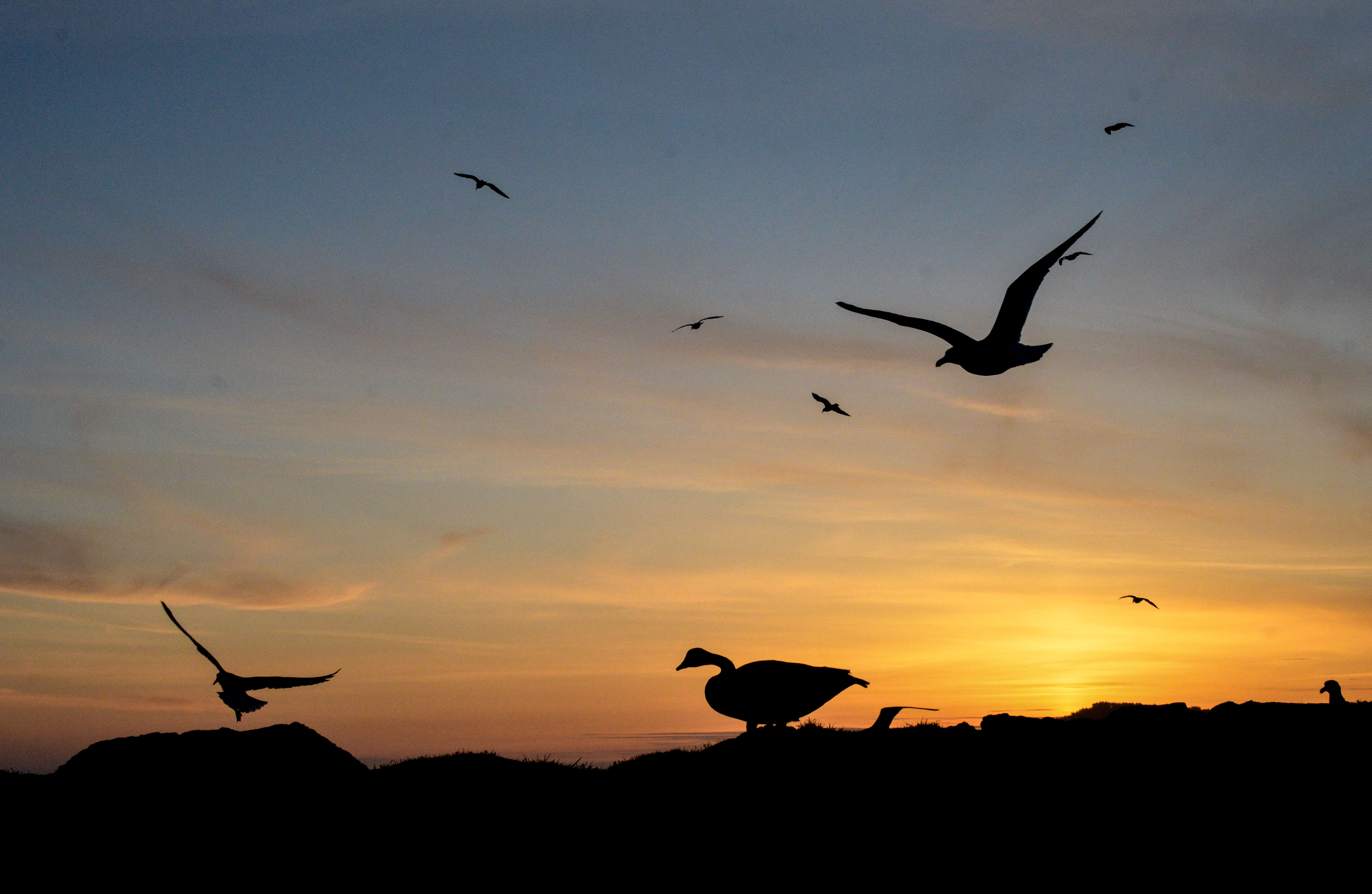
Birdyfull Sunset

Birdyfull Sunset

Unsettled Weather

The last few days have seen many extremes in weather, from 50 knot Westerlies with hail to gorgeous, clear, sunny and warm afternoons. I enjoy watching the squall fronts marching up the Juan de Fuca Strait, passing over me, and then moving on to affect Victoria.

Stunning cloudscapes
Race Rocks Tidal Rips

We were visited by a red-tailed hawk a few days ago. I didn’t observe it preying upon anything; the gulls are a bit too big for it to take on I think….

Hawk landing on the Anemometer
Hawk perched on the Anemometer

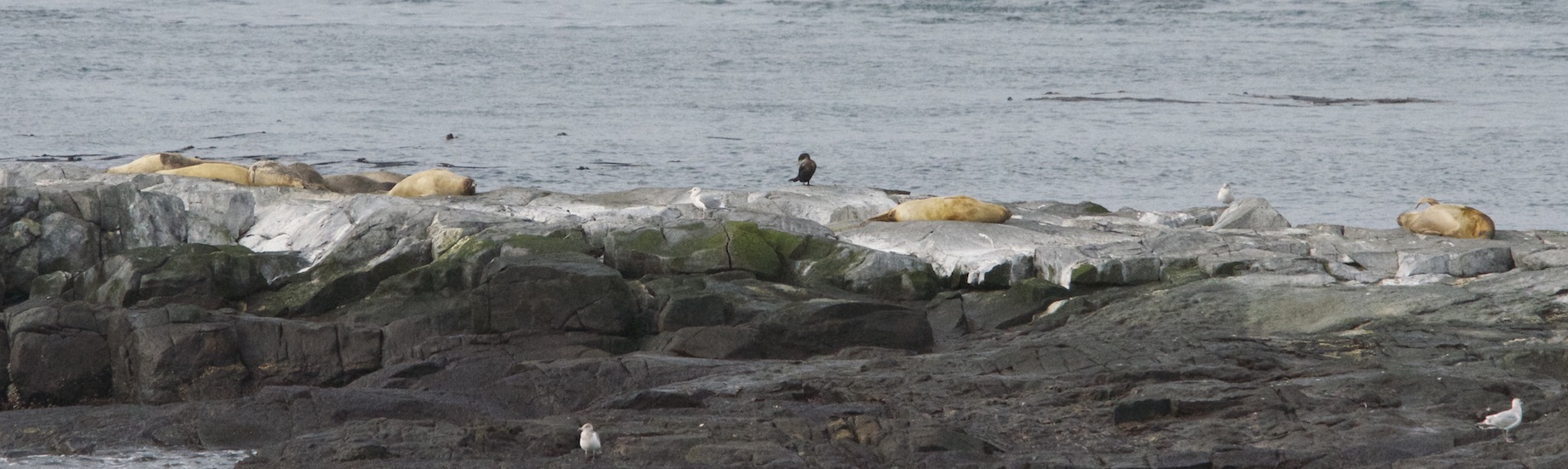
There are about 15 Elephant Seals in the reserve at this time, mostly juveniles. 3 of them are using Great Race as their haul-out while the others are on Middle Rock and can be observed using the live webcams: http://www.racerocks.com/racerock/video1.htm

3 Juvenile E-seals April 2013 including Tag 5086,  a visitor from last spring.
3 Juvenile E-seals April 2013 including Tag 5086, a visitor from last spring.


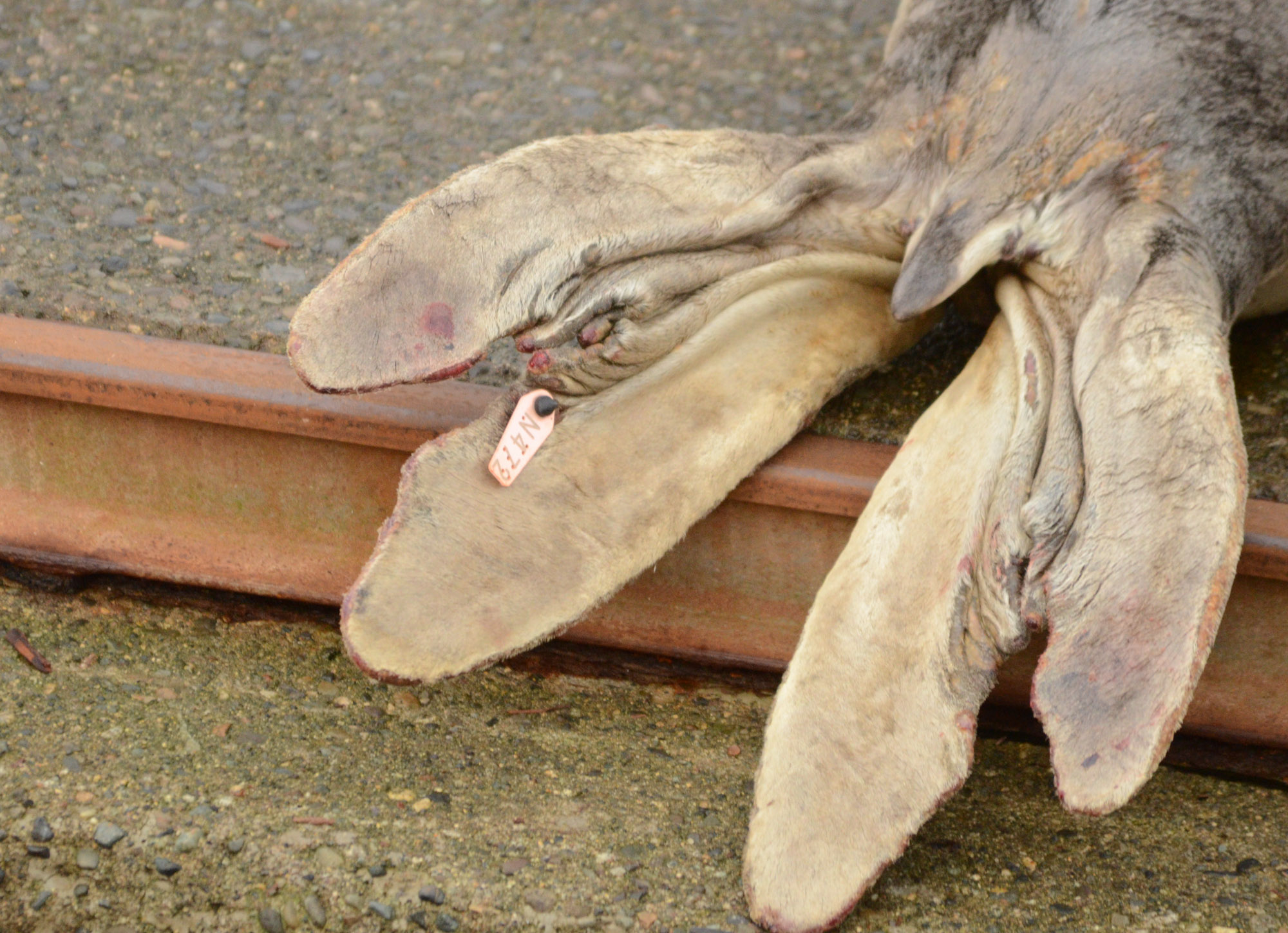
Tagged Pink N472

This female elephant seal showed up on the ramp on Jan 23rd with pink tag N472.  I dont recall seeing her here before.  She wasnt very comfortable with people and left when we took a sea water sample.  She showed up again in the rocky bay on the south side of the island and stayed there for a few days before leaving again, havent seen her since so we are back to 0 females visible in the reserve.

esealpinktagN472 pinkN472

Female Elephant Seals

The elephant seal population has been steadily declining over the past few weeks.  For the last few days since Jan 19 there have not been any female elephant seals visible in the reserve.  This is the time when elephant seal pups have been born out here in the past so it is somewhat surprising and a bit disappointing.  Both male elephant seals have been back and forth between the main island and West rock and have been chasing and trying to mount the few small females that have been around, which is likely why they have all left.

Guard seal

Guard seal

Small e- seal moulting

Small e- seal moulting

Large female elephant seal on Middle rock .. possibly Bertha?

Large female elephant seal on Middle rock .. possibly Bertha?

Weather past week

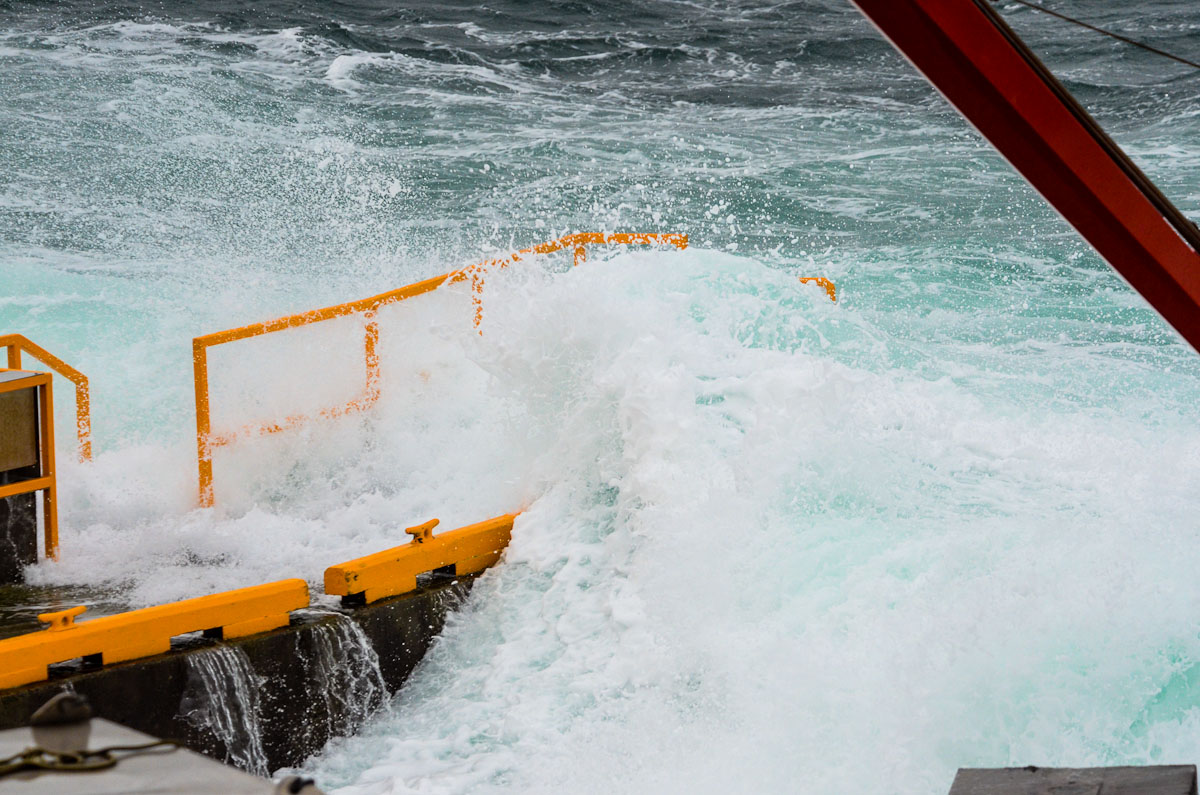
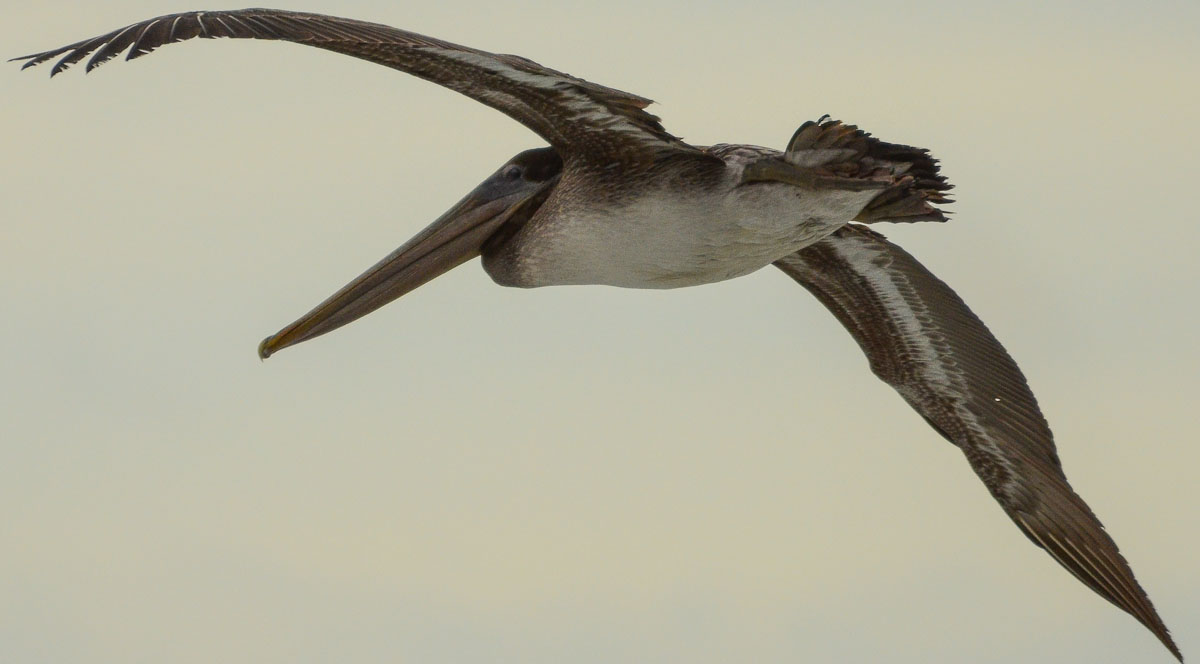
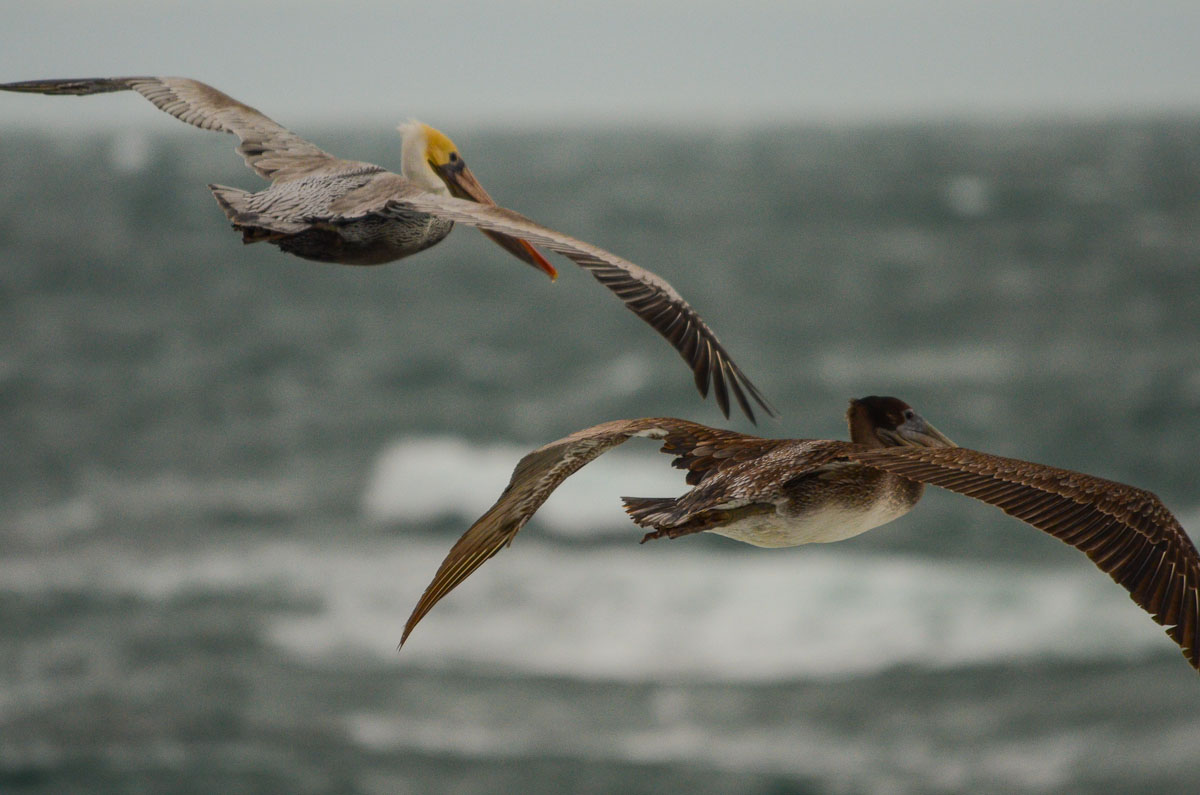
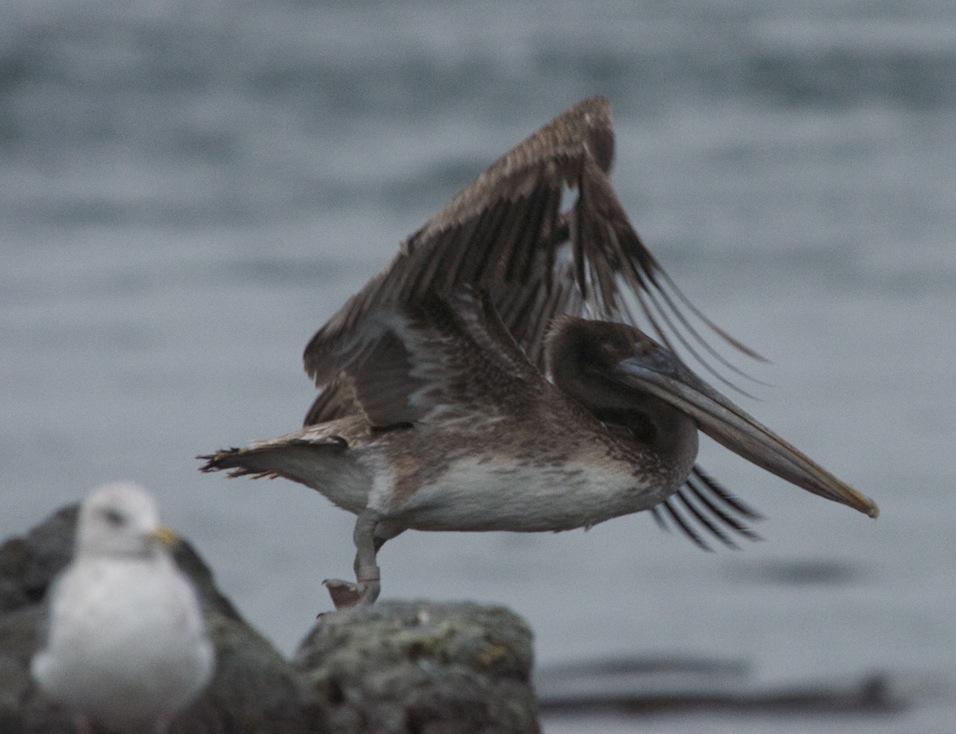
On Dec 25th Easterly winds were gusting over 40 knots pushing swells into and over the jetty.  Zeke is seen below just above the jetty near the crane pad. The Pelicans pictured below were hovering in winds around 30 knots.

Since Dec 25th atmospheric pressure has climbed steadily reaching a high point of 1030 hPa yesterday, Jan 1.  For the past several days we have had sustained NE winds between 10 and 20 knots which demonstrates the potential for harnessing wind energy at Race Rocks, particularly in the winter months when there is less solar radiation to charge the batteries.  Pearson College is in the process of sourcing a wind generator for the island with the goal of further reducing and eventually eliminating dependance on fossil fuel electric generation in the Ecological Reserve.


Dec 24th

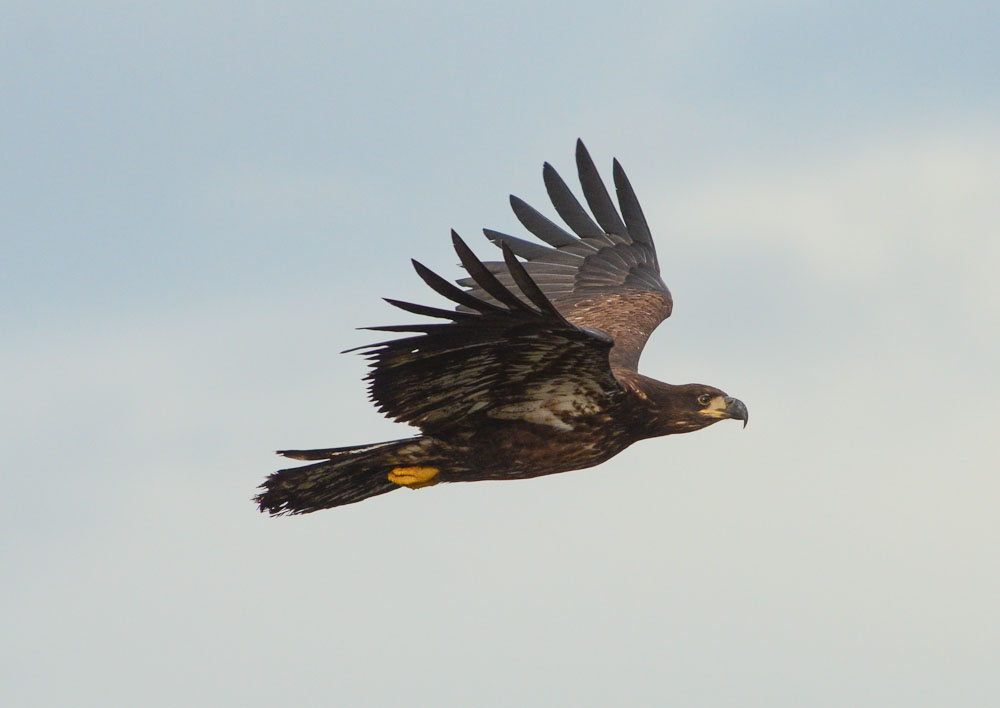
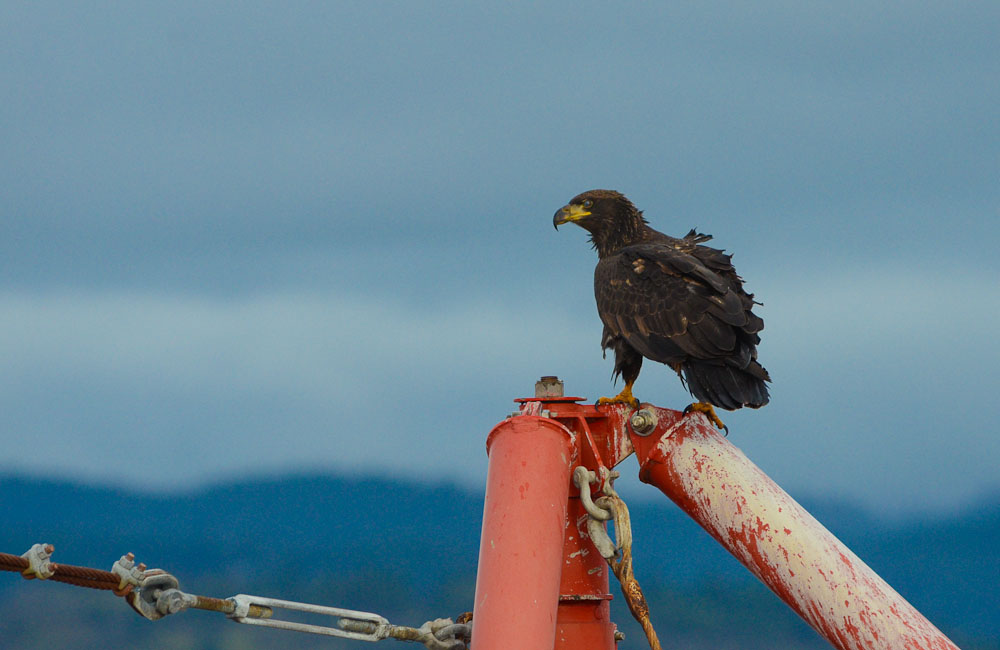
Have had some really nice weather out here since the storm. Pelicans are still stopping in and flying through the reserve, mostly in pairs or singles.  Bald Eagles have been quite active in the mornings hunting.


On top of the crane, the eagle had just finished eating what looked like some part of a seagull.  In this picture the eagle’s nictitating membrane is covering the eye.  According to Baldeagleinfo.com, “every three or four seconds, the nictitating membrane slides across the eye from front to back, wiping dirt and dust from the cornea. Because the membrane is translucent, the eagle can see even while it is over the eye.”

A few nights ago Zeke got some fresh wounds on his back from Misery, it was not as bad as the the last time.  Him and Misery have been on the main island for several days now. I have not been seeing as many female elephant seals since the storm.  

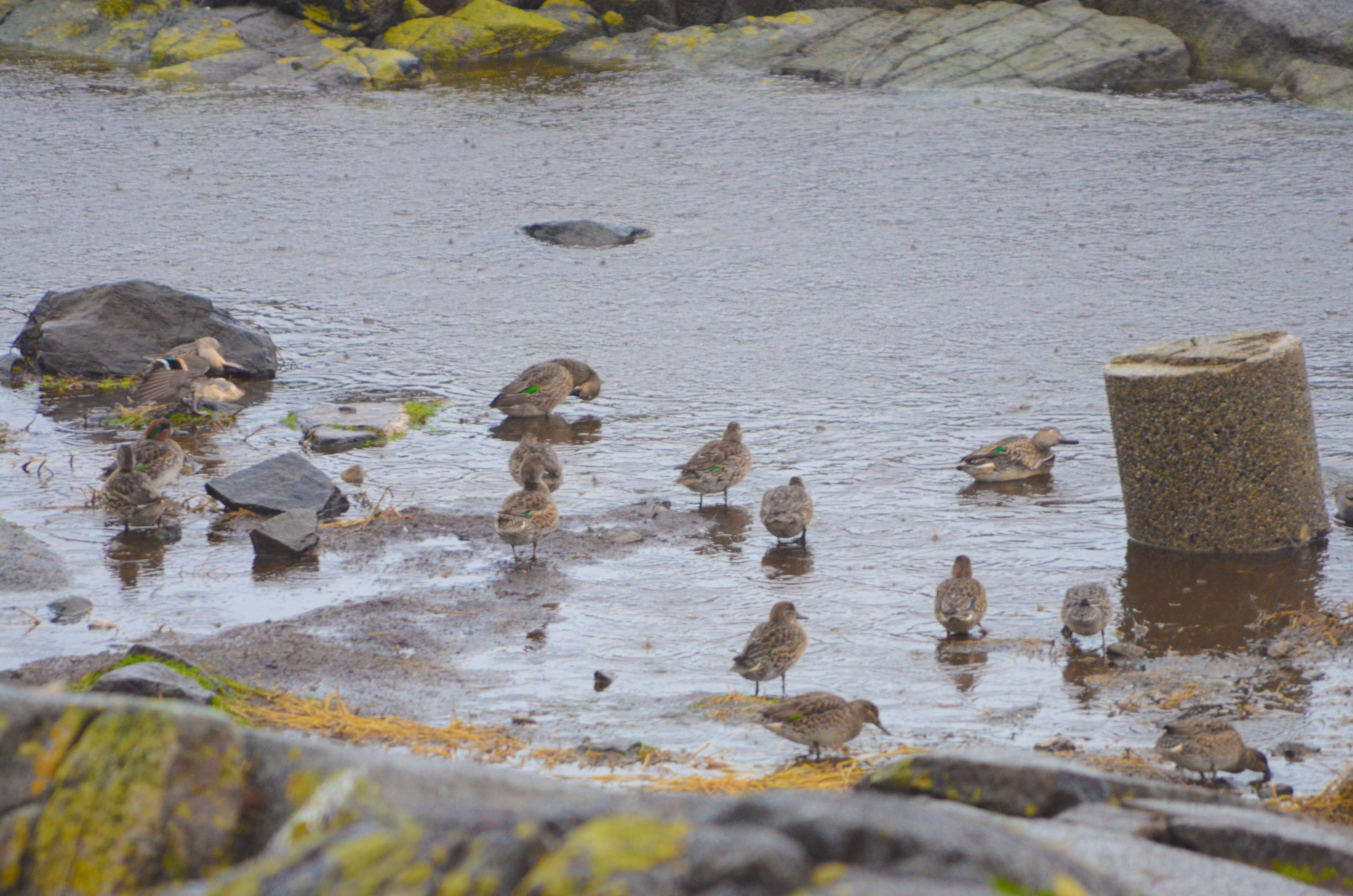
On Dec 19 there were 15 Green Winged Teals in a pool on the NE side of the island.  This  is the first recorded sighting of this bird in the reserve.


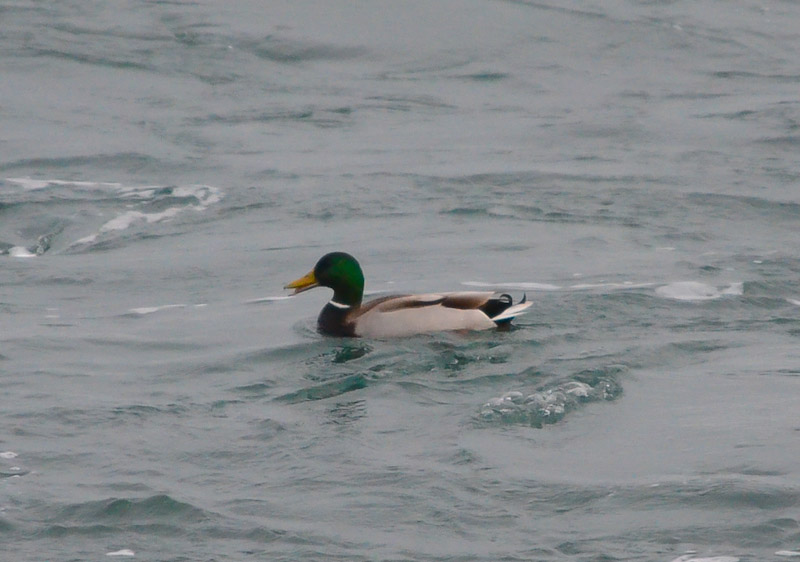
There has also been a Mallard duck in the reserve for over a week.  Pam Birley first sighted it around Dec 18th, it was also the first recorded sighting of this bird in the reserve.


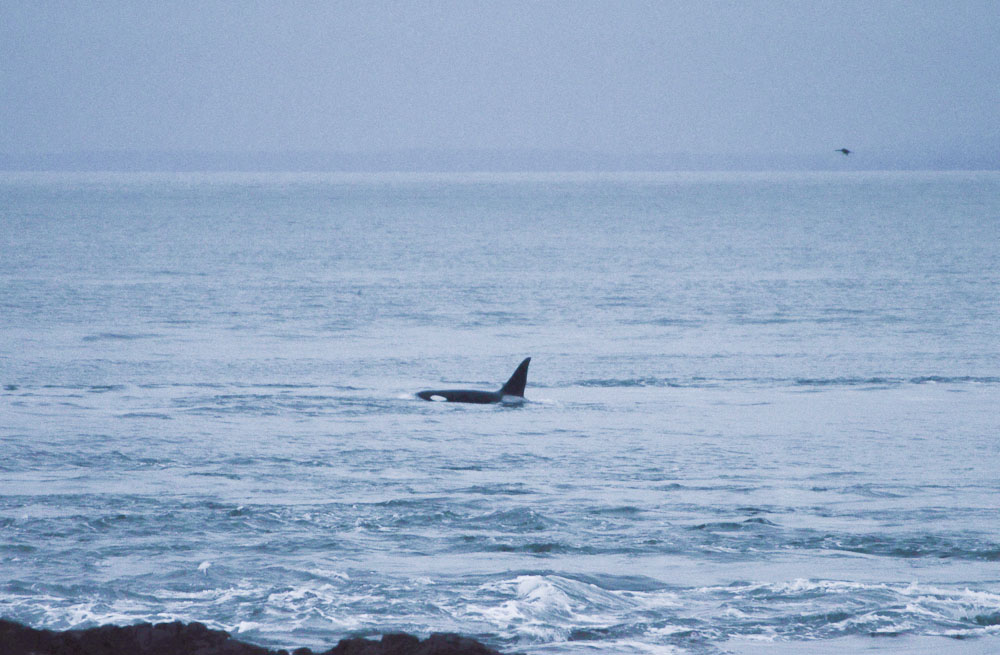
Yesterday after sunset a lone adult orca passed through the reserve going over Rosedale Reef.


Elephant Seals

There have been two tagged elephant seals on the main island over the past days, green tags 6397 and 6375.  Misery has been on the main island, younger male on west rock.  There continue to be a total of around 15 elephant seals in the reserve.

The yearling in the two photos on the left looks like she could be the one that was born here in January (named Squall) but it is hard to tell for sure.

green tag 6375

15 Elephant Seals

West Rock, 10 elephant seals Dec 8.


Male elephant seal younger than Misery with deep scars and a female elephant seal on main island Dec 8

On Dec 8 I counted 15 elephant seals in the reserve: 3 female and 2 male elephant seals hauled out on Great Race as well as 10  female elephant seals on West Rock.  I think this is the most i have ever counter here.

mouth or throat injury

Unfortunately one of the females on Great Race is injured in her mouth or throat and has been bleeding quite a lot.  We have notified the Department of Fisheries and Oceans about her.  There was an elephant seal in the spring that had a mouth injury as well.


The second male elephant seal is brave  to venture onto great race while Misery, Alpha male, is about.  This same elephant seal was here earlier this year, Mike posted about “chunk” at the end of May: https://www.racerocks.ca/2012/05/31/end-of-may/

And i think that it is the same one that had been around earlier that we were calling “Zeke”. I reported him injured here by Misery in February: https://www.racerocks.ca/2012/02/09/zeke-is-wounded/

The scars look similar, including a scar to his right eyelid.  Misery does not seem to be very bothered by the other male being on the main island.  The younger male has kept his distance though.

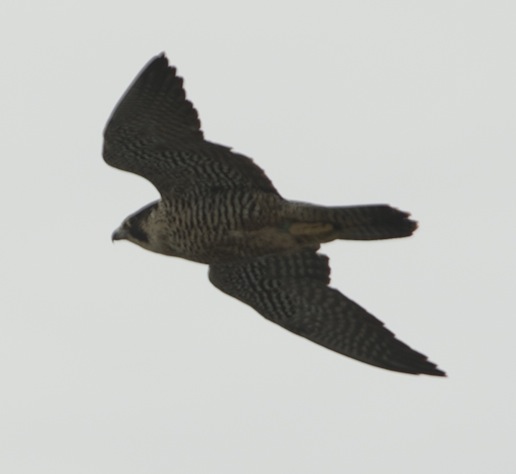
There has been a Peregrine hunting in the reserve the past three days, this picture taken Dec 8.


One tagged Pelican Dec 8 but not able to make out the ID #.

ER #97 Wardens Report, Dec.8 2012

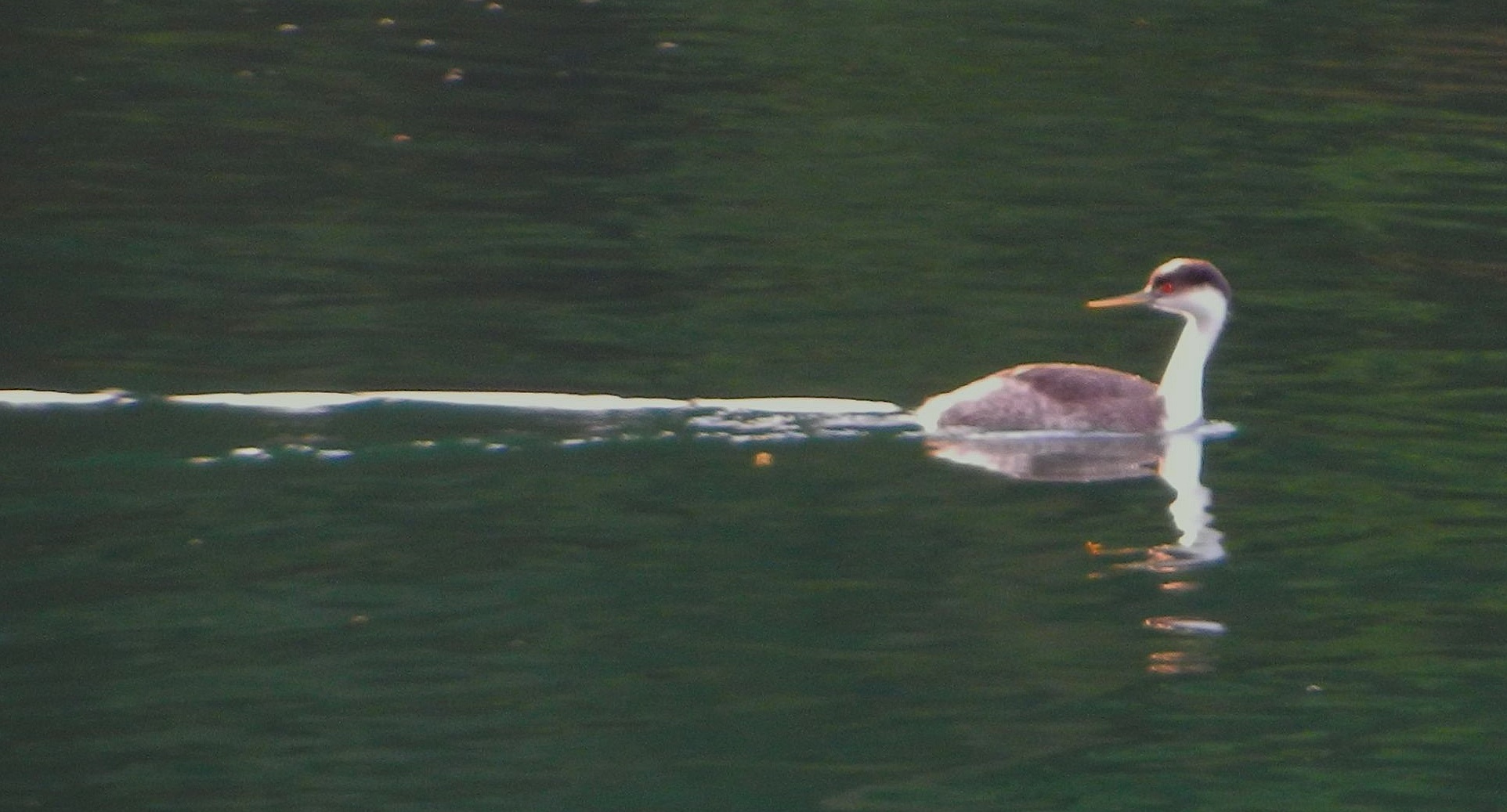
Leaving the Docks at Lester B. Pearson College I noticed an unusually high number of western grebes. These birds (a species at risk) have an unusual migration pattern, in that they nest in wetlands on the Canadian prairies and then instead of migrating south as most other birds, they fly west, over the Rocky Mountains to winter in the small bays of southern Vancouver Island. We have few records of them at Race Rocks , but one that ended up at the docks dead made it into our taxonomy and gallery of species.
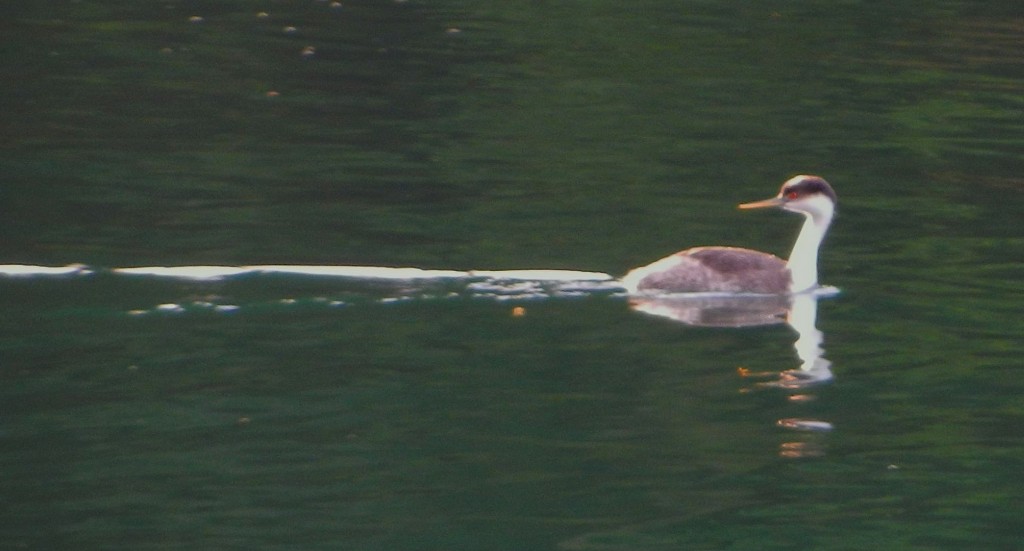
Western grebe — 11 in Pedder Bay today

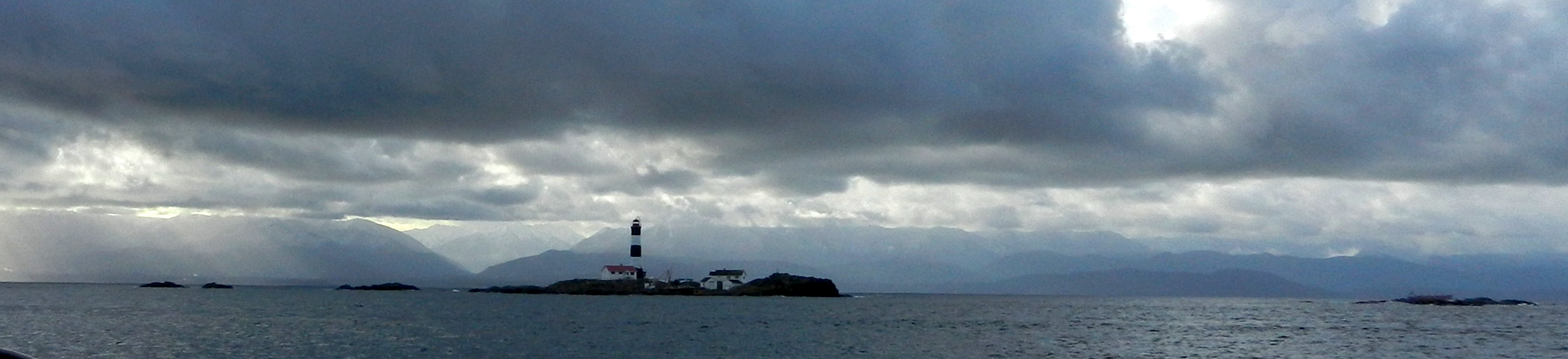
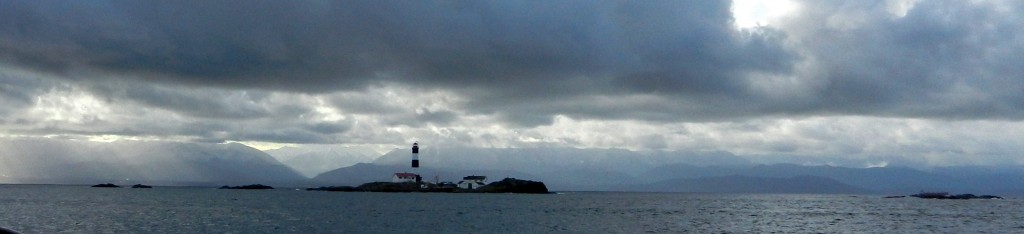
On the approach to Race Rocks one of those ever-changing sky scenes unfolded.We could see that the middle islands to the west are covered with Northern (Steller) sea lions today as well as a number of elephant seals .  We only had time to check out Great Race Island as Erik was doing some underwater work, changing zincs on equipment and cleaning the underwater camera.
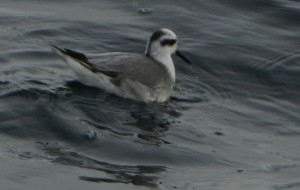
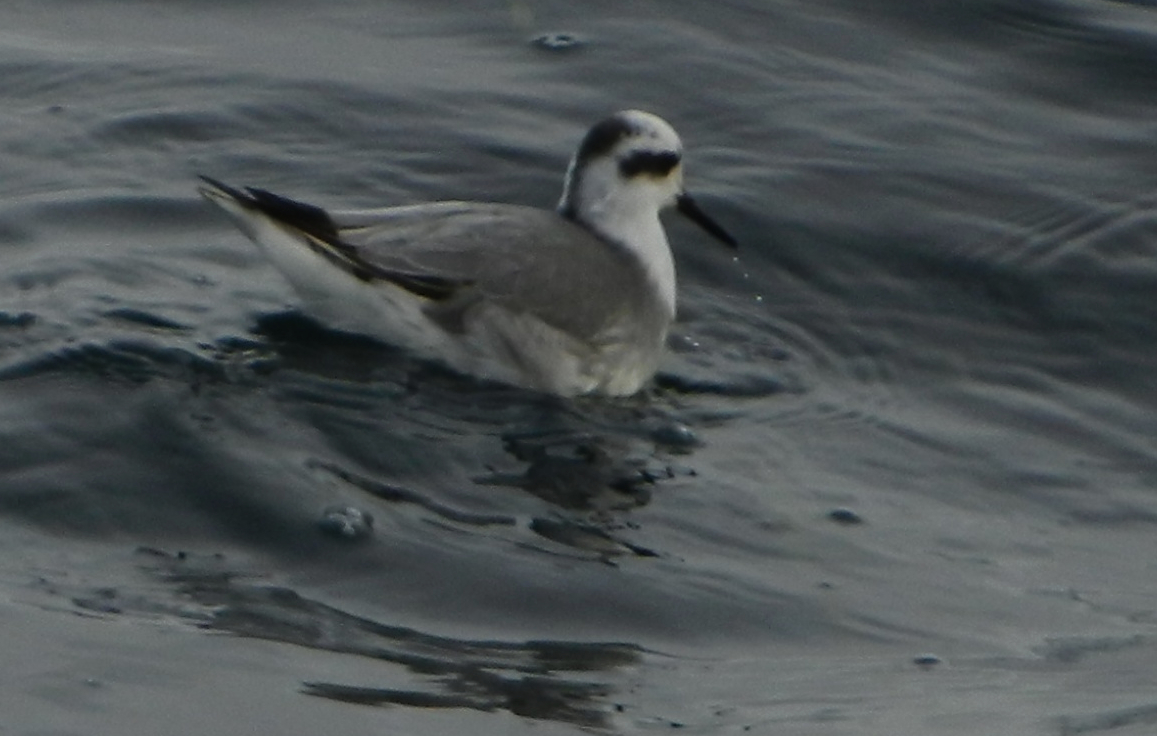
Red phalarope near docks

As I tended him diving, a red phalarope (Phalaropus fulicarius ) swam in the waves near the dock, churning up plankton in a vortex . This is the usual location  where we have  sighting of the red-necked variety of these birds in the winter.
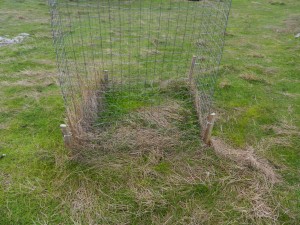


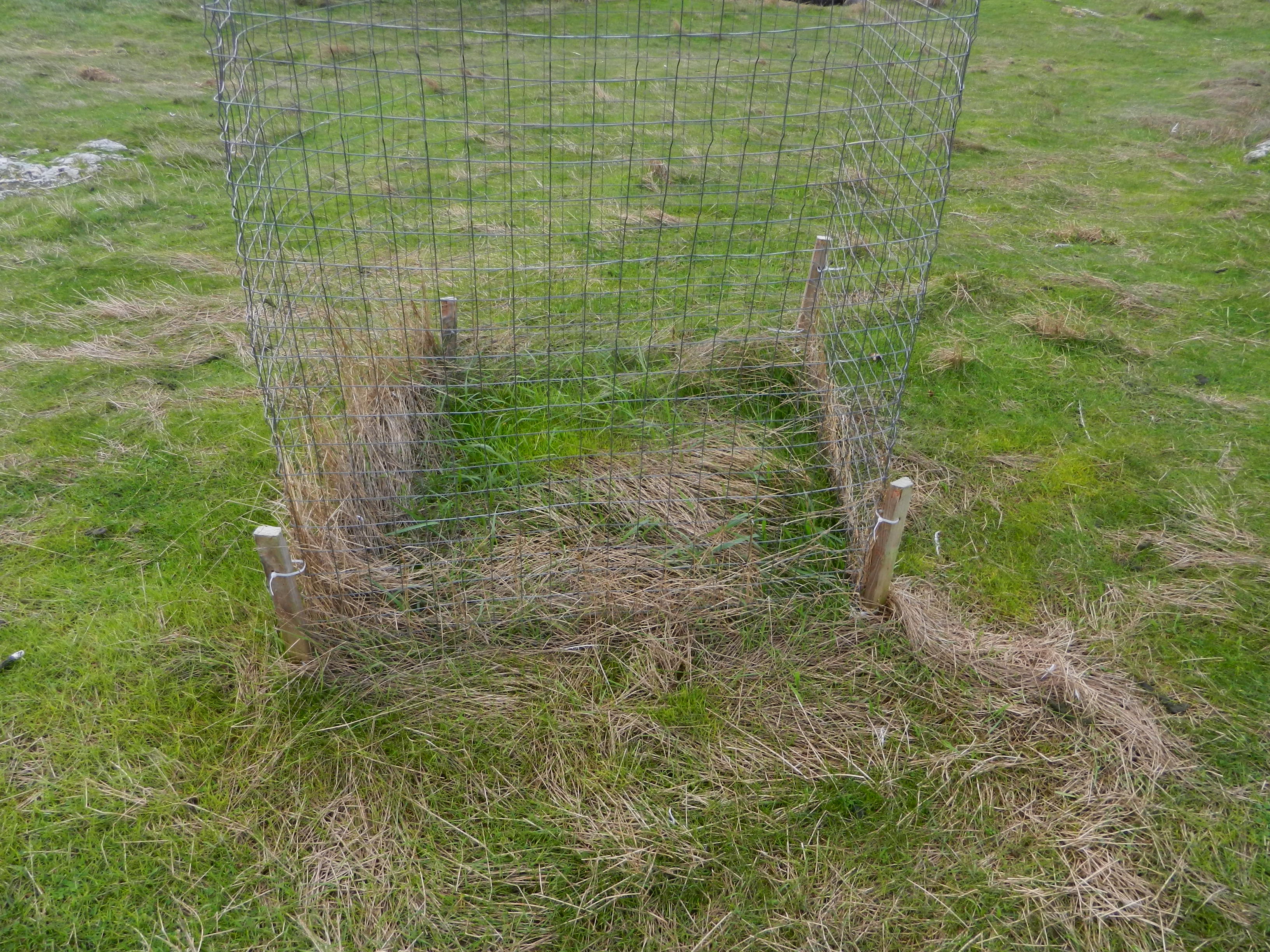
Grass enclosure, Dec. 8, 2012


A year ago Alex set out three 1 square metre enclosures to monitor the effects of grazing and marine mammal trampling on vegetation at Race Rocks.  In this one by the centre path it was evident that there is beginning to be a build up of organic material which will contribute to the turf cover.

Below are some of the pictures of the elephant seals on Great Race Island when we were there today. One female by the docks is injured as has been reported previously. Normally when there are natural injuries to animals out here we have a policy of not intervening as nature takes its course . When there may be evidence of a human cause for the injury where it may be treated, then the Department of Fisheries and Oceans has jurisdiction and must decide what to do. In this case, i suspect there is some irritation  in the mouth or jaw which is causing continual bleeding, probably a fishhook. In the past we have had one successful treatment of an elephant seal when DFO arranged for the Vancouver aquarium to capture it and rehabilitate it.  It was returned to the reserve at the end of summer in perfect health. So we have to wait and see what the decision is on this animal.

Again this year there are two males on the main island which could lead to some sparring around breeding time in January. The size of the proboscis on the younger male indicates his lesser age, and he is probably several hundred kilos lighter. It is quite amazing to see the amount of weight that Misery has put on over the past year.

Garry Fletcher
December 8, 2012
Ecological Reserve Warden for Race Rocks Ecological Reserve #97