Bull Misery has returned

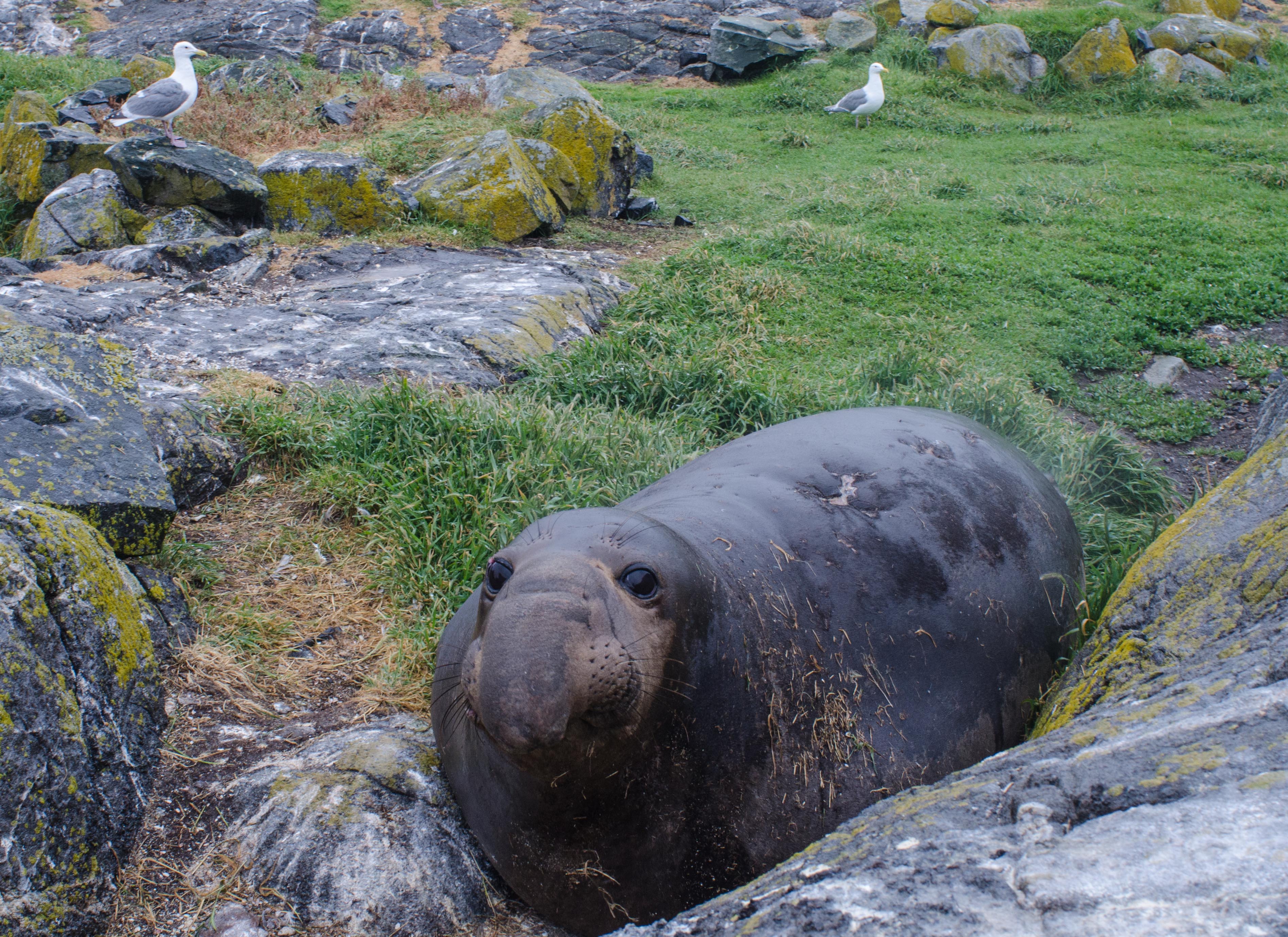
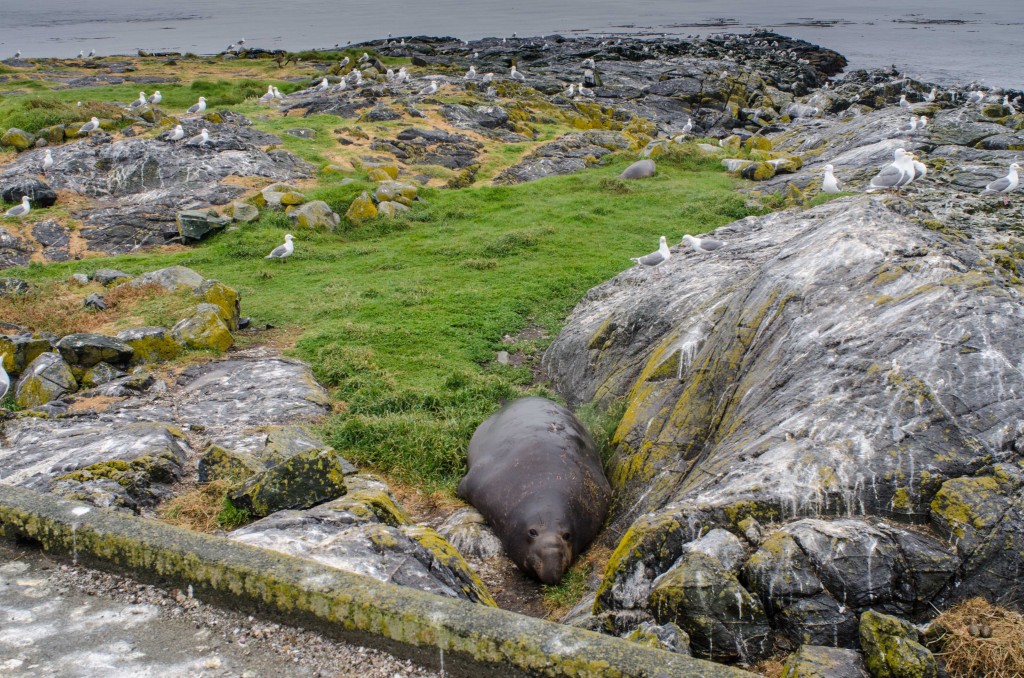
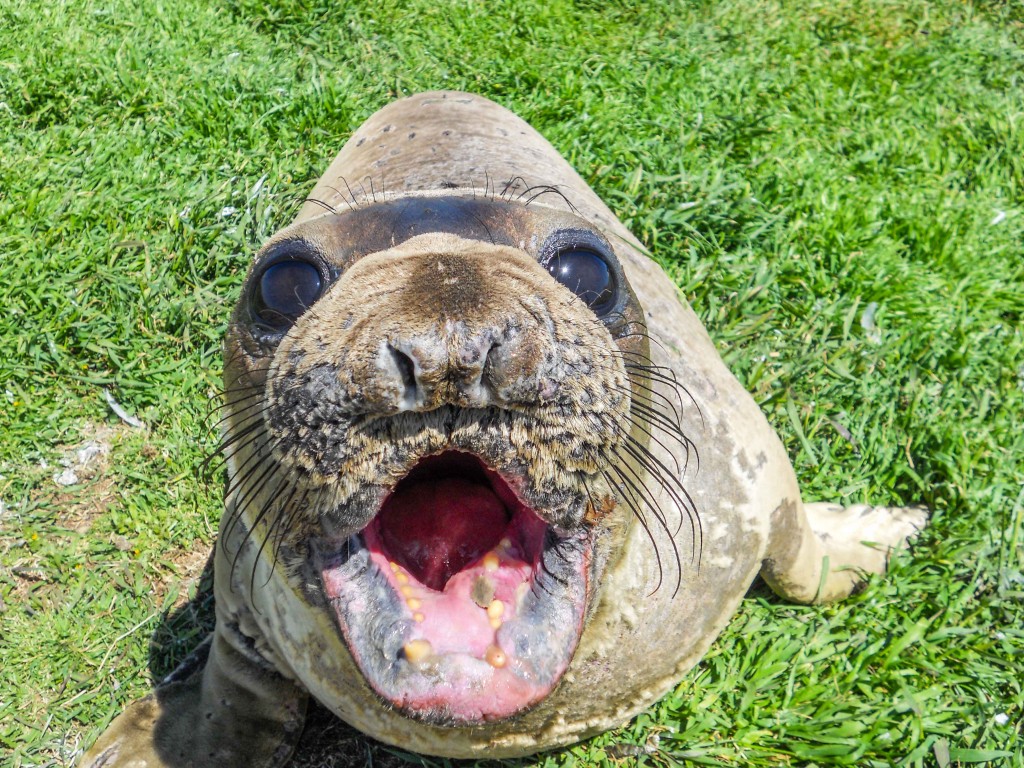
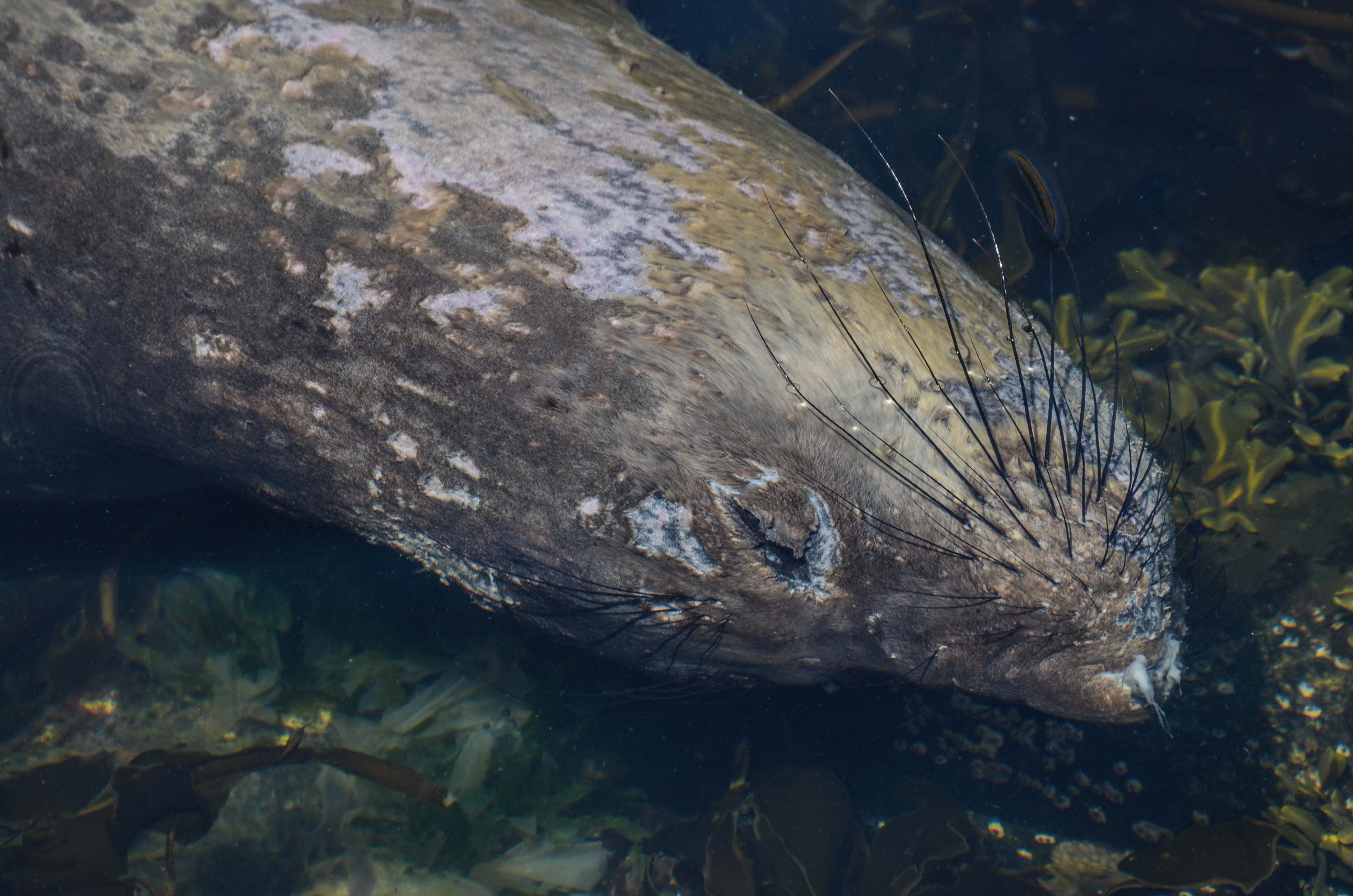
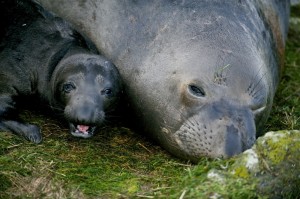
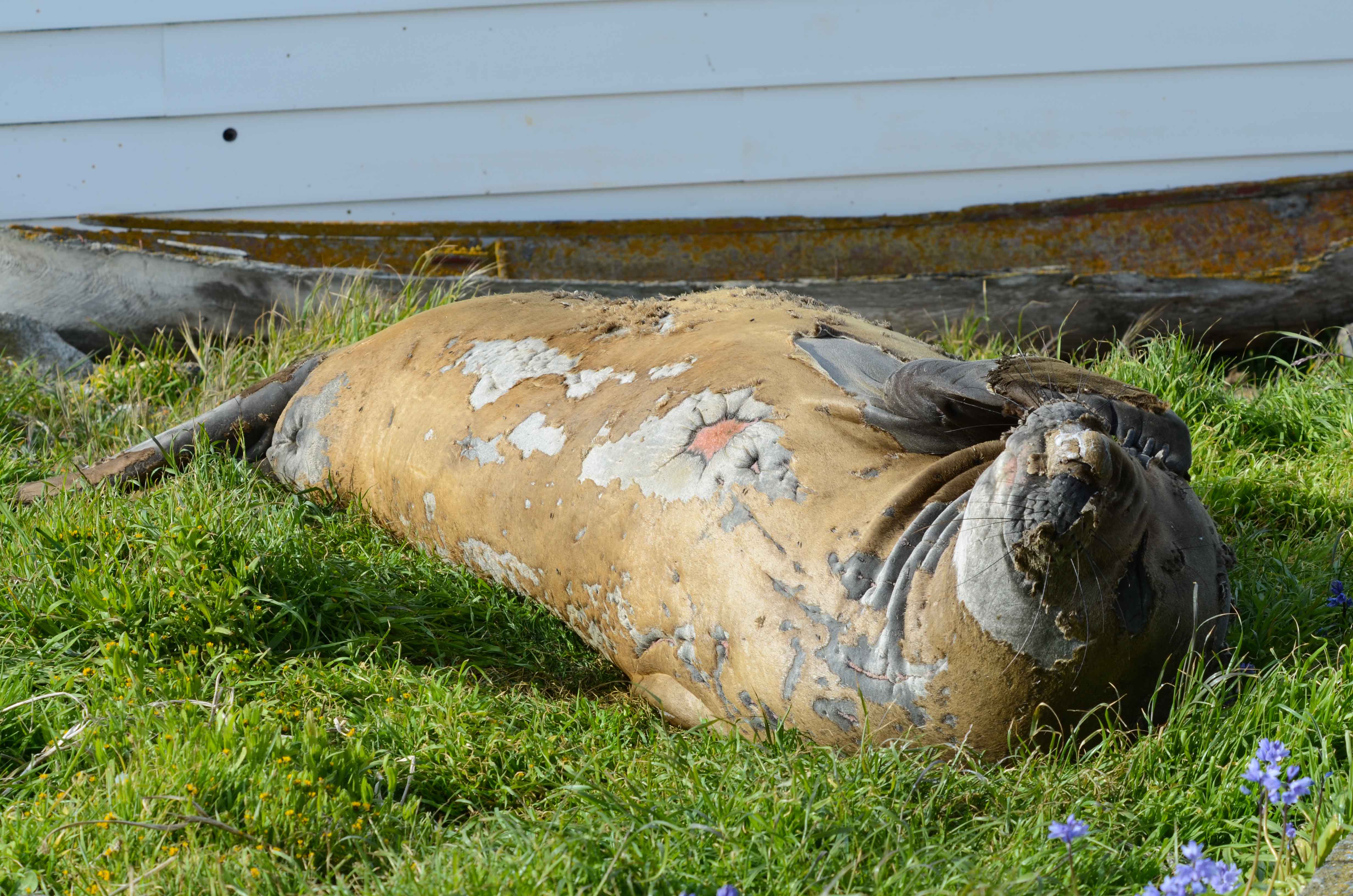
The big boss is back. Misery (Mystery as I like to call him) has returned to the island and has been snoozing and rolling his generous bulk around the grassy areas. He appears to have gained 100 kgs or more in his time away. Wherever they are going after their onshore fasting, and it can’t be too far, the seals appear to have no problem finding abundant food resources. Fortunate for them that their prey is at a depth most predators can’t reach, nor is that prey (squids, skates, rays and some crustaceans) commercially hunted. Elephant seals appear to love grass, which is unusual as most of the places they live don’t have any vegetation. But their pleasure is apparent to anyone who watches them. Yesterday there were 10 individuals here, a new record.
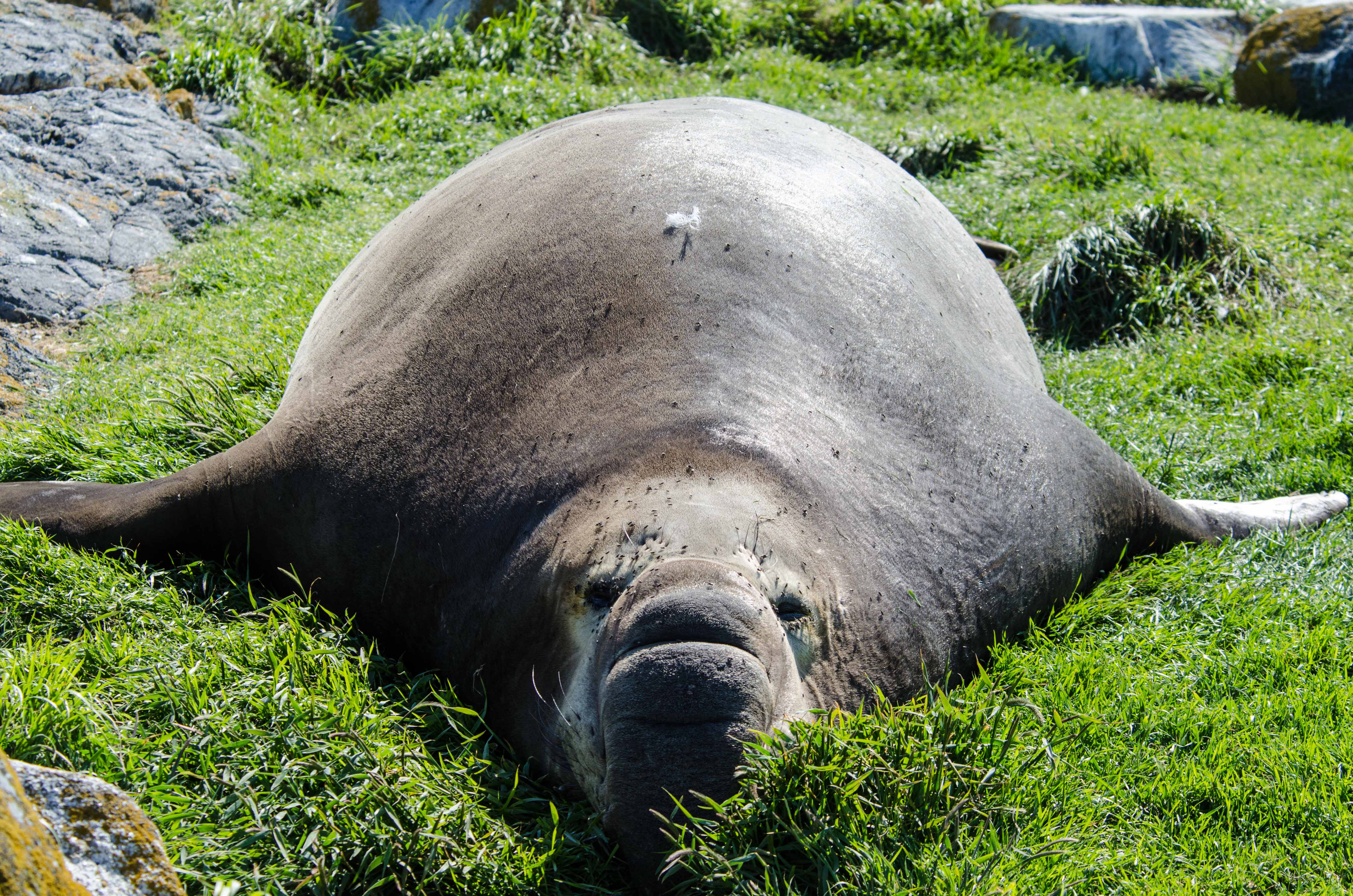
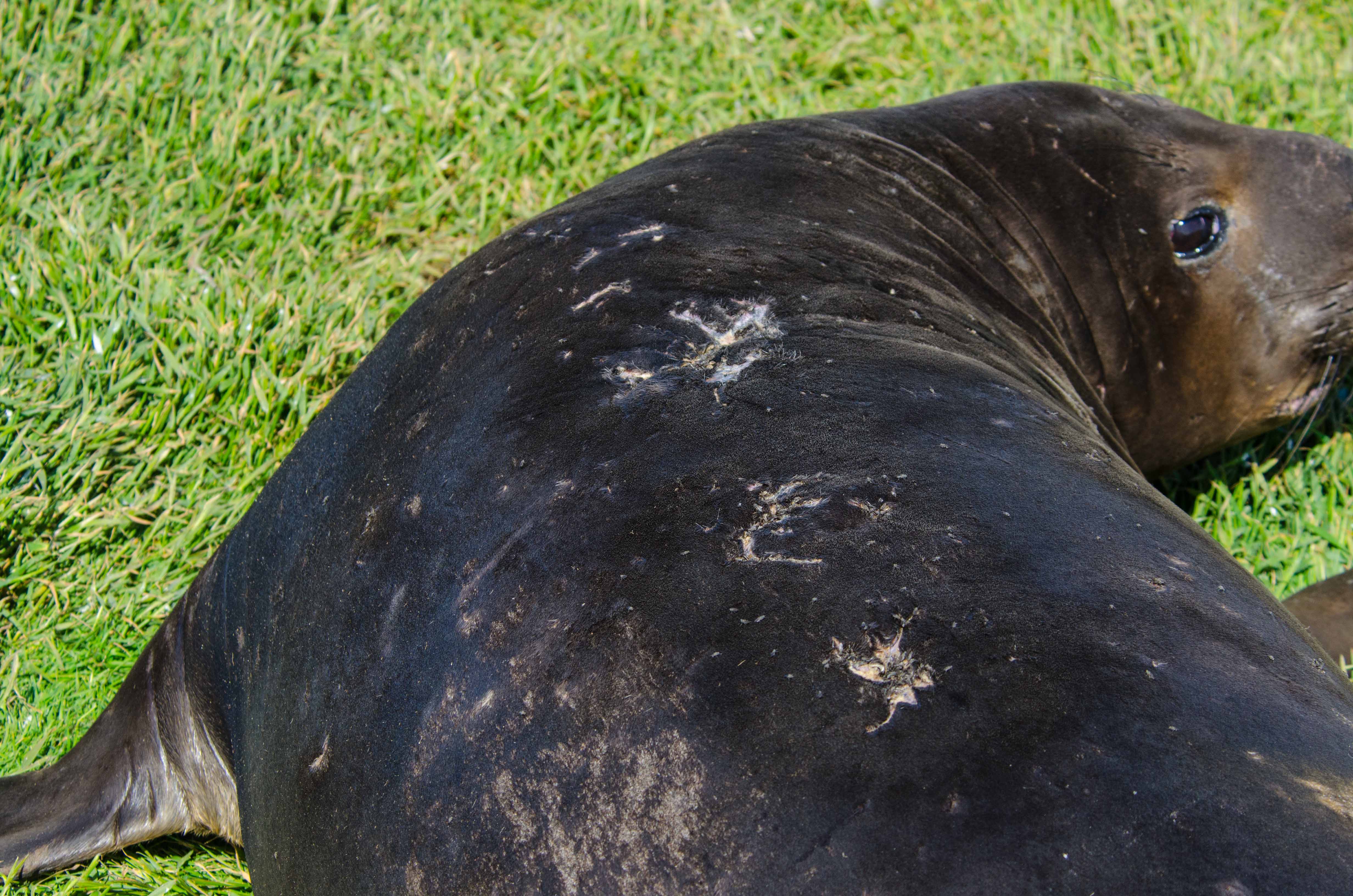
The younger bull Chunk (named for the hideous propeller scars on his back) stays out of the way but Misery seems less aggressive without any potentially fertile females around. A new juvenile with the tag 6355 showed up today.


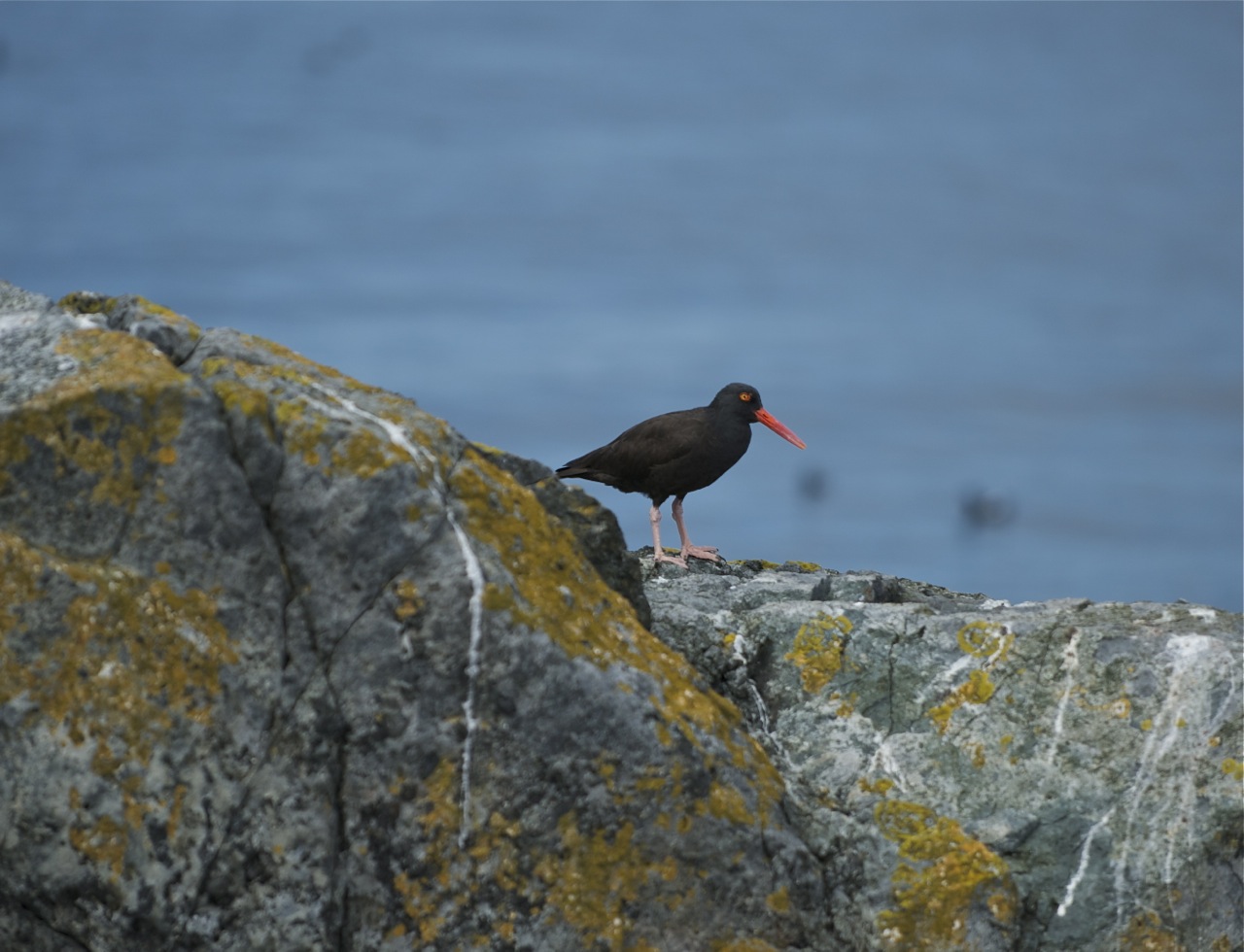
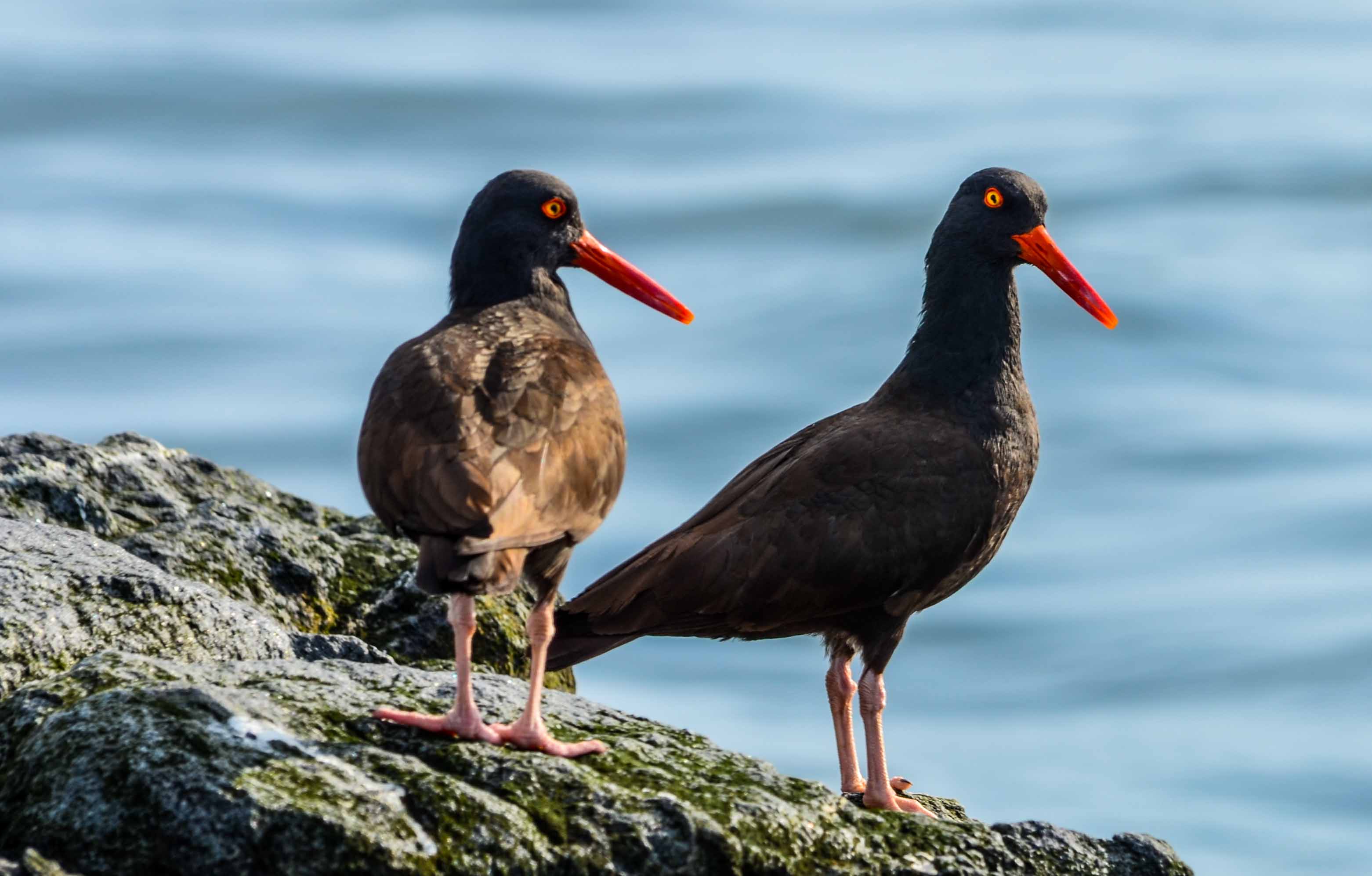
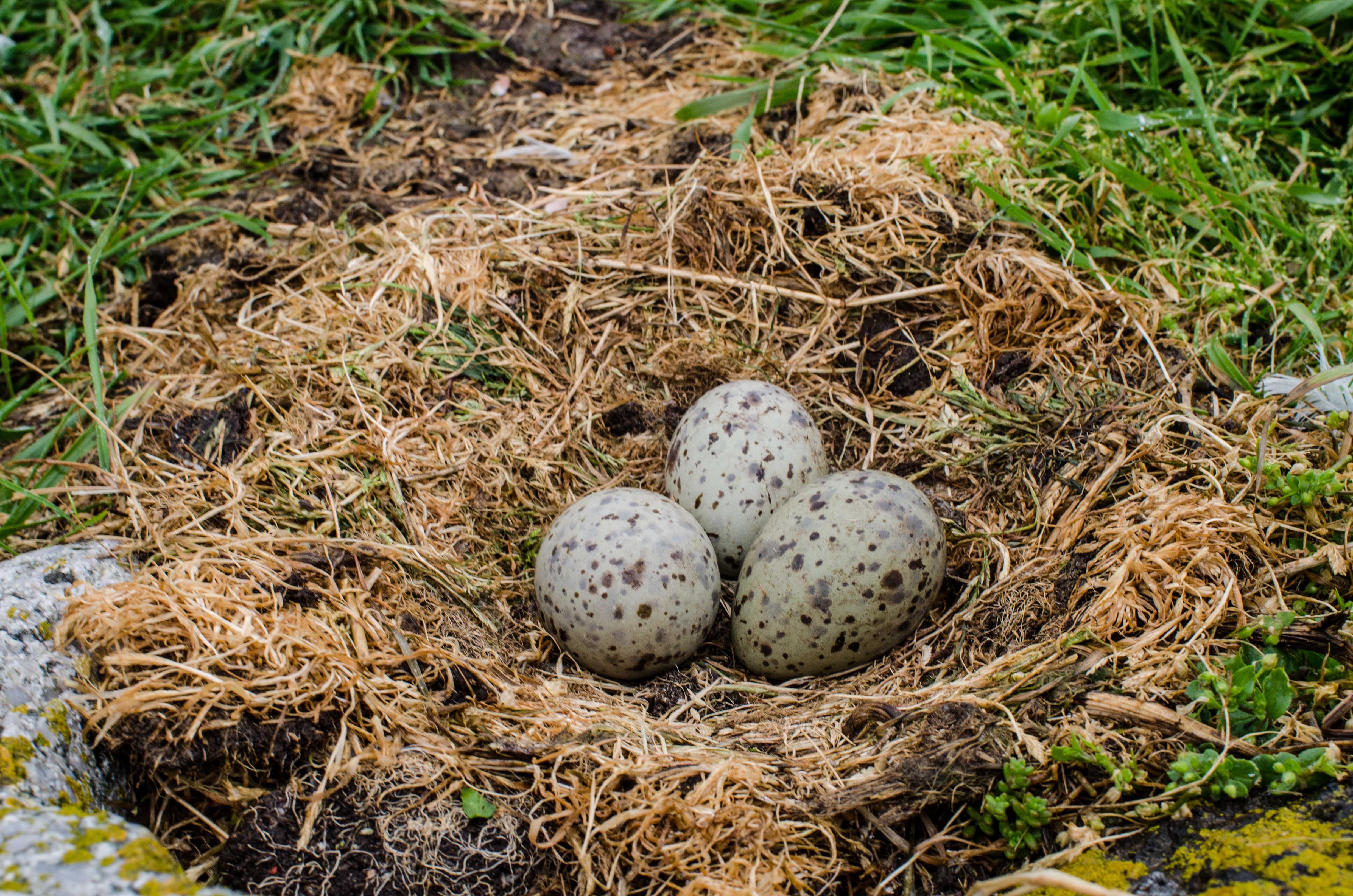
It is hard to tell if the oystercatchers have laid their eggs yet because they are so secretive about their nests, and use very vocal and visual threat displays to distract would be predators and naturalists. Normally 2 to 3 eggs are laid in this nest, these are very hard and can even survive being submerged by a high tide or very high water levels. Incubation takes around 26–28 days. The chicks are capable of leaving the nest after one day. I once witness an acquaintance of mine accidentally step on an oystercatcher nest and crush an egg. He was devastated but not as much as the bird. She clearly knew we were responsible and proceeded to fly after us carrying shards of egg in her beak and screaming what I took to be obscenities at us. I don’t blame her at all. Remarkably she repeatedly flew ahead of us with the broken egg, landed on the beach and vocalized, until our guilt forced us to flee the island. That bird recognized cause and effect!
Aneri and Sahar are staying here for a few days and they have been great company. They are so much more consciously evolved than my generation was at that age and they give me hope that many of the antiquated paradigms of our culture will go extinct and we can progress to 21st century thinking to solve 21st century problems. I shall miss them when they leave tomorrow. They have helped me prop up some of the solar panels, washed windows, swept walks, and made some tasty brownies!
End of May

Hold the presses! I just got back from the top of the tower where I was washing the windows. My eyes were drawn to a huge lump on Middle Rocks. With the binoculars I could see what appears to be 3 bull elephant seals, a few cows and a juvenile. That makes at least 14 elephant seals in the reserve! I wonder if it is Misery?

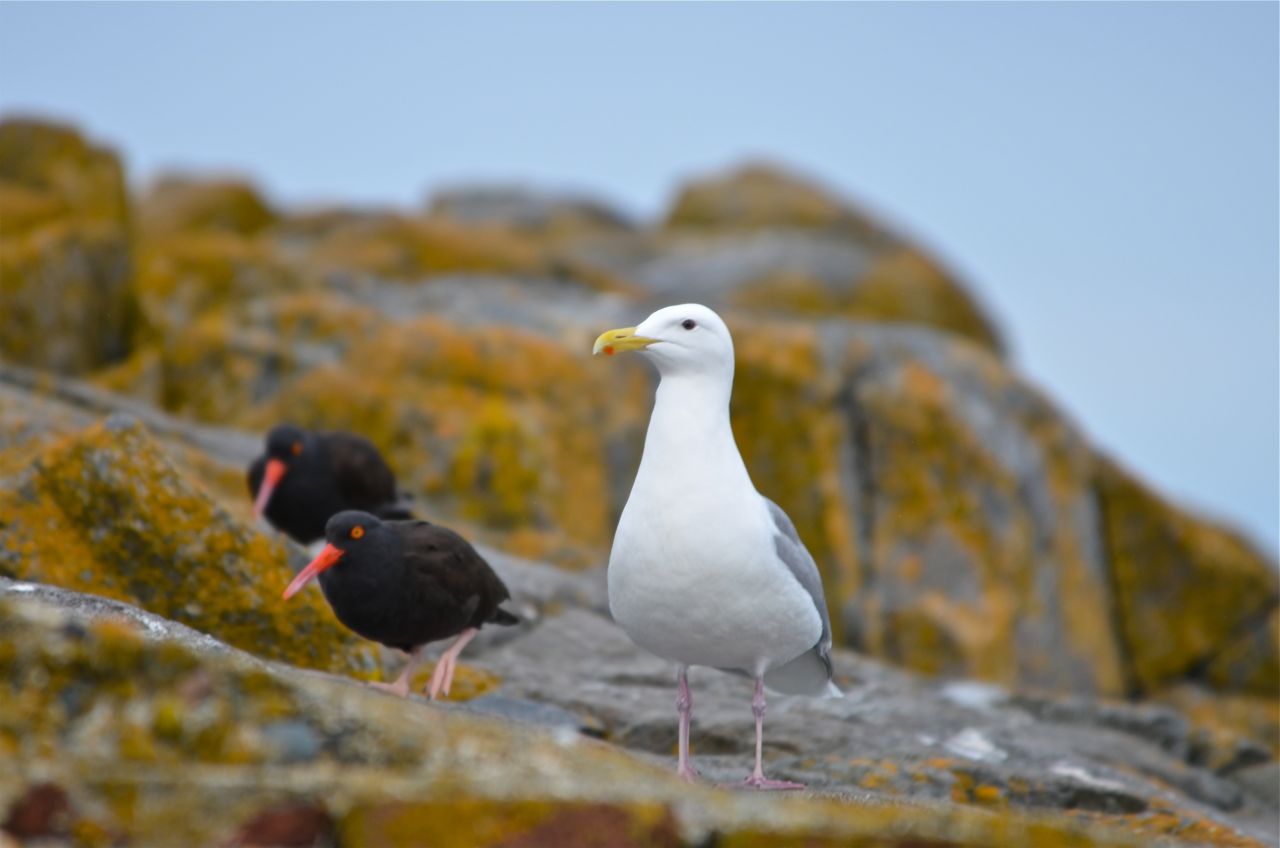
It is hard to tell that June begins tomorrow, due to the fog and damp. But there are certainly signs of summer beginning to show up in spite of the weather. The first Glaucous-winged Gull eggs are being laid, the Oystercatchers are getting more secretive


But the really BIG news is that a new-to-me bull elephant seals arrived yesterday. He isn’t as big as Misery but he is bigger than Zeke. I would guess he is a few years away from becoming a Beachmaster. He caused quite a commotion rampaging around and roughing up a few females before he found a nice spot to sleep for the next few days. I have named him Chunk, for both his size and the large scars down his back, which appear to be caused by a boat propellor a few years ago. (Ed note: These were actually caused by a fight with Misery last year. ) The scars look fairly well healed but some pretty big chunks were carved out by the prop.


Busy Times

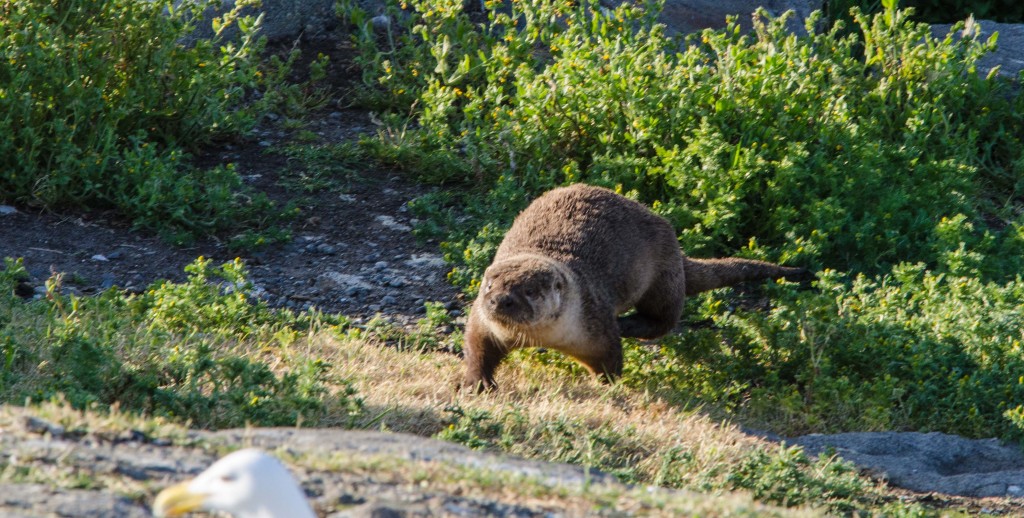
A lot is going on in and around the reserve. I spotted 6 Caspian Terns in area over the last week. Twice orca have gone past, though at the northern boundary, well-observed by tourists on the excursion vessels that are now very frequent visitors. There is a River Otter now living under walkway in front. 

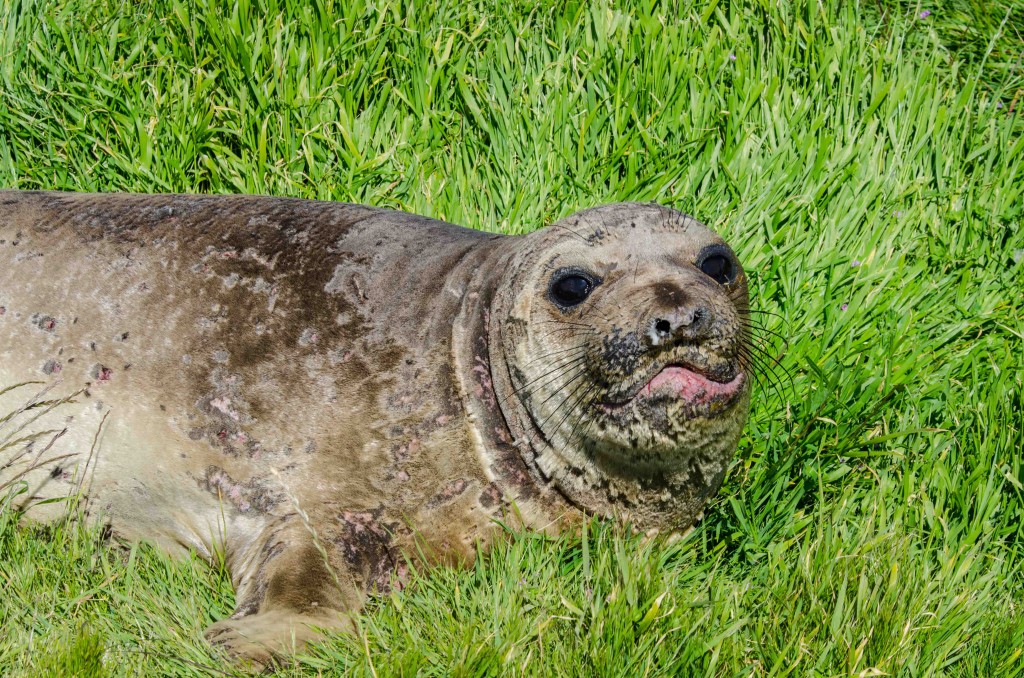
This morning 9 Elephant Seals were present, a new record! At least to me… They include Numbers 6355, 6360, 6397, 5086, Bertha, Noah – young male 3-4 yo est.), 2 untagged 2-3 yo juveniles, AND, happily the sad seal with the infected mouth that suffered for weeks on the end of the pier returned, and she is looking great! I had observed that after one of the sharp pieces of jaw bone that was protruding from her lower palate fell out she quickly returned to the water to find sustenance; she was very skinny and weak at the time.  Although her mouth is still repairing and healing itself it is clear she was able to feed well and she must have gained 40 kgs in fat in 5 weeks. I am astounded and impressed with the recuperative powers of these magnificent creatures.


More about Elephant Seals!

In researching elephant seals I discovered that they are all descended from a single male. Hunted near extinction, only a remnant population survived on a remote Mexican island. Their comeback to about 150,000 individuals is remarkable, but there is not much genetic variation in the population. This could be problematic if disease strikes. It could also mean rapid genetic mutation, an event that could be detrimental or beneficial to the population. The jury is out, but I hope they survive on this planet for millions of years.

I am very excited to be watching the recolonization of traditional territories by the elephant seal. Race Rocks appears to be the epicentre of this recent phenomenon. Wouldn’t it be wonderful if in a decade or two, hundreds of moulting individuals could be witnessed lounging about on the lawns and on the ramp here, safe, comfortable and respected.

Elephant Seal Facts from: http://www.amnh.org/exhibitions/permanent/ocean/01_dioramas/h_elephantseal.php

  • Size: 45 kilograms (100 pounds) at birth; adult males weigh 2700 kg (6,000 lbs)
  • Food: mostly squid
  • Life span: 15 to 20 years
  • Closest relatives: southern elephant seals (Mirounga leonina)
  • Fun fact: elephant seals can slow their heart rate from 100 beats to 3 beats per minute to conserve energy and oxygen during very deep dives

Getting Busy round here

More and more tour boats are visiting the reserve this week. It is easy to loose track of the numbers because they come out of nowhere it seems and from every direction. I estimate we are seeing about 20 visits a day this week. This may be because the orca are out of range, and Race Rocks can always be counted on to provide a picturesque opportunity to see marine mammals in the wild. By and large the tour boat operators are respectful but some operators seem ignorant of the reserve boundaries and come in or leave a little too rapidly. I will be emailing the companies to clarify this issue when I have some photographic evidence.

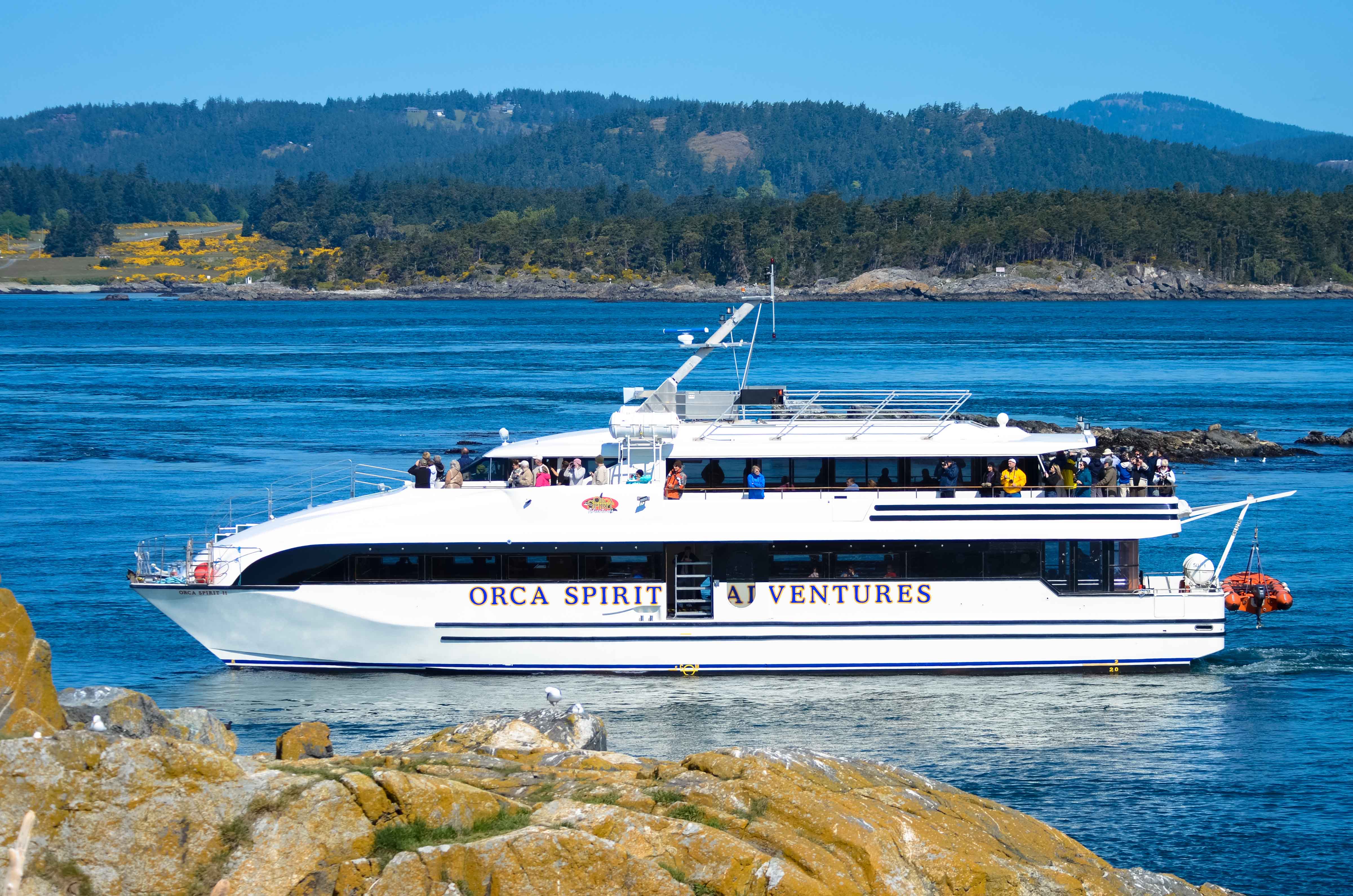
Whale-watching vessel

This enormous vessel is new. I will be curious to see how marine mammals react to it. I suspect it will have less impact than the zodiacs because it will stay a bit further away and more people will see the animals on one trip than 6 or 8 zodiac trips. We will see!


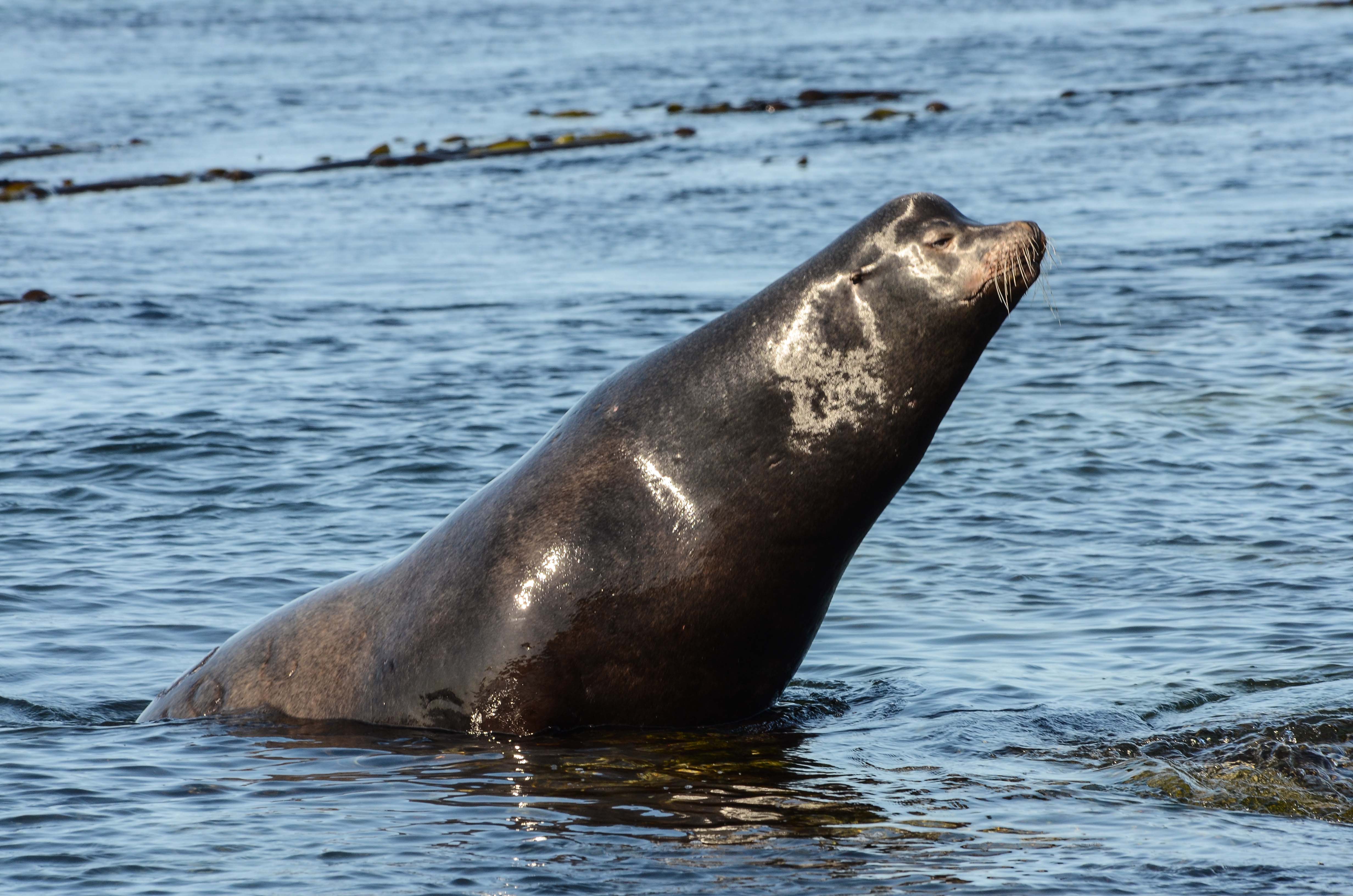
This large California Sea Lion arrived yesterday. He has a brand that appears to be 909 (or 606). More pictures of him coming soon….

Elephant Seals at Docks


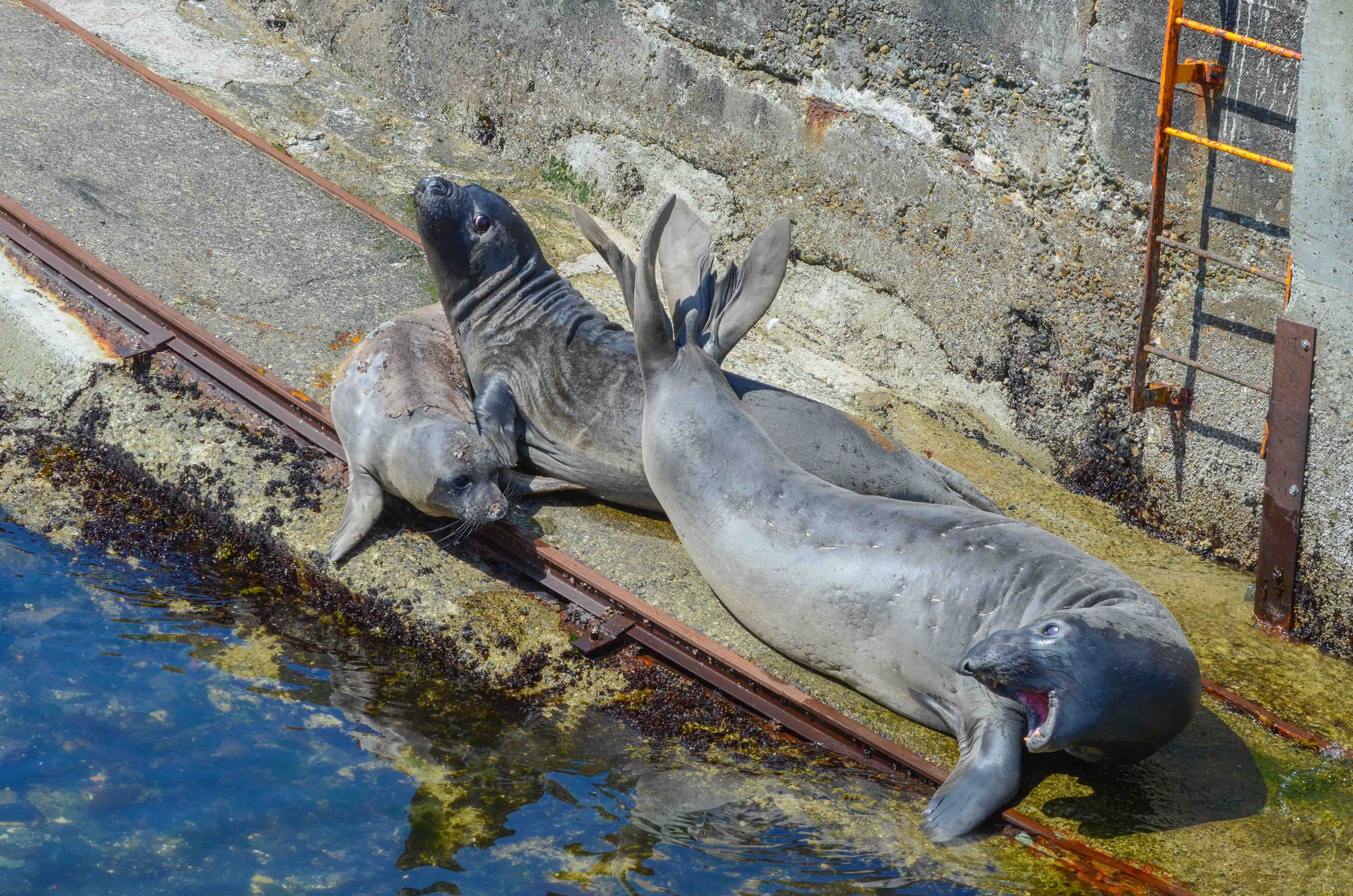
There are 6-7 elephant seals finishing up their moulting now. On occasion we get a little traffic jam on the ramp. Here Bertha reminds the others who is boss…


The military conducted several over-flights whilst on manoeuvres, but at a reasonable altitude. Yesterday Erik and I shipped 500 gallons of water over, as finding parts for the desalination unit is challenging. I hope that volume will last a month or so…

Busy Little Island – here come the humans…

This weekend the island and reserve is teeming with humans. Seven Pearson students are experiencing a weekend here, we have 4 groups of Pearson students (60 in total) coming out for a biology exam. As well the “Friends of Ecological Reserves” group is coming for a tour in a few hours. But perhaps most obvious are the 25-30 sport halibut fish boats ringing the reserve to the East, South and West. Apparently there is a derby with about 450 fishing tickets sold. Either those boats are crowded or we can expect more before the day is over. Personally I am routing for the halibut!

We had 6 elephant seals here yesterday including numbers 6360, 5086 and 6375. Bertha is back for her moulting time of the year. She seems to go through the process much quicker than the juveniles. You can see the scar that makes her so easy to identify and is testament to her recuperative powers.

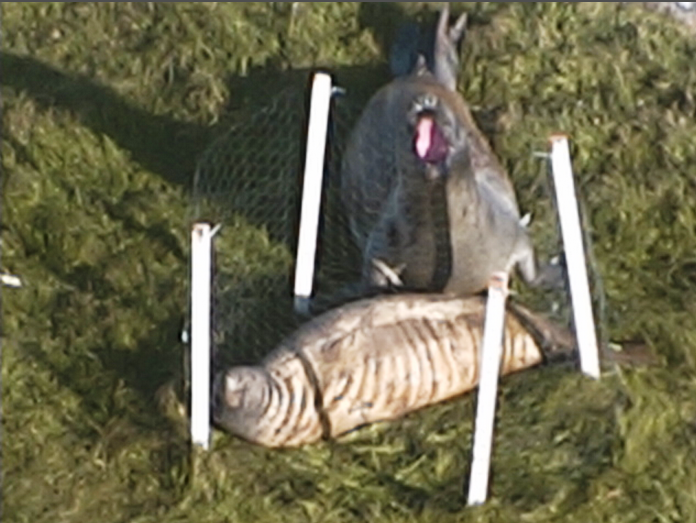
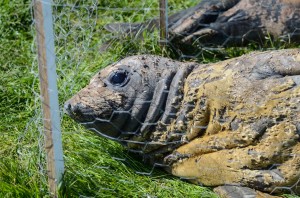
One of the juvenile elephant seals managed to wiggle under the chicken wire of one of the enclosures Alex made to measure the impact of Canada Geese on the grass. Turns out a 100 kg e-seal can have an impact on grass too.

photo courtesy of Pam Birley. Taken from the tower remote camera.

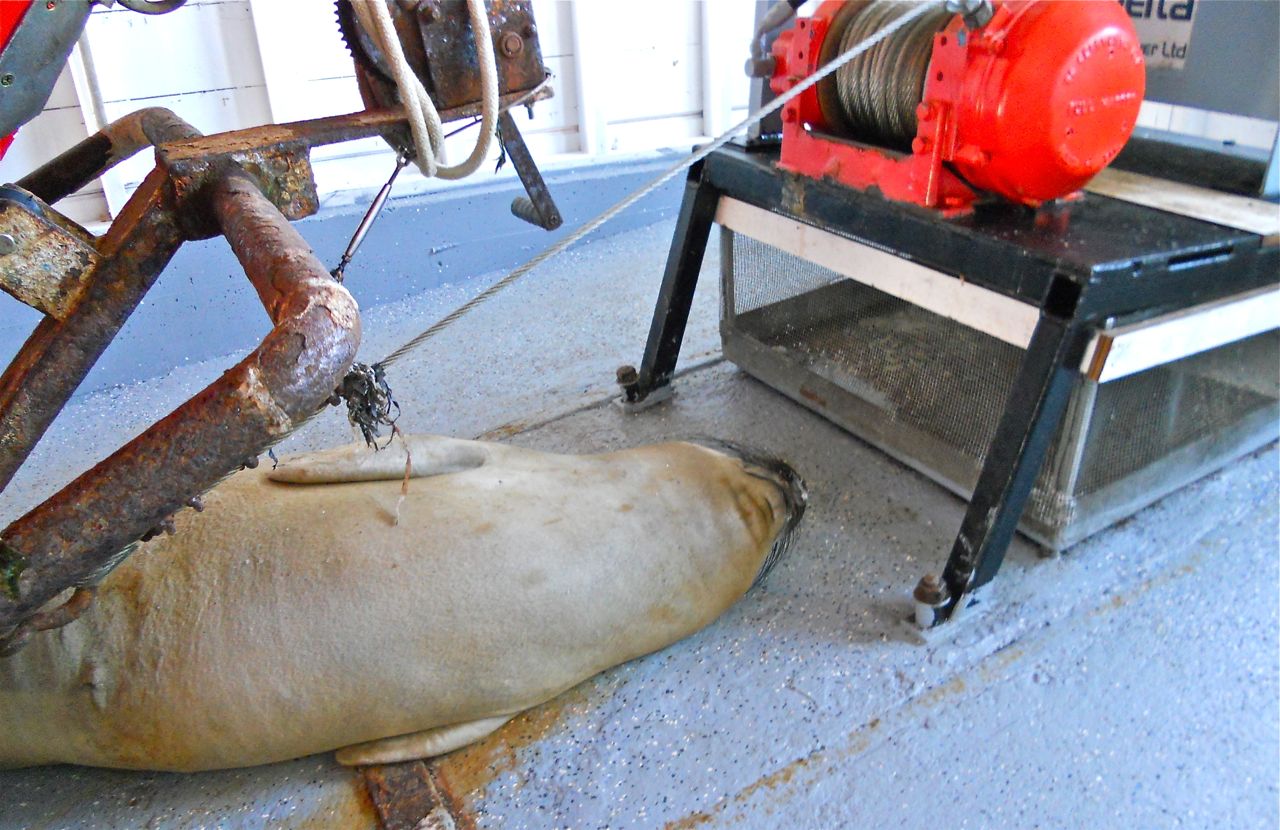
She has been liberated but seemed more annoyed than thankful!

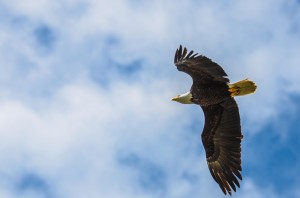
Bald Eagle flyover…. a float plane just buzzed us and last night the military helicopter was doing exercises in the area. Chris cleaned the underwater webcam yesterday. You can watch the fish and if you are lucky spot a Sea Lion! https://racerocks.ca/racerock/uwcam/video2frame.htm


Busy whale-watching season

The weather has settled after a couple of blustery days and the sun is shining. Erik and I are refuelling the station which involves transporting about 6,000 litters of diesel fuel from Pedder Bay Marina to the island. We should be completed this afternoon. Hopefully this will last about one year, but that depends on conserving energy/electricity wherever possible.

Seven Pearson students spent last weekend here and we may get another group this coming weekend, however that depends on getting a new part for our desalinator. Without water it is challenging to host our guests, and I may have to ration our dwindling supply for a few weeks until the new part arrives. I counted just under 20 whale-watching vessels in the preserve last week, averaging 2 a day with 4 or 5 on the weekends. I will monitor the numbers more closely as tourist season arrives. DND continues to explode ordinance on Bentinck Island, much to the annoyance of every living thing in the reserve. The percussive shock waves rattle the windows and seem very incongruous with the spirit and intention of this place. I can’t quite understand why they won’t perform their exercises in an inland location where the noise and pollution can be better contained. I believe they are violating federal guidelines and hope they will take measures to ameliorate the effects of their mandate.

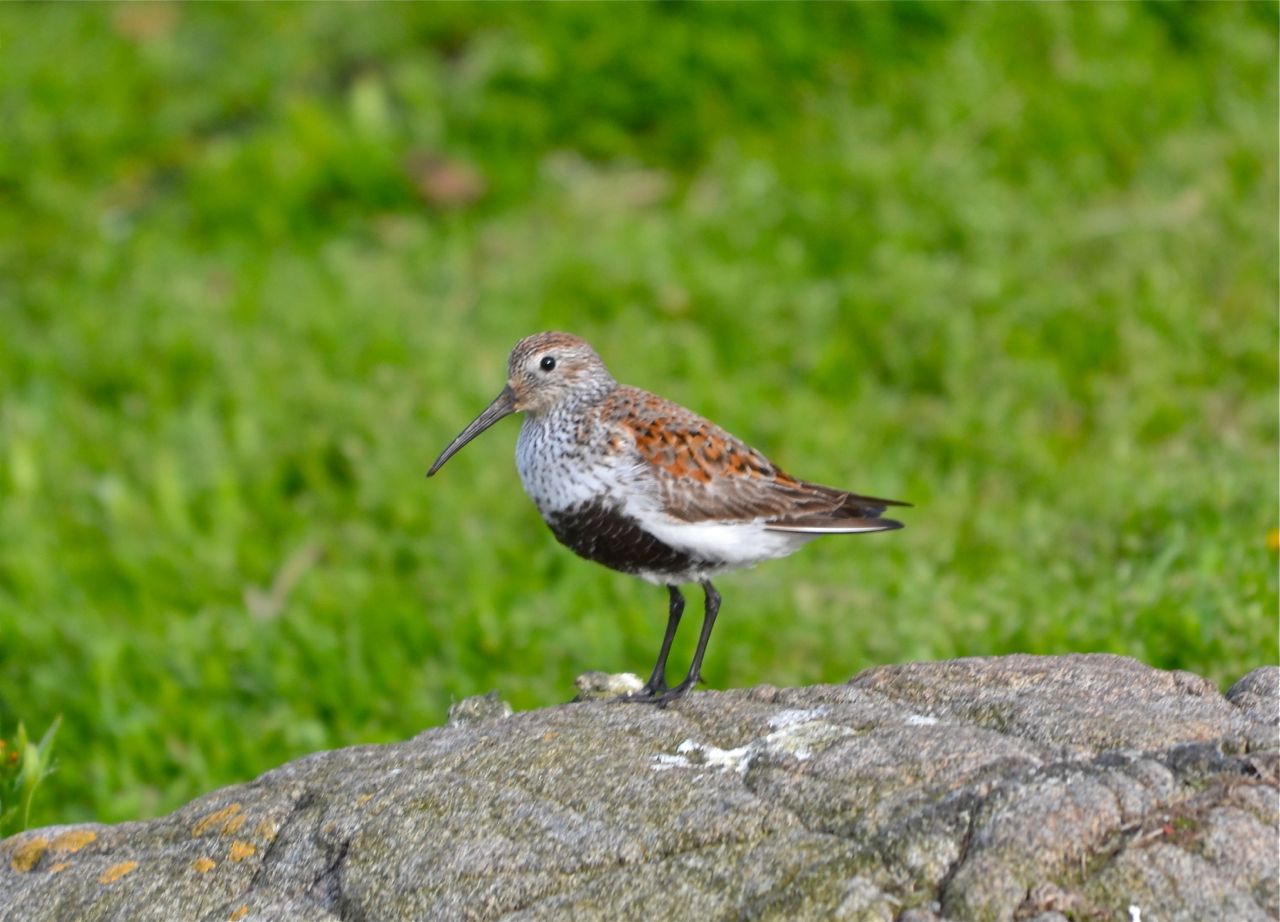
 Dunlin

Hundreds of pigeon guillemots are banding the seashore around Great Race and they add a colourful and busy presence to the island. Three scruffy young female elephant seals are busy moulting their pelage. Little scraps of old skin and fur are littering the island, adding to the biological detritus that makes up the bulk of the soil layer along with guano, shell and decayed plant material. A few California Sea Lions are in the area along with the Stellar and Northerns.

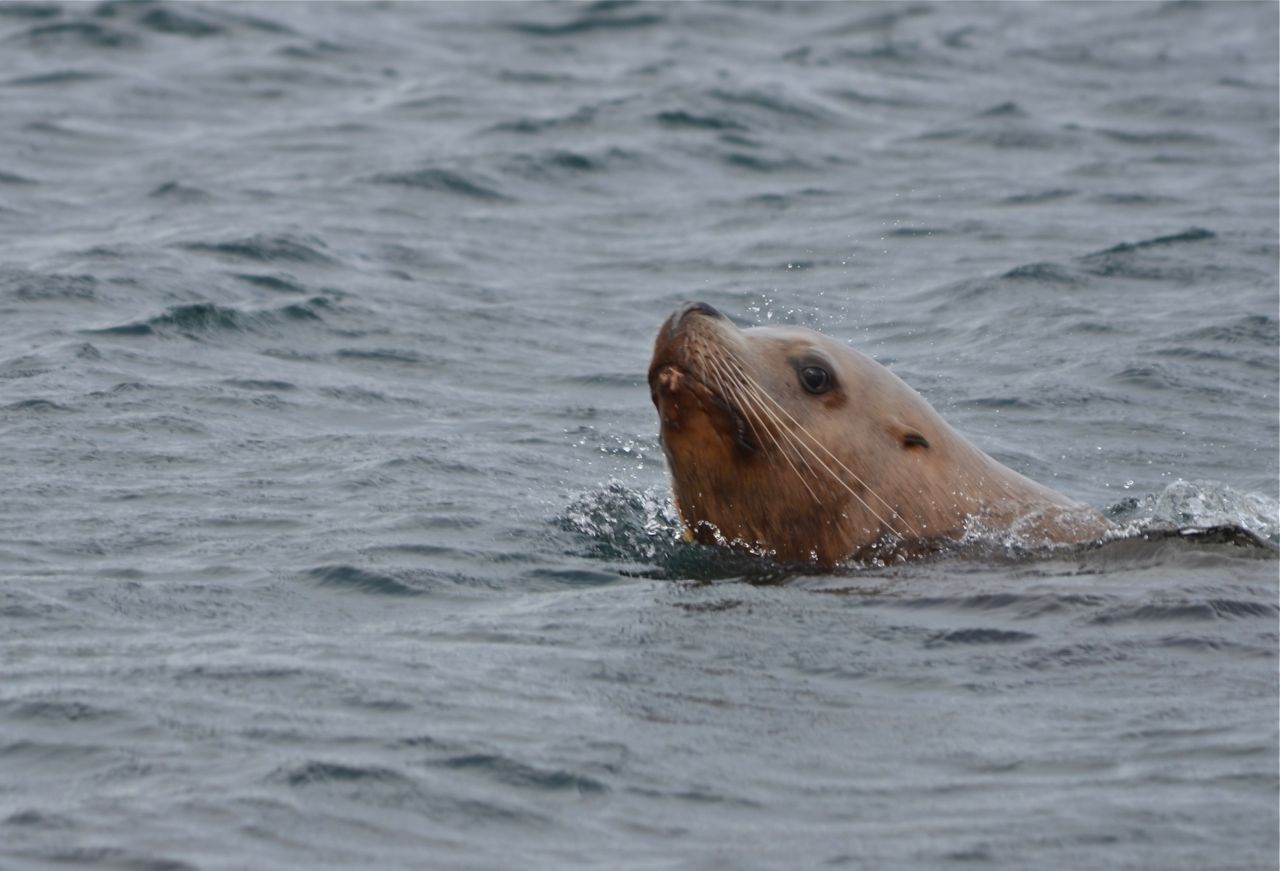
 Stellar Sea Lion

 We have a new camera now with a good telephoto lens so I hope to edu-tain you with beautiful pictures of magnificent animals…. stay tuned!

Animal Visitors

Yesterday two Whimbrels were seen on the south shore of Great Race and this morning a posse of California Sea Lions was swimming about South Rocks barking in their distinctive manner. Garry alerted me to another weaner elephant seal pup on West Rocks. Today we have 5 e-girls here at the station: Bertha, Squall, Divot (she has raw sores/holes in her skin but seems otherwise healthy), Goat (this one crawled up to the weather station in  the middle of the island), and 5086 (Fifty/Fiddy) whom I believe we first saw in December. I had thought Squall had left as I didn’t see her for a few days but turns out she had crawled up into the boathouse to get some peace and quiet!

Plenty of recreational fisherfolk are fringing the reserve. I suppose it makes a cunning sort of sense to hunt near the place where most of the fish are, but there is a self-serving element to that way of thinking that is reflective of why we need to have parks, reserves and preserves in the first place! Personally I prefer finding my dinner on the shore within the intertidal zone where I can be sure of what I am catching and can ensure there are plenty left to restock the locale. Unfortunately for me I won’t be eating creatures from the reserve though!

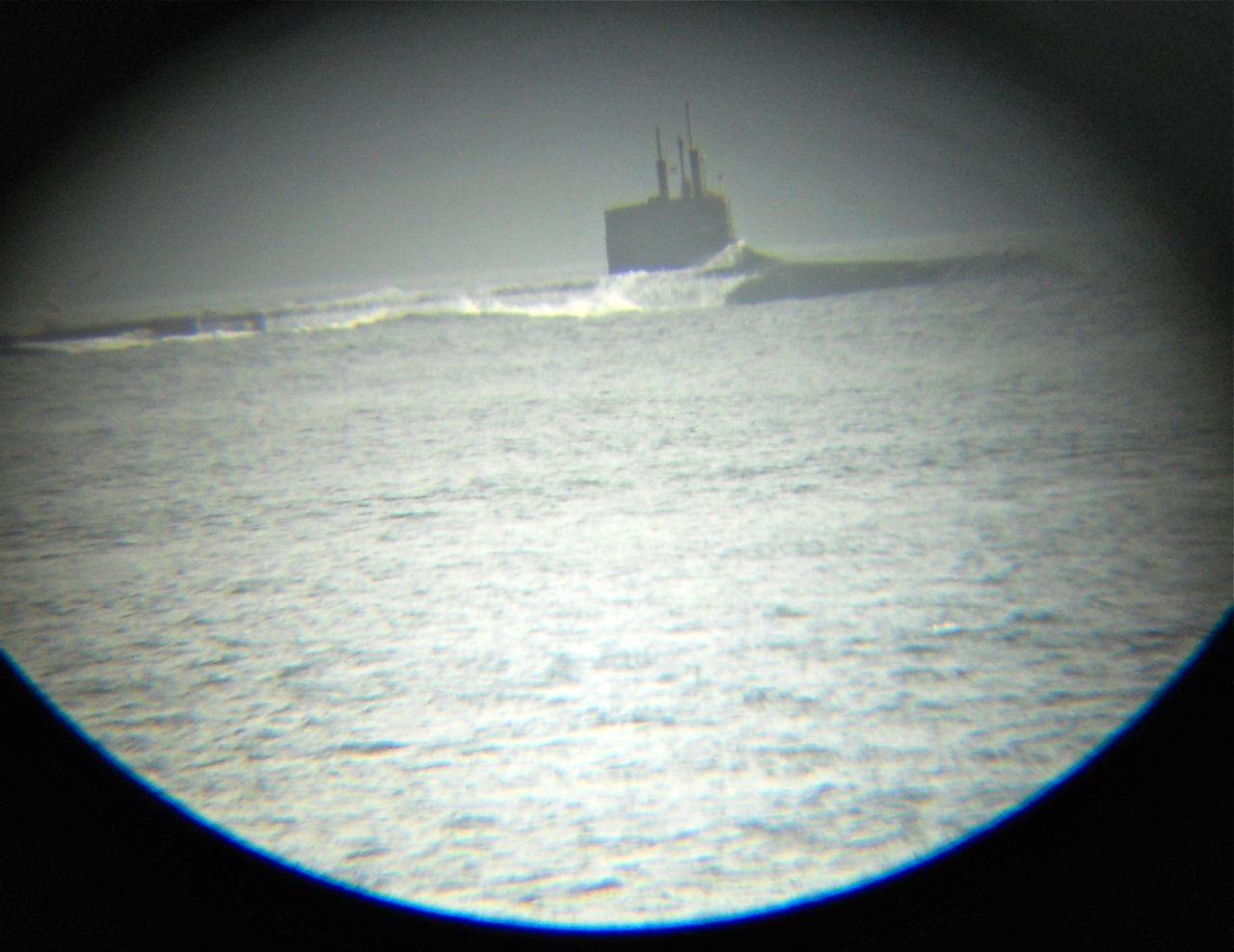
Today 6 kayakers lingered for quite a while at Middle Rocks; the Sea Lions didn’t like it and went in the water. We think of kayaks as benign but i have found that most animals prefer to know when the humans are coming and kayaks allow us to sneak up on them, ironically causing more panic than a motorized vessel. Yesterday I observed a huge submarine pass within 2 miles of the island. I reckon it was a Trident nuclear sub as it was escorted by the American Coast Guard. I can’t imagine the Sea Lions liked that either!

Animal Census Apr 18, 2012

Stellar Sea Lion – 20

Elephant Seal – 12

Harbour Seal – 200

Glaucous-winged Gull – 200

Brandt’s Cormorant – 250

Pelagic Cormorant – 10

Black Turnstones – 30 w/ 2 juveniles

Surfbirds – 10

Raven – 4

Crow – 1

Dunlin – 2

Sparrows – 6

Pigeon Guillemots – 150

Harlequin Ducks – 100

Canada Goose – 20

Bald Eagle (adult) – 4 (juvenile) 8

Black Oyster-catcher – 40

34 people have visited in the least 2 weeks