A Good Day for the Birds

As the sun rose, the wind and sea were calm. The wind picked up throughout the morning to become a moderate breeze with light rain and choppy seas during the afternoon. The barometer rose during the morning and dropped slightly in the afternoon, levelling out at 1014 hPa in the evening.

Eight boats were seen visiting the ecological reserve: 4 whale watching boats, 1 pleasure craft, 2 visits from SCUBA divers at Ogden Point Dive Centre and one boat from Pearson College to pick up Rikka, a student who was visiting for the last four days.

Maintenance tasks were performed today: chopping driftwood for the fire, daily seawater salinity test, running the generator and cleaning the houses.

Two crows were making their rounds on the reserve throughout the day. A juvenile bald eagle flew around Great Race at 0800, landing on Turbine Rock. An adult bald eagle landed on the high point of the South Islands at 1345 and took watch for an hour.

A bald eagle and sea lions on South Islands

A bald eagle and sea lions on South Islands

Clear Skies

As the daylight broke, the fog began to burn off near the entrance of Pedder Bay and to the west of Race Rocks. The wind rose slightly throughout the day to a medium breeze of 11 knots in the evening. Clear skies prevailed through the day as the barometer rose slightly.

Maintenance tasks were performed throughout the day, giving me a chance to spend lots of time outside: painting, tidying, sweeping, cleaning the solar panels, and topping up the batteries with the generator.

There were ten boats in the seen in the reserve. Several whale watching boats passed by. The Juan De Fuce Warrior from Ogden Point Dive Centre spent a few hours with two groups of divers. Two boats from Royal Canadian Marine Search and Rescue (RCMSAR) Station in Sooke passed through Middle Channel at noon. A sailboat went against the current through Middle Channel at 15:30.

Divers from Ogden Point Dive Centre with curious California Sea Lions looking on

Divers from Ogden Point Dive Centre with curious sea lions looking on

sailors

A sailboat heads northeast by Middle Rock

Elephant seal

Flag at half mast with the sunset in the background

Weather Day

A series of squalls and thunder showers turned Race Rocks into an emerald isle today.

A series of squalls and thunder showers turned Race Rocks into an emerald isle today.

Today was a weather day; we had all kinds. The morning fog was thick but lifted early and a westerly wind blew in squall after squall with dramatic downpours interspersed with glorious sunshine. The island had several good fresh water rinses, much needed after a long dry season.

Gulls lifted after the heavy rain and flew above the Davis Weather station drying their wings.

Gulls lifted after the heavy rain and flew above the Davis Weather station drying their wings.

There were dramatic cloud towers with thunder rumbles in the distance. Late afternoon the west wind simmered down to a steady 20 knots and the sky cleared. The barometer rose all day as it became nicer and nicer. A strong wind warning remains in effect for central Juan de Fuca and the outlook is for west winds, showers and increasing cloudiness Sunday and then a shift to southeasterly winds and rain on Monday.

Some of the whale watching boats seemed to be in a hurry today. The speed limit within 400 meters of the islets is 7 knots.

Some of the whale watching boats seemed to be in a hurry today. The speed limit within 400 meters of the islets is 7 knots.

It was a busy day for whale watching boats visiting the Ecological Reserve. A total of eleven boats were noted watching pinnipeds and more passed just outside the boundaries following the lags and watching Humpbacks just to the south and east of Race Rocks. Several of whale watching boats were pushing the boundaries of speeding in the reserve.

In a hurry? King Salmon of Great Pacific Adventures rushing through the Ecological Reserve at Race Rocks.

In a hurry? King Salmon of Great Pacific Adventures rushing through the Ecological Reserve at Race Rocks.

The usual dive boat spent most of the day in the Ecological Reserve doing multiple dives to the north of Great Race and finishing their last dive just off the jetty.

The Steller's Sea Lion would be a good candidate for disentanglement. He is robust and the strapping is not cutting into the back of his neck, yet.

The Steller’s Sea Lion would be a good candidate for disentanglement. He is robust and the strapping is not cutting into the back of his neck, yet.

Ecological observations were made throughout the day as opportunities arose.
I spotted a new (to me), entangled, Steller’s Sea Lion. It looked as though the culprit was plastic strapping again and there is a tiny glimmer of hope for the animal because, although the plastic had cut into the flesh of its throat, there was a bit of it unraveling and maybe there will be more. Again this would be a good candidate for disentangling because the plastic strap could easily be cut on the back where it was not embedded and because the individual is (for now) otherwise healthy-looking and robust enough to get into several scraps just finding a place to sleep.

If it wasn't so anthropomorphic, I might be tempted to suggest that these two are both saying do something, please.

If it wasn’t so anthropomorphic, I might be tempted to suggest that these two are both saying, ‘do something, please’.


You can see the extent of the injury being caused by the plastic cutting into this animals' neck.

You can see the extent of the injury being caused by the plastic cutting into this animals’ neck.

Alex and I took advantage of the downpours to collect rainwater in the wheelbarrow and wash outside windows. Alex made a sturdy, long handle for the squeegee and we worked as a team to clean and squeegee the exterior of the windows on both houses. The science house windows were still covered from gull breeding season, dive bombings and will benefit from a few more downpours which are on the horizon now. We tried to trouble-shoot the wind direction problems (again) with the Davis Weather system. Holding the vane at ninety degrees did not affect the reading on the console display. The usual chores regarding power, water and seawater sampling were also completed.

Out of the Fog

I returned to Race Rocks today after attending the Trans-Atlantic workshop on Ocean Literacy and the European Marine Science Educator’s conference last week, in Gothenburg, Sweden. I am refreshed and inspired to finish off my shift at Race Rocks.
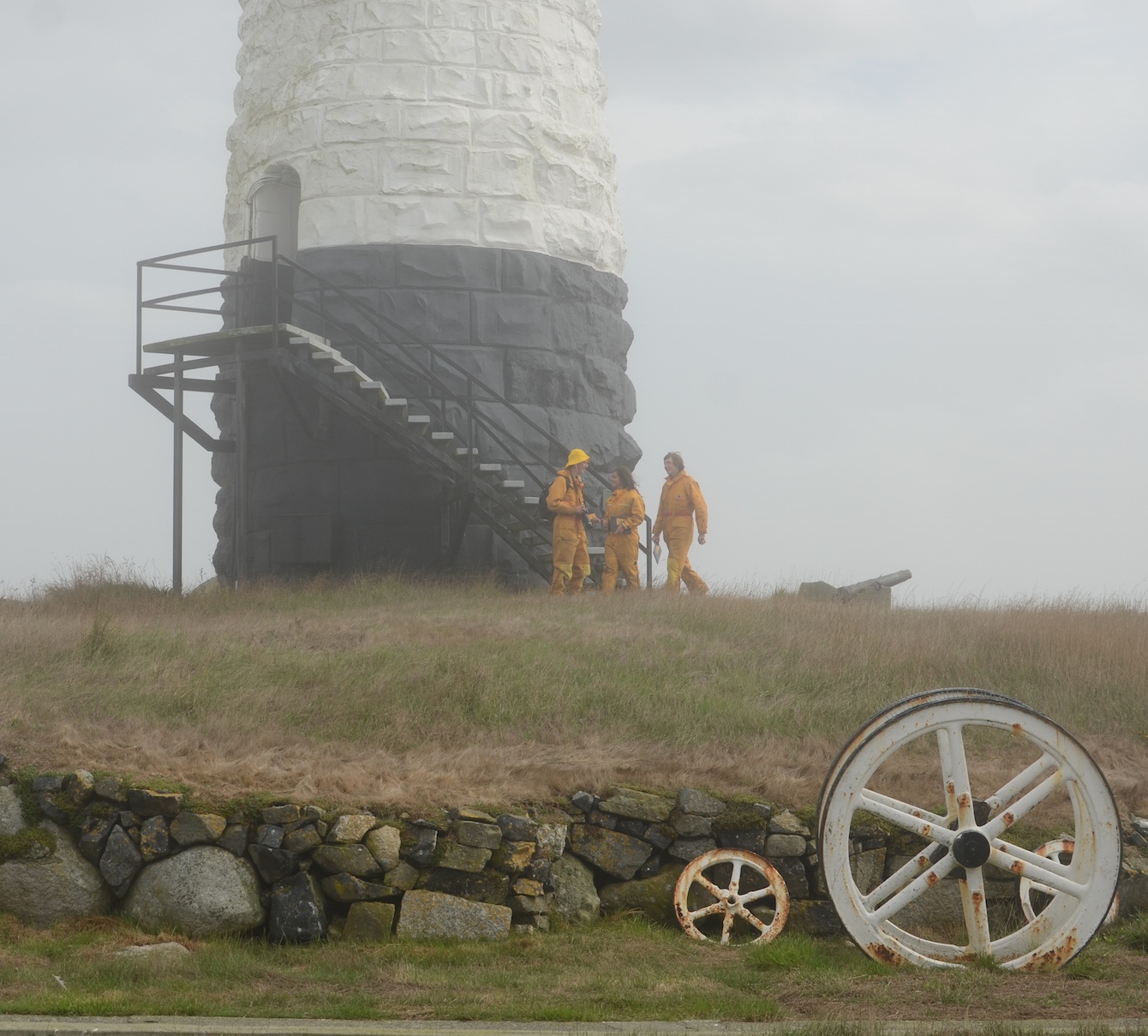
It was warm and sunny when Courtney and I left Pearson College in Pedder Bay this morning but as we drove southeast towards Race Rocks, we were soon enveloped in the cool, damp fog. As the sunny peaks of the Olympic Mountains slid out of view, obscured by fog, the dark shape of North Islet emerged and behind it came Great Race and the light-tower, out of the fog. It is great to be back and was just as great for Jeff, who was filling in, to leave.
It was foggy on and off all day with a few periods of sunshine with visibility of over a nautical mile. Throughout the day, the foghorn blew and I could hear ships signaling as they navigated the Strait of Juan de Fuca in the fog. There was no wind for most of the day but it has been consistently blowing about ten knots out of the west for the past several hours and the fog is thickening.
The fog did not deter the whale watching boats as there were Humpback Whales feeding in the area today and the last cruise ship of the season in port. One smaller Humpback was diving and presumably feeding right in the Ecological Reserve diving against the flooding tide. I wonder if they can use the flow to their advantage in feeding more efficiently with less effort? Natural history speculation aside, the count of observed whale watching boats from 11:00 to 19:00 (dusk) was thirteen with some vessels visiting more than once.
The Chum Salmon run started in earnest while I was away and there appears to be fewer sea lions hauled out than there were before. There are many in the water however. Sea lions of both species are very busy eating Chum Salmon with most of the kills I observed, happening right in or at the edge of the tidal flows. They thrash the fish and rip it apart at the surface and swallow large chunks tail last at the surface as well. This source of scraps, of course attracts gulls. Several species of gull were seen in these sea lion driven feeding flocks today; Glaucous-winged, Hermann’s, Thayer’s and Ring-billed Gulls. There were three or four fairly hefty Elephant Seals hanging around the marine railway today. They have such huge eyes and such clean looking pink mouths. Many of the Sea Lions have serious tooth decay and oral disease.

While I was away there were several a visits to the island. The Victoria Natural History Society made it part of their birding trip on September 27, sixteen friends of the Royal BC Museum made a visit October 4th and a family visit was made by by Mike and Carol Slater, one of their daughters and several grand-children. Mike and Carol were the last light-keepers at Race Rocks and the first Eco-Guardians. They survived some epic storms and I am sure they have some great stories to tell. If you are interested in the “contemporary” history of Race Rocks, there is a lot of information on this web-site, including ancient videos, images and even historic weather events.

My main tasks today were to get moved back into the house, to do the seawater sampling, fix the pier fence and run the generator for a few hours in order to top up the batteries. There is new clean oil in the Lister gen-set and new filters etc. thanks to Jeff. The old Lister seems to run better than ever tonight a I finish my last task, posting this blog..

Real Rain

There was measurable rain last night and this morning for the first time in a long time, followed by fairly thick fog. Eventually the fog burned off and the northeast wind chased it out of the Strait. Although it is now blue sky above, it seems to be the donut hole with clouds all around, so expect more showers and outflow winds. The barometer started climbing out of the hole early this morning and kept climbing most of the day, until leveling off late afternoon. On the satellite, it looks like the first pineapple express of the season and we are in the lee of the Olympic Mountains.

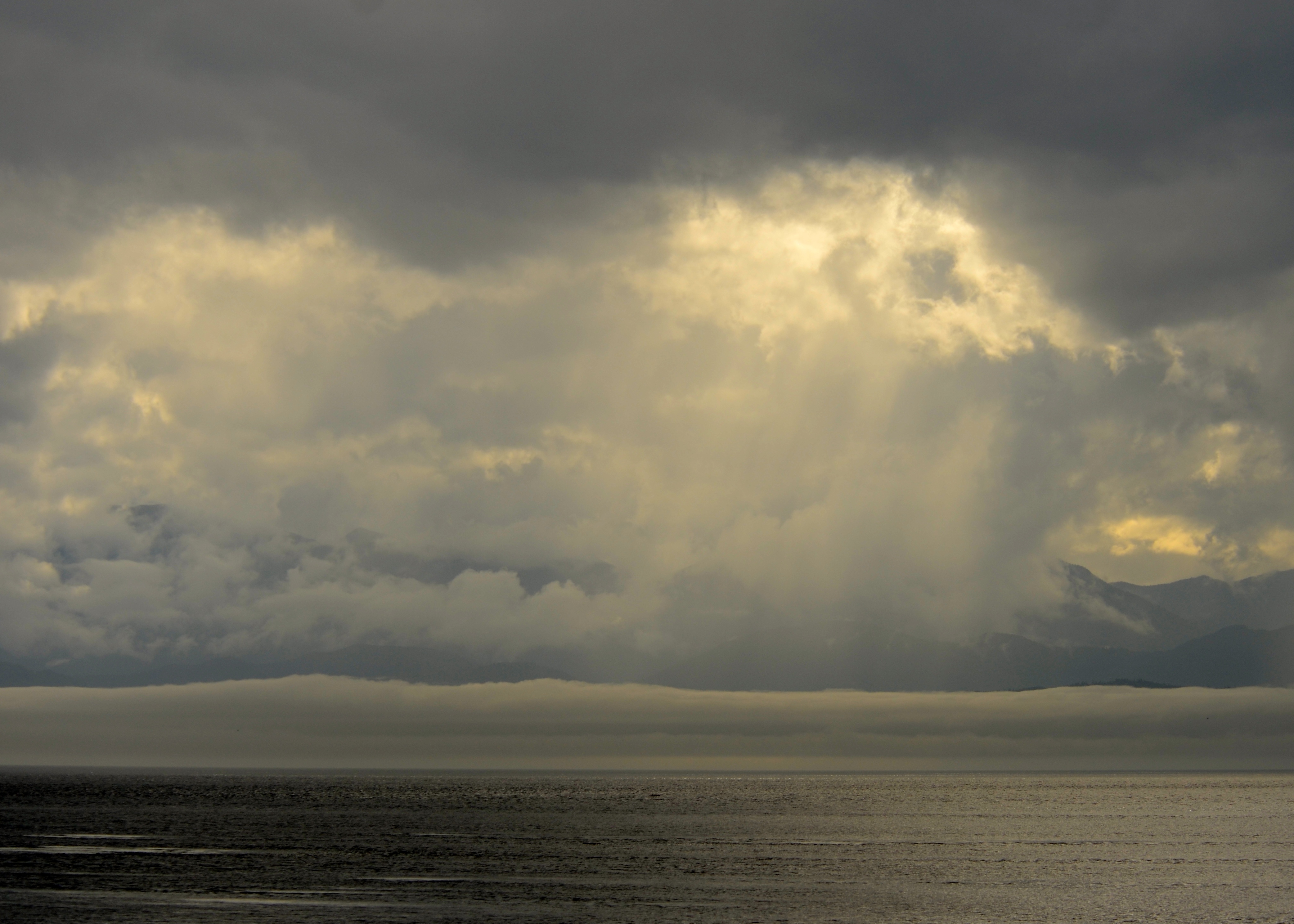
Rain, sunshine and fog, with god-rays for good measure.

Rain, sunshine and fog, with god-rays for good measure.

There was only one whale watching boat today ‘Gold Wing’, one recreational boat and a couple of commercial charter vessels.

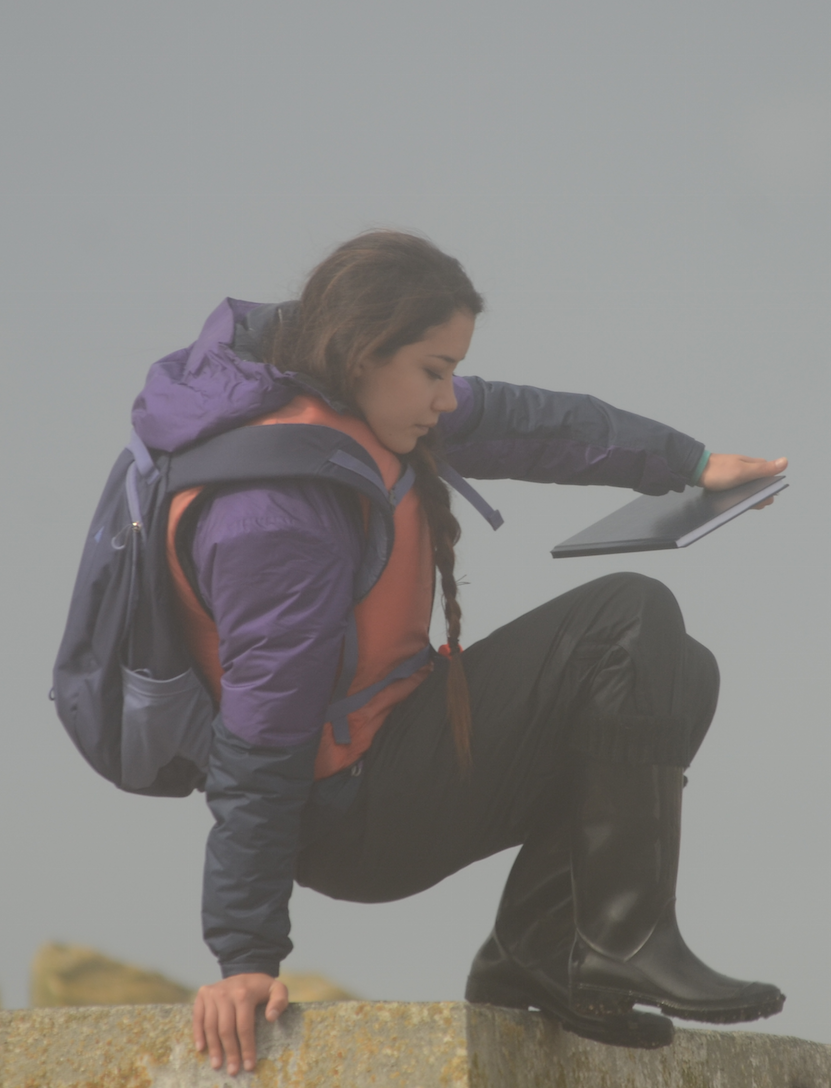
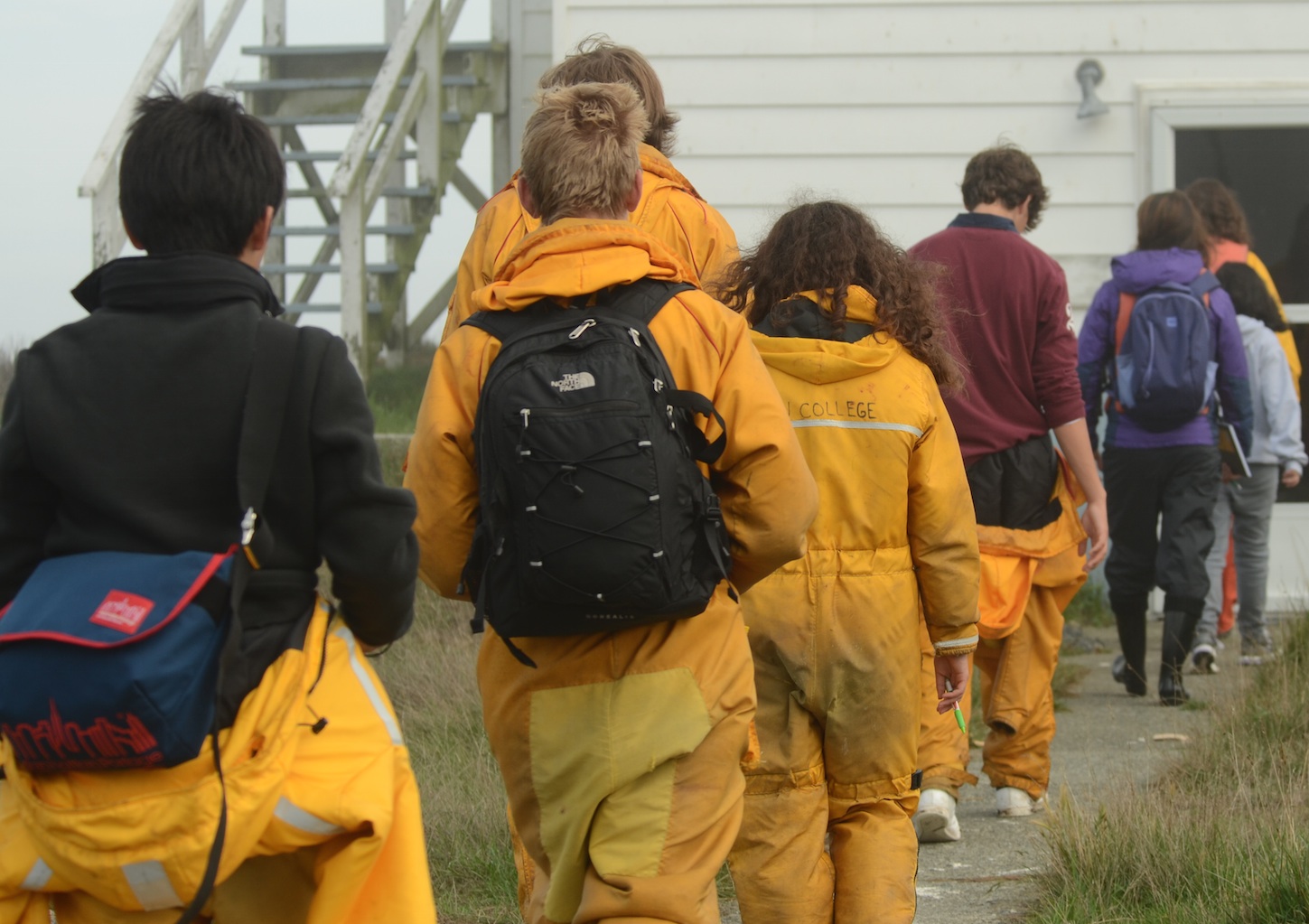
The second of three first year Marine Science classes came for a field trip today. Their quest was similar to yesterday’s class; to make first-hand observations and enter their notes and drawings into their field journals and to add to their species lists. I added consumption of warm fruit crumble, with very Canadian maple syrup to their to do list and the students seemed to enjoy the whole process.

Students making discoveries.

Students making discoveries.

Canadian student observing from the top of the tower.

Canadian student observing from the top of the tower.

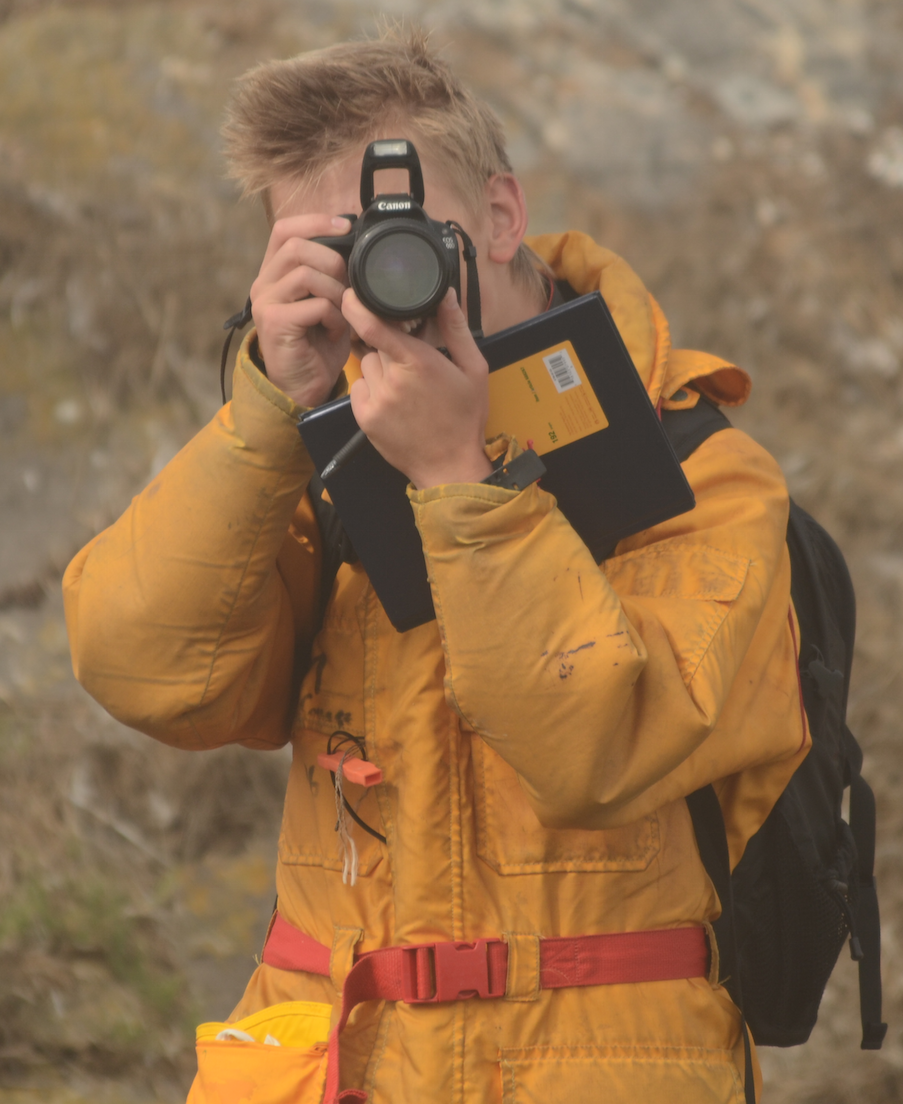
Journal and camera at the ready for marine science observations.

Journal and camera at the ready for marine science observations.

Hang on to that journal. You will need to keep track of it for two years.

Hang on to that journal. You will need to keep track of it for two years.

Class meeting at the ecoguardian house.

Class meeting at the ecoguardian house.

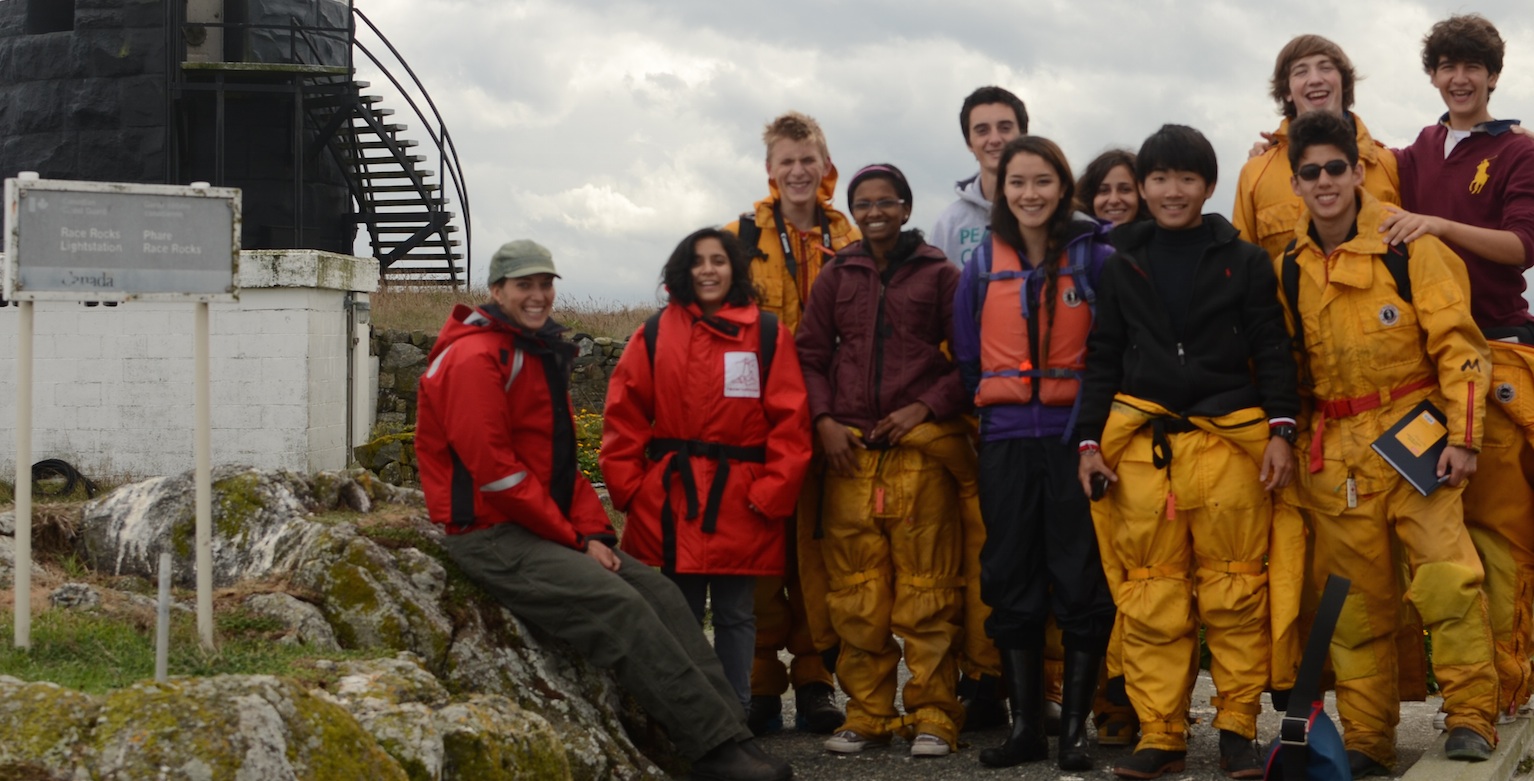
The crew

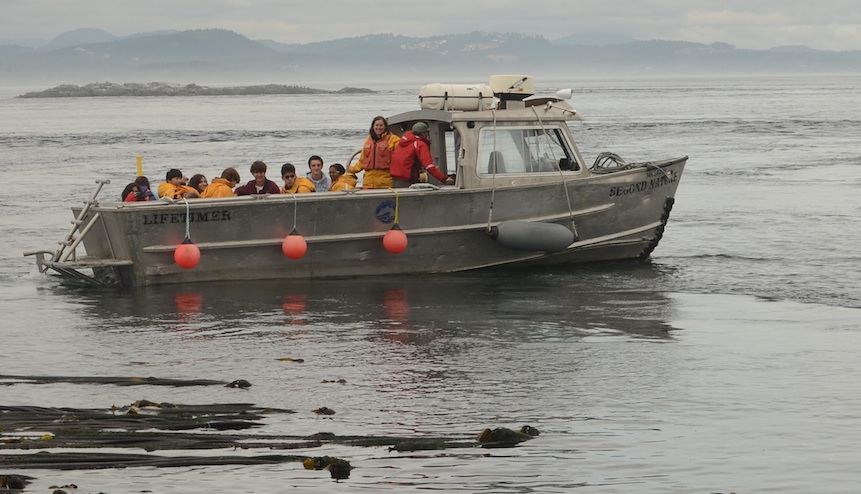
Second Nature departing with Courtney at the helm.

Second Nature departing with Courtney at the helm.

The California Sea Lions seem to be disturbed by the rain and spent the night making a lot of noise. In the morning most of them moved into the water when the rain started again. Could it be that there hasn’t been much rain where they have been? So far we have brands from the Channel Islands, Rogue Reef in southern Oregon and the Columbia River in northern Oregon.

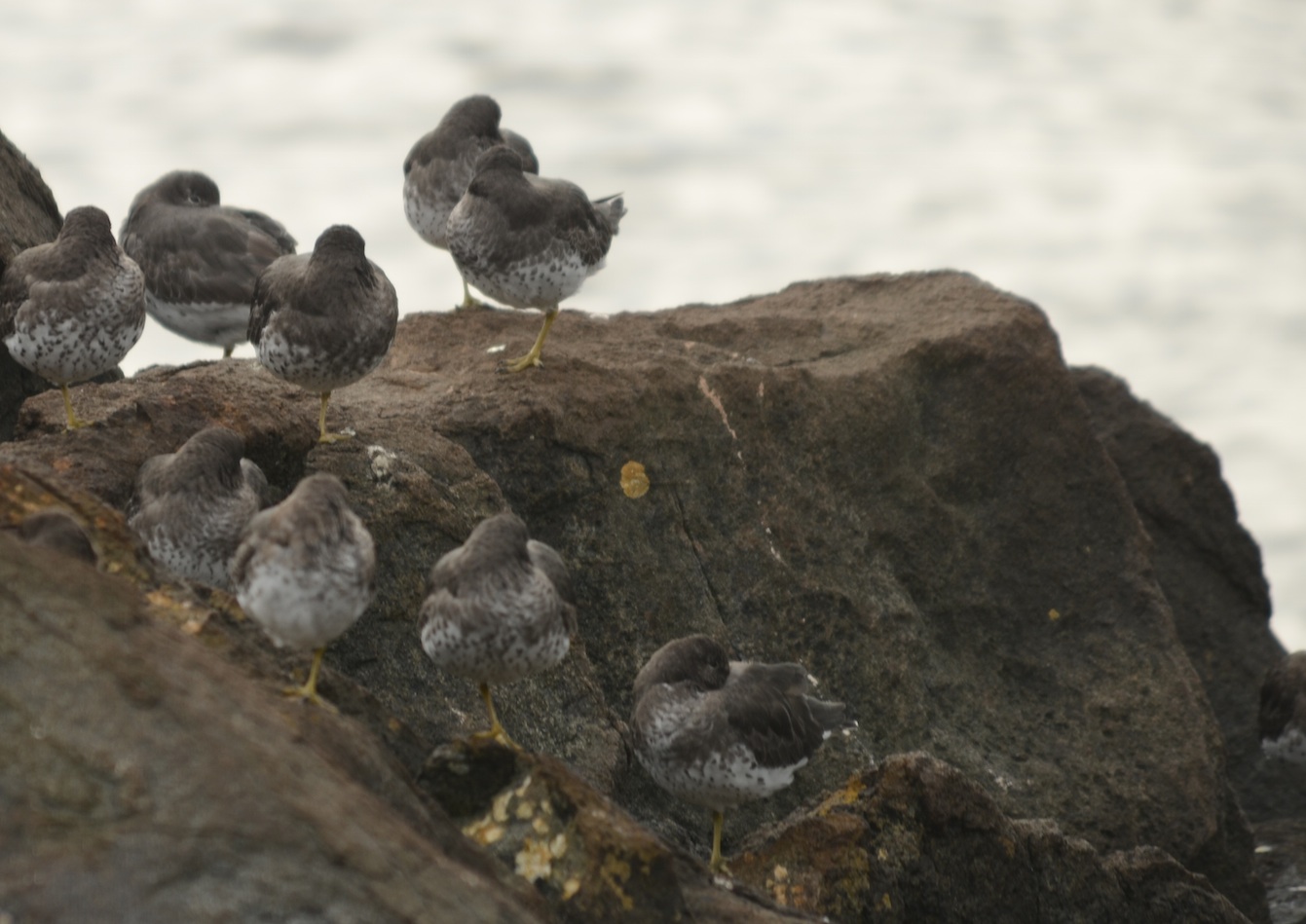
We had some new arrivals today in the form of a flock of very tired Surfbirds. They slept most of the day. Their breeding grounds are in the mountains of the Yukon and in Alaska and they winter here on the coast.

Surfbirds arrived today and rested.

Surfbirds arrived today and rested.

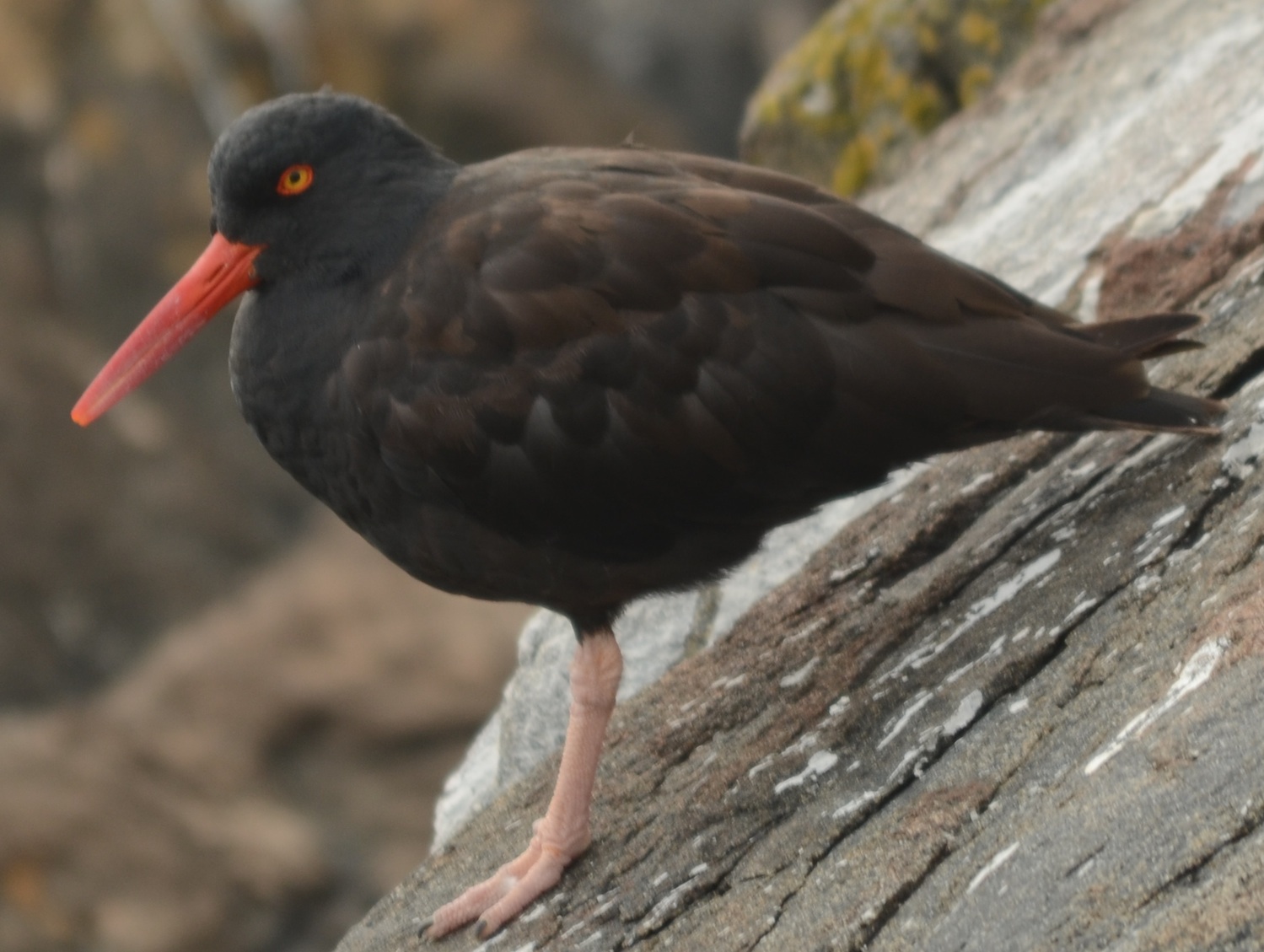
There were also a couple of Western Sandpipers flitting about today. They breed in western Alaska and are heading south, just passing through here. If they are looking for biofilm, Race Rocks is covered in it, even though with its’ high current and rocky substrate, it is the opposite of a mudflat, it has such a massive concentration of life that there is food for eveyone. I saw more Black Oystercatchers today than I have in a couple of weeks. They are one of my favourite birds.

Black Oystercatchers are very jazzy birds. They have the most spartan nests imaginable. The adult pairs are quite site fidel.

Black Oystercatchers are very jazzy birds. They have the most spartan nests imaginable. The adult pairs are quite site fidel.

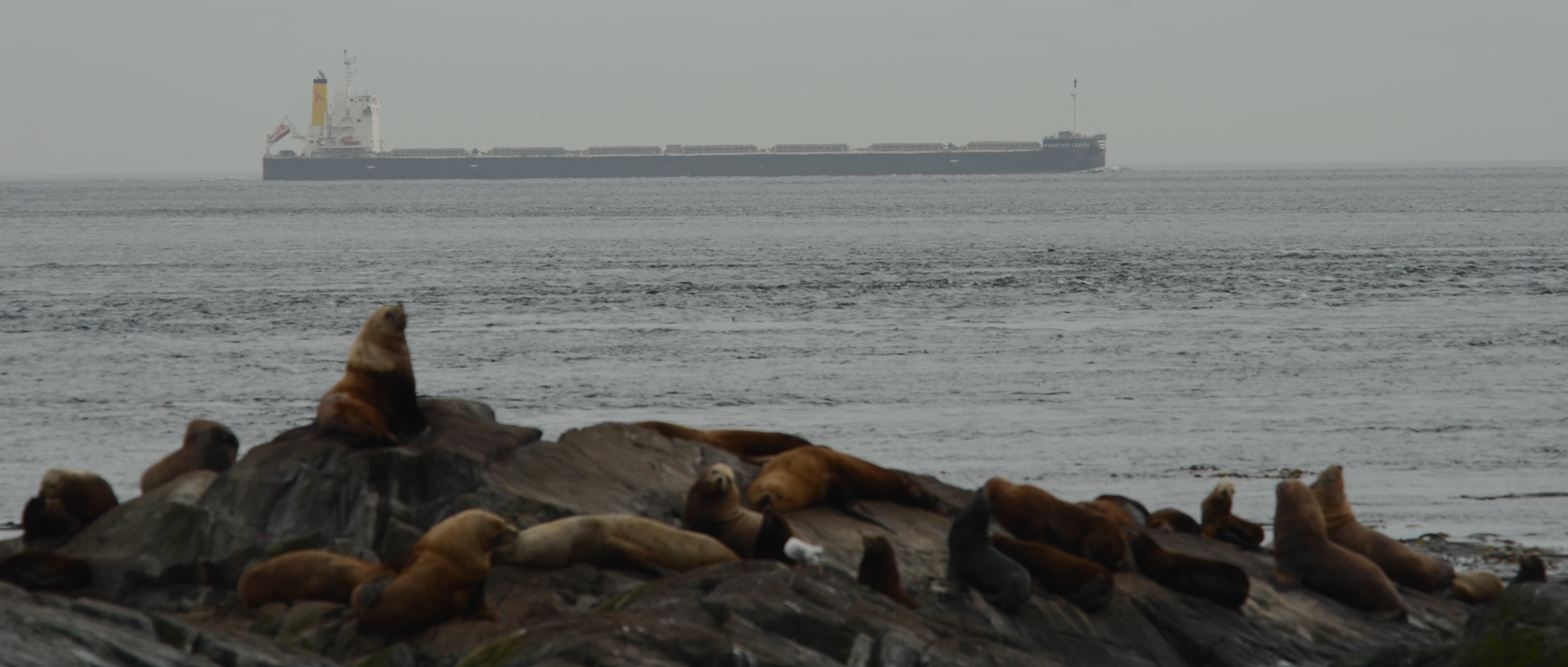
I am preparing to attend an international workshop on ocean literacy, followed by the European Marine Science Educator’s Conference. Also trying to trouble-shoot the Davis wind direction data, which is reading greater than 360o. All the normal, potential problems seem fine, so it is still a mystery. Regular tasks like making power, making water, testing the seawater, taking photos of branded animals and generally fighting entropy, continue. Here is another photo for Garry of sea lions in the foreground and shipping in the not too distant background.

Race Rocks Ecological Reserve is located adjacent to a very busy shipping lane.
Race Rocks Ecological Reserve is located adjacent to a very busy shipping lane.

Cut and Recycle Plastic Straps

Beautiful weather continues and today’s lack of fog and strong winds made it a really perfect summer day. The barometer rose steadily all day and the outlook is for more of the same.

Thirty-five whale-watching boats were noted in the reserve today and some may have been missed as I made a mad dash to “civilization” during the late afternoon slack tide. It is quite a process getting the boat launched and then back up into the boat shed but the good coffee I picked up made it all worthwhile. Back on the rock now with 600 sea lions and one Elephant Seal.

Killer Whales were within sight today, out in Juan de Fuca Strait, but not in the reserve and that was why there was high traffic by the boats, stopping by to see the sea lions.

I spent an hour this morning in the tower, photographing the tagged/branded animals that I have been recording. It is really nice to have a birds’ eye view of the rookery. Speaking of rooks, there were two ravens this morning. Until today I have only seen solo ravens. The evening bird continues to be a mystery to me, I can only describe the call as being high pitched and saying something like chee bedee be dee be dee. From the few glimpses I have had of it in the dark (not very good glimpses) I would say that it flew like a shorebird. (turned out to be a killdeer)

Common Murres and Rhinoceros Auklets are feeding in deeper water around the reserve now and today saw an influx of California Gulls into the reserve. The Heerman’s Gulls continue to join mixed-species, feeding flocks and forage on their own but I have not seen any landing on Great Race. There are more and more Canada Geese landing every day and they are eating every new little green thing that is not a thistle. Can they be classified as pest-like?

Another reason to both cut and recycle plastic straps. Three ring-necks observed today.

Another reason to both cut and recycle plastic straps. Three ring-necks observed today.

I photo-documented more entangled sea lions today to follow up on work being done by Wendy Szaniszlo, the Vancouver Aquarium and others. I observed two California Sea Lions ring necked, one is doing very poorly with an open wound and liquid coming out of it. It looks like a white plastic strap. The other may have already been treated as it looks and acts healthy. As I was coming into to land at the jetty in the tidal race, I noticed a Steller’s Sea Lion that was ring-necked. I did not get a chance to photograph it as landing here is already exciting enough by myself. I will look for it after chores in the morning.

Chores were basic today, cleaning and organizing, sharpening tools and almost completing the new fence.

Business as usual

Overcast. Winds 5-10 knots most of the day. Barometric pressure rising until this evening. Winds forecasted to be 15-25 knots tomorrow.

16 whale watching boats

3 recreational boats

1 commercial fishing boat passed through

Many sea lions on the main island now. There is lots of interaction between the Californias and Stellers. In the evening, the Californias take over the northeast lawn and the Stellers tend to stay on the outer edge of the rock though many do squish their way into the lawn resting area. There are three juvenile elephant seals that have been spend their days on the ramp. They make their way into the waters in the evening.

Finished cleaning out the tank room. Backflushed the desalinator although it is having issues with the high pressure pump. Been working on cameras 1 and 5 which are down.

Sea lions are here

Mostly clear skies. Fog late morning into early afternoon. Winds between 10-15 knots most of the day. Barometric pressure rising the first half of the day and falling in the afternoon/evening.

6 whale watching boats (hard to say with fog though)

2 recreational fishing boats (PBM rentals)

2 recreational dive boats

Down to three elephant seals on the island currently. The sea lions have crept further up the east side of the island. There are an estimated 60-70 on the island now. The fence is still deterring them from the jetty, etc. Big moon tonight (supermoon tomorrow) but still the bioluminescent phytoplankton is visible!

Animal Census

Northwest winds dipping down to 10 knots midday and back up to 15 knots in the afternoon. Barometric pressure climbing since late Thursday. Forecasted fog for tomorrow and winds from 10 to 25 knots in the afternoon.

Animal Census:
272 Gulls
32 Guillemots
4 Elephant seals
381 Sea lions (Steller and California)
3 River otters
2 Double-crested cormorants
273 Harbour seals
13 Black oystercatchers

The otters appeared in the early evening again, taking at least two gull chicks. The sea lions, both Steller and California, have started making their way onto the main island. The electric fence is set up to deter them from the jetty, the winch pad (and hydraulic pipes) and the main residence.

We’ve had issues with one of the inverters in the generator room this week which have meant limited power, internet and phone access.


Orcas

Northwest winds increasing from midday to 35 knots this evening. Barometric pressure in a downward trend since Wednesday at noon. Some fog this morning. 20-25 knot winds forecasted for tomorrow with some fog.

37 whale watching boats

11 recreational fishing boats

3 recreational boats (including a dive boat)

A pod of orcas passed through the reserve on the north side of Middle and Turbine Rocks. There were at least 7-8 of them in front heading east through the channel with a few more trailing a few hundred metres behind. Four elephant seals on cite at the moment. No eagle visits today but a number of California sea lions have started arriving.

Topped up the batteries and did the monthly report.