Marine Mammal Rescue!

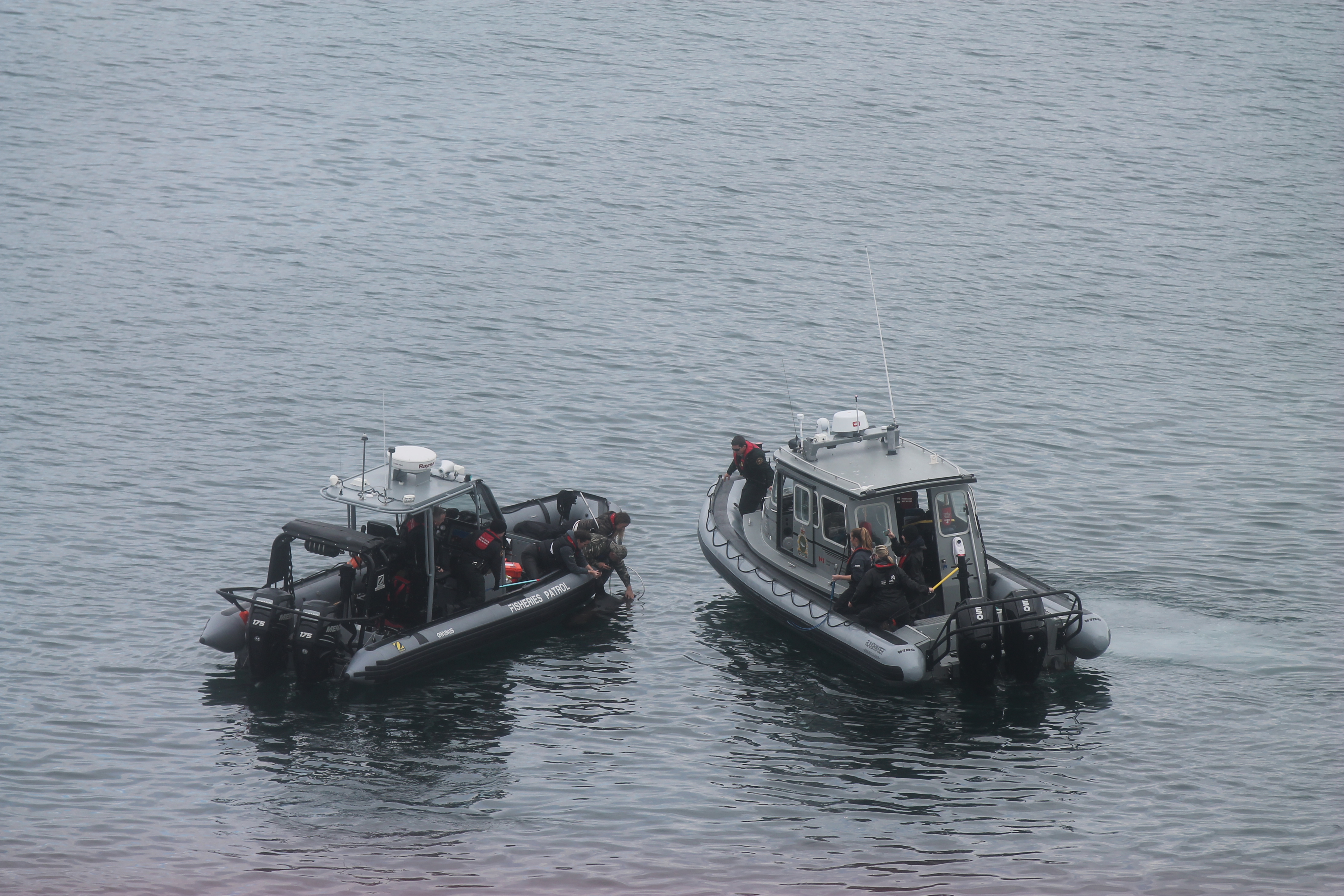
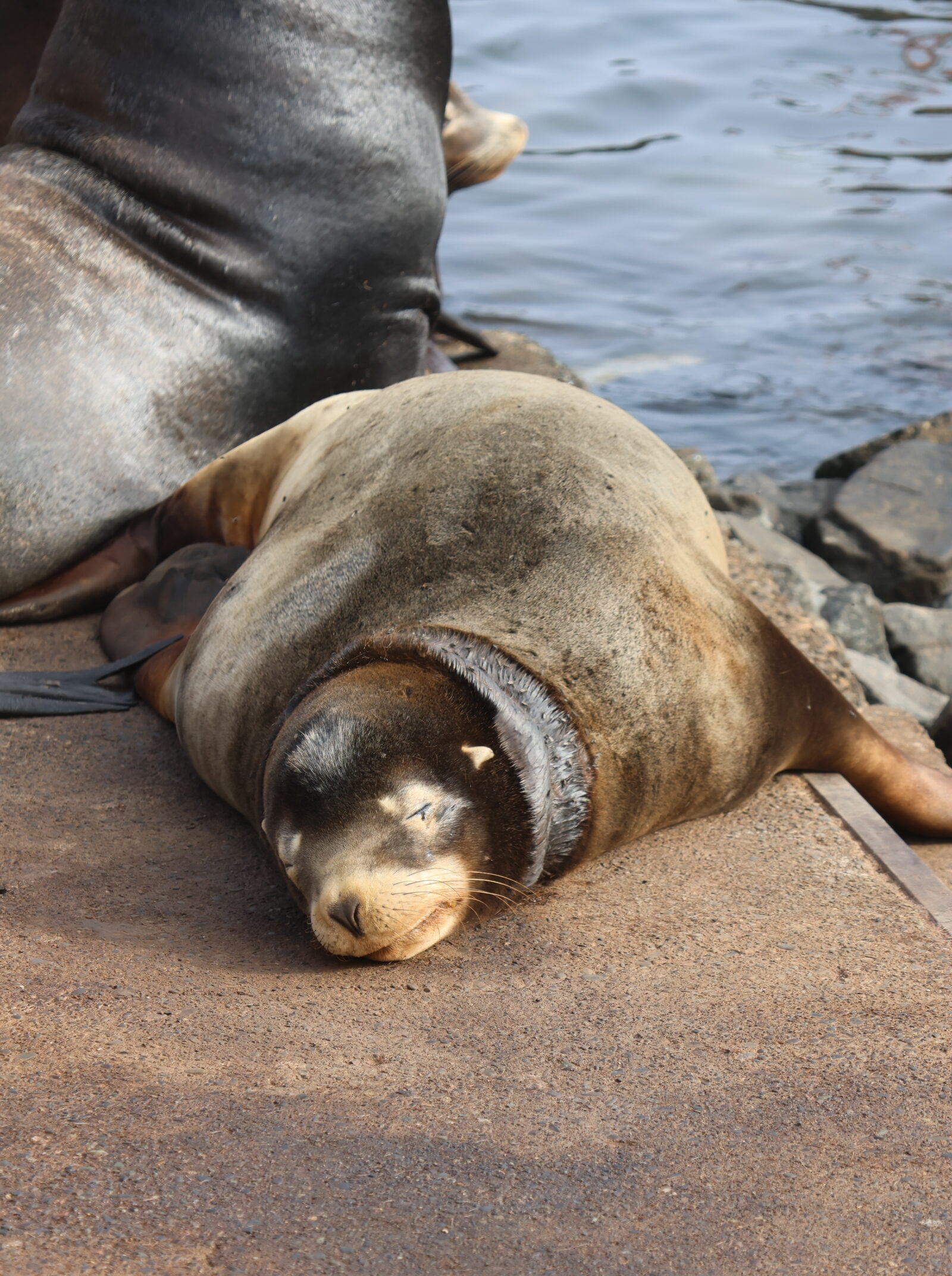
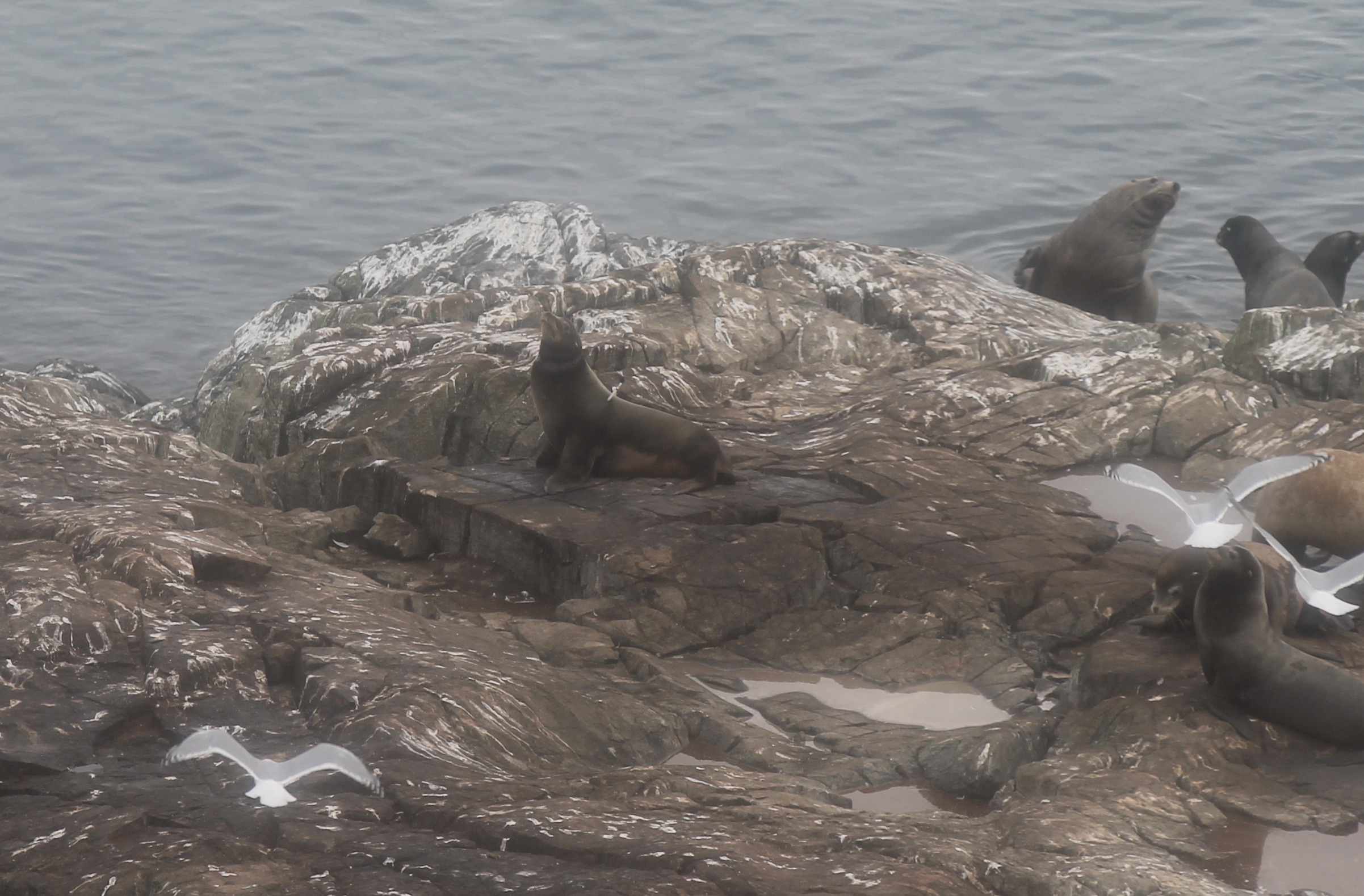
It has been a fantastic few days out here! The team from the Vancouver Aquarium Marine Mammal Rescue Society came out with DFO to disentangle the California sea lion that I first spotted last October.
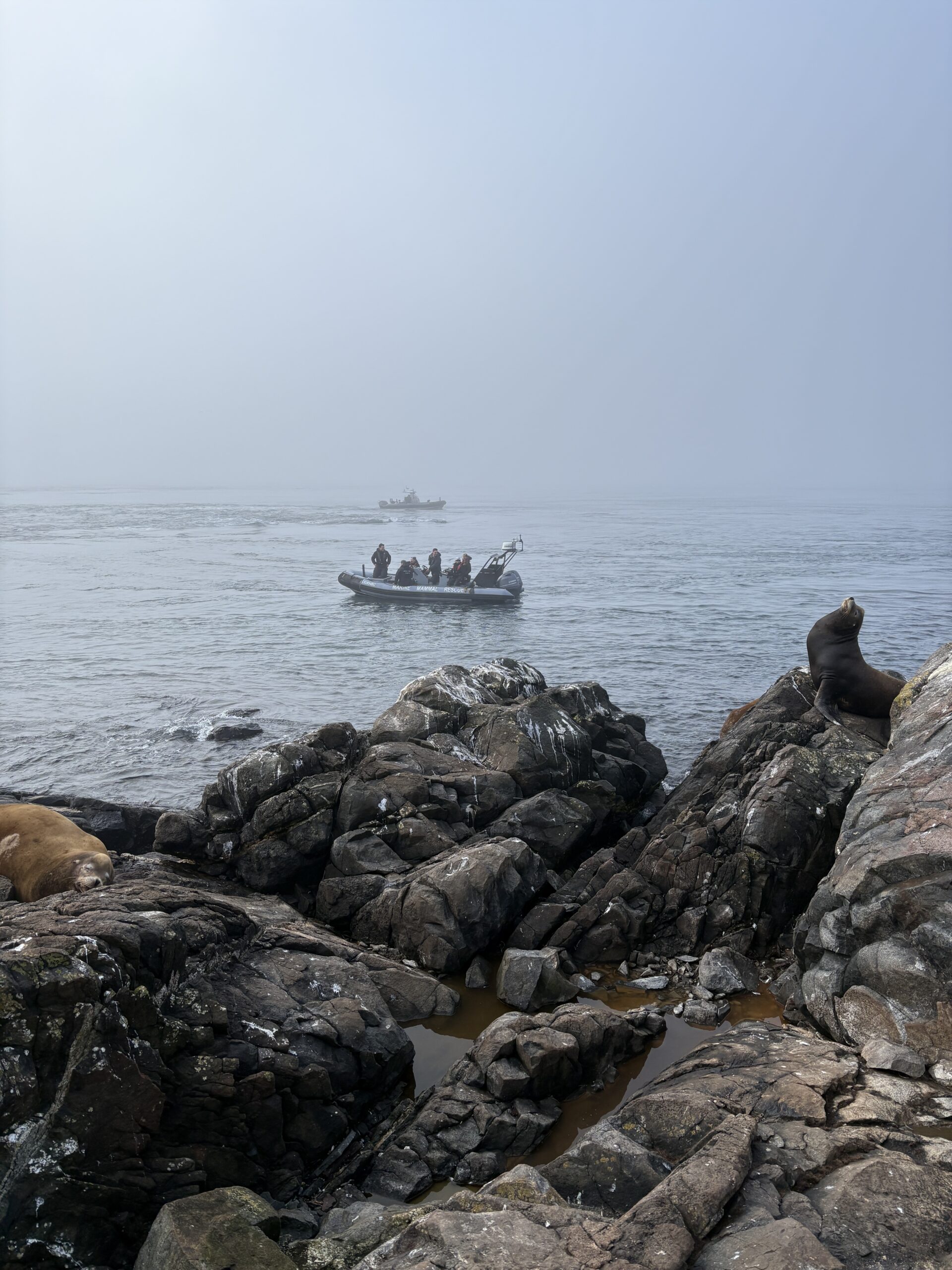
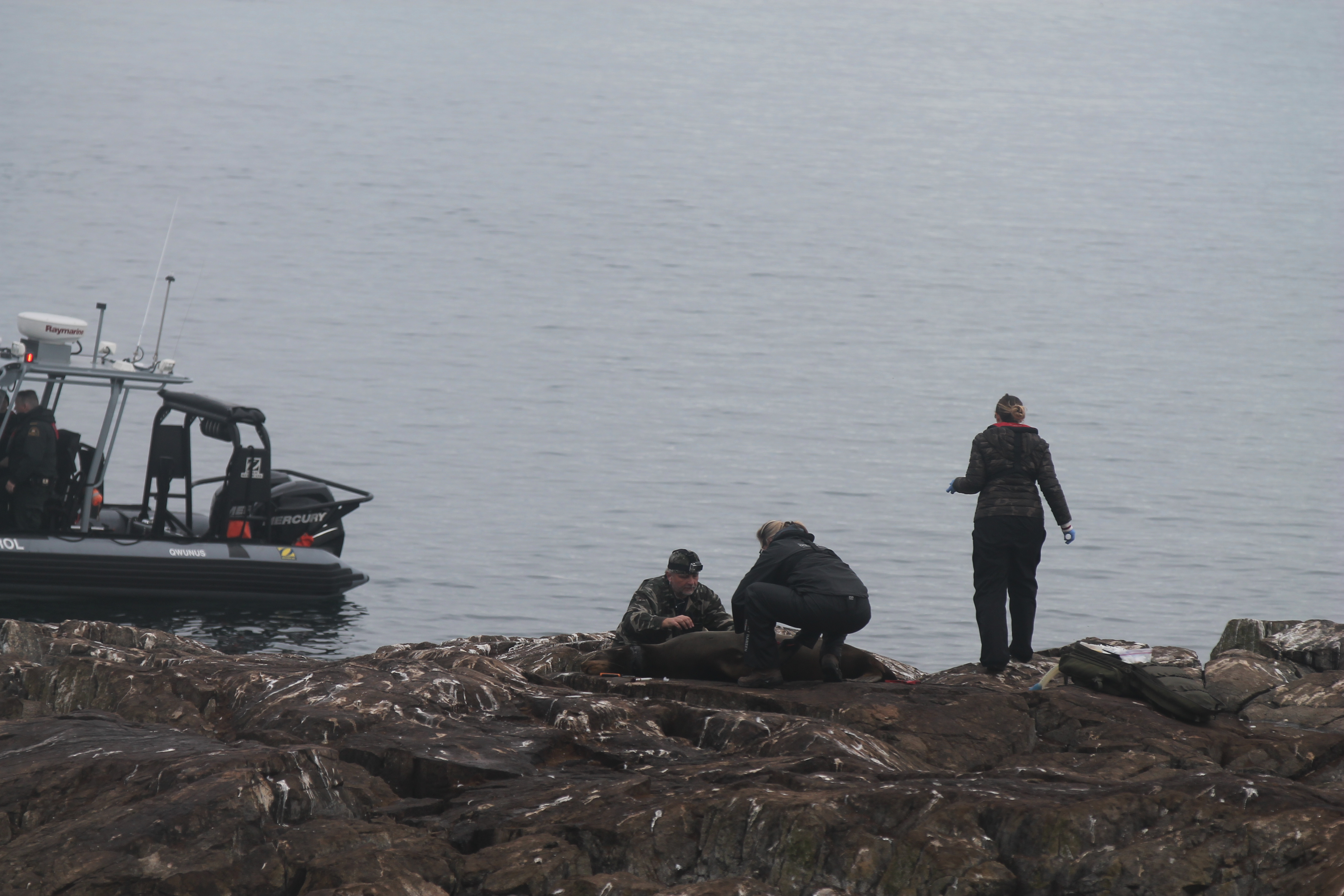
He was sleeping up high on the boat launch with made landing at the jetty tricky because we didn’t want to scare the sea lions and risk him going in the water. Instead, DFO dropped the rescue team off the south side of the island. The current was strong so we weren’t sure it would be possible, but they were able to safely nose the rhib into the rocks behind the generator building and the team came up the rocks. This ended up being great because we could approach the entangled sea lion without scaring him, and there are significantly less sea lions on the south side lately, so the disturbance was minimal.
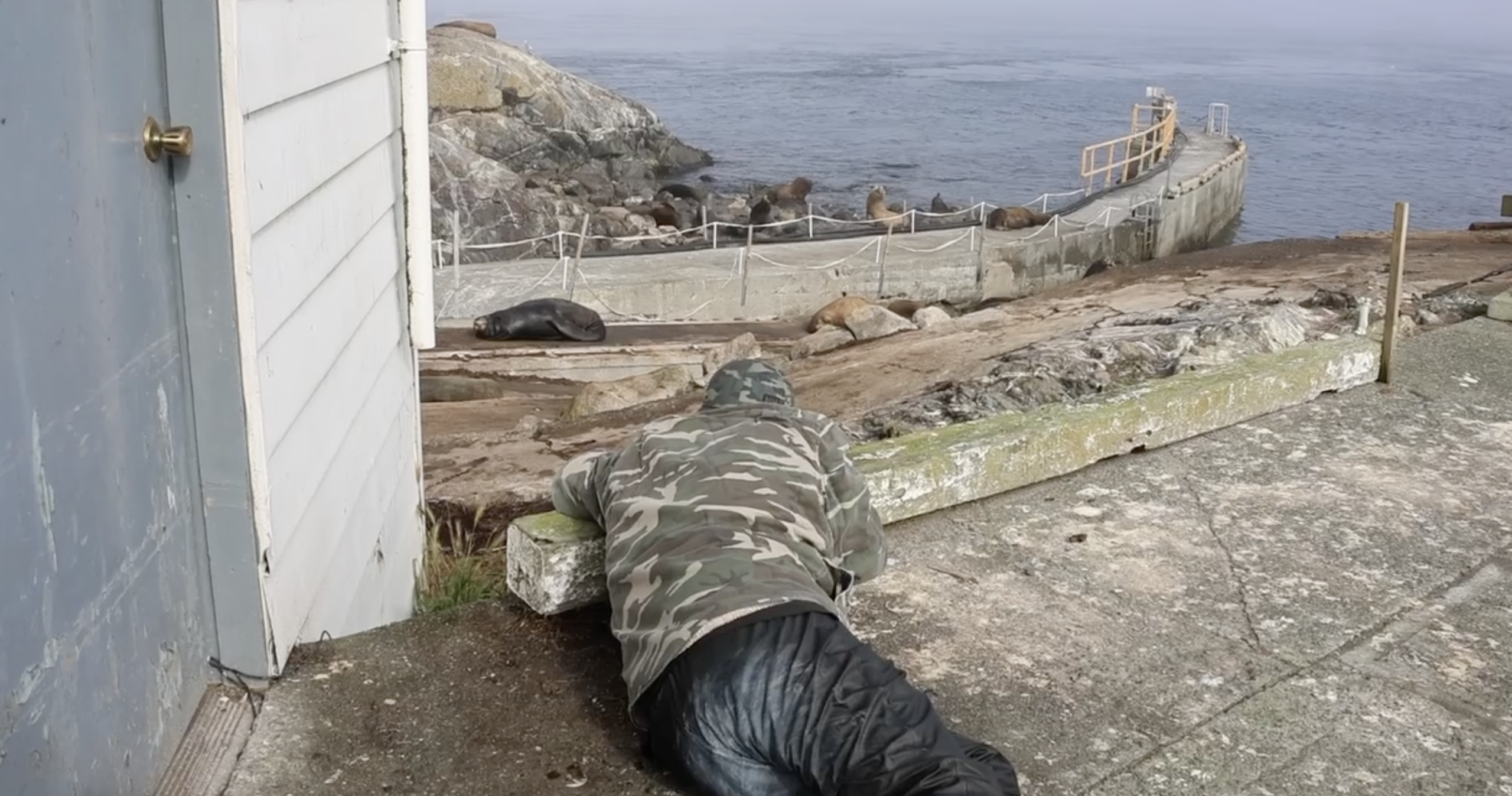
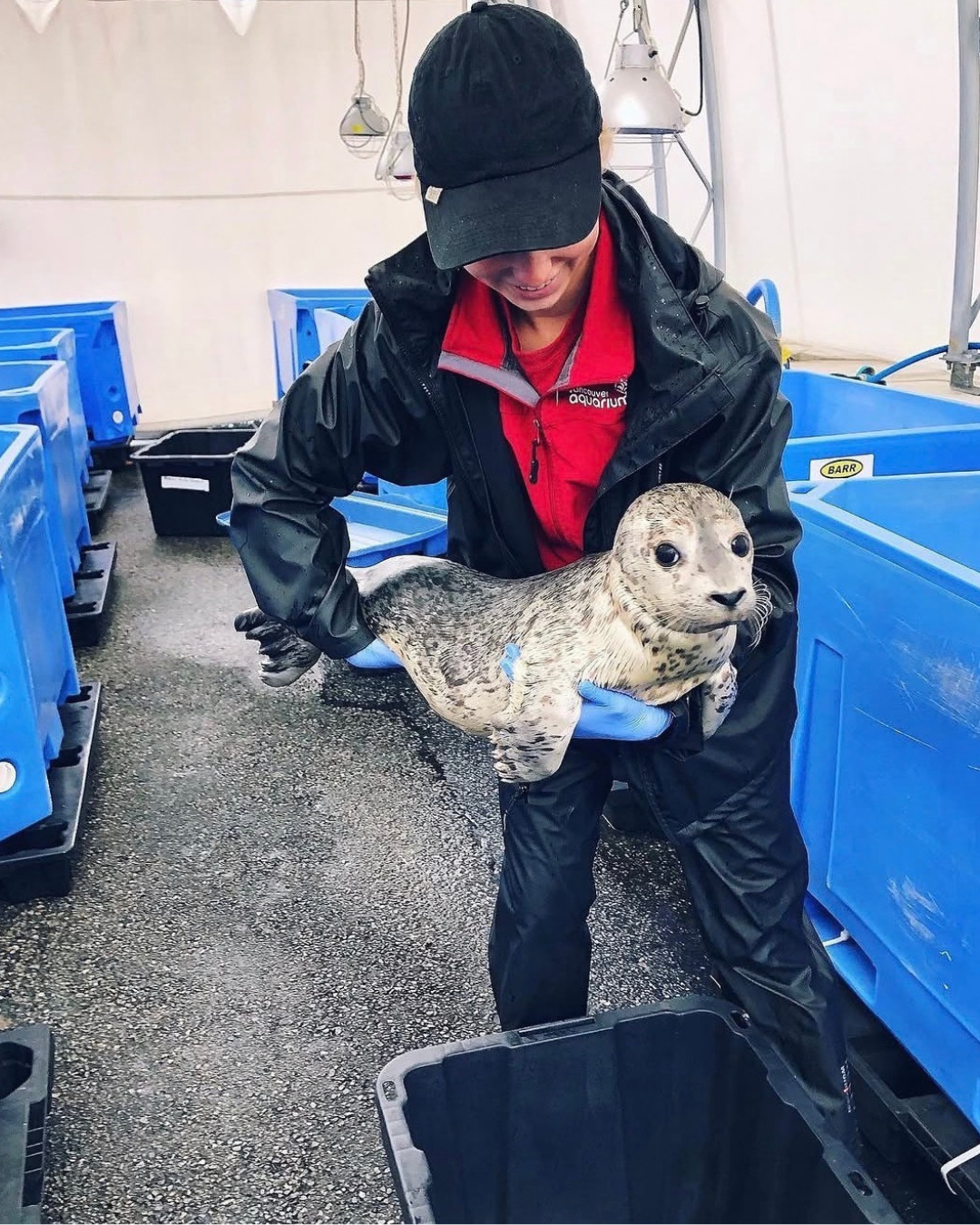
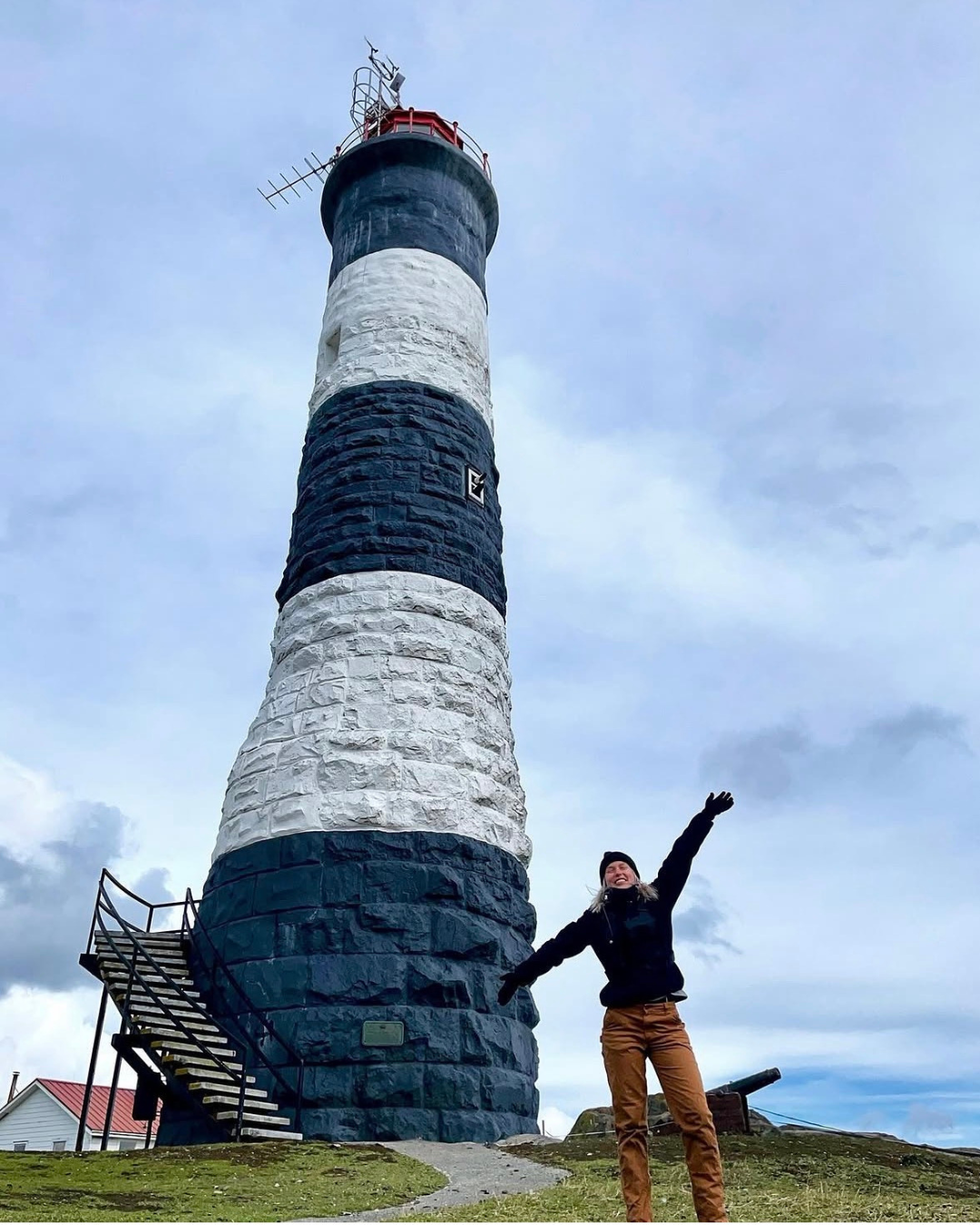
For those who don’t already know, when I’m not at the lighthouse, I work full time as a Registered Veterinary Technologist with the Marine Mammal Rescue Society. This was my team coming out, and disentanglements are one of my favourite parts of the job. Doing this work at Race Rocks is especially meaningful: I can help save an animal, and I’m often the person who finds and monitors them, coordinates with the team, and supports the rescue. Afterward, I’m able to continue monitoring the animal in the following days, which is incredibly rewarding.
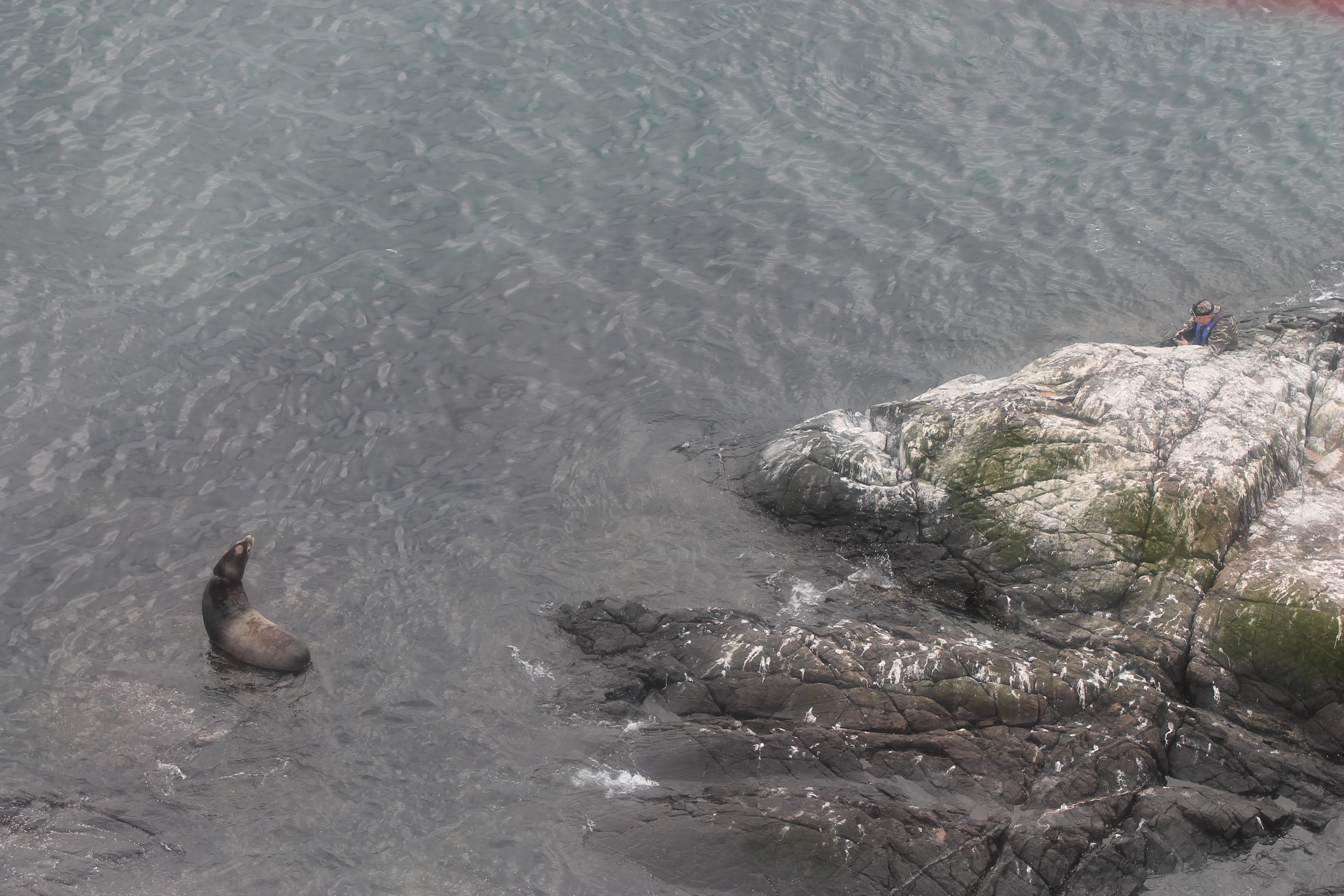
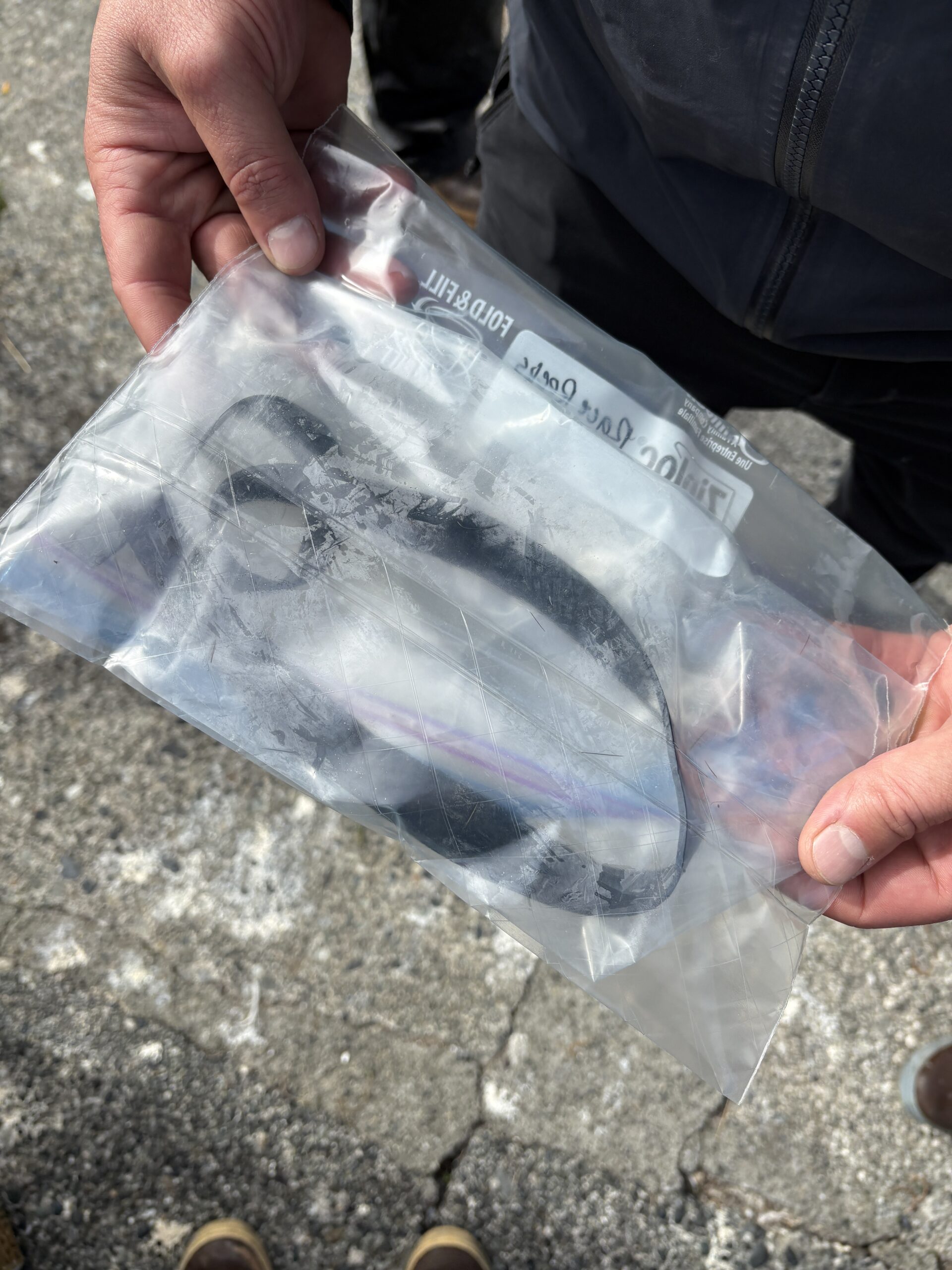
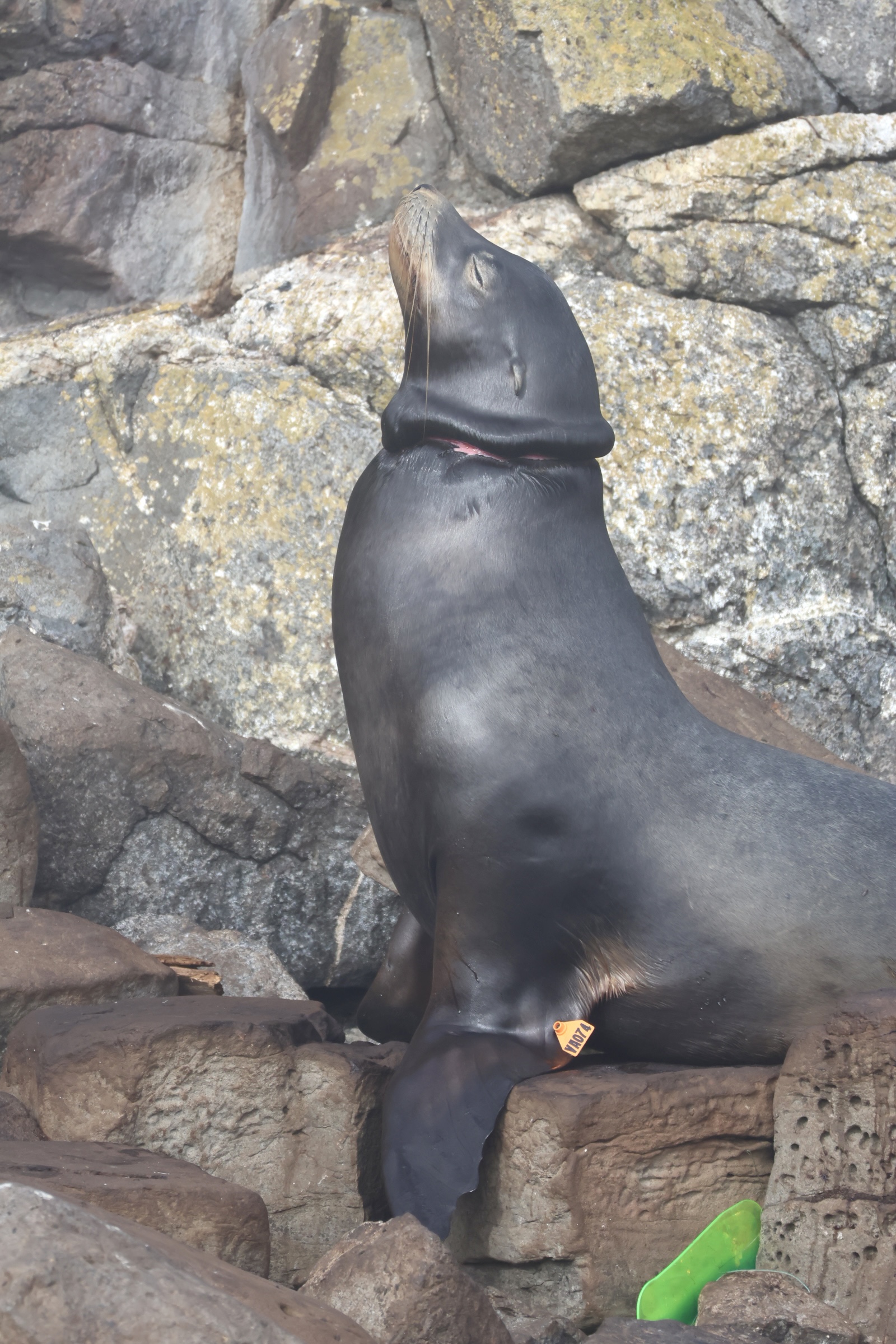
The rescue itself was straight forward, Dr. Haulena darted the entangled sea lion with a sedation protocol that allows us to approach and work with the animal, but doesn’t sedate them so deeply that if they end up going into the water they won’t drown. Thankfully, after the initial shock of the dart, the sea lion only moved a few feet before settling back down on the ramp. The sedation takes about 12 minutes to take effect, at which time we moved in. We quickly discovered that the entanglement material was a thick industrial rubber band, these bands have a wide variety of uses in the marine field and can often be found on commercial crab traps or used in other pot fisheries. Once the band was removed, we place a flipper tag on each of his fore flippers, these are not satellite tags, but they can help us identify the animals in future sightings.
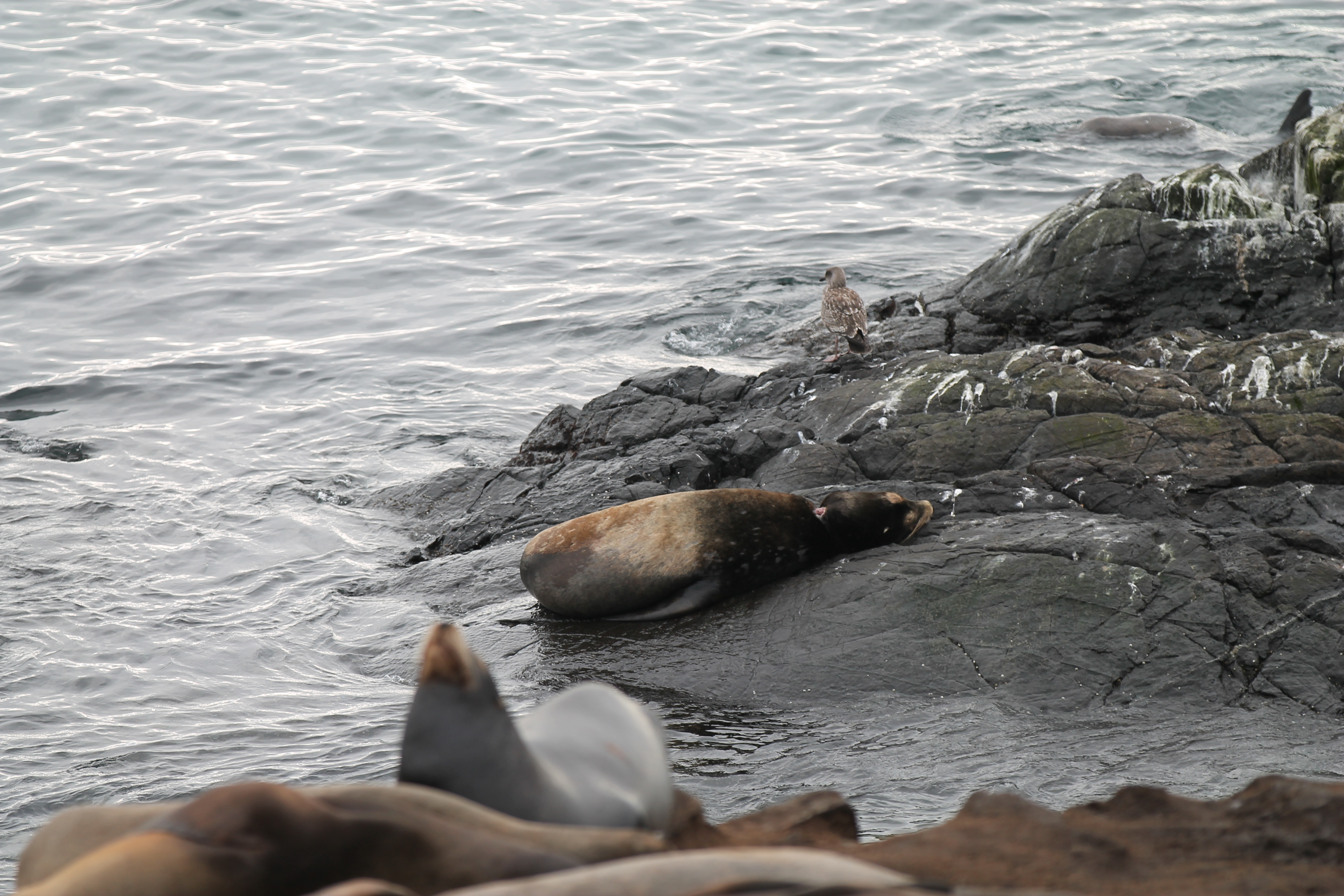
A great example of this is the animal Eva helped us with in August. He is still here and I was able to determine that by taking a photo of his tags and then comparing them to our spreadsheet. Each tag has a unique number on it that allows to ID the animal when resighted. I’ll insert a photo of the animal we rescued in August below:
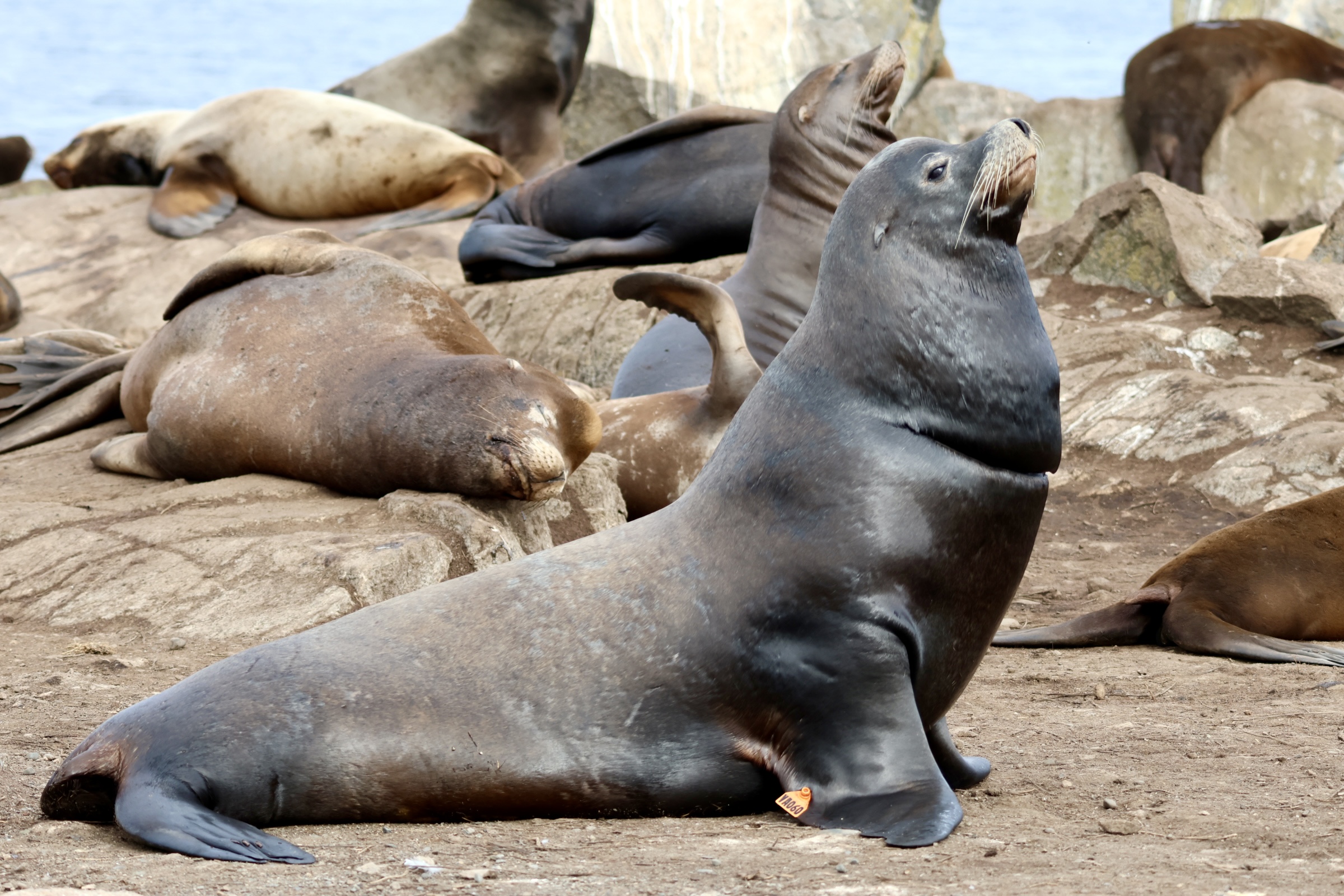
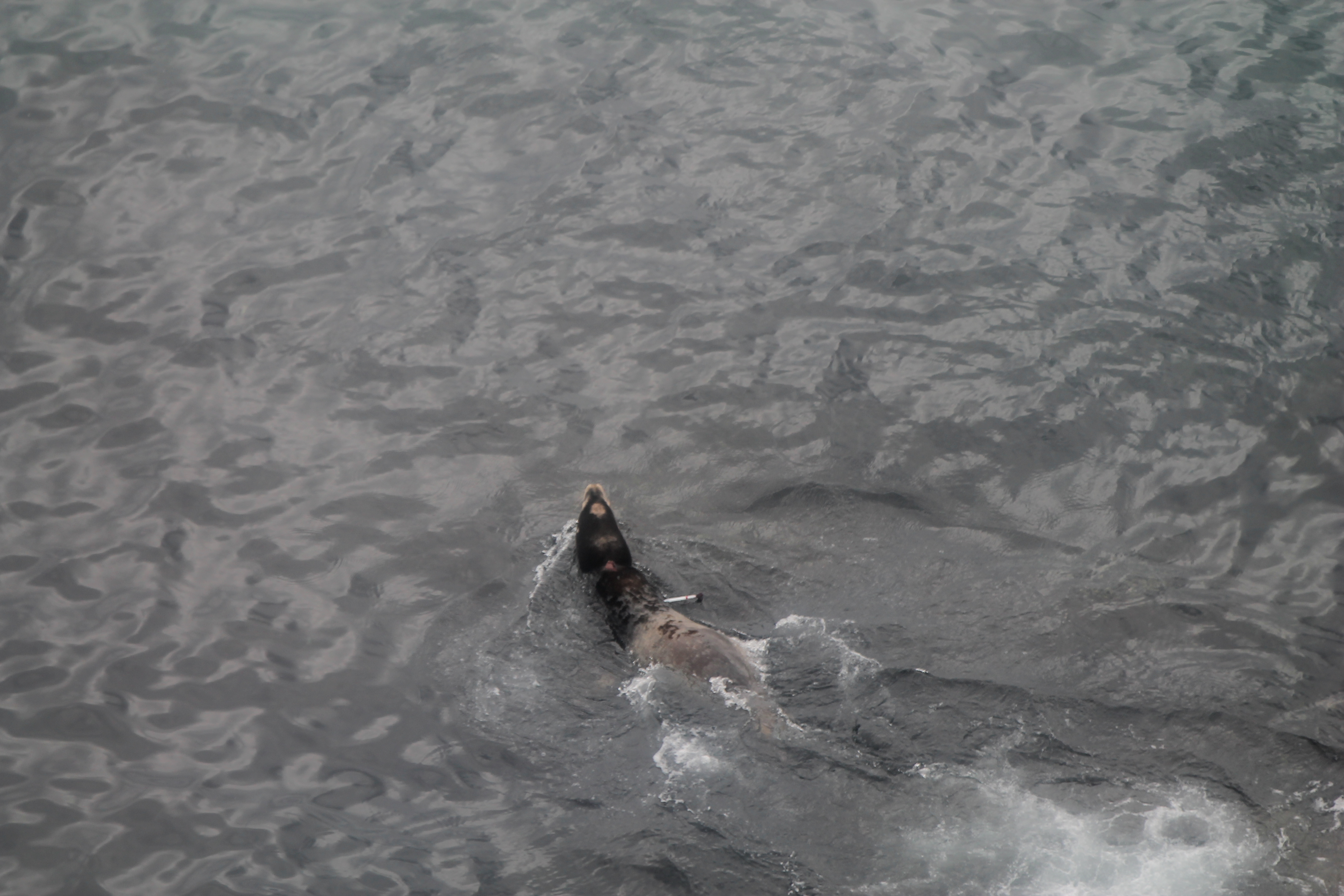
Once we were done, we gave him an injection to reverse the sedation and then we watched from the top of the of the boat launch as he woke up, stretched out, and then entered the water and swam off. He later hauled back out on the rocks to the left of the jetty and is currently still there as I write this. I can’t imagine the relief he must be feeling and I’m already excited to see him here again next year!

You can watch the rescue video here: https://youtu.be/EJJ7pKWvKIY?si=JR4Ft_c99E8h6POc
 

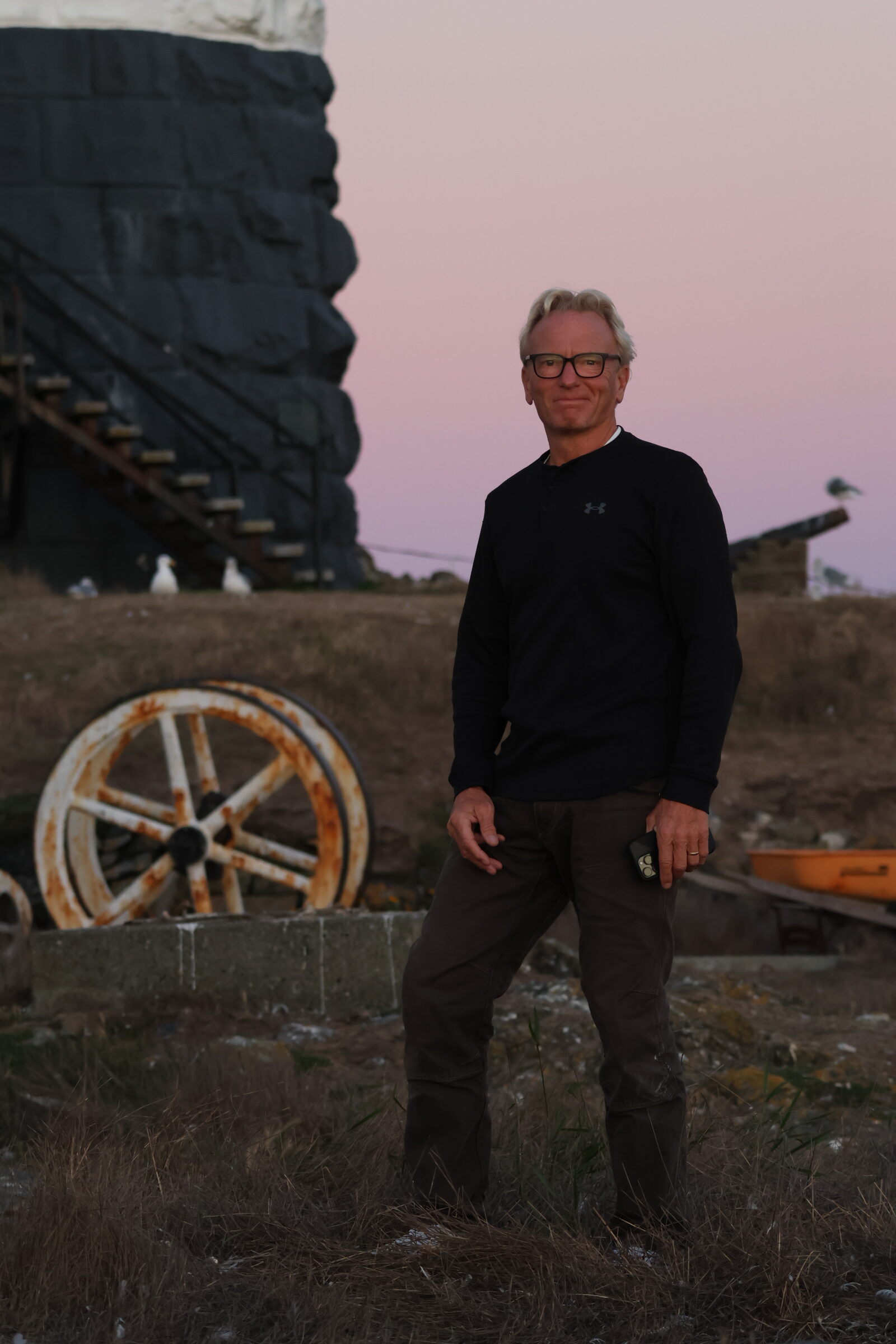
The team was gone by 12:30, and with them they took my dad whose been here this first week with me. It’s been so special having him here and spending time with him, he is the one who taught me my love for the ocean and he enjoys it out here just as much as I do!
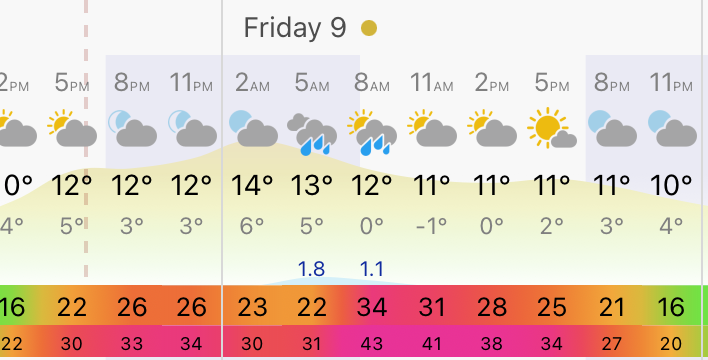
Aside from the excitement of the disentanglement, things have been quite calm around here. The weather has been incredible, glassy seas and no wind, full sun and whales everywhere! Today is supposed to reach 40 knot winds (close to 80km/hr) and raining, so today I’ve be battening the hatches and making sure everything is securely put away and I have everything I need in the house. The generator is being run manually at the moment so I will need to make a couple outside treks to turn that on and off but other than that my plans include a fire and storm watching from inside. I’m very curious to see how that affects Saturday’s census!
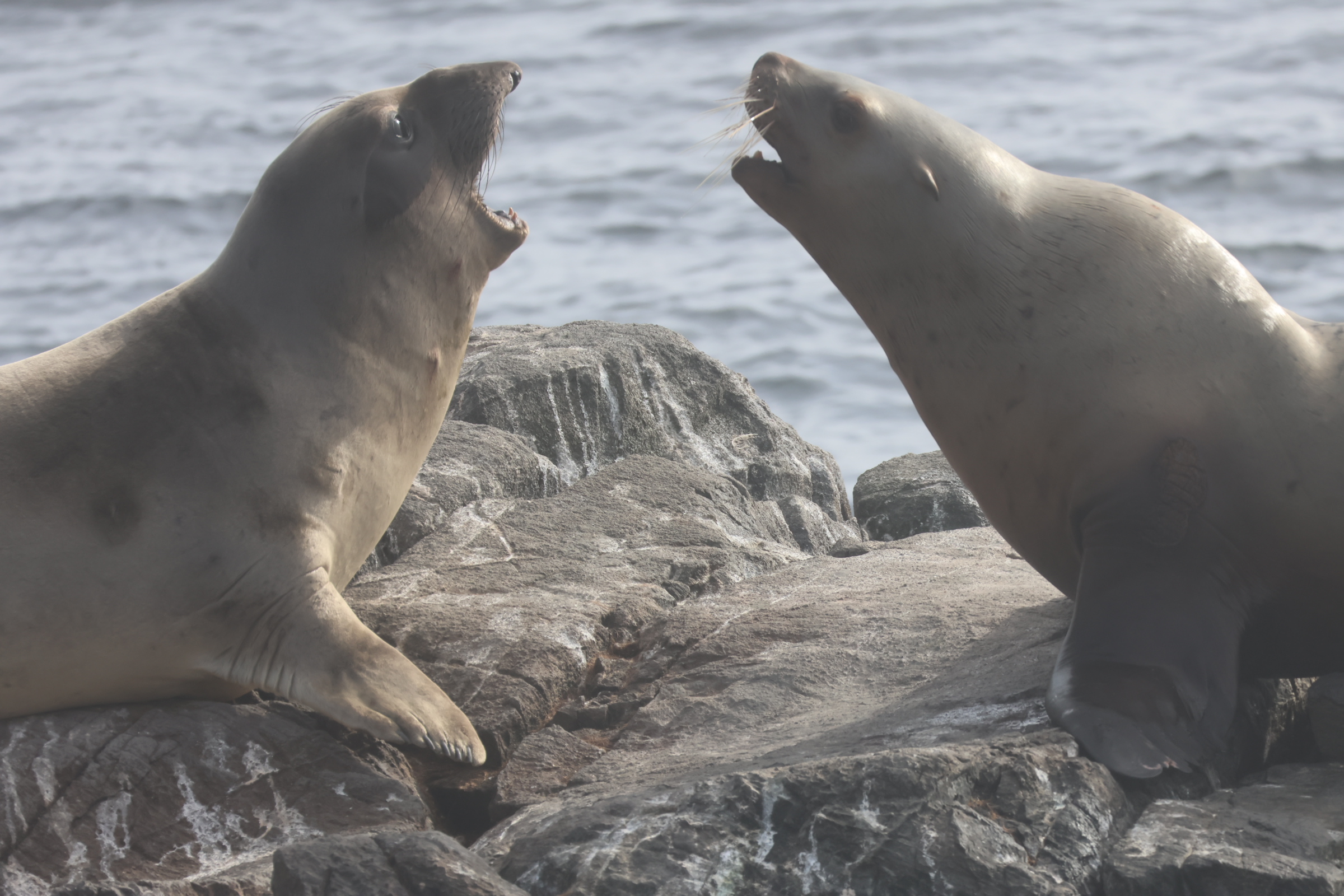
And lastly, we have a young female elephant seal back at Race Rocks! She has been hanging out with the Stellers on the South rocks but hopefully she comes up to the grass soon!
Facility work for the past couple days:

  • Ran the generator
  • Cleaned main house windows
  • Topped up batteries
  • Fixed the main house kitchen sink (thanks dad!)
  • Lots of fence repair
  • Cleaned solar panels
  • Storm prep: lowered the flag, secured the electric fence as best as possible, general site clean-up.
  • Oil change in Honda generator
  • Ran the last remaining line of electric fence tape behind the main house

Vessels:

  • Ecotourism: average of 15 per day
  • Private: average of 4 per day

Visitors:

  • DFO team: 4 people
  • VAMMR team: 6 people
  • Greg/Richard for supply drop off.
Marine Mammal Rescue

On November 4th and 5th the Marine Mammal Rescue Team was here to help out a couple California sea lions that were entangled. They arrive on the 4th and after doing a thorough search around the island there were no tangled sea lions around so we were afraid they may have left the area but thankfully the team stayed the night and the next morning they were able to find two sea lions who needed some help getting the garbage off of their necks. The first animal was on the north east side of island up on the rocks and Marty was able to dart him without him fleeing into the water. His tangle was pretty bad but thankfully the team was able to help him out before it got any worse. I’ve seen him hanging around the same spot since he’s been untangled.

The second one was in a bit of a tougher spot he was already half in the water so he jumped right in as soon as the dart hit him and went for a swim. The dart was very helpful in making him easier to spot as he swam around until he was sedated and the team was able to get a hold of him to help him out.

Overall it was a very successful trip and I am so glad the Marine Mammal Rescue team was able to come out here and help these guys out. I have not seen any new tangles since and I’m keeping an eye out for the two that are on the mend.


Census update

Weather: 

  • Sky: partly cloudy
  • Visibility: 15+ miles
  • Wind: 0-10 knots NE
  • Water: flat

Boats/Visitors: 

    • still a few tour boats cruising around along with some fishing and sailing boats
    • had visitors recently, the marine mammal rescue team came and I will post more on that later

Ecological

  • So many sea lions, here is an updated census
  • Census
    • Sea Lions – 1085 (365 Steller and 720 California)
    • Harbour Seals – 37
    • Gulls – 400
    • Cormorants – 210
    • Fox Sparrows – 10ish, harder to count these guys
    • Canada Geese – 22
    • Black Turnstones – 30
    • Eagles – 6
    • Raven – 1
    • possibly 1 sea otter, bit hard to see from this distance
    • still seeing a humpback here and there but less frequent than last week

Sea Lion Rescue

Weather

  • Visibility: 15 Miles throughout the day
  • Wind:  0-5 SW throughout the day
  • Sky: clear this morning, clouds rolled in around 3
  • Water: calm

Boats/Visitors

  • Fisheries along with a vet and people from the aquarium came by to help a sea lion who had a piece of rope or something like it wrapped around its neck

Ecological

  • plenty of sea lions around

Notes

  • DnD was blasting again today
  • It was nice to have those people come around to help the sea lion out, they first sedated it via dart gun and once it was safe to approach they removed the garbage that was wrapped around the sea lions neck and monitored it until woke up and swam away

Race Rocks–too familiar

Ed Note: This article is an important one that emphasizes the risks that are taken by the public in the waters around race Rocks. It is particularly noteworthy in that it also points out the risk to those involved in Marine Rescue.

From the Goldstream gazette,

  • Nov. 24, 2015 7:00 p.m.

Rescue society always there to help

Race Rocks is an area David Best is becoming all too familiar with.

Rescue society always there to help 

Race Rocks is an area David Best is becoming all too familiar with.

A member of the Victoria Marine Rescue Society Station 35, the 31-year-old has been called to the ecological reserve at the east entrance of the Juan de Fuca Strait three times in the last year.

Two of those rescues occurred within the last few months. One turned deadly when 27-year-old British police officer Timothy Chu became separated from his dive master and drowned.

On the afternoon of Nov. 15, Best was at home watching TV when he received another mayday call to respond to Race Rocks. This time nine divers were in the water after their boat was overturned by a ferocious wave.

Best, along with crew members Mike Deigan, Mike Graham and Earle Shirly, jumped into their Titan 400 rescue boat and left Ogden point, arriving at the scene 25 minutes later. Members from station 37 in Sooke also sprang into action.

“You are trying to think ahead as to what you need to have ready the second you show up,” said Best. “You are also thinking, what am I going to see here? Everyone in the boat is thinking the same thing.”

High winds were producing large waves between eight to 10 feet high. The crew arrived to find several people sitting on the haul of the overturned seven-metre aluminum boat. A couple more were in the water, clinging onto the boat’s side.

Standing on the back of The Tolonen, Best and one of his colleagues tossed a throw bag into the water, which releases 50 feet of line for victims to grab and be pulled to safety. The first man pulled in was an older fellow who was plummeted with huge waves crashing over his head. Once on board, the team discovered the man had mild hypothermia.

“He was shaken and cold, obviously. Somewhat in shock I think,” said Best, who estimates the man had been in the water, holding onto the overturned boat for a good hour. “He was pretty sore. He was just thankful that he was able to get on something solid and warm.”

Repeating the drill, station 35 pulled three more people from the frigid water and Sooke rescued another five. Two of the divers (from the CFB Esquimalt-based recreational Aquarius Dive Club) had mild hypothermia and others were left shaken by the ordeal. All but one of the nine people were wearing wet or dry suits.

Due to the heavy currents and strong winds often found at Race Rocks, Best said the area is dangerous to scuba dive. The only people that should be there are those who know what they are doing, but even then things can still go wrong.

Fortunately, the Victoria Marine Rescue Society is there to make sure help is always available to mariners in distress. The team of volunteers dedicate their time providing 24-hour, year-round emergency search and rescue services on the Victoria waterfront, stretching as far west as Sooke and east to Oak Bay. On average, 50 to 60 rescues are conducted every year.

Best has been with the station for a year-and-a-half. Every time he goes out on a rescue, he risks his own life to help save others.

“(It’s) a passion for adventure and a passion to help people,” said Best, who was out on the water training with the team during last week’s big storm.

“It helps me sleep at night knowing that I have a fire department down the street that if I have a fire in my house, they will help rescue my family and myself. I feel that this country and this town has given me more than I can ask for so I try to return the favour whatever way I can.”

The Victoria Marine Rescue Society is always looking for new volunteers and the vast majority of expenses are covered through donations and fundraising events. For more information visit vmrs.org.