Race Rocks Officially Designated as an MPA Sept 14, 2000

RACE ROCKS OFFICIALLY DESIGNATED AS AN MPA SEPT. 14, 2000


Table of Contents:PREAMBLE

  1. INTRODUCTION
  2. BACKGROUND
    1. National, International and Provincial Context
    2. Legislative Authority for the Stewardship/Conservation of (Race Rocks)
    3. Marine Protected Area Strategy
  3. – A Place of Many Values
    1. Conservation Interests
    2. Historic Interests
    3. Socio-economic Interests
  4. PROPOSAL FOR (RACE ROCKS) MARINE PROTECTED AREA
    1. Process
    2. Issues Raised During Consultation
    3. A Vision for (Race Rocks) Marine Protected Area
    4. Objectives for (Race Rocks) Marine Protected Area
    5. Proposal to Designate
    6. Name
    7. Area Boundaries
    8. Designation
    9. Management Intentions
    10. Post Designation

LIST OF APPENDICES

I–Canada/BC Marine Protected Area Strategy MPA CriteriaII–IUCN Management Categories for Marine Protected Areas

III–Assessment of known conservation (Table 1) and socio-economic (Table 2) values in (Race Rocks) Marine Protected Area according to IUCN criteria for the identification and selection of marine protected areas

IV–Consultative Process

V–Guiding Principles for Designation of Race Rocks Ecological Reserve as a Marine Protected Area

VI–Maps

VII–Bibliography

PREAMBLE

The purpose of this proposal is to demonstrate that the criteria outlined in the draft Canada/British Columbia Marine Protected Area Strategy for Canada’s Pacific Coast (Appendix I) for establishing marine protected areas have been met, thereby providing the rationale for proceeding with formal designation of Race Rocks Marine Protected Area under the Oceans Act. Such designation will compliment the protected status of the existing provincial Ecological Reserve. In addition, designation of Race Rocks Marine Protected Area will also contribute to the World Conservation Union (IUCN) World Commission on Protected Areas initiative to create and manage a network of marine protected areas.

1.0 INTRODUCTION

In 1998, the Minister of Fisheries and Oceans announced four pilot Marine Protected Area initiatives on Canada’s Pacific coast. One of these areas was (pronounced “shwai’yen” (Race Rocks) (Appendix VI). Since then, a wide range of further studies and consultations has been undertaken to determine the feasibility of proceeding to final designation of this unique area under the Oceans Act.

Located at the eastern entrance of Juan de Fuca Strait, (Race Rocks) with its small rocky island system and high-current subtidal and intertidal areas is ecologically unique. The area contains ecologically significant and unique assemblages of benthic and pelagic invertebrates and provides haulout and feeding areas for California and Stellar sea lions during the winter. It is also the largest haulout and breeding areas for harbour seals in the Strait of Juan de Fuca, and provides nesting habitat and resting areas for migratory seabirds.

Race Rocks has been managed as a provincial marine protected area for the past 20 years. The natural values of the (Race Rocks) area were recognized formally by the Province of British Columbia in 1980 in its designation of the area as an Ecological Reserve under the provincial Ecological Reserves Act. This designation provides for protection of the natural and cultural heritage values of the terrestrial (nine islets) and the ocean bottom (to a depth of 20 fathoms) lands.

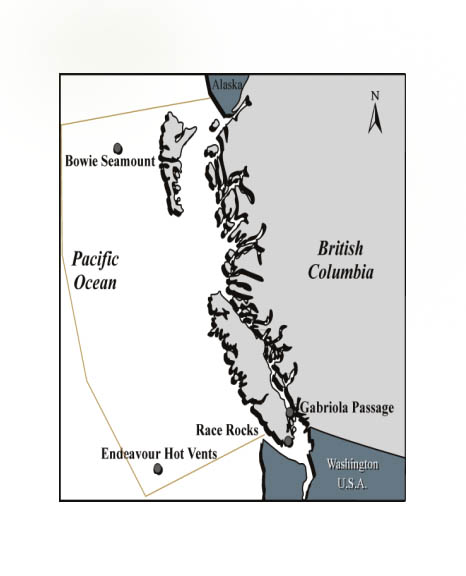
(Race Rocks) is located 17 kilometres southwest of Victoria, and is the most southerly part of Canada’s Pacific Coast. One of its nine islets is the site of Race Rocks lightstation, the second oldest lighthouse in Western Canada.

The area’s remarkable tidal flow – up to seven knots – supplies a generous stream of nutrients to a thriving community of subtidal invertebrates, including sponges, anenomes, hydroids and soft corals. Crowds of barnacles, tunicates, urchins and sea stars adorn the underwater cliffs. Fish such as sculpin, rockfish and lingcod seek refuge in the rocky crevices and undulating kelp forests. Above water, the islets serve as nesting colonies for many seabirds, such as gulls, cormorants, pigeon guillemots and oystercatchers, and as a

stopover for migratory birds. They share the rocks with resting harbour seals, Stellar and California sea lions, and a few Northern Elephant seals. River otters patrol the shoreline and killer whales are frequent visitors. Gray whales, Dall’s and harbour porpoises occasionally pass by.

The (Race Rocks) area is traditional territory for at least four Coast Salish First Nations people; Beecher Bay, T’souke, Songhees and Esquimalt. The nutrient rich waters provided a wide diversity of food fishing opportunities year round. The Coast Salish people’s interaction with the area has been based on the First Nations “Thirteen Moons” calendar; a spiritual and temporal-based approach to sustainably harvesting and respecting the resources.

The exceptional diversity of marine life at (Race Rocks) – long recognized by First Nations in the area – makes it an ideal place for scientific and educational observation. It serves as a model for the transition zone between inner coastal waters and the open ocean, which is why nearby Lester B. Pearson College has supported the stewardship and protection of the area. In accordance with the management objectives for the Ecological Reserve, BC Parks is proposing to operate the lightstation facility as a research/education/guardian centre. It is proposed that Lester B. Pearson College will provide this service, under permit to BC Parks.

Designation as a Marine Protected Area under the Oceans Act will be followed by a further consultation process leading to the preparation of a long-term integrated management plan for the joint federal/provincial marine protected area under the direction of Fisheries and Oceans Canada and BC Parks.


2.0 BACKGROUND:


2.1-International, National and Provincial Context

Canada and British Columbia are committed to the protection of marine biodiversity and ecological processes, and the sustainable use of marine resources. The commitment to establish Marine Protected Areas fulfils Canada’s international responsibilities and obligations to the United Nations Convention on the Law of the Sea (UNCLOS) and as a signatory to the Convention on Biological Diversity (UNEP 1994) and the major components of the Jakarta Mandate developed under that Convention. This commitment also provides a means of meeting obligations under the Convention on Migratory Species (Bonn Convention).

This commitment is reinforced by a national Fisheries and Oceans Canada policy for establishing Marine Protected Areas. This policy aims to establish a system of Marine Protected Areas under the Oceans Act throughout Canada’s oceans to protect areas that are examples of the major ecological regions and the communities of plants and animals they contain. Supported by a range of provincial and federal marine-related legislation and policy responsibilities, the Federal Committee on Oceans (Pacific Region and National) provides advice and input to assist in the co-ordination and integration of Marine Protected Area proposals at the broader regional and national level.

Section 35 of the Oceans Act specifically provides for the Minister of Fisheries and Oceans to establish Marine Protected Areas. The commitment of this Act and associated policy supports the above international responsibilities and obligations in addition to the World Conservation Union (IUCN) World Commission on Protected Areas program of promoting the establishment and management of a global representative system of Marine Protected Areas (Kelleher et al 1995). Appendix II lists the internationally accepted IUCN management categories for protected areas. These management categories were developed by the IUCN with input from agencies with protected area responsibilities from around the world to promote a consistent approach to protected area management. It is proposed that this MPA will have an appropriate management category assigned to it as part of the preparation, with stakeholders, of the management plan.

(Race Rocks) has been assessed against the IUCN’s and World Commission of Protected Areas (WCPA) criteria for selection and identification of Marine Protected Areas (see Appendix III for summaries of these assessments).


2.2 -Legislative Authority for designation and management of (Race Rocks)Stewardship of the (Race Rocks) area is entrusted to all Canadians. To ensure that the interests of all Canadians are fairly represented in management processes for the area, three lead steward groups will oversee the management of the (Race Rocks) area. The tri-partied management of will be comprised of the Coast Salish First Nations people; the provincial government through the Ministry of Environment, Lands and Parks; and the federal government through Fisheries and Oceans Canada. The legislative authorities under which these stewards are mandated (acknowledged) are as follows:

First Nations:

Aboriginal title to traditionally used territories is recognized and affirmed as an ‘existing Aboriginal right’ in Section 35 of the Constitution Act, 1982. Aboriginal title is one manifestation of a broader-based conception of Aboriginal rights. Aboriginal title is based on occupation of traditional territory prior to the assertion of European sovereignty and takes into account the following aspects: right of exclusive use and occupation of the land; right to choose to what purposes the land can be put; and the economic aspect of the land. (Delgamuukw vs. British Columbia).

The Crown is required to give appropriate priority to Aboriginal interests in Aboriginal title lands, reflecting the exclusive nature of Aboriginal title. The Supreme Court has also affirmed the Crown’s obligation to accommodate participation by First Nations in decision-making with regard to development of lands subject to Aboriginal title.

The legal authority to establish a protected marine area flows from one or more provincial and federal statutes including: British Columbia’s Ecological Reserve Act, Park Act, Wildlife Act or Environment and Land Use Act, as well as the Fisheries Act of Canada, National Parks Act, Canada Wildlife Act, Migratory Birds Convention Act, Canada’s Oceans Act or the proposed new Marine Conservation Areas Act.

Fisheries and Oceans Canada has the mandate to manage specified marine resources under the Fisheries Act and the Oceans Act. Section 35 (2) of the Oceans Act states that the Minister of Fisheries and Oceans Canada has a responsibility “to lead and co-ordinate the development and implementation of a national system of Marine Protected Areas on behalf of the Government of Canada”.

Section 35 (1) of the Oceans Act authorizes the Government of Canada to establish Marine Protected Areas for a number of reasons, including the conservation and protection of:

  1. commercial and non-commercial fisheries, including marine mammals and their habitats;
  2. endangered or threatened species and their habitats;
  3. unique habitats;
  4. marine areas of high biodiversity or biological productivity; or
  5. any other marine resource or habitat as is necessary to fulfil the mandate of the Minister of Fisheries and Oceans.

British Columbia ecological reserves are established by provincial order-in-council under the Ecological Reserves Act for the:

  1. preservation of representative samples of British Columbia’s ecosystems;
  2. protection of rare and endangered plants and animals in their natural habitat;
  3. preservation of unique, rare or outstanding botanical, zoological or geological phenomena;
  4. perpetuation of important genetic resources; and
  5. scientific research and educational uses associated with the natural environment.


2.3-Marine Protected Area Strategy

The governments of Canada and British Columbia are working together to implement a Marine Protected Areas strategy that will achieve co-ordinated marine protection and

conservation goals for the Pacific coast. As mentioned earlier, one of these areas is (Race Rocks).

The proposed designation of (Race Rocks) as a Marine Protected Area exemplifies the essential elements of a viable west coast Marine Protected Area draft strategy (Marine Protected Area Strategy for Canada’s Pacific Coast) in that:

  1. It uses a joint federal-provincial approach: all relevant federal and provincial agencies will work collaboratively to exercise their authorities to achieve the full level of protection expected by the public for the area.

2.-It provides for shared decision-making with the public: commits government agencies to employ an inclusive shared decision-making process with First Nations, stakeholders, coastal communities and the public.3.-It contributes to a comprehensive marine protected area system: seeks to build an extensive system of protected areas by the year 2010 through a series of coastal planning processes.

4. The (Race Rocks) area was selected as an MPA pilot under the federal provincial MPA Strategy initiative based on its status as a richly diverse and important ecosystem. Both levels of government recognized that the Oceans Act could provide new, complementary and longer-term opportunities for the protection of the Race Rocks Ecological Reserve.

Past collaboration between Fisheries and Oceans Canada and BC Parks has yielded Fisheries Act closures within the reserve for most species since 1990. The creation of an Oceans Act MPA within the water column above the provincial Ecological Reserve will facilitate the integrated management of the (Race Rocks) area under the respective authorities of the two levels of governments.

Management planning processes provide a mechanism for public review and support for management strategies. In this respect it will be important that the proposed management plan for the joint Ecological Reserve – Marine Protected Area make appropriate linkages with other land use planning strategies.


3.0- (Race Rocks) – a place of many values

(Race Rocks) is a place with many values. It is essential that these values be respected and managed holistically to enable optimum protection of (Race Rocks). It is because of the array of natural, cultural heritage, and recreation values that complementary federal and provincial designations and management activities are required to achieve the level of protection expected by the public.

These values have been categorized into three interest areas: Conservation, Cultural Heritage, and Socio-Economic.

While the Ecological Reserve and Marine Protected Area complement each other in contributing to the maintenance of biological diversity and the protection of genetic material, equally important is the historic significance of the area to First Nations people and mariners.


3.1-Conservation Values

The Ecosystem Overview of Race Rocks (Race Rocks Ecosystem Overview, G. Fletcher, 1999) and the Draft Management Plan for Race Rocks (BC Parks, 1998) identify a number of key conservation values for the (Race Rocks) area which are outlined below.

Geology:

The geological terrain that includes Race Rocks is known as the Crescent Terrain, with the most prominent feature being the Metchosin Igneous Complex. This package of rocks are fine grained basalts (extrusive ocean crust) and their coarse grained equivalent, gabbros (intrusive rocks). Still evident are the small erratics and scour marks from the last of three glaciations.

Climate:

Located in the rain shadow of the Olympic Mountains and influenced by a wind funnel effect over the Strait of Juan de Fuca, (Race Rocks) often experiences weather patterns quite different to southern Vancouver Island. It has an unusually high amount of sunshine in the winter months, very seldom recording freezing temperatures. In the summer, there is the occasional blanketing of fog. The winds in the Juan de Fuca Strait blow principally from the southeast and northwest. Outward blowing winds occur fifty percent of the time during the winter (October through to March) while the inward blowing winds predominate during the summer (April through to September).

Temperature and salinity:

Race Rocks lightstation staff have recorded salinity and temperature for the past sixty years, with some local records dating back to 1921. Salinity varies considerably and is seasonally affected by the large volumes of weakly stratified, freshwater from the Fraser River. Winter water temperatures average about 7.5° C. with summer peaks of about 11° C.

Physical oceanography:

The area features high velocity currents that can reach up to seven knots in some shallow rocky intertidal or subtidal locales. The currents create a turbulent regime that brings nutrients up from surrounding depths and thus support a highly localized and complex food web. The currents also mix the water column, inhibit stratification, and promote high dissolved oxygen and nutrient concentrations. Rocky intertidal and subtidal sites especially those with high current flow also attract many diverse species of fishes, marine mammals and seabirds and promote high levels of invertebrate larval recruitment.

Marine algae and vascular plants:

Forty-one taxa are found at Race Rocks. Approximately 50% of vegetation coverage consists of Brown Kelps in certain depths and months; 30-90% may be Coralline Algae in other locales. Their biomass may be significantly higher than in surrounding areas.

Phytoplankton and zooplankton:

Species information is available from collection stations in the Strait of Juan de Fuca, a highly dynamic but poorly studied area. About 130 known taxa of phytoplankton and 100 zooplankton occur. Diatoms are most abundant in spring and early summer; dinoflagellates high in later summer and early fall; microflagellates in winter. Chlorophyll ranges from 1 to 5 mg/m3, low in fall/winter, high in spring/summer. Calanoid copepods are a dominant group, up to 70 – 90% in spring and summer. Pseudocalanus are most common species in the Strait. Other important zooplankton include euphasids, arrow worms, and fish eggs and larvae. Zooplankton abundance reaches a high of about one million individuals per sq. metre in August.

Benthic Invertebrates:

Although the species list is incomplete, evidence indicates high abundance and species diversity with over 200 taxa listed. Germesia (soft-coral), Gorgonocephalus (brittle star), E. prolifera and M. senile (anemones) are extremely abundant. Pacific abalone is listed as threatened by the Committee on the Status of Endangered Wildlife in Canada (COSEWIC). Recent towed video surveys showed high occurrences of sea urchins and anemones.

Fishes:

Thirty-five species are found here. However, there are large knowledge gaps about the fish populations and their roles in this ecosystem. The area represents a critical habitat for many species of rockfish, lingcod, and kelp greenling. Some rockfish species are now considered a “Species of Concern” by Washington State (U.S.A.) and are of conservation concern in B.C.

Birds:

About 45 known species of marine associated birds use Race Rocks Area for feeding, roosting, and nesting. The area provides critical nesting habitat for Glaucous-winged Gulls, Pigeon Guillemots, Black Oystercatchers and possibly Brandt’s Cormorants. Twenty-three percent of the Pelagic Cormorant population in the eastern Strait of Juan de Fuca nests at Race Rocks.

Marine Mammals:

Species found at Race Rocks include five known species of pinnipeds and ten species of cetaceans, five of which are common. The area is primarily used as a stop-over and rafting site for California (>1,000) and Steller sea lions (>50) in the winter. Harbour seals are the primary year-round resident users for haulout, birthing, pupping, and weaning. Race Rocks is the largest haulout for harbour seals in the Strait of Juan de Fuca, the second largest in the Canadian waters of the Georgia Basin, and can represent up to 20% of the South Gulf Islands population.

3.2- Cultural Heritage Values

Traditional harvest:

Four Coast Salish First Nations, Beecher Bay, T’souke, Songees and Esquimalt Nations, claim the eastern end of the Strait of Juan de Fuca as part of their traditional territory. Other Coast Salish Nations may have used this area. Interviews with First Nations representatives indicate that a wide range of food was available from the coastal waters including gull’s eggs, sea cucumbers, sea urchins, chitons, snails, whelks, mussels, barnacles, seaweeds, crab and fish. Seafood was not only eaten but also traded with other First Nations including those from Washington State (U.S.A.).

Marine Navigation:

As part of the “Graveyard of the Pacific”, the area was named “Race Rocks” by officers of the Hudson’s Bay Company who noted the area as a severe hazard to navigation in the 19th century due to the dangers created by the rip tide. Numerous shipwrecks led to the establishment of a lighthouse station at Great Race Rock in 1860. This lighthouse is the second oldest on Canada’s West Coast and is protected with designation as a heritage structure. The Underwater Archaeological Society of British Columbia maintains an inventory of shipwreck sites within the Race Rocks Ecological Reserve.


3.3 -Socio-economic interests

The diversity and significance of natural, cultural heritage and recreational values of the Race Rocks area generates substantial and varied socio-economic interests. Under the provincial legislation however, there are significant limitations on the acceptable uses of the area. For instance, the primary purpose of the Ecological Reserve is the protection of the natural and cultural heritage values, and human use may only occur to the extent to which these values are not impaired. Ecological Reserves are not designated for recreational purposes. The socio-economic interests identified below should be considered in light of this restrictive legislation.

  1. Co-operation with First Nations:The (Race Rocks) pilot Marine Protected Area investigation and pre-designation process has provided a good opportunity to nurture significant relationships between all participants and improved understanding of First Nations’ interests (Appendix IV). The area has been a productive traditional use fishing area for First Nations.
  2. Education and research:The biodiversity of the (Race Rocks) area has strong value for the local naturalist and science communities. Lester B. Pearson College of the Pacific, as an international school of choice for many foreign students, has been engaged for more than twenty-five years with the “ living classroom”; providing benefits to thousands of people of all ages and from more than a hundred countries. Through its interactive internet site, www.racerocks.com, the college is promoting awareness of the marine environment to an international audience.The faculty and students of the Biology and Environmental Systems program at Pearson College are long-time volunteer ecological reserve wardens. They are actively involved in research and education activities and provide an important monitoring function. The College has been the principal research agency to date and has developed an excellent database for the ecological reserve and its values. Numerous opportunities exist to involve the education and research community in creative joint educational initiatives with First Nations, BC Parks and Fisheries and Oceans Canada.
  3. Eco-tourism:The following summarizes the forms of eco-tourism that currently occur in the Race Rocks area. It is recognized that these uses may be restricted as necessary to protect the natural and cultural heritage values of the area and ensure that these values are sustained.Marine wildlife viewing and diving are the predominant forms of eco-tourism in the Race Rocks area. As a result of a rapid and spontaneous growth of marine wildlife viewing in southern Vancouver Island, principally for orca whales, there has been increasing interest in Race Rocks for the diversity and availability of other marine mammals.British Columbia’s waters are renowned world-wide for their excellent diving value and Race Rocks exemplifies some of the world’s best diving opportunities. Strong currents, offer limited diving windows requiring experienced and “guided” diving. The dive industry is enjoying good growth and providing jobs and benefits to the tourism sector.
  4. Commercial Fishing:The area has been closed to commercial fishing for all species under the Fisheries Act since 1990.
  5. Recreational Fishing:Sport fishing for salmon and halibut is currently very popular in the area directly adjacent to the Race Rocks Ecological Reserve.
  6. Marine Navigation:Frequent heavy oil and crude tanker traffic (two supertankers per day on average) passes within two miles of the (Race Rocks) area. Recreational boating is somewhat limited because of tidal and current conditions.
  7. Mining and Petroleum:The authority for exploration for or extraction of any oil or gas reserves within the Georgia Region, including the (Race Rocks) area rests with the Province of British Columbia.Exploration and development of mineral and petroleum resources within the Race Rocks Ecological Reserve is prohibited under the British Columbia Ecological Reserve Act.
  8. Co-operation with non-government organizations:The process for consultations with stakeholders involved considerable and useful dialogue with non-government organizations. The volunteer Race Rocks Advisory Board (RRAB) included representation from the Canadian Parks and Wilderness Society, Georgia Strait Alliance and Friends of Ecological Reserves. As a result, all participants developed better understanding of interests, values and common objectives with the establishment of a marine protected area.
  9. Co-operation Between Governments:

BC. Parks, Parks Canada, the Department of National Defence and Fisheries and Oceans Canada are committed to a coordinated and cooperative approach to the management of Race Rocks and providing the level of protection identified by the public and the RRAB. This pilot process has led to a greater understanding and improved collaboration between these agencies.


4.0 Proposal for (Race Rocks) Marine protected Area4.1-Process

To assist Canada and B.C. in working towards the formal designation of the (Race Rocks) Marine Protected Area under the Oceans Act, a multi-stakeholder Race Rocks Advisory Board was established in 1999.

Membership on the Race Rocks Advisory Board was comprised of representatives from: Friends of Ecological Reserves, the local dive community, Georgia Strait Alliance, Pearson College, First Nations (Coast Salish Sea Council), Sport Fish Advisory Board – Victoria, Department of National Defence, Lester B. Pearson College of the Pacific, Parks Canada, the Canadian Parks and Wilderness Society, the local science community, Northwest Whale Watchers Association and Fisheries and Oceans Canada.

The function of the Advisory Board was to:

  • represent key stakeholders and partners who would provide advice to Fisheries and Oceans Canada and BC. Parks on the consultation process;
  • collate and analyze feedback from consultations;
  • provide consensus-based, recommendations to Fisheries and Oceans Canada and BC Parks for the establishment of a Marine Protected Area at

(Race Rocks) and recommendations for management of the MPA; and,

ensure community involvement in the establishment and on-going management of the (Race Rocks) Marine Protected Area.


4.2 -A Vision for (Race Rocks) Marine Protected Area

“Based on a cooperative and integrated, multi-lateral relationship, Race Rocks Marine Protected Area – Ecological Reserve will conserve and protect a unique, high-energy marine ecosystem for the benefit of future generations.”

Source: Stakeholder Consultations 1999/2000
“Race Rocks Ecological Reserve will continue to protect the high energy marine system found in the eastern entrance of the Strait of Juan de Fuca.”

Source: Race Rocks Ecological Reserve, Draft Management Plan June 1998
4.3 Management Issues Raised During Consultation

Eco-tourism

As British Columbia’s eco-tourism and dive industries expand, it is anticipated that visits to (Race Rocks) will increase over the next few years. This will necessitate the development of “best practices” to ensure that the feeding, resident and breeding species in the area are not disturbed. To date, there has been excellent co-operation from the marine mammal viewing industry towards the development and maintenance of guidelines for operating in the (Race Rocks) area. Similarly, the dive industry has expressed strong interest in developing guidelines, training and stewardship models for managing activity within Marine Protected Areas.

Any restrictions to recreational use will be made in consultation with the Race Rocks Advisory Board and the affected interest groups and others. For example, through the public advisory group process, and with the support of the whale watching industry, voluntary guidelines for appropriate viewing procedures have been established. As the popularity of viewing activities increases, this use will be monitored and further restrictions may be applied if impacts on the resources exceed acceptable limits.

Recreational Fishing

There are conservation concerns related to bycatch of species of concern such as rockfish and lingcod in the recreational salmon and halibut fisheries directly adjacent to the Race Rocks Ecological Reserve. The Race Rocks Advisory Board recommended that the area be closed to all fishing activity. Although initially reluctant to consider a total recreational fishing closure within the boundary of the proposed (Race Rocks) Marine Protected Area, the Sport Fish Advisory Board (SFAB) now supports this recommendation.

Recreational Boating

Proximity to a large population base and the geographic location of Race Rocks (transit between the “west coast” and Gulf Island communities) make the Marine Protected Area particularly vulnerable to boating use. The volume of traffic passing in close proximity to, or through the MPA, will likely continue to increase over time. This activity will need to be closely monitored and subject to marine safety considerations, further restrictions may be required if adverse impacts exceed acceptable limits.

Marine Navigation

Due to the isolated nature, and the small area encompassed by the Race Rocks Ecological Reserve and proposed Marine Protected Area, even a small oil spill could have a devastating impact on the Race Rocks area. Oil spill contingency resources are available in Victoria. There may be a requirement to consider special contingency arrangements during the development of the management plan for (Race Rocks) Marine Protected Area due to the area’s high-energy environment.

The Port of Vancouver’s draft Ballast Water Management Guidelines state that dumping of ballast water may take place west of the Race Rocks Ecological Reserve. The introduction of alien species and contamination could significantly impact the (Race Rocks) environment. A monitoring regime to address the potential introduction of alien species will need to be considered through the Federal Committee on Oceans — Pacific during the development of the management plan.

Federal Committee on Oceans (Pacific Region)

Members of the Federal Committee on Oceans (Pacific Region) were contacted by letter in mid-May to determine if there were any issues related to moving forward with designation of the Race Rocks MPA. No issues were raised.

4.4-Objectives for (Race Rocks) Marine Protected Area

The following objectives have been identified for the Oceans Act portion of the joint marine protected area. These objectives may be modified following an integrated management planning process for the joint Federal-Provincial Marine Protected Area.

The objectives for the (Race Rocks) Marine Protected Area are as follows:

  1. To protect the conservation values associated with marine biological diversity, marine habitats and the marine ecosystem associated with the Race Rocks Ecological Reserve and surrounding waters (see Appendix III);
  2. To permit the awareness, appreciation, use and enjoyment of the Race Rocks area, its natural and cultural heritage values to the extent that these uses do not impact adversely on the values within the proposed Marine Protected Area;
  3. To support the sharing of traditional knowledge;
  4. To provide scientific research opportunities to further understanding of the area to the extent that the impact of these uses is within acceptable limits and do not impair the diversity, abundance and functioning of the marine ecosystem;
  5. To permit increased education and awareness of the marine environment to the extent that the impacts of these uses are within acceptable limits and do not impair the diversity, abundance and functioning of the marine ecosystem; and,
  6. To test Fisheries and Oceans Canada’s National Framework for Establishing and Managing Marine Protected Areas and the Canada/BC Marine Protected Areas Strategy for Canada’s Pacific Coast.


4.5-Proposal to designate

The recommendations, outlined below, reflect the outcome of a consensus-based process by the Race Rocks Advisory Board (RRAB) regarding the management of the (Race Rocks) area as an MPA. These recommendations also reflect the directions expressed by the public, stakeholders and other partners, through consultations over the past two years, in support of complementary management of the Race Rocks Ecological Reserve as a Marine Protected Area.

Over the past eighteen months, the pilot Marine Protected Area process has identified and galvanized strong support for the complementary designation of Race Rocks as a joint MPA under federal and provincial jurisdictions. The consultative process developed new, trust-based relationships between an array of stakeholders and user groups including First Nations, sports fishers, eco-tourism companies, dive charter operators, scientists, educators and environmental organizations. It also elevated expectations that federal follow-through will be expeditious. There is significant risk to these valuable relationships and stakeholders’ reputations should the designation be delayed.

The following recommendations for the area’s management are presented for consideration:

4.6 a-Designation

It is recommended that Race Rocks be a joint federal-provincial marine protected area, receiving a high level of protection through the complementary authorities of the Federal Oceans Act and the Provincial Ecological Reserve

Act.

4.6 b-Co-operative Management

It is recommended that a joint Management Committee consisting of First Nations, Fisheries and Oceans Canada and BC Parks be established to ensure that the planning and management of the area is co-ordinated, effective and efficient and that Fisheries and Oceans Canada and BC Parks, as the lead public agencies, are publicly accountable for achieving the area’s goals and objectives.

4.6 c-Name

It is recommended that the Marine Protected Area be named (Race Rocks) in respect for the Coast Salish Nations name in the Clallam language, which is translated as meaning “fast flowing waters”.

4.7-Area Boundaries

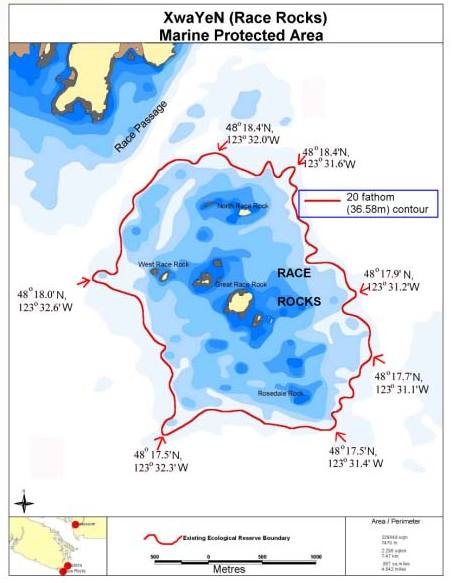
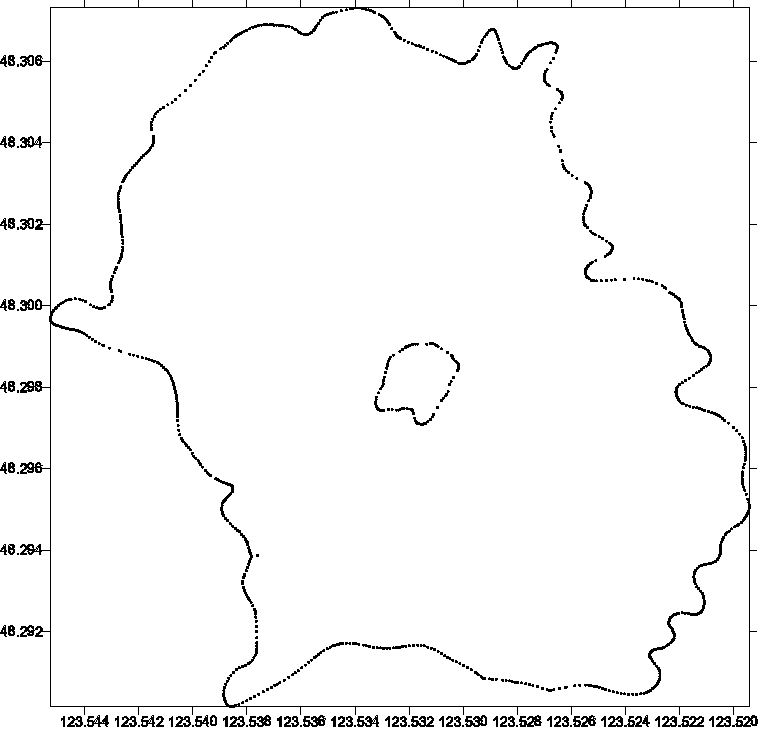
It is recommended that the boundary for (Race Rocks) Marine Protected Area coincide with the current Ecological Reserve boundary (1980); being all waters within the 36.5 metre (20 fathom) line as described on Canadian Hydrographic Chart 3641 [1980]. Total area 200 hectares. For maps, see Appendix VI.


4.8-Federal Oceans Act Designation

This proposal:

  • addresses the relevant objectives of Canada’s Oceans Act;
  • is consistent with the National Framework for Establishing and Managing Marine Protected Areas (March 1999);
  • addresses and is consistent with the “Marine Protected Areas: A Strategy for Canada’s Pacific Coast”, Guiding Principles for the Development of Marine Protected Areas (as outlined in Appendix V);
  • meets the “Marine Protected Areas: A Strategy for Canada’s Pacific Coast” suggested criteria for selection of Marine Protected Areas (Appendix I); and,
  • meets IUCN criteria for selection and identification of Marine Protected Areas (as outlined in Appendix III).


On this basis, it is recommended that (Race Rocks) be designated as a Marine Protected Area under the Oceans Act Section 35.

An appropriate IUCN Management Category will be applied to the (Race Rocks) Marine Protected Area as part of the establishment of a management plan. It will be recommended as part of this process that (Race Rocks) become an IUCN Category I Marine Protected Area.


4.8-Management Intentions

Managing human use and impacts are the principal issues for (Race Rocks) as a combined Oceans Act Marine Protected Area and Ecological Reserve. Human use including eco-tourism is compatible with the objectives of establishing and managing Marine Protected Areas, but is incompatible with the purpose and objectives of provincial ecological reserves.

In recognition of the historical significance of the area to First Nations, shared management of the (Race Rocks) will be addressed co-operatively by First Nations, Fisheries and Oceans Canada, and BC Parks in consultation with the Race Rocks Advisory Board. The management plan to be developed by First Nations, Fisheries and Oceans Canada, BC Parks, in consultation with stakeholders, will address the issues of human use, environmental protection, governance and stewardship. The Race Rocks Advisory Board has developed a series of recommendations (Race Rocks Advisory Board Management Recommendations for (Race Rocks) Marine Protected Area, March 2000) that outline a vision for the management of the MPA. This will form the basis for discussions leading toward the development of a management plan for the area.

Rather than develop a new regulatory framework for protection and conservation, existing regulatory mechanisms will be applied where necessary to support management objectives. There are strong indications that a voluntary compliance and stewardship program will achieve many of the resource protection goals and objectives, it is recognized, however, that some management objectives will require regulatory authority in order to be achieved. Principal stakeholder groups have expressed a keen interest in not only developing “best practices” but also working towards ensuring a high degree of compliance.


The recommended milestones and timing for designation appear below:

MILESTONES TIMING
Preparation of the Race Rocks Marine Protected Area Proposal June 30 ‘00
Agreement/support from key stakeholders, relevant provincial and federal agencies and committeesMinister (agreement-in-principle) July 31 ‘00August ‘00
Federal/Provincial announcement (of designation or the timing of designation and implementation of interim management arrangements) September ‘00
Commence management planning processCanada — B.C. approval of management plan

Regulatory regime completed

September 30 ‘00June 8 ’01

Dec. 1 ‘01


4.9-Post Designation

Following the designation, the Federal-Provincial Management Committee referred to in Section 4.6 b will work with key stakeholders on the development and implementation of management policies and practices for (Race Rocks). These policies and practices will remain in place until such time that a formal integrated management plan is finalized and agreed to by relevant stakeholders and government agencies. The Management Committee will have ongoing responsibility for management of the joint MPA.


List of Appendices:

 Appendix I–Canada/BC Marine Protected Area Strategy MPA Criteria

Appendix II –IUCN Management Categories for Protected Areas

Appendix III –Assessment of known conservation (Table 1) and socio-economic values (Table 2) in Race Rocks Marine Protected Area according to the IUCN criteria for the identification and selection of marine protected areas.
Appendix IV–Consultative Process
Consultative framework
First Nations
Stakeholder consultations

Public consultations

Appendix V–Guiding Principles for Designation of Race Rocks Ecological Reserve as a Marine Protected Area

Appendix VI–Maps

Appendix VII–Bibliography


APPENDIX I


Canada/BC Marine Protected Area Strategy MPA Criteria

MPA Protection Objectives Determining Criteria
To contribute to the protection of marine biodiversity, representative ecosystems and special natural features.
  • representativeness
  • degree of naturalness
  • areas of high biodiversity or biological productivity
  • rare and endangered species
  • unique natural phenomena
  • vulnerability
  • unique habitat
To contribute to the protection and conservation of fishery resources and their habitats.
  • areas of high biodiversity or biological productivity
  • rare and endangered species
  • vulnerability
  • areas supporting unique or rare marine habitats
  • areas supporting significant spawning concentrations or densities
  • areas important for the viability of populations and genetic stocks
  • areas supporting critical species, life stages and environmental support systems
To provide opportunities for increased scientific research on marine ecosystems, organisms and special features, and sharing of traditional knowledge.
  • value as a natural benchmark
  • value for developing a better understanding of the function and interaction of species, communities and ecosystems
  • value for determining the impact and results of marine management activities


APPENDIX II


IUCN Management Categories for Protected Areas

Management Categories

The World Conservation Union (IUCN) has been actively involved in the process for the establishment of marine protected areas since first promulgating guidelines in 1991. Through the efforts of the IUCN, governments and communities around the world have been spurred to conservation and protection initiatives that have, in effect, been harmonised by the development of an international context within which to operate. Dependent upon their objectives, the IUCN (’94) has provided six categories for all protected areas including marine protected areas:

Category I-Protected area managed mainly for science or

wilderness protection (Strict Nature Reserve/Wilderness Area);Category II -Protected area managed mainly for ecosystem

protection and recreation ( National Park);Category III-Protected area managed mainly for conservation of

–specific natural features (Natural monument);

Category IV-Protected area managed mainly for conservation

through management intervention (Habitat/SpeciesManagement Area);

Category V-Protected area managed mainly for landscape/seascape

–conservation and recreation (Protected Landscape/Seascape); and

Category VI-Protected area managed mainly for sustainable use of

natural resources (Managed Resource Protected Area) 

Given the uniqueness, diversity and size of the proposed Race Rocks Marine Protected area, the highest level of protection will be required – IUCN Category I Protected Area. Based on the results of previous consultations, it is anticipated that relevant stakeholders and partners will support this approach.

Appendix III

Table 1

Assessment of known conservation values in (Race Rocks) Marine Protected Area according to the IUCN criteria for the identification and selection of marine protected areas.

CRITERIA FOR THE DENTIFICATION AND SELECTION OF AN MPA CONSERVATION VALUES
ECOLOGICAL IMPORTANCEContains genetic diversity

Contains habitat (or refugia) for rare or endangered species; and

Contains one or more areas which is a biologically functional, self sustaining ecological unit

For a small area (less than 220 hectares), the area has one of the highest levels of biodiversity in Canada’s pacific waters. Contains diverse species assemblages in the terrestrial, intertidal and subtidal zones and habitat (or refugia) for two “threatened” marine species — Northern abalone (Haliotis kamtschatkana) and killer whales (Orcinus orca).
UNIQUENESSContains unique geographic features, species, communities and ecosystems The area contains a geographic/physical oceanographic feature (a combination of shallow sills and island archipelago off a prominent headland with strong currents that is unique to the Strait of Juan de Fuca. The strength and speed of tidal currents at Race Rocks make it a unique feature in the Strait of Juan de Fuca. The area is characterized by turbulent and nutrient-rich waters, resulting in species assemblages both unique and ecologically significant to the Strait.
BIOGEOGRAPHICAL IMPORTANCEPresence of rare biogeographical qualities The combination of geographic/physical oceanographic features unique to the Strait of Juan de Fuca creates ecological conditions that yield important species assemblages.
INTERNATIONAL OR NATIONAL IMPORTANCEPotential to be or is listed on the World Heritage list (Race Rocks) has potential for consideration by the UNESCO World Heritage List as a site of international significance based on its natural heritage values.
VULNERABILITYDegree to which species or ecosystems are susceptible to natural processes Relative to more inland coastal waters (Strait of Georgia), water quality is high despite being located in waters contiguous to Victoria’s Inner Harbour and its sewage outfall. Oceanographic mixing, high flushing rates and proximity to the open Pacific, maintain good water quality. The marine system is vulnerable to oil spills (heavy tanker traffic in the Strait), commercial and recreational fishing and eco-tourism. Both terrestrial and marine systems are vulnerable to the introduction of non-indigenous species.
PRODUCTIVITYContains species, populations, or natural communities that have a high natural biological productivity Contains populations and species that flourish in high-energy, productive marine environments. The combination of rocky reefs and high-velocity currents create high levels of biological productivity and biodiversity
NATURALNESSDegree to which the area has been protected from, or not been subject to, human induced change The terrestrial environment has been heavily impacted through the construction and manning of a lightstation over many years. The marine environment likely has a high degree of naturalness, although there has been heavy fishing pressure on pelagics and groundfish over the years. Designation as an ecological reserve for more than twenty years, has provided a some protection, along with the stewardship of Pearson College.
REPRESENTATIVENESSDegree to which the area adds to the representativeness of a national MPA network Representative of the transitional zone between the open Pacific Ocean and coastal inshore waters
COMPREHENSIVENESSDegree to which the area covers the full range of ecosystems within the region The proposed area ranges from the terrestrial environment through an extensive sub-tidal zone to depths in excess of forty metres. Low energy, sand-dominated and freshwater habitats are not included.


TABLE 2

Assessment of socio-economic values in the (Race Rocks) Marine Protected Area according to the IUCN criteria for the identification and selection of Marine Protected Areas.


Criteria for the identification and selection of an MPA Degree to which the proposed MPA satisfies each criterion
ECONOMIC INTERESTSDoes this site:

make an existing or potential contribution to economic value by virtue of its protection, e.g. for recreation or tourism, or as refuge or nursery area, or source of supply for economically valuable species-

have current or potential use for the extraction of, or exploration for resources-

have importance for shipping and/or trade-

have usage by traditional users including commercial fishers-

have value due to its contribution to local or regional employment and economic development-

Recreation — restricted under provincial legislationTourism — restricted under provincial legislation

Refugia — likely

Nursery areas — likely

Supply of key species — yes

Non-renewable resources — no

Proximity to busy shipping lanes — yes

Commercial fishing — no

Sports fishing — limited

Restrictions may be applied to tourism, recreation, education and research tht limit their contributions to employment and development of local community

FIRST NATIONS INTERESTShave traditional First Nation use and/or current economic value-

contain First Nation’s cultural values-

subject to Treaty and/or title considerations-

Traditional use — yesCultural values — yes

Treaty — yes

SOCIAL INTERESTSdoes the site have existing or potential value to the local, national or international communities because of its heritage, cultural, traditional, aesthetic, educational recreational or economic values- National and international communities have strong interests in the area’s educational, research, eco-tourism, cultural and traditional use values.

Appendix IV

Consultative Process

Consultative Framework

The pilot process for the establishment of a Marine Protected Area at (Race Rocks) recognized the importance of a comprehensive dialogue between those constituents whose interests might be affected. After identifying the key stakeholder groups or individuals, interests, issues and proposals for resolution were developed through facilitation and meetings. In some instances, this required a series of meetings to develop consensus. Overall, it is important to note that there was and continues to be a high level of support for the creation of Marine Protected Areas. The Race Rocks Advisory Board provided an excellent forum for discussion and issue resolution.

First Nations:

Engaging First Nations in the consideration of Race Rocks as a pilot MPA has been a priority. Initial discussions with T’souke and Beecher Bay First Nations revealed both common interests and issues requiring resolution.

From a First Nation’s perspective, the Race Rocks area has cultural significance with respect to traditional use and management of the area’s resources. There is recognition that, should a Marine Protected Area be established, it will not infringe on First Nations’ existing Treaty rights, traditional, food, ceremonial interests or relationship with the area. Further, a significant opportunity has developed for cooperative management and First Nation’s educational opportunities.

The Race Rocks Advisory Board included representation from the Coast Salish Sea Council. Active participation from First Nations ensured effective communications with local Bands and those in neighbouring Washington State U.S.A. Several events highlighted the First Nations’ participation. A “Thirteen Moon” seminar was conducted in December “which demonstrated the lunar cycle’s influence on traditional First Nations’ life and relationship to the ecosystem”. On March 9, 2000 the members of the Race Rocks Advisory Board were honoured to be invited by the Beecher Bay Band to a “Burning Ceremony” near Race Rocks. This event is highly spiritual and provides an offering to ancestors. It was a rare privilege to be invited to participate in such a ceremony and it provided a very meaningful opportunity to build relationships.

More recently, First Nations’ elders and youth are visiting (Race Rocks) to learn about traditional uses and relationship to the marine environment. These visits are assisting in the development of both a traditional use study and First Nations’ curriculum for elementary and junior secondary students.


The Race Rocks Advisory Board members expressed appreciation for the opportunity to develop a fuller understanding of First Nations’ relationship with marine ecosystems.

Through this process it became apparent that there was First Nations’ support for the creation of Marine Protected Areas such as (Race Rocks) and a willingness to participate in the management of MPA’s.


Stakeholder Consultations

Extensive consultations were conducted to determine interests, issues and support for the creation of a Marine Protected Area at Race Rocks. With most groups support was readily apparent and strong. A small minority of stakeholder groups expressed concerns and interests that were resolved. Issues regarding recreational fishing and eco-tourism interests required more detailed and protracted discussion.

Public Consultations

In addition to sector consultations with stakeholders, two public sessions were conducted in February 2000. The public consultations were held to ensure the widest range of information and discussion with those persons potentially not represented by particular interest groups.


 APPENDIX V

The following Guiding Principles for Marine Protected Area development have been adapted, in co-operation with BC Parks, from the draft Marine Protected Areas – A Strategy for Canada’s Pacific Coast 1998 – Guiding Principles for MPA Development.


Guiding Principles for the Designation of Race Rocks Ecological Reserve as a Marine Protected Area

Working Together: The full realization of Race Rocks as both and ER and MPA is dependent on the combined authorities of Canada and British Columbia, as well as the ongoing coordination of management actions by a range of federal and provincial agencies, non-government organizations and volunteers. DFO and BC Parks, representing Canada and British Columbia, will together provide the leadership that fosters this coordination, cooperation and partnership.

Learning by Doing: The outcomes and recommendations for management were based on stakeholders working together to develop the best solutions for a new initiative. Flexibility and adaptability will be required to meet the needs of all interests.

Respect First Nations and the Treaty Process: Canada and British Columbia consider First Nations’ support and participation in the Race Rocks Ecological Reserve and Marine Protected Area planning and management processes as essential. First Nations will be actively involved in all planning and management processes. The establishment of this MPA will not preclude options for settlement of treaties.

Managing for Sustainability: All resources within the Marine Protected Area require protection and conservation and must be managed for the benefit of future generations, with the emphasis on maintaining viable populations of all species and conserving a functioning ecosystem.

Precautionary approach: All management actions, including the regulation of appropriate uses, will be based on the precautionary approach. The precautionary approach means, “erring on the side of caution.” This principle puts the burden of proof on anyone conducting activities within Race Rocks MPA to demonstrate that there will be no damage to the marine ecosystem from the proposed activity.

Adaptive Planning and Management: The values protected within Race Rocks MPA will be subject to external influences and change over time. As such, the management direction and actions for the MPA component of the Race Rocks area will be adaptive and responsive to the changing environmental, social and economic conditions.


Fostering Ecosystem-Based Management: An ecosystem-based approach will be used to manage Race Rocks MPA. This means that management respects the integrity of the natural ecosystem and its key components structure and functions. This approach means that certain human activities will be managed in order to protect the natural environment.

Fostering Stewardship: Governments, stakeholders and local communities all play an equally important role in sustaining the activities, lifestyles, economics and health of the Race Rocks marine environment. Opportunities to actively involve others outside of Government in the stewarding of the Race Rocks area will be a foundation for the successful protection of the Race Rocks environment.

Open, Informed and Inclusive Decision-Making: Effective protection of Race Rocks’ values, as well as trust-based stewardship depends on open, transparent and informed decision-making. The management direction will be both inclusive of all interests and supported, to the greatest extent possible, by all affected organizations and individuals.

Appendix V1 MAPS


 Appendix VII

Bibliography


BC Parks (1999). The Management Plan for the Race Rocks Ecological Reserve –Draft. Unpublished. 26pp.

Fisheries and Oceans Canada (1999). National Framework for Establishing and Managing Marine Protected Areas. 25pp

Fletcher, G. (1999). The Race Rocks Ecological Overview. 

Governments of Canada and British Columbia (1998). Marine Protected Areas – A Strategy for Canada’s Pacific Coast. 28pp.

Kelleher, G. & A. Phillips (eds.) (1999). Guidelines for Marine Protected Areas. World Commission on Protected Areas of IUCN – The World Conservation Union. 28 pp.

Murgatroyd, L. (1999). Managing Tourism and Recreational Activities in Canada’s Marine Protected Areas: the Pilot Project at Race Rocks British Columbia. Dalhousie University graduate thesis.

Pakenham, M. (ed.) (2000). Race Rocks Advisory Board Management Recommendations for ( Race Rocks) Marine Protected Area. Unpublished. 20pp.

Pakenham, M. & K. Francis. (eds.) (2000). Regulatory Impact Assessment Statement – regulations to Designate (Race Rocks) Marine Protected Area. Unpublished. 17 pp.

Pakenham, M. & K. Francis. (eds.) (2000). Proposal to Designate (Race Rocks) Marine Protected Area. Unpublished. 25pp.

DHALIWAL AND SAWICKI ENDORSE RACE ROCKS AS CANADA’S FIRST MARINE PROTECTED AREA

NR-PR-00-120E

September 14, 2000


DHALIWAL AND SAWICKI ENDORSE RACE ROCKS AS
CANADA’S FIRST MARINE PROTECTED AREA


VICTORIA, BC – Herb Dhaliwal, Minister of Fisheries and Oceans and Member of Parliament for Vancouver-South Burnaby and Joan Sawicki, Minister of Environment, Lands and Parks announced today their endorsement of the Race Rocks Advisory Board’s recommendation that Race Rocks become Canada’s first Marine Protected Area (MPA) under the Ocean’s Act.

Race Rocks was declared a candidate Marine Protected Area in September, 1998. An MPA is an area of the ocean that is designated for special protection under the Oceans Act. The goals of an MPA are to protect and conserve the natural beauty and richness of Canada’s marine areas, retain ecological diversity, provide scientific research and educational opportunities and preserve the many recreational and cultural features of the oceans.

“I am very pleased and proud that Race Rocks has been put forward for designation as an MPA under the authority of the Oceans Act,” said Mr. Dhaliwal. “Today represents the culmination of an outstanding community-driven process which saw First Nations, BC Parks and Fisheries and Oceans Canada working collaboratively with the local community to achieve a common vision for this special place called XwaYeN.”

“Race Rocks is an international treasure,” said Minister Sawicki. “Today’s announcement will further promote and strengthen the stewardship of this extraordinary place. Together, the federal and provincial marine protected areas designations will help to protect the marine life that makes Race Rocks so unique.”

In 1980, the Province of British Columbia recognized the natural values of the Race Rocks area by designating it as an ecological reserve under their Ecological Reserves Act. This authority provides for protection and conservation over the terrestrial (nine islets) and the ocean bottom (to a depth of 20 fathoms). Designation of Race Rocks or XwaYeN (pronounced shwai’yen) as an MPA will further protect marine species and their habitat found within the boundaries of the existing ecological reserve. The marine ecosystem within this area is known for its exceptional diversity which is of importance to commercial and recreational fisheries in adjacent areas. It also protects critical habitat for threatened Northern abalone.

The MPA designation will also serve to protect the natural beauty of the area and provide scientific and educational opportunities for researchers and students. Lester B. Pearson College, the primary advocate for originally securing Race Rocks as an Ecological Reserve, operates the lightstation facility as a research and education centre in cooperation with BC Parks and Fisheries and Oceans/Canadian Coast Guard.

“The First Nations people have long recognized the importance of the ocean and particular significance of XwaYeN,” said Tom Sampson of the Coast Salish Sea Council. “The creation of this first Marine Protected Area under the Oceans Act is a positive step toward creating mutual understanding of our cultural values. It will have an impact on not only the living marine resources and their environment but on Canadians and, most importantly, their children.”

“Protection of the rich marine waters at XwaYeN (Race Rocks) is an important step towards establishing a system of marine protected areas in Canada,” said Sabine Jessen, Conservation Director for the BC Chapter of the Canadian Parks and Wilderness Society. “The community and government collaboration at XwaYeN is a model for future MPAs. The conservation community is committed to continuing our efforts to protect other ecologically important marine habitats on all of Canada’s coasts.”

“The whale watching and eco-tourism industry is proud to be an integral participant in the MPA process and is extremely pleased that this ecological marine environment will now receive additional protection,” said Dan Kukat, Vice President of the Whale Watch Operators Association (North West) and Sport Fish Advisory Board Member (Victoria Chapter). “The recreational and sport fishing community is pleased to provide continued support in the conservation of marine species.”

“The development of this comprehensive package for Race Rocks has been achieved through the complementary use of the powers of the Oceans Act and of the provincial Ecological Reserves Act, as well as the key role played by the community,” stated Ministers Dhaliwal and Sawicki. “This is an excellent demonstration of Canada’s new management approach towards oceans and their resources.”

Named for its strong tidal currents and rocky reefs, Race Rocks is a showcase for Pacific marine life, featuring whales, sea lions, seals, birds and a wide array of underwater plants and animals. Race Rocks is located 17 kilometres southwest of Victoria at the eastern end of the Strait of Juan de Fuca, and is the most southerly part of Canada’s Pacific coast. One of its nine islets is the site of Race Rocks Lightstation, the second oldest lighthouse in Western Canada.

For a virtual tour of Race Rocks anytime, visit https://www.racerocks.ca


-30-


Backgrounders:

Race Rocks – A Success Story for Community and Stakeholder Involvement

(originally at: http://www-comm.pac.dfo-mpo.gc.ca/english/release/bckgrnd/2000/bg0032e.htm)

Herb Dhaliwal  Announces The Designation of Race Rocks as Canada’s First Marine Protected Area–Victoria, BC

(originally at http://www-comm.pac.dfo-mpo.gc.ca/english/release/Statement/2000/st0002e.htm)

September 14, 2000

For information:


Kelly Francis
Fisheries and Oceans Canada
(250) 616-9143
Alex Dubrowski
Environment, Lands and Parks
(250) 387-9423
Tom Sampson
Coast Salish First Nations
(250) 652-3889
Sabine Jessen, Conservation Director
Canadian Parks and Wilderness Society-BC
(604) 685-7445 office
(604) 657-2813 cell
Dan Kukat, Vice President
Whale Watch Operators
Sport Fish Advisory Board
(250) 386-6016
Angus Mathews, Director
Administration & Operations
Lester B. Pearson College
(250) 391-2406


 NOTE: THIS WEB PAGE HAS BEEN COPIED TO OUR SITE TO PRESERVE IT FOR ARCHIVE PURPOSES. (.It appeared originally at:: http://www-comm.pac.dfo-mpo.gc.ca/english/release/p-releas/2000/nr00120e.htm)


RACE ROCKS XwaYeN -A Success Story for Community and Stakeholder Involvement

Fisheries and Oceans Canada - News ReleaseFisheries and Oceans Canada – News Release
 

BG-PR-00-32E

September 14, 2000

RACE ROCKS ñ XwaYeN
A Success Story for Community and Stakeholder Involvement

Located at the eastern entrance of Juan de Fuca Strait, Race Rocks or XwaYeN (pronounced shwai’yen) is an ecologically unique, small and rocky island system with high current subtidal and intertidal areas. The waters surrounding the Race Rocks area support significant biodiversity and biological productivity ñ a thriving community of marine mammals and birds, subtidal invertebrates, fish, and nutrient-rich kelp forests. Race Rocks was declared a candidate Marine Protected Area in September, 1998. To assist Fisheries and Oceans Canada and BC Parks in working toward the formal designation of Race Rocks (XwaYeN) MPA, a multi-stakeholder Race Rocks Advisory Board (RRAB) was established in 1999. Together, they began a process to develop Canadaís first Marine Protected Area (MPA).

While the current Ecological Reserve provides substantial protection of the natural and cultural heritage and values of the land and seabed, it does not have jurisdiction over the conservation and protection of the water column or for the living marine resources inhabiting the coastal waters surrounding Race Rocks. Implementing a Marine Protected Area will provide for a more comprehensive level of conservation and protection for the ecosystem than can be achieved by either an MPA or an Ecological Reserve on its own. Designating an MPA within the area corresponding to the Ecological Reserve will facilitate the integration and increase the synergy of conservation, protection and management initiatives under the respective authorities of the provincial and federal governments.

The Oceans Act provides for the development and implementation of plans for the integrated management of all activities with other agencies of the Government of Canada, with provincial governments and with affected Aboriginal organizations and coastal communities for the purposes of conservation and protection of Canadaís oceans.

Integrating the management of the terrestrial and marine components of the Race Rocks ecosystem requires a facilitated, coordinated, effective and efficient management of the area. A consensus-based approach proved to be the preferred method throughout the comprehensive consultation process. Candidate activities for cooperative management include marine mammal watching, guided diving, research and education, ballast water management as well as Department of National Defence programs conducted in the area.

The consultative process has identified and galvanized strong support for designation of Race Rocks as an MPA. This process has developed new trust-based relationships. The declaration of the MPA will maintain the level of positive momentum and stakeholder confidence that has now been established.

To facilitate the consultative process, the RRAB was established with representation from:

  • B.C. Ministry of Environment, Lands and Parks
  • Fisheries and Oceans Canada
  • Aboriginal groups through the Coast Salish Sea Council
  • Parks Canada
  • Lester B. Pearson College of the Pacific
  • Department of National Defence
  • the Scientific community
  • the Friends of Ecological Reserves
  • the Dive community
  • the Georgia Strait Alliance
  • Sport Fish Advisory Board ñ Victoria representing the recreational fishing community
  • local marina operators
  • Canadian Parks and Wilderness Society, and
  • The Northwest Whale Watchers Association ñ Victoria

The role of the Race Rocks Advisory Board role was to:

  • represent key constituent groups or stakeholders;
  • provide advice to Fisheries and Oceans Canada and BC Parks on the consultation process;
  • collate and analyze feedback from consultations;
  • make consensus-based recommendations to Fisheries and Oceans Canada and BC Parks for the establishment of a marine protected area in the waters surrounding Race Rocks; and
  • ensure community involvement in the establishment and on-going management of Race Rocks MPA.

In addition to sectoral consultations with stakeholders, two public sessions were conducted in February 2000. The public consultations were held to provide opportunities for information and discussion with those persons not represented by particular interest groups. With an attendance of 101 persons, the consultations provided useful fora for the discussion of both the MPA and Ecological Reserve aspects of the initiative. Results of these discussions indicated a high level of support for establishment of a Marine Protected Area at Race Rocks to complement the areaís Ecological Reserve status.

Management recommendations submitted to Fisheries and Oceans Canada and BC Parks reflect the outcome of a consensus-based process by the Race Rocks Advisory Board and directions expressed by the public, stakeholders and other partners through consultations conducted over a two-year period. In recognition of the cultural and historical significance of the area, Race Rocks (XwaYeN) will be managed cooperatively by First Nations, Fisheries and Oceans Canada and BC Parks in consultation with the RRAB.

The Race Rocks Advisory Board provided an excellent forum for issue identification, discussion and resolution. It has functioned well and guided the development of the proposed cooperative management regime. The resulting commitment to stewardship and cooperation in the protection of this area as an MPA has laid the groundwork for a management regime through voluntary compliance that is unprecedented.

Principal stakeholder groups participating on the RRAB have expressed a keen interest in not only developing “best practices” but also working towards ensuring a high degree of compliance. The development of stewardship initiatives and “best practices” guidelines has already commenced. Overall management will be achieved through a combination of regulatory actions and voluntary compliance guidelines for a number of activities and issues, such as recreational boating, diving practices, whale watching, education and research. Monitoring and assessment of the effectiveness of these guidelines will take place over a two-year period. Depending on the results, activity regulations can then be considered if necessary.


Joint Federal and Provincial Government News Release of Dhaliwal and Sawicki Endorse Race Rocks as Canada’s First Marine Protected Area.

Fisheries and Oceans Canada - News Release

NR-PR-00-120E

September 14, 2000

DHALIWAL AND SAWICKI ENDORSE RACE ROCKS AS
CANADA’S FIRST MARINE PROTECTED AREA
VICTORIA, BC – Herb Dhaliwal, Minister of Fisheries and Oceans and Member of Parliament for Vancouver-South Burnaby and Joan Sawicki, Minister of Environment, Lands and Parks announced today their endorsement of the Race Rocks Advisory Board’s recommendation that Race Rocks become Canada’s first Marine Protected Area (MPA) under the Ocean’s Act.

Race Rocks was declared a candidate Marine Protected Area in September, 1998. An MPA is an area of the ocean that is designated for special protection under the Oceans Act. The goals of an MPA are to protect and conserve the natural beauty and richness of Canada’s marine areas, retain ecological diversity, provide scientific research and educational opportunities and preserve the many recreational and cultural features of the oceans.

“I am very pleased and proud that Race Rocks has been put forward for designation as an MPA under the authority of the Oceans Act,” said Mr. Dhaliwal. “Today represents the culmination of an outstanding community-driven process which saw First Nations, BC Parks and Fisheries and Oceans Canada working collaboratively with the local community to achieve a common vision for this special place called XwaYeN.”

“Race Rocks is an international treasure,” said Minister Sawicki. “Today’s announcement will further promote and strengthen the stewardship of this extraordinary place. Together, the federal and provincial marine protected areas designations will help to protect the marine life that makes Race Rocks so unique.”

In 1980, the Province of British Columbia recognized the natural values of the Race Rocks area by designating it as an ecological reserve under their Ecological Reserves Act. This authority provides for protection and conservation over the terrestrial (nine islets) and the ocean bottom (to a depth of 20 fathoms). Designation of Race Rocks or XwaYeN (pronounced shwai’yen) as an MPA will further protect marine species and their habitat found within the boundaries of the existing ecological reserve. The marine ecosystem within this area is known for its exceptional diversity which is of importance to commercial and recreational fisheries in adjacent areas. It also protects critical habitat for threatened Northern abalone.

The MPA designation will also serve to protect the natural beauty of the area and provide scientific and educational opportunities for researchers and students. Lester B. Pearson College, the primary advocate for originally securing Race Rocks as an Ecological Reserve, operates the lightstation facility as a research and education centre in cooperation with BC Parks and Fisheries and Oceans/Canadian Coast Guard.

“The First Nations people have long recognized the importance of the ocean and particular significance of XwaYeN,” said Tom Sampson of the Coast Salish Sea Council. “The creation of this first Marine Protected Area under the Oceans Act is a positive step toward creating mutual understanding of our cultural values. It will have an impact on not only the living marine resources and their environment but on Canadians and, most importantly, their children.”

“Protection of the rich marine waters at XwaYeN (Race Rocks) is an important step towards establishing a system of marine protected areas in Canada,” said Sabine Jessen, Conservation Director for the BC Chapter of the Canadian Parks and Wilderness Society. “The community and government collaboration at XwaYeN is a model for future MPAs. The conservation community is committed to continuing our efforts to protect other ecologically important marine habitats on all of Canada’s coasts.”

“The whale watching and eco-tourism industry is proud to be an integral participant in the MPA process and is extremely pleased that this ecological marine environment will now receive additional protection,” said Dan Kukat, Vice President of the Whale Watch Operators Association (North West) and Sport Fish Advisory Board Member (Victoria Chapter). “The recreational and sport fishing community is pleased to provide continued support in the conservation of marine species.”

“The development of this comprehensive package for Race Rocks has been achieved through the complementary use of the powers of the Oceans Act and of the provincial Ecological Reserves Act, as well as the key role played by the community,” stated Ministers Dhaliwal and Sawicki. “This is an excellent demonstration of Canada’s new management approach towards oceans and their resources.”

Named for its strong tidal currents and rocky reefs, Race Rocks is a showcase for Pacific marine life, featuring whales, sea lions, seals, birds and a wide array of underwater plants and animals. Race Rocks is located 17 kilometres southwest of Victoria at the eastern end of the Strait of Juan de Fuca, and is the most southerly part of Canada’s Pacific coast. One of its nine islets is the site of Race Rocks Lightstation, the second oldest lighthouse in Western Canada.

For a virtual tour of Race Rocks anytime, visit http://ww.racerocks.ca

-30-
 

Backgrounders:

RACE ROCKS – A SUCCESS STORY FOR COMMUNITY AND STAKEHOLDER INVOLVEMENT

(originally at: http://www-comm.pac.dfo-mpo.gc.ca/english/release/bckgrnd/2000/bg0032e.htm)

HERB DHALIWAL  ANNOUNCES THE DESIGNATION OF RACE ROCKS AS CANADA’S FIRST MARINE PROTECTED AREA–VICTORIA, BC

(originally at http://www-comm.pac.dfo-mpo.gc.ca/english/release/Statement/2000/st0002e.htm)

September 14, 2000


For information:

Kelly Francis
Fisheries and Oceans Canada
(250) 616-9143
Alex Dubrowski
Environment, Lands and Parks
(250) 387-9423
Tom Sampson
Coast Salish First Nations
(250) 652-3889
Sabine Jessen, Conservation Director
Canadian Parks and Wilderness Society-BC
(604) 685-7445 office
(604) 657-2813 cell
Dan Kukat, Vice President
Whale Watch Operators
Sport Fish Advisory Board
(250) 386-6016
Angus Mathews, Director
Administration & Operations
Lester B. Pearson College
(250) 391-2406

 NOTE: THIS WEB PAGE HAS BEEN COPIED TO OUR SITE TO PRESERVE IT FOR ARCHIVE PURPOSES. (.It appeared originally at:: http://www-comm.pac.dfo-mpo.gc.ca/english/release/p-releas/2000/nr00120e.htm)

racerocks.com home page
Sitemap Contact
webmaster:
Garry Fletcher
Copyright

AGENDA and Minutes for Meeting #4 of Race Rocks MPA Advisory Board

Race Rocks Advisory Board Meeting
BC Parks Office, 800 Johnson St. Victoria
12h00-16h00 February 23, 2000


Purpose:

Meeting #4 of the Race Rocks Advisory Board.

Participants:


Cheryl Borris – Friends of Ecological ReservesErin Bradley – Dive Community

Howard Breen – Georgia Strait Alliance

Garry Fletcher – Lester B. Pearson College

Kelly Francis – Fisheries and Oceans Canada

Gordon Hanson – Coast Salish Sea Council

Dan Kukat – Sport Fish Advisory Board

Lieutenant Commander Bill Laing – Department of National Defence (DND)

Angus Matthews -Lester B. Pearson College

Sean Moore – Local Marina Operators

Jim Morris – BC Parks

Marc Pakenham – Fisheries and Oceans Canada

Tom Sampson – Coast Salish Sea Council

Brian Smiley – Fisheries and Oceans Canada

Keith Symington – Canadian Parks and Wilderness Society (CPAWS)

Dr. Anita Voss – Science

Kevin Walker?- Whale Watch Operators Association – North West

Scott Wallace – Science

Observers

Rupert Gale – Georgia Strait Alliance Sean MacConnachie – Fisheries and Oceans Canada

Roy Neighbour – Fisheries and Oceans Canada

Jennie Sparkes – Parks Canada

*************************************************************


Agenda

    1. Purpose of meeting – Kelly Francis
    2. Agenda and minutes — All
    3. Update on public consultation (February 12 & 16) – Marc Pakenham / Jim Morris
    4. Roundtable updates — All
    5. Draft Management Recommendations — All
    6. Permit process for research and education — Garry Fletcher
    7. Next steps
    8. Other business
       
    9. RACE ROCKS ADVISORY BOARD MEETING # 4
      DRAFT MINUTES

      12h00 — 16h00, FEBRUARY 23, 2000 —BC PARKS, 800 JOHNSON ST, VICTORIA


      Participants: Doug Biffard — BC Park

      Regrets: Cheryl Borris — Friends of Ecological Reserves

      Observers:Sean MacConnachie – Fisheries and Oceans Canada

      INTRODUCTION

      • Revision and acceptance of agenda and previous minutes.

      FIRST NATIONS UPDATE

      • Tom Sampson gave an update on his work with First Nations’ participation in the process. He indicated that there would be a traditional burning ceremony on March 9, 2000 by the Beecher Bay First Nation. The intent of the ceremony is to bring parties together to work on this project and provide an opportunity for non- natives to gain an idea of respect that First Nations have for the land, resources and their ancestors. The invitation is open to all members of the RRAB. The intent is to have all First Nations’ chiefs present from Sooke, Esquimalt, Songhees, and Beecher Bay. The ceremony will be held on Indian Reserve #2 at Rocky point. Please let Marc Pakenham know about attendance and he will distribute a map to site.
      • Angus Matthews felt that this was a very generous offer by First Nations, it provides an opportunity for all of us to work together and it is not an offer that is given frequently.
      • Gord Hanson indicated that the MPA initiative goes beyond Race Rocks and suggests that First Nations people are looking at Race Rocks at what role they will play in the future processes and their interaction with senior levels of government.

      UPDATE ON PUBLIC CONSULTATION

      • Kelly Francis gave an overview of the public meetings held on February13 and 16.
      • Jim Morris introduced Doug Biffard and Marty Roberts. Jim Morris suggested that there was 95% support for the proposal, with 5% wanting more information.
      • Marc Pakenham felt that session went well. Over 100 participants spread over two meetings including the Mayor of Colwood and Mayor of Metchosin. The forums gave an opportunity for the public to see how the two levels of government are working together.
      • Kelly Francis indicated that the proceedings should be available next week from the consultant for RRAB members.

      ROUNDTABLE UPDATE

      • Erin Bradley indicated that the dive community and operators are currently developing site-specific guidelines and possible stewardship roles. Strong positive support from dive community on process and project. He is working to get a meeting together to finalize guidelines and hopes to have a draft document by the end of the week.
      • Garry Fletcher expressed his concern that the maximum sustainable use of the reserve has not been defined, not only for diving but research and all other activities. Marc Pakenham suggested that the management plan and framework once in place will allow us to deal with these sorts of things as they arise.
      • Dr. Anita Voss suggested that the problem with eco-tourism is that although it impacts less than traditional forms of industry it still impacts and she sited the example of the impact on amphibians with increased tourism. Angus Matthews felt that identifying the incremental increases of impact is what is important.
      • Angus Matthews informed the RRAB of a recent incident where people were camping on West Race and were asked to leave by not only the current keepers but also a whale watching organization.
      • Doug Biffard suggested that at some point triggers should be identified to discuss limits of access and use.
      • Erin Bradley stressed the importance of educating the people who will be using the area. By eliminating commercial operators and guides, public users will collectively impact the are more than commercial operators would.
      • Doug Biffard suggested that a dive speciality ticket could be established for Race Rocks. Erin Bradley indicated that there a peak performance buoyancy ticket exists that instructs divers how to minimize their impact by altering their diving behaviour.
      • Marc Pakenham suggested that Garry Fletcher’s experience in site specific diving practices could be beneficial to the diving community’s guideline development.
      • Duane Freeman reported that he has been focusing on internal communications with Ottawa and the Maritimes, as they are interested in this precedent setting exercise. He suggests that there is overall strong support for pilot in DND.
      • Jim Morris indicated that he is working on including activity specific management plans in the final overall management plan.
      • Marty Roberts indicated that he sits on the joint federal and provincial MPA working group and he appreciates the opportunity to get a feel for how this and that group relate.
      • Jennie Sparkes suggested that as an observer she continues to report back to Parks Canada on this group’s process.
      • Doug Biffard suggested that after the February 12 session the public at large supports this and these types of projects.
      • Angus Matthews firmly believes that the model we are pursuing may further facilitate the development of a positive relationship with First Nations. He believes that industries (diving and eco-tourism) can best develop their own guidelines that can be incorporated in Race Rocks management plan. The Race Rocks.Com project is going well and on-track.
      • Dr. Anita Voss suggested that she would like to see specific permits for some activities.
      • Alan McGillivray indicated that he was here in place of Kevin Walker. He distributed the whale watching community’s draft site specific guidelines. The hope is that these guidelines will help develop a common attitude toward best management practices. The guidelines have been based on the keep it simple model and include the use of radar to delineate a 1/8 of a mile (~200 m) exclusion zone from shore. He suggested that they are highly motivated to work on a conservative pro-active approach. He felt that implementing many regulations would create an atmosphere of trying to find loopholes as opposed to an atmosphere of compliance.
      • Garry Fletcher indicated that he doesn’t see how operators would deal with serendipitous events such as birds feeding on a herring ball and that these events may need to be included in the Whale Watch Operators Northwest association guidelines.
      • Keith Symington asked to have minutes from last the meeting revised about his comment on boundaries. He distributed a copy of the WildWaters document for the RRAB members.

      DRAFT MANAGEMENT RECOMMENDATIONS

      • Marc Pakenham gave a slide presentation on recommendations:
        • Including model of governance with roles and responsibilities post designation;
        • Recommendations:
        • Missing: Vision, aviation, recommendation for designation, governance.
        • Garry Fletcher suggested that the Vision recommendation should include:
        • Vessel management regime
        • Recommendations should include something about safety needs superseding conservation needs.
        • Fishing Activities
        • Management of educational activity
          • Alan McGillivray suggested that whale watch community be co-managers of warden-operators. Therefore those that being permitted are part of the management team.
          • Jennie Sparkes inquired as to how does whale watch operators that educated public fit into permitting process. Marc Pakenham indicated that we need to define levels of education and research.
          • Alan McGillivray indicated that whale watch operators do not want to see a permitting system but want to work towards self-regulation and a change of attitudes.
        • Minimum standards — no dumping, dredging and extraction of non-renewable resources.
        • Migratory birds —change to just birds as many species at Race Rocks are non-migratory.
        • Diving activity
        • Commercial shipping
          • Duane Freeman suggested that changes to ballast water management guidelines have safety implications. Marc Pakenham indicated that the Port of Vancouver is aware of the Race Rocks project and concerns of existing regulations.

      Action Item: Marc Pakenham will revise slides for a recommendations package for March meeting.

      • Marty Roberts explained that different levels of government have different levels of responsibilities as set out by the Constitution, which has made it traditionally difficult for us to work together, but protection and conservation of the environment can not be reached unless there is goodwill and cooperation between governments.
      • Angus Matthews suggests taking sometime to sign-off on those recommendations that can be reached today. RRAB members agreed.
        • Governance structure: Model does not hierarcherize. Advisory board would be comprised of users. Operations-warden would be the servant of the two groups. Jennie Sparkes suggested that to fully respect First Nations involvement in the process, First Nations have to be included in the management plan for both the ER and MPA.
        • Boundaries– Alan McGillivray suggested that the whale watchers are indifferent to the size or shape of the boundaries but agree to the ER model. Greatest concern is the vessel management regime in the area.
      • Rupert Gale suggested that an evaluation and monitoring recommendation be included. Marc Pakenham indicated that it would be included in the list but it is also one of the roles of the Steering Committee as described in the governance model.

      PERMITTING PROCESS–Garry Fletcher

      • Garry Fletcher distributed a document detailing the evolution and history of the current permitting process. He gave an overview of the permitting process that is required to go forward with RaceRocks.com work of installing sensors in the marine environment. He recommended using a form created by Pearson.
      • Jennie Sparkes inquired if the permitting process in the ER is legislated. Doug Biffard indicated that it was.
      • Duane Freeman indicated that existing processes exist for different types of activities. He gave an example of the permitting process required for introducing an actual object into the environment as opposed to just observing the environment.
      • Garry Fletcher felt that the MPA process should be able to overcome the existing requirements to streamline the process and that the Oceans Act gives the authority to overcome this issues. Jennie Sparkes indicated that the Canadian Impact Assessment Act (CIAA) supersedes the Oceans Act on this regard.
      • Rupert Gale suggested that what people are looking for is one point of access and that could be the Steering Committee.
      • Doug Biffard indicated that the purpose of permitting is not to control research but to form a contract with the researcher so that the information that is generated is open to the public domain. Further it can be used as a mechanism to maintain the ecological integrity of the area.
      • Angus Matthews suggested an important role that the Steering Committee could have is to screen and channel permits so that external authorities that are not familiar with local issues do not supersede the authority of the advisory board and eco-wardens.

      NEXT STEPS.

      • Kelly Francis indicated that there would be one more meeting where the vision will be vetted and recommendations are accepted. She suggested that if there was interests in particular areas, groups could get together to discuss recommendations.

      Next proposed meeting date March 22, 2000 from 09h30 to 15h30 at the BC Parks office on 800 Johnson St..
      Meeting adjourned 16h00.

      Return to RRAB Index
      Racerocks.com Pearson College website Sitemap Contact
      webmaster:
      Garry Fletcher
      Copyright

Agenda for the RR MPA Advisory Board Meeting, January 5, 2000

Purpose:

Second meeting of the Race Rocks Advisory Board.

Participants:

Doug Biffard – BC ParksCheryl Borris – Friends of Ecological Reserves

Erin Bradley — Dive Community

Howard Breen – Georgia Strait Alliance

Garry Fletcher – Lester B. Pearson College

Kelly Francis – Fisheries and Oceans Canada

Duane Freeman – Department of National Defence

Gordon Hanson – Coast Salish Sea Council

Dan Kukat — Sport Fish Advisory Board

Lieutenant Commander Bill Laing – Department of National Defence (DND)

Angus Matthews -Lester B. Pearson College

Sean Moore – Marina Operators

Jim Morris – BC Parks

Marc Pakenham – Fisheries and Oceans Canada

Dr. John Pringle – Fisheries and Oceans Canada

Tom Sampson – Coast Salish Sea Council

Keith Symington – Canadian Parks and Wilderness Society (CPAWS)

Dr. Anita Voss

Kevin Walker?- Northwest Whale Watchers Association

Scott Wallace

Observers

Sean MacConnachie – Fisheries and Oceans Canada

Paul Preston – Fisheries and Oceans Canada

Jenny Sparkes – Parks Canada

Wendy Szanislow – Parks Canada

*************************************************************

Agenda

  1. Purpose of Meeting
  2. Draft Terms of Reference
  3. Consensus decision making
  4. MPA boundaries
  5. Draft Management Plans
  6. Updates from meetings/consultations
  7. Other business

Race Rocks MPA Advisory Board Agenda forsecond meeting meeting

Race Rocks Advisory Board Meeting
Lester B. Pearson College, Victoria
1100 — 1500 January 5, 2000
Purpose:

Second meeting of the Race Rocks Advisory Board.

Participants:

Doug Biffard – BC ParksCheryl Borris – Friends of Ecological Reserves

Erin Bradley — Dive Community

Howard Breen – Georgia Strait Alliance

Garry Fletcher – Lester B. Pearson College

Kelly Francis – Fisheries and Oceans Canada

Duane Freeman – Department of National Defence

Gordon Hanson – Coast Salish Sea Council

Dan Kukat — Sport Fish Advisory Board

Lieutenant Commander Bill Laing – Department of National Defence (DND)

Angus Matthews -Lester B. Pearson College

Sean Moore – Marina Operators

Jim Morris – BC Parks

Marc Pakenham – Fisheries and Oceans Canada

Dr. John Pringle – Fisheries and Oceans Canada

Tom Sampson – Coast Salish Sea Council

Keith Symington – Canadian Parks and Wilderness Society (CPAWS)

Dr. Anita Voss

Kevin Walker?- Northwest Whale Watchers Association

Scott Wallace

Observers

Sean MacConnachie – Fisheries and Oceans Canada

Paul Preston – Fisheries and Oceans Canada

Jenny Sparkes – Parks Canada

Wendy Szanislow – Parks Canada

*************************************************************

Agenda

  1. Purpose of Meeting
  2. Draft Terms of Reference
  3. Consensus decision making
  4. MPA boundaries
  5. Draft Management Plans
  6. Updates from meetings/consultations
  7. Other business
Return to RRAB Index
Racerocks.com Pearson College website Sitemap Contact
webmaster:
Garry Fletcher
Copyright

Terms of Reference for the Race Rocks MPS Advisory Board

Race Rocks Advisory BoardTerms of Reference

1. Introduction:

The Oceans Act provides the authority for the nomination or recommendation and establishment of Marine Protected Areas (MPAs).The Race Rocks area has been recommended as a pilot Marine Protected Area for a number of reasons. As a transition zone between the Pacific Ocean and coastal waters, the area is renowned for its exceptional diversity of marine life.

From a First Nation’s perspective the area has cultural significance with respect to traditional use and management of the area’s resources. There is recognition that, should a Marine Protected Area be established, it will not infringe on First Nations’ existing Treaty rights, traditional, food, ceremonial interests or relationship with the area; and allow for cooperative management opportunities.

Race Rocks was designated as an Ecological Reserve in 1980 under the province of British Columbia’s authority and a cooperative management relationship has been developed with Lester B. Pearson College of the Pacific. Fisheries and Oceans Canada and BC Parks, in collaboration with First Nations, stakeholders and the public, are aiming to develop further management strategies to support protection and conservation objectives for the area. The Race Rocks Advisory Board (RRAB) has been convened with representation from a number of stakeholder groups and levels of government.

2. Purpose:

The Race Rocks Advisory Board has been established to enable a Marine Protected Area designation under the Oceans Act at Race Rocks. The terms of reference have been developed to clarify the objectives, process, role and conduct of the Advisory Board.


  1. Objectives:

The Race Rocks Advisory Board will:

  • represent key constituent groups or stakeholders
  • provide advice to Fisheries and Oceans Canada and B.C. Parks on the consultation process
  • collate and analyze feedback from consultations
  • make interim management recommendations to Fisheries and Oceans Canada

and B.C. Parks for the establishment of a marine protected area at Race Rocks

  • ensure community involvement in the establishment and on-going management of Race Rocks MPA

4. Participation, Roles and Responsibilities:

Participants:

The Race Rocks area is of interest to a wide range of constituents representing a broad spectrum of activities. The RRAB represents a reasonably comprehensive cross-section of interest groups and activities. The RRAB shall be comprised of, but not limited to, representatives from the following groups:

    • Fisheries and Oceans Canada
    • BC Parks
    • First Nations Council of the Salish Sea
    • Lester B. Pearson College
    • Department of National Defense
    • Sports Fishery Advisory Board
    • Whale Watchers Operators Association – North West
    • Scientific Community
    • Dive Community
    • Georgia Strait Alliance
    • Friends of Ecological Reserves
    • Canadian Parks and Wilderness Society
    • Local Marina Operators
  • Parks Canada (Advisor/Observer Status)
  • Underwater Harvesters of BC

If a member/participant is unable to attend a scheduled Board meeting, they may invite an alternate from their constituency. Participants are encouraged to invite other members of their groups to attend RRAB meetings, with prior notification of the Chair and subject to space limitations.

Roles:

  1. The RRAB shall provide advice to BC Parks, Fisheries and Oceans Canada and First Nations regarding the development of a management plan for the MPA.
  2. The RRAB shall act solely as an advisory body to BC Parks and Fisheries and Oceans Canada. Nothing in these terms of reference constitutes authority to perform operational or management functions, or to represent or make decisions on behalf of BC Parks and/or Fisheries and Oceans Canada and/or First Nations.
  3. The RRAB shall draw on the expertise of its members and other sources in order to provide advice to BC Parks and Fisheries and Oceans Canada.
  4. The RRAB may serve as a forum for consultation and deliberation among its participants and as a source of consensus-based advice to BC Parks and Fisheries and Oceans Canada. Such consensus advice shall fairly represent the collective and individual views of the RRAB members and the constituencies they represent.


Responsibility of Advisory Board Participants:

Participants on the Race Rocks Advisory Board are encouraged to:

  • provide advice and information on their activities within and surrounding Race Rocks
  • actively participate in discussions
  • share airtime with others
  • offer respect for different viewpoints and attention when others are speaking
  • ask questions for clarification and mutual understanding
  • verify assumptions
  • deal with differences as problems to be discussed, not battles to be won
  • refrain from distracting others through side conversations, cell phones off
  • make a best faith effort to work toward an agreement at the table
  • represent the perspectives, concerns and interest of respective agencies or constituencies wherever possible to ensure that agreements developed are acceptable to the organizations, agencies or constituents that you represent
  • maintain dialogue with your constituency regarding the activities and discussions of the Race Rocks Advisory Board
  • refer media contacts regarding the activities of the Board to the Chair/facilitator. Board members can speak on behalf of the Board not on the behalf of individual members.
  1. Process:

Recommendations by the RRAB will be made through a consensus-based process. The intent of this process is to provide the opportunity for all parties to participate in a manner which responds to their interests If issues arise, whenever possible, final decisions will be made on the basis of recommendations supported by consensus as opposed to being unilaterally imposed.

Consensus shall mean the “general agreement of all participants on a package of decisions or recommendations” and shall embody the following concepts:

  1. Consensus does not mean total concurrence on every aspect of a decision, but all participants must be willing to accept the overall decision package.
  2. If a participant withholds agreement on an issue(s), that participant is responsible for explaining how their interests are adversely affected or how the proposed agreement fails to meet its interests. The participant withholding agreement must propose alternatives and other participants must consider how all interests may be met.
  3. Once consensus is reached on the overall package, it is assumed to be binding (Cormick et al. 1996).

All participants to a recommendation on which consensus had been achieved agree to exercise their rights, mandates, and responsibilities consistent with that recommendation and to take such further steps as may be necessary to give it effect.

If consensus is not achieved through this process, each participant will exercise their rights, responsibilities, and mandates as they see fit — unfettered as to statutory decision-making responsibilities and without prejudice to their rights and obligations by reason of having participated in the process.

6. Meetings:

Meetings will be held periodically to assess and evaluate RRAB’s activities and input. The chair / facilitator will be responsible to call meetings as interest or issues develop. RRAB members are also able to call a meeting if a topic has to be addressed.

7. Deliverables:

The RRAB will deliver recommendations on levels of protection, goals and objectives to BC Parks, Fisheries and Oceans Canada and First Nations on the establishment of a MPA at Race Rocks. The Federal and Provincial Government in accordance with the joint MPA strategy for Canada’s Pacific Coast will determine the final recommendations for a MPA at Race Rocks.

8. Timeline:

It is expected that the Race Rocks Advisory Board, as outlined by these terms of reference, will complete the tasks described by 31 March, 2000.

9. Responsibilities of Fisheries and Oceans Canada and B.C. Parks:

Fisheries and Oceans Canada and B.C. Parks support the sharing of all information and dialogue from the consultative process. Representatives from the respective departments on the Race Rocks Advisory Board will endeavour to fairly represent the interim management recommendations developed by the Race Rocks Advisory Board. B.C. Parks and Fisheries and Oceans Canada will review the recommendations of the Advisory Board and consider those recommendations when developing criteria for the designation, management and regulation of Race Rocks Marine Protected Area and future MPA strategies.

Agenda and Minutes of the First Meeting of the Race Rocks Advisory Board

AGENDA for the First Meeting of the Race Rocks Advisory Board
Wednesday, 01 December ’99 1100h – 1500h Boardroom

Coast Guard Base Victoria 25 Huron St. Victoria, B.C.

MEMBERS OF RACE ROCKS ADVISORY BOARD

Cheryl Borris Friends Eco Reserves ecoreserves(use the “at” symbol)hotmail.com 250-356-6921 (W) Erin Bradley Dive community info(use the “at” symbol)divevictoria.com 250-380-9119 (W) Howard Breen Georgia Strait Alliance hbreen(use the “at” symbol)island.net 250-7753-3459 (W) 250-247-7467 (R) Garry Fletcher Pearson College gfletcher(use the “at” symbol)pearson-college.uwc.ca 250-391-2411 (W) Kelly Francis Fisheries&Oceans francisk(use the “at” symbol)pac.dfo-mpo.gc.ca 250-756-7095 (W) Gordon Hanson First Nations projects ghanson(use the “at” symbol)gulfislands.com 250-629-9923 (W) Dan Kukat Sports Fish Advisory springtide(use the “at” symbol)coastnet.com 250-386-6016 (W) Lt. Cdr. Bill Laing Dept. National Defence marpacn33_2(use the “at” symbol)hotmail.com 250-363-5041 (W) Angus Matthews Pearson College amatthews(use the “at” symbol)pearson-college.uwc.ca 250-391-2411 (W) Jim Morris B.C. Parks Jim.Morris(use the “at” symbol)gems1.gov.bc.ca 250-391-2304 (W) Marc Pakenham Fisheries&Oceans pakenhamm(use the “at” symbol)pac.dfo-mpo.gc.ca 250-213-8762 (Cell) Dr.John Pringle Fisheries&Oceans pringlej(use the “at” symbol)pac.dfo-mpo.gc.ca 250-363-6335 (W) Tom Sampson Coast Salish Sea sampsont(use the “at” symbol)island.net 250-652-3889 (R) Jennie Sparkes Parks Canada Jennie_Sparkes(use the “at” symbol)pch.gc.ca 250-363-8559 (W) Keith Symington C.Parks&Wilderness Soc. marine(use the “at” symbol)cpawsbc.org] 604-685-7445 (W) Dr. Anita Voss Science anitab-voss(use the “at” symbol)bc1.com 250-642-3520 (R) Scott Wallace Science scottw(use the “at” symbol)island.net 250-758-2390 (W) Kevin Walker Whale Watchers Assoc. kbwalker(use the “at” symbol)islandnet.com 250-598-4556 (W) Please note addition: Keith Symington – Canadian Parks and Wilderness Society (CPAWS) Marc Pakenham Oceans Community Advisor – South Coast Fisheries and Oceans Canada – Pacific 25 Huron St. Victoria, B.C. V8V 4V9 (250) 480-2794 (250) 480-2793 fax (250) 213-8762 cell. pakenhamm(use the “at” symbol)pac.dfo-mpo.gc.ca

AGENDA:

1. Introduction of Board Members
2. Draft terms of reference
3. Frequency of meetings & schedule for information/consultation sessions
4. Format and process for information/consultations
5. Managing the information/feedback
6. Making recommendations….consensus or strong majority?
7. Other business


RACE ROCKS ADVISORY BOARD MEETING MINUTES
1100h — 1530h, DECEMBER 1, 1999

25 HURON STREET, VICTORIA


Participants: Doug Biffard — BC Parks

Absent: Dr. John Pringle – Fisheries and Oceans Canada , Scott Wallace, Dr. Anita Voss

Dan Kukat — SFAB

Observers:Sean MacConnachie – Fisheries and Oceans Canada

***************************************

INTRODUCTIONS

  • The meeting began with a discussion of the agenda and roundtable introductions, with a brief description from each board member about their participation in the board.

SLIDE PRESENTATION

  • Marc Pakenham gave a slide presentation describing the roles and objectives of the Oceans Act and MPA’s, and more specifically the Race Rocks pilot MPA.
  • This slide presentation will make up the bulk of the information for the stakeholder and public consultations.


GENERAL DISCUSSION

  • Tom Sampson inquired as to how the Race Rocks pilot MPA would fit into the Georgia Basin Ecosystem Initiative. Marc Pakenham responded that the marine environment is currently zoned and regulated. The pilot MPA could make up another layer of zoning within the ecosystem.
  • Angus Matthews asked if Tom Sampson could give the group a perspective on First Nations’ values and background on Race Rocks and ecosystem based management as a whole.
  • Tom Sampson responded by describing that the whole ocean is a MPA, and not just Race Rocks. He suggested that we practice “what we know” regarding management of future MPA’s and that many ocean areas need protection. We need to provide opportunities for FN’s to recommend locations, importance of areas. FN’s support MPA’s where there is no conflict with existing agreements between FN’s and government or the treaty process — FN’s are not prepared to renegotiate treaty issues.
  • He described First Nations annual calendar of the 13 moons and how all things are linked. By knowing how the changes in the seasons and the atmosphere affect the land and the water, First Nations were able to manage the resources on both the terrestrial and marine environment for thousands of years. He described the importance of the difference types of food that were collected around the area to the diets of First Nations and their medicinal properties.
  • Tom Sampson expressed a desire to acquaint board members with “FN thinking about natural cycles” and offered to organise a “13 Moons” workshop preferably at Pearson College.

ACTION ITEM

  • Tom Sampson to arrange for a workshop on the First Nations’ Thirteen Moon calendar for the RRAB.
  • Tom Sampson suggested using First Nations language in any documentation produced on Race Rocks would greatly facilitate the acceptance and understanding of a management plan for the area by local First Nations.
  • Howard Breen asked if a traditional use study was part of the pre-designation work. Marc Pakenham responded that it was not part of the formal protocol, but informal discussions on this topic have taken place. Angus Matthews indicated that the College is working on developing a First Nations education package that will eventually lead to a curriculum package that can be used by First Nations and non-natives.
  • Gordon Hanson pointed out that the draft Race Rocks Ecological Reserve management plan suggests pursuing opportunities for a traditional use study and recommended that a traditional FN use of RR study be commissioned by the RRAB.
  • Howard Breen indicated that NGO’s strongly support action on designation of MPA’s and raised the issue of resourcing for the MPA process — GSA will intervene in upcoming Ministerial meetings to press for resource commitments for the Race Rocks MPA process.
  • Kelly Francis responded that the management plan process would include identification of resource requirements and funding options.
  • Jim Morris agreed on the need to focus on the management plan and indicated that the Province currently has no “dollar” resources for the process.
  • Doug Bifford added that he would identify dollars through his provincial budgeting process.
  • Howard Breen wants issues moved forward soon and indicated that his constituency will be pushing for some serious indication of commitment to the MPA process.
  • Jim Morris asked that the group review the draft management plan included in the background information package provided to the advisory board prior to the next meeting. He noted that Parks BC as manager of the Ecological Reserve, has made changes to regulations through public input and have documentation of agreement by many stakeholders.
  • Doug Bifford stated that there has been no discussion within Parks BC with respect to possibly relinquishing RR as an Ecological Reserve in favour of an MPA and therefore will continue to manage RR as an ER unless the public wants change.
  • Kelly Francis responded that the ER/ MPA designation is complementary but dual designation does require clarification.
  • Angus Matthews noted that the existing draft management plan recommends going to MPA status.

TERMS OF REFERENCE DISCUSSION

  • Round table discussion as to the importance of a Terms of Reference (TOR) for the RRAB.
  • Howard Breen inquired about a ‘protocol agreement’ between the Province and Fisheries and Oceans Canada for the Race Rocks MPA initiative and stressed the need to have FN issues expressed in the TOR — NGO’s (GSA) have been developing a protocol agreement for co-management with FN’s.
  • Gordon Hanson stressed the importance of recognising First Nations as members of a government “Triad” i.e. as a level of government (not a stakeholder) in the MPA process

ACTION ITEM

    • Gord Hanson to develop a chart outlining organisation of the RRAB
  • Howard Breen asked if the Terms of Reference would be site specific.
  • Jenny Sparkes would like the “what, how and who” RRAB will report to be included in the TOR.
  • Garry Fletcher cautioned against setting milestone dates, but the TOR should reflect the day-to-day management concerns that are happening regardless of the various action plans that are underway. The RRAB should avoid adding levels of bureaucracy to the system.
  • Doug Bifford indicated that the draft management plan might be a good template for the TOR.
  • Jim Morris gave an overview of the development of the draft management plan. He indicated that the original round of consultation showed that the predominant concerns of the public centred on issues in the water column. However the process was flawed because it was incomplete – the new round of MPA consultations will hopefully be able to address this and he encouraged advisory board members to disseminate information to their constituents.
  • Angus Matthews suggested that matters of jurisdiction and protocol between the two levels of government be addressed immediately. Also some clarity is needed as to how the regulations from the Ecological Reserve Act will mesh with the Oceans Act. He suggested that “inventing a new way for governments to work together” is fundamental to the success of the RRAB. Membership on Advisory Board should be mandatory for all government reps, voluntary for NGO’s.
  • Jenny Sparkes suggested that identifying barriers to implementation is fundamental to the consensus process and stressed the need to focus on common goals vs. individual issues. She suggested that, to prevent confusion, the TOR define the meaning of consensus for this group.
  • Jenny Sparkes suggested a small sub-committee to develop draft TOR.

ACTION ITEM

    • Marc Pakenham, Jim Morris, Howard Breen, Angus Matthews, Jenny Sparkes and Gord Hanson to develop draft TOR and distribute.


FREQUENCY OF MEETINGS / SCHEDULING

  • Marc Pakenham indicated that he would like to see this process move forward to designation by March 2000. As a result Marc and Jim will endeavour to pursue bi-lateral discussion with various groups over the next two months to determine stakeholders interests and issues.
  • Garry Fletcher described the MPA process as a ‘continuum’ and cautioned not to pick dates for designation.
  • Marc Pakenham suggested that it is important that the Minister of Fisheries and Oceans and the Minister of Parks BC be comfortable with designation of RR by fiscal year end.
  • Angus Matthews concurred with the aggressive schedule and suggested that at least one meeting of the RRAB should be held at Race Rocks.
  • Doug Bifford advised against this as it may contravene the principles of the Ecological Reserve. Angus Matthews pointed out that the buildings on RR are not included in the ER boundaries and that ongoing staffing of RR is unlikely due to funding constraints.
  • Marc Pakenham suggested three meetings before January 31, 2000; large meeting at the end of consultation process at the end of January to frame up recommendations. Meanwhile Marc and Jim will continue with bilateral consultations.
  • Howard Breen asked if there was consensus among the RRAB to pursue this schedule. Consensus was met.

CONSULTATION AND RECOMMENDATION PROCESS

  • Angus Matthews suggested that although consensus will probably not be reached between various stakeholder groups, the RRAB should reach consensus on all recommendations that it puts forth.
  • Jenny Sparkes advised that during meetings or consultation that focus should be on interests and how their interests are being met as opposed to issues and how they are being dealt with.
  • Marc Pakenham noted Whale Watchers experiences in recent meetings — accepted ‘ownership’ of process, buy-in to concept of MPA, visit to RR an important feature of acceptance- developing site specific whale watching guidelines for RR and will return information to Advisory Board during development process.
  • Please see attached consultation list.
  • All notes or minutes from all bi-lateral discussions will be distributed the RRAB within 48 hours of the meeting via e-mail.

OTHER BUSINESS

  • Bill Laing gave an update on DND staff’s activities in the area and standard operating procedures for demolition of ordinance.

ACTION ITEM

    • Bill Laing to arrange for a meeting with DND staff to discuss the pilot MPA process at Race Rocks before Christmas.

NEXT MEETING

  • The next meeting of the RRAB is scheduled for 1100h — 1500h, January 5, 2000 at Lester B. Pearson College in Victoria. (lunch will be provided)

Meeting adjourned – 1530.

Return to RRAB Index
Racerocks.com Pearson College website Sitemap Contact
webmaster:
Garry Fletcher
Copyright

