This file is designed for the use of the Race Rocks Advisory Board in order to make available in one index, the resources that are most relevant to the Marine Protected Area Designation Process.
Category Archives: DFO
 , the Race Rocks Area includes a link to RRAB involvement .
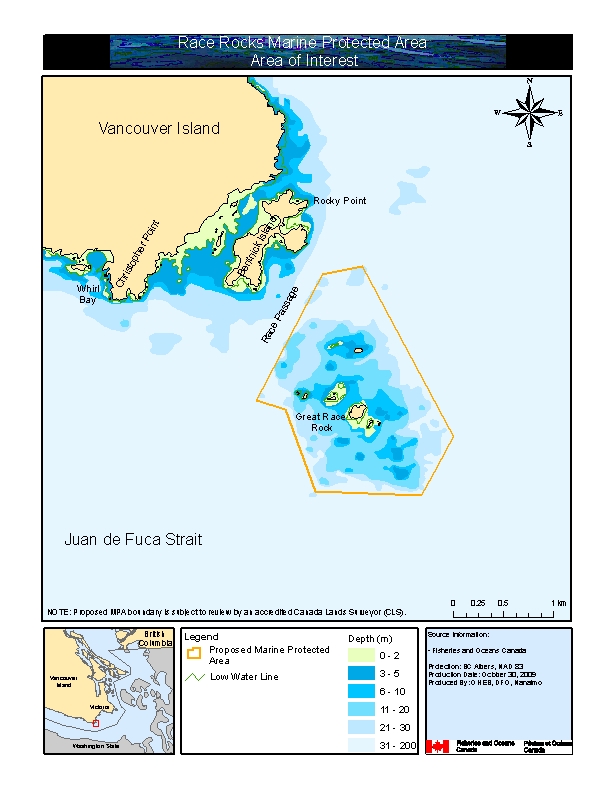 Proposed boundary areas
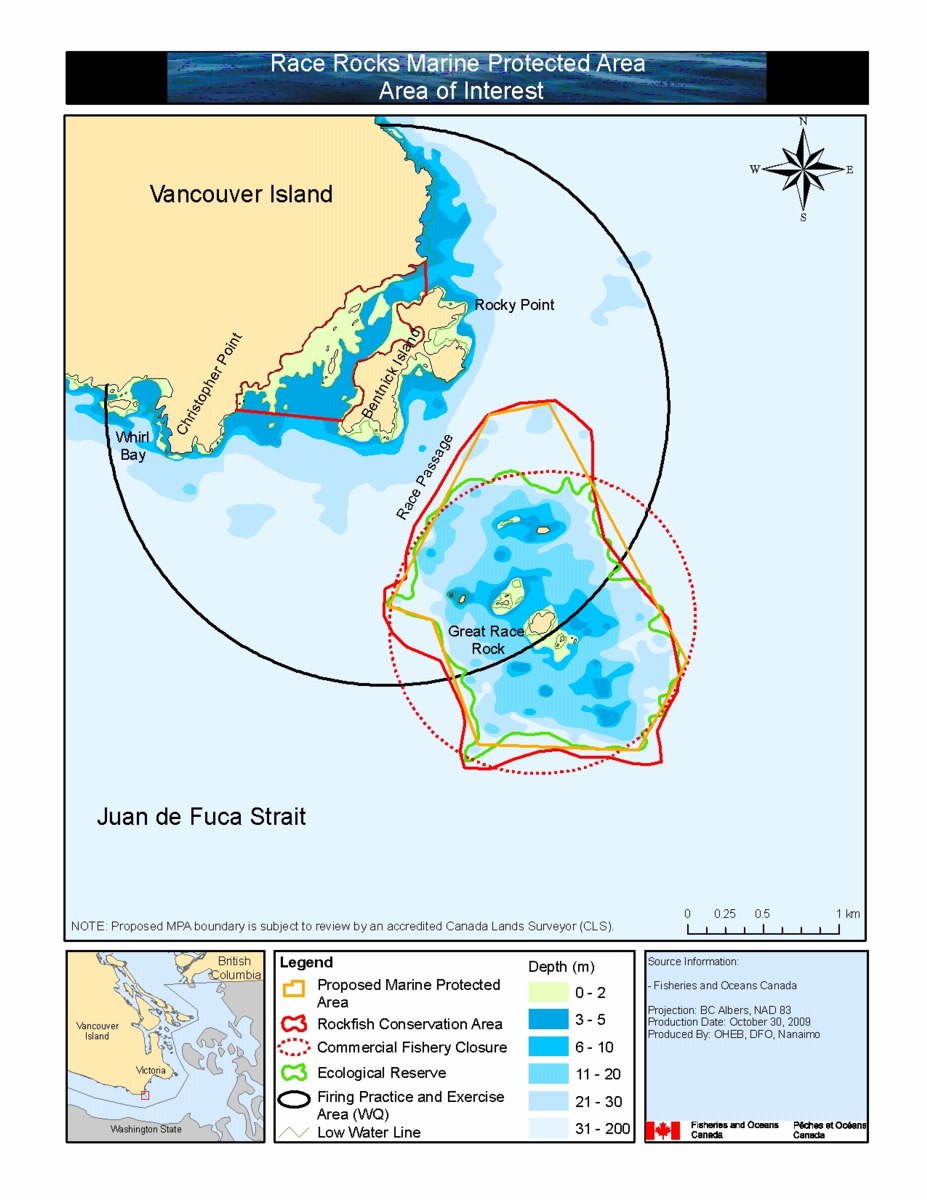 Proposed boundary areas detail
DFO expenses from Access to Information Request
CONTENTS of this File:
1. Background and Rationale for this report .
3. Table 1: Yearly budgets, 1999-2010
4. Figure 2: Detailed overview of DFO expenditures on Race Rocks
5. Table 2: Detailed overview table, 1999-2010
6. Figure 3. Pie chart showing expenditures for five categories.
7. Table 3. List of Individual Expenses for the Race Rocks MPA 1999-2010
8. Example of Ecotourism report done for First Nations :2006
(668 KB.pdf file)
9. ATIP Report : A200900266_2010-02-09_09-00-22.pdf (6MB.pdf file)
11. Condensed version with headers removed, showing graphs.
ANALYSIS AND DISCUSSION:
Upon receiving this report, I was surprized to note several features:
1. The fact that there was a significant budget for the creation of the Race Rocks MPA almost every year from 1999 to 2010, when the RRAB (Race Rocks MPA Advisory Board ) had been effectively shut down in 2002.
2. The fact that in many years a significant portion of the budget remained unspent at the end of the DFO fiscal year when the process of management of this ecosystem and designate MPA was still being carried on by Lester Pearson College without any financial support from DFO.
3. The large portion of the cumulative budget over the 11 years that was designated for First Nations Liaison and continues to be designated, so far without any evidence of an outcome. ( process still ongoing as of Sept, 2011–)
4. The unavailability of written records showing the deliverables for most of the contracts.. hopefully in the interests of transparency and resource availability they are still to come from DFO.
5. When I made a request for the #8 report above: 2006 report on ecotourism, there was some concern about confidentiality expressed by DFO and then the pdf file referred to above in number 8 was released by DFO. This report, which it turns out after checking with the author of the document, was originally a generic power point presentation, which was never presented to the First Nations groups by the contractor. The simplicity and lack of quality directed a this specific case, represented by an expenditure of $19,000 is obvious. Furthermore, I consider the language and the content of the report to be patronizing to the First Nations who commissioned it and it only leaves me questioning the lack of oversight represented by this expenditure .
6. A request for further explanation of many of the contracts has been made to DFO and I will update this space if and when information is available.
7. The analysis for The Bowie Seamount MPA has so far not been done, but I plan on doing it as well as time allows in order to have comparative figures available.
8. One of the requests in my ATIP that they were not able to accommodate was for similar figures for the creation phase as well as the operation phase for the other MPAs in Canada, the majority of which are on the East Coast. I urge the DFO to make this available or if necessary other individuals to go through the ATIP process in order to retrieve this information and make it public.
9. I was struck by the fact that during the course of 11 years, not one cent was devoted by DFO to doing on the ground scientific research that could meet the GAPS in scientific knowledge that I identified early in the Pilot MPA process in April 1999 at the Race Rocks Ecological Overview Workshop . Furthermore, no funds were ever forthcoming for the ongoing operation of the designate MPA. ( Refer to year 2001 proposal )
10. As per a comment recently of one member of the current Advisory Board, “If DFO really is serious about public advice from an MPA Advisory Boards, It should make all information like this freely and easily available to the Board members.”
11. I would like to thank the individuals in the DFO Access to Information and Privacy office for their advice and cooperation during the process involved in this ATIP request.
On March 17, 2010, I sent an e-mail to our RRPAB representative from of the Oceans Habitat and Enhancement Division of Fisheries and Oceans Canada in Nanaimo. He had agreed by phone to help clarify some of the specific questions I had about some of the items in the list of expenditures. Below are the results of that query, with his responses in green.
Response April1, 2110
Based on discussion with my manager and our ATIP staff, I suggest that you submit your request for records outlined below through ATIP. In reviewing the records you’re requesting, I note that many of them are not in my own files. Further, going through ATIP provides greater certainty that the records you receive have taken into consideration confidentiality concerns.
I did quickly go through your list below with some responses that you may find useful in posing specific questions to ATIP. To the extent you can keep your questions specific, it would certainly help reduce the search time estimates. Also keep in mind though, that I have files from past staff in boxes. Though they’re labelled to some extent, if I receive an ATIP for files and I know those past staff have had some involvement in the programs relevant to the records, I’m obliged to include in my search estimates the time to go through the boxes that could potentially have relevant records. As mentioned below in a number of spots, I’m not familiar with some. By that, I largely mean that your description didn’t ‘ring a bell’ with me which would suggest that I won’t have the financial records associated in my own files.
1. I mentioned I am missing the March 31 2008 end of year report of expenditures which may have been lumped in with the Endeavour project number.
As mentioned in my email, fiscal year 2008/09 activities included only First Nations liaison work through Aaron Reith and the Socio-economic overview and analysis report (contract carried out by Sunderman). As I understand, those records were provided to you, but may have had a date of 2009.
2. Also although Lisa sent me the Endeavour /Race Rocks end of year summary for March 2009, It is difficult to separate RR from Endeavour in that one.. Is there any further clarification such as Total Line Object figures which may help me to pick out the Race Rocks specific expenditures.
As mentioned above, March 2009 relates to fiscal year 2008/09 and I’ve listed the items related to that year.
3. I have come across another report that I am unsure about:
Feb 20/01 M.Pakenham Conference Fees? $340.16
I believe he delivered a presentation to this conference as at least I have seen reference to it in a googled file , however it may be useful to have the whole presentation ( presumably a power point in pdf ) if it is still available.
I do not have this presentation. I would not be confident that it could be readily located. A conference presentation may also have limited utility. That is, I don’t know whether Marc would have written and followed speakers notes written in the presentation. It sounds like you’ve googled the conference, I would suggest the proceedings of the conference would potentially be at least as useful to you.
4. Mar30/00 CRD VEHEAP contribution $6000.00. What is VEHEAP ..of the CRD was anything produced as a result of this.
VEHEAP stands for Victoria and Esquimalt Harbours Environmental Action Plan. I don’t have records of this. Further, I would suggest that this was an activity more related to our Integrated Management Programs rather than Race Rocks.
5. Was a report made available from this: Jan29/02 Env.consult , Environment/Environnment 0500 726000008186 $10,000.00
I’m not familiar with this.
6. Is there documentation or report on this one? Apr9 Apr/02 sci/env consult Luanne Chew Consulting Services for Completion of MPA Design Reports.
$5000.00
I’m not familiar with this.
7. When it says ” as per attached statement of work” are those statements available and can they be made public.
as in
——–June 30/09-July13/09-Aaron Reith&Co Community Liaison for First Nations with Respect to the designation process for the Race Rocks Marine Protected area. See the attached statement of work
——Feb 05/04 –To suport the engagement of Select Douglas Treaty First Nations as per attached statement of work. $15,000.00
——and 17 Aug,18 July 2004 –Songhees First Nation Support the ongoing negotiations of select Douglas Treaty First Nations in SVI in Broad Discussions related to Marine Aquatic Resources /To support neg. with Fed and Prov. Gov’ts of a framework for the cooperative mgt. as per statement of work $25,000.00
That would be a question best dealt with through filing an ATIP
8. What is meant by protection services in this one? and to whom did it get paid?
Feb08, Jan 09/2005 Security Additional Meeting, Protection Services ( Guardians, Commissionaires, security Guards etc.) $5,000.00
I ‘m not familiar with this.
9. October 99 to December 2000 Axys Environmental Consulting.. Socio-Economic Overview of RR — Is this the same one we have been looking at recently? if not could we get a copy for our resource files.
This is the same as the Sunderman report provided to the RRPAB and referenced below.
10. It also is apparent that the socio-economic study update , I believe done in 2009 Prepared by:Randy Sunderman Peak Solutions Consulting Inc. Kamloops, BC does not seem to be included anywhere in the expenditures up to January 2010, so could you check on that.
I had understood that was provided in the ATIP. Again, you may wish to check the records provided for fiscal year 2008/09.
11. Dec 99-Feb 2000 Gordon Hanson & Associates Consulting…. was there a report produced for this, and if not what was the nature of the contract?
I’m not familiar with this.
12. The Canadian Hydrographic survey (done back in 1999, that used the multi-beam SONAR ) does not seem to be represented as far as I can determine. This is probably because it was done by another part of the department, could you check into whether that cost is available as it would be a relevant science portion.
You are correct, it would have been financially coded in Canadian Hydrographic Services (CHS) coding. It may have been Oceans funded, but there could have been a budget transfer to Science Branch for the CHS expenditure.
Thanks for your attention to this. I hope this is not too many questions to pursue. If you can’t resolve all of them we will have to live with that.
The above comments in the Analysis and Discussion represent the opinion of Garry Fletcher and are not to be interpreted as being the opinions of any other organization or individuals unless indicated otherwise. It is my hope that it can lead to a level of accountability in expenditure by DFO, and transparency to the public about this process.
Garry Fletcher
Victoria, BC
March 25, 2010
(updated April 20, 2010–GF.)
Access to Information Request on DFO expenses 1999-2010
CONTENTS of this File:1. Background and Rationale for this report .
3. Table 1: Yearly budgets, 1999-2010
4. Figure 2: Detailed overview of DFO expenditures on Race Rocks
5. Table 2: Detailed overview table, 1999-2010
6. Figure 3. Pie chart showing expenditures for five categories.
7. Table 3. List of Individual Expenses for the Race Rocks MPA 1999-2010
8. Example of Ecotourism report done for First Nations :2006
(668 kb.pdf file)
9. ATIP Report : A200900266_2010-02-09_09-00-22.pdf (6MB .pdf file)
11. Condensed version with headers removed, showing graphs.
Background and Rationale for this report:
When we started the MPA designation Process for Race Rocks in 1999, I believe we all went into it assuming that the process of community involvement and stewardship would be one that could be a model of how ordinary people could help to achieve ecological conservation. Further to this, they could play a valuable role in assisting governments in creating one regime, devoid of jurisdictional barriers for the management of humans to ensure ecological sustainability of this unique resource. It was also hoped, that there would be unprecedented transparency in the process. At the time there was no reason that it could not become a template for the establishment of a network of Marine Protected Areas.
The Initial MPA Advisory Process involving the Race Rocks Advisory Board ended in 2002 when the consensus of the Board was not accepted by DFO office in Ottawa, and the resulting modified document gazetted was repugnant to RRAB members as well as First Nations. The Master’s Thesis of Sean Leroy provides a good overview of why this process had failed.
Since that time Lester B. Pearson College has continued with the support of the Ecological Reserve at Race Rocks. They had assumed this responsibility in Stewardship of facilities and the Ecological Reserve since the de-staffing of the light station by the Coastguard in 1997. Since that time the College has provided an on site guardian and generated the funds to cover all expenses, striving for energy self sufficiency and a sharing of the resource with creative use of technology on the internet in keeping with the mandate set out in the management plan for the Ecological Reserve. During that time, BC Parks has also cooperated by providing some funding for on-sight infrastructure repair and maintenance.
“If we are to learn from past mistakes in the Process of Creating Marine Protected Areas, then it must be documented transparently so that stakeholders might have
an opportunity to inform themselves.”
In the fall of 2009, DFO reconvened the Race Rocks (Public) Advisory Board. It became clear to many in the first meeting that the community memory was absent, leading to a projected process highly reminiscent of the re-invention of the wheel, aimed to push through the process and seek completion of the MPA by the end of March, 2010. It was to me as if the last 11 years had not existed.
Prior to the November meeting of the Race Rocks Advisory Board (RRAB), I initiated an Access to Information and Privacy request ( ATIP) to DFO which was originally intended to quantify the costs involved in the creation and the follow up costs of administration and operation of the existing Marine Protected areas on all coasts of Canada. One of many points of that ATIP request included the costs of the MPA Creation Process since 1999 for Race Rocks. After many email and telephone communications back and forth with the ATIP office in Ottawa, I agreed to reduce the extent of the request due to costs they were projecting for my complete list: ( 52 hours at $10.00 per hour which was beyond my budget!) Since I was still primarily concerned with being able to compare costs to see whether there was a common approach to MPA designation and operations after designation, I agreed to accept the records for Bowie and Race Rocks. It was made clear to me at the time that I would only get the figures from invoices for expenses which had been tagged with a code designating the project of that reserve.
This means that staff time and DFO internal resource costs were not available. In addition there is no accounting of the costs incurred by Lester Pearson College, outside researchers and volunteers with no support from DFO for research and the protection of the reserve during the interim while apparently ongoing negotiations by DFO had continued.
Knowing that ATIP requests usually take a long time, I assumed we would be having another meeting before I received the ATIP file. In the November RRAB meeting, I asked to include in the agenda of the next meeting a discussion of the costs of the MPA Process for Race Rocks . I was not given assurance at that time that it would be discussed and a further attempt by telephone to get it on the agenda also failed with an indication that it was not in the interests of the Advisory Board. By the time of the March meeting I had had time to do an analysis of the data and asked if I could present this report to the Board. Time was not made available to do that in the meeting so a group of a dozen Board members were able to stay after the meeting for the presentation and follow-up discussion.
The ATIP file of data had been sent to me on February 10, 2010. That document included all financial reports contained in DFO Pacific’s electronic financial reporting system (MRS) under the project code numbers for the Race Rocks MPA designation process (54257 and 93818) and the Bowie Seamount designation process (54262 and 93826), from 1998 to the present (January 15, 2010). Total 6mb with 142 pages in a pdf file.) The following are summary graphs generated by extracting information from the ATIP file.
No information is available so far for the year Mar.2007-Mar.2008 ( GF)
Garry Fletcher
Victoria, BC
March 25, 2010
Clean Current Presentation on Race Rocks as Possible Demonstration site
This PDF is of a presentation by the staff of Clean Current Power Systems Incorporated that was given to the BC Ministry of Land water and Air Protection and Fisheries and Oceans Canada in May of 2004 to give a background to the Tidal Current Energy proposal and to answer the question ” Does Tidal Turbine Technology fit the Management Plans for Race Rocks Ecological reserve? ”
See the PDF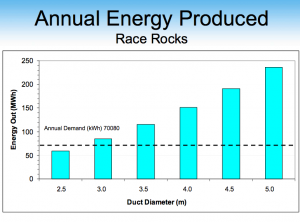 :Race Rocks Tidal Generator
Race Rocks MPA Feasibility Report and Recommendations
Table of Contents:
Acknowledgements
1.0 Background
1.1 Legislative Authority for Marine Protected Areas
1.2 MPA Strategy
1.3 Map
2.0 An Introduction to Race Rocks
2.1 Rationale for Selection
2.2 Purpose of Feasibility Report
2.3 A Vision for Race Rocks Marine Protected Area
2.4 Goal
2.5 Principles For Management of Race Rocks Ecological Reserve / Marine Protected Area
2.6 Objectives for Race Rocks as an MPA
3.0 Creating a Marine Protected Area at Race Rocks
3.1 Process
3.2 Consultative Framework
3.2(c) Stakeholder consultations
3.2(d) Public consultations
3.3 Recommendations for Race Rocks Marine Protected Area
3.3(c) Human Use
(c) 3. management of fishing
(c) 4. diving management
(c) 5. educational activities and research
(c) 6. traditional use study
3.3(d) Environmental Protection
renewable resources
(d) 3. birds and habitat
(d) 4. marine mammals and habitat
3.3(e) Management/Governance Framework
(e) 1. Pacific Steering Committee
(e) 2. Race Rocks Management/Implementation Committee
(e) 3. Race Rocks Advisory Board
(e) 4. Eco-warden operator(e)
(e) 5. Compliance
3.4 Resource Requirements F/Y 2000/2001
4.0 Conclusion
4.2 Challenges for Race Rocks as an MPA
The Report was produced by Marc Pakenham, Community Advisor and Integrated Coastal Zone Coordinator, Kelly Francis – Oceans Directorate, Fisheries and Oceans Canada. Assistance was provided by Jennie Sparkes – Parks Canada, BC Parks staff including: Jim Morris, District Planner; David Chater, District Manager; and Marty Roberts and Garry Fletcher of Lester B. Pearson College.
1.1 Legislative Authority for Marine Protected Areas
Currently jurisdictional responsibilities for the management of the marine environment and marine resources are shared between the federal and provincial governments, as described by the Constitution. For example, DFO is responsible for organisms in the water column, marine mammals, migratory birds and navigation. The Coast Guard maintains a heritage lighthouse tower at Great Race Rock. The province has jurisdiction over the terrestrial areas and the land under the water column. The provincial government is working with federal government agencies of DFO, Parks Canada and Environment Canada to develop and implement a marine protected areas strategy, and with Parks Canada to implement the Pacific Marine Heritage Legacy program. The Canadian Forces Base (CFB) in Esquimalt holds and uses the land at Rocky Point which may impact the ecological reserve – marine protected area’s values.
1.2 Marine Protected Area Strategy
The Marine Protected Area Strategy consists of three elements:
- A joint federal-provincial approach: All relevant federal and provincial agencies will work collaboratively to exercise their authorities to protect marine areas.
- Shared decision-making with the public: Commits government agencies to employ an inclusive, shared decision-making process with First Nations, marine stakeholders, coastal communities and the public.
- Building a comprehensive system: Seeks to build an extensive system of protected areas by the year 2010 through a series of coastal planning processes.
2.0 An Introduction to Race Rocks
Named for its strong tidal currents and rocky reefs, Race Rocks is a showcase for Pacific marine life, featuring whales, sea lions, seals, birds and a dazzling array of underwater plants and animals.
Race Rocks is located 17 kilometres southwest of Victoria, and is the most southerly part of Canada’s Pacific Coast. One of its nine islets is the site of Race Rocks lightstation, the second oldest lighthouse in Western Canada.
In 1980, Race Rocks was designated as an ecological reserve by the province of British Columbia. The area’s remarkable tidal flow – up to seven knots – supplies a generous stream of nutrients to a thriving community of subtidal invertebrates, including sponges, anenomes, hydroids and soft corals. Crowds of barnacles, tunicates, urchins and sea stars adorn the underwater cliffs. Fish such as sculpin, rockfish and lingcod seek refuge in the rocky crevices and undulating kelp forests.
Above water, the islets serve as nesting colonies for many seabirds, such as gulls, cormorants, pigeon guillemots and oystercatchers, and as a stopover for migratory birds. They share the rocks with resting harbour seals, Stellar and California sea lions, and a few northern elephant seals. River otters patrol the shoreline and killer whales are frequent visitors. Gray whales, Dall’s and harbour porpoises occasionally pass by.
The exceptional diversity of marine life at Race Rocks – long recognized by First nations in the area – makes it an ideal place for scientific and educational observation. It serves as a model for the transition zone between inner coastal waters and the open ocean, which is why nearby Lester B. Pearson College was instrumental in having Race Rocks designated as an ecological reserve. In cooperation with B.C. Parks and the Canaian Coast Guard, the college now operates the lightstation facility as an education/guardian centre.
The Race Rocks area was selected as an MPA pilot under the federal-provincial MPA Strategy initiative based on its status as a richly diverse and representative marine ecosystem due in part to the past twenty years of protection as an ecological reserve.
While provincial designation affords a strong measure of protection it does not have authority over the water column. Past collaboration with Fisheries and Oceans Canada has yielded Fisheries Act closures within the reserve for most species (1990). New opportunities under the Federal Oceans Act now exist for more complete and integrated measures to achieve the ecological reserve and marine protected area vision for protection and conservation.
2.2 Purpose of Feasibility Report and Recommendations
The purpose of this report is to clearly demonstrate that all the identified criteria have been met to proceed with the formal designation of Race Rocks Marine Protected Area under the Oceans Act.
In broad terms the report outlines a conceptual management vision, goals and objectives which have been derived through consultations with local First Nations, public and multiple stakeholders. It provides conceptual strategies for the protection and management of natural values, recreation use, research and education uses for both the ecological reserve and marine protected area.
Preparation of a management plan for Race Rocks will take place following designation.
“Based on a cooperative and integrated, multi-lateral relationship, Race Rocks Marine Protected Area – Ecological Reserve will conserve and protect a unique, high energy marine ecosystem for the benefit of future generations.”
To evaluate Race Rocks Ecological Reserve as a pilot Marine Protected Area under the Oceans Act by testing Fisheries and Oceans Canada’s national MPA program framework and the joint federal-provincial MPA Strategy for Canada’s Pacific coast.
2.5 Principles For Management of Race Rocks Ecological Reserve / Marine Protected Area
WORKING TOGETHER: The full realization of Race Rocks as both and ER and MPA is dependent on the combined authorities of Canada and British Columbia, as well as the ongoing coordination of management actions by a range of federal and provincial agencies, non-government organizations and volunteers. DFO and BC Parks will, together, provide the leadership that fosters this coordination, cooperation and partnership.
RESPECT FIRST NATIONS AND THE TREATY PROCESS: Canada and British Columbia consider First Nations’ support and participation in the Race Rocks Ecological Reserve and Marine Protected Area planning and management processes as essential. First Nations will be actively involved in all planning and management processes. The establishment of any MPA will not preclude options for settlement of treaties.
PRECAUTIONARY PRINCIPLE: All management actions, including the regulation of appropriate uses, will be based on the precautionary principle. The precautionary principle means, “When in doubt, err on the side of caution.” This principle puts the burden of proof on any individual, organization or government agency conducting activities within Race Rocks MPA to demonstrate that there will be no damage to the marine ecosystem from proposed activity.
As outlined in Marine Protected Areas – a Strategy for Canada’s Pacific Coast, the objectives for establishing Race Rocks as a marine Protected Area are:
To contribute to, provide for and enhance:
- protection of marine biodiversity, representative ecosystems and special natural features.
- conservation and protection of fisheries resources and their habitats.
- protection of cultural heritage resources and encourage understanding and appreciation.
- opportunities for recreation and tourism.
- scientific research opportunities and support the sharing of traditional knowledge.
- increased education and awareness.
3.0 Creating a Marine Protected Area at Race Rocks
The following outlines the process followed in the development of this feasibility report and recommendations.
After Fisheries and Oceans Canada’s Minister David Anderson’s announcement
regarding the nomination of Race Rocks as a pilot Marine Protected Area in
September, 1998, the Oceans Directorate – South Coast staff developed an action plan which outlined a process to determine the feasibility of designating Race Rocks. This action plan included the following steps:
- Establishment of a federal/provincial management planning team consisting of representatives of BC Parks and Fisheries and Oceans Canada and First Nations (Sept. 99).
- Review of the draft management plan for Race Rocks as an ecological reserve (June ’98) by BC Parks and Fisheries and Oceans. A pamphlet was developed to provide the public and stakeholders with general information.
- Completion of an ecosystem overview and the identification of additional information requirements.
- Determined the scope of consultations with stakeholders to ensure that all interests affected by federal/provincial authorities were addressed (September 1999).
- Initiation of an assessment of the feasibility and implications of using Federal (Oceans Act) and Provincial (Ecological Reserves Act, Park Act) legislation jointly (April/May 1999);
- Development of a draft Socio-economic Overview of Race Rocks as a Marine Protected Area under the Oceans Act (September 1999).
- Consultations, open houses and meetings with affected stakeholders and public to discuss the creation of a Marine Protected Area and the development of a feasibility report and recommendations (September ‘99 – March ‘00).
- Recommendations developed based on the feedback received for designation and management/governance of Race Rocks (March ‘00).
9. Development of the Race Rocks Marine Protected Area Feasibility Report and
Recommendations, in part, as a synthesis of the following
documents:
- Race Rocks Ecological Reserve Draft Management Plan (June 1998),
- Marine Protected Areas- a Strategy for Canada’s Pacific Coast – discussion paper (Aug. 1998), and
- Recommendations for Designation and Management of Race Rocks Marine Protected Area
- Race Rocks Pilot MPA – a Science Review3.2 Consultative FrameworkThe pilot process for the establishment of a Marine Protected Area at Race Rocks recognized the importance of a comprehensive dialogue between those constituents whose interests might be affected. After identifying the key stakeholder groups or individuals, interests, issues and proposals for resolution were developed through facilitation and meetings. In some instances, this required a series of meetings to develop consensus. Overall, it is important to note that there was and continues to be a high level of support for the creation of marine protected areas. The Race Rocks Advisory Board provided an excellent forum for discussion and issue resolution. 3.2(a) First Nations:
Engaging First Nations in the consideration of Race Rocks as a pilot MPA has been a priority. Initial discussions with T’souke and Beecher Bay First Nations revealed both common interests and issues requiring resolution.
From a First Nation’s perspective, the Race Rocks area has cultural significance with respect to traditional use and management of the area’s resources. There is recognition that, should a Marine Protected Area be established, it will not infringe on First Nations’ existing Treaty rights, traditional, food, ceremonial interests or relationship with the area. Further, there developed a significant opportunity to develop cooperative management and First Nation’s educational opportunities.
During the consultative process, a Race Rocks Advisory Board was developed which included representation from the Coast Salish Sea Council, through Tom Sampson. Active participation from First Nations ensured effective communications with local Bands and those in neighbouring Washington State. Several events highlighted the First Nations participation. A Thirteen Moon seminar was conducted in December “99 by Mr. John Elliott and Tom Sampson. This demonstrated the lunar cycle’s influence on traditional First Nation’s life and relationship to the ecosystem. On March 09, 2000 the members of the Race Rocks Advisory Board were honoured to be invited by the Beecher Bay Band to a “Burning Ceremony near Race Rocks. This event is highly spiritual and provides an offering to ancestors. It was a rare privilege to be invited to participate in such a ceremony and it provided a very meaningful opportunity to build relationships.
More recently, First Nations elders and youth are visiting Race Rocks to learn about traditional uses and relationship to the marine environment. These visits are assisting in the development of both a traditional use study and First Nations curriculum for elementary and junior secondary students.
The Race Rocks Advisory Board members expressed appreciation for the opportunity to develop a fuller understanding of First Nation’s relationship with marine ecosystems.
It became apparent that there was First Nations’ support for the creation of Marine Protected Areas such as Race Rocks and a willingness to participate in the management of MPA’s.
3.2(b) Race Rocks Advisory Board
A Race Rocks Advisory Board was established to support the consultative process for Race Rocks pilot MPA. Terms of reference were developed to clarify the objectives, process, role and conduct of the Advisory Board.
The Race Rocks Advisory Board role was to:
- represent key constituent groups or stakeholders
- provide advice to Fisheries and Oceans Canada and B.C. Parks on the consultation process
- collate and analyze feedback from consultations
- make consensus-based, recommendations to Fisheries and Oceans Canada and B.C. Parks for the establishment of a marine protected area at Race Rocks
- ensure community involvement in the establishment and on-going management of Race Rocks MPA
The Race Rocks Advisory Board met five times between December ’99 and March ’00. It is important to note that the recommendations developed through the consultations and work with the Race Rocks Advisory Board may not reflect the complete agreement of every person involved in the dialogue but it does represent complete unanimity from the Race Rocks Advisory Board and the groups they represent.
MEMBERS OF RACE ROCKS ADVISORY BOARD
Cheryl Borris -Friends of Ecological Reserves-
Erin Bradley – -Dive community-
Howard Breen -Georgia Strait Alliance –
Garry Fletcher -Pearson College –
Kelly Francis -Fisheries & Oceans-
Gordon Hanson-First Nations projects
Dan Kukat- -Sports Fish Advisory Board – Victoria-
Lt. Cdr. Bill Laing-Department of National Defence-
Angus Matthews -Pearson College of Pacific-
Sean Moore-Pedder Bay Marina
Jim Morris -B.C. Parks
Marc Pakenham – Fisheries & Oceans
Brian Smiley – -Fisheries & Oceans-
Tom Sampson-Coast Salish Sea Council-
Jennie Sparkes – Parks Canada-
Dr. Anita Voss -Science community-
Kevin Walker -Northwest Whale Watchers Association –
3.2(c) Stakeholder Consultations
Extensive consultations were conducted to determine interests, issues and support for the creation of a Marine Protected Area at Race Rocks. With most groups support was readily apparent and strong. A small minority of stakeholder groups expressed concerns and interests which initially seemed at odds with Marine Protected Areas’ goals and objectives. Some of the issues were the result of insufficient information and misapprehension. These were quickly resolved. Issues regarding sportsfishing and eco-tourism interests required more detailed and protracted discussion. For a list of stakeholder groups see Appendix I.
In addition to sectoral consultations with stakeholders, two public sessions were conducted in February 2000. The public consultations were held to ensure the widest range of information and discussion with those persons potentially not represented by particular interest groups. With an attendance of 101 persons, the consultations provided useful for a for the discussion of both MPA and Ecological Reserve aspects of the initiative.
Media coverage, after the initial announcement of the pilot initiative at Race Rocks, has been regular, positive and resulted in continued public discussion and interest. Ranging from local newspapers to Knowledge Network and Discovery Channel, the coverage has highlighted the ecological values and public support.
3.3 Recommendations for Designation and Management of Race Rocks Marine Protected Area
Recommendations for the designation and management of the Race Rocks Marine Protected Area have been developed as a result of extensive consultations over the past eighteen months. The Race Rocks Advisory Board unanimously supports these recommendations. Key recommendations are categorized into the following six areas:
(a) Designation
(b) Area Boundaries
(c) Human Use
(d) Environmental Protection
(e) Management/Governance Framework
(f) Stewardship
Recommend that Race Rocks be designated as a Marine Protected Area under the Oceans Act Section 35.
Recommend that the boundary for Race Rocks Marine Protected Area coincide with the Ecological Reserve boundary (1980); being all waters within the 36.5 metre(20 fathom) line as described on Canadian Hydrographic Chart 3641 [1980]. Total area 200 hectares.
Managing human use and impacts are the principal issues for Race Rocks as a combined marine protected area and ecological reserve
(c) 1. Recommendations for vessel and boating management guidelines addressing the following areas will be developed in consultation with user groups:
- speed limits
- anchoring restrictions
- shoreline restriction
- considerations when whales are within the MPA boundary
- sensitive areas restrictions (i.e. kelp beds)
- ballast water discharge and vessel traffic considerations
- vessel and boating management guidelines will de developed in consultation with user groups
- routine monitoring and reporting of vessel activity
(c) 2. Recommendations for the management of aviation activities:
- helicopter traffic by authorization
- no over flights
(c) 3. Recommendation for the management of fishing activities:
- establish a “no-take” zone for all species within the 20 fathom contour line with other conservation and protection measures as recommended by the Steering Committee
(c) 4. Recommendations for management of diving activities to be developed in consultation with user groups:
- volunteer stewardship developed in cooperation with the dive community
- educational and training programs for the dive community
- adaptive development and application of Reefkeepers and other observation programs
- routine monitoring and reporting of diving activity
(c) 5. Recommendations for the management of educational activities and research:
- adaptive and integrated permit process for education and research, as per Ecological Reserve Act example monitored by Eco-warden Operator
- develop a spectrum of learning opportunities including internet-based learning opportunities about MPA’s
- educational and research activity reported annually
- develop learning and research opportunities which have minimal impact on ecosystem
(c) 6. Recommendations for the development of a Traditional Use Study:
- through consultation with First Nations, develop terms of reference and framework for a traditional use study, including translation
- conduct traditional use study
- working cooperatively, develop marine ecosystem-related curriculum for schools to further understanding of First Nations’ relationship with Race Rocks
3.3(d) Environmental Protection
(d) 1. Recommendations for the management of dredging and dumping:
- dredging of any kind is prohibited in Race Rocks Marine Protected Area
- disposal of any material, including overboard discharge of sewage, is prohibited in the Race Rocks Marine Protected Area
(d) 2. Recommendations for the management of exploration for, and development of, non-renewable resources:
- that the exploration for, or development of, non-renewable resources is prohibited in the Race Rocks Marine Protected Area
- no pipelines or utility corridors
(d) 3. Recommendations for the protection of birds and habitat:
- develop a structured monitoring program and protocol for other activities
- establish appropriate conservation measures and protection areas
- develop partnerships with CWS, Rocky Point Bird Observatory Society. etc.
- use internet capability for non-intrusive observation
- routine monitoring and reporting
(d) 4. Recommendations for the protection of marine mammals and habitat:
- develop partnerships with all groups for monitoring and research within a structured program
- establish protection measures where appropriate
- partnerships with whale watching industry for public education
- work with marine mammal viewing industry to develop best practices
- use internet capability for non-intrusive observation
- routine monitoring and reporting
3.3(e) Management/Governance Framework
Recommendations for management/governance:
(e) 1. create a Pacific Steering Committee, with representation from First
Nations, BC Parks, Fisheries and Oceans Canada
(e) 2. create a Race Rocks Management/ Implementation Committee with
representation from First Nations, BC Parks, Fisheries and Oceans
Canada
(e) 3. create a Race Rocks Advisory Board
(e) 4. create a Eco-warden Operator
(e) 5. develop a compliance program
(e) 1. Pacific Steering Committee
- consists of a representative from First Nations, B.C. Parks and Fisheries & Oceans Canada
- develops policy and management recommendations for ER/MPA’s
- identifies areas of interest and process for designation
- provides general direction for Race Management/ Implementation Committee
(e) 2. Race Rocks Management/Implementation Committee
- consists of a representative from First Nations, B.C. Parks and Fisheries & Oceans
- implements and coordinates the management of Race Rocks ER/MPA
- provides policy and management recommendations to government departments regarding ER/MPA’s
- provides direction for the Race Rocks ER/MPA Eco-warden Operator
- works with the Race Rocks Advisory Board
- provides direction for ER/MPA evaluation
(e) 3. Race Rocks Advisory Board (post designation)
- cross-sector representation
- provides advice to Pacific Steering Committee and Race Rocks Management/Implementation Committee on management issues
- facilitates communications with constituents
- makes recommendations for the operations of Race Rocks Marine Protected Area
- provides advice and participates in ER/MPA evaluation
(e) 4. Eco-warden operator
- direction provided by Race Rocks Management/Implementation Committee
- manages day to day operations in Race Rocks ER/MPA
- facilitates permit system for research and education
- facilitates compliance program
- develops information and education programs
- assists with ongoing evaluation and monitoring
(e) 5. Recommendations for compliance:
- emphasize partnerships and voluntary compliance through education
- support stewardship initiatives
- develop enforcement response by appropriate government agencies, as required
- develop a protocol for reporting to the Steering Committee and Management/Implementation Committee
As the consultative process unfolded, it soon became apparent that there was significant support for the creation of a Marine Protected Area at Race Rocks. Rather than develop a complex regulatory framework for protection and conservation, there are strong indications that a voluntary compliance and stewardship program will achieve the goals and objectives as described herein. Principal stakeholder groups have expressed a keen interest in not only developing “best practices” but also working towards ensuring a high degree of compliance. The development of stewardship initiatives and “best practices” guidelines has already commenced; the results will be reflected in the development of a management plan.
3.4 Resource Requirements F/Y 2000/2001
Cooperation Between Government: Good working relations exist between B.C. Parks, Coast Guard, DFO, Parks Canada and Department of National Defense which will contribute to the best protection for the ecological reserve – marine protected area. The pilot process has led to a greater understanding and improved collaboration between these agencies.
Cooperation with First Nations:
The Race Rocks pilot Marine Protected Area process has developed significant relationships with participants and improved understanding of interests. Further opportunities have been outlined in the recommendations.
Cooperation with Lester B. Pearson College: Lester B. Pearson College was instrumental in the establishment of the ecological reserve – marine protected area. The faculty and students of the Biology and Environmental Systems program at Pearson College are long-time volunteer ecological reserve – marine protected area wardens. They are actively involved in research and education activities and provide an important monitoring function. The College uses the decommissioned lighthouse buildings at Great Race Rock as a research and education facility and guardian base through a temporary agreement with the Coast Guard. The Coast Guard lease of Great Race Rock is reverting to the province of B.C., at which time, Pearson College’s tenure will be confirmed. Race Rocks Ecological Reserve – Marine Protected Area provides outstanding marine research opportunities. Lester B. Pearson College has been the principal research agency and has developed a good database for the ecological reserve – marine protected area and its values.
Management of Education and Research Activities:
The Race Rocks ecological reserve – marine protected area will enhance the protection and conservation of the high-energy marine ecosystem found in the Strait of Juan de Fuca. Research will assist in focusing the management and monitoring of the ecological reserve – marine protected area, as well as contribute to the knowledge base of coastal marine systems on a broader scale. The ecological reserve – marine protected area will be a prime educational source for increasing awareness of marine systems for students, visitors and the general public. It will also be a key educational and awareness tool for the DFO MPA program. Recent Millennium 2000 funding has supported the development of www.racerocks.com , an internet, interactive series of video cameras which provide world-wide educational opportunities. Opportunities exist to involve First Nations with BC Parks and Fisheries and Oceans Canada in management, stewardship and creative joint educational initiatives.
With the proximity to Victoria, Race Rocks Ecological Reserve – Marine Protected Area provides excellent educational opportunities. Lester B. Pearson College uses Race Rocks for their marine ecology program for college and local school students and naturalists. Tourism operators from Victoria also offer educational nature tours.
4.2 Challenges
Boundaries: The irregular shape of the proposed Marine Protected Area boundary is challenging for compliance and enforcement of regulations. Recent improvements in navigation technology, such as more accurate global positioning satellite (GPS) units, electronic charts and depth sounders are readily and inexpensively available. As the vessel operators equipment improves, so does the accuracy for determination of boundaries.
Management of Human Use: Commercial and non-commercial recreation activities such as wild life viewing, diving, boating and nature appreciation occur in the ecological reserve – marine protected area, both in the water and on land. These activities will require strong cooperative management and stewardship initiatives with the federal government, tour operators and recreational users to ensure that the values of the ecological reserve – marine protected area are maintained.
Sport Fishing: Sport fishing for halibut and salmon is currently very popular in the area directly adjacent to the Race Rocks Ecological Reserve. The large sport fisher community does not wish to see the boundaries for Race Rocks Marine Protected Area any larger than the current ecological reserve boundaries.
Ballast Water Dumping: Currently under the draft Ballast Water Management Guidelines, the Port of Vancouver stipulates that dumping of ballast water may take place west of the Race Rocks Ecological Reserve – marine protected area. The introduction of alien species and contamination could significantly impact the Race Rocks environment.
Oil Spills: Frequent heavy oil and crude tanker traffic (two supertankers per day on average) passes near the Race Rocks area. Due to the isolated nature, and the small area encompassed by the Race Rocks ecological reserve – marine protected area, even a small spill could have a devastating impact on the Race Rocks area.
Relationship with Other Land Use Planning: Management planning processes provide a mechanism for public review and support for management strategies. In this respect, an ecological reserve – marine protected area management plan must be considered in terms of its relationship with other land use strategies.
In June 1994, the provincial government announced the Vancouver Island Land Use Plan. This plan recommended that strategic planning occur for marine areas. Marine planning units have now been identified and planning framework statements summarizing values and capabilities have been prepared for the next level of planning. Race Rocks and surrounding areas are included in this process.
The marine environment of the Pacific coast is not well represented in either federal or provincial protected areas systems. The federal and provincial governments are committed to establishing a system of marine protected areas and are developing a strategy to this end. A separate but related initiative is the Pacific Marine Heritage Legacy (PMHL), where the federal and provincial governments are working to form a network of coastal and marine protected areas along the southern Pacific coast. Race Rocks Ecological Reserve – Marine Protected Area is situated adjacent to a study area for a national marine conservation feasibility study which was initiated in 1998-99 as part of the PMHL Program.
The following groups were represented or directly participated in the information/consultations:
Amalgamated Conservation Society
Aquarius Dive Club – DND
Association for the Protection of Rural Metchosin
BC Shorekeepers/Reefkeepers Assoc.
BC MELP – Parks
BC Ministry of Fisheries
Canadian Coast Guard – DFO
Canadian Parks and Wilderness Society
Canadian Wildlife Service
Capital Regional District — Roundtable on the Environment & Environment Committee
Department of National Defence – CFB Esquimalt
District of Metchosin
Environmental Risk Management – CFB Esquimalt
Environmental Youth Alliance
First Nations – Beecher Bay, Esquimalt, Songhees, T’sartlip, T’souke
Frank White’s Scuba Shop
Friends of Ecological Reserves
Georgia Strait Alliance
Golden Rods and Reels Victoria
Greater Victoria Natural History Society
Habitat Acquisition Trust
Lester B. Pearson College
Local marinas
Ogden Point Dive Centre
Ocean Centre
Parks Canada PMHL
Pedder Bay Marina
Regional Recreational Boating Advisory Council
Royal BC Museum
Rotary Club – Victoria
Rural East Sooke Association
Saanich Inlet Protection Committee
Sea to Sea Greenbelt Society
Sierra Club of British Columbia
Society for the Protection of Ayum Creek
South Island Aquatic Stewardship Society
Sports Fish Advisory Board – Race Rocks Sub-Committee
The Land Conservancy
Tourism Victoria – Environment Committee
University of Victoria
Veins of Life Watershed Society
Victoria Golden Rods and Reels
Victoria Natural History Society
Victoria Marine Adventure Centre
Victoria Marine Advisory Council
Western Canada Wilderness Committee
Whale Watch Operators Association NW.
Return to RRAB Index

Recreational lingcod fishing prohibited in Strait of Juan de Fuca
Saturday, June 01, 2002
Good Morning WEATHER: Sky Cloudy Vis. 12 Miles Wind West 11 Knots Rippled
Good Evening
TEMPERATURE: Max. 13.0 C Min. 8.1 C Reset 10.0
MARINE LIFE: Another beautiful day here, with quite a lot of marine activity. The Glaucous Winged Gulls are actively mating and nesting, being very defensive of their nests. Crows are harassing the Gulls, Oystercatchers and and Pigeon Guillemots, in search of an unattended nest and egg. One of the pairs of Canadian Geese on the Island are nursing their five young Goslings, despite the Goslings rapidly increasing size the Geese continue to be very protective of their youngsters. Divers spotted some large Ling Cod** around the docks, along with a healthy stock of smaller fish.
HUMAN INTERACTION: A lot of fishing activity around the reserve today, around 10 to 12 vesels on the reserve boarder actively fishing. Problems with both vessels motoring too quickly through the reserve and fishermen disregarding the reserve limitations and fishing around West Race rocks. Four eco-tourism vessels moved through the park today.
**Good news for the Ling Cod!! This note was just received from the Sierra Club:
June 1, 2002 Victoria, BC: Despite intense pressure from sports-fishery lobbyists, local Fisheries and Oceans managers have decided that this year’s recreational fishery for lingcod in the Strait of Georgia will not go ahead today as scheduled. In an unprecedented, last-minute move, regional Fisheries and Oceans officials decided late Friday to issue a variation order to the B.C. tidal waters recreational fishery regulations, to prevent the recreational fishery for lingcod from proceeding. In an unprecedented, last-minute move, regional Fisheries and Oceans officials decided late Friday to issue a variation order to the B.C. tidal waters recreational fishery regulations, to prevent the recreational fishery for lingcod from proceeding. The lingcod season, which would have run from today to September 30, would have allowed anglers a daily bag limit of one lingcod, a possession limit of two, and an annual limit of 10.
The commercial harvest of Strait of Georgia lingcod was banned in 1990, after commercial landings had steadily declined to 44 tonnes after a peak catch of 3,300 tonnes in the 1930s. Fisheries and Oceans scientists estimate that only five per cent of the 1950s-era lingcod biomass is left in the Strait of Georgia. Against the advice of federal fisheries scientists, the recreational lingcod fishery was allowed to continue, however, and by 2001 the sports catch was believed to result in an annual harvest of at least 30 tonnes. Friday’s decision to suspend the fishery will prohibit recreational lingcod fishing throughout Johnstone Strait, the entire Strait of Georgia area, and most of Juan de Fuca Strait.
“We believe that the vast majority of anglers will support this decision,” said Terry Glavin, fisheries adviser to the Sierra Club. “While we are encouraged by reports that there may be localized revivals in lingcod stocks, a full closure is the only hope that these precious fish will gain the time they need to recover to their former abundance.”posted by at 5:49 AM
Good Evening
TEMPERATURE: Max. 13.0 C Min. 8.1 C Reset 10.0
MARINE LIFE: Another beautiful day here, with quite a lot of marine activity. The Glaucous Winged Gulls are actively mating and nesting, being very defensive of their nests. Crows are harassing the Gulls, Oystercatchers and and Pigeon Guillemots, in search of an unattended nest and egg. One of the pairs of Canadian Geese on the Island are nursing their five young Goslings, despite the Goslings rapidly increasing size the Geese continue to be very protective of their youngsters. Divers spotted some large Ling Cod** around the docks, along with a healthy stock of smaller fish.
HUMAN INTERACTION: A lot of fishing activity around the reserve today, around 10 to 12 vesels on the reserve boarder actively fishing. Problems with both vessels motoring too quickly through the reserve and fishermen disregarding the reserve limitations and fishing around West Race rocks. Four eco-tourism vessels moved through the park today.
**Good news for the Ling Cod!! This note was just received from the Sierra Club:
June 1, 2002 Victoria, BC: Despite intense pressure from sports-fishery lobbyists, local Fisheries and Oceans managers have decided that this year’s recreational fishery for lingcod in the Strait of Georgia will not go ahead today as scheduled. In an unprecedented, last-minute move, regional Fisheries and Oceans officials decided late Friday to issue a variation order to the B.C. tidal waters recreational fishery regulations, to prevent the recreational fishery for lingcod from proceeding. In an unprecedented, last-minute move, regional Fisheries and Oceans officials decided late Friday to issue a variation order to the B.C. tidal waters recreational fishery regulations, to prevent the recreational fishery for lingcod from proceeding. The lingcod season, which would have run from today to September 30, would have allowed anglers a daily bag limit of one lingcod, a possession limit of two, and an annual limit of 10.
The commercial harvest of Strait of Georgia lingcod was banned in 1990, after commercial landings had steadily declined to 44 tonnes after a peak catch of 3,300 tonnes in the 1930s. Fisheries and Oceans scientists estimate that only five per cent of the 1950s-era lingcod biomass is left in the Strait of Georgia. Against the advice of federal fisheries scientists, the recreational lingcod fishery was allowed to continue, however, and by 2001 the sports catch was believed to result in an annual harvest of at least 30 tonnes. Friday’s decision to suspend the fishery will prohibit recreational lingcod fishing throughout Johnstone Strait, the entire Strait of Georgia area, and most of Juan de Fuca Strait.
“We believe that the vast majority of anglers will support this decision,” said Terry Glavin, fisheries adviser to the Sierra Club. “While we are encouraged by reports that there may be localized revivals in lingcod stocks, a full closure is the only hope that these precious fish will gain the time they need to recover to their former abundance.”posted by at 5:49 AM
Race Rocks Ecological Overview: Wright and Pringle 2001
This overview is linked here in PDF form: https://racerocks.ca/wp-content/uploads/2001/06/257000.pdf
Operational Proposal for Race Rocks Ecological reserve and MPA
Ecological Reserve and Marine Protected Area
OPERATIONAL PROPOSAL 2001/2002
 Presented to:
Department of Fisheries and Oceans
Attention: Dick Carson,
Director, Pacific Region
February 15, 2001
The Department of Fisheries and Oceans has recently recognized the ecological value of this treasured eco-system by selecting Race Rocks as one of the first Pilot Marine Protected Areas under the Oceans Act. Since 1980 when the Race Rocks Ecological Reserve was established, marine life on the rocky outcrops and the ocean floor extending to a depth of 20 fathoms has been protected by the Province of British Columbia. Great Race Island is home to the Race Rocks light station. Since 1980 the light- keepers have been of great assistance in protecting the Ecological Reserve by keeping a watchful eye.
As a consequence of a Federal decision to de-staff the light station in 1997, the keepers were to be removed and they would no longer provide the essential supervision required for full protection of the Reserve. In excess of $25 million worth of commercially exploitable species are known to exist within the Reserve area. The presence of the keepers was determined to be essential for continued protection. Coast Guard agreed to a special short-term agreement whereby Pearson College would retain the former light keepers as eco-guardians and operate the surplus facilities as a new Marine Education Centre until such time as a permanent solution for the operation of Race Rocks could be found.
A New Beginning
The Federal Department of Fisheries and Oceans began community consultations in 1998 to assess the possibility of Race Rocks being recognized as Canada’s first Marine Protected Area. For the first time, Race Rocks, with the cooperation of both levels of government would be truly protected with a management plan that included both the Provincially managed Ecological Reserve and the Federally controlled water column.
On September 14, 2000 the Minister of Fisheries and Oceans, the Hon. Herb Dhaliwal, announced he had accepted the recommendations of the Race Rocks Advisory Board and DFO staff and Race Rocks would become Canada’s first Marine Protected Area.
Background
 An extensive management plan for the Race Rocks area is now being developed by DFO staff working in close consultation with BC Parks and representatives of the South Island First Nations. At the invitation of the MPA strategy, extensive community involvement has led to broad consultation and local support for the MPA initiative.
For the first time, the Race Rocks eco-system will enjoy full protection under a unified management plan with the authority of both the Federal and Provincial governments. An important new provision has also been made for the full involvement of First Nations in on-going management of the area. The vital priorities of protecting ecological values, education and research are the primary focus of the new plan now being developed.
Scope of the Race Rocks Project
For the past four years, on a temporary basis to assure interim protection at Race Rocks, Pearson College staff and students have undertaken the following responsibilities:
Protection
- Continuous supervision of the island and Reserve by resident eco-guardian.
- Security for buildings, equipment and infrastructure (24 hrs/day all year).
- Vigilant observation of activities within the Reserve and if needed, reporting of infractions to appropriate agencies.
- Electronic video monitoring of the Reserve area by enforcement agencies.
- Restrict access to specific areas as necessary.
Safety
- Observe and report any situations which may represent a safety hazard.
- Assist individuals in distress when required and liaise with rescue agencies.
- Assist in emergency communications.
- Be vigilant for fire hazards.
- Monitor for the occurrence of hazardous material spills.
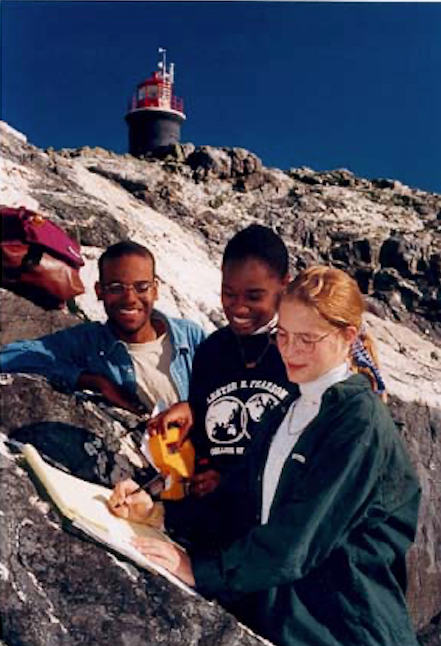 Science
- Continue monitoring program for weather conditions.
- Continue monitoring program for seawater temperature and salinity.
- Ongoing protection of unique Northern Abalone populations and monitoring of population and growth rates.
- Annual intertidal and subtidal transect site monitoring.
- Installation of environmental scan sensor arrays for air, soil and seawater with full accessibility on the Internet.
- Observation and recording of marine mammal and bird populations.
- Daily ecological events log.
- Support for visiting scientists.
- Development of alternative energy solutions.
Education
- Development of curriculum materials for K-12 use.
- Cooperative development of information about First Nations focusing on the history of traditional uses and creating a supporting curriculum.
- Operation and continuous upgrading of the racerocks.com education site with a major commitment for the production of online archived video for classroom and public use.
- Interactive web cast production and delivery for use by schools, science centres, museums and conferences.
- Public education programs for visitors to the Race Rocks area.
- Education programs in cooperation with eco-tourism industry and dive community.
Eco-guardian / Project Management BC Parks, which now owns Great Race Island is issuing a long term Parks Permit to Pearson College staff to operate the site and serve as eco-guardians.
Located 3.7 nautical miles from Pearson College’s docks at Pedder Bay, Race Rocks is within easy reach in moderate weather conditions. In addition to the Race Rocks station boat, Pearson College operates two purpose built aluminum workboats suitable for transporting fuel, personnel, equipment and supplies to Race Rocks.
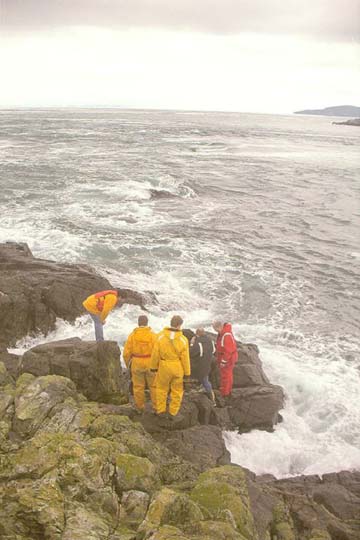
 Pearson College staff provides all logistical support required for the efficient operation of Race Rocks. Qualified staffing for maintenance, accounting, purchasing and deliveries are all coordinated by existing College systems. Mike and Carol Slater, the former light-house keepers, are now employed by Pearson College and they live at Race Rocks. They are particularly well qualified to supervise and operate the facility after 30 years of experience with the Coast Guard and extensive experience observing marine life. Over the past 14 years they have been responsible for dealing with the public in the Reserve area and, when necessary, reporting infractions to the appropriate agency. Many of the College’s suppliers such as Nixon Electrical Services, Day’s Welding, Aramark Services, Henning’s Plumbing and others offer their services to Race Rocks at reduced rates or by donation.
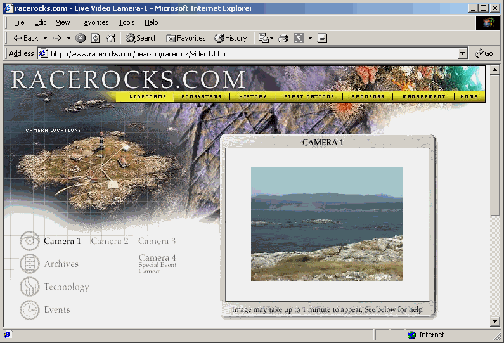
It is an extraordinary legacy of the Millennium Partnership Fund and our partners that Race Rocks is the most technologically advanced Marine Protected Area in the world. The state of the art information technology system includes a full island network, wireless technology, remote controlled live video streams from above and below water and an environmental data array all streamed live on the Internet for public use. Major sponsorships from Apple, Apple Learning, LGS Group, Sorenson, Sony, Telus, Yamaha, Seapoint Sensors, the Vancouver Aquarium and others support the Race Rocks project.
As an educational institution Pearson College applies significant educational resources to the Race Rocks project. Environmental Systems/Biology faculty member Garry Fletcher serves as Educational Director of the Race Rocks program. Supported by students involved in web design, scuba diving, vessel operation, photography, video production, research and school program delivery, Garry has established an award winning education program at Race Rocks. This program is widely used by educational institutions such as the Open Learning Agency, primary and secondary schools, universities, museums and science centres throughout Canada. In the past year alone there have been over 65,000 visitors directly to the racerocks.com site and thousands more through links to the Apple Learning Exchange site.
This project has proved conclusively that there can be mass electronic public access to a protected area without the negative impact of large numbers of visitors to the islands. Race Rocks provides a viable alternative to the potentially high impact personal site visit. Rather than a Marine Protected Area being a secret resource this approach encourages public education and appreciation of the area while maintaining a high level of protection.
Pearson College has a proven record of successful fundraising for the Race Rocks project. Since 1997 over $280,000 has been raised from private donors to operate Race Rocks. This was an emergency initiative to save the site from demolition while a long-term solution could be found. Pearson College will continue this commitment to fundraising for the project by raising one third of the annual operating costs for the ongoing operation of Race Rocks.
Community Commitment
Federal Fisheries Minister The Hon. Herb Dhaliwal and BC Environment, Lands and Parks Minister The Hon. Joan Sawicki committed their respective governments to the establishment of a Marine Protected Area at Race Rocks on September 14, 2000. Their action was based on the unanimous recommendations of the Race Rocks Advisory Board. The Advisory Board includes senior staff from the Department of Fisheries and Oceans, BC Parks and South Island First Nations leadership. In addition there is broad public representation from groups such as sports fishers, the dive community, ecotourism companies, marina operators, scientists, Friends of Ecological Reserves, Georgia Strait Alliance, and the Canadian Parks and Wilderness Society. A key feature of the Race Rocks Advisory Board conclusions is a recommendation that both the Federal and Provincial governments provide financial support for the Race Rocks Marine Protected Area.
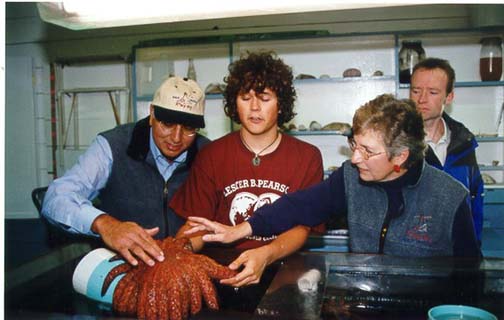
Meeting DFO Needs at Race Rocks
Race Rocks represents a unique challenge for DFO if it is to meet the declared objectives of protection, sustainability, education, research and broad community collaboration as defined in the MPA strategy. As the lead agency in the establishment of Canada’s first MPA, the Department must meet these objectives in a coordinated, cost effective manner. Pearson College, through a contract with DFO, can deliver programs under the direction of DFO that meet the defined objectives and fulfill specific DFO areas of responsibility.
The following key DFO objectives would be fulfilled under this contract:
-
- 24 hour on site staffing throughout the year
- monitoring of visitors to the MPA to ensure use guidelines are respected
- data collection on the daily number of vessels and visitors within the MPA
- reporting and recording of any infractions that may occur
- vigilant reporting of any evidence of toxic contaminants
- periodic marine mammal and sea bird population counts
- ongoing intertidal and subtidal marine life inventories
- underwater data collection through environmental scan sensors
- maintaining a daily environmental journal
- support for visiting researchers
- maintaining a directory of all research data and publications
- continuation of seawater and salinity measurements for IOS
- continuation of weather reporting for Environment Canada
- assistance to Coast Guard staff when required
- development of web based educational curriculum materials
- extensive educational programming for educational institutions and the general public utilizing the Internet as much as possible
- education programs for reserve users and liaison with commercial users
- development of specific First Nations curriculum featuring the history of traditional uses in cooperation with local band leadership
- education programs for First Nations youth including material in their own languages
- showcasing the value of MPAâs with custom live web casts for DFO events and conferences
- assisting in maintaining and enhancing vital community relationships
- ongoing involvement in the Race Rocks Advisory Board
Why is the need for Race Rocks funding special?
Race Rocks is a unique Provincial asset with specific circumstances that qualify it to be deserving of a special funding allocation designated at the Ministerial level.
Race Rocks is:
- an internationally recognized Marine Protected Area established jointly by the Federal and Provincial Governments.
- Canadaâs first and only Marine Protected Area and therefore success is essential if others are to follow.
- the Race Rocks Marine Education Centre has over $650,000 in physical building and equipment assets which clearly require security and routine maintenance.
- over $25 million worth of extremely marketable sea-life that has prospered under 20 years of protection would be subject to immediate poaching without the presence of the resident eco-guardians.
- Race Rocks has the most comprehensive accumulation of scientific data of any protected site on the West Coast. The continuous data chain, some of which dates back to 1926 must be sustained.
- Race Rocks, through award winning web based education programming, is recognized as a word leader in environmental monitoring and education delivery.
- partnerships with educational institutions such as schools, museums, science centres, and Ministries of Education provide direct benefit to Canadians.
- the funding formula proposed is in accordance with recommendations of the Race Rocks Advisory Board and the intent of the MPA strategy.
- DFO investment in Race Rocks will be directly matched at a two to one ratio by other independent funding sources.
- when gift in kind contributions from our other sponsors are considered the ratio of private contribution is over ten times the DFO contribution level.
- the involvement of DFO assures the project of stable funding. The lack of involvement by DFO will lead to immediate financial collapse.
Financial Proposal
The following operational budget provides details of projected minimum operational expenses at Race Rocks for the period April 1, 2001 to March 31, 2002. The budget is based on our four years of experience in funding the Race Rocks project and the highly efficient operational format we have established. Pearson College guarantees to cover any cost over runs if they should occur.
It is proposed that the Department of Fisheries and Oceans, BC Parks, and Pearson College each contribute $50,000 to cover the 2001-2002 operating budget.
|
Race Rocks MPA/ER
|
|
|
Operating Budget April 1, 2001 to March 31, 2002
|
|
|
Salaries
|
|
|
Eco-guardian(s)
|
42,000
|
|
Educator (1/2 time)
|
30,000
|
|
Shoreside support (1/3 time)
|
14,000
|
|
Benefits
|
9,460
|
|
95,460
|
|
|
Fuel
|
|
|
Generator
|
11,000
|
|
Heating
|
1,400
|
|
Boat
|
1,750
|
|
Lube/oils
|
2,000
|
|
16,150
|
|
|
Maintenance
|
|
|
Buildings
|
6,000
|
|
Generators
|
4,300
|
|
Water pumps
|
2,100
|
|
Desalinator
|
2,200
|
|
Winches
|
800
|
|
Boat and motor
|
4,700
|
|
Jetty
|
400
|
|
Fuel system
|
450
|
|
Radios
|
200
|
|
Diving equipment
|
2,500
|
|
23,650
|
|
|
Administration Costs
|
|
|
Phone
|
600
|
|
Insurance
|
1,800
|
|
Stationery/printing
|
1,150
|
|
3,550
|
|
|
Education Program
|
|
|
Classroom materials
|
4,500
|
|
Communication/outreach programs
|
2,500
|
|
First Nations’ program
|
5,000
|
|
Internet access
|
2,000
|
|
14,000
|
|
|
|
|
|
Total expenditures
|
$152,810
|
Pearson College is a registered charity and as such is subject to an annual audit. Our auditors KPMG will provide fully audited accounting details of all Race Rocks expenditures to the partner agencies. In addition the College will file an annual operating report with DFO.
Conclusion
We had not expected to operate the facility on an interim basis without any financial support from any government for the past four years. Our donors are experiencing fatigue and our largest private financial supporter has indicated their continued support is conditional upon governments entering into this cost sharing formula. A similar proposal has been forwarded to the Provincial Government. Race Rocks is an essential investment by DFO, a cost effective arrangement, a unique innovation in the field of environmental protection and education and a proud accomplishment for all Canadians. We ask that you agree to support the Race Rocks Marine Protected Area as it begins a new life.
Respectfully submitted,
Angus Matthews
Director of Special Projects
Lester B. Pearson College of the Pacific
650 Pearson College Drive
Victoria, BC
Release of Entangled Sea lion- DFO and Vancouver Aquarium
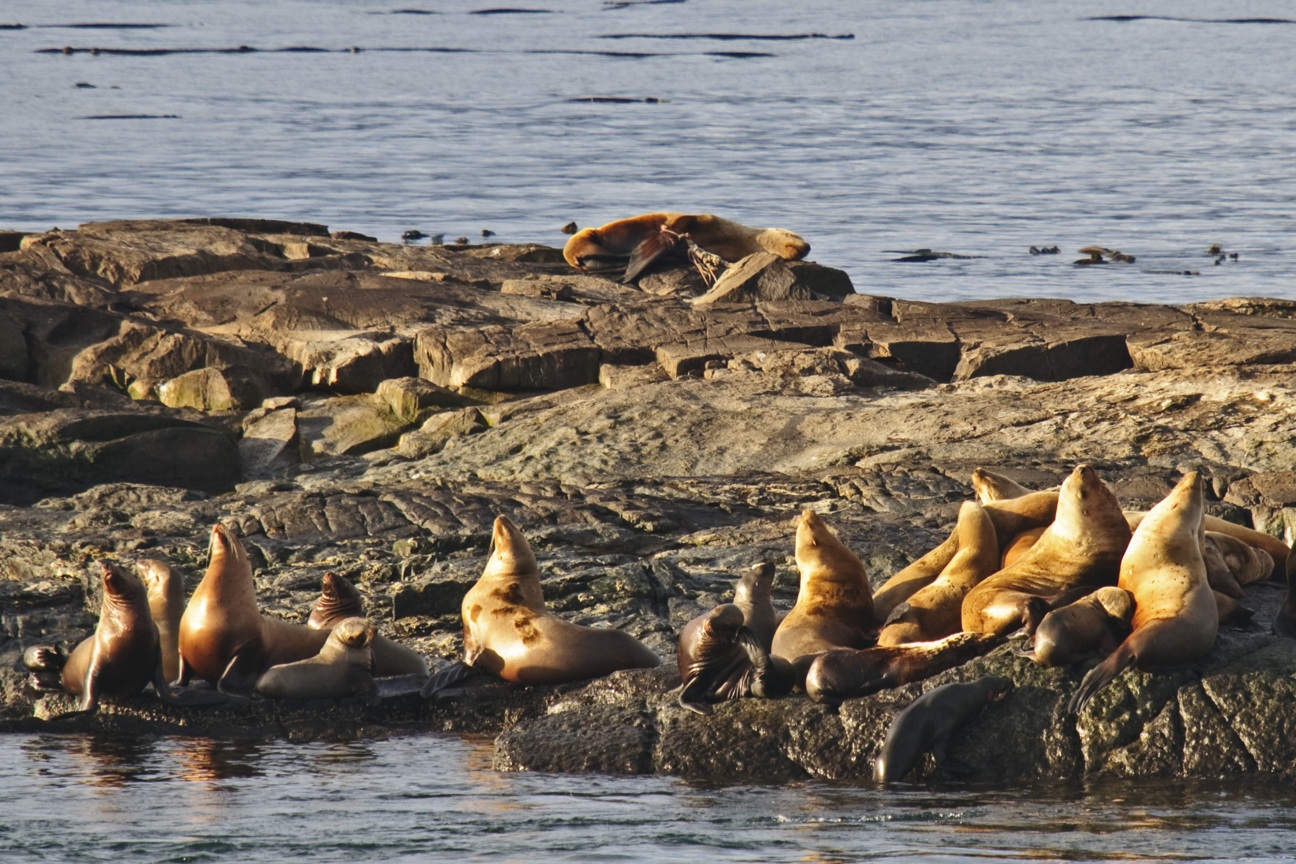
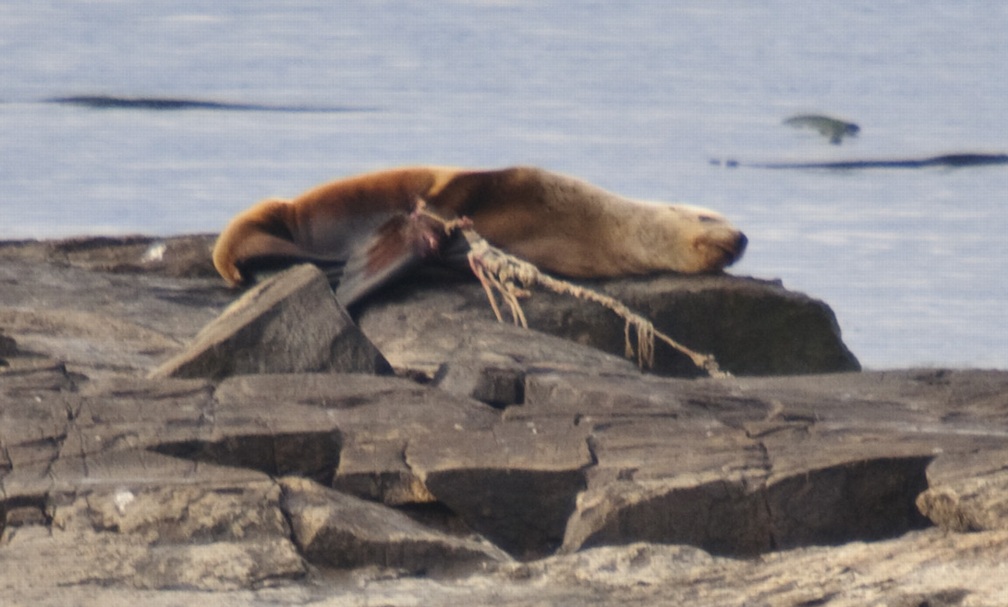
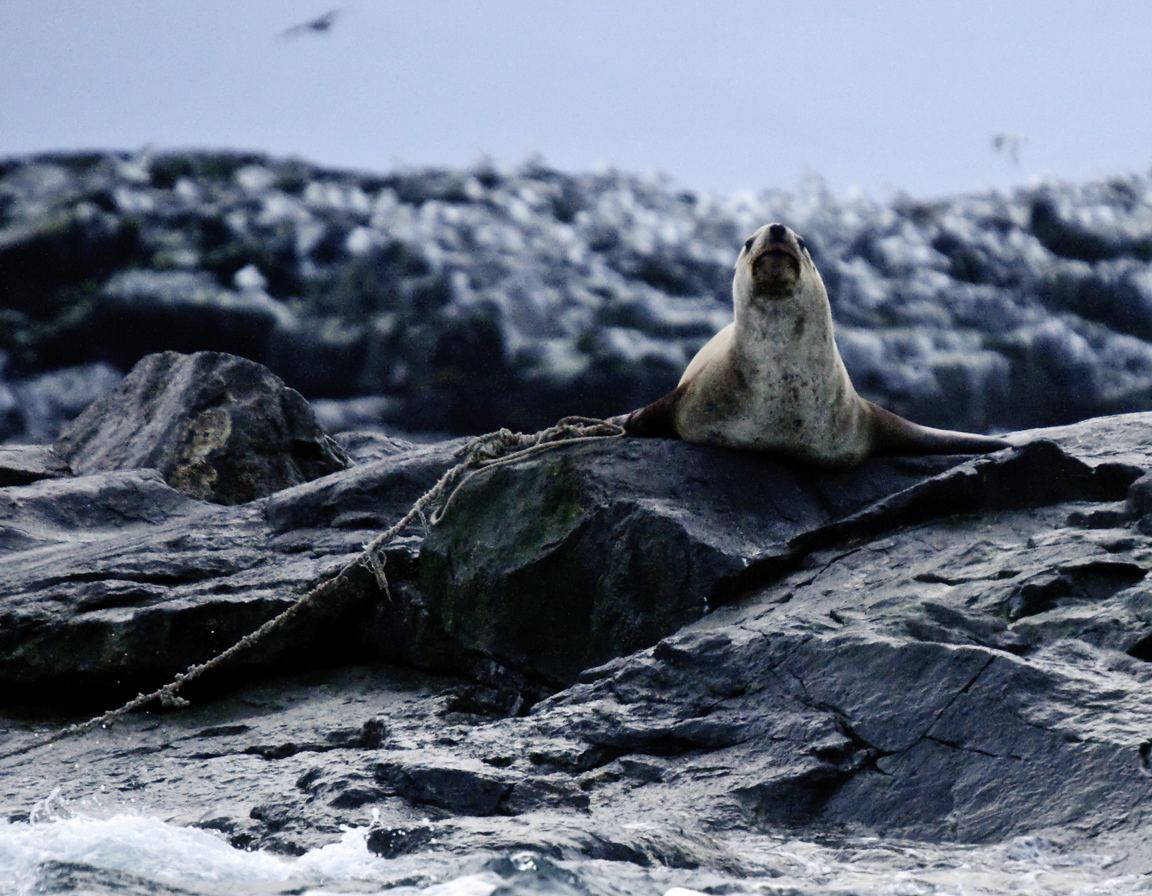
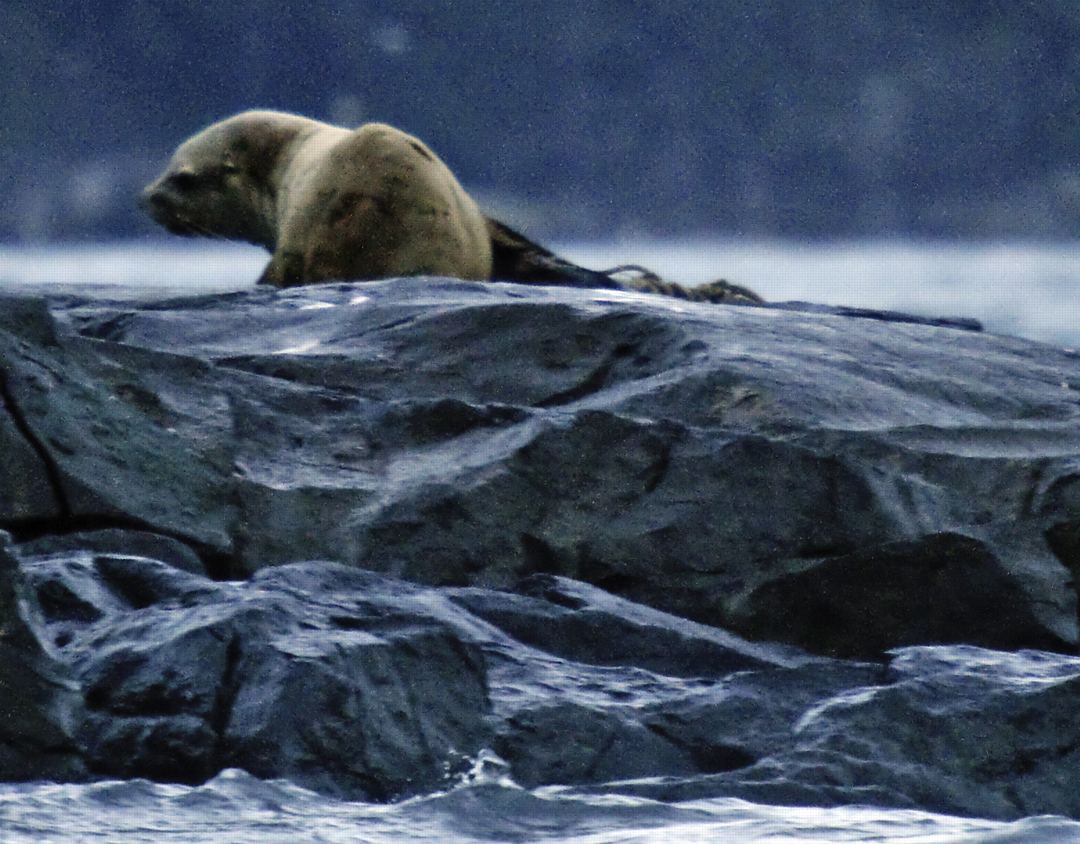
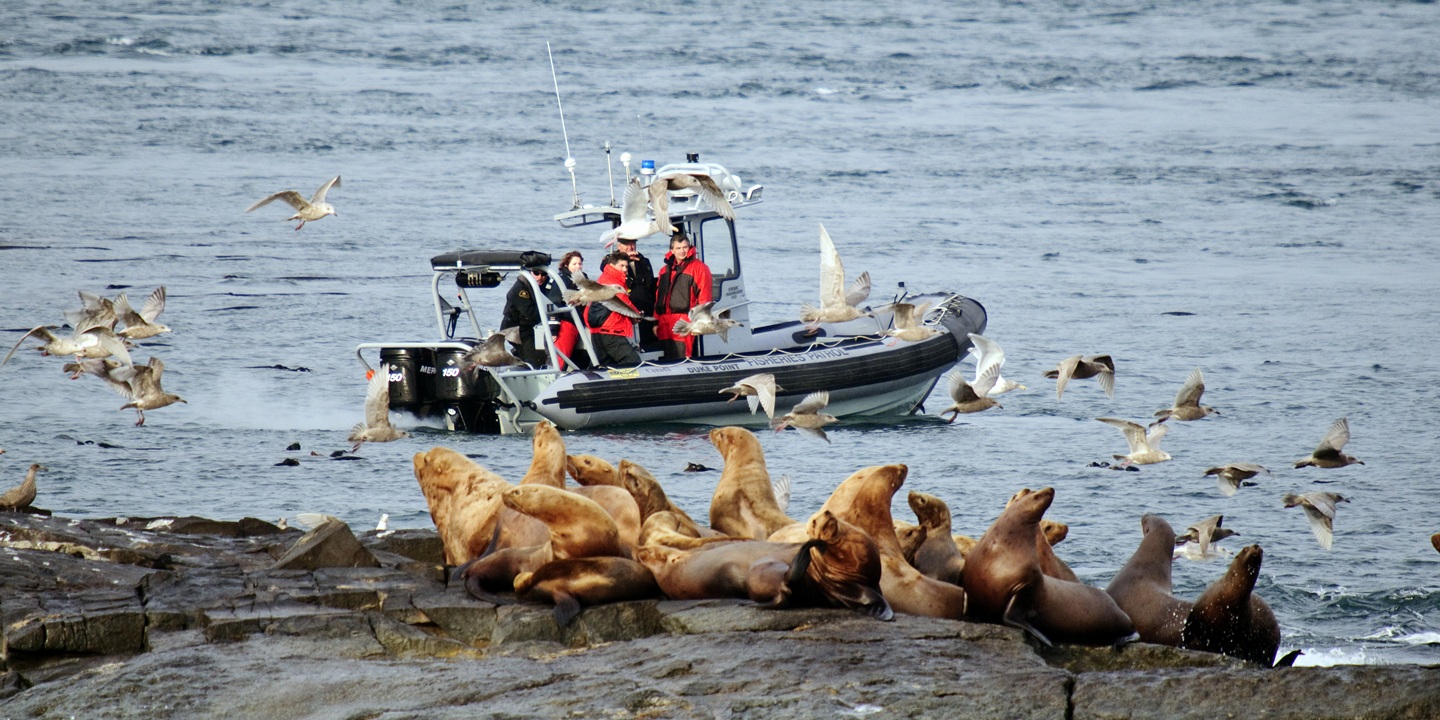
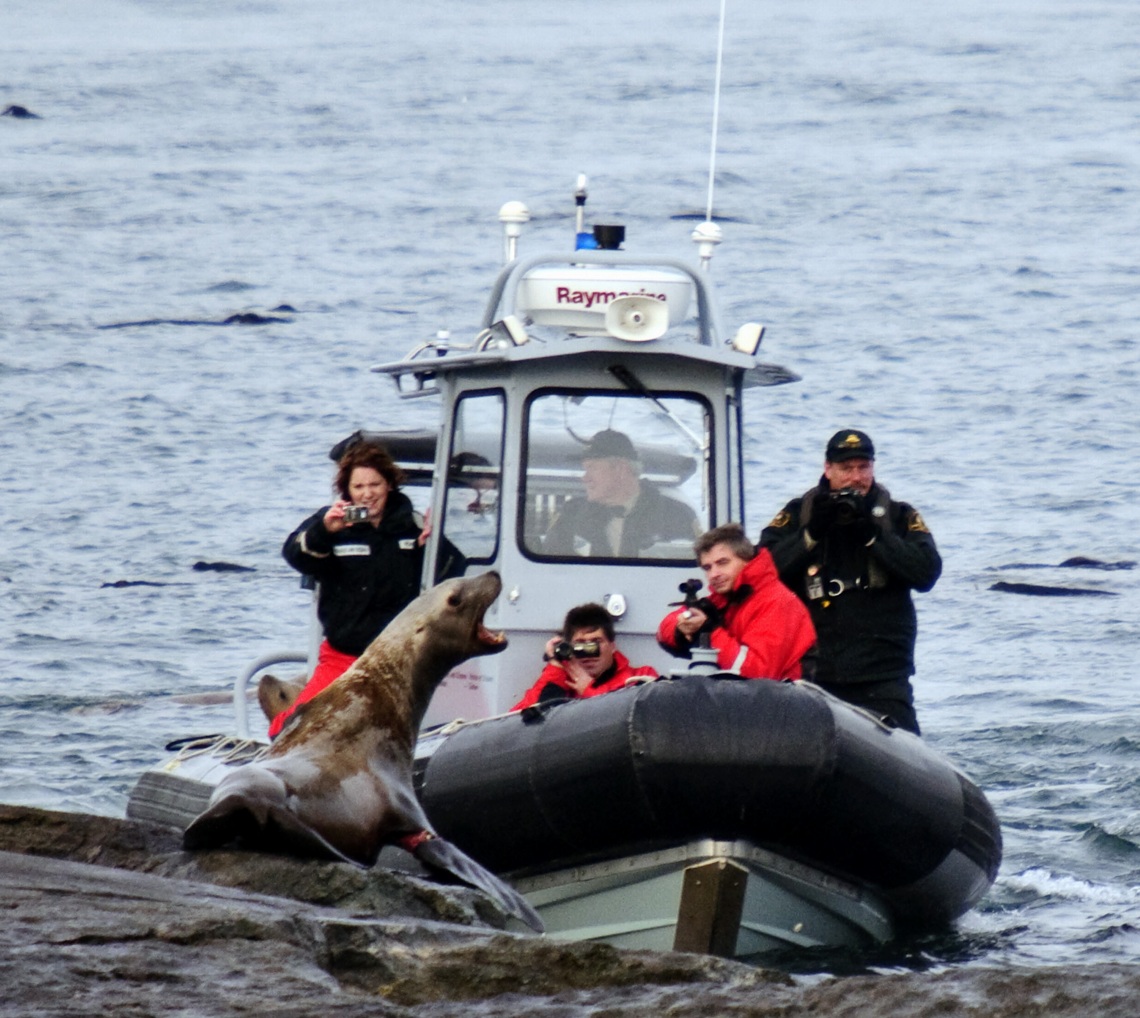
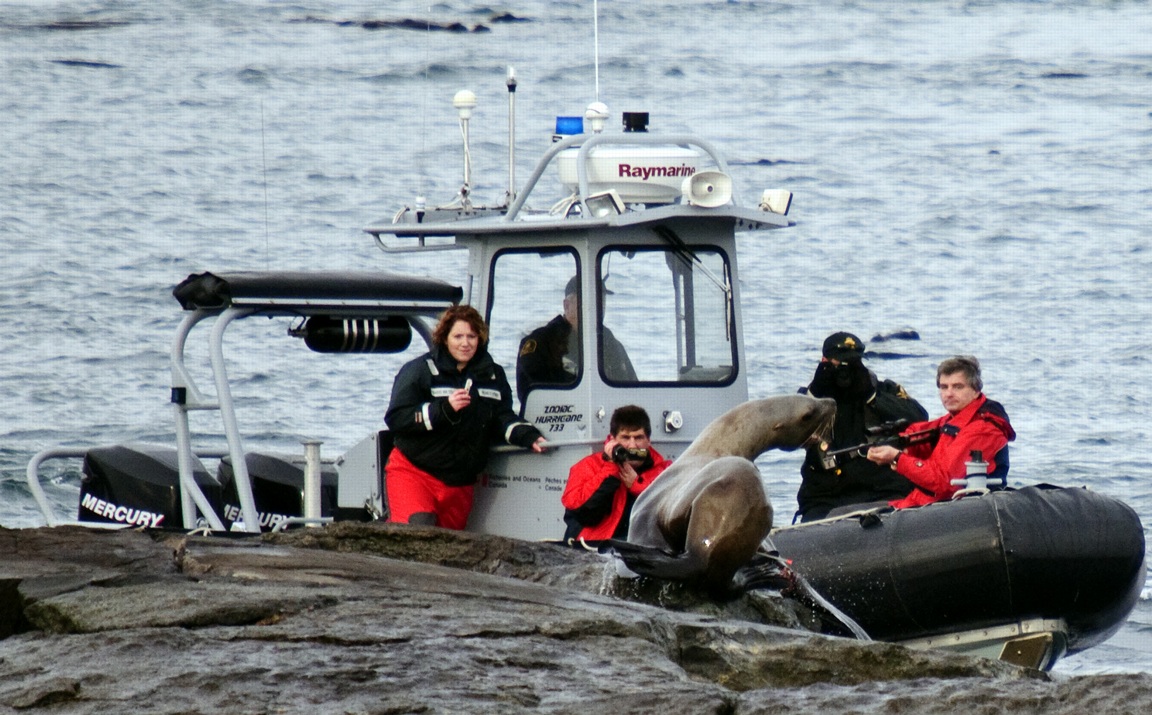
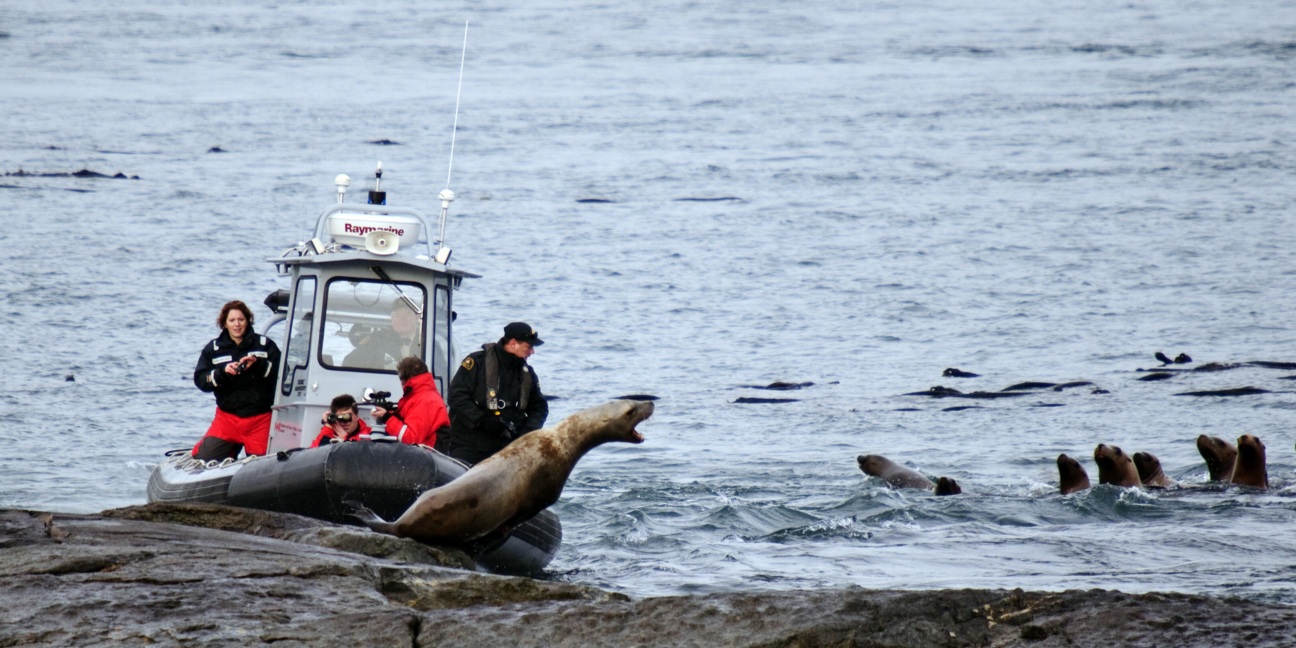
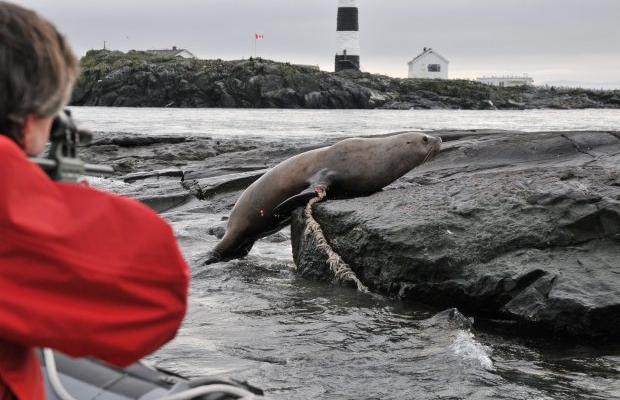
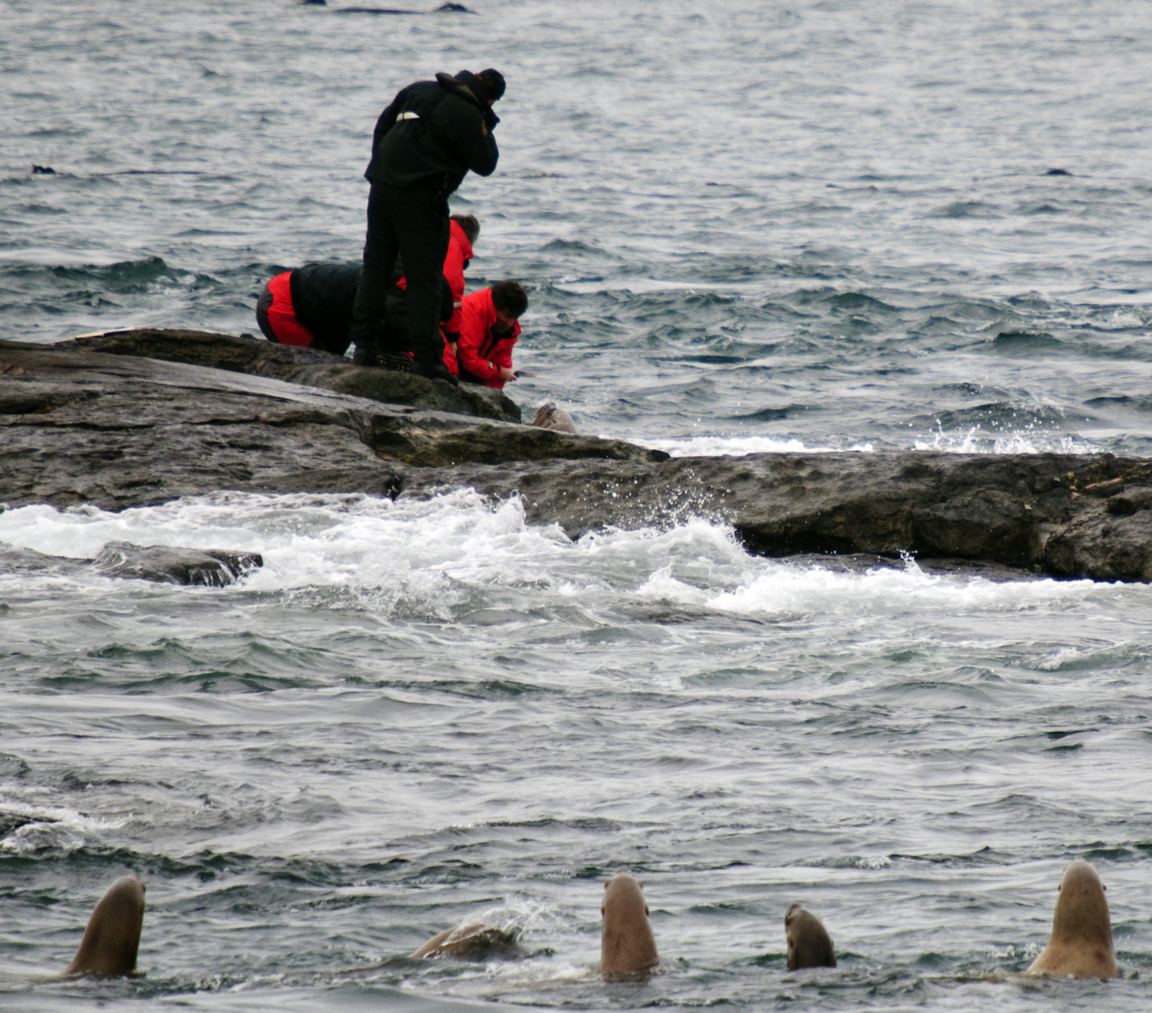
On December 13, 2009, Ryan Murphy reported to DFO that a sea lion on Middle Island was entangled in ropes. (See Ryan’s comments below) The ropes were snagged so it could not leave the rock. A rescue was mounted by DFO and the Marine Mammal Rescue Centre of the Vancouver Aquarium on December 16. This was the first time a sea lion had been successfully released from such an entanglement.
-
- Location of the animal (top of picture) on Middle Island
-
- A tangle of ropes had him snared so that he could go in and out of the water but not very far.
-
- The rope had his right flipper ensnared, and it was caught on a rock leaving him tethered on the island.
-
- On December 14 he was still there
-
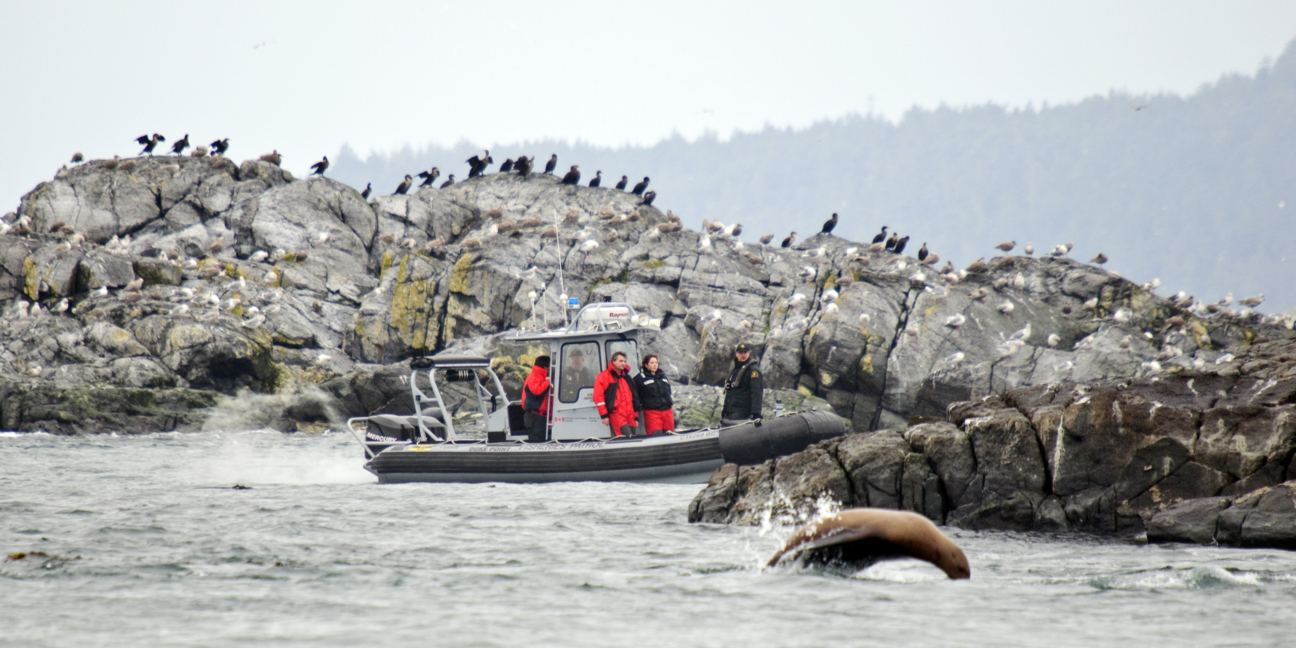
- The DFO vessel approaches middle island on December 16. They are accompanied by members of the marine Mammal rescue group from the Vancouver Aquarium. Approaching from the north side of the island. A dart is shot into the flank of the animal to immobilize it.
-
- Approaching from the north side of the island.
-
- A dart is shot into the flank of the animal to immobilize it.
-
- The open wound on the sealion
-
- Photo by Richard Christianson, DFO
-

- DFO and marine mammal personnel on the island after the animal has been anesthetized
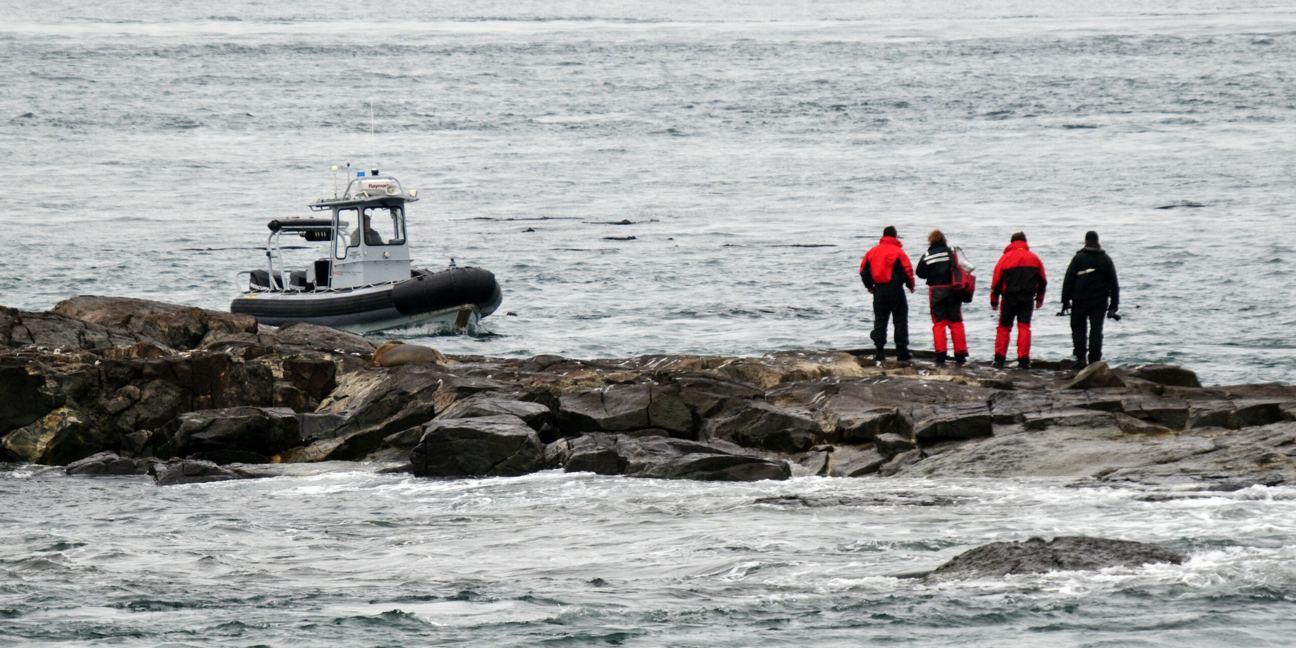
-
- Removing the ropes. Photos by Ryan Murph
Further comments from resident marine scientist and ecoguardian at Race Rocks Ryan Murphy
: December 21 2009
Ryan was interviewed for this article in the Goldstream Gazette: Daring Sealion Rescue at Race Rocks
“Normally, neither DFO or the Vancouver Aquarium will intervene with entangled pinnipeds (seals and sea lions), but this case was special for a number of reasons.
1. The sea lion was actually tethered to the rocks. These animals are really tough and can often survive for years with their entanglements. If tranquilized, these animals would take to the water and most likely drown before a rescue team could get to it. This wasn’t the case here and so a rescue operation was a viable option.
2. Steller sea lions (Eumetopias jubatus) like this one are listed as a species of special concern under SARA and as such are afforded a higher priority than other more abundant species like harbour seals and california sea lions.
3. This animal was most likely spotted within 24 hours of its entanglement and was still in relatively good health. Mike Demarchi of LGL who was on the island monitoring DND activity on nearby Bentinck Island and Rocky Point first spotted it on the morning of the 13th and his team and I were able to keep a very close eye on it during the daylight hours. It was reported to DFO’s Observe, Record, Report (ORR) line (1-800-465-4336) and the Vancouver Aquarium Marine Mammal Rehabilitation Centre (at 604-258-SEAL (7325) or via the emergency phone at 604-862-1647). A case like this on an offshore haul out would most likely have resulted in death by starvation, hypothermia, or drowning long before it was sighted. In the 3 days between the first sighting (first photograph) and its successful rescue, this animal had further tangled its tether from about 10m to 3m and exacerbated the wound to its flipper. The gale yesterday would have drowned it had it not been rescued.”
CANADA GAZETTE.. Xwayen ( Race Rocks) Marine Protected Area
Copy of Gazetting
| Vol. 134, No. 44 Canada Gazette Part I OTTAWA, SATURDAY, OCTOBER 28, 2000 |
Vol. 134, n o 44 Gazette du Canada Partie I OTTAWA, LE SAMEDI 28 OCTOBRE 2000 |
||||||||||||||||||||||||||
| page 3364 | |||||||||||||||||||||||||||
| 3364 | |||||||||||||||||||||||||||
| XwaYeN (Race Rocks) Marine Protected Area Regulations Statutory Authority Oceans Act Sponsoring Department Department of Fisheries and OceansREGULATORY IMPACT ANALYSIS STATEMENT DescriptionThe Oceans Act (the Act) came into force on January 31, 1997. Part II of the Act authorizes the establishment of an Oceans Man-agement Strategy (OMS) based on the principles of sustainable development, integrated management and the precautionary ap-proach. This part of the Act also provides authority for the devel-opment of tools necessary to carry out the OMS, tools such as the establishment of Marine Protected Areas. Section 35 of the Act authorizes the Governor in Council to designate, by regulation, Marine Protected Areas for any of the following reasons: (a) the conservation and protection of commercial and non-commercial fishery resources, including marine mammals and their habitats; (b) the conservation and protection of endangered or threatened species and their habitats; (c) the conservation and protection of unique habitats; (d) the conservation and protection of marine areas of high biodiversity or biological productivity; and (e) the conservation and protection of any other marine re-source or habitat as is necessary to fulfill the mandate of the Minister of Fisheries and Oceans. In 1998, the Minister of Fisheries and Oceans announced four pilot Marine Protected Area initiatives on Canada’s Pacific Coast. One of these, Race Rocks in British Columbia, meets the criteria set out in paragraphs 35(1)(b), (d)and(e) above. This regulatory initiative proposes to formally designate, under the Oceans Act, the waters surrounding Race Rocks as XwaYeN (Race Rocks) Marine Protected Area (MPA). In addition, the harvesting of liv-ing marine resources within the MPA will be prohibited subject to existing aboriginal or treaty rights. XwaYeN (pronounced shwai’yen) is located in the Juan de Fuca Strait, 17 kilometres off the coast of Vancouver Island,southwest of Victoria. The islets of XwaYeN (Race Rocks) form the most southerly part of Canada’s Pacific Coast. Named for its strong tidal currents and rocky reefs, the waters surrounding XwaYeN (Race Rocks) are a showcase for Pacific marine life, featuring whales, sea lions, seals, birds and a wide variety of underwater plants and animals. These waters are home to a thriving community of sub-tidal invertebrates, includ-ing sponges, anemones, hydroids and soft corals. Crowds of barnacles, tunicates, urchins and sea stars adorn the underwater cliffs. Fish such as sculpin, rockfish and lingcod seek refuge in the rocky crevices and undulating kelp forests. This proposal to designate the XwaYeN (Race Rocks) area as a Marine Protected Area under the Oceans Act provides the neces-sary foundation for the Minister to lead and facilitate the devel-opmentof an integrated, cooperative ecosystem-based manage-ment regime utilizing: Benefits and Costs The primary benefit of the proposed Regulations establishing the XwaYeN (Race Rocks) Marine Protected Area is that the foundation will be set for ensuring the conservation and protec-tion of a highly diverse and productive ecosystem of Canada’s oceans. It will aid in the prevention of potential ecological dete-rioration and protect the Northern abalone in that area. A subsidiary benefit of designating the XwaYeN (Race Rocks) MPA is the opportunity to initiate an integrated management regime based on a cooperative, integrated, ecosystem-based management approach to conserve and protect the area involving several federal and provincial government agencies using their respective authorities; and voluntary compliance through stewardship and cooperation with an alliance of stakeholder groups. The establishment of this MPA will also demonstrate Canada’s resolve to fulfill its commitments under the United NationsConference on the Law of the Sea (UNCLOS) and the Convention on Biological Diversity (UNEP 1994), as well as Canada’s commit-ment to the IUCN World Commission on Protected Areas Program. Four Coast Salish First Nations, Beecher Bay, T’souke, Song-hees The Race Rocks Advisory Board provided an excellentforum for issue identification, discussion and resolution. It has func-tioned well and guided the development of the proposed coopera-tive management regime. The resulting commitment to steward-ship and cooperation in the protection of this area as an MPA has laid the groundwork for a management regime through voluntary compliance that is unprecedented. In discussing and developing recommendations for designation and management of the Race Rocks Marine Protected Area, all members of the Race Rocks Advisory Board and their constitu-ents clearly understood that, upon designation, the area would be closed to harvesting (commercial and recreational) of all living marine resources. It was also accepted that this would not prevent the removal of marine organisms for scientific or educational purposes as part of an ongoing research program to assess and monitor the long-term health of the XwaYen (Race Rocks) ma-rine ecosystem. The recommendations reflect the outcome of a consensus-based process by the Race Rocks Advisory Board and directions expressed by the public, stakeholders and other partners through consultations conducted over a two-year period. In addition to sectoral consultations with stakeholders, two public sessions were conducted in February 2000. The public consultations were held to provide opportunities for information and discussion with those persons not represented by particular Contacts: Camille Mageau, Director, Marine Ecosystem Conservation, Department of Fisheries and Oceans, 200 Kent Street, Ottawa, Ontario K1A 0E6, (613) 991-1285 (Telephone), (613) 998-3329 Ann Green, Director, Legislative and Regulatory Affairs, De-partment of Fisheries and Oceans, 200 Kent Street, Ottawa, On-tario K1A 0E6, (613) 990-0162 (Telephone), (613) 990-0120 PROPOSED REGULATORY TEXT Notice is hereby given that the Governor in Council, pursuant to subsection 35(3) of the Oceans Act a ,proposes to make the annexed XwaYeN (Race Rocks) Marine Protected Area Regulations. Interested persons may make representations with respect to the proposed Regulations within 30 days after the date of publi-cation of this notice. All such representations must cite the Canada Gazette,Part I,andthedate ofpublication of this notice, and be addressed to Camille Mageau, Director, Marine Ecosystem MARC O’SULLIVAN XwaYeN (RACE ROCKS) MARINE PROTECTED
1. The area within the 20-fathom (36.58 metre) contour line as shown on the chart set out in the schedule is hereby designated as the XwaYeN (Race Rocks) Marine Protected Area. PROHIBITION 2. (1) The definitions in this subsection apply in this section. “fish” has the same meaning as in section 2 of the Fisheries Act.(poisson) “fish habitat” has the same meaning as in subsection 34(1) of the Fisheries Act.(habitat du poisson) (2) No person shall remove from XwaYeN (Race Rocks) Ma-rine These Regulations come into force on the day on which they |
|||||||||||||||||||||||||||
| Règlement sur la zone de protection marine XwaYeN (Race Rocks) Fondement législatif Loi sur les océans Ministère responsable Ministère des Pêches et des Océans RÉSUMÉ DE L’ÉTUDE D’IMPACT DE LA RÉGLEMENTATION DescriptionLa Loi sur les océans (la Loi) est entrée en vigueur le 31 jan-vier 1997. La partie II de la Loi permetl’établissement d’unestratégie de gestion des océans (SGO) basée sur les principes dudéveloppement durable, de la gestion intégrée et de la prévention.Cette partie de la Loi prévoit aussi l’élaboration d’outils nécessai-resà la SGO, notamment l’établissement de zones de protection marine. L’article 35 de la Loi autorise le gouverneur en conseil à dé-signer,en vertu de la réglementation, des zones de protection marines pour l’une ou plusieurs des raisons suivantes : a) la conservation et la protection des ressources halieutique commerciales ou autres, y compris les mammifères marins, et de leur habitat; La proposition pour la désignation de XwaYeN (Race Rocks) provinciaux aux pouvoirs distincts; de plus, la désignation favo-rise Le Conseil consultatif de Race Rocks représentait un excellent Internet) disposées stratégiquement. Ces mesures contribuent à un PROJET DE RÉGLEMENTATION Camille Mageau, Directrice, Conservation des écosystèmes ma-rins, Le greffier adjoint du Conseil privé, RÈGLEMENT SUR LA ZONE DE PROTECTION DÉSIGNATION (2) Il est interdit d’enlever de la zone de protection marine ENTRÉE EN VIGUEUR |
|||||||||||||||||||||||||||
| The complete text of the CANADA GAZETTE from which this has been copied may be found in PDF form at : http://canada.gc.ca/gazette/part1/pdf/g1-13444.pdf pages 112-120. INCLUDED on page 119 and 120 are the charts of the proposed MPA area with coordinates defined also a copy of the English version facsimile is attached below |
|||||||||||||||||||||||||||
 |
|||||||||||||||||||||||||||
|
|||||||||||||||||||||||||||

